
Our take
This poetic memoir by the late director Terence Davies opens with a tracking shot that takes us down a rainy, dilapidated Liverpool street, finally settling on the wet staircase of a roofless house as three audio tracks morph into one another: a Nat King Cole song, dialogue from a movie, and, finally, a boy calling for his mother. Just as we hear the latter, the shot of the exposed staircase dissolves, taking us into the past to reveal the owner of the voice sitting in the same spot — only now, the stairs are dry, the roof restored.
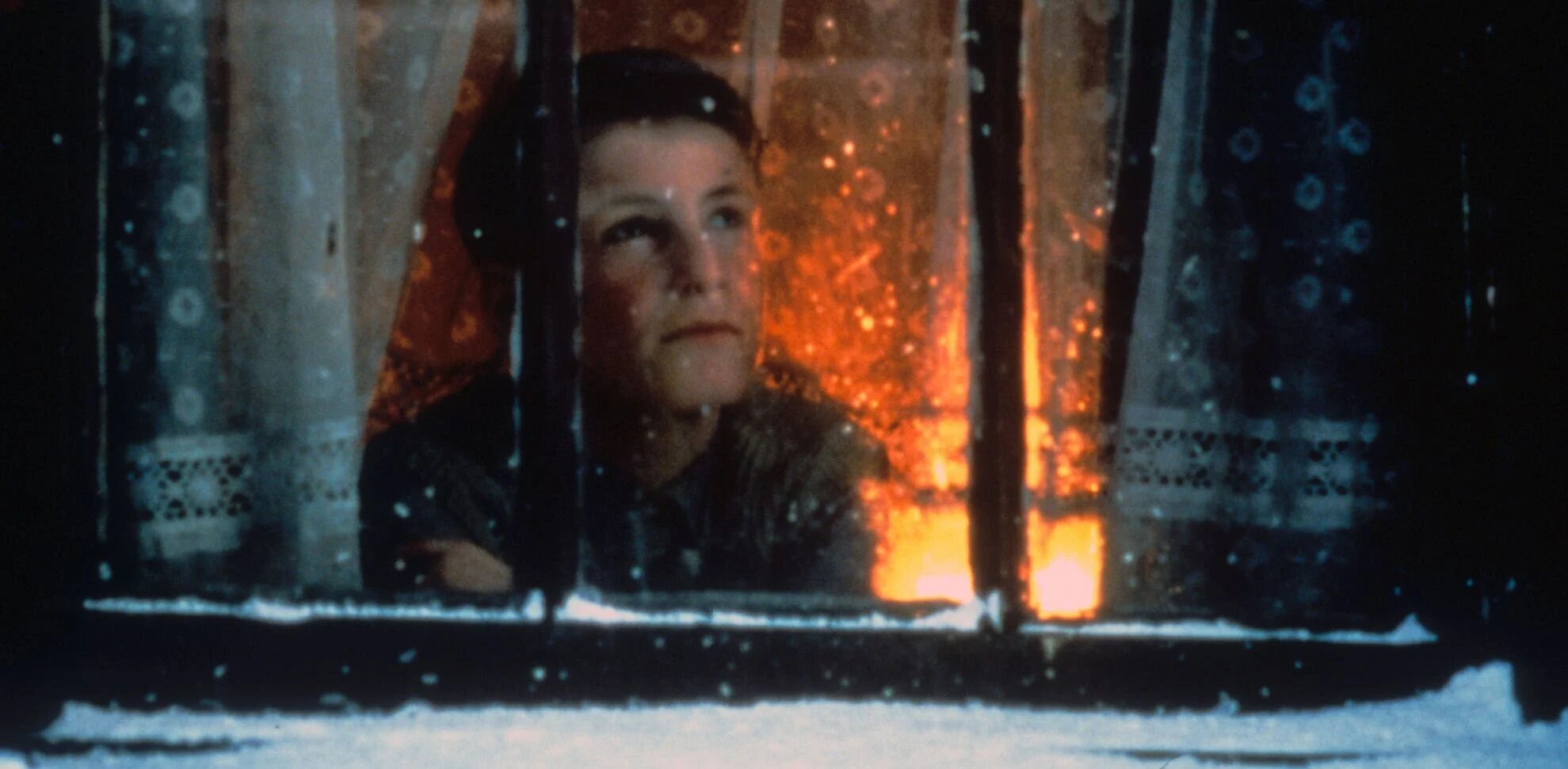
The scene perfectly encapsulates the film: it’s a dreamlike pool of sensory recollections from that lonely boy’s childhood, assembled according to the strange logic of memory. Music and movie dialogue echo across the film as we watch snapshots from Bud’s (Leigh McCormack, playing a proxy of Davies) early years. Though most of the memories radiate warmth — Christmases with family, euphoric cinema trips — a note of melancholy tinges these blissful recollections. Callously cruel schoolmates, desperate church prayers, and instantly rueful stolen glances jar against the nostalgia and let us know that something dark is coming. Intensely, painfully intimate, this is one of the best and most unbearably sad evocations of memory in cinema.
What it won

Cannes
1 nom
The story
Bud is a lonely and quiet boy whose moments of solace occur when he sits in rapture at the local cinema, watching towering and iconic figures on the movie screen. The movies give Bud the strength to get through another day as he deals with his oppressive school environment and his burgeoning homosexuality.
Elsewhere

"[An] exquisite, impressionistic, largely autobiographical reverie ..."
— Richard Brody

"Terence Davies' most underrated work: a cinematic hymn to the echoes and sensations of childhood - a paradise gained and lost."
— PJ Nabarro
Recollections from the memory of a closeted, movie-obsessed, and devoutly Catholic young introvert in 1950s Liverpool.
That opening dissolve isn’t the only one in the film — even when there is no obvious link between adjacent scenes, The Long Day Closes makes frequent use of the dissolve to slip smoothly from memory to memory. It’s a brilliant technique, one that conjures up that strange quality of memories: that, like dreams, they often don’t start or end at logical places, but jump and flow according to their own mysterious rhythms. There’s no better example of its use here than the ‘Tammy’ scene, in which Debbie Reynolds sings the song of the same name in her caramel voice as the camera glides above the lonely Bud playing alone — a scene that morphs first into a bird’s eye shot of a packed cinema, and then over crammed church pews, an emptying schoolroom, and, finally, Bud’s street again. It’s a magnificent scene, and perhaps the most illustrative example of the magic of this movie and Davies’ filmmaking that exists.
There’s no getting over the ‘Tammy’ scene.
The details



Streaming arrival
Who picked it

Farah Cheded is a UK-based curator at A Good Movie to Watch and a Rotten Tomatoes-approved freelance critic whose work has been published at outlets including The Playlist, Paste Magazine, and Film School Rejects. She lives in fear of the day she runs out of 'Columbo' episodes to watch.

