
Our take
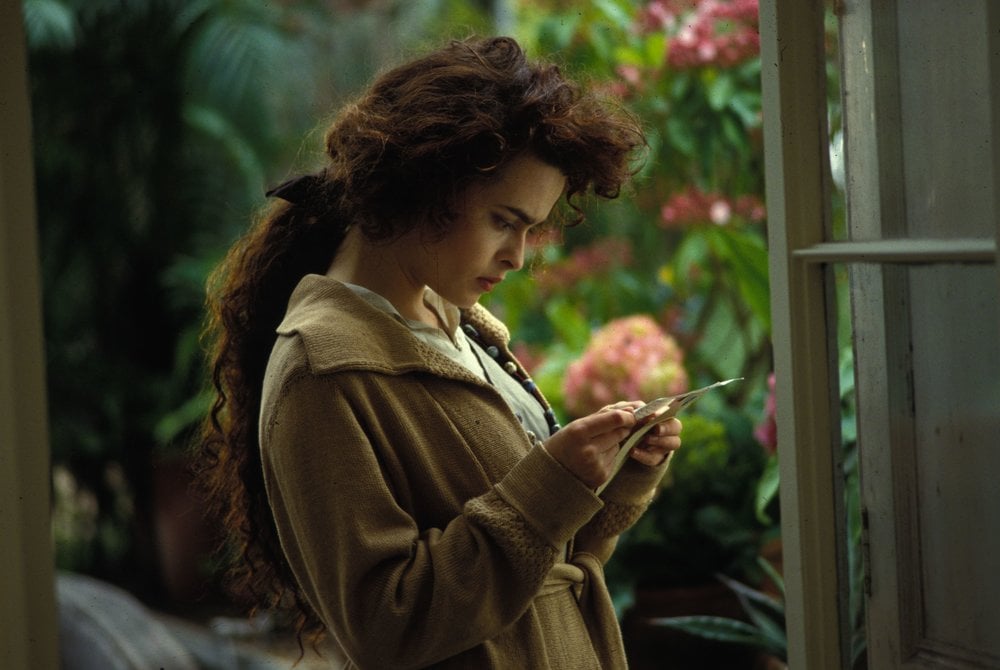
With Howards End, the magic trio of producer Ismail Merchant, director James Ivory, and writer Ruth Prawer Jhabvala converted yet another turn-of-the-19th-century EM Forster novel into exquisite cinematic form. Ravishingly shot and performed to career-best heights by many of its cast, Howards End loses nothing of the elegance we expect from a period drama, and yet it also feels thoroughly modern. The film charts the tragic entwining of three families: the progressive and intellectual middle-class Schlegel sisters, the much more traditionally minded and wealthier Wilcox family, and the Basts, a down-on-their-luck working-class couple. It’s the liberally minded Schlegels who cross the class divide of 1910 London to bring these two distant social circles so close to each other, but it’s the old-world values of the Wilcoxes that make that meeting a tragic one. Simmering with rich emotion and crackling with class politics, Howards End is the crowning glory of the Merchant Ivory powerhouse and the rare perfect period drama.
Streaming arrival
What it won

Oscars
3 wins · 6 noms

Cannes
1 win

Golden Globes
4 noms

BAFTA
2 wins · 9 noms

DGA
1 nom

Spirit Awards
1 nom

WGA
1 nom

Nat. Board of Review
4 wins

NYFCC
1 win · 2 noms

LAFCA
1 win

César Awards
1 nom
The story
A saga of class relations and changing times in an Edwardian England on the brink of modernity, the film centers on liberal Margaret Schlegel, who, along with her sister Helen, becomes involved with two couples: wealthy, conservative industrialist Henry Wilcox and his wife Ruth, and the downwardly mobile working-class Leonard Bast and his mistress Jackie.
Elsewhere

"A more troubling and rigorous inquest into a bygone era than usual."
— Lizzie Francke

"E. M. Forster's Howards End makes a most compelling drama, perhaps the best film made during the 30-year partnership of Ismail Merchant and James Ivory."
— Variety Staff
The Schlegels, the Basts, and the Wilcoxes — each from different social classes — become tragically entangled in Edwardian England.
Howards End converted three of its nine Oscar nods into wins: Best Adapted Screenplay, Best Production Design, and Best Actress, courtesy of Emma Thompson’s portrayal of Margaret Schlegel. All three were richly deserved, but the latter especially so: with expert subtlety, Thompson makes Margaret the conflicted and compassionate presence that is central to the film’s exploration of changing class relations. As the elder of the two Schlegel girls, Margaret is required to be more sensible than her hotheaded younger sister (Helena Bonham Carter), a responsibility that tacitly informs her decision to marry the high-minded, middle-aged Henry Wilcox (a superlative Anthony Hopkins), who shares none of her artistic interests or empathetic impulses. These gulfs widen during their marriage as the independent Margaret assumes an increasingly passive role, her well-intentioned self-sacrifice reaching an intensity that is heartbreaking to watch. What happens in the film’s closing scenes — the way Thompson signals that Margaret has reached a breaking point, but never that she has lost her compassion — is the defining grace note of this stunning film.
True story: they renamed the Oscar for Best Actress “the Emma Thompson Award” after this.
The details



Who picked it

Farah Cheded is a UK-based curator at A Good Movie to Watch and a Rotten Tomatoes-approved freelance critic whose work has been published at outlets including The Playlist, Paste Magazine, and Film School Rejects. She lives in fear of the day she runs out of 'Columbo' episodes to watch.