
 2023 Movie
Dir. Kenneth Dagatan & Kenneth Lim Dagatan · Philippines, Singapore · Tagalog
Oppressively bleak Filipino wartime horror with a unique look and impressive performances
There’s a cruelty to In My Mother’s Skin that may seem off-putting at first, but one must reckon with the sheer scale of the violence already occurring before these characters are even introduced to us. The Japanese occupation of the Philippines was a particularly vicious period in the country’s history; if Filipinos weren’t fighting or hiding from their invaders, many of them were trying to maintain a precariously submissive, neutral existence, or they were being turned against each other due to the conflict of war trickling down between the social classes. All these things are implicit throughout Kenneth Dagatan’s film, which doesn’t try to reenact World War II but capture the total absence of hope during this period.
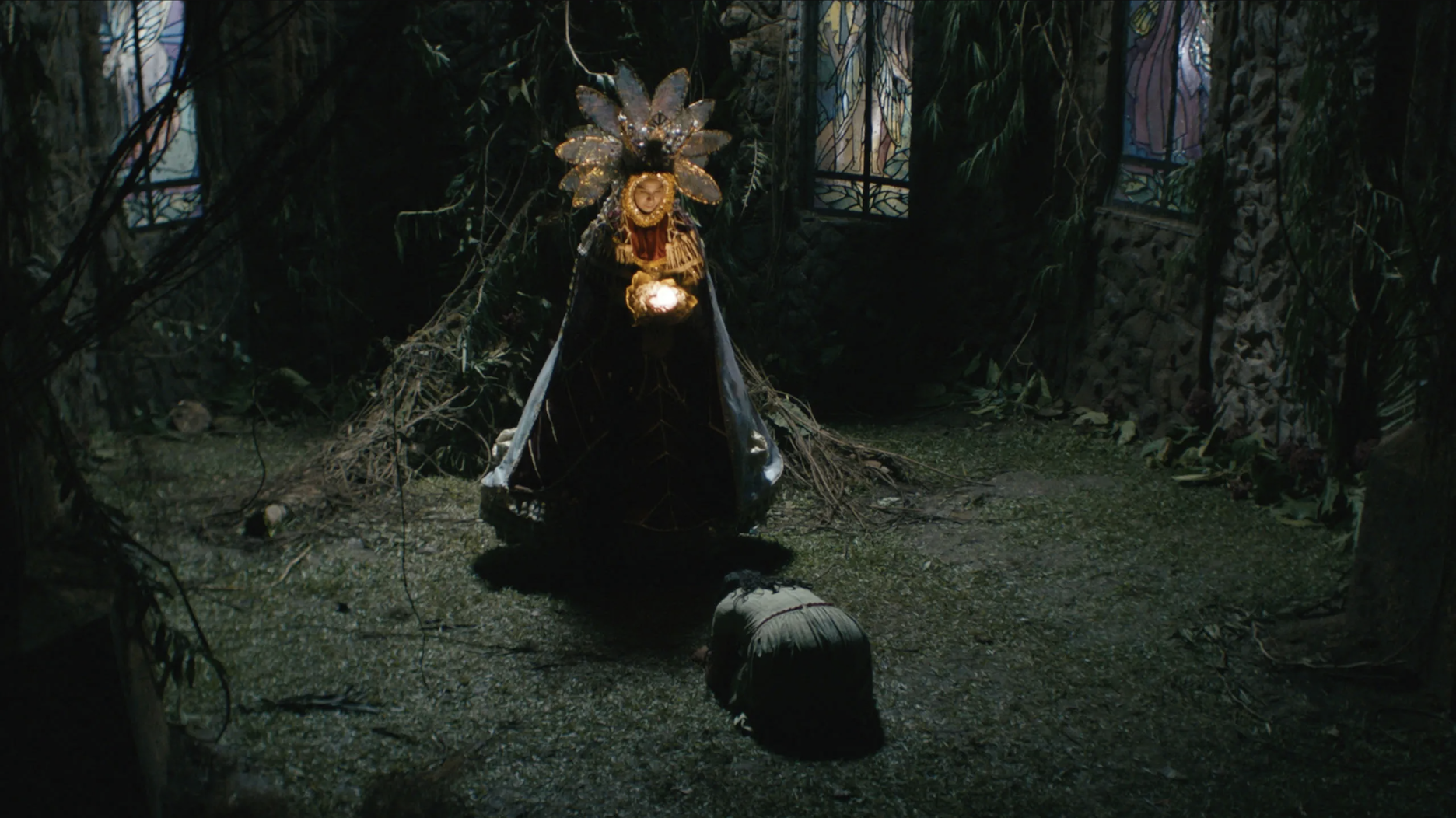
Dagatan’s style of horror insists on a very slow pace, emphasizing every footstep leading to a horrifying reveal, and not just the main scare itself. This choice doesn’t always work, especially as certain beats begin to repeat themselves, but the film’s incredibly confident visual style fills every moment with an eerie paranoia. Gothic, shadowy interiors, nasty gore, and one opulently costumed fairy make everything perpetually unsettling—gradually forcing us to accept that these contradictions are just the reality of life under war.
Stranded in the Philippines during World War II, a young girl finds that her duty to protect her dying mother is complicated by her misplaced trust in a beguiling, flesh-eating fairy.

"“In My Mother’s Skin” finds a rare sweet spot between story-book nightmare and historical allegory."
— Michael Nordine
As her family becomes increasingly sick and hungry during the Japanese occupation of the Philippines in World War II, a young girl sets out to find her father, only to encounter a deceitful fairy stalking the lands.
Unlike in many other horror films where characters' anguished screams are arguably played more towards the audience than for good storytelling, the cast of In My Mother's Skin comes across as genuinely horrified. Their trauma runs several layers deep, with Angeli Bayani's caretaker character holding back bitter resentment for her employers, and Beauty Gonzalez and James Mavie Estrella in almost destructive mourning over the vanishing of the family patriarch. But it's young Felicity Kyle Napuli who steals the show, as Tala's every attempt to make things better backfires—leaving her with a level of guilt that no child should ever have to live with.
The monster in this is a fairy? How bad can that be? (Famous last words.)

Emil Hofileña is a curator at A Good Movie to Watch. He also writes as a theater critic, with work published in Rogue and Out of Print, among others. He’s probably crying over a movie or an episode as we speak.
Comments