
 2022 Movie
Dir. Allison Otto & Female director · United States of America · English
Too much conjecture dilutes the intrigue of this true crime documentary's genuinely fascinating story
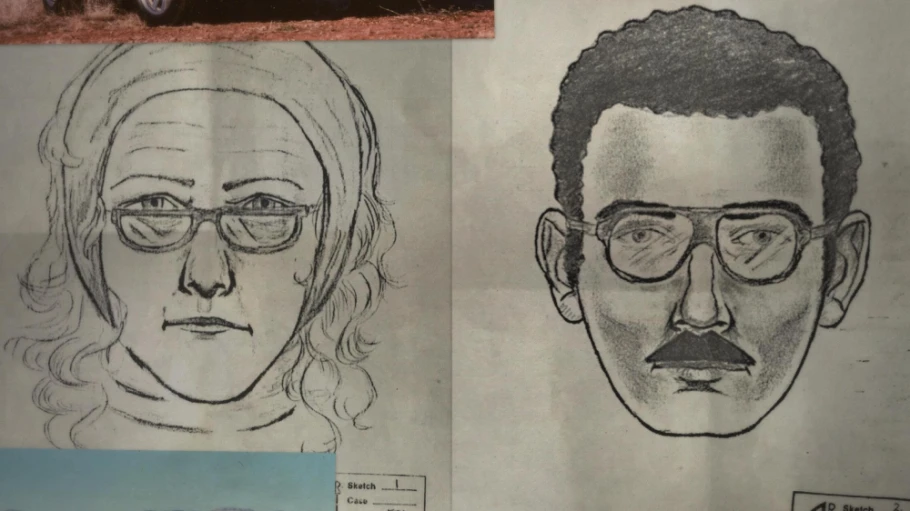
A fascinating kernel of certainty is padded out with giddy speculation in this documentary about a pair of unlikely art thieves. The facts are as such: 32 years after a $160 million painting by abstract artist Willem de Kooning was crudely cut from its frame in an Arizona gallery, a trio of small-town antique dealers discovered it in Jerry and Rita Alter’s estate sale. The Thief Collector is less interested in the painting itself — in fact, it’s openly dismissive about its artistic value — and more curious about how it fell into the hands of the mysterious couple, who frequently took exotic trips around the world despite their modest teacher incomes.
There are certainly intriguing questions raised by the Alters’ possession of the painting and compelling evidence that places them as the thieves, but this documentary can’t offer any convincing original theses of its own. It does try, by suggesting that the short stories Jerry wrote — about more thefts and gorier crimes — were thinly disguised autobiographical recollections, but it finds nothing to back these theories up except for a few loosely relevant anecdotes from relatives. With too many what-ifs to go on, it all makes for an intriguing but ultimately unsatisfying deep dive.
In 1985, Willem de Kooning’s “Woman-Ochre,” one of the most valuable paintings of the 20th century, vanished into the Arizona desert after being cut from its frame at the University of Arizona Museum of Art. 32 years later, the $160 million painting was found hanging in the home of Jerry and Rita Alter in rural New Mexico.

"A movie that has used art to touch something essential about how strangers — or maybe I should just say the downright strange — walk among us."
— Owen Gleiberman
The story of the unlikely thieves behind one of the FBI’s most puzzling art heists.
The Thief Collector is mostly structured around interviews with family and friends of the couple, de Kooning biographers, and those involved with the painting’s recovery, but it also features starry recreations of the crime and adaptations of some of Jerry’s short stories (which usually revolve around a couple). Glenn Howerton and Sarah Minnich play Jerry and Rita and their assumed fictional stand-ins in these brief, deliberately arch reprieves from the talking heads. The tone of these impish interludes fits well with a bloodless crime like the painting theft — and Jerry’s apparently self-aggrandizing stories — and feels like a refreshing relief from the typical true crime storytelling, the subjects of which are usually too tragic for such tongue-in-cheek treatment. That’s only true until The Thief Collector begins to overstretch itself and theorize about how much of Jerry’s writing was fact versus fiction, though. Once it enters darker territory, the device starts to feel a little flippant, and the documentary unfortunately can’t sober up enough to pull off the tonal shift required to be duly respectful of the enormity of its insinuations.
This true crime documentary is as guilty of an overactive imagination as the genre’s most rabid fans are

Farah Cheded is a UK-based curator at A Good Movie to Watch and a Rotten Tomatoes-approved freelance critic whose work has been published at outlets including The Playlist, Paste Magazine, and Film School Rejects. She lives in fear of the day she runs out of 'Columbo' episodes to watch.
Comments