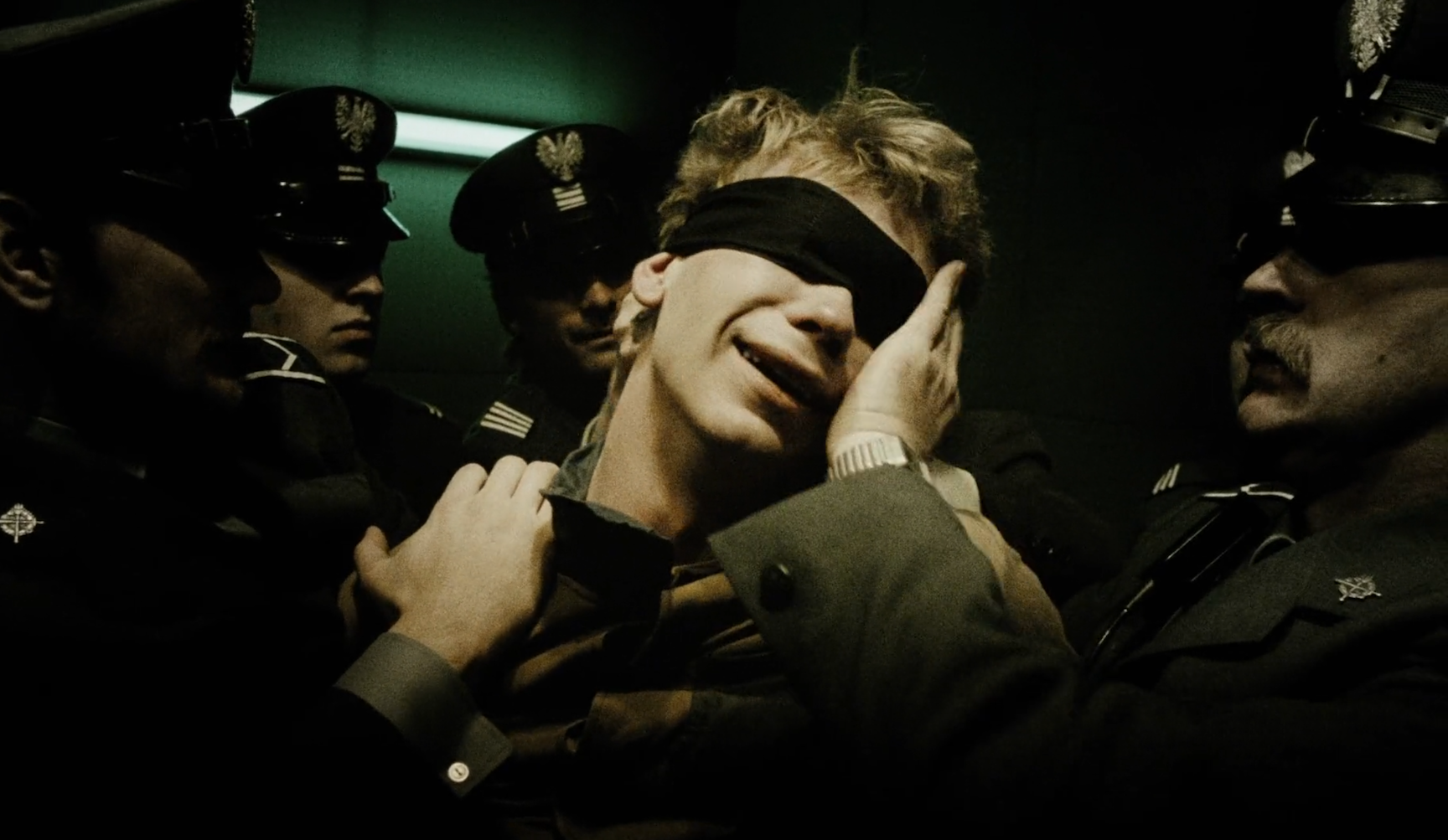

Even before any blood is inevitably shed during A Short Film About Killing (which serves as the expansion of another episode from director Krzysztof Kieślowski’s Dekalog miniseries, alongside A Short Film About Love), there’s something positively oppressive and sinister even just in the way the movie is shot. Kieślowski and cinematographer Witold Adamek use color filters to make the film deliberately ugly—as if the image is degrading right in front of us. Oftentimes shadows obscure the edges of the frame, shining a sickly yellow spotlight on the characters on screen. It’s the perfect way to get right into the heads of these people existing in a lawless land driven by primal instinct.
When crime and punishment finally occur, they’re equally difficult to watch unfold, but in different ways. Kieślowski lingers on the details—the tools and processes that we tell ourselves will make the act of killing easier. And what he’s ultimately able to expose is how capital punishment has been made to seem humane, just, or necessary, when it’s often even more barbaric, cruel, and unproductive than a crime borne of desperation. The very government that does nothing to address the roots of crime is the same one most eager to kill criminals instead.

"Krzysztof Kieslowski's A Short Film About Killing is a work of visionary irony."
— Paul Coates
Jacek climbs into the taxi driven by Waldemar, tells him to drive to a remote location, then brutally strangles him, seemingly without motive.
The fates of several characters drifting throughout Warsaw intersect through a seemingly random act of violence.
For a film so despairing and so dependent on the atmosphere it creates, it also manages to build such a beautiful and human portrait of grief and anger in the character of Jacek, played by Mirosław Baka. Even if Kieślowski and his co-writer Krzysztof Piesiewicz intentionally make it unclear as to why Jacek behaves the way he does, you can still detect a specific worldview from the memories he clings onto, the people he treats kindly, and those he casually terrorizes on the streets. It's a bold move by Kieślowski to make his protagonist borderline unlikable, but that's exactly the point: capital punishment still won't heal anybody.
We've already gotten the best apocalyptic film onscreen, and it's just Poland in the '80s.

Cannes
2 wins