Amazon Prime Suggestions - Highly-Rated Movies & Shows on Amazon Prime
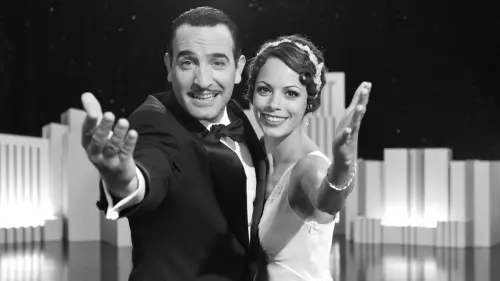
What was popular back then isn’t popular today for a reason. In film, that’s because the technology’s improved, the audience gets too used to the trend, and what once worked fades into the background. Once in a while, however, someone brings back nostalgia for a certain style. This happened when filmmaker Michel Hazanavicius created The Artist. Set in the transition between silent film and talkies, The Artist cleverly takes on the silent film form, but makes it suitable for today’s moviegoers. The ears are never left empty, thanks to the bouts of score and few foley that focuses attention. The camera shoots mostly in black and white, but shoots in various styles across the Golden Age. Even the story itself is classic melodrama– Sunset Boulevards and A Star is Born comes to mind– but it’s treated with the genre mixing the 2010s started to play with, the postmodern revue that recontextualizes the past. The Artist brings back what cinema has long discarded, and remembers what made these styles classic.
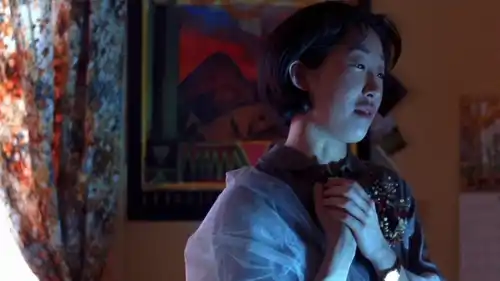
Sandra Oh earned her breakout in this warm, candid Canadian indie, which — not uncoincidentally — shares its name with that of a decorative Chinese symbol associated with marriage. The movie’s title is also a reference to 22-year-old Jade Li’s (Oh) struggle to pursue her own ambitions and meet the clashing romantic and professional expectations her disapproving first-generation immigrant parents have for her. As she puts it, “Double happiness is when you make yourself happy and everyone else happy, too.”
An aspiring actress who dreams of playing Blanche DuBois, Jade is instead asked by unimaginative casting directors to adopt a pronounced Chinese accent for tiny bit parts. In essence, she’s typecast everywhere: on set, and at home, where she struggles to play the good daughter who’ll give up acting for a more conventional job and will only marry a man her parents approve of. It’s a jarring existence, but Double Happiness never feels claustrophobic because it gives Jade the freedom to finally be herself via witty, confessional monologues and fantasy sequences. There’s undoubtedly bittersweetness to this portrait of a young woman fighting to be herself on every front, but that it’s nevertheless such an irresistibly charming, never-flippant watch is a testament to first-time director Mina Shum and Oh’s already mature talents.

What’s great about this highly inventive film is that it doesn’t look like it was shot through three iPhone 5s. Instead of using shaky cameras and static shots, Tangerine glides us through saturated, orange-toned scenes that evoke the Los Angeles sunset. Launching director Sean Baker into prominence, Tangerine is an innovative film that, at heart, is a nuanced comedy about the trans sex worker community. Newcomers Kitana Kiki Rodriguez and Mya Taylor run the show, and their performances create a vivid, electric drive that powers the whole movie. But it’s the quieter moments, the moments after betrayal, the moments of recovery, that make this movie truly special.
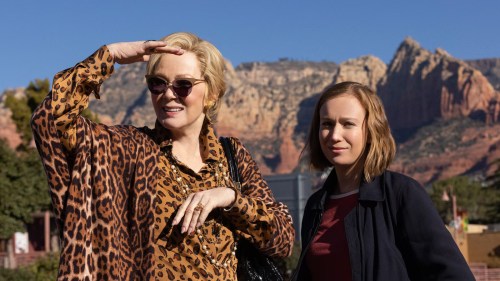
The initial charm of Hacks is in watching sparks fly between its sharp-tongued leads. Neither the elderly Deborah nor the young Ava holds back the digs, both of them cutting to the core of their insecurities. Part of what makes their tension so watchable is that they’re stand-ins for different generations. Deborah represents the all-hustle culture of the boomers, while Ava represents burned-out millennials. Lock them in a scene together and you get endless (and endlessly funny) observations about the modern world.
Eventually, however, their relationship deepens into something more meaningful than that. As Deb and Ava bond over their shared hopes and flaws, the show transforms into a clever and tender two-hander about their prickly but profound relationship. They’re two sides of the same coin, and even though no one can bring them down like the other can, the opposite is also true: no one else can lift them and push them to new heights like the other can.

Director Thomas Vinterberg (The Hunt) reunites with Mads Mikkelsen to tell the story of four teachers going through a mid-life crisis. They’re not sad, exactly—they have homes and jobs and are good friends with each other—but they’re not happy either. Unlike the ebullient youth they teach, they seem to have lost their lust for life, and it’s silently eating away at them, rendering them glassy-eyed and mechanic in their everyday lives.
Enter an experiment: what if, as one scholar suggests, humans were meant to fulfill a certain alcohol concentration in order to live as fully and present as possible? The teachers use themselves as the subjects and the tide slowly starts to turn to mixed effects. Are they actually getting better or worse?
With an always-satisfying performance by Mikkelsen and an instant classic of an ender, it’s no surprise Another Round took home the award for Best Foreign Film in the 2020 Academy Awards.
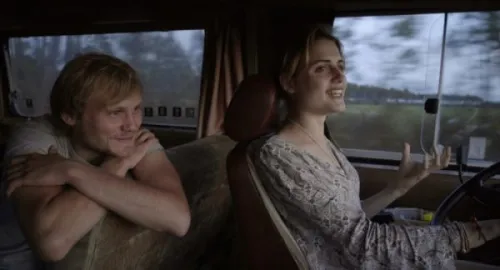
A sweet and romantic German movie about two Berliners who meet randomly and go on a road trip to the south of Europe. It might seem like a silly premise but it’s actually a philosophical movie, one that feels very realistic. The two characters debate human nature, politics, relationships, etc; almost throughout their trip. And they’re played by excellent newcomers who ooze charisma and make the question of what will happen between them incredibly thrilling.
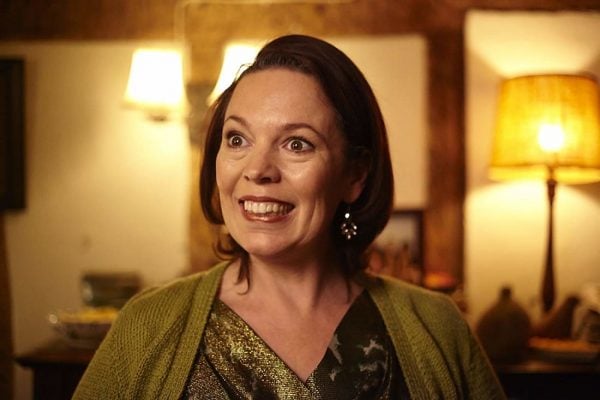
It starts off with a man failing at hanging himself from a fruit tree in a bleak-looking garden. Something this grotesque isn’t usually the stuff of sitcoms. This is unsurprising because Will Sharpe’s Flowers, produced for the British Channel 4, is not your usual sitcom. With a unique visual style, an extraordinary cast, and a dark, satirical script, it carves out a genre of its own. The always amazing Olivia Colman plays Deborah Flowers, the eccentric family’s matriarch, and a music teacher. The man trying to hang himself is her depressed and unfaithful husband Maurice (Julian Barratt), who is a children’s book author. They live in a ramshackle house with a Japanese butler, who barely speaks English, and their dysfunctional adult twins. Amidst all this glorious mess, Flowers is ultimately about mental illness and depression and is apt in pairing this disturbing reality with hilarity. Obviously, it is very dark. A bit too dark for comedy, and too mad for drama: truly original stuff.
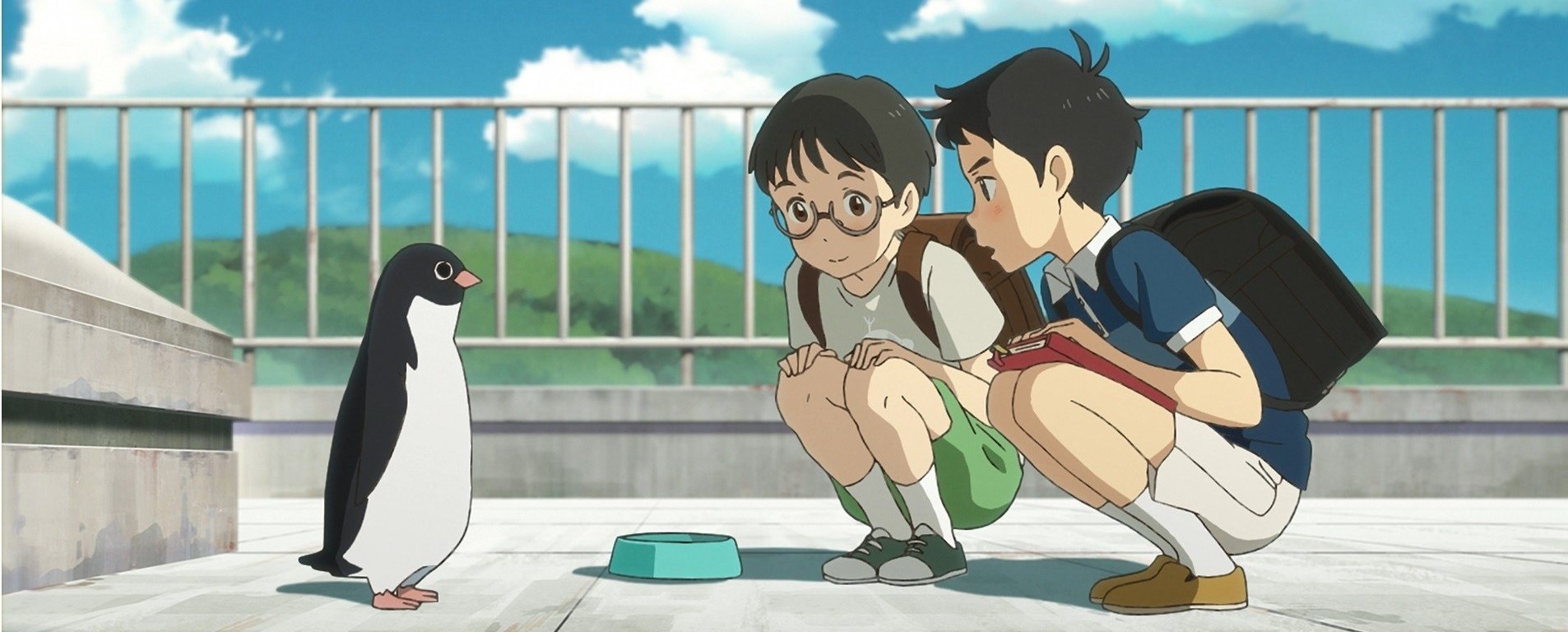
Surreal, strange, yet wondrous, Penguin Highway never takes a straightforward approach to its story. Penguins pop up out of nowhere, leading the nerdy and precocious Aoyama to study them via empirical observation and logical deduction. These studies don’t end up with a feasible explanation– in fact, by the final act, the film abandons all laws of physics. But the journey to that act feels intuitively right. This journey feels like an indescribable formative experience. Aoyama may be obsessed with growing up and committing to the reasonable adult mindset, but he is still a child. From fending off bullies to forming connections with others, his childhood imagination served him better than science could. The film reveres this discovery as well as it should.
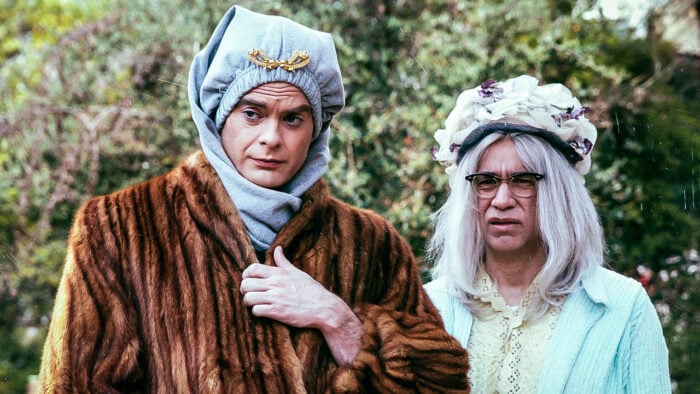
Fans of sketch comedy, documentaries, and the always-hilarious duo of Bill Hader and Fred Armisen are in for a treat with Documentary Now!, a delightful miniseries that both satirizes and pays tribute to the non-fiction format. Each episode parodies a particular documentary and tone, bringing the comedians and their ever-revolving roster of guest stars to different eras, regions, costumes, accents, and more.
With SNL veterans Hader and Armisen at the helm, this mockumentary is sure to amuse and impress even the most stoic among us, if not for the show’s humor, then for its sharp attention to detail and endlessly creative references.
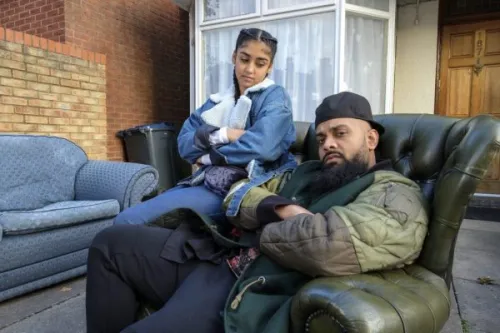
At first glance, those who enjoyed Hulu’s Ramy might be tempted to view this as the UK version of it. However, Man like Mobeen is a bit more street than Ramy and a lot more British. It’s also not so much about being a good Muslim. Mobeen (Guz Khan), Eight (Tez Ilyas), and Nate (Tolu Ogunmefun) are three mates from Birmingham. Two of them happen to be Muslim but it’s not a big deal. Except it is because of the way Western society sees them. Mobeen, the head of the group, takes care of his sister, Aks (Dúaa Karim), in the absence of his parents, trying to be a good guy, while also trying to escape his past as a drug dealer. In the first episode, a transaction to buy a laptop results in three SWAT teams closing in on them for no reason. (When Nate runs off, the police officer asks the others why he ran, and Mobeen says: “If I had to guess, I’d say it’s because he’s black.”) Much of Man like Mobeen is laugh-out-loud comedy, but there’s a healthy dose of wokeness to be found here, too. Teenage knife crime (in the second season), the rise of right-wing sentiment, and the police’s history of violence towards immigrants are effortlessly woven into gags. Very funny!
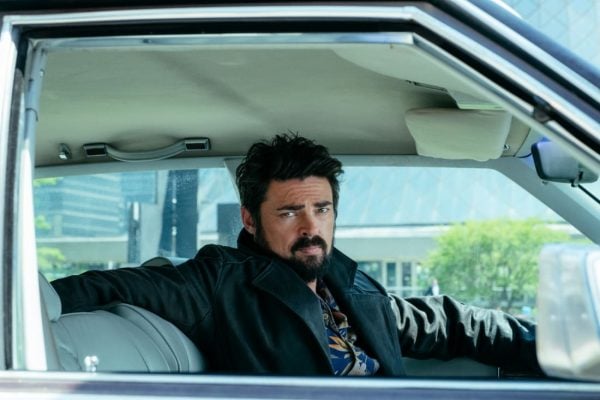
From the producers of Superbad and Pineapple Express, stoner filmmakers Seth Rogen and Evan Goldberg, comes a deft deconstruction of the ubiquitous superhero genre on Amazon Prime. Based on the comic book of the same name by Garth Ennis and Darick Robertson, it is set in a world where god-like superheroes, or Supes, are recognized as heroes but are increasingly self-absorbed, arrogant, and corrupt underneath their flying capes. The best of them are called The Seven, aggressively marketed and monetized by the Vought Corporation, complete with Instagram likes, energy drink advertisements, and TV appearances. It all starts to slowly deteriorate when the girlfriend of Hughie Campbell (Jack Quaid) gets obliterated by A-Train (Jessie Usher), a super-fast hero modelled on Flash, galvanizing The Boys, a crazy normal-human vigilante group led by Butcher (Karl Urban, pictured above), who are sick and tired of the Supes and their corruption. This show packs a multitude of wacky characters, including Frenchie, our favorite, a hilarious and romantic French bomb expert. Don’t forget to fasten your seatbelts because this is a fast-paced, mean-spirited bloodbath that is as wild as it is entertaining.
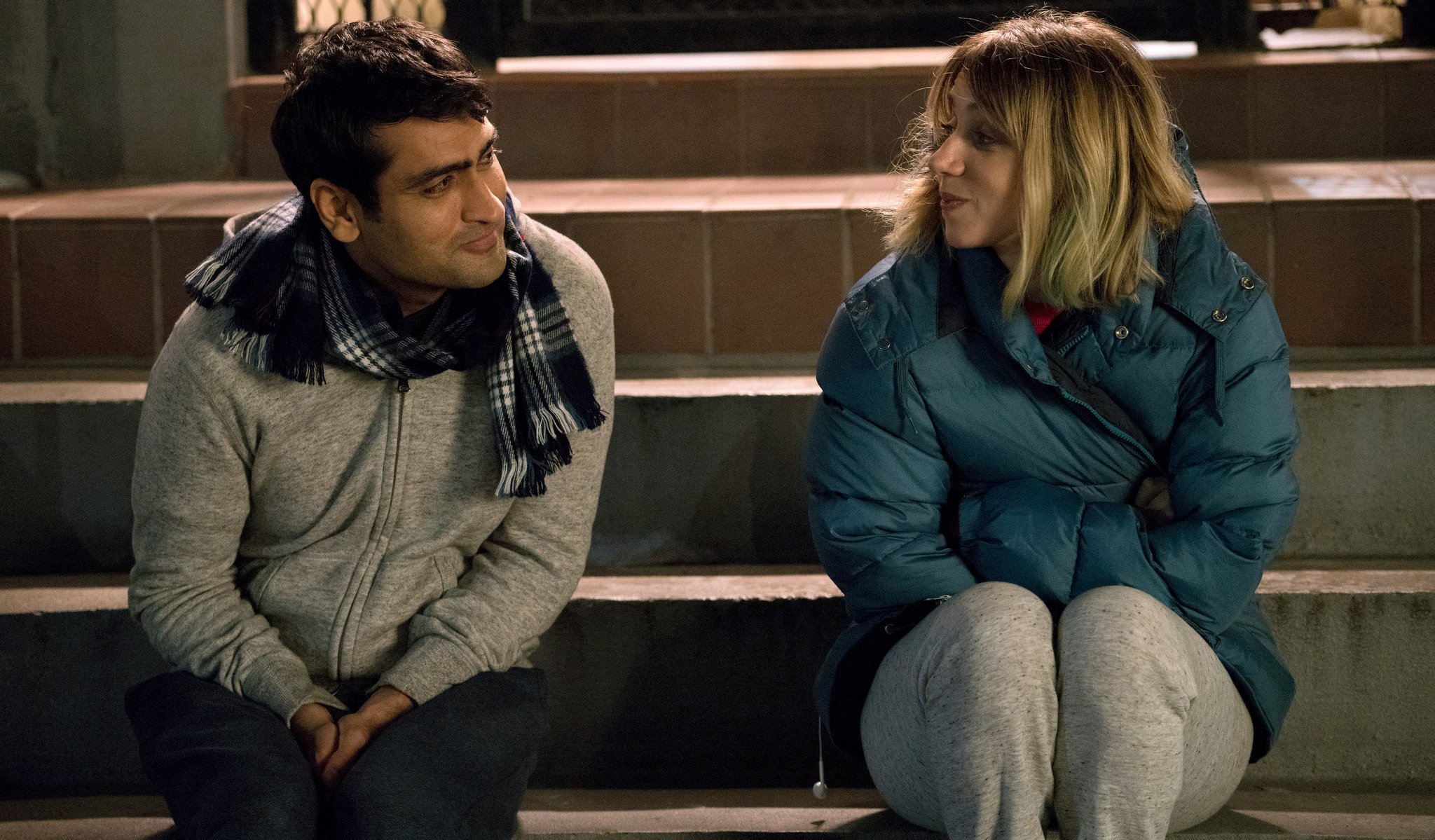
A revelation of a movie, both in filmmaking and commercial success. While little-known abroad, it has made more than $42 million in US Box Office revenue out of a tiny $5 million budget. Kumail Nanjiani, stand-up comedian and star of the show Silicon Valley, tells his own story of romance with his now-wife Emily V. Gordon (who co-wrote the movie). Because it is based on a true story, and because it is the product of the love of both its writers and stars, this movie is incredibly heartfelt. It is also timely, addressing heavy themes such as identity, immigration, and family relationships. Not to mention it is absolutely hilarious. And it’s produced by Judd Apatow. Trust me and go watch it.
The initial charm of Hacks is in watching sparks fly between its sharp-tongued leads. Neither the elderly Deborah nor the young Ava holds back the digs, both of them cutting to the core of their insecurities. Part of what makes their tension so watchable is that they’re stand-ins for different generations. Deborah represents the all-hustle culture of the boomers, while Ava represents burned-out millennials. Lock them in a scene together and you get endless (and endlessly funny) observations about the modern world.
Eventually, however, their relationship deepens into something more meaningful than that. As Deb and Ava bond over their shared hopes and flaws, the show transforms into a clever and tender two-hander about their prickly but profound relationship. They’re two sides of the same coin, and even though no one can bring them down like the other can, the opposite is also true: no one else can lift them and push them to new heights like the other can.
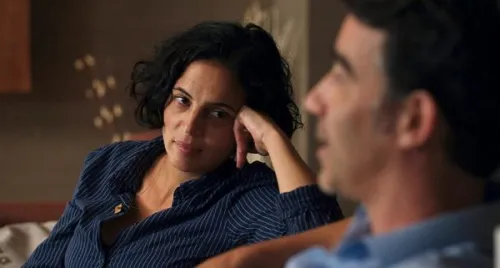
The simple premise of this series, about real couples going to therapy, shouldn’t feel as revolutionary as it does. And yet, Couples Therapy feels like radical reality-TV, a focused and coherent undertaking.
Couples of different histories, ages, races, and sexual orientations walk into Dr. Orna Guralnik’s New York office. Their problems are as diverse and unique as they are, but there is also a painful universality to them. Couples Therapy becomes a portrayal of human partnership period, a TV show in which to see oneself at times and to learn from the different webs couples get tangled in over time.
Never before has reality TV been the best vehicle to portray something so serious.
From the producers of Superbad and Pineapple Express, stoner filmmakers Seth Rogen and Evan Goldberg, comes a deft deconstruction of the ubiquitous superhero genre on Amazon Prime. Based on the comic book of the same name by Garth Ennis and Darick Robertson, it is set in a world where god-like superheroes, or Supes, are recognized as heroes but are increasingly self-absorbed, arrogant, and corrupt underneath their flying capes. The best of them are called The Seven, aggressively marketed and monetized by the Vought Corporation, complete with Instagram likes, energy drink advertisements, and TV appearances. It all starts to slowly deteriorate when the girlfriend of Hughie Campbell (Jack Quaid) gets obliterated by A-Train (Jessie Usher), a super-fast hero modelled on Flash, galvanizing The Boys, a crazy normal-human vigilante group led by Butcher (Karl Urban, pictured above), who are sick and tired of the Supes and their corruption. This show packs a multitude of wacky characters, including Frenchie, our favorite, a hilarious and romantic French bomb expert. Don’t forget to fasten your seatbelts because this is a fast-paced, mean-spirited bloodbath that is as wild as it is entertaining.

Even without doing the important and long overdue work of uplifting Native American voices, Dark Winds manages to be an intriguing mystery, layered with complex performances and bolstered by the majestic expanse of the American Southwest (in the ‘70s no less!). Finally released from the shackles of supporting roles, Zahn McClarnon shines here; he’s in top form as the gritty but softhearted police officer who protects his tribe from encroaching federal forces. The mysteries that propel the show are compelling too; they have the same beats as any you’d expect from a crime thriller, but they’re seeped deep into Native American mysticism, making them intriguing and wholly unique.
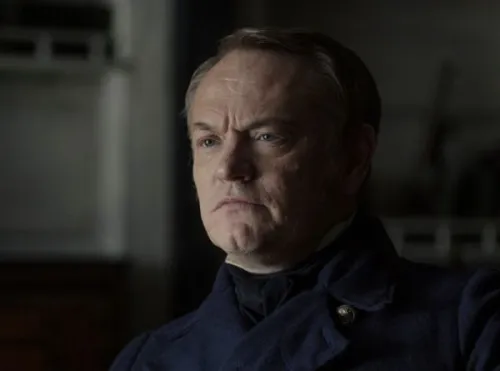
In 1845, two huge and aptly named ships, the HMS Terror and Erebus, were sent on an expedition to the Arctic to find the Northwest Passage, a century-old dream of connecting Asia and Europe through North America. Now, even when all went well, an Arctic expedition in the mid-19th-century was a pretty horrific affair by today’s standards, and, as you can imagine, all does not go well. In addition to the bitter cold, the cannibalism, and the malnutrition, The Terror throws in some hideous creatures from Inuit folk tales into the mix that hunt and maim the poor sailors. At its core, however, this is not fantasy horror. Co-produced by Ridley Scott and starring Jared Harris from Chernobyl, The Terror is unrelenting in the depiction of the hopelessness on board the two ships. Great timing and a pervasive sense of dread make this a must-watch for every fan of period-piece horror movies.
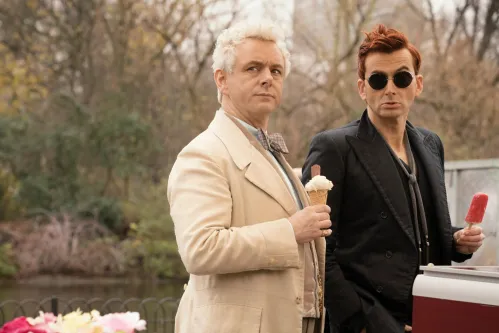
Based on the book of the same name by celebrated author Neil Gaiman, Good Omens is a fantastic story about an angel and a demon teaming up to save the world. Michael Sheen and David Tennant play the deities who go against their superiors’ apocalyptic orders after having grown too fond of both the fun and follies brought about by the human race. This unexpected team-up, along with the creative use of Christian concepts and the comedic chops of all the actors onboard, are what make Good Omens a subversive, inventive, and thoroughly entertaining series.
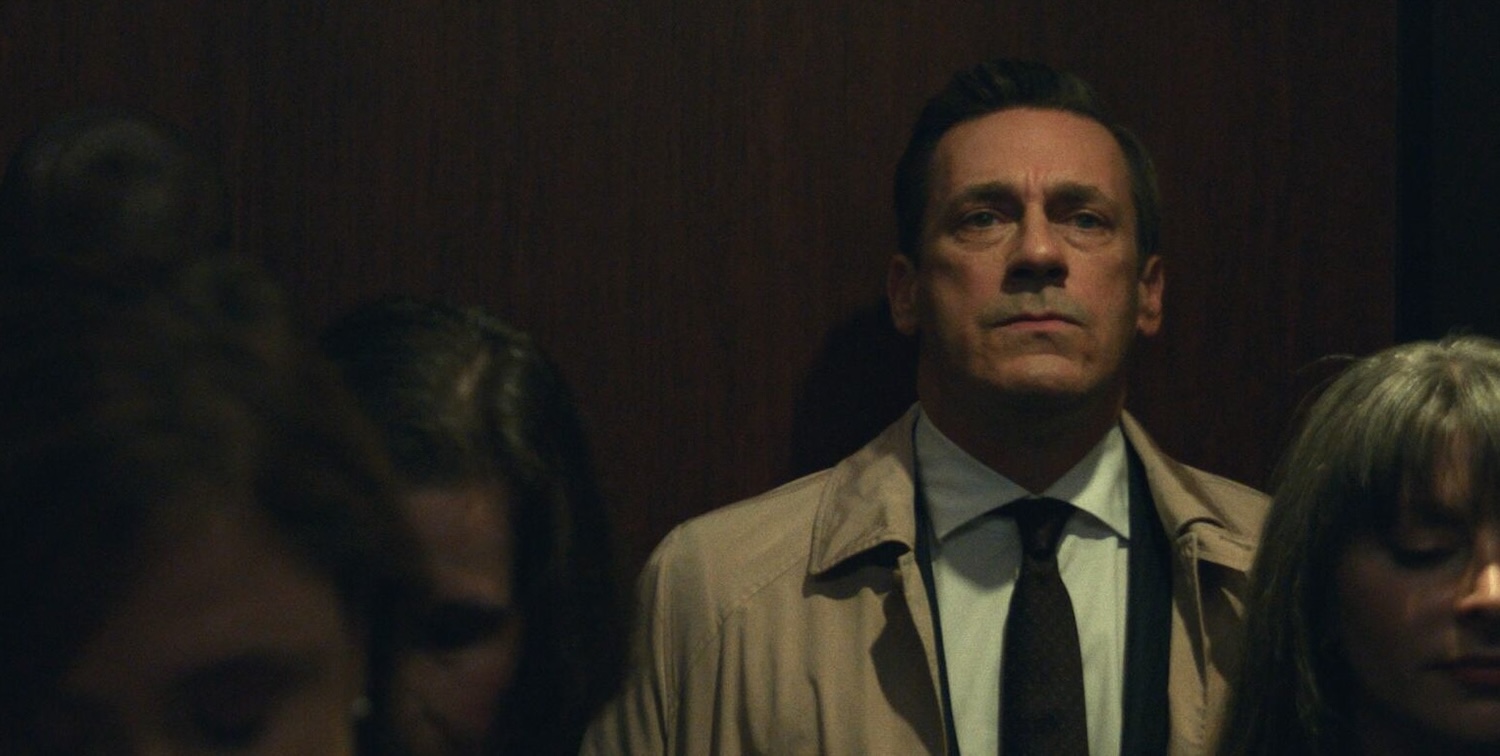
It’s always fascinating to see how the ultra-rich live, but it’s even more fun to see them ruin themselves with greed. That’s what happens in Your Friends and Neighbors when Coop (Hamm) loses his main source of income and decides to rob his wealthy friends and neighbors. He starts slow as to remain inconspicuous: luxury watches they barely wear, paintings they pass by every day. Disposable for them, but worth a living to the increasingly broke Coop. But soon, petty thievery gives way to something more dangerous and compromising, endangering not just Coop’s status but his life. It’s a smart, entertaining show, given much heft by Jon Hamm. It’s nice to see him donning a similar character to the iconic one he gave life to in Mad Men. Here, again, he injects pathos in what would otherwise seem like a typical rich sad sack. Hamm turns Coop into someone complicated, sympathetic even, as he hides his emotional implosion behind a sleek suit. Though its class commentary is not as sharp as it should be, Your Friends and Neighbors is nonetheless a worthwhile watch—if only to see Hamm back in his element.
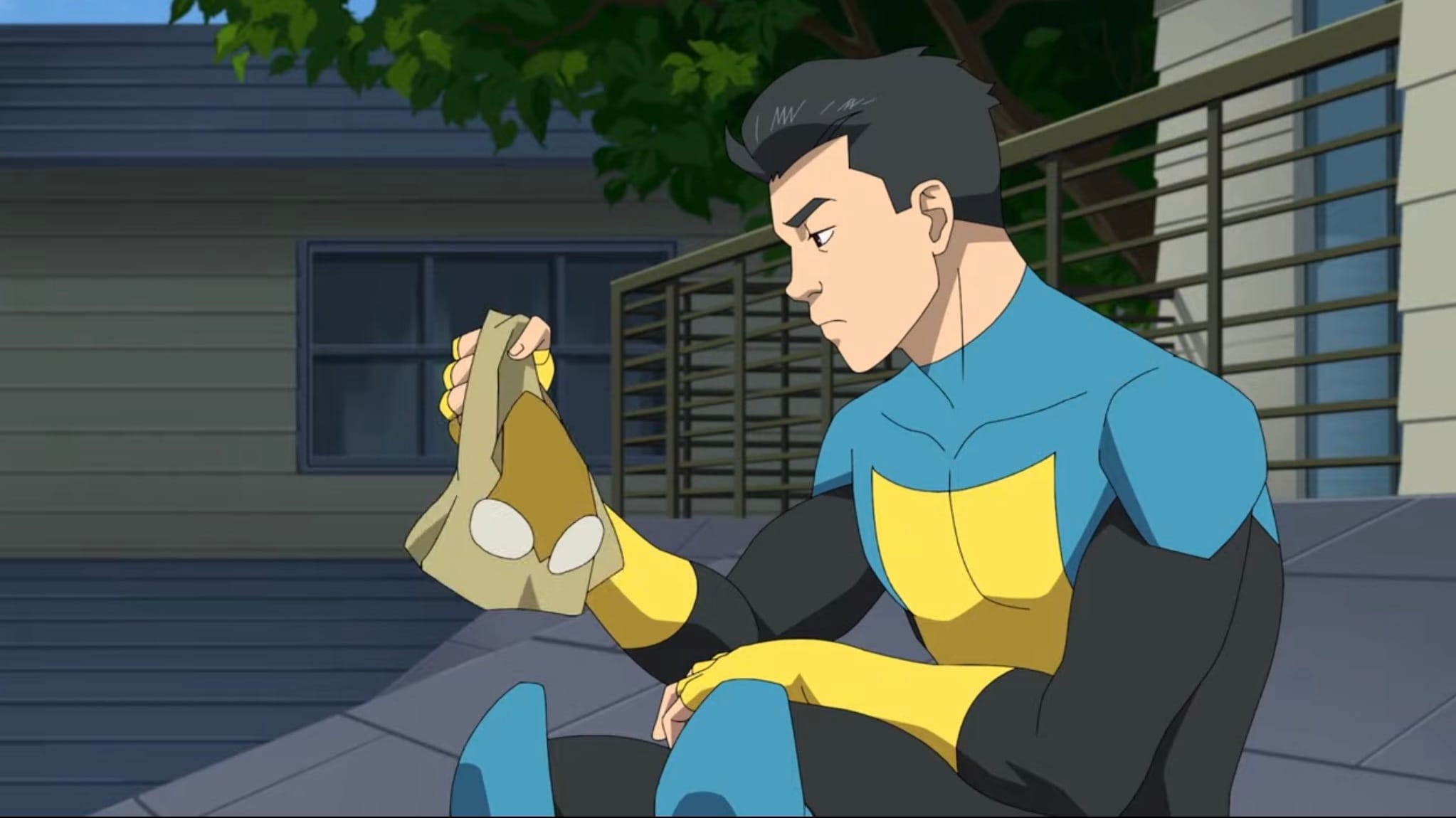
It sounds bizarre to say that out of all the superhero media out there, it’s a cartoon that seems to have the most realistic storylines. But it’s also true. Thanks to its serial format and animation style, Invincible has more freedom to explore universal feelings like guilt and pressure, but also problems that are specific to this world, such as the moral ramifications of killing for good, for instance, or whether there is such a thing at all. Superheroes also question how human they are and what they deserve. It goes in deep, a bit like The Boys but with less irony and more humanity. Also, it’s just a very refreshing world to enter, watch, and explore. There are overlaps in heroes to be sure, but Invincible gives them their own spin, plus the 2D animation gives it a nostalgic charm.
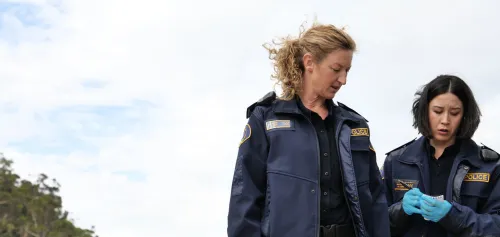
Deadloch begins like any other self-serious police procedural. A body washes up on shore, sparking widespread fear and a twisty mystery that eventually and intriguingly reveals layers of itself. Local officer Dulcie Collins (Kate Box) takes to it like it’s the most important case in the world, and for some reason, everything we see onscreen is tinged in gray, as if the town is set under a perpetual stormcloud.
Then a joke finds its way into the dialogue, followed by another, and another. The show, it turns out, is as much of a sitcom as it is a mystery, with Dulcie acting as the straight man grounding us through the kookiness of it all. The rest of the characters are actual characters, wonderfully zany and larger-than-life as they bumble around and commit small-town gaffes. A hearse screeches to a halt when a random passerby yells, “You’re going the wrong way!”, and a millennial policewoman exclaims, “I can’t believe I’m on a stakeout! It’s so aggressively police-y.”
It’s quite the risk to be both funny and serious, to dole out this many jokes while solving multiple murders, but Deadloch pulls it off with so much charm to spare. It’s a refreshing take on the buddy-cop series, ambitious and modern and unafraid to laugh at itself every once in a while.

Structured more like a network procedural than a gritty streaming miniseries, the TV adaptation of The Lincoln Lawyer feels easy, even nostalgic, to watch. The formula is simple: in every episode, Mickey handles a new case (most of them wrongful convictions against people on the fringe), all while dealing with a larger, more complicated case and his inner demons. There to help is his trusty driver Izzy (Jazz Raycole), who gets him everywhere in his Lincoln Town Car, and his two ex-wives, with whom he shares a surprisingly healthy relationship. All these elements come together to make an entertaining legal drama. It’s not the most compelling thing out there, but it’s consistently enjoyable and endlessly likable.
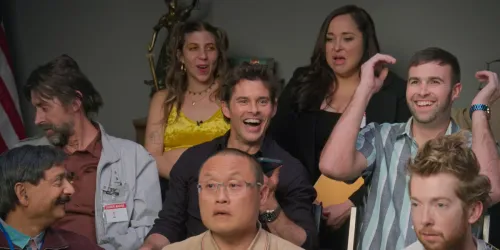
Between HBO’s The Rehearsal and Peacock’s Paul T. Goldman, it would seem that genre-bending reality-based shows are having a moment. Among the more lighthearted and enjoyable ones out there is Jury Duty, which follows a trial involving improvisational actors, save for one: Ronald Gladden, a friendly everyman who has yet to realize that everything around him, from the inane case to his oddball co-jurors, is fake. Every now and then though, thanks to the sheer ridiculousness of it all, Ronald looks like he’s at the cusp of figuring it out, but the guy (bless his soul) is just too damn nice to get there.
And that’s what makes Jury Duty so watchable. It finds a heart in the ever-hopeful Ronald who, as the appointed foreman, goes out of his way to help his fellow jurors. Whether that means reading a script with James Marsden (who plays a hilariously narcissistic version of himself here), building up nerdy genius Todd’s confidence, or even just encouraging ol’ Barbara to stay awake, he’s there every step of the way. More than just laugh at Ronald’s ignorance, we’re also asked to look at his capacity for caring for people, which makes Jury Duty not just funny and experimental, but unexpectedly endearing as well. If you’re looking for a show that’s both easy and eccentric, familiar and new, then you should put this on.

Young Sherlock isn’t quite accurate to the Andrew Lane book series or the original works from Arthur Conan Doyle. Here, the detective in question is college aged, rather than 14 or 60, a choice made surely to introduce a new ensemble of fresh-faced talent. And unlike its source material, there’s a larger mystery behind each episode’s case. We would say that these changes make the story better fit for television– Holmes at his unpolished youth has more freedom to mess up, so it certainly allows the cast and crew to have much more fun. And while some decisions feel distinctly out of time, Young Sherlock would be enjoyable enough for this generation.
What was popular back then isn’t popular today for a reason. In film, that’s because the technology’s improved, the audience gets too used to the trend, and what once worked fades into the background. Once in a while, however, someone brings back nostalgia for a certain style. This happened when filmmaker Michel Hazanavicius created The Artist. Set in the transition between silent film and talkies, The Artist cleverly takes on the silent film form, but makes it suitable for today’s moviegoers. The ears are never left empty, thanks to the bouts of score and few foley that focuses attention. The camera shoots mostly in black and white, but shoots in various styles across the Golden Age. Even the story itself is classic melodrama– Sunset Boulevards and A Star is Born comes to mind– but it’s treated with the genre mixing the 2010s started to play with, the postmodern revue that recontextualizes the past. The Artist brings back what cinema has long discarded, and remembers what made these styles classic.
Sandra Oh earned her breakout in this warm, candid Canadian indie, which — not uncoincidentally — shares its name with that of a decorative Chinese symbol associated with marriage. The movie’s title is also a reference to 22-year-old Jade Li’s (Oh) struggle to pursue her own ambitions and meet the clashing romantic and professional expectations her disapproving first-generation immigrant parents have for her. As she puts it, “Double happiness is when you make yourself happy and everyone else happy, too.”
An aspiring actress who dreams of playing Blanche DuBois, Jade is instead asked by unimaginative casting directors to adopt a pronounced Chinese accent for tiny bit parts. In essence, she’s typecast everywhere: on set, and at home, where she struggles to play the good daughter who’ll give up acting for a more conventional job and will only marry a man her parents approve of. It’s a jarring existence, but Double Happiness never feels claustrophobic because it gives Jade the freedom to finally be herself via witty, confessional monologues and fantasy sequences. There’s undoubtedly bittersweetness to this portrait of a young woman fighting to be herself on every front, but that it’s nevertheless such an irresistibly charming, never-flippant watch is a testament to first-time director Mina Shum and Oh’s already mature talents.
What’s great about this highly inventive film is that it doesn’t look like it was shot through three iPhone 5s. Instead of using shaky cameras and static shots, Tangerine glides us through saturated, orange-toned scenes that evoke the Los Angeles sunset. Launching director Sean Baker into prominence, Tangerine is an innovative film that, at heart, is a nuanced comedy about the trans sex worker community. Newcomers Kitana Kiki Rodriguez and Mya Taylor run the show, and their performances create a vivid, electric drive that powers the whole movie. But it’s the quieter moments, the moments after betrayal, the moments of recovery, that make this movie truly special.
It starts off with a man failing at hanging himself from a fruit tree in a bleak-looking garden. Something this grotesque isn’t usually the stuff of sitcoms. This is unsurprising because Will Sharpe’s Flowers, produced for the British Channel 4, is not your usual sitcom. With a unique visual style, an extraordinary cast, and a dark, satirical script, it carves out a genre of its own. The always amazing Olivia Colman plays Deborah Flowers, the eccentric family’s matriarch, and a music teacher. The man trying to hang himself is her depressed and unfaithful husband Maurice (Julian Barratt), who is a children’s book author. They live in a ramshackle house with a Japanese butler, who barely speaks English, and their dysfunctional adult twins. Amidst all this glorious mess, Flowers is ultimately about mental illness and depression and is apt in pairing this disturbing reality with hilarity. Obviously, it is very dark. A bit too dark for comedy, and too mad for drama: truly original stuff.
Fans of sketch comedy, documentaries, and the always-hilarious duo of Bill Hader and Fred Armisen are in for a treat with Documentary Now!, a delightful miniseries that both satirizes and pays tribute to the non-fiction format. Each episode parodies a particular documentary and tone, bringing the comedians and their ever-revolving roster of guest stars to different eras, regions, costumes, accents, and more.
With SNL veterans Hader and Armisen at the helm, this mockumentary is sure to amuse and impress even the most stoic among us, if not for the show’s humor, then for its sharp attention to detail and endlessly creative references.
At first glance, those who enjoyed Hulu’s Ramy might be tempted to view this as the UK version of it. However, Man like Mobeen is a bit more street than Ramy and a lot more British. It’s also not so much about being a good Muslim. Mobeen (Guz Khan), Eight (Tez Ilyas), and Nate (Tolu Ogunmefun) are three mates from Birmingham. Two of them happen to be Muslim but it’s not a big deal. Except it is because of the way Western society sees them. Mobeen, the head of the group, takes care of his sister, Aks (Dúaa Karim), in the absence of his parents, trying to be a good guy, while also trying to escape his past as a drug dealer. In the first episode, a transaction to buy a laptop results in three SWAT teams closing in on them for no reason. (When Nate runs off, the police officer asks the others why he ran, and Mobeen says: “If I had to guess, I’d say it’s because he’s black.”) Much of Man like Mobeen is laugh-out-loud comedy, but there’s a healthy dose of wokeness to be found here, too. Teenage knife crime (in the second season), the rise of right-wing sentiment, and the police’s history of violence towards immigrants are effortlessly woven into gags. Very funny!
A revelation of a movie, both in filmmaking and commercial success. While little-known abroad, it has made more than $42 million in US Box Office revenue out of a tiny $5 million budget. Kumail Nanjiani, stand-up comedian and star of the show Silicon Valley, tells his own story of romance with his now-wife Emily V. Gordon (who co-wrote the movie). Because it is based on a true story, and because it is the product of the love of both its writers and stars, this movie is incredibly heartfelt. It is also timely, addressing heavy themes such as identity, immigration, and family relationships. Not to mention it is absolutely hilarious. And it’s produced by Judd Apatow. Trust me and go watch it.
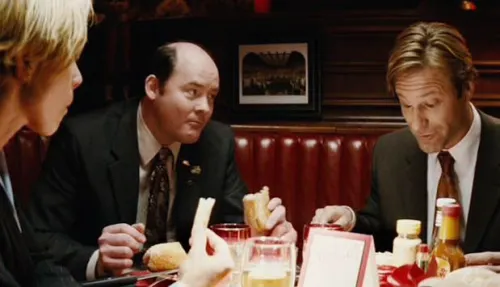
As black a comedy as they come. Nick Naylor (superbly portrayed by Aaron Eckhart) is the chief spokesperson for tobacco and shows the world why smoking is as key to protect as any other liberal value. This movie is funny, smart, thoughtful and raises some good questions about the ego, the morale and what we leave behind, from unexpected sides.
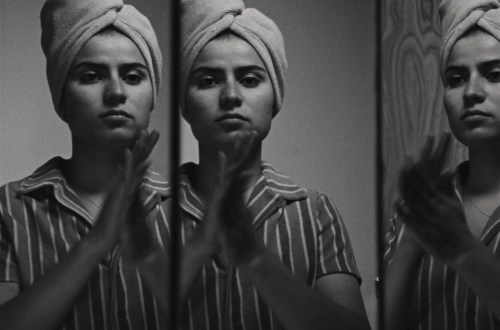
Aptly for a film partly set in a fortune cookie factory, Fremont deals with luck — specifically, the other side of good luck: survivor’s guilt. Donya (played by real-life Afghan refugee Anaita Wali Zada) is a former translator for the US Army who fled her home city of Kabul on an emergency evacuation flight when the Taliban took over in 2021. Now living a safe, if drab, existence in the titular Californian town, insomniac Donya struggles to embrace her freedom, tormented by the knowledge that she lost some of her old colleagues to reprisal attacks and that her loved ones are still living under repressive rule in Afghanistan.
As Donya shuttles between her little apartment in Fremont, her job writing cryptic one-liners for a fortune cookie factory in San Francisco, and appointments with her eccentric psychiatrist (Gregg Turkington), Fremont balances a moving study of her melancholy with deadpan humor. Despite its black-and-white cinematography and tight Academy ratio, this is no austere drama, but an endlessly warm and understated portrait of someone rediscovering themselves and all of life’s unexpected moments of connection, like chance romantic encounters and sudden tears at karaoke.
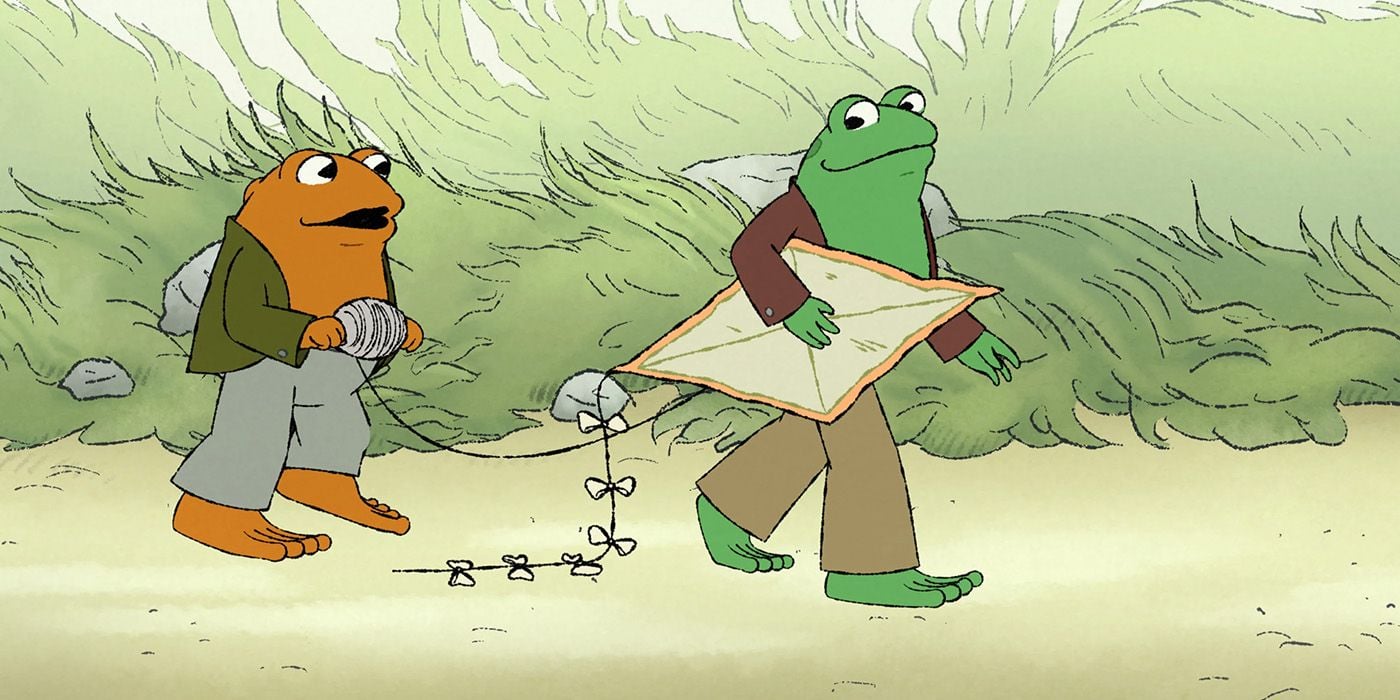
For those familiar with the original book series, you’ll already know what kind of show to expect. The Apple+ cartoon is centered on the two titular amphibians going through universal adventures that makes or breaks your day. From finding the willpower to resist eating delicious cookies, to hoping a friend would contact you when you’re lonely, each episode keeps a gentle sort of humor, poking lighthearted fun at the differences between the emotional Toad and more sensible Frog. With each episode’s twenty minute runtime, and two adventures per episode, Frog and Toad is a sweet, nostalgic series that’s easy to breeze through for millennial parents and their kids.
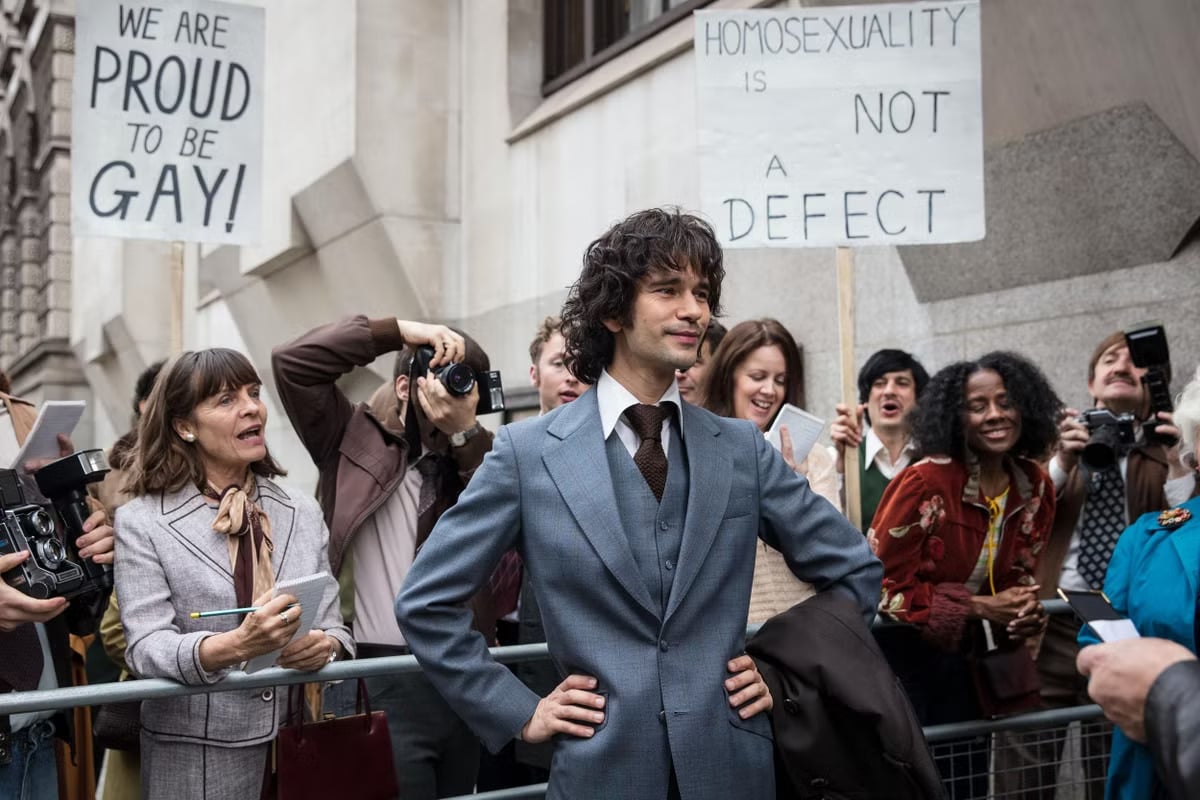
Led by fine-tuned performances from Ben Whishaw and Hugh Grant at the top of their game, this three-episode series dives headfirst into the sex scandal between Norman Scott and former Liberal Party leader Jeremy Thorpe with devastating wit. Neither character is treated as morally superior over the other, as both become consumed by the media frenzy surrounding the English justice system’s thirst for controversy. And Russell T Davies’ writing and Stephen Frears’ direction allow the show’s tone to pivot from brilliantly timed notes of humor to profoundly sad stretches of tragedy and drama. Given its short length, A Very English Scandal seems to be designed for binge-watching, but it should still reward patient and attentive viewing.
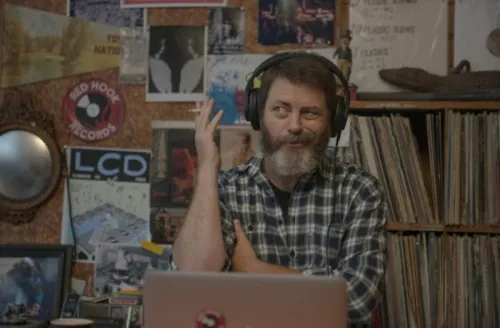
A sweet feel-good movie starring Nick Offerman as a dad who has to deal with his only daughter leaving for college and his record store struggling. The daughter is played by Kiersey Clemons who you might recognize from the show Easy. And Ted Danson has a great role too. This is a relatable and heartwarming movie, one of the best the so-called “indie” genre has known in a long time.
Director Thomas Vinterberg (The Hunt) reunites with Mads Mikkelsen to tell the story of four teachers going through a mid-life crisis. They’re not sad, exactly—they have homes and jobs and are good friends with each other—but they’re not happy either. Unlike the ebullient youth they teach, they seem to have lost their lust for life, and it’s silently eating away at them, rendering them glassy-eyed and mechanic in their everyday lives.
Enter an experiment: what if, as one scholar suggests, humans were meant to fulfill a certain alcohol concentration in order to live as fully and present as possible? The teachers use themselves as the subjects and the tide slowly starts to turn to mixed effects. Are they actually getting better or worse?
With an always-satisfying performance by Mikkelsen and an instant classic of an ender, it’s no surprise Another Round took home the award for Best Foreign Film in the 2020 Academy Awards.
It starts off with a man failing at hanging himself from a fruit tree in a bleak-looking garden. Something this grotesque isn’t usually the stuff of sitcoms. This is unsurprising because Will Sharpe’s Flowers, produced for the British Channel 4, is not your usual sitcom. With a unique visual style, an extraordinary cast, and a dark, satirical script, it carves out a genre of its own. The always amazing Olivia Colman plays Deborah Flowers, the eccentric family’s matriarch, and a music teacher. The man trying to hang himself is her depressed and unfaithful husband Maurice (Julian Barratt), who is a children’s book author. They live in a ramshackle house with a Japanese butler, who barely speaks English, and their dysfunctional adult twins. Amidst all this glorious mess, Flowers is ultimately about mental illness and depression and is apt in pairing this disturbing reality with hilarity. Obviously, it is very dark. A bit too dark for comedy, and too mad for drama: truly original stuff.
From the producers of Superbad and Pineapple Express, stoner filmmakers Seth Rogen and Evan Goldberg, comes a deft deconstruction of the ubiquitous superhero genre on Amazon Prime. Based on the comic book of the same name by Garth Ennis and Darick Robertson, it is set in a world where god-like superheroes, or Supes, are recognized as heroes but are increasingly self-absorbed, arrogant, and corrupt underneath their flying capes. The best of them are called The Seven, aggressively marketed and monetized by the Vought Corporation, complete with Instagram likes, energy drink advertisements, and TV appearances. It all starts to slowly deteriorate when the girlfriend of Hughie Campbell (Jack Quaid) gets obliterated by A-Train (Jessie Usher), a super-fast hero modelled on Flash, galvanizing The Boys, a crazy normal-human vigilante group led by Butcher (Karl Urban, pictured above), who are sick and tired of the Supes and their corruption. This show packs a multitude of wacky characters, including Frenchie, our favorite, a hilarious and romantic French bomb expert. Don’t forget to fasten your seatbelts because this is a fast-paced, mean-spirited bloodbath that is as wild as it is entertaining.
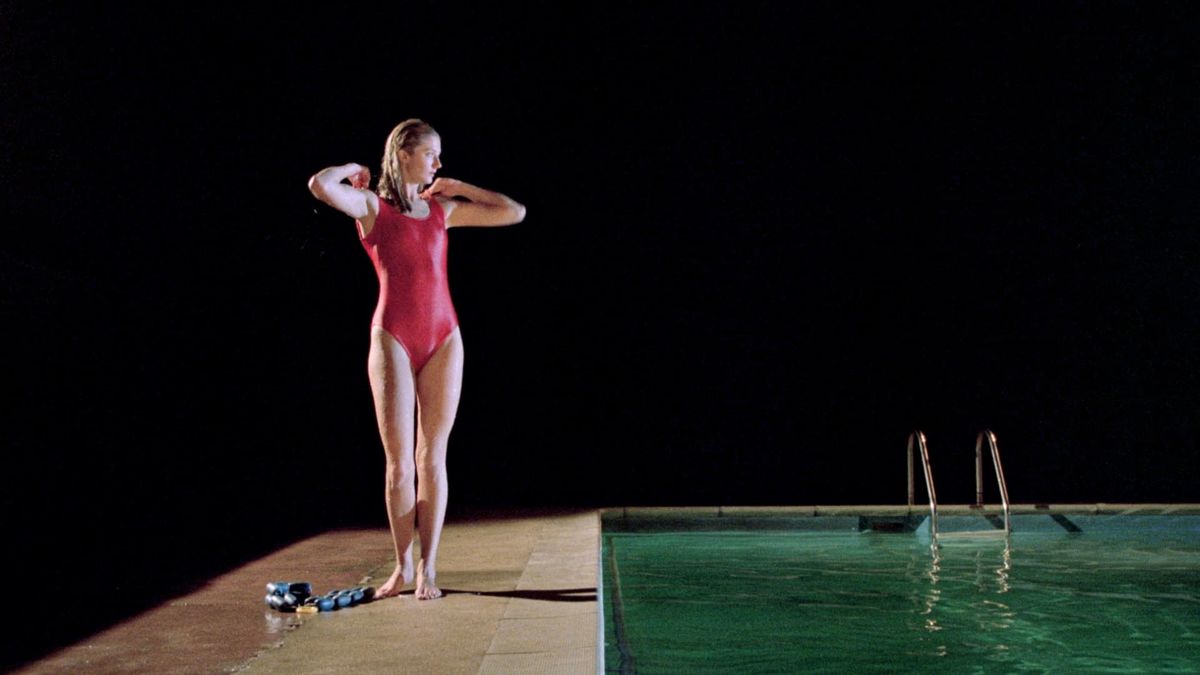
Murdering your spouse is bad, so it’s slightly bizarre how Drowning by Numbers has an unbothered, even amused, attitude towards its murders. Moments seem randomly placed, like the first scene of a girl jumping rope while listing the stars by name, and the film can be hard to follow, even if the production design and cinematography keep you drawn in. But as the film progresses, and Madgett’s son Smut enumerates the fictional games as if he was a historian of sorts, writer-director Peter Greenaway meticulously crafts a quirky, twisty crime comedy, where, like children’s games and the men in their lives, the murdering wives do what they do because they can get away with it. Drowning by Numbers cleverly plays with the way we treat folklore, structure, and rules, even down to the very medium Greenaway works with.

The Square is a peculiar movie about a respected contemporary art museum curator as he goes through a few very specific events. He loses his wallet, his children fight, the art he oversees is does not make sense to an interviewer… Each one of these events would usually require a precise response but all they do is bring out his insecurities and his illusions about life. These reactions lead him to very unusual situations. A thought-provoking and incredibly intelligent film that’s just a treat to watch. If you liked Force Majeure by the same director, The Square is even better!
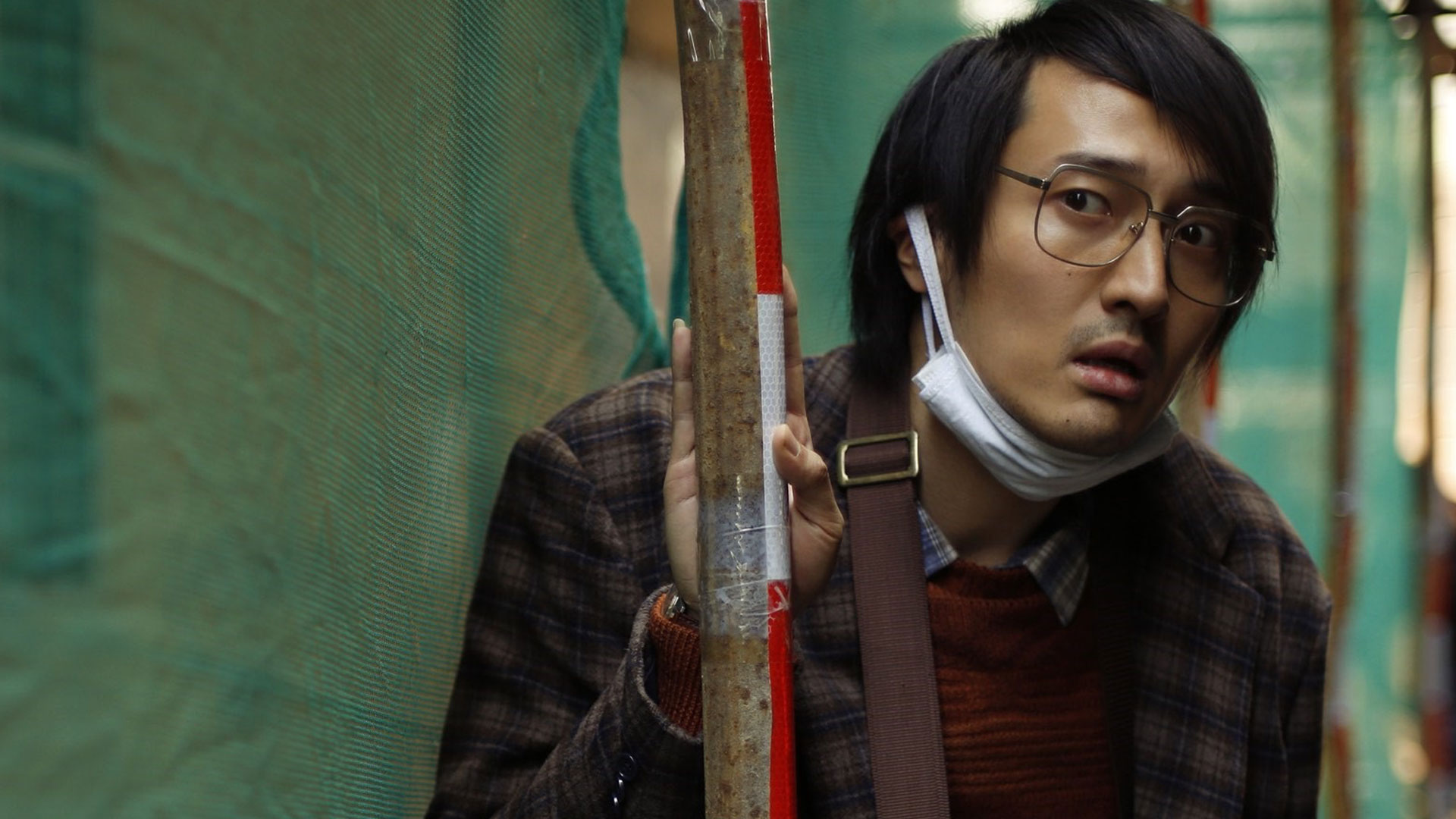
Robin Hood might be a centuries old folk hero, but his reincarnations seem to pop up in real life, including the true story behind Dying to Survive. Alternatively translated as I’m Not A Medicine God, the modern day Chinese iteration is initially less concerned over the common good and more concerned with money. It makes for a much more humorous take, as the ordinary peddler bribes, smuggles, and asserts his desire for profit, but it also sets up the real desperation created by a medical drug industry that hopes to incentivize research and protect consumers, but inadvertently blocks the very people that needs said drugs. Dying to Survive might focus more on the smuggler than critiquing this conundrum, but nonetheless it understands the real recurring tragedy that modern life can’t seem to completely solve.
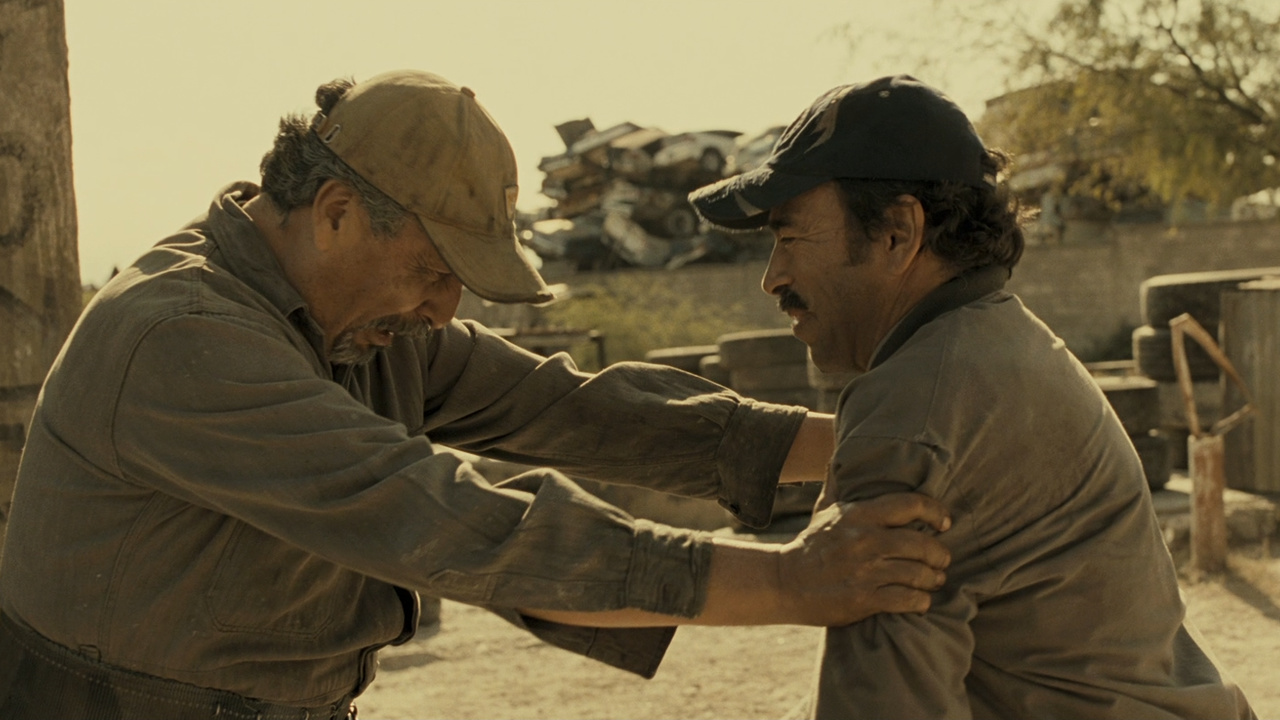
Better known through its original Spanish name El Infierno, Hell is an underrated crime thriller that satirizes Mexico at the time of the Drug War. It follows an immigrant, Benjamin Garcia, who subsequently dives into a life of crime, though it’s not as lucrative as he expects. What ensues ends up becoming a darkly humorous, Western-inspired take on the issue, flipping from funny to dramatic at a turn of a hat, and smartly pointing out the absurd in the violence that still grips the country today. While underseen abroad due to its NC-17 rating, it’s a fitting installment for director Luis Estrada’s penchant for bold political satires, garnering a cult following in the country itself.
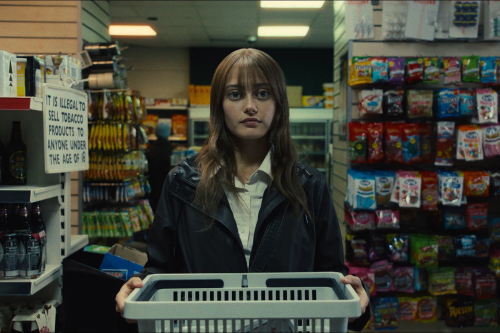
In Sweetpea, every element comes together to make an addictive watch. The premise is amusing on its own—a shy girl is pushed so far into the edge she sees murder as a viable option—but brought to life by stylish direction, witty lines, and an irresistibly endearing Ella Purnell, you get great TV. It’s not exactly novel (the underrated Hulu series Obituary has a similar premise) but it benefits from having more than a few twists hidden up its sleeve, not to mention a complex anti-hero in Purnell, who you know is wrong but feel bad for anyway. Who doesn’t want to root for the little girl standing up to her bully, the girl who stomps her foot down and demands her hard-earned respect at the workplace? Of course, it’s never that simple, and it’s that conflicting feeling of liking and abhorrent Purnell’s character that makes it an intriguing show.

Of the many violence-inflected black comedies that Pulp Fiction spawned, Grosse Pointe Blank ranks among the best. Though it’s patently inspired by Tarantino’s magnum opus — John Cusack plays a sardonic, amoral hitman, and the film features bursts of stylized violence and a retro soundtrack — it never feels derivative. The film finds its own identity as a quirky romcom when Cusack’s character, Martin Blank, returns to his hometown for a 10-year high-school reunion on the advice of his terrified therapist (Alan Arkin).
Martin is experiencing professional disillusionment as part of the quarter-life crisis that often takes hold when one realizes it’s been a whole decade since high school. His profession puts a darkly comic spin on that convention, but the film doesn’t treat that element entirely flippantly. Unlike Martin — and so many of the film’s Pulp Fiction-inspired brethren — Grosse Pointe Blank isn’t nihilistic, but quite sincerely romantic. Its hybrid nature and surprising heart come to the fore in Martin’s renewed relationship with the girlfriend he jilted at prom: Debi (Minnie Driver), now a ska-loving radio DJ. Cusack and Driver have sparkling chemistry, which makes the sincerity with which their characters grapple with the possibility of a second chance at happiness all the more absorbing to watch.

This is an inexplicably and philosophically dark comedy.
Its protagonist, Larry, is a lackluster professor at a dull university. Then his life starts to unravel: his wife decides to leave him for one of his more successful colleagues; his unemployed brother moves in to stay on his couch.
So Larry ventures on a quest for meaning and clarity within his Jewish community.
All Cohen Brothers fans will appreciate the movie’s aesthetics and comedic strength. The protagonist’s struggle will resonate with anyone who has had a religious upbringing: guilt is a big theme here.
I felt like I had to rewatch it to understand it. But I also enjoyed that weird sense of not understanding everything that’s going on. Much like life itself.
The film rightfully earned itself two nominations for the Oscars, including Best Picture.
Elisabeth Moss is in it. Calling The One I Love a romantic-comedy, looking it up, or trusting anyone else about it — especially my review, will ruin this film for you. Just watch it. If one’s penchant is typically opposed to titles with ‘love’ in them, then it’s for you. Just hit ‘play’, or ‘start’, or whatever. The initial wtf-ness that attracted me to it is compelled further by excellent acting. And Elisabeth Moss is in it.
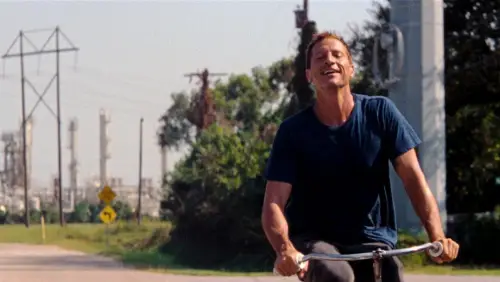
When Mikey Saber’s porn career takes a dip in California, he returns to an estranged wife in Texas, where he meets new and old friends alike and attempts to rebuild his life through a couple of odd jobs. Though Mikey eventually earns his keep, his vanity and eagerness to succeed at all costs threaten to get the best of him.
All this happens against a vibrant backdrop of local sights, beautifully lit and framed by director Sean Baker (The Florida Project, Tangerine). Quaint, naturalistic, and ever-so-subtly political, Red Rocket is another great entry into Baker’s impressions of the vexed American Dream.
What was popular back then isn’t popular today for a reason. In film, that’s because the technology’s improved, the audience gets too used to the trend, and what once worked fades into the background. Once in a while, however, someone brings back nostalgia for a certain style. This happened when filmmaker Michel Hazanavicius created The Artist. Set in the transition between silent film and talkies, The Artist cleverly takes on the silent film form, but makes it suitable for today’s moviegoers. The ears are never left empty, thanks to the bouts of score and few foley that focuses attention. The camera shoots mostly in black and white, but shoots in various styles across the Golden Age. Even the story itself is classic melodrama– Sunset Boulevards and A Star is Born comes to mind– but it’s treated with the genre mixing the 2010s started to play with, the postmodern revue that recontextualizes the past. The Artist brings back what cinema has long discarded, and remembers what made these styles classic.
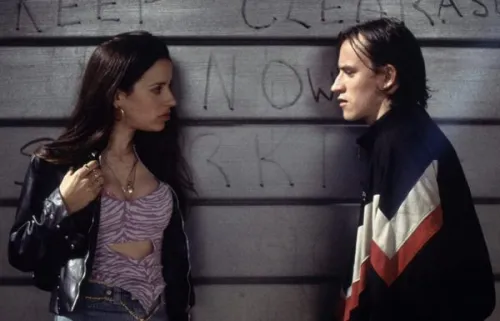
Grounded by Lesley Manville and Timothy Spall’s powerhouse performances, this gut-wrenching family drama from Mike Leigh is an acting juggernaut. Penny and Phil are a working-class couple whose marriage is rapidly deteriorating and pushed to the brink when their son, played by a young James Corden, is hospitalized.
While Manville and Spall are centered as the leads, Leigh draws a staggering amount of depth from Corden as well as a young Sally Hawkins who plays a neighbor. Despite being one of Leigh’s grimmest films, there is still a profound sweetness lingering at the edges as the story teeters between despondency and hope.
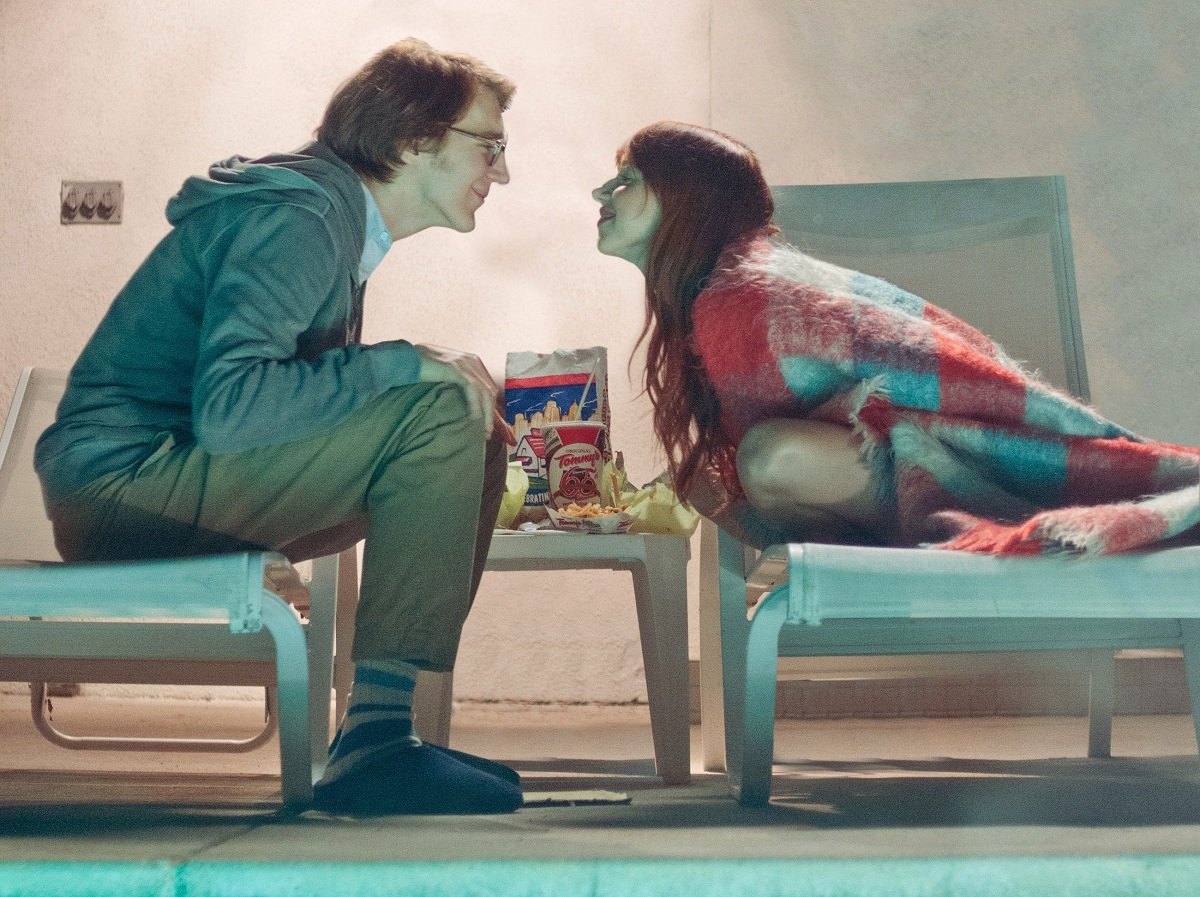
Calvin Weir-Fields (Paul Dano), a young and promising novelist imagines and writes about his idea of a perfect female companion. Somehow, his words manifest into reality – the beautiful and corky Ruby Sparks (Zoe Kazan). Soon, however, his magical love turns shallow as his creation begins to think for herself and wrestle against her creation. This romantic comedy has the right amount of wit and emotion with a deep message of loving people just the way they are.
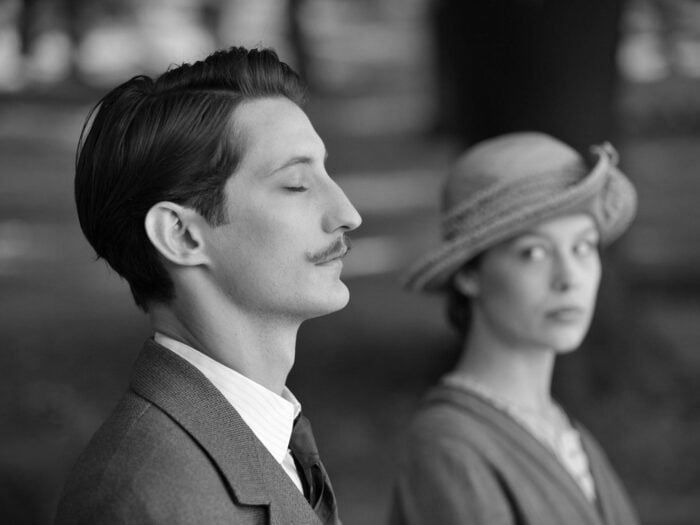
It’s always fun to watch something that makes you second guess each move, that shifts seamlessly from one thing to another. Frantz is that kind of film, and as the deceptively simple premise unfolds—a widow befriends her late husband’s friend—you’re never really sure if what you’re watching is a romance, a mystery, or a sly combination of both.
It helps that Frantz is also more than just a period piece, packed as it is with tiny but thoughtful details. When it is filled with color, for example, it does so in the muted palette of 1900s portraits, making each shot look like a picture come to life. When it talks about love, it goes beyond heterosexual norms and hints at something more potent and, at times, political. And when it takes a swing at melodrama, its actors ground the moment with enough restraint and reserve so that it never teeters on excess. All this results in a well-executed, gripping, and overall lovely film to watch.
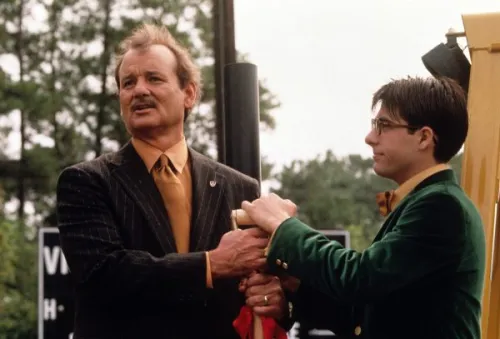
If it weren’t for his knack for writing, Max Fischer (Jason Schwartzman) would never have gotten into a prep school like Rushmore. But his art secures him a scholarship, and what he lacks in smarts and money, he makes up for in school pride. As he flunks more and more of his academics, however, he is eventually kicked out, and it’s outside the halls of his beloved Rushmore, stripped of all titles and insignia, where he learns to be his true self.
As the film’s comedic and emotional core, Schwartzman is a revelation as the ambitious and sharp-tongued Max. Equally captivating is Bill Murray’s deadpan but lovable turn as Max’s millionaire friend, Herman Blume. It’s a role so fitting, in fact, that the poor-rich-man character will follow Murray well into his career, long after the curtains close on Mr. Blume. Meanwhile, Wes Anderson will go on to do more colorful and stylized pictures than Rushmore, but thanks to its unbeatable wit and down-to-earth charm, the film remains to be one of the auteur’s most delightful and hilarious works to date.
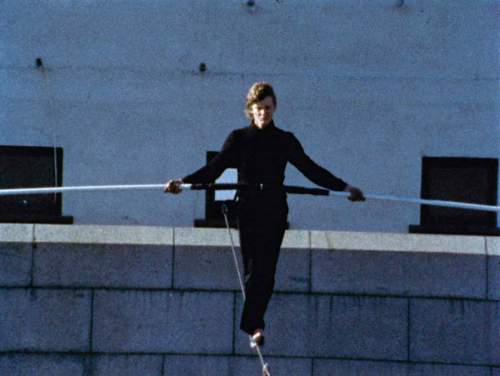
Man on Wire is a true technical masterpiece. You can almost feel the director telling the cameraman what angle to choose, or thinking about the questions that will generate the most resounding answers. However, this does not diminish the story this documentary tells one bit. It’s one that is glorious, riveting, and fun. It’s one where you feel like an insider to a world lived on and below wires, with high-stake risks. Hopefully the edge of your seat is comfortable, because this is where the movie will keep you till the very end.
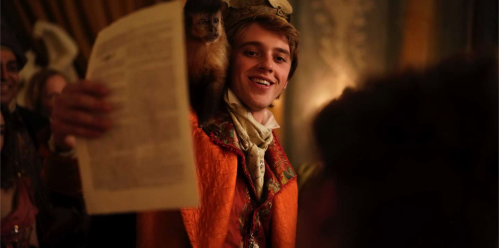
Despite being based on a 19th-century serial novel, Lost Illusions feels remarkably close to contemporary concerns about fake news and the devaluing of art for profit. But as the story is also, obviously, set in the 19th century, all this bribery and these backdoor dealings are done entirely through the written word and by sending runners from one Parisian theater to the next—and the result is uniquely thrilling. Nearly every character is a terrible person (like in an old-timey Goodfellas way) and it can get tiring seeing the film glorify their hustle, but the energy it brings is rare to find in any other period drama.
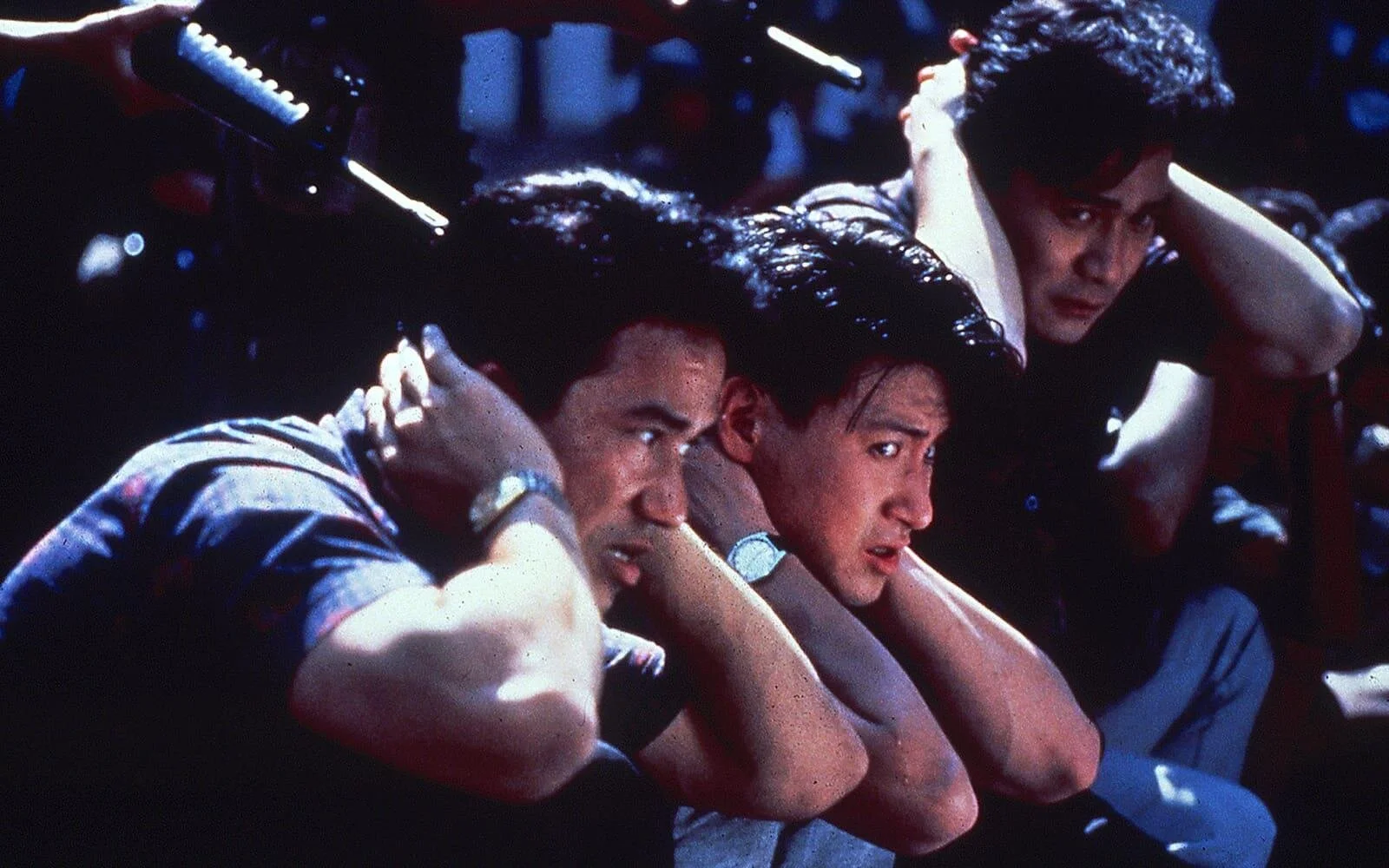
In the fallout of his conflict with producer Tsui Hark, filmmaker John Woo was alone, virtually blacklisted, and unable to find funding for what could have been the prequel to A Better Tomorrow. Because of these circumstances, he self-funded this action thriller Bullet in the Head. Of course, it’s possible that the themes of brotherhood, loyalty, and betrayal are entirely coincidental, but nonetheless, Woo crafts a compelling narrative, helped by its haunting score and the tear-tracked performances of the three leads. Setting the film in the Hong Kong riots and Vietnam War, Bullet in the Head reveals how war never leaves any relationship unscathed, not even between those who proclaim to be brothers.
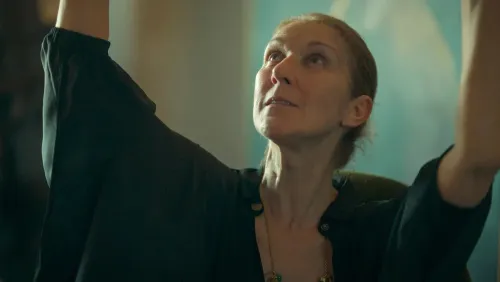
Celebrities are often described as being “vulnerable” in documentaries, but it’s never been more fitting in this case. Here, Celine Dion opens up about her near-paralyzing illness, which affects her vocal cords and muscles and consequently prohibits her from performing on stage. We see clips of the star having spasms and breakdowns as she tries and fails and tries again to get her voice back. More than just a simple biography of what Dion has achieved, which we already know is massive, the film is largely about the doubt that creeps in and threatens to rock your sense of self, and the strength of the human spirit to persevere despite all that. The film is bracingly, unflinchingly raw, but it’s never exploitative, thanks partly to director Irene Taylor’s gentle direction and to Dion’s unwavering resilience.
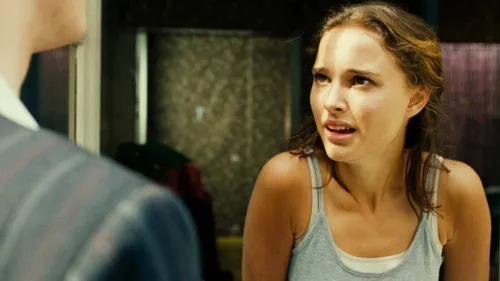
This anthology of 18 short films — directed by the likes of the Coen brothers, Gurinder Chadha, Wes Craven, and Olivier Assayas — is a cinematic charcuterie board. Each director offers their own creative interpretation of one north star: love in Paris. Romantic love is heavily represented, naturally, but in diverse forms: love that’s run its course, dormant love in need of rekindling, electric chance encounters, and, apt given the location, honeymoon love. Segments like the one starring Juliette Binoche and Alfonso Cuarón’s five-minute-long continuous take opt to focus on parental love instead, with the former also exploring love through the frame of grief.
If this all sounds a little syrupy and sentimental, fear not: there are dashes of bubble-bursting humor from the Coens, whose short stars a silent Steve Buscemi as a stereotypically Mona Lisa-obsessed American tourist who commits a grave faux pas in a metro station. Instead of sightseers, some directors offer more sober reflections on the experience of migrants in the city, which help ground the film so it doesn’t feel quite so indulgent. Still, the limited runtime of each vignette (sub-10 minutes) doesn’t let any one note linger too long, meaning the anthology feels like a series of light, short courses rather than a gorge of something sickly.
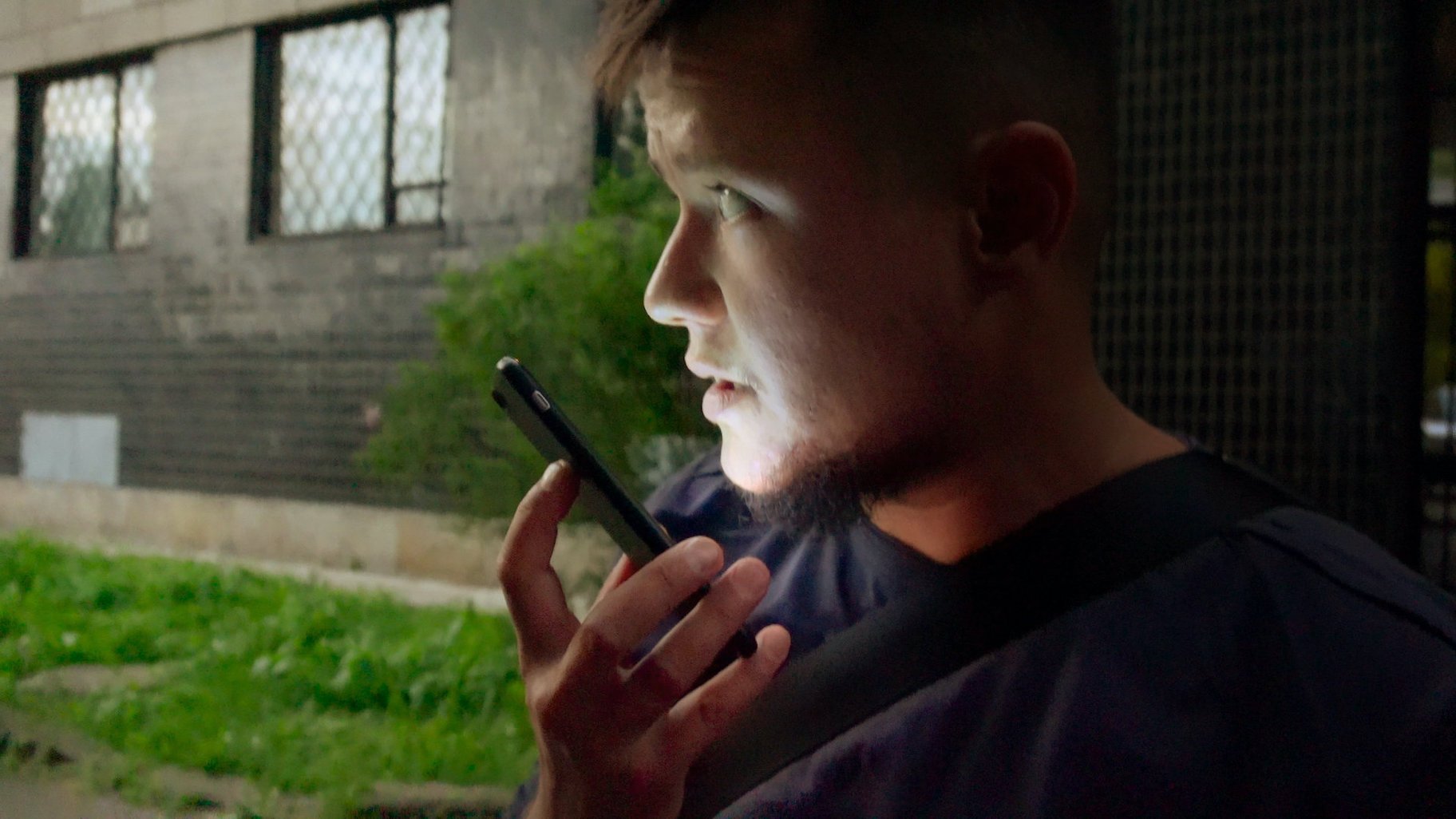
Featuring real, in-the-moment footage of operations to rescue young queer individuals from the continuing anti-gay purges in the Chechen Republic, Welcome to Chechnya makes for a demanding but essential call to action. There’s a genuine sense of fear that pervades the documentary, not just for those being rescued after being forcibly outed, beaten, and trapped by the people around them, but for the filmmakers themselves, whose operations are built on meager resources and desperate, spur-of-the-moment decisions. It’s a remarkably courageous film—one that also presents new ways of keeping sensitive subjects safe through the thoughtful use of deepfake technology, keeping their identities hidden while allowing them to freely express themselves.

This coming-of-age drama set near Sept-Îles in Quebec, Canada is about two indigenous Innu best friends who grow up together. One day, one of them meets a white guy and starts planning a life with him, which is seen by both her best friend and her community as a rupture with them.
“If everybody did the same thing you’re doing, we wouldn’t exist,” her friend tells her. Kuessipan is about that intersection between friends growing apart and indigenous identity, all set in the backdrop of Canadian reserve life. Won the Grand Prix at the Québec City Film Festival.
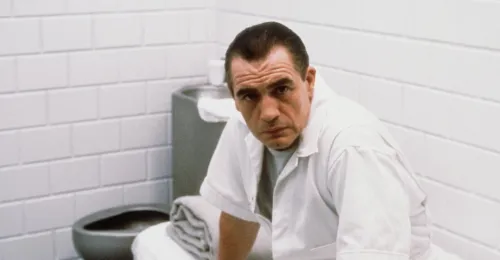
Before The Silence of the Lambs and Anthony Hopkins’ Hannibal, there was Manhunter and Brian Cox’s deeply unnerving Dr. Lecktor. Michael Mann’s neon-lit serial-killer thriller follows Will Graham (William Petersen), a retired FBI agent lured back to work by a psychotic mass murderer whom no one at the Bureau can catch. But Will has something no one else on the force does: he was so committed to tracking down the now-imprisoned Lecktor that he developed an ability to warp his mind into that of a deranged killer, seeing a kind of logic in their madness that allows him to hunt them down.
While that’s a professional superpower of sorts, it’s also a point of insecurity and a source of deep torture for Will, who struggles with the burden of his extraordinary empathy. Manhunter is thus a different kind of psychological thriller: while its dive into the depraved minds of Lecktor and the Tooth Fairy is certainly disturbing, it’s the obsessive, sanity-smashing effect the investigation has on Will that is most terrifying. Add to that Dante Spinotti’s impossibly vivid cinematography, Tom Noonan’s shudder-inducing performance as the voyeuristic Tooth Fairy, and the film’s surprisingly layered treatment of the murderer, and this is the serial-killer movie to end all others.
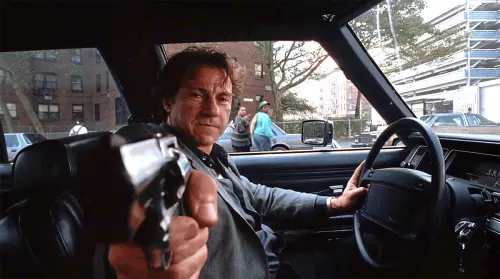
Bad Lieutenant is no misnomer: Harvey Keitel’s policeman really is one of NYPD’s worst. Already corrupt, abrasive, and abusive at the film’s outset, the movie chronicles his coked-out descent into total depravity after he’s called to investigate a heinous crime amid rapidly worsening personal circumstances. The brilliance of Bad Lieutenant is therefore a counterintuitive one: as awful as the Lieutenant is, we can’t help but feel emotionally involved because, in Keitel’s bravura performance, we can see the glint of pain — and thus of a person — within.
Always one for provocation, director Abel Ferrara pushes our empathy to — and maybe even beyond — its natural limits, only to break with the film’s hitherto unrelenting grit and dangle the glinting possibility of transcendent redemption in front of us. Anyone familiar with Catholic guilt cinema (movies like Martin Scorsese’s Who’s That Knocking At My Door and Mean Streets) will instantly recognize the same undercurrent running through Bad Lieutenant — even if Ferrara takes the idea of juxtaposing the profane with the sacred to the extreme here.
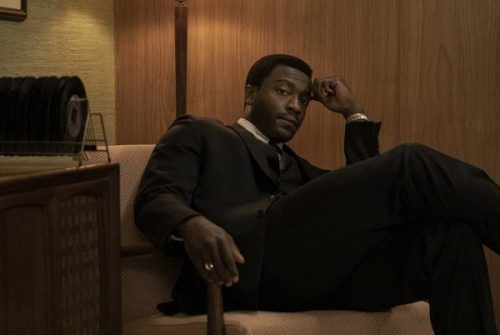
This stagelike historical drama is about a meeting between Malcolm X, Jim Brown, Sam Cooke, and Muhammad Ali, the night Ali became world champion and announced he became Muslim.
And here is the thing: Malcolm X and Muhammed Ali have been portrayed many times in film, but never with this much nuance. Their relationship with each other is often frictional and their relationship to their faith is recognizable: they’re not always sure about it, and they take breaks.
Ali smuggles alcohol without Malcolm knowing, Malcolm is accused of being obsessed with celebrity (and later of colorism), Jim Brown is insecure about being an actor, and Sam Cooke wishes he wrote a Bob Dylan song.
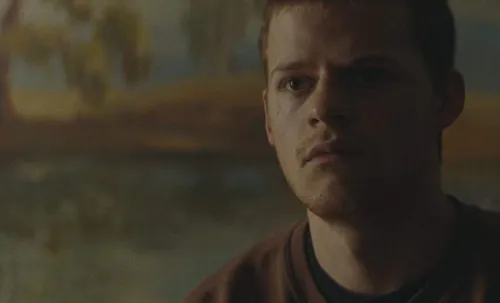
There is so much power to this story based actor Shia Laboeuf’s life. As a kid, he lived with his father on the road during the filming of Even Stevens and other star-making roles. His dad was a war veteran who goes to bikers’ AA meetings and who had a brief acting career himself. He was full of anger that made Laboeuf later suffer from PTSD, but which he was able to perceive in a fascinating way.
Putting Laboeuf’s fame aside, this is an incredible movie on emotionally abusive parent-child relationships. It’s a universal story. With Shia Laboeuf as his father and Lucas Hedges as current-day Laboeuf.
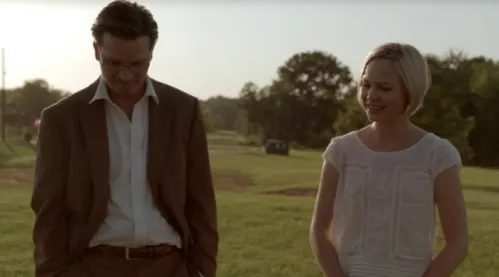
Some of the best novels of all time will probably take a few pages to introduce their premise, backstory, and key characters, and might demand some patience until the plot fully unfolds. This might be a hard sell in today’s world of short attention-spans, but some stories just need the time. Rectify is one of those stories. We meet Daniel Holden, played by Aden Young, after he is released from death-row prison after 19 years. While smart and thoughtful, Holden is obviously a damaged man, slightly out of synch with the world outside. His release affects his family very differently – some, like his sister, Agatha, had been fighting for his release since the day he was arrested. Others, like his brother-in-law, suspect he’s guilty of the crime he was accused of. Still others, like the fictional town’s sheriff, are bent on finding new evidence to lock him away again. So, in addition to awe-striking Southern landscapes, thought-provoking themes, subtle writing, you get a deep and detailed character-driven plot played by amazing actors. It might be too slow for some. This is not a who-dunnit or true-crime voyeurism. But you will be hard-pressed to find someone who isn’t enveloped by torrent of emotion when Daniel meets his mother and sister outside of a prison cell for the first time in nearly twenty years in the very first episode. And it really gets better and better with every season.
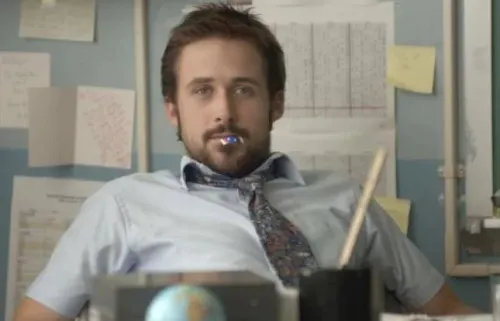
The self destructive, substance abusing history teacher Dan (Ryan Gosling) works in a Brooklyn middle-school and is constantly at odds with the curriculum, preferring to teach 13 year old kids Marxist theory in class. Meanwhile, his student Drey (Shareeka Epps) has to go through struggles of her own, her brother being in jail on drug charges and her single mother having to work long hours to make ends meet. Slowly, an unlikely and tender friendship between teacher and student evolves, in which it becomes less and less clear who of them is the adult part. Steering away from cliches, Half Neslon is not your typical social drama. Its intelligent plot twists, great cast (with outstanding performances by both Gossling and Epps) and slow, non dramatic storytelling makes this a highly underestimated movie that, although treating depressive topics without any easy relief for the viewer, will leave with an inner smile, albeit a sad one.
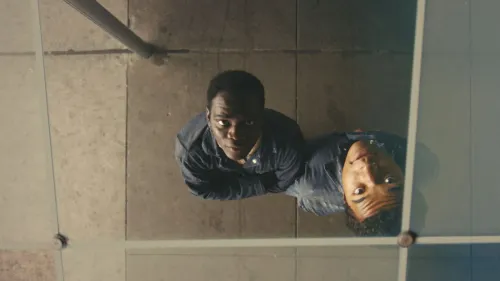
The first things that grab your attention in Nickel Boys are its beauty and technicality. Director RaMell Ross, a large-format photographer, ensures every frame relays something deep, intimate, and moving. Then there’s how he takes these shots: we see things unfold through the POV of Elwood and Turner, students at an abusive reform school in Tallahassee, Florida. The year is 1962, and even though the civil rights movement inspires Elwood and his peers to stand up for themselves, the political climate is as skewed and violent as ever. Nickel Boys tells the unfortunately common story of how Black men, in particular, had to endure unimaginable abuse during the Jim Crow era in the South. What is uncommon, though, is the sensitivity and boundless inventiveness with which Ross tells this story. Yes, violence is unavoidable in a story like this, but Ross swaps trauma porn with something more effective and chilling—a mixture of silence, archival photographs, time jumps, and that immersive POV, which forces you to be in Elwood and Turner’s shoes. The world before them may be brutal, but inside, they hold space for beauty, fun, relationships, and wonder, manifested in the film in dreamy visual sequences. What Ross does is art in the highest form, an unforgettable balance between style and substance.
What’s great about this highly inventive film is that it doesn’t look like it was shot through three iPhone 5s. Instead of using shaky cameras and static shots, Tangerine glides us through saturated, orange-toned scenes that evoke the Los Angeles sunset. Launching director Sean Baker into prominence, Tangerine is an innovative film that, at heart, is a nuanced comedy about the trans sex worker community. Newcomers Kitana Kiki Rodriguez and Mya Taylor run the show, and their performances create a vivid, electric drive that powers the whole movie. But it’s the quieter moments, the moments after betrayal, the moments of recovery, that make this movie truly special.
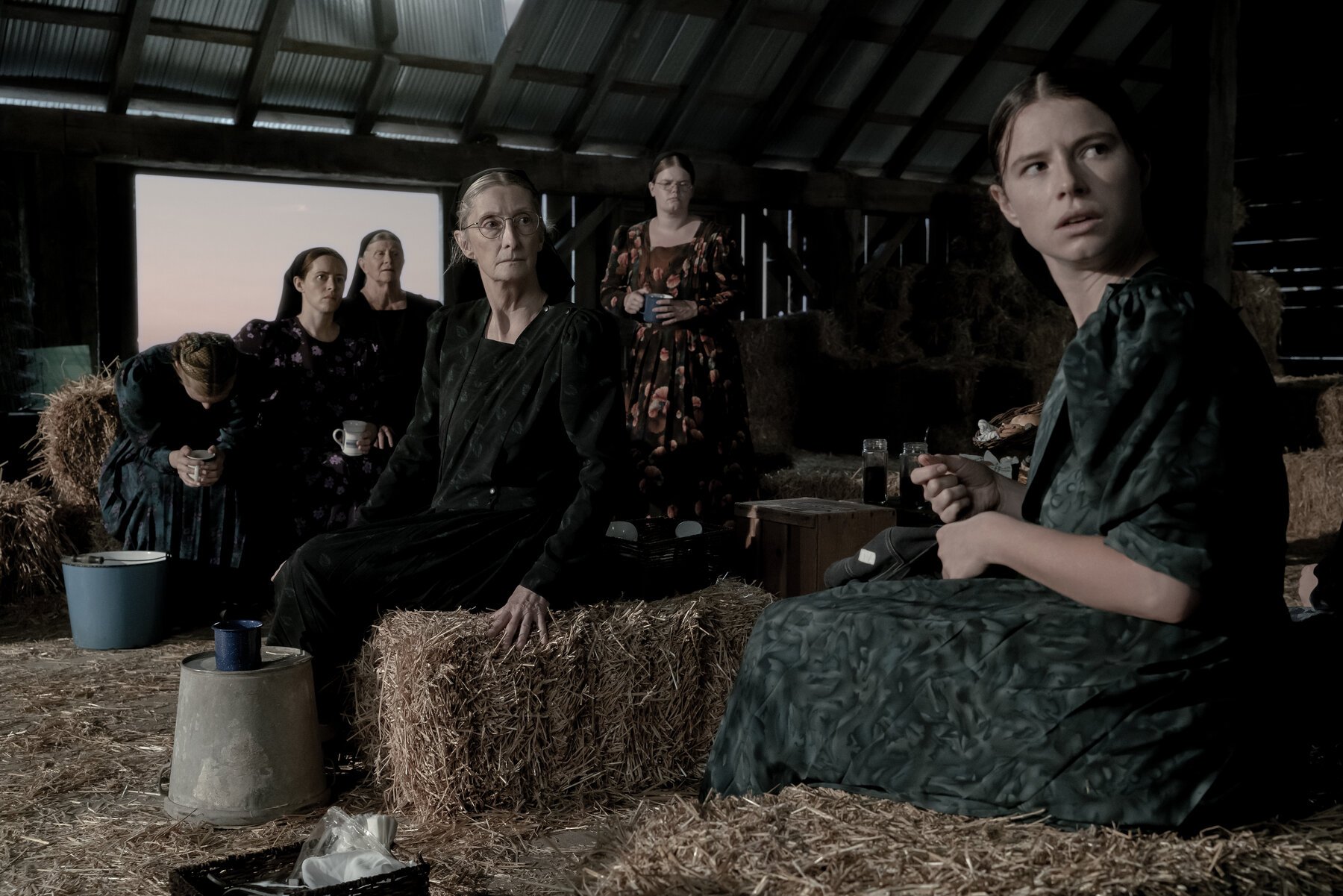
Not much happens in Women Talking, but what it lacks in action it more than makes up for in message. As the wronged women of an insular Christian colony decide whether they should leave or stay in their community, valuable points on each side are raised and debated fiercely. Are the men at fault or is there a bigger problem at hand? Is it sacrilegious to refuse forgiveness? Will leaving really solve anything?
The women of this ultraconservative and anti-modern community may not know how to read or write, but years of toiling away on land, family, and faith have made them wise beyond their years, which makes their discussion all the more captivating and powerful. Relevant themes, coupled with director Sarah Polley’s poetic shots and the cast’s all-around stellar performances, make Women Talking a uniquely compelling and timeless watch.
The initial charm of Hacks is in watching sparks fly between its sharp-tongued leads. Neither the elderly Deborah nor the young Ava holds back the digs, both of them cutting to the core of their insecurities. Part of what makes their tension so watchable is that they’re stand-ins for different generations. Deborah represents the all-hustle culture of the boomers, while Ava represents burned-out millennials. Lock them in a scene together and you get endless (and endlessly funny) observations about the modern world.
Eventually, however, their relationship deepens into something more meaningful than that. As Deb and Ava bond over their shared hopes and flaws, the show transforms into a clever and tender two-hander about their prickly but profound relationship. They’re two sides of the same coin, and even though no one can bring them down like the other can, the opposite is also true: no one else can lift them and push them to new heights like the other can.
Director Thomas Vinterberg (The Hunt) reunites with Mads Mikkelsen to tell the story of four teachers going through a mid-life crisis. They’re not sad, exactly—they have homes and jobs and are good friends with each other—but they’re not happy either. Unlike the ebullient youth they teach, they seem to have lost their lust for life, and it’s silently eating away at them, rendering them glassy-eyed and mechanic in their everyday lives.
Enter an experiment: what if, as one scholar suggests, humans were meant to fulfill a certain alcohol concentration in order to live as fully and present as possible? The teachers use themselves as the subjects and the tide slowly starts to turn to mixed effects. Are they actually getting better or worse?
With an always-satisfying performance by Mikkelsen and an instant classic of an ender, it’s no surprise Another Round took home the award for Best Foreign Film in the 2020 Academy Awards.
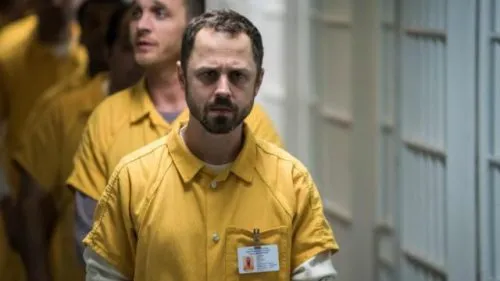
Sneaky Pete is probably the Amazon Prime Original that suffers the most from the platform’s awkward branding. Had it been on Netflix, your co-workers wouldn’t stop talking about it. Four years after the finale of the mighty Breaking Bad aired, Bryan Cranston is back with some thrilling, far-fetched, but furiously entertaining TV. A con man just released from prison, Marius Josipovic (Giovanni Ribisi) seeks to reconnect with his brother Eddie (Michael Drayer), who tells him that gangster Vince Lonigan (Cranston) wants payment for the $100,000 Marius owes him. Being a con man, Marius does what he does best, assuming his cellmate Pete Murphy’s identity and duping his family. This is where things get roaringly fun and a little absurd, while gangsters, the police, his brother, and Pete’s family do everything they can to make his life difficult. Suspend your disbelief, though, and you will be thoroughly entertained.

It’s rare to see a prequel surpass its antecedent, but Pearl is that exception. You can watch it before or after X and still get the same satisfaction from piecing together the puzzle of Mia Goth’s many roles (three in total across the trilogy). If the first film owed a lot to slasher classics like the Texas Chainsaw Massacre, the second (surprise!) channels The Wizard of Oz and nods to the splendiferous melodramas of Douglas Sirk. The jarring form-content opposition here makes sense, as we’re seeing through the eyes of the main character, who most of all dreams of being in a movie. Because of that very same whimsy, everything has to change: the violence is not as explicit and the role of sex is brought to the forefront. All hail the new kind of final girl: a farm girl-turned-star.

You may have heard about this 2019 critic-favorite from clips like this one of a kid running to flee the movie theater during a screening. “little billy ran the f**k out the door”, the caption reads.
You will want to do the same. Recovering from losing her sister and her parents in a single incident, a young girl goes on a trip to Sweden to observe a ritual within a bizarre commune that occurs every 90 years. This cult’s idea of death and their traditions intersect with the girl’s grief to create unthinkable monstrosities.
Note: while some readers praise the movie for its depiction of anxiety, I highly recommend against watching Midsommar if you suffer from panic attacks.
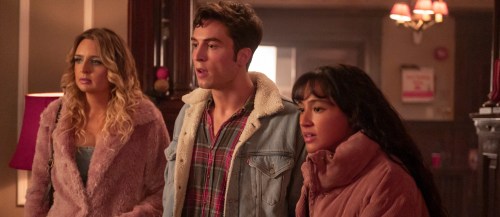
The most surprising thing about Overcompensating is that, underneath the sexual romps and irreverent humor, there exists something sweet in the form of Benny and Carmen’s friendship. Yes, the show is largely about college and exploring the boundaries of freedom. It’s also about the different performances we put on in an awkward attempt to fit in and realize Who We Are. But it can also feel like it’s tackling too much at times, without a lot of novelty. College-set films and shows like Undeclared, The Sex Lives of College Girls, and even Neighbors have already treaded similar ground in sharper and funnier ways. But Overcompensating is still worth the watch, if only to see how Benny and Carmen grow and find platonic comfort in each other. Campy characters like Hallie (Holmes) and Esther (Kaia Gerber) also provide plenty of laughs and elevate it into something truly memorable.
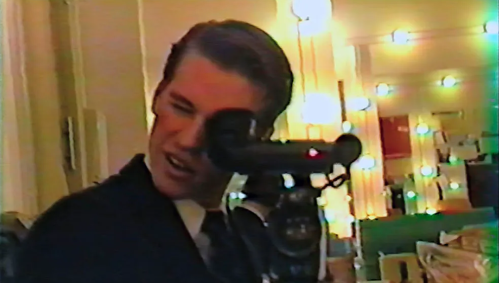
The late Val Kilmer is best known for his roles in Top Gun and Batman. If you’re from an earlier generation, you might also recognize him in the tabloids as that famously difficult actor to work with, always demanding perfection in every scene. The documentary Val sheds those outer layers to reveal a man who was, above all else, sensitive, ambitious, creative, and resilient. Through intimate home videos, which Kilmer started taking when he was very young, we see him as a playful kid, a talented prodigy, a playwright, a painter, a father, and a deeply committed actor. Misunderstood and miscast, yes (for reasons that will be divulged in the film), but undeniably talented and committed as well. Val is a beautiful portrait of a complicated man in his twilight years. He’s an actor who could’ve done more if the industry had been kinder and who, thankfully, had the good sense to document almost every minute of his life with a good ol’ camera.
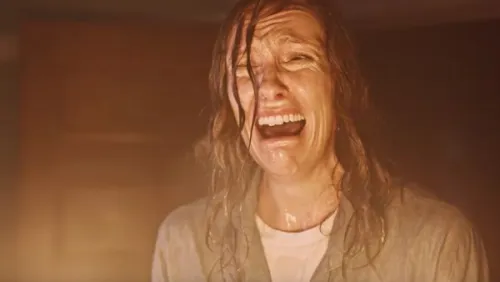
A chilling and dark movie to be especially appreciated by true suspense lovers. At the funeral of the family’s matriarch, no one is emotional except the granddaughter, whose grieving is disturbing, to say the least. When both grieving and not grieving are unsettling, you can tell what kind of family (and movie) this will be.
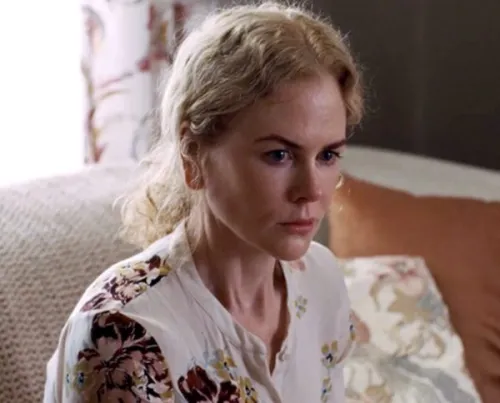
This is a really weird movie starring Colin Farrell and Nicole Kidman. They play a wholesome and well-off couple where Farrell is a heart surgeon. The movie starts with him taking care of a teenager called Martin, who’s not related to him or seems to have any real connection with him. It later turns out that Martin shares a special bond with the surgeon, a bond that will threaten his family in unexpected ways. The camera work and direction by Yorgos Lanthimos (The Lobster, The Favourite) offset the weirdness to offer an intriguing experience.
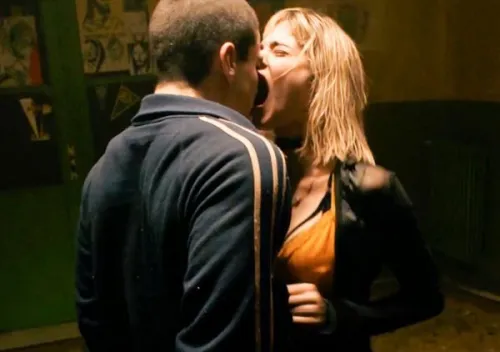
This twisted movie is actually two movies, the credits even roll in between. The first half is gorgeous: talented dancers get together for a party and perform beautiful contemporary dance sequences. They introduce themselves through their audition tapes to join the dance group, but also through conversations at the party. The second half is less fun. It turns out someone had laced the sangria they’ve been drinking with a psychedelic drug. Not for the faint of heart or anyone who didn’t like director Gaspar Noé’s past movies (Enter the Void, I Stand Alone, etc).
This stagelike historical drama is about a meeting between Malcolm X, Jim Brown, Sam Cooke, and Muhammad Ali, the night Ali became world champion and announced he became Muslim.
And here is the thing: Malcolm X and Muhammed Ali have been portrayed many times in film, but never with this much nuance. Their relationship with each other is often frictional and their relationship to their faith is recognizable: they’re not always sure about it, and they take breaks.
Ali smuggles alcohol without Malcolm knowing, Malcolm is accused of being obsessed with celebrity (and later of colorism), Jim Brown is insecure about being an actor, and Sam Cooke wishes he wrote a Bob Dylan song.
There is so much power to this story based actor Shia Laboeuf’s life. As a kid, he lived with his father on the road during the filming of Even Stevens and other star-making roles. His dad was a war veteran who goes to bikers’ AA meetings and who had a brief acting career himself. He was full of anger that made Laboeuf later suffer from PTSD, but which he was able to perceive in a fascinating way.
Putting Laboeuf’s fame aside, this is an incredible movie on emotionally abusive parent-child relationships. It’s a universal story. With Shia Laboeuf as his father and Lucas Hedges as current-day Laboeuf.
The self destructive, substance abusing history teacher Dan (Ryan Gosling) works in a Brooklyn middle-school and is constantly at odds with the curriculum, preferring to teach 13 year old kids Marxist theory in class. Meanwhile, his student Drey (Shareeka Epps) has to go through struggles of her own, her brother being in jail on drug charges and her single mother having to work long hours to make ends meet. Slowly, an unlikely and tender friendship between teacher and student evolves, in which it becomes less and less clear who of them is the adult part. Steering away from cliches, Half Neslon is not your typical social drama. Its intelligent plot twists, great cast (with outstanding performances by both Gossling and Epps) and slow, non dramatic storytelling makes this a highly underestimated movie that, although treating depressive topics without any easy relief for the viewer, will leave with an inner smile, albeit a sad one.
What’s great about this highly inventive film is that it doesn’t look like it was shot through three iPhone 5s. Instead of using shaky cameras and static shots, Tangerine glides us through saturated, orange-toned scenes that evoke the Los Angeles sunset. Launching director Sean Baker into prominence, Tangerine is an innovative film that, at heart, is a nuanced comedy about the trans sex worker community. Newcomers Kitana Kiki Rodriguez and Mya Taylor run the show, and their performances create a vivid, electric drive that powers the whole movie. But it’s the quieter moments, the moments after betrayal, the moments of recovery, that make this movie truly special.
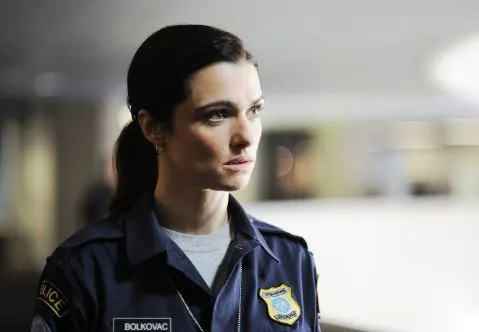
Based on a true story, The Whistleblower is the biography of a once Nebraskan police officer who volunteers for the U.N. peacekeeping mission in post-war Bosnia. Once there, she uncovers a human trafficking scandal involving peacekeeping officials, and finds herself alone against a hostile system in a devastated country. Rachel Weisz plays the whistleblower in a powerful lead role, but the true star of the movie is its director, Larysa Kondracki, who thanks to near documentary-style film-making delivers a perfectly executed political thriller with utmost authenticity.
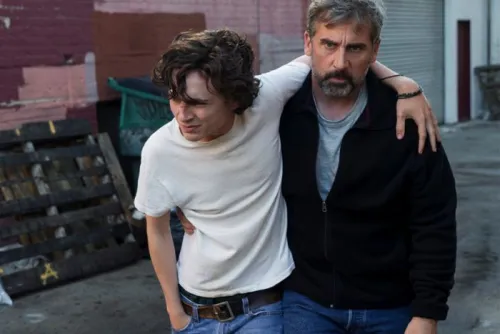
Steve Carrell delivers an amazing performance here. Beautiful Boy is a movie that is based on a true story that first appeared as a best-selling serialized memoir.
It’s about a son’s journey through drug abuse and how his relationship with his father evolves. The son is played by Timothée Chalamet (Call Me By Your Name), Carrell is the dad.
As you can probably guess, the themes of drug addiction and family are made to induce tears, which this movie manages to do in a lot of ways. It can come across as somewhat emotionally manipulative at times. In those moments, it helps to remind oneself that it is based on a true story.
The performances and the exploration of the limits of the father-son relationship remain the reasons why you should consider watching this movie.
A revelation of a movie, both in filmmaking and commercial success. While little-known abroad, it has made more than $42 million in US Box Office revenue out of a tiny $5 million budget. Kumail Nanjiani, stand-up comedian and star of the show Silicon Valley, tells his own story of romance with his now-wife Emily V. Gordon (who co-wrote the movie). Because it is based on a true story, and because it is the product of the love of both its writers and stars, this movie is incredibly heartfelt. It is also timely, addressing heavy themes such as identity, immigration, and family relationships. Not to mention it is absolutely hilarious. And it’s produced by Judd Apatow. Trust me and go watch it.
It’s rare to see a prequel surpass its antecedent, but Pearl is that exception. You can watch it before or after X and still get the same satisfaction from piecing together the puzzle of Mia Goth’s many roles (three in total across the trilogy). If the first film owed a lot to slasher classics like the Texas Chainsaw Massacre, the second (surprise!) channels The Wizard of Oz and nods to the splendiferous melodramas of Douglas Sirk. The jarring form-content opposition here makes sense, as we’re seeing through the eyes of the main character, who most of all dreams of being in a movie. Because of that very same whimsy, everything has to change: the violence is not as explicit and the role of sex is brought to the forefront. All hail the new kind of final girl: a farm girl-turned-star.
Grounded by Lesley Manville and Timothy Spall’s powerhouse performances, this gut-wrenching family drama from Mike Leigh is an acting juggernaut. Penny and Phil are a working-class couple whose marriage is rapidly deteriorating and pushed to the brink when their son, played by a young James Corden, is hospitalized.
While Manville and Spall are centered as the leads, Leigh draws a staggering amount of depth from Corden as well as a young Sally Hawkins who plays a neighbor. Despite being one of Leigh’s grimmest films, there is still a profound sweetness lingering at the edges as the story teeters between despondency and hope.
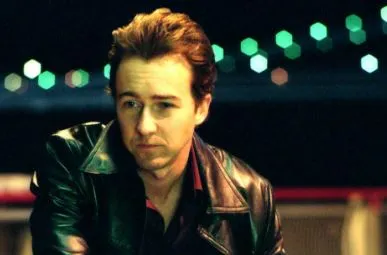
Spike Lee directs the story of Monty (Edward Norton) and his life in 24 hours before he is to serve a 7 year sentence in jail. It’s easy to develop a sentimental bond with Monty as well as the childhood friends he chooses to spend his last hours with – played by then underground actors Phillip Seymour Hoffman and Rosario Dawson. It’s aggressive and it’s blunt, but it’s an interesting, relatable character study that finds director Spike Lee in top form.
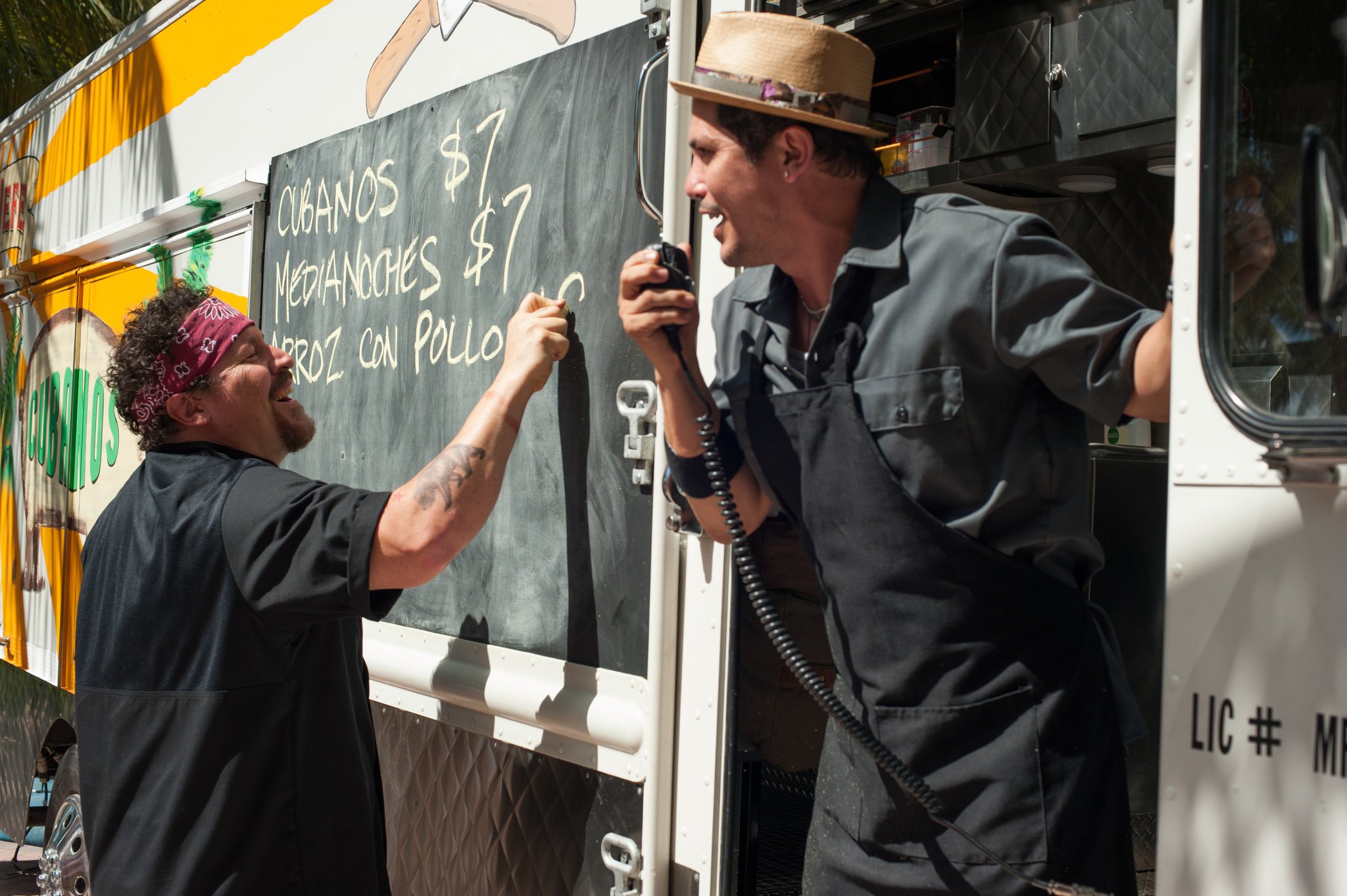
A popular chef loses his job and respect after a bad review. He ends up with a food truck and tries to show the world he still has his creative side, while at the same time trying to fix his broken family. Chef is a heartwarming feel-good movie, after you finish it you will want to cook, love your family, travel, and spread the love. One of my favorite movies, I see myself happily watching it again numerous times.
Calvin Weir-Fields (Paul Dano), a young and promising novelist imagines and writes about his idea of a perfect female companion. Somehow, his words manifest into reality – the beautiful and corky Ruby Sparks (Zoe Kazan). Soon, however, his magical love turns shallow as his creation begins to think for herself and wrestle against her creation. This romantic comedy has the right amount of wit and emotion with a deep message of loving people just the way they are.