
Our take
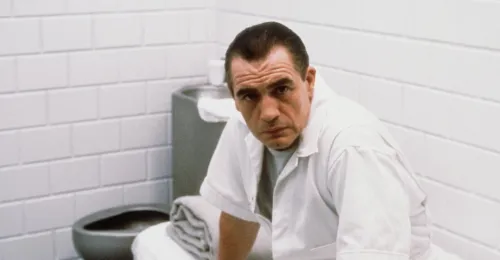
With his final film, octogenarian master filmmaker Robert Bresson found the violent, chilling truth in that old cliché, “money is the root of all evil.” L’Argent extends the simplicity of its title (literally, “Money”) into the fabric of the film, using an extremely bare style to track the devastating domino effect that a childish ruse has on one man’s life. When a shopkeeper realizes two schoolboys swindled him out of 500 francs with a counterfeit note, he decides to pass the problem on by paying delivery man Yvon (Christian Patey) with the false note. But when Yvon tries to pay for his lunch with the money, the police are called and his life unravels.
This is just the start of L’Argent’s clinical exploration of the meanness and littleness of man’s greedy spirit. Yvon’s downfall is chronicled with matter-of-fact coldness: everything onscreen is minimal, from the precise cinematography and frugal editing to the non-professional actors’ expressionlessness. This detached style encourages us to absorb all the bitter emotion of the story, which feels — in such an economical format as this — like a moral tale as old as time, but no less cutting.
What it won

Cannes
1 win

Venice
1 nom

César Awards
1 nom
The story
A forged 500-franc note is passed from person to person and shop to shop, until it falls into the hands of a genuine innocent who doesn't see it for what it is—which will have devastating consequences on his life.
Elsewhere

"Bresson -- who was eighty-two years old when the film came out, and clearly in no mood for mellowing -- frames the acts of wickedness, both great and small, with a terrifying calm."
— Anthony Lane
A delivery man’s life is turned on its head when he unknowingly accepts counterfeit money from a customer.
The way Bresson deals with notions of good and evil. Money is depicted as the great compromiser of morals in L’Argent; it's what makes hypocrites out of even the film’s most well-meaning characters. It isn’t just the initial cause of Yvon’s predicament but the lubricant that greases palms and allows him to slip deeper and deeper into suffering. The gradual brutalization of this once-honest man plays out like a grim certainty, but what is surprising is L’Argent’s final suggestion that redemption, even after so much ugliness, is possible. What a note to end a career on.
The concept of money has 24 hours to respond.
Who picked it

Farah Cheded is a UK-based curator at A Good Movie to Watch and a Rotten Tomatoes-approved freelance critic whose work has been published at outlets including The Playlist, Paste Magazine, and Film School Rejects. She lives in fear of the day she runs out of 'Columbo' episodes to watch.