
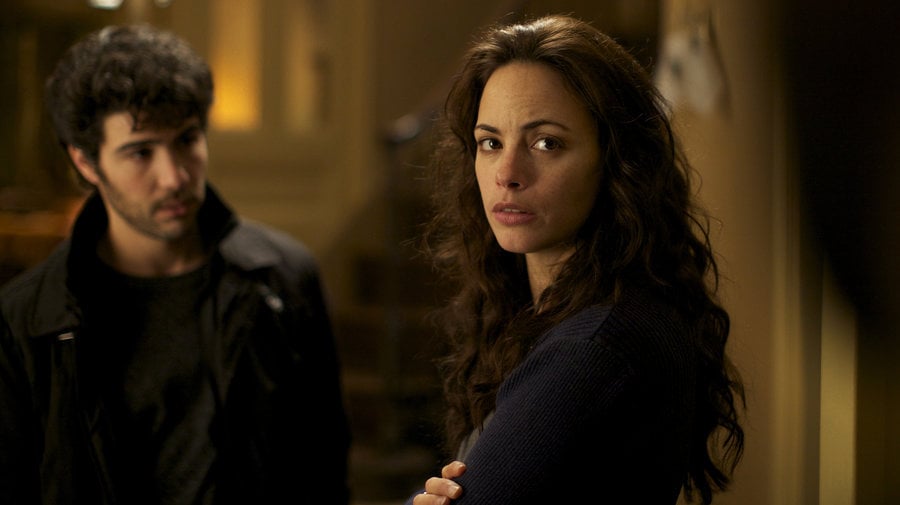
Our take
A Good Movie to Watch features almost every work of Asghar Farhadi for the sole reason that his films, although highly acclaimed and brilliant, are criminally under-watched. As always, Farhadi offers complex, compelling, and contemporary drama and piercing insight into human relationships and emotions. Expect the twists, subtleties, and emotional limbo that you’re probably familiar with from A Separation or About Elly. That said, The Past is a bit different, because, for one, it focuses on romantic relationships, and, secondly, it plays in the far more permissive world of a Parisian suburb – and not in theocratic Teheran. Independent of its location, The Past’s key subject is the universally human phenomenon of having to deal with the choices made in the past. In addition to Farhadi’s intricate directing and the sensitive script, it is imperative to mention the powerful performances by Ali Mosaffa, Tahar Rahim, and, above all, Bérénice Bejo. An unforgettable experience.
The story
After four years apart, Ahmad returns to his wife Marie in Paris in order to progress their divorce. During his brief stay, he cannot help noticing the strained relationship between Marie and her daughter Lucie. As he attempts to improve matters between mother and daughter Ahmad unwittingly lifts the lid on a long buried secret...
Elsewhere

"[Farhadi's] gift for pulling us deep into the story, and for conveying the major burdens of these supposedly minor lives, is unimpaired."
— Anthony Lane
Who picked it

Bilal Zouheir is the founder of A Good Movie to Watch. He is based in the US and a member of the Nevada Film Critics Society. He grew up in Morocco, where he learned English from watching movies. Bilal's work with A Good Movie to Watch is focused on offering an alternative to streaming algorithms, which are often used as commercial tools by streaming services.
Safaa Sultan is a contributing writer at A Good Movie to Watch, reviewing films and shows across the major streaming services.






"Forcing his characters into moral gray zones, the director weakens the notion of objectivity, allowing the viewer's allegiances to shift freely among the household's denizens-even if as individuals, none of them is particularly sympathetic."
— Emma Myers