
 2022 Movie
Dir. Jesse Short Bull & Laura Tomaselli · United States of America · English
An eloquent, infuriating, and ultimately hopeful look at Native peoples' struggle for reparations
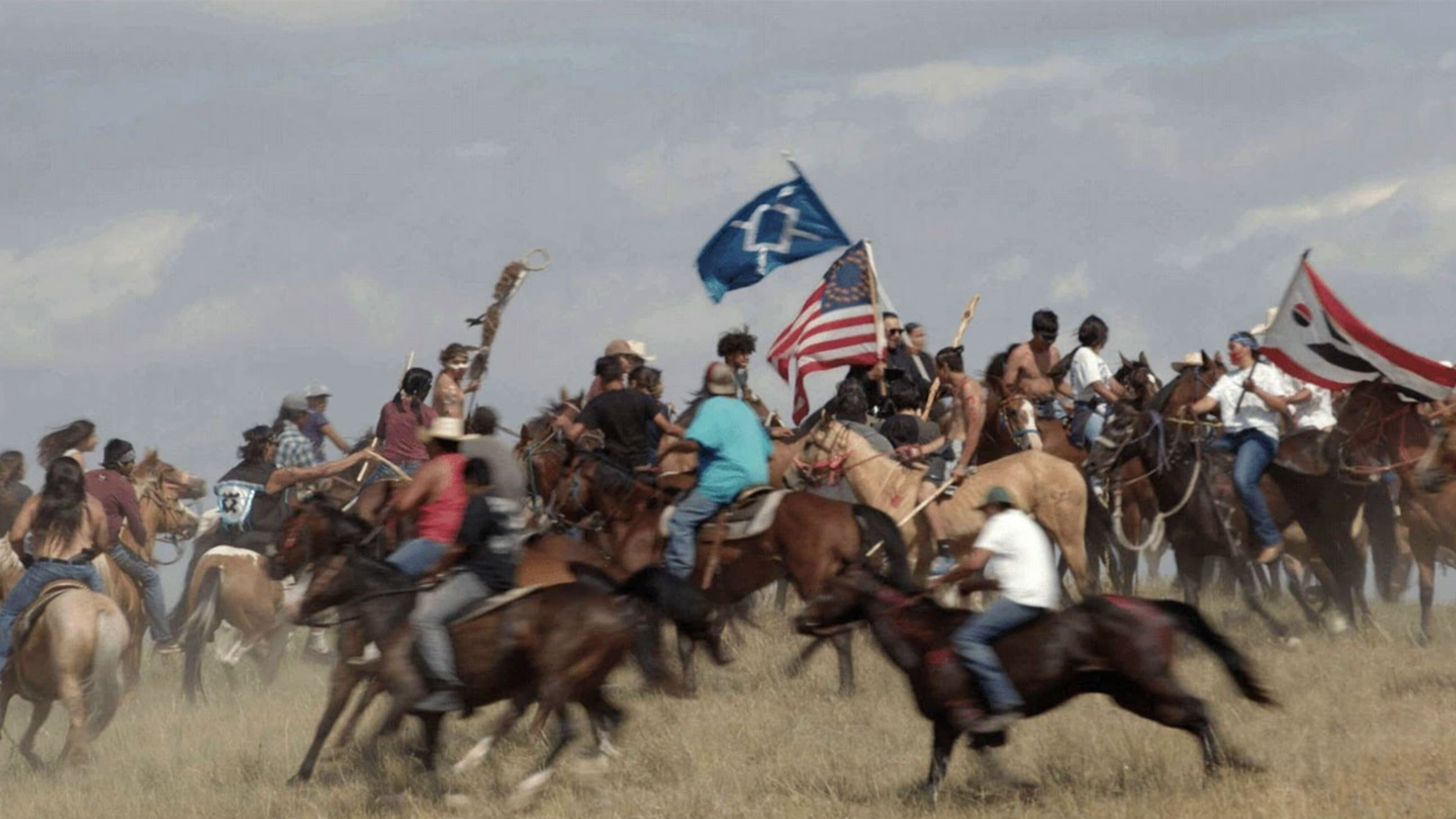
Using the documentary form with supreme clarity and righteous fury, Lakota Nation vs. United States distills hundreds of years of American history into two powerful, consistently engaging hours of film. The information presented in this movie has always been available to the public, but directors Jesse Short Bull and Laura Tomaselli do an excellent job at allowing these historical accounts and more recent headlines to cumulatively take on a truly emotional—almost spiritual—resonance. The enormity of the losses that Native Americans have endured physically, culturally, and economically is genuinely horrifying, and every new obstacle that the Oceti Sakowin peoples face feels heavy with the struggle of all of their ancestors before them.
Short Bull and Tomaselli stick to a generally conventional structure, but are able to weave together together personal stories and factual legal arguments through archival footage, majestic shots of the frontier, and the poetry of Lakota poet Layli Long Soldier. The whole film, then, begins to take on more of a lyrical quality—as if every tragic moment has permanently become part of the tapestry of Native life, impossible to forget and always driving efforts for reparation forward. Still the Native struggle continues, but with much more hope than despair.
Poet Layli Long Soldier crafts a searing portrait of her Oyate’s connection to the Black Hills, through first contact and broken treaties to the promise of the Land Back movement, in this lyrical testament to resilience of a nation.

"Jesse Short Bull and Laura Tomaselli’s vital Lakota Nation vs. United States doesn’t waste any of its 121 minutes, but it also boasts a number of moments that effectively squeeze the film’s entire perspective into a single unforgettable image."
— David Ehrlich

"“Lakota Nation vs. United States” moves swiftly but thoughtfully through various topics, covering issues like the over 400 land-grabbing treaties that robbed tribes of their homes to historic confrontations."
— Monica Castillo
The Oceti Sakowin peoples recount centuries of extermination and forced assimilation of their ancestors by white settlers, and Indigenous Americans' ongoing battle to take back their land—particularly the sacred Black Hills mountain range.
It's a simple stylistic choice, but one of the things that really drives home the mountain of propaganda that the Oceti Sakowin are up against is the use of mock intermission title cards that break up the three main sections of the documentary. There's a mocking, whimsical tone to each of these "breaks"—as if we're watching a John Wayne western or something—that only serves to remind us of how complicit the American industry of filmmaking has been in promoting violence against Native peoples. All throughout its runtime, Lakota Nation vs. United States is aware of the cinematic tradition it has no choice but to participate in and be associated with, which makes it feel all the more courageous.
Yeah, the US is never beating the "illegitimate country" allegations.

Emil Hofileña is a curator at A Good Movie to Watch. He also writes as a theater critic, with work published in Rogue and Out of Print, among others. He’s probably crying over a movie or an episode as we speak.
Comments