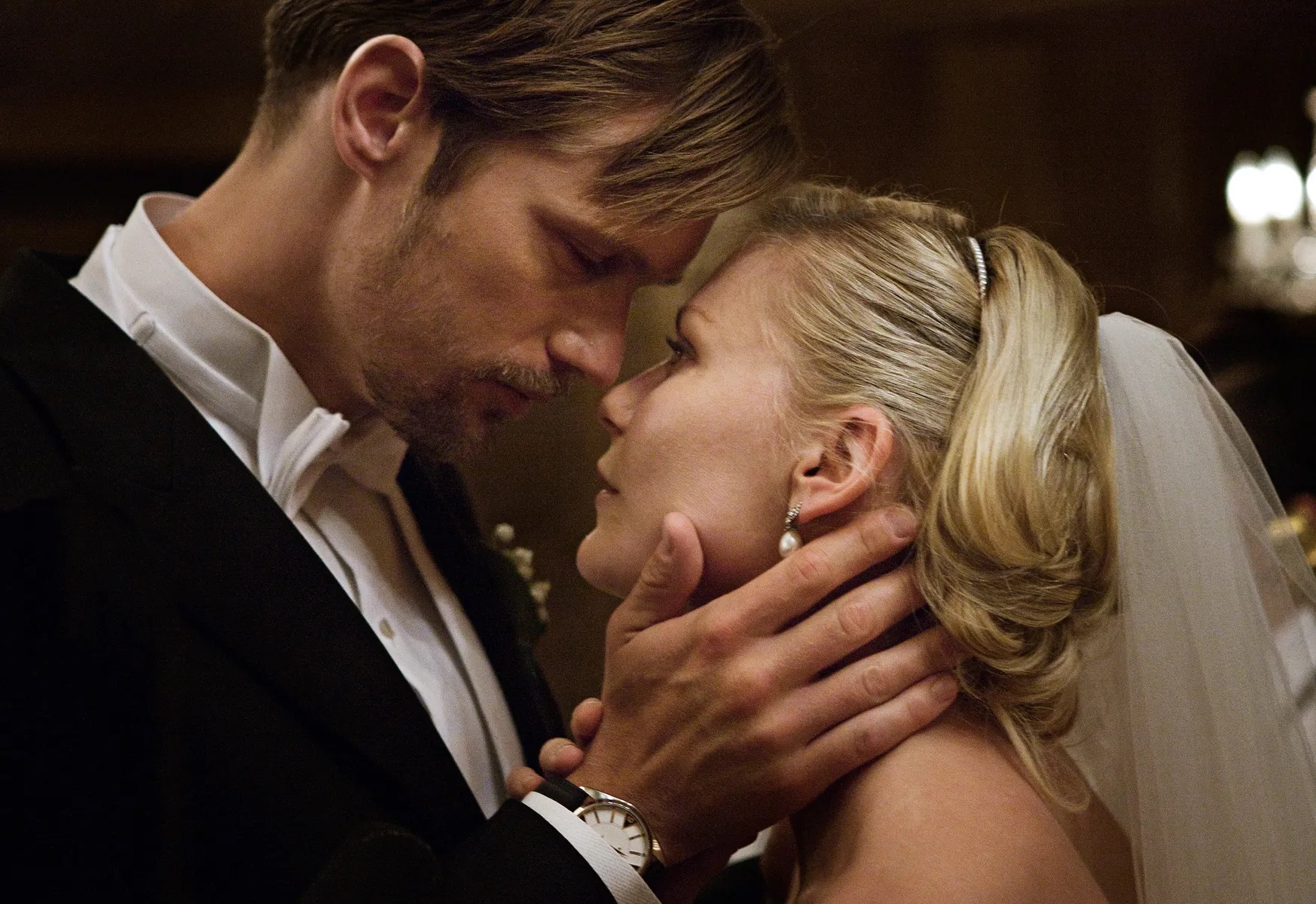

When categorizing Lars von Trier’s oeuvre, critics speak of a “Depression Trilogy” bookended by Antichrist and Nymphomaniac, but Melancholia is the one that really embodies the concepts and worries nested at the heart of this project. The Danish director may be known for his provocative approach to filmmaking and disregard of taboos, but with this film, he makes room for vulnerability. On the character of Justine (Dunst) he places the weight of the world, only after allowing her to be weak, small, and socially unacceptable at her own wedding celebration. A rather subversive decision, but vesting these expectations in someone as wide-ranging as Kirsten Dunst assures an absolute win, even if there remain some questionable characteristics that align too well with abstract male fantasies of what a woman in distress would look like.

"Von Trier's latest fable is nothing without its blaze of majesty -- or, as his detractors would say, its bombast."
— Anthony Lane
Two sisters find their already strained relationship challenged as a mysterious new planet threatens to collide with Earth.
It's Justine's (Kirsten Dunst) wedding day, but she feels and acts off despite her sister Claire's (Charlotte Gainsbourg) best effort; meanwhile, a mysterious planet called Melancholia approaches Earth.
Of course, we have to talk about the visual style here. Lars von Trier is one of the founders of the Dogme-95 movement, where filmmakers prioritized real life as captured by low-quality, shaky handheld camcorders to underline the artificiality of film and to get closer to the fabric of life through digital means. Melancholia is a much, much more polished film, but the quivering, jolting camerawork is somewhat of a staple here. The widescreen aspect ratio in combination with tight close-ups on a person's face right before the crisp focus shifts to someone else testify to the commotion that is reality. In this way, by highlighting how strange situations and social interactions really are, von Trier performs a Brechtian critique of societal expectations. Be it depression, or the apocalypse, some people will always act like they know what's best, and leave it to Lars von Trier to show them exactly how wrong they were about that.
All the subsequent suffering will be worth it, if you make it past the insufferable first ten minutes.

Venice
1 win

"Von Trier creates a blackly comic delirium that is terrifying and completely exhilarating."
— Amy Taubin