Our take
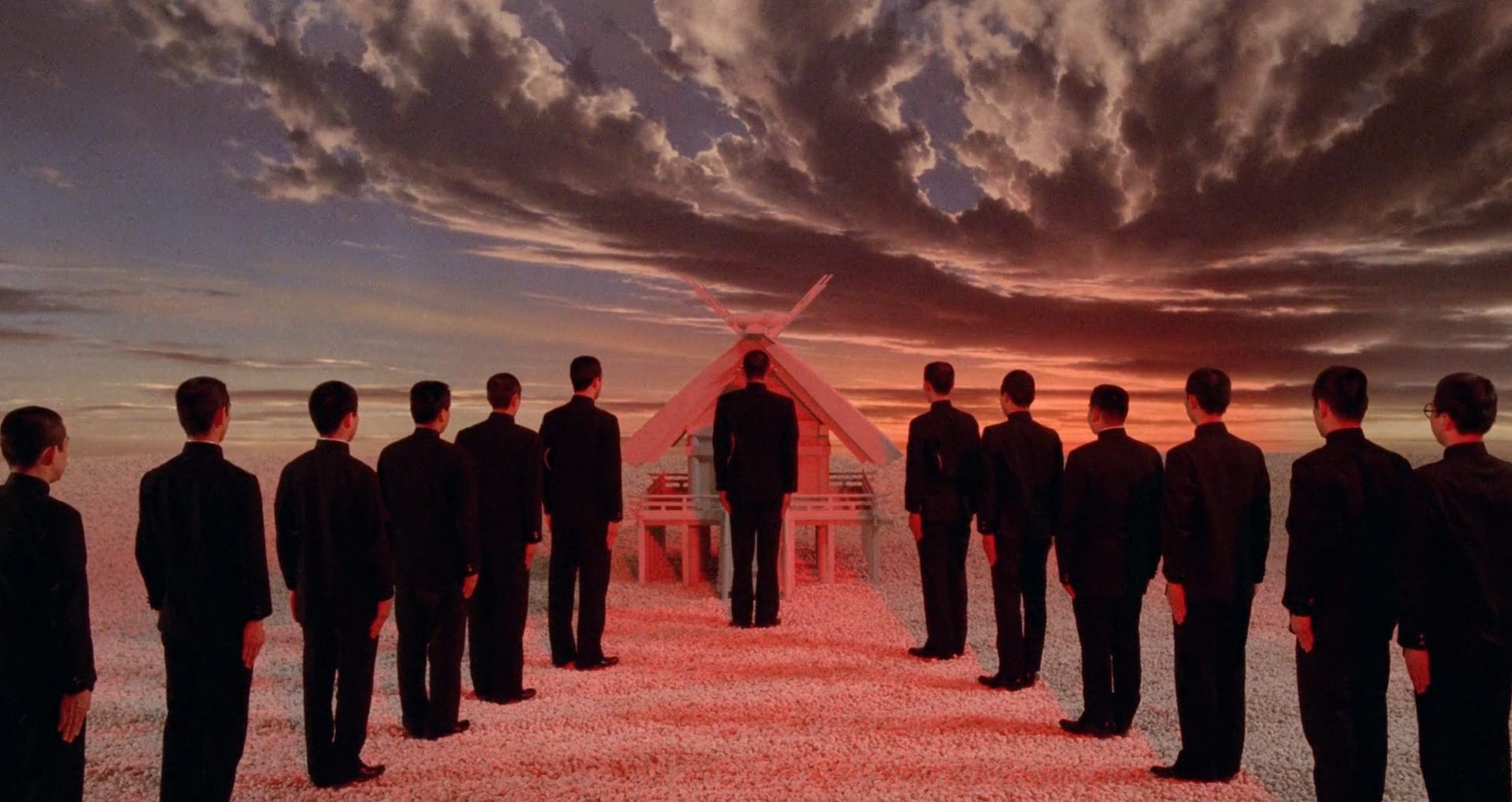
Shattering the rules for how a biographical drama can look and be told, Paul Schrader’s Mishima rejects the usual character study template in favor of a much more abstract attempt to understand a person through their art. Told in fragments that flit between Mishima’s early life, dramatizations of his fiction novels, and the final day of his life, the film pieces together what it believes was the core of this person’s life. Schrader’s script (co-written with his brother Leonard Schrader) traces within Mishima’s history a lifelong struggle with perceptions of his own masculinity and authority—as if he spent his every waking moment trying to compensate for a lack that he could hardly articulate. The character’s eventual turn towards reactionary beliefs makes logical sense in the film, but remains baffling all the same.
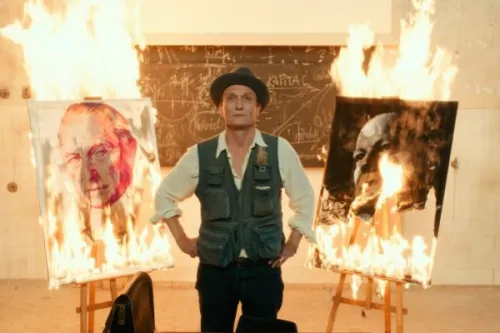
With all of its talk about beauty—enhanced by Philip Glass’ opulent musical score, and Eiko Ishioka’s breathtaking production design that transforms Mishima’s novels into tactile stage productions—the film conceals an incredibly dark heart. Mishima doesn’t inspire sympathy so much as he inspires morbid fascination, and it’s both a daring and frustrating choice to focus entirely on the character’s harmful delusions without room for much else. Still, Schrader has constructed an unforgettable audiovisual experience that lingers long after it’s over.
What it won

Cannes
1 win
The story
A fictional account of the life of Japanese author Yukio Mishima, combining dramatizations of three of his novels and a depiction of the events of November 25th, 1970.
Elsewhere

"One of the most gorgeous and sophisticated portraits of an artist ever put on film."
— Michael Sragow

"Paul Schrader’s film Mishima is a boldly conceived, intelligent and consistently absorbing study of the Japanese writer and political iconoclast’s life, work and death."
— Variety Staff
The story of the celebrated but highly controversial Japanese author and right-wing nationalist Yukio Mishima, partially told through excerpts from three of his novels.
While Mishima's visuals and music take up the spotlight for most of the film, Ken Ogata's performance as the title character is a chillingly dedicated performance that only builds and builds. And in the final sequences, where Schrader recounts Mishima's final moments, Ogata takes this dangerously unsympathetic man and finds a way to reduce him back into a little boy taken aback by how large and merciless the rest of the world is. Desperately he proclaims what he believes in with his tears in his eyes, but nobody—not even the audience—can take him seriously.
Every other biopic ever made ought to be embarrassed.
The details



Who picked it

Emil Hofileña is a curator at A Good Movie to Watch. He also writes as a theater critic, with work published in Rogue and Out of Print, among others. He’s probably crying over a movie or an episode as we speak.