
Our take
Before Turning Red and Crazy Rich Asians, there was The Joy Luck Club. Based on the bestselling novel, the film adaptation centers around the four Chinese-American women and their relationships with their mainland-born mothers. Explaining that the club isn’t particularly joyful or lucky, the film starts from June’s perspective, a perspective of a Chinese-American woman who’s lived all her life in America. However, through strategic screenplay structure and effective sequence arrangement, we learn the struggles of the founding club members, the struggles that brought them to another country, which forms the dynamics between them and their American daughters. Because of how comprehensive and layered the film is, this underrated film adaptation is a phenomenal take on the immigrant experience. Tears are inevitable with how they deal with difficulties, but so is hope.
Streaming arrival
What it won

BAFTA
2 noms

WGA
1 nom

Nat. Board of Review
1 win
The story
Through a series of flashbacks, four Chinese women born in America and their respective mothers born in feudal China explore their pasts.
Elsewhere

"The film contributes a strong and exceedingly rare view of a different cultural experience to the American screen, and in a way that will reach a wide public."
— Todd McCarthy
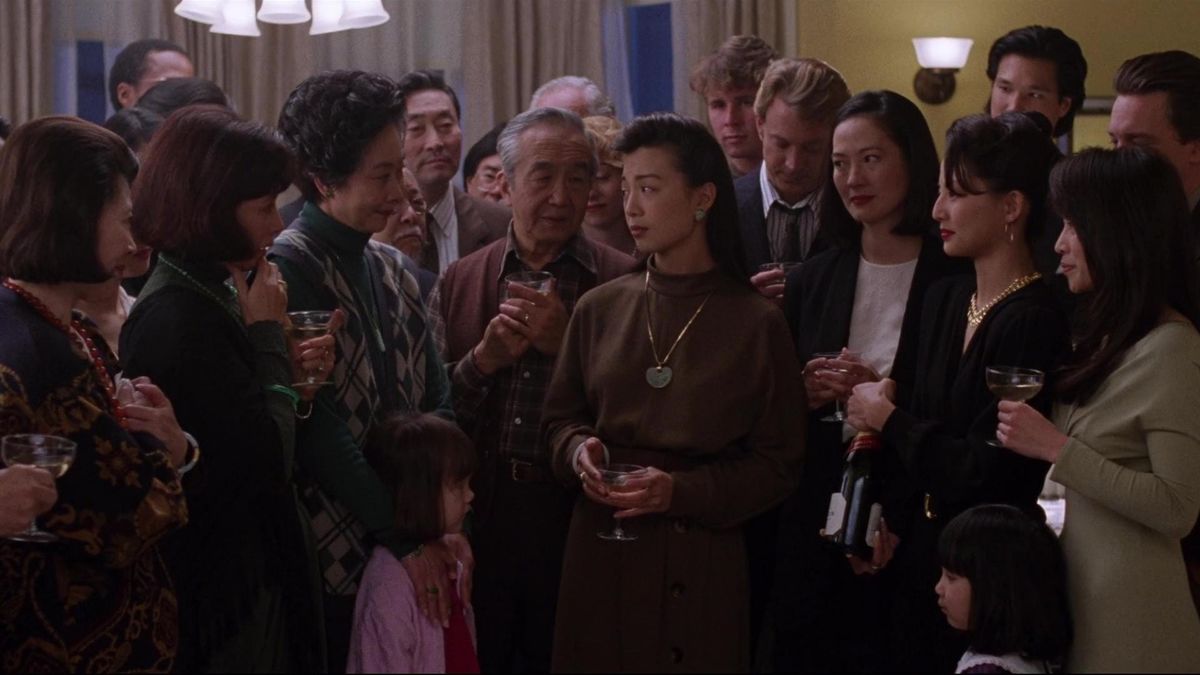
Before June leaves for China, her deceased mother’s mahjong club reunites, sparking the memories of the immigrant women and their American daughters.
Because of the novel’s structure, the film can feel episodic as the story juggles the narratives of eight separate characters through interconnected vignettes. However, the film does a phenomenal job of giving justice to each character. Screenwriter Ronald Bass’ addition of the frame story – June’s surprise farewell party – effectively sets up the idea of the mahjong club as a community of immigrants seeking support from one another for 30 years. Through the club’s reunion, the film connects flashback to flashback, linking their discussions with previous memories. It’s a difficult task to make multiple flashbacks feel understandable, but director Wayne Wang and the original novelist Amy Tan have arranged each sequence with a sense of ease not present in other films.
Honestly, this was tough to watch while my mom was in the room.
The details



Who picked it

Isabella Endrinal is a curator at A Good Movie to Watch. She's now free from the corporate night shift. Previous articles have been published in outlets such as NANG Magazine. She's currently catching up on some classic films… if she isn't coping with the fact that the Haikyu anime will end soon.