
Our take
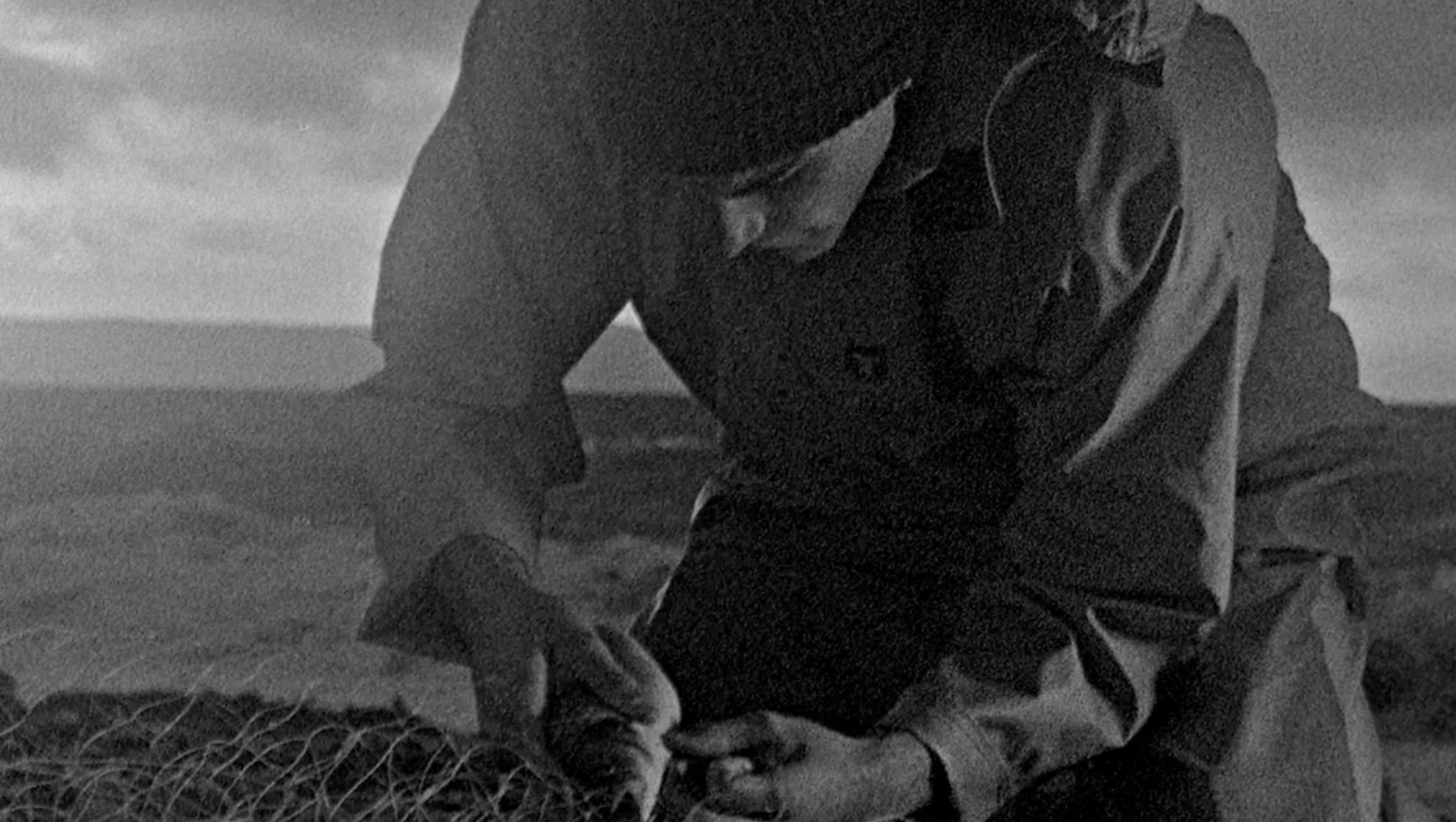
Shot on a hand-cranked silent camera with all the sound and dialogue added in during post, Bait immediately stands out as a film that appears lost in time. With the visual texture and slightly displaced audio of an independent film made during Hollywood’s infancy, the movie manages to convey its character and class conflicts with an additional air of surreality, even in its simplest sequences of shots. But writer/director/cinematographer/editor Mark Jenkin doesn’t approach this project with an ironic or flippant attitude. Through the most fundamental techniques of an art form that’s constantly changing, he crafts a story about the inevitability of change and those who really stand to lose the most from the passage of time.
Streaming arrival
The story
Martin Ward is a cove fisherman, without a boat. His brother Steven has repurposed their father’s vessel as a tourist tripper, driving a wedge between the brothers. With their childhood home now a getaway for London money, Martin is displaced to the estate above the picturesque harbour. As his struggle to restore the family to their traditional place creates increasing friction with tourists and locals alike, a tragedy at the heart of the family changes his world.
Elsewhere

"Strange, spellbinding and timely. One of the most thrillingly original British films in years."
— Adam Woodward

"A creeping, original British work that feels pounded into existence by hand, or possibly belched up by the angry sea."
— Ian Mantgani
Tensions rise between the citizens of a seaside Cornish village and the tourists who have started renting out space and disrupting the local economy.
You could take any frame from Bait and convince anybody that it's a film made anywhere between 1920 and 1970. But it's the editing—the strange way it plays with perspective and time—that allows the movie to transcend its analog aesthetic, and that really proves Jenkin's skill as a craftsman. Early on in the film, we begin to see images out of order and we aren't sure how real they're supposed to be. Jenkin successfully creates a sense of subjectivity that only keeps growing alongside its narrative—developing into a suggestion that these issues of displacement and discrimination tackled in the film have always occurred and will always occur so long as human beings share space.
Inspiring for budding filmmakers like me who can only afford the most outdated cameras in the world. Discouraging for budding filmmakers like me who don't have a fraction of Mark Jenkin's skill.
The details



Who picked it

Emil Hofileña is a curator at A Good Movie to Watch. He also writes as a theater critic, with work published in Rogue and Out of Print, among others. He’s probably crying over a movie or an episode as we speak.