
 2022 Movie
Dir. Stephen Williams · Czech Republic, Ireland · English, French
A formulaic biopic that’s still worth a watch by virtue of its extraordinary subject
This biopic of the little-known Chevalier de Saint-Georges, the world’s first prominent Black classical composer, opens with a fierce indictment of history’s ignorance of its subject. Even if it’s one example of the movie’s dramatic license-taking, the scene — in which the Chevalier (Kelvin Harrison Jr.) challenges his eminent contemporary Mozart to an onstage musical “duel” and easily bests him — is a dramatically thrilling statement of intent for the movie.
Unfortunately, the rest of its overlong runtime doesn’t quite fulfill the promise of that opener. That’s largely because of the writing, which leaves uber-talented performers like Harrison Jr. with only a limited range of notes to play. What’s more, Chevalier stops short of exploring some of the most fascinating facts of its multihyphenate subject’s life — like the role he played in the French Revolution, commanding the first all-Black regiment in Europe — in favor of hewing to a predictable screenwriting formula that demands a romantic element to the plot, even if the one in question is only thinly backed by actual evidence. Still, while some of Chevalier’s filmmaking choices seem to misjudge what makes its subject so interesting, the key facts of his life — his extraordinary skill at music and fencing, the role racism played in blocking his greatest ambitions — still get enough exposure here to make it an enlightening watch.
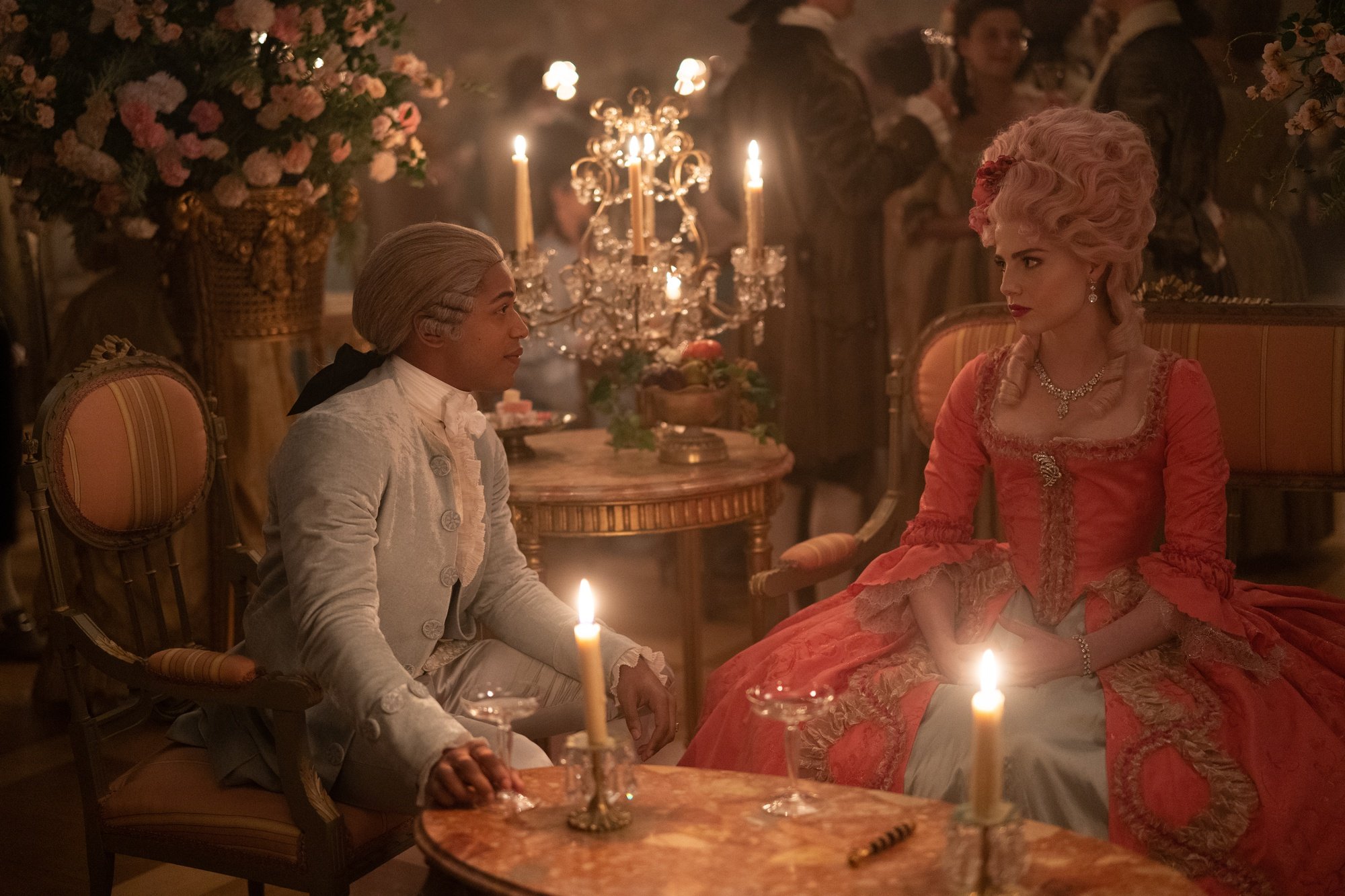
The illegitimate son of an African slave and a French plantation owner, Joseph Bologne rises to improbable heights in French society as a celebrated violinist-composer and fencer, complete with an ill-fated love affair and a falling out with Marie Antoinette and her court.

"Few people are as deserving as the grand-scale biopic as Joseph Bologne, and even when it’s hitting false notes, “Chevalier” dazzles because of the untapped magic of its central character."
— Kate Erbland

"A solid and handsome portrait that’s also frustratingly conventional in its structure and tone."
— Christy Lemire
The (mostly) true story of the world’s first known Black classical composer, the Chevalier de Saint-Georges, as he contends with racism in the court of Marie Antoinette
That electrifying opening battle of violins aside, Chevalier features another standout scene near its ending, at the moment when the composer has lost nearly everything dear to him. A stirring monologue delivered by his Senegalese mother (played by Ronke Adekoluejo) argues that, amidst all the dehumanizing oppression meted out to people of color during that era of colonialism, the greatest evil done was in convincing them they had no agency left. It’s both a much-needed moment of connection between the Chevalier and his mother (whom he seems embarrassed by before this point) and a rare moment of keen psychological insight in this otherwise fairly shallow film.
Though it starts out on a thrilling opening note, this musical biopic isn’t quite as virtuosic as its subject

Spirit Awards
1 nom

Farah Cheded is a UK-based curator at A Good Movie to Watch and a Rotten Tomatoes-approved freelance critic whose work has been published at outlets including The Playlist, Paste Magazine, and Film School Rejects. She lives in fear of the day she runs out of 'Columbo' episodes to watch.
Comments