
The Best R Movies to Watch (Page 2)
You might want to wait until the geds are in bed before going through this list of great titles to stream. Here are the very best movies and shows with an R rating, intended for audiences over 17 or with parental guidance.
To access filters, visit our homepage.
In 2017, the New York Times published a groundbreaking report by Jodi Kantor and Megan Twohey that detailed, for the first time, Harvey Weinstein’s atrocious history of sexual abuse. The New Yorker would release Ronan Farrow’s report five days after, prompting multiple survivors to share their own stories—and the rest, as you know, is history. Following Kantor and Twohey (played by Zoe Kazan and Carey Mulligan, respectively), She Said sheds light on how this pivotal moment in the establishment of the #MeToo movement came to be.
Based on Kantor and Twohey’s book of the same name, the film reveals the specific journalistic processes involved in writing this expose—a seemingly impossible feat, considering Weinstein’s hold over multiple industries, including the press. Because it’s a newsroom drama, there’s a lot of talking, but there’s also a lot of listening. Gripping, empathetic, and (even now) necessary, She Said makes for a thrilling watch.
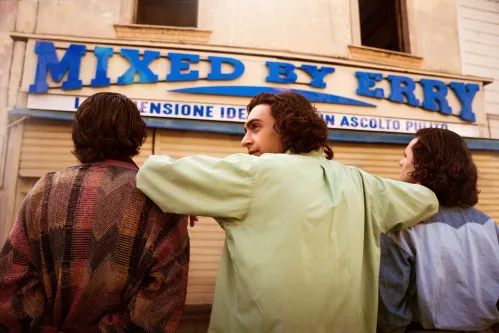
Rye Lane knows it’s treading familiar ground by having its charming leads fall in love as they walk and talk their way through a beautiful city. So instead of experimenting on a tried-and-tested setup, it smartly focuses on specificity. It hones in on the characters’ Gen Z woes and cranks up the British references, giving itself character and charm for days. It also finds other ways to be inventive as it trades plot twists for bold editing and camerawork. Rye Lane is a refreshing entry into romcom cinema, but it is also obviously a big fan of it as it holds plenty of homages and subversions of the genre. This one is made for and by romcom fans, and it’s always nice to see a modern love story set during our times.
For better or for worse, we have no choice in the country we’re born in, the citizenship we first attain, and sometimes we’re forced to leave that country for our own safety. My Name is Loh Kiwan depicts a North Korean defector seeking refugee status in Belgium, but while the government deliberates, it’s a hard life he has to face, one that changes when he meets a fellow Korean who may not be an immigrant, but who’s just as lost as he is. While there are some subplots that falter halfway, My Name is Loh Kiwan still manages to stick the landing of being both a moving romance and an empathetic survival drama that highlights the struggles of refugees.
There’s not much to analyze in The Wrath of Becky, which might sound like a jab, but for grindhouse thrillers such as this, it comes as a compliment. The story is lean, the action is on point, and the dialogue is whipsmart. There is little to distract from the main attraction, which is the creatively gruesome ways in which everyone tries to kill each other.
It’s so simple, in fact, that you’d be forgiven for thinking this is a standalone film, instead of a sequel to an earlier movie, simply titled Becky. Efficiently, parts of the first installment appear as flashbacks here, but they’re hardly needed to convince us of Becky’s ferocious might. Wilson already does an excellent job with minimal but evocative gestures. Seann William Scott, too, is surprisingly terrifying as the head of the Neo-Nazi group out to get Becky. It’s easy enough to paint the incel as a villain, but to portray him with such palpable terror is a challenge that Scott steps up to.
If you’ve never encountered Beth Stelling before, it might take some getting used to before her brand of comedy really hits. Her routine in this special isn’t necessarily built around huge punchlines, animated delivery, or edgy subject matter. But there’s plenty of oddly specific detail to her many, many anecdotes that gradually begins to feel warm and easy to connect with, whether or not you’ve ever been to Ohio. Stelling usually comments on the absurdity of many of these details herself—which, surprisingly, never ruins the joke but helps invite the audience in closer. Her storytelling is consistently engaging all throughout, painting this easygoing outlook on life, which just happens to be punctuated by the most bizarre memories that still remind us of the people we’re fondest of.
If Katrina Babies seems like a somewhat disjointed account of the myriad responses to Hurricane Katrina and the U.S. government’s horrible, anti-poor response to the disaster, director Edward Buckles Jr. uses this structure with much more intent. For once this is a documentary that feels like citizen reporting and not a sanitized report from experts who have little to no real personal stake in the subject. As the film swings from one talking point to the next, you get the sensation of just how much the people of New Orleans are still trying to comprehend; the loose structure brings to this film a sense of helplessness that, for some, just can’t be overcome.
To Leslie follows the eponymous Leslie (Andrea Riseborough), a Southern woman who finds herself at the bottom of the barrel after finally using up every penny of her $190k lottery win. Out of work, friends, and family, she drowns herself in alcohol—that is until a kind soul in the form of motel owner Sweeney (Marc Maron) takes her in and gives her a shot.
To Leslie starts off a bit slow, and its premise may seem like it’ll give way to weepiness, but it’s worth sticking by till the end. The film only gets better, especially with the arrival of Maron, whose presence lends the film a much-needed buoyancy. It’s also worth noting that unlike many of its kind, To Leslie avoids the poverty porn trap by depicting issues like addiction and indigence with nuance, honesty, and humanity.
It’s slower and talkier than you’d expect from a semi-erotic film, but Ehnegard lives up to its title well enough to satisfy. It’s titillating, but in a cheeky rather than provocative way. The dialogues are lengthy, but they’re alternately witty and poetic, so despite the pace they never actually bore. Ehnegard’s real delight, however, is its beauty. Set in the old kingdom of Babenhausen, Ehnegard looks like a fairy tale come to life. The towering castles, the sprawling meadows, the twinkling forest lakes, and of course, the smartly costumed people who populate the scenery—all these and more ensure that each frame has a picturesque glow to it. And with Sidse Babett Knudsen (Borgen, Westworld) taking charge of an appealing cast, Ehnegard proves to be a charming watch.
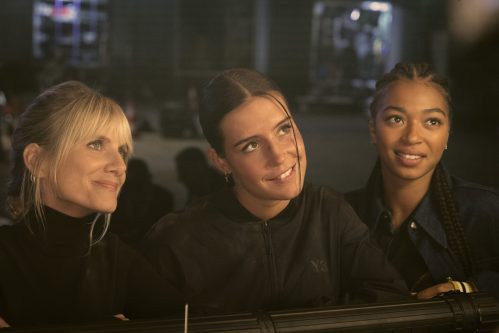
An all-female action comedy that doesn’t get self-serious about the way it’s subverting the genre — Wingwomen feels like a breath of fresh air. It wisely grasps that plot isn’t paramount for a movie like this, and so it joyously dunks on cerebral scenarios with its unabashedly silly story convolutions, like when its professional thieves take a brief pause from their momentous One Last Job™️ to sail to Italy and exact bloody, flamenco-delivered revenge on the gangsters who killed their beloved rabbit. Exotic Mediterranean location-hopping isn’t the only way Wingwomen milks Netflix’s finance department for all it can get, either: director-star Mélanie Laurent also packs in all manner of stunts, from spectacular base-jumping sequences to dramatic drone shootouts.
For all its breezy style, though, there is real heart here, and not the kind that feels crafted by an algorithm. It’s true that a late twist unwisely uses the movie’s embrace of implausibility for emotional ends, but otherwise, the relationship between its professional thieves — ostensibly platonic but very much coded otherwise (a la Bend It Like Beckham) — has surprisingly sincere warmth. Thanks to the cast’s natural chemistry and characters that feel human despite the ridiculous plot, Wingwomen is much more moving than you might believe possible for a Netflix action-comedy.
While not having world-ending stakes or large-scale operations, Sixty Minutes just works as an action movie. Sure, the plot is familiar and a little far fetched, but the film maximizes the potential of its premise, with excellently choreographed fight sequences working in tandem with the cinematography to reflect the MMA fighter leading the movie. Each moment isn’t wasted, with the action escalating each time Octa finds out about the hidden information kept from him about the match he’s planned to skip, and the film easily keeps track of his journey through neon-lit stopwatch faces and maps. And when we (and Octa) feel tired from all the fighting, the film ends right on time after sixty (and twenty nine) minutes.
Stutz is Jonah Hill’s loving tribute to his therapist Phil Stutz, a smart and empathetic man who’s dedicated his entire life to helping people. The conversations between them, deeply personal and vulnerable, are meaningful in themselves, but Stutz also works as a helpful instruction on how to be your best self and as a metanarrative on telling honest stories on a medium as seemingly artificial as film (it is similar to Bo Burnham’s Inside in that way).
Stutz is at once experimental and comforting, a real gem especially for people with an interest in psychoanalysis and alternative psychiatry. It’s at its best when the two men deal with uncomfortable truths in the kindest of ways, and it’s sure to be something people will return to often for advice and solace. Fun fact: the documentary was co-produced by Joaquin Phoenix and Rooney Mara.
They Cloned Tyrone is a genre-bending gem. It combines Deep State conspiracy theories with sci-fi and social commentary, all while looking like a futuristic 1970s Blaxploitation film. It’s outrageous good fun and pleasing to look at (here is a film that knows how to properly light Black actors), but there are times when it feels too far fetched. The science can get wonky and its commentary on gentrification lacking, but all is forgiven when you have such a strong trio of leads. One of the smartest things They Cloned Tyrone does is pair Boyega with Teyonah Parris, who plays the call girl Yo-yo, and Jamie Foxx, who plays the pimp Slick Charles. They have a fun-loving no-nonsense chemistry about them that makes them easy to attach to and root for. They’re also just very funny, which might be expected of Foxx but it comes as a pleasant surprise for Parris, whose popular turns in Mad Men and WandaVision prove that she’s been severely underutilized as a comic.
As the title suggests, Saturday Night takes place in all of one night, during the very first airing of the titular NBC show. Everyone’s naturally nervous, not least of all Lorne Michaels (Gabriel LaBelle), who runs the entire circus. The suits are keeping eye, the cast clashes egos, no one knows where the lighting director is or if costume change can happen just in time. The guests are unhappy, there are too many sketches, and to top it all off, Lorne’s wife Rosie doesn’t know if she wants to use his last name in the credits. The stakes are high. But are they, really? Saturday Night often feels arrogant and self-important in how it assumes we’d care how things went down that fateful night. Still, it tempers that with a humorous self-awareness, some fine performances, an infectious buzzing energy, and well-timed reminders that SNL is, in fact, that show. It changed the trajectory of comedy in TV, and so that arrogance is earned (though still admittedly annoying at times). And lest you think it’s all laughs and nerves, Saturday Night also harbors some surprising sweet stuff in the center. The film doubles as a love letter to New York City, specifically the NYC of the late 20th century. Though that expression can be overloaded too, it’s endearing and enjoyable nonetheless.
As sexy and intriguing as Rosa Peral’s case sounds, this documentary suggests that it’s just another instance of the public’s wild if harmful imagination. Both the media and prosecutors made Peral out to be a promiscuous woman out for blood, with tabloids calling her a “go-go dancer” and a “stripper,” despite being neither, and public officials recalling her sexual activities in court, despite their irrelevance to the case. Via a phone call from prison, Peral debunks these claims and tries her best to reclaim the narrative. It’s the first interview she’s given since being convicted for 25 years in 2020, and in a finely balanced move, the filmmakers contrast her impassioned testimony with interviews they’ve conducted with Peral’s critics and prosecutors, thus giving us enough to deliberate among the two sides. If the documentary ever seems biased towards Peral, it’s clear that it’s only to offset the weirdly strong vitriol she’s received among the Spanish public.
In both documentaries and films, adoptees meeting their biological parents for the first time is an event often painted in a sweet light. Never mind the child’s mixed feelings about it or the tragic reality that caused the split in the first place—it’s a reunion between family members, so it must be unequivocally special. In Return to Seoul, director Davy Chou doesn’t just debunk that myth, he subverts it by making the adoptee, Freddie, as unapologetically complex and emotionally enigmatic as possible. She resists affection but wallows in loneliness. She craves reinvention but stays in the same place for years. She’s in constant motion while being absolutely stuck in life. In other words, she’s a realistic embodiment of a person struggling to find some semblance of home. Chou displays an intimate understanding of the foreign experience, and he couples it with captivating cinematography, a rousing soundtrack, and fantastic performances across the board to make a daring, inventive, and thoroughly exciting film.
A healthy mix of despair and self-deprecation has always been Bo Burnham’s signature, but Inside takes it to the next level. It’s a deconstructed film, rather than a simple one-night special; a one-man-show that constantly undercuts itself. Even more so, it sabotages its own immersive qualities and explores the depths of self-loathing by turning oneself into comedy material. Some may say, it’s a classic move, but the pandemic reality and Burnham’s unkempt look predispose us to embrace all the cringe (YouTube reactions), quirkiness, (the sock puppet), and frightening angst (suicide jokes) he puts forward. Emotional rawness and a polished DIY look fits the Netflix bill, but as far as the content goes, this one goes straight to the world heritage lockdown archives.
A documentary told entirely through animated avatars can be a hard sell, but instead of playing into the expected jokes, director Joe Hunting takes this digital environment extremely seriously, and that makes all the difference. He doesn’t downplay how absurd it is to see what are essentially 3D characters going on dates and having bellydance classes together, and yet Hunting still takes time to emphasize how freeing this virtual existence is for all involved. It’s disappointing that the film never addresses the many real concerns people have about purely online relationships (deception, exploitation, and abuse, among others), but as a positive and perhaps overly romanticized view of this new, 21st-century social space, the documentary remains fresh and vital.
Factually accurate yet still earnest in its mission, Eldorado: Everything the Nazis Hate delivers what it promises. While the title comes from the club’s name, the film is less about the club and more about the LGBTQ+ experience in Nazi Germany. To do this, the documentary focuses on Eldorado’s individual patrons. Directors Benjamin Cantu and Matt Lambert interweave their stories with historical context. For example, patrons like trans pioneers Charlotte Charlaque and Toni Ebel shed light on historical advancements for the LGBTQ+ community. While it can be overwhelming when Eldorado introduces its patrons and their lovers and their political rivals, the film stays focused on what it sets out to do. Eldorado remains an important reminder of the LGBTQ lives lost and the love that still remains.
If you’re new to the story, I Don’t Expect Anyone to Believe Me feels difficult to understand. The film adaptation portrays the novel through abruptly cut sequences, meticulously framed naturalistic frames, and monologue and dialogue that mean more than what’s being said, on top of Juan Pablo’s gradual descent into a criminal network. It’s as disorienting as being in Barcelona feels for Mexican couple Juan Pablo and Val. However, this film feels like a new approach in adapting novels – the multiple perspectives and epistolary portions adeptly portrayed through typed up screens and alternating perspectives (and direction) between the couple. It doesn’t feel like something that you’ve likely seen before.
In 1961, Francisco de Goya’s portrait of the Duke of Wellington was stolen from London’s National Gallery, but the theft was no slick heist pulled off by international art thieves. No, the improbable culprit was (the improbably named) Kempton Bunton, a retired bus driver and aspiring playwright who pinched the painting — which the gallery had recently acquired for £140,000 of UK taxpayers’ money — as a Robin Hood-esque “attempt to pick the pockets of those who love art more than charity.” The principled Bunton (played here by Jim Broadbent) was, at the time, waging a one-man campaign to convince the government to grant pensioners and veterans free TV licenses, and the Goya theft was his way of publicizing those efforts. It was an eccentric plan, but Broadbent leans fully into his status as a UK national treasure here, making oddball Bunton a deeply sympathetic and warm figure because of (not despite) those quirks. Thanks to his performance — and the note-perfect direction of the late, great Roger Michell — a quirky footnote of history becomes a sweet, unexpectedly moving story about solidarity and the power of the underdog.
The colloquial phrase “May-December” refers to romantic partners with a large age gap, but leave it to Todd Haynes to craft a poetic and unsettling world out of this (slightly troubling) banality of life. His new film is loosely based on the real case of Mary Kay Letourneau, who in 1997 was convicted as a sex offender after being caught having a relationship with a minor, a student of hers, 12 years old (22 years her junior). May December begins twenty years after the tabloid scandal surrounding the marriage of Joe and Gracie has died down. Elizabeth, an actress, is conducting research in preparation to play Gracie in a film production, but she doesn’t know what to expect. Alongside her, we are welcomed into the family home, meet their teenage children, sit through their family dinners, marvelling at the levity and nonchalant atmosphere in the air. Something is missing, or at least that’s what Elizabeth suspects. A psychological drama-thriller-black comedy, May December is impossible to pin down. A profound film on human confusion, identities, and past traumas, it unites two of the best Hollywood stars, Julianne Moore and Natalie Portman, in a delightfully eerie play of doubling and revelations.
At first, the Last Call for Istanbul feels like one of those serendipitous travel romances reminiscent of Before Sunrise. As Serin and Mehmet enjoy New York at night, it’s absolutely enchanting, especially with the unique, striking mirrored transitions that shift between the two as they get ready, but this nighttime stroll has already been walked on before, complete with droll dialogue and impulsive choices. However, the film makes a shift to its second half, and it suddenly reconfigures what we know about the two and their romance. While it does employ other familiar romance tropes, it’s still an intriguing shift that explores the concept of possibilities, and the cost in choosing one over the others.
Surreal, off-putting, and extremely disturbing, Infinity Pool plays with the concepts of cloning and the death penalty to craft an examination on colonial tourism. It’s a thematically rich horror film, with hazy neon-lit sex scenes and absolutely terrible behavior, enabled by their wealth and advanced technology that could have been put to better use. Mia Goth, in particular, is strikingly unhinged, as Gabi taunts and lures James into bigger and more terrible crimes, crimes that he can only pay off with the wealth of his father-in-law. And Alexander Skarsgård as James believably gets sucked into this extremely libertine lifestyle, fuelled by the nepotistic anxiety of not living up to his own potential. The film presents a scary notion that pushed by wealth and playground tactics, one will willingly kill their own conscience, again and again, to belong to their cohort.
When the system messes with you personally, it’s such a powerful fantasy to be able to settle things with your own hands. To be strong enough to retaliate, and once things are settled, to be strong enough to be left alone, not to be messed with. The Black Book depicts this revenge fantasy, reminiscent of Liam Neeson’s Taken, albeit with corrupt police. The Nigerian action thriller isn’t afraid to go hard, with threats of splitting a person in half by a table saw, dramatic shoot-outs, and fight sequences. However, what makes the thriller work is that all these action sequences are intended to be the reckoning of corrupt institutions. There are some messy parts, certain shots that included some bad takes. Despite this, The Black Book still proves to be entertaining enough to forgive these mishaps.
After Loving Vincent, DK and Hugh Welchman’s iconic oil paint animation initially seems like old hat, but this time the style is actually more fitting for their second feature. As an adaptation of the iconic Polish novel, The Peasants had to live up to the book’s reputation as the Nobel-winning depiction of the Polish countryside, one of the first to take an intimate look into the lives of the commonfolk, their customs, beliefs, and traditions. The Welchmans’ naturalist, impressionist art style lines up with the way the original Chłopi was inspired by these movements, as does L.U.C’s selection of mesmerizing, haunting Polish folk songs. While the plot is a tad cliché, it only does so in the way folklore tends to weave the same threads. It just so happens that the threads in The Peasants lead to violent ends.
In the Mexican film A Cop Movie, director Alonso Ruizpalacios mixes fact and fiction, documentary and narrative, to tell the tale of Teresa and Montoya, two police officers whose dreams are dashed by the corruption of their trade and who, eventually, find love and comfort in each other.
Ruizpalacios takes thrilling risks in structuring this genre-bending story—cutting stories into parts, jumping back and forth between the harrowingly real and captivatingly non-real. For all the experimental maneuvers he makes, however, the through-line is always Teresa and Montoya: particularly, their love for each other and for an institution that should have, in an ideal world, supported them and the people they vowed to protect.
To its credit, instead of merely humanizing the controversial police force, A Cop Movie adds some much-needed nuance to the big picture. At the end of the day, they’re no different than any other underpaid laborers working desperately to make end meets. A Cop Movie doesn’t gloss over the fact that the police, like so many other workers, are stuck in a rotten system that’s long overdue for a major overhauling.
The Assessment is a psychological sci-fi thriller following Mia and Aaryan, a wealthy couple applying to be parents in the strictly controlled New World. Their final hurdle is to pass a seven-day assessment conducted by Virginia (Alicia Vikander), who makes sure to test every grain of Mia and Aaryan’s patience and sanity. The trials get more unusual, intrusive, and repulsive at every turn, but they’re not just shocking: they get you thinking about what it really means to raise a person when circumstances are bleak; what the world can come to once nature finally fights back; and what humans are capable of when deprived of humanity. These are weighty themes, but The Assessment carries them out with style and substance. It’s breathtaking to look at, and the performances (especially by Olsen and Vikander) will knock you off your feet.
Primarily, Cha Cha Real Smooth follows Andrew (Cooper Raiff) as he figures out what to do with his life post-college. But peripherally, it’s also about love, friendship, coming of age, and parenthood. Sometimes the movie wobbles under the weight of all it wants to be and you start to wonder whether it would benefit from a leaner script and a tighter focus.
But ultimately, Cha Cha Real Smooth is endearing and a breeze to watch. Andrew is relatable as a know-it-all who doesn’t actually know it all, and Domino (Dakota Johnson) is moving as a young mother consumed by both her envy and love for Andrew. Despite its occasional unevenness, the film’s big emotional heart triumphs, and sometimes that’s the best that you can hope for in a story about one’s 20s.
You don’t need to be familiar with the rest of the Rurouni Kenshin live-action movie series—or the original manga and anime, for that matter—to appreciate The Beginning as a powerful period drama in its own right. This is a story that courses its historical context about a tumultuous time in Japan’s past through a stoic, fearsome protagonist who can’t seem to escape the violence that’s become his only function. And even more impressively, as a prequel, the film keeps a heavy sense of dread about it, even if you’re sure about which characters are meant to survive in order to appear in the previous films. It’s the mark of any great tragedy that even the things that are destined can still feel so painful.
You could take away a lot of parts in Reptile, and it would still make sense. It’s the kind of film that leans on sound and style to justify overlong takes and teeth-grittingly predictable scenes. But all is forgiven when del Toro, who also co-writes and co-produces the film, appears on screen. He has a simmering, captivating presence that demands you keep your eyes on him even when little, if anything at all, happens. Silverstone, Eric Bogosian, and Ato Essandoh are likewise enthralling, but Justin Timberlake unfortunately does not hold the same staying power. The film is at its weakest when it tries to convince us that he plays a complex, layered man when, in fact, Timberlake relays nothing but surface-level thrills. But Reptile is at its strongest when it gives us del Toro in all his forceful glory.
A music documentary with its star as one of its main talking heads runs the risk of coming off like cheap PR, but Tina Turner’s own articulate insights never restrict this retrospective on her life. If anything, she assists directors Dan Lindsay and TJ Martin in expanding the film’s scope to cover the origins of rock music and the struggles of so many women in the public eye who only ever seem to be defined according to their abusers. Even if Tina is still ultimately a conventional doc that relies on interviews and archival footage, it has a strong emotional core that gives the film a relatively unique psychological edge.
The late Val Kilmer is best known for his roles in Top Gun and Batman. If you’re from an earlier generation, you might also recognize him in the tabloids as that famously difficult actor to work with, always demanding perfection in every scene. The documentary Val sheds those outer layers to reveal a man who was, above all else, sensitive, ambitious, creative, and resilient. Through intimate home videos, which Kilmer started taking when he was very young, we see him as a playful kid, a talented prodigy, a playwright, a painter, a father, and a deeply committed actor. Misunderstood and miscast, yes (for reasons that will be divulged in the film), but undeniably talented and committed as well. Val is a beautiful portrait of a complicated man in his twilight years. He’s an actor who could’ve done more if the industry had been kinder and who, thankfully, had the good sense to document almost every minute of his life with a good ol’ camera.
If the sheer intensity of The Novice’s storytelling can at times feel like it’s trying too hard to be in-your-face—rather than authentically disturbed—the ambition of Laura Hadaway’s direction is still quite the spectacle to behold. Where some of the film’s relationships don’t come off as complex as they should be, Hadaway and her team more than makes up for with frantic editing, shallow camera focus, panicked strings as a musical score, and heavy breathing mixed deep into the sound design. There’s just something violent about how the movie is put together, as Alex (played by Isabelle Fuhrman) tears herself apart for seemingly no other reason than to prove to herself that she can do it.
There are only two main characters in Good Luck to You, Leo Grande: Nancy, a retired teacher who was recently widowed, and Leo, an adept sex worker with a mysterious past. They’re almost always in one place and work on a single goal: pleasure. But despite the seeming monotony, the movie is crackling with wit and sensuality every step of the way. It doesn’t waste any time getting to the heart of the matter. Nancy and Leo go back and forth about their past, with Nancy divulging much about the stigma of aging and Leo about the stigma of sex work. They also dive into the shame attached to pleasure, ultimately revealing more than just their naked bodies to each other and to the audience.
This fun comedy-drama is about a New York playwright called Radha who never hit big. When she turns 40, she decides to reinvent herself as RadhaMUSPrime, a rapper.
And it’s all a personal affair: Radha Blank plays the main character (named after herself) and is also the writer, director, and producer.
The story is about rap and theater, but being so connected to reality, it feels like it’s about Blank making the movie itself. Its very existence feels like a triumph against the pressure of age, the misunderstanding of others, and the weight of unreached goals.
In the vein of classic 80s films, Totally Killer is an homage to the genres that got its heyday in the decade. This film happens to be a serial killer mystery, a time-travel sci-fi adventure, and a teen comedy all at once. With mentions of Back to the Future and Molly Ringwald, the new addition to the Prime Video’s current horror roster makes a throwback to when these genres were at its peak. But these throwbacks aren’t just for style – like how true crime rehashes old cases for content, the small town of Vernon still rehashes the serial murders for entertainment, as if stuck and unable to move on from its glory days. Admittedly, this film does the same sin. Plenty of the twists and turns can feel predictable to those familiar with 80s movies. But the multi-genre mix still feels like a fun ride, even when it contradicts the point it’s making.
In Compartment Number 6, two different people strike an unlikely friendship during a train ride from Moscow to Murmansk. One is Laura, a Finnish student looking to observe ancient rock carvings at their destination, and the other is Ljoha, a gruff miner who hopes to secure a job once there. While the pair are initially unable to get on the same page, their friction eventually lends way to curiosity and empathy, especially as they learn more about each other and life itself.
It’s a great film to put on if you’re a fan of smart but subdued movies like the Before trilogy and Lost in Translation, and there is a lot to mine beyond their already-rich conversations, especially in terms of class and romance. It’s little wonder then that this delightful two-hander shares the 2021 Grand Prix award with another brilliant piece of art, Asghar Farhadi’s A Hero.
As the title suggests, My Mind & Me is a documentary that reckons with the mental state of a pop star who shot to fame at an early age and who, now in her 30s, continues to deal with the destabilizing pressures of celebrity. This is Selena Gomez in her most open state, frankly sharing her experiences with bipolar disorder and self-harm, as well as self-love and acceptance.
Stylistically, this isn’t something you haven’t seen before, and it’s as straightforward as documentaries can get. But it is endearing in its commitment to staying personal and raw, and this alone makes it a worthwhile and ultimately illuminating watch.
In Swan Song, acclaimed actor Udo Kier stars as the real-life Pat Pitsenbarger, a local queer legend in the small town of Sandusky. He used to live a private but joyful life, beautifying socialities by day and performing in drag at night. But now the aging icon is resigned to live out his days in a bleak retirement home, where he takes part in feeble acts of rebellion to keep himself amused. This is bound to change when Pat returns to town on an oddly specific request. There, he makes peace with old friends and grabs at the chance to revive his inner beauty queen once more.
It’s a simple story with a simple premise, but Swan Song is elevated by Krier’s powerful presence and director Todd Stephens’ obvious love for his hometown. Every diss Krier drops as the sassy Pat is to be savored, and every tribute Stephens makes to town life is to be admired. Filled, too, with colorful and euphoric moments that celebrate gay pride, Swan Song makes for quite the lovable film.
Romantically pairing up AI with humans is hardly new, and I’m Your Man is aware of that. Instead of spending way too much time explaining the advanced tech that makes the perfect mate possible, the movie zeroes in on its charismatic leads Tom the robot (Dan Stevens) and Alma the indifferent academic (Maren Eggert). Tom is the curious, humanoid automaton who is designed to worship Alma, and Alma is the disillusioned human who is conflicted with the authenticity of her growing feelings for Tom. I’m Your Man is smart and empathetic enough to stay afloat amidst its swirling genres and ethical dilemmas, but it is mostly the chemistry between Tom and Alma that anchors it to the love story that it actually is.
This stagelike historical drama is about a meeting between Malcolm X, Jim Brown, Sam Cooke, and Muhammad Ali, the night Ali became world champion and announced he became Muslim.
And here is the thing: Malcolm X and Muhammed Ali have been portrayed many times in film, but never with this much nuance. Their relationship with each other is often frictional and their relationship to their faith is recognizable: they’re not always sure about it, and they take breaks.
Ali smuggles alcohol without Malcolm knowing, Malcolm is accused of being obsessed with celebrity (and later of colorism), Jim Brown is insecure about being an actor, and Sam Cooke wishes he wrote a Bob Dylan song.
You’ll recognize more than a few faces in Uncle Frank. There are no mega-stars but the caliber of acting in this 70s story is truly impressive.
Beth is an 18-year-old in rural South Carolina who grew up admiring the family member she could relate to the most: her uncle, a college professor living in New York.
When she finishes high-school, she makes the move to the city her beloved uncle told her so much about. Once there, she discovers that he has been living a double life which he kept a secret from the family.
This is the perfect holiday movie for those looking for a story that’s not about the actual holidays. It’s sweet, often funny, and packs a heartfelt and genuine story without being too predictable.
The Outfit doesn’t need to do a lot to be as sleek and surprising as it is. In fact, much of the film takes place in a single place while consisting of only a few (albeit memorable) characters. It’s deceptively simple, but the tricks it hides up its sleeves are plentiful and pleasurable. It’s a well-made and even better-performed gangster movie. Led by a quietly powerful Mark Rylance (who plays Leonard, the tailor with hidden depths), the actors are serious enough to lend it gravitas but easygoing enough to make it light on its feet.
All in all, The Outfit is an agile action film with twists that will keep you at the edge of your seat right till the very end.
This movie narrated by Nicolas Cage is the incredible story of actor Anton Yelchin (Star Trek, Like Crazy): from being born to a Jewish Russian family in Leningrad to moving to the U.S. and ending with his sudden death at age 27. Anton, or Antosha as his loved ones called him, was a gifted kid: he was making his own movies at seven years old, taking highly sophisticated notes on Fellini movies, and picking up playing guitar in a short time. He took photographs that still show in exhibitions around the world. He led an extraordinary life, portrayed here, one that was cut way too short.
The journey of transitioning can be tough, but it’s not likely to be as wild as the journey undertaken by the titular rich mob boss of the crime thriller romance musical Emilia Pérez. It’s pretty surprising, with the incredibly stylish and totally unpredictable ways the plot unfolds, all made possible by the ridiculous all-or-nothing methods and means of a Mexican mob, and it’s a delight to see Zoe Saldaña and Selena Gomez feel at home in their respective Spanish-speaking roles. There are certain moments where the film bites off more than it can chew, but the visuals are stunning, the story is daring, and there’s really nothing like Emilia Pérez right now.
When Émilie finds a new roommate in Camille, she also gains a friend and a lover. Still, the parameters of their relationship are never quite sure, causing a complicated chasm that both divides and arouses them. Eventually, they meet Nora, who brings her own desires and insecurities into the mix. Experimentation ensues as the film follows the trio coming into their own as sexual and human beings.
Shot in rich black and white against the backdrop of Paris’ urban Les Olympiades neighborhood, Paris, 13th District is a finely balanced film that never overstays its welcome in the contrasting ideas it takes on. Classic love stories offset modern setups of romance, while fast-paced city life levels out the uncertainty of its inhabitants. Paris, 13th District is an engaging watch, not despite but because of its bold attempt to be many things at once.
After years of relatively tame, tearjerking LGBTQ+ dramas, finally comes a sexy, erotic thriller made for and by sapphic women that pushes past convention. Love Lies Bleeding is an unexpected sophomore film from British director Rose Glass, not just because it’s set in New Mexico, but because of the 80s B-movie vibe literally on steroids that seems drastically different from her debut film Saint Maud. But both have the altered, surreal moments that blur the line between real and imagined, this time with a desperate edge of star-crossed lovers and the rage fuelled by familial trauma, jealousy, and overdosing on steroids. Kristen Stewart and new leading lady Katy O’Brian are delightful to watch with their immediate chemistry.
After you get back home, and you tuck your kids to bed, we search for some easy entertainment in the late-night talk show. Quips about today’s news and intimate conversations with guests are just the thing to wind down, but theoretically, anything can happen at late night. Late Night with the Devil plays as a pseudo-documentary centered on late show host Jack Delroy on a Halloween night, pairing the charged, uncensored atmosphere with a supernatural twist. The film alternates between the color-toned show and black-and-white behind the scenes, and as Delroy tries to lead the show to safe entertainment, with David Dastmalchian’s genial aura, things don’t go as planned as Lily becomes host to a scary demon with Ingrid Torelli’s terrifying physicality. It’s creepy and slightly comedic, with the classic selling of the soul for fame interrupted with words from their sponsors, and it’s certainly a fun twist to the late night we’re used to seeing.
Mike Mills has always had an obsession with childhood and parenthood, often honing in on the beautiful, frustrating, and inevitable mess that comes with them. C’mon C’mon is no exception, but here, Mills blurs the lines between the two even more. Sometimes the kid acts more like an adult, and the adult more like a kid; sometimes the uncle acts as a surrogate mother, and the mother (unsurprisingly) takes on the role of an everywoman, attempting to be breadwinner, caretaker, and friend all at once.
C’mon C’mon has no allegiances; it simply shows us the dynamics between one family and mirrors what we already know about ours. Shot in black and white, grounded in simple conversations, and interwoven with moving essay excerpts and real interviews, C’mon C’mon feels at once personal and universal; a moving feat of a film.
The question mark in the title represents the central idea of this fascinating documentary: what if worshipping Satan is the only way of ensuring religious freedom for everyone?
That’s what a group of young members known as The Satanic Temple believe, led by a determined and well-spoken Harvard graduate. They embark on a journey across the U.S. to challenge corrupt officials and the prevalence of religious biases in government agencies. They always request that their belief system (Satanism) is given the same favorable treatment as Christianity, effectively proving that authorities will really only accept a show of religion if it’s one religion: Christianity.
But their intoxicating energy comes with costs: divisions within the organization and growing pains. This documentary perfectly illustrates not only a misunderstood religion (in the documentary it’s referred to as “post-religion”) but the difficulties of establishing grassroots movements in general.
This adaptation of a tragedy by Pulitzer Prize-winning playwright August Wilson might retain the mostly minimal setting of its source material — two rooms in a Chicago recording studio — but the searing performances at its heart more than warrant the translation to the big screen. A ferocious Viola Davis plays the titular ‘Mother of the Blues’, a fiery artist whose diva-ness is powerfully revealed to be a matching of the same transactional energy with which she’s treated by her white managers.
On a steamy day in the roaring 1920s, one of Ma’s recording sessions morphs into a tinderbox of debate on art, race, and these exploitative power dynamics that exist at their intersection. As her band awaits her characteristically late arrival, its members tease, and then bicker, and finally erupt at one another. The youngest musician, Levee (Chadwick Boseman), is the most hot-headed — in his older band-mates’ eyes, he’s an arrogant young upstart with delusions of grandeur, but Levee’s ambitions are powered by real pain, as revealed in a blistering monologue. The film is unabashedly stagy in many respects, a quality that can work both ways — but, ultimately, the crackling current that runs through Davis and Boseman’s acting gives the movie all the blazing, goosebump-inducing immediacy of a live performance.
A Real Pain is a deceptively simple film. There’s not a lot going on on the surface, but Eisenberg’s smart script and tight direction, coupled with Culkin’s firecracker performance fuel the film with heart and infectious energy. A Real Pain shines when it focuses on the cousins’ bondat once pained and precious—but it also works as a strong ensemble of realistic characters, and as a heartfelt tribute to the Holocaust victims of the region. Eisenberg does an excellent job of tying the characters’ flaws and emotions with the horrors of the past. It deals with heavy stuff, but there’s an impressive restraint at play here, even during Eisenberg and Culkin’s big moments. They’re moving (but never overly sentimental) and truly memorable.
The Apprentice is as much about Roy Cohn as it is about the titular mentee, a very green Donald Trump. It’s Cohn who teaches Trump the dirty tricks and the power moves, and it’s he who instills in him his everlasting entitlement. It’s also Cohn who arguably steals the show. As expected, Strong disappears into his character and is at once terrifying and pathetic, but always arresting. Stan is less effective as Trump, but his more subtle turn as the real estate mogul still works, especially when set against Cohn’s more hardened and vulnerable persona. The film is powered by these two; without them, it moves like any old tale about greed, power, and betrayal. It doesn’t shy away from Trump’s known grotesqueries, but it also could’ve benefited from leaning into them more, a la Wolf of Wall Street. As it stands, The Apprentice is familiar fare elevated by the engaging performances of two of Hollywood’s best-working character actors.
Rather than portraying the yakuza as the badass, ruthless thugs that bring crime to the streets, A Family is much more subdued. That’s because, with fewer people joining their ranks, the yakuza aren’t the force they used to be, with only a few holdouts scrambling for the scraps. It’s probably a good thing for the country as a whole, but for the protagonists here, the people born and raised in that life, it means losing the community that once gave them everything. A Family still has some of the violence that makes the yakuza genre exciting to watch, but it’s the existential contemplation of the yakuza as a whole that makes the film compelling.


x2
x18