
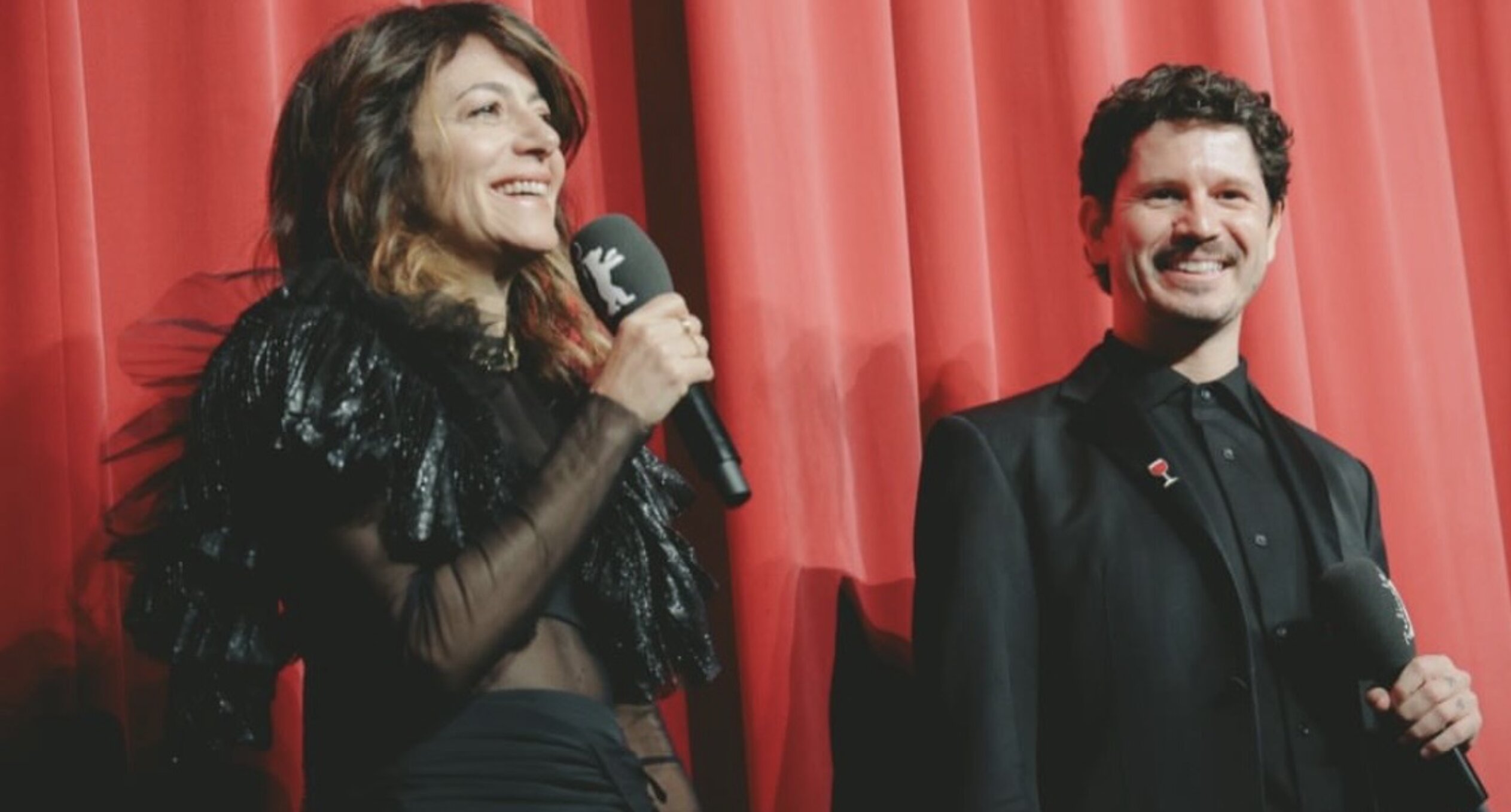
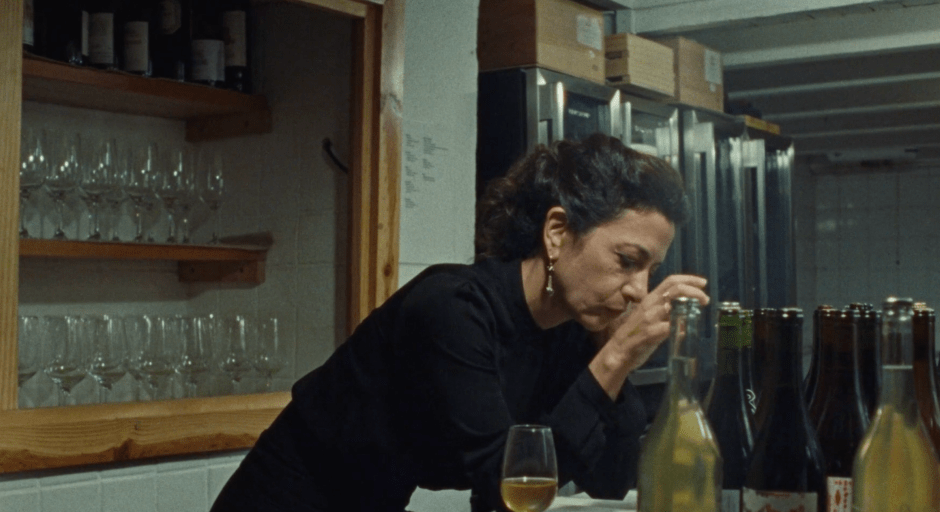
Isabel is the kind of intimate, small-scale production that succeeds precisely because it refuses to be anything larger. It’s a glimpse into the São Paulo natural wine scene through the eyes of a sommelier who champions a forgotten Brazilian grape called Peverella. Unfortunately for her, she works for a Michelin-starred chef who despises it. Fed up with the situation, Isabel decides to take matters into her own hands: she quits to open her own wine bar.
This is a project you will certainly remember, and it’s hard to pick only one reason why. Is it the underdog story? The gorgeous grain of the 16mm cinematography? The love letter to São Paulo? It might just end up being all of the above.
What drew you to this topic?
I’m attracted to underdogs. It’s kind of a contrarian posture, perhaps. Maybe it comes from being a stubborn kid and my parents telling me, “You have to do it like this,” and me being, “There’s this other way to do it,” and driving people crazy in that way.
Isabel is one of those characters who kind of drives people crazy with her idealism and her integrity.
When you talk to people about Brazilian wine, people say, “What is Brazil?” It’s not part of the industrial complex of wine. And that’s interesting. It’s due to the fact that there are various challenges in Brazil in the agricultural sector: how you can actually produce wine, how you can cultivate it, how you can market it, how you can safely bring it to customers.
If you want to try Brazilian wine outside of Brazil, it usually has to be from somebody who brought it in their suitcase.
Isabel is this underdog character. She sees herself in opposition to this boss, who’s the classic sort of egotistical male chef. We based him on the kind of chefs you see on these TV shows, like MasterChef. He just doesn’t like the wines that she’s proposing. He doesn’t even want to open up a discussion about it; he just flatly refuses them.
And so she just reaches her breaking point and says, “That’s it. I have to find a way to express myself, to be independent.” Wine is really just an excuse to be able to tell the story that we all tell in our lives: this urge, this necessity, really, to do things our own way. It was just nice to use that as the mechanism to be able to tell the story and also meet amazing people in the wine world.
So did the story start with wine? Or from this “I want to see an underdog” idea?
We were drinking a lot of natural wine during the pandemic. Economically, it became cheaper to order bottles of wine directly from producers since we weren’t going to bars. You could order a variety of different types without breaking the bank because you weren’t spending money at restaurants.
Every week was like a project: let’s try something from this producer or that producer. I’d always wanted to demystify it for myself. You know that sensation you have when you go into a wine shop and you don’t know anything? You feel super intimidated. I think it’s something a lot of people share.
I still have that, but I’m starting to be a little bit more knowledgeable in a way that I can navigate those shops. But it’s such a conversation with natural wine. With industrial wine, you eliminate the conversation; it’s just a bunch of super friendly, easy things on your palate. With Chardonnay or Bordeaux, you know what you’re gonna get, so people don’t think, they just grab it off the shelf.
When you go to a wine shop, the idea is to engage the person. When you go to a small wine bar in São Paulo, if you get there early enough, you can sit down with the sommelier and really chat. That’s such a beautiful, personal experience. It’s also deeply subjective, because everyone reacts differently based on their experience of wine and food.
When we make a handmade movie like ours, an artisanal film shot in 16mm, I draw this parallel between going to a wine bar and going to a small neighborhood cinema. The kind of movies I love are the ones where you go to a coffee shop or a wine bar afterward and talk about the film for hours with your friends. If you’re talking about it over a glass of wine, you’re adding something special to that. I like to make connections between those two cultures; one can complement the other in an interesting way.
What inspired Isabel the character? And can you talk more about this idea of being your own boss that seems to be gaining even more traction in our culture?
I went out to a lot of women in the wine world. In São Paulo, we have a lot of them, who are leaders of this natural wine movement in Brazil.
For a lot of them, it doesn’t come down to “natural wine versus non-natural wine.” It comes down to good wine versus bad wine. There are industrial wines that are interesting, and natural wines that are utter failures. In Isabel’s case, she is more forgiving of natural wines because she feels like they have soul. It’s like taking an imperfect person with a lot of baggage and thinking, “Let’s give them a pass; they’re perfect as they are.” I love that.
I’ve drank a lot of [natural] wines where you feel like something went wrong. But that’s okay, because it’s like sitting down with a relative from a long time ago -maybe they’re not pleasant to be around, but you’re gonna learn something from that experience. You learn to be a little more kind or forgiving.
A sommelier should probably strive for “good” wine, but Isabel makes the opposite argument: “I’m imperfect, so why can’t wine be imperfect?” That was the heart of the film. Isabel really loves this grape called Peverella, and she identifies with it because it was a grape that basically got wiped out by Chardonnay.
She’s Peverella. And the mainstream is Chardonnay. Peverella is such a delicate, beautiful grape. For a while, it was very popular in Brazil, but then the market got uptight. People just wanted that buttery, familiar Chardonnay taste. Peverella, which makes beautiful natural orange wines, started to go away. It’s harder to cultivate, and there wasn’t a big profit margin. Chardonnay is just easier. So she looks at Chardonnay as the compromise grape.
The scenes of the wine professionals drinking and talking in the film – were they acted?
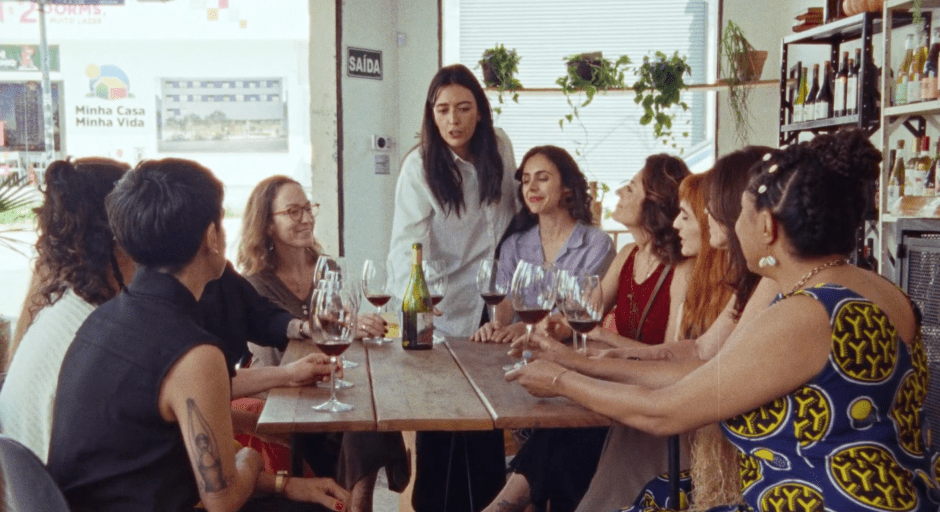
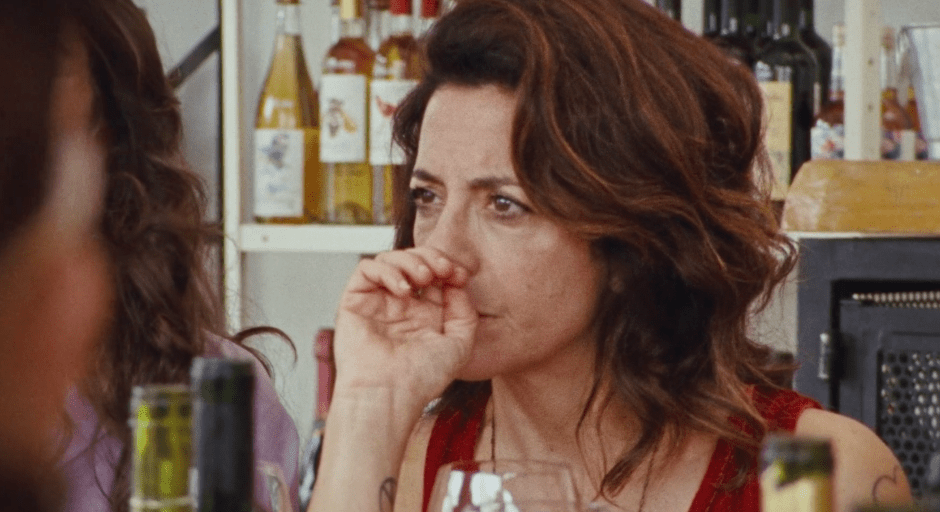
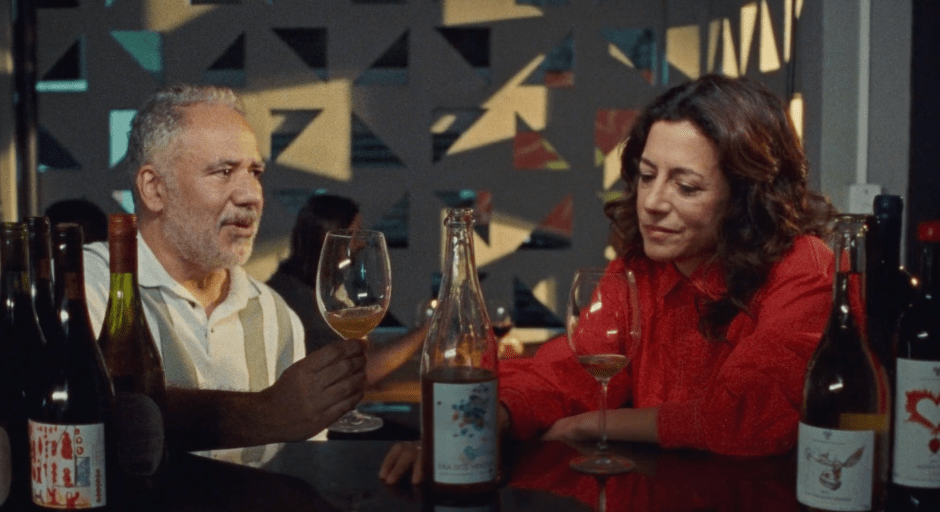
Those are real women from the wine world whom we based Isabel on.
We did an open call and got a great group of winemakers, sommeliers, and bar owners together. I would focus them a little, but I gave them free rein to take the conversation where they wanted. Like film people, when wine people get together, they can get very technical and specific. I told them, “Let’s open it up, guys. Let’s make it more philosophical about life.” And we were always drinking real wine on set.
We were shooting on film, which is expensive, so we were rolling through lots of it, probably 40 minutes of conversation that day. At a certain point, we had to stop and try to send everyone home, but they stayed. They were super drunk. Danny, who’s in the film, actually got up on the table at one point and said, “None of you would be doing any of this if I hadn’t started it!” I was shouting, “Where are the cameras? Bring them back!”
Marina Person who plays Isabel is also credited as a writer. How was it collaborating together on the script?
I wrote a first draft and presented it to Marina, not knowing she was a fan of natural wines. I then found out she actually had a project right before the pandemic to open a fermented goods store. They had a business plan and everything, but the pandemic shut it down.
So the spark was already there. When we wrote the second version of the script, she brought all that frustration into the Isabel character. Marina represents the essence of São Paulo. She is a Paulista, born there, and lives blocks from where she was born. Her dad, Luis Sergio Person, was a very important filmmaker who made São Paulo: Anonymous City, which was a huge reference for us.
I like to make these historical connections. Those 1960s movies were made in a guerrilla style-filming in the streets, embracing the chaos of the city. I wanted that as an example. Marina understood that approach perfectly. Because of her connection to the city, we were able to make São Paulo into a character.
It’s like you wrote it for her without knowing.
It was my instinct. I saw her present her dad’s movie at the cinematheque, and I just felt like I should talk to her. A mutual friend introduced us, and it was meant to be.
There’s a big gap between this and your last film. I read an interview where you said you were trying to figure out your place in cinema. What does that process look like?
I’m still thinking about it. We don’t get to do these very often on our own terms. The pandemic and the Bolsonaro years were tough for everyone. I was trying to get a feature going in Chicago, where I used to live, but it just wasn’t happening.
It occurred to me that making films in America is very industry-based. Even in the independent sector, it’s hard to exist because it’s all private financing. In Brazil, we have government support and initiatives that allow films to exist for culture’s sake, without the immediate pressure of box office results.
In the US, if you don’t make a dent at the box office, you’re “nobody.” In countries like France, Portugal, or Brazil, public subsidies allow for a rigorous film culture that creates a cultural footprint.
They also make a lot of garbage.
Absolutely. And taxpayers often agree! It’s a fight in Brazil with the right wing asking why money goes to these films. But out of those failures, you get the great ones.
Ironically, this film was actually made with private money. It was more like an independent US film made in Brazil. My identity as a filmmaker now is about reconnecting with my roots. To use the wine metaphor: my roots are digging back into the soil of São Paulo. In the US, my vines weren’t getting the nutrients they needed. Now, my leaves are flourishing. My grapes are nice, juicy. I feel like I found my place again.
That kind of reverse migration is a difficult decision. Did you have doubts?
Part of my paternal family were Jews who came to Brazil from Poland and Austro-Hungary in the 1920s. They always said, “We’re never going back to Europe.” While that level of historical trauma isn’t present for me, it is traumatizing to realize that in the US, if you’re not a citizen, you basically have no rights.
Lots of friends in Brazil asked, “Why did you come back?” People fetishize the American experience as the land of opportunity. A lot of people in my neighborhood I would meet at yoga class would ask, “Why did you move back? It’s getting better over there.”
For a long time, that was jarring, this perception that moving back to Brazil is “going backward.” But for me, that’s exciting. If you don’t invest in your community and take risks, it’s never going to get better. My return is about what I can contribute as an artist to show solidarity with the people there who are trying to tap into what being Brazilian really means.
I try to see the good side of globalization, even if it has downsides like over-tourism. Everyone has more capacity to talk about culture now, but it also gets diluted.
I spent 20 years of my life in Chicago. But making a film in São Paulo is laying a claim to the place. You become part of the city’s culture, and that gesture of solidarity starts to get reciprocated.
Interview edited for clarity. Picture credits: Urban Sales, Instagram and Isabel (2026).