
The Garden We Dreamed follows a Haitian family on the migrant trail, stranded in a Mexican pine forest where monarch butterflies come to winter and an illegal logging operation runs the land. Joaquín del Paso braids together two true crises: the murder of Mexican environmental activists who tried to protect the forest, and the long, often invisible journey of Haitian migrants pushed to the very edge of the continent.
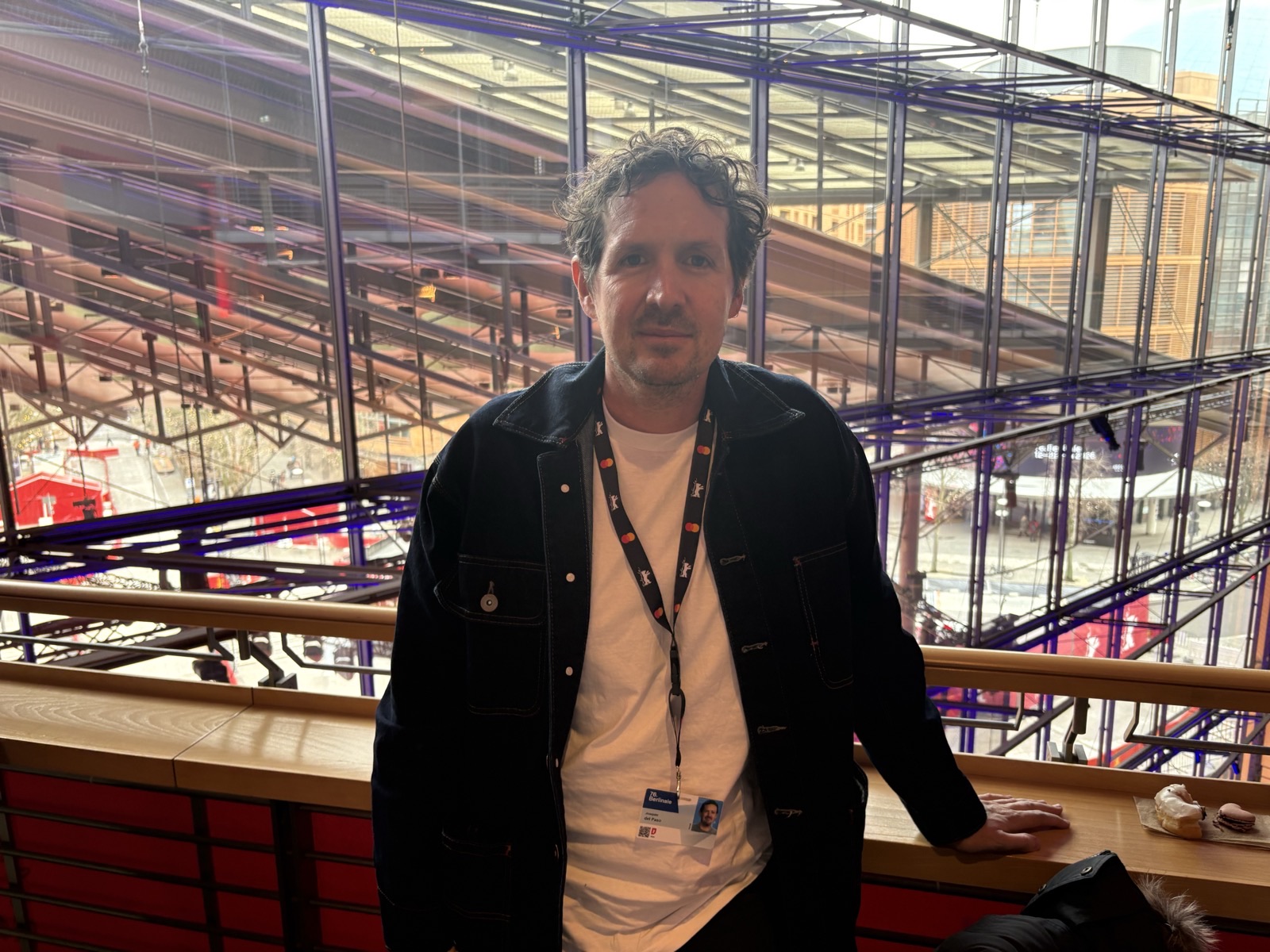
It is a film about hostility, the kind that takes hold when everyone is fighting for their own survival, and about the thing that refuses to disappear even then. We talked in São Paulo, a day after the premiere, about butterflies that are all real, a three hundred and fifty year old tree, and why del Paso insists his heartbreaking film is actually hopeful.
Did you use real stories as inspiration?
The departing point of the film was that in Mexico many activists who protect nature have been killed. One of them was Homero Gómez, who led the protection of the monarch butterflies. His murder showed the world that there is a conflict happening in that forest. That was one part.
The other part is the history of the Haitian people, which is a universal story of migration and exodus. It started from the butterflies, and at the same time this happened around the pandemic. The borders of the USA were closed, and all the immigrants who were crossing toward the USA got stuck at the border. Suddenly their presence in Mexico became very visible. I put those two stories together: the migration of the butterflies and the migration of the Haitian people. There are no specific migrant stories in the film. I found this human context and built it organically. Once I started researching and talking to people about their experience crossing, it felt more like a prediction.
You have described it as a hopeful film, but watching it I was in panic and fear the whole time. It is heartbreaking.
Even though the film talks about a really hard experience that happens to this family, love remains. For me, love remains after all. The union between them is strong, even at the very end. That is the most human part: love stays there. Of course their lives are hard, but that is the reality, and the reality is even harder than my movie. My movie is soft compared to what really happens.
I did not want any of them to die. That is why the girl survives, and he survives too, in my opinion. It is the ending. You do not know what happens later. When the girl shouts at the end, “A house, I see a house,” for me that is the symbol of hope. Of course, that house could be filled with horrible people. But it is hope.
There is no benevolent character in the film. Everyone the family meets is hostile. Was that the reality you found?
Once you get deeper into the lives of people, you see that Mexicans are some of the kindest and most friendly people in the world. But in the context of what happens in the movie, everyone is in their own conflict. The village is trying to protect itself from the wood logging mafia. The mafia is trying to make deals and exploit people to get what it wants. It is a board game where everyone is against each other. If the family had been able to cross and enter the town, they would probably have found nice people. But in the external barriers of the conflict, in the war zone, nobody wants to be soft.
That is also why I chose to make the film about Haitians. In the whole migrating context, they are the most neglected. They do not even speak Spanish, and almost the entire continent speaks Spanish. Nobody speaks Haitian Creole, so they are doubly isolated. If my characters had been from Guatemala, at least they could have communicated, and the reaction would have been different. Mexico is a country that is not used to Black people or to Creole. I am not saying Mexican people are bad. I am saying that when we are against each other, migrants are such an easy target.
How did you work with the young girl who plays Flor, especially the asthma attacks?
I had an acting coach for children, and she went to a workshop we organized with three acting coaches to help her relax in front of the camera. It is the second time I do this. In my previous film I also cast young teenagers. Natural talent is the first thing, and she is a natural talent. She understood the character very well and understood exactly what she had to do. She fell into it like a game and played it beautifully.
She was the most disciplined actor in the whole movie. Her perseverance helped me push the other actors to do things they did not want to do. In the river scene, the actors were complaining about the temperature of the water, because the river was freezing. She was the first one to go in, saying, “Come on, guys, we have to do the scene.” I have big appreciation for her.
The butterflies, were they real or sometimes CGI?
They are all real. The film was shot during the butterfly season, which is January, February and March. In reality there are even more of them, but they are uncontrollable. They sleep in the trees, and every morning they fly out to look for water and then come back. The trees are their home. If the temperature drops, they do not leave. They stay in the trees the whole day, and you cannot make them move. Once it is a bit warm and the sun hits, they start flying again.
The scene where Junior cuts the big tree for the first time is almost where the movie stops. It is long and done in one shot. Can you talk about it?
In the process of making the film we saw many, many trees being cut down. We shot in the actual place where they cut the trees, and it is such a powerful and violent thing. It really shakes you up, even though we are surrounded by wood. The chair you are sitting on comes from exactly that thing you see on screen. We are so disconnected, as humans, from the things that surround us.
When we were choosing the tree to cut for the scene, I picked a pine that was maybe three hundred and fifty years old. They were going to cut it either way, with us or without us. I told my cinematographer, “I do not care about the dialogue. This scene is about the tree. The humans are just around it, but we need to shoot it as if we were inside the tree. The main character of this scene is the tree.” That is why I wanted to do it without cuts, in real time. I wanted to show the complete act of cutting a tree from the tree’s perspective.
And Tonio’s monologue. Is he a hypocrite, or are we the hypocrites?
I think he is angry about his situation and his condition. I wanted to show a glimpse of a man who is also not comfortable with his own life. That is why he mentions that he had a family. He is disturbed, and he is angry about having to do this dirty job while the rest enjoy it from his perspective. I wanted to show another face of the conflict, to imagine how the people who do it actually feel. I do not have a clear answer.
The monologue was much longer, but I cut it down because it suddenly shifted the weight of the film. It is also about Junior listening to him and not understanding what is going on. After that, it clicks for Junior that this man justifies everything. There is no evil in the film, just people in different situations. He is the easiest one to call evil, but if there were ten thousand of him we would not have the problems we have today. The bigger problem is institutional exploitation, the big companies, the monoculture that wipes everything out and replaces it with a single species.
Interview edited for clarity.