

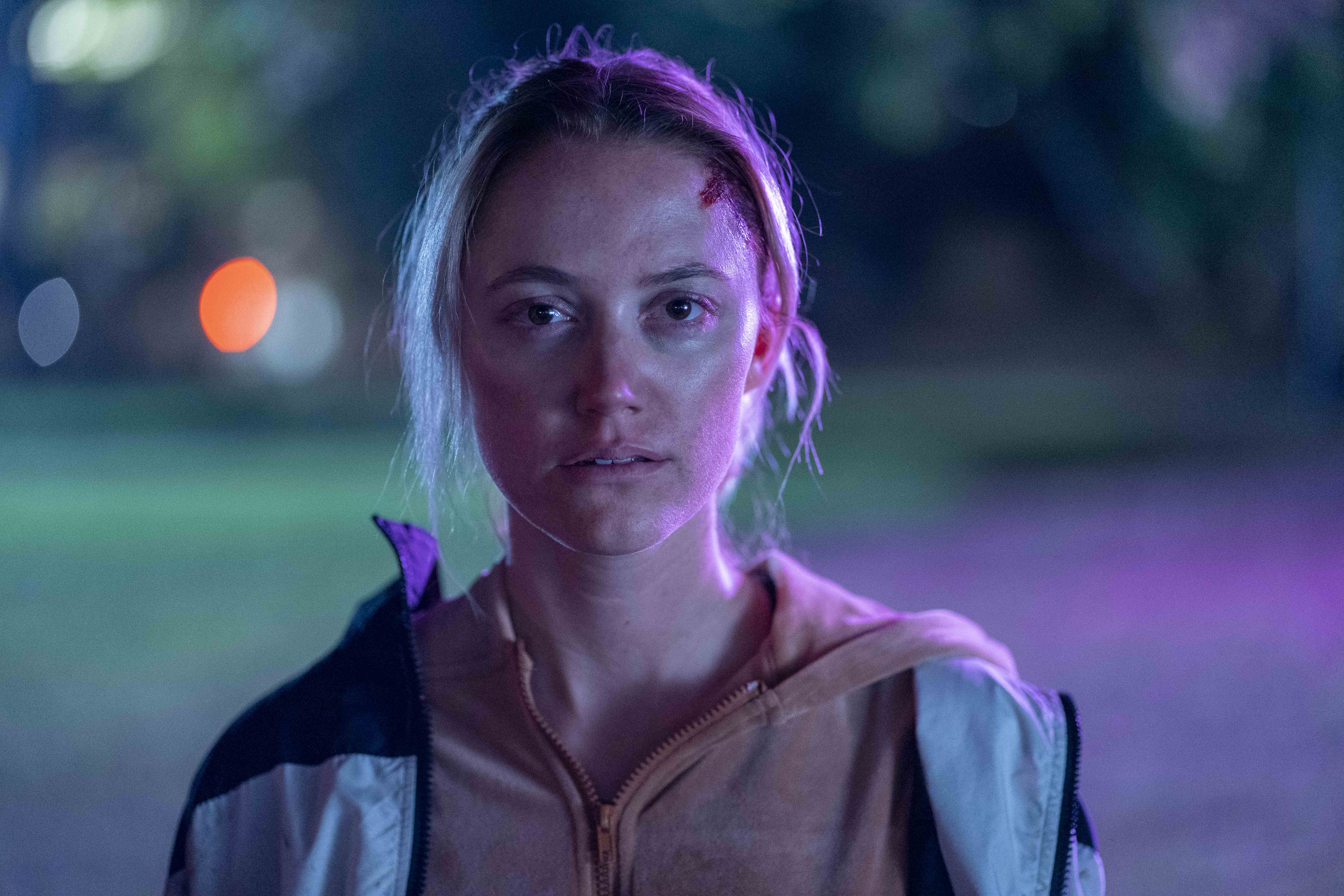
Anyone who’s watched any action thriller will find In Cold Light a familiar tale. Maika Monroe plays Ava, a former drug dealer fresh out of prison and ready to find who framed her. That quest pushes her to confront the past. And of course, kick some ass. That’s what gangster films do, and this Canadian thriller is no exception.
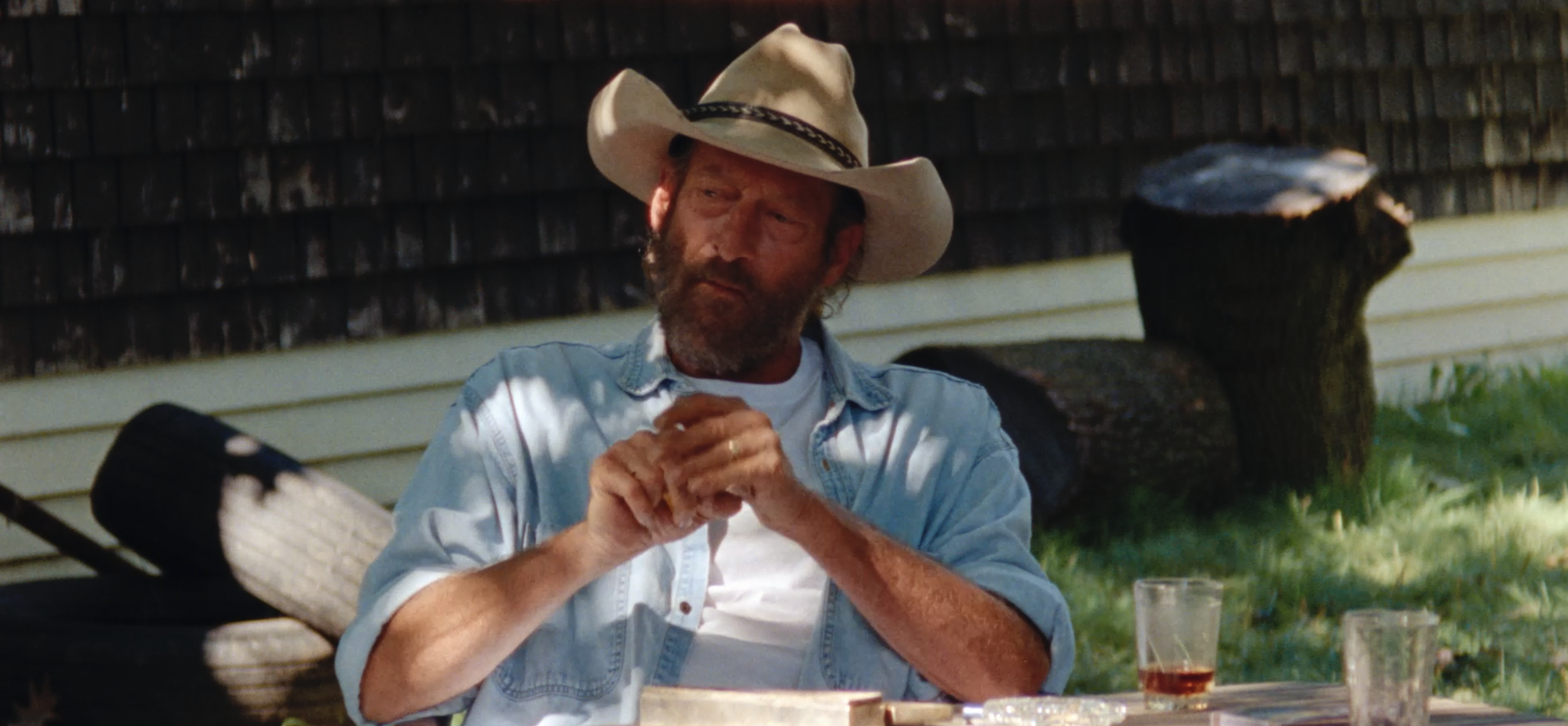
But beneath the shoot-outs and the betrayal is Ava’s relationship with her family. Her twin brother Tom (Jesse Irving) seems to have moved on with a new one, while her father Will (played by Oscar winner Troy Kotsur) seems to yearn for the golden days when he was a rodeo star. This fractured relationship, along with the unrelenting pace and the striking cinematography, makes In Cold Light feel rather fresh despite the genre trappings.
For Projektor, we talked to director Maxime Giroux about breaking cycles and trying new things for his English-language debut.
Projektor: I really felt the adrenaline rush when watching. But it was a surprise to me because from what I read about your previous work, you don’t normally do action. And of course, this is your first English-language film. Why make this change?
Maxime: You’re right. It was my first action movie and English movie. The reason why I decided to do that is because I never did it. What I like about doing movies is trying to do something different every time I do a [new one]. I know that there’re some directors who like to do what they always do, you know, and most of the time, they’re really interesting because they’re talking about themselves in every movie. [But] my journey into cinema is more about learning. Every time I’m doing a new movie, I’m trying to do something different because I want to learn, not only with the cinema language, but also learning about a new subject, about something new.
In that case, it was the rodeo scene. It’s a part of my country that I don’t know and that I didn’t understand before. When you shoot a movie and you go shoot in the real location with the real people, you start to understand the people and to learn about them and to learn things about life and about yourself too. That’s why I’m doing movies.
Projektor: What drew you to this part of Canada? What drew you to this story in particular?
Maxime: The script is not written by me. It’s Patrick Risser’s script. So it was his idea to put this character in the rodeo world, which is a man’s world, you know. And Alberta is our Texas– there’s oil, there’s petrol, there’s our cowboys in this place in Canada. People don’t think that about this place, so it was interesting for me to go do a movie there.
Projektor: Speaking of the rodeo, I think it’s interesting that the father character here used to work there, but just to clarify, was the character deaf since birth or was it a result of an injury? Can you tell me more about him?
Maxime: Oh, he was deaf by birth. He was a rodeo rider when he was young. A lot of the rodeo guys are, because you can get injured really easily. The animals are so strong that three seconds after you jump out of the saddle, you can injure yourself really seriously. When you get older, it’s too tough for your body. [But] he wants to come back to the rodeo because it’s the only thing he has in life.
Projektor: I mentioned that this film was a big change from what you’ve done previously. But I think the father kind of reminded me of what I’ve read in your previous works, at least in Tomorrow, and Felix and Meira. So was that relationship– that reverse relationship of children having to take care of their parents– Was that something that drew you into this film?
Maxime: it’s true that in a lot of my films, the father characters are fathers that are not really present, that don’t communicate a lot, that have that kind of problem with their child, which is the case with a lot of fathers in this world. And it’s changing. I think the new generation are better fathers, are more present, they are more communicative. They face other challenges. But I grew up in a society where the fathers were there, but not really there. They were not bad fathers, but they were fathers that didn’t communicate well and that were not so present. Maybe I’m wrong, but the mothers are more present and have more power on the education of their children.
Projektor: I also noticed it in the brother figure as well. Here, Ava’s twin, they’re both brought into drug dealing, because of each other, I think. And in your previous work, Jo for Jonathan, two brothers were in illegal car racing. So, siblings bringing each other into trouble– was this character dynamic something that interested you as well?
Maxime: You know what, sometimes you do a movie and you don’t know why you’re doing it. But after, when people mention it, you understand, oh yeah, it’s true, you know? And in my case, I have a brother. He’s a little bit older than me and he was a little monster, so he got me in trouble a lot of times. But at the same time, I love my brother, but there are some difficulties and challenges. The rivalry between brothers, who’s going to be stronger, who’s going to be the big guy, and I think that in a way, that sibling dynamic attracts me in a script.
Projektor: Related to what you mentioned about the rodeo being a man’s world, it’s interesting that Ava’s brother is a twin, right? Because that’s a direct comparison with each other.
Maxime: Because the sibling is a man, he has less difficulty in life for everything. Being a woman, you have to fight more for everything. Everything is easier for a man like this character. You know, to get away with everything. Even the father tells him, you can do whatever you want. You’re a boy. You can make trouble. But a girl has to be perfect, you know?
Projektor: When I was watching, there’s this very real sense of disorientation for Ava, especially after the 30-minute mark when everything changes. What inspired that direction?
Maxime: That’s a difficult question to answer because, again, first, it’s not my script. So the scenes were written in one way, but as a director, you have to reinterpret the scene for yourself. You have to own the scene. So what inspired me first is the script. And then after is the education you have with cinema.
You’ve seen movies before, so it’s either you want to do something that you saw before or you want to do the complete opposite. I don’t want to do the same thing as everyone else, I want to do something else, even if it’s not gonna work. I think that’s the case in the movie. There’s some cliché, but I was trying to work with it, especially visually. I know that the movie seems, on one level, really simple and really cliche, but I feel that this movie is pretty different from that kind of movie normally. Some scenes are working well, some others are working less, and are not as good as I wanted. But at least I’ve tried to come up with something different.
Projektor: It kind of reflects Ava’s own journey of breaking out of the cycle. Would that be the main takeaway for anyone who would want to watch this film?
Maxime: You said something interesting. Breaking the cycle of something. In this case, she wants to break the cycle of violence. Violence with others, but against herself too. She’s angry against the world because she’s angry against herself, because she made a bad decision. She wants to stop that violence against herself too. That’s what the movie is about. And that is the goal of a lot of people in the world, to stop the violence against yourself. I feel more and more people have become violent against themselves. When I’m talking about violence, we ask too much of ourselves. And because of that, we make bad decisions, and because of that, we hate ourselves. Let’s start to be good towards ourselves.