
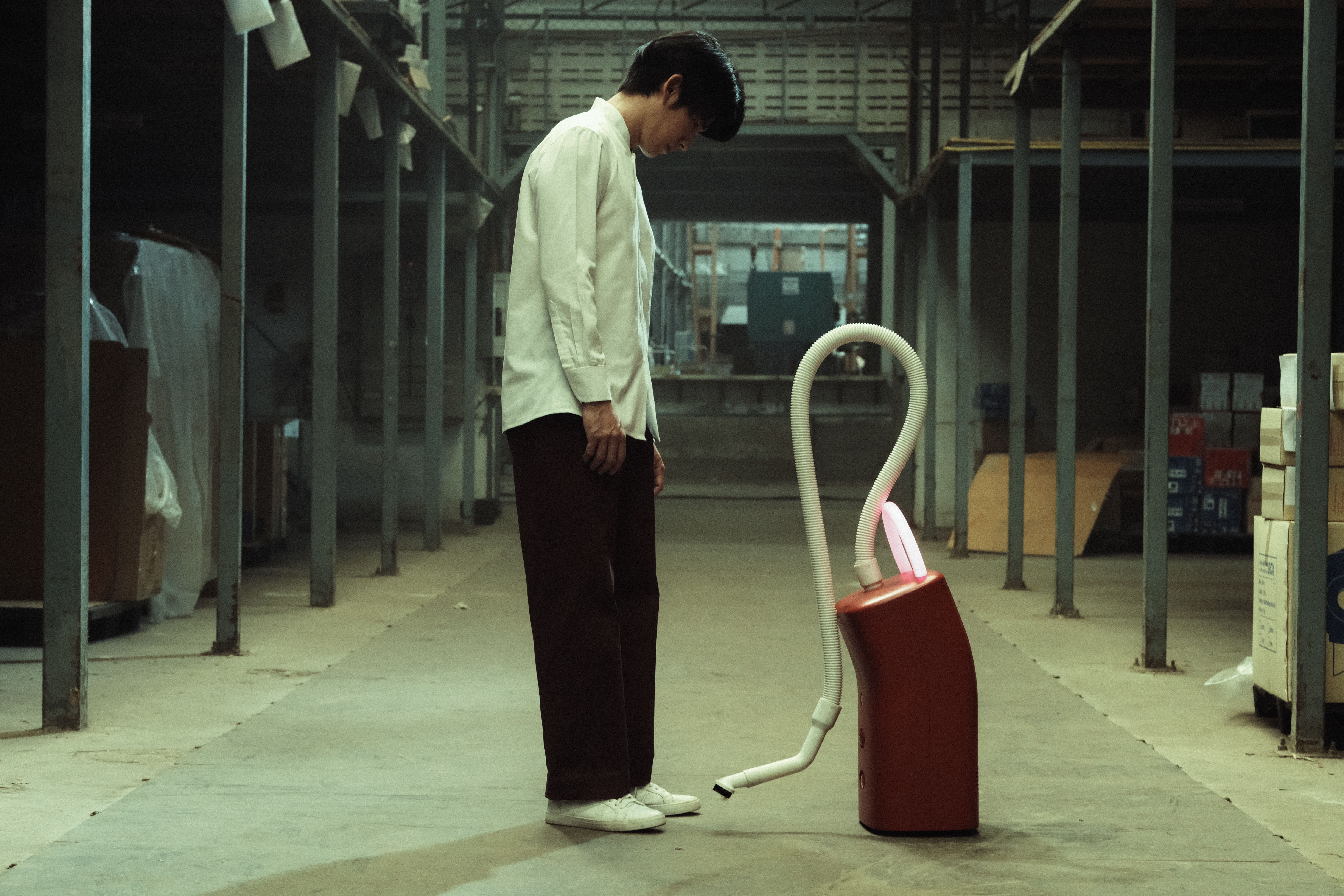
Ghosts have taken many forms in cinema and in this Thai supernatural comedy, their medium of choice is vacuum cleaners. One is a deceased factory worker, who keeps haunting his old place of work. Another is a deceased wife, who comes back to take care of her grieving husband. The rest… Well, you’ll have to see it to believe it.
Still, A Useful Ghost isn’t your usual ghost story. Instead of terrorizing the living, the ghosts here befriend them, work beside them, and, on occasion, even fall in love with them. The film rides on this bizarre premise to unpack the ways progress and urbanization can erase a country’s collective memory– their history, art, politics, and language. It’s this insight that captivated audiences around the world, including those on the panel of Cannes Critics’ Week, who awarded this directorial debut the Grand Prix.
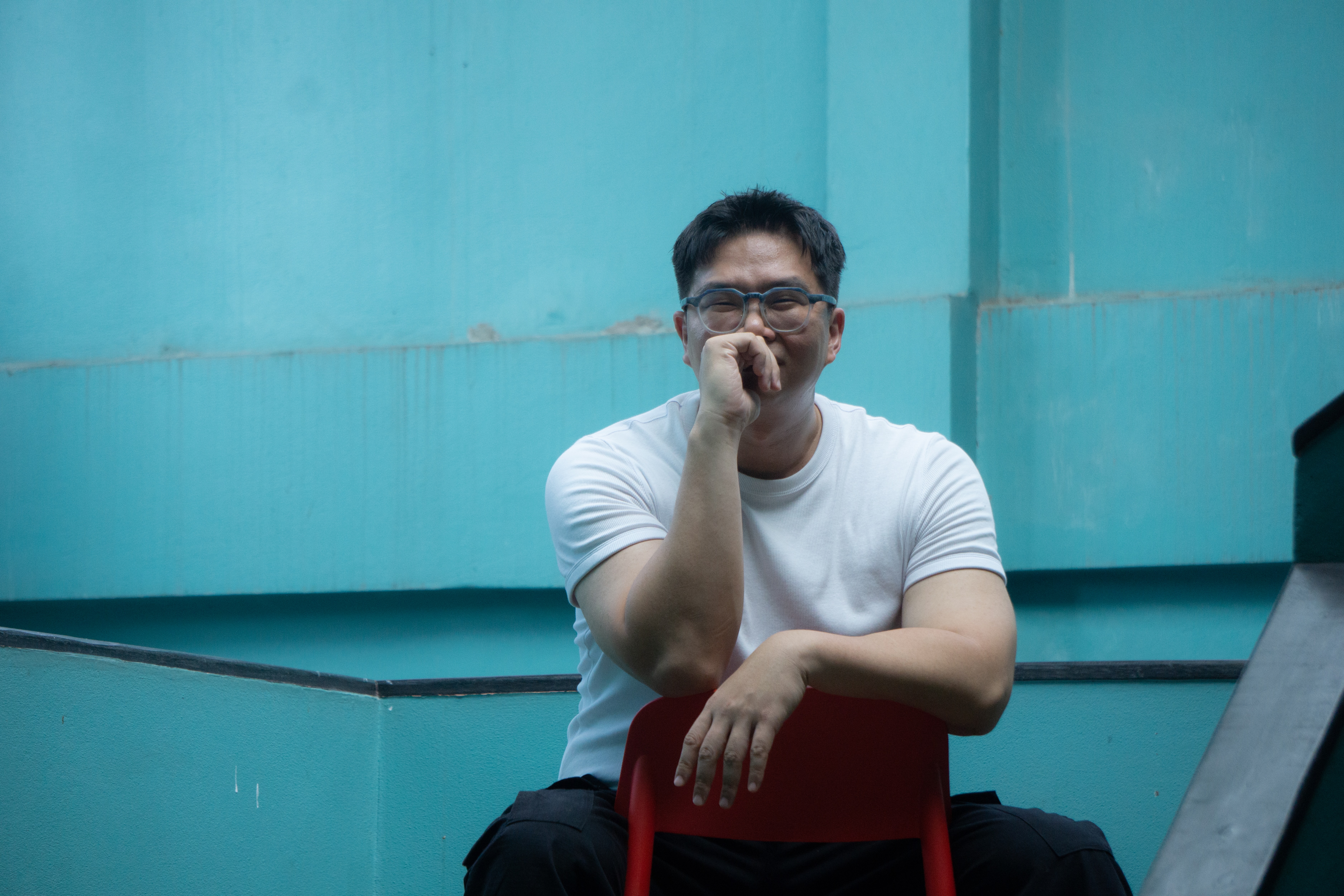
For Projektor, we spoke with director Ratchapoom Boonbunchachoke about ghost stories and what it means to break out of filmmaking conventions, coming from a developing country.
Projektor: A Useful Ghost is pretty unique. Usually, where I’m from, ghosts leave by religious exorcism or by solving a mystery. But here, the ghosts haunt appliances and they leave by having their loved ones go through electroshock treatment. What inspired you to make that modern twist?
Ratchapoom Boonbunchachoke: Thailand is known for producing many ghost films. Actually, the equivalent term for horror means ghost film. Normally, [these] ghosts are quite scary and frightening. They mostly need to take their revenge against people. So when I started doing this film, I wanted to ask: Could ghosts do something else? What can they do? The main question for me is: How can ghosts–if they don’t want to be scary, if they don’t want to be frightening to people–how can they fit in a society that’s still living? So that’s what led me to think: Maybe they can be useful. Maybe they can do something for other people as well.
Projektor: It’s funny that you mentioned horror because when we were watching the film, I was thinking a lot about this tradition of creating strange black comedies. I was thinking about films from Aki Kaurismäki and Manoel de Oliveira. [Their films are] comedic, but it’s packed with a lot of themes, and it breaks the mold to tell a story. I think that applies to your film as well. What drew you to this tradition of filmmaking?
Ratchapoom: When I’m asked who inspired me, I mention de Oliveira and João César Monteiro. Kaurismäki also inspired how I pictured the film, playing with the color and composition. But usually, the first thing people would say to me is that they were reminded of Wes Anderson. To be honest, I wasn’t consciously thinking about him when I was preparing this film.
To answer your question, I’m not sure if that’s a tradition. I see it more like a style. I was inspired by deadpan performances, with understated expressions. But I’m not sure why I chose that. What I was consciously trying to achieve was [creating] a universe that has specific rules, like how people interact, how people behave. I mean, they don’t behave like people in reality, they behave like what you saw in the film. I tried to find an example or a reference point to think about how I can create this world. This kind of filmmaker, that relies on deadpan acting, deadpan performances, impressed me when I was younger.
Projektor: So it wasn’t so much you had all these ideas about class and colonialism. It was more about this style – that there’s something here that needs to be said and you were going to put the two together?
Ratchapoom: I think style is something that’s more organic, not like genre. With genre, you can say, I want to make a sci-fi film, I want to make a western, I want to make a melodrama. You can make attempts with genres, even genres you’re not familiar with. But style– It’s almost like your signature, it’s your handwriting. You can’t deviate too much from your own usual handwriting, because it’s maybe something you feel comfortable doing.
For example, I like comedy, and I have my own sense of humor. My day job is actually writing screenplays for TV, and because of that, I sometimes get assignments for commissioned dramas or horror shows. With the genre assigned, I could not add humor to that. I felt suffocated, writing non-humorous stories. So, no matter what subject or topic that I want to tackle with a film, the style comes with me. There will be some sense of humor. Maybe there’s some absurd situation and ridiculousness that are always going to always appear in my films, I think. I had this idea that I wanted to make a film about this, but the style just organically came with me.

Projektor: Were there any differences between reactions to the film inside and outside of Thailand?
Ratchapoom: Yes, there were differences between how the local audience would interpret and react to the film, compared to the international audience. A lot of Thai viewers would say the film was courageous and daring, because in our cinema, we don’t normally make films about politics too much. Independent Thai filmmakers tend to use symbolic ways to convey their intention. If they want to talk about some political issue from the past, they could not depict it directly or too visually. They need to hide it behind some allegory that people need to decode it afterward.
So, the Thai audience really enjoyed the first half and found it funny, but the second half might be seen as divisive. It’s shocking, in a “Oh, this can happen in our cinema” way, or “Oh, I didn’t expect to watch this kind of heavy issue” way. I think bluntness is quite a luxury in Thai cinema. You cannot say things too bluntly–It could be a bad thing for some audiences. It’s too in-your-face. But I think Thai cinema somehow needs this directness.
For the international audience, one of the main keywords that I found reading reviews would say the film is a critique of capitalism. But for the Thai audience, they would say it’s a critique of authoritarianism. It’s kind of two different things. The Thai audience got more of the context, but I think it’s okay that the international viewers saw it reflected their own societies. It’s more an attack on the ruling class.
This was a question that me and my producer were thinking about– How local can this film be made, without losing the audience outside Thailand? My primary audience would be the Thai audience, but we need to balance. We cannot just focus only on them, we also need it to work with people from outside Thailand. The film could be appreciated on many levels. You can just watch it on the surface and enjoy it for what it was. And also, if you know some context, it might enrich your experience as well.
Projektor: Do you have the fear that you’re going to be known as a “shocker”? Because we have some of those filmmakers that, by no intention of their own, are seen as provocative simply by embarking on a creative process?
Ratchapoom: I’m not sure how I’ll be perceived as a Thai filmmaker. With my experience, it’s more about the film than me. When I read comments, I think less people talk about me as a director, they talk more about the film itself. People who know me from my short films, they might see my characters, based on my personality, develop through my work. But for most viewers, this is the first thing I’ve done. They may not have an idea or notions of the person behind the film.
It might be a worry for my second film. They might say, oh, he made this kind of film again. Sometimes, filmmakers here try to make a film, then create a whole personality around it. They have a Facebook page or IG, for the public to follow them, and craft a whole social media personality. A personality that viewers can associate with their work. But for me, I haven’t tried it yet. I haven’t tried [creating] a persona.
Projektor: Since this film is also about memory, what do you want viewers to remember about this film?
Ratchapoom: I want audiences, after finishing the film, to talk more about ghosts. In any definition. Their own ghosts, their country’s ghosts. What’s been quite heartening for me is that in South East Asia, like in the Philippines and Indonesia, they say the end could happen to their own politicians. I achieved one of my goals with this film, seeing people relate it to their own society.