
Our take
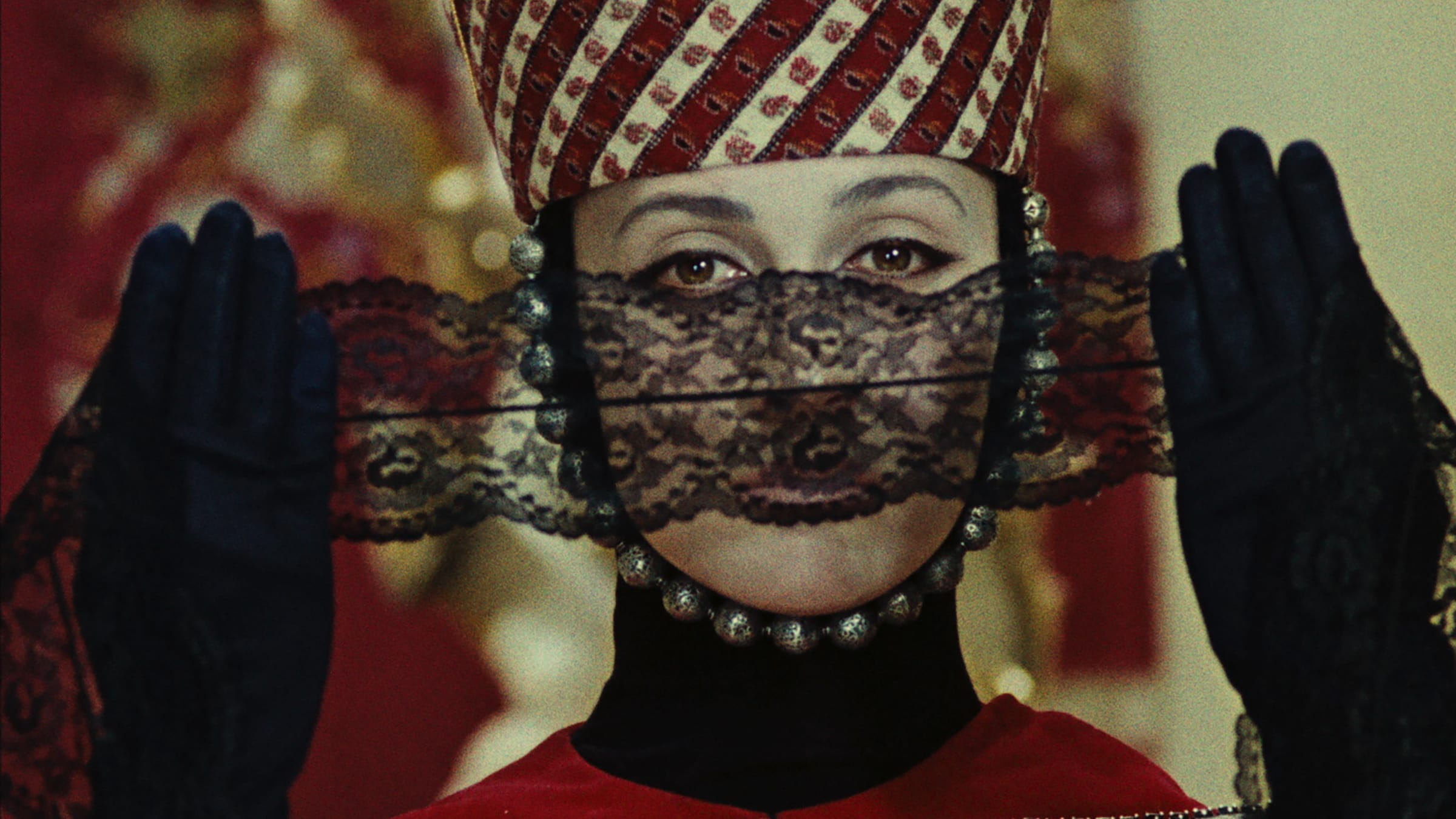
Why should anyone watch a decades-old biopic about a centuries-old Armenian troubadour that relies not on dialogue, not on a straightforward narrative, but on scenes that are cryptic as hell? The Color of Pomegranates won’t be for most viewers, but even without the historical context, cinephiles will appreciate the artistic vision Sergei Parajanov crafted alongside the words from Sayat-Nova himself, the series of meticulously assembled tableaux that aren’t easy to forget. Every image is intentional. As each image flashes on screen, recreating what must have been the poet’s daily life, Parajanov also immortalizes Armenian culture– the textile crafts, the folklore, the language, and the iconography– at a time when Armenia was under the rule of the Soviet Union. Soviet censors blocked its distribution, pushed it to the underground, and re-cut the film, but Sayat Nova, as well as the culture he came from, still remains an iconic masterpiece that meditated on suppression and art as a living memory.
Streaming arrival
What it won

Cannes
1 nom
The story
The life of the revered 18th-century Armenian poet and musician Sayat-Nova. Portraying events in the life of the artist from childhood up to his death, the movie addresses in particular his relationships with women, including his muse. The production tells Sayat-Nova's dramatic story by using both his poems and largely still camerawork, creating a work hailed as revolutionary by Mikhail Vartanov.
Through an abstract series of tableaux, Sergei Parajanov depicts the life of Armenian troubadour Sayat-Nova through Childhood, Youth, Prince's Court, The Monastery, The Dream, Old Age, The Angel of Death and Death.
Sofiko Chiaureli plays not just the poet in his adolescence, but also his love, his muse, a mime, and the Angel of Resurrection. It’s an interesting choice to cast the Armenian actress this way, but it’s why the film is so memorable.
Watch the Criterion version, which is closest to the original Sayat Nova.
The details



Who picked it

Isabella Endrinal is a curator at A Good Movie to Watch. She's now free from the corporate night shift. Previous articles have been published in outlets such as NANG Magazine. She's currently catching up on some classic films… if she isn't coping with the fact that the Haikyu anime will end soon.