
Our take
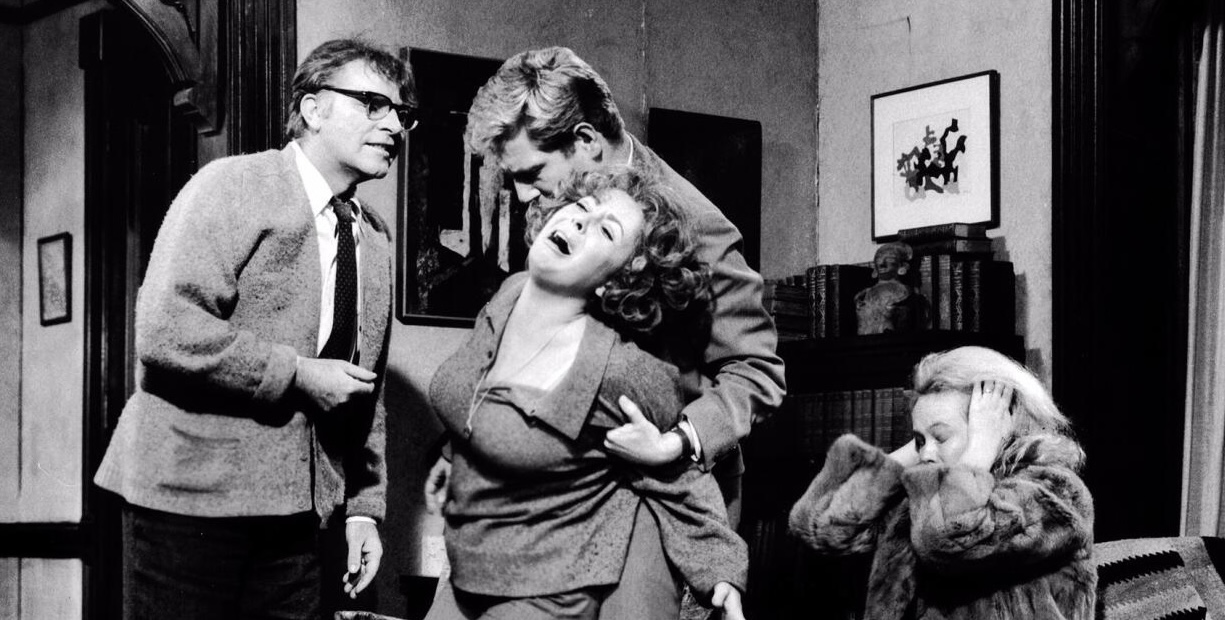
Based on a stage play of the same name, Who’s Afraid of Virginia Woolf? is a masterful example of how vital blocking is in movies. The film takes place in a few locations–a New England home, the yard, and a roadhouse a few miles away–and is shot in simple black and white. There are only four characters here. And yet, the film feels dynamic, volcanic even–every scene erupts with so much anger, passion, love, and frustration. The characters move about like they’re in a highly charged dance, and each of their lines feels like a dagger straight to the heart. You could easily see how this worked as a play, but Mike Nichols (The Graduate, Charlie Wilson’s War) translates it smartly into film. The camera is as restless as the characters, and each frame is a thoughtful decision of what to show and what not to show, betraying their actual ignorance despite their academia. Who’s Afraid of Virginia Woolf? remains a classic for a reason: it set the standard for a lot of dialogue-heavy, raw-honest films these days, but it’s also simply a riot to watch.
What it won

Oscars
5 wins · 8 noms

Golden Globes
7 noms

BAFTA
3 wins
DGA
1 nom

WGA
1 win

Nat. Board of Review
2 wins

NYFCC
1 win · 2 noms
The story
A history professor and his wife entertain a young couple who are new to the university's faculty. As the drinks flow, secrets come to light, and the middle-aged couple unload onto their guests the full force of the bitterness, dysfunction, and animosity that defines their marriage.
Elsewhere

"Keen adaptation and handsome production by Ernest Lehman, outstanding direction by Mike Nichols in his feature debut, and four topflight performances score an artistic bullseye."
— Variety Staff
Late into the night, George (Richard Burton) and Martha (Elizabeth Taylor) invite a young couple into their home for some after-party drinks. Things quickly escalate when George and Martha exchange fiery words and accusations against one another.
Elizabeth Taylor, easily. Before this film, Taylor was highly regarded as a beautiful actress, but not much else. Woolf proved she had so much more to offer as she let loose and gave one of the most explosive performances in cinema history.
Even today’s marriages (and marriage films) fail to be this incisive, honest, and self-aware.
The details



Streaming arrival
Who picked it

Renee Cuisia is the lead curator at A Good Movie to Watch. In her spare time, she likes to watch K-dramas and analyze them to death. She's also seen You've Got Mail one too many times but is still convinced it's one of the greatest films out there.