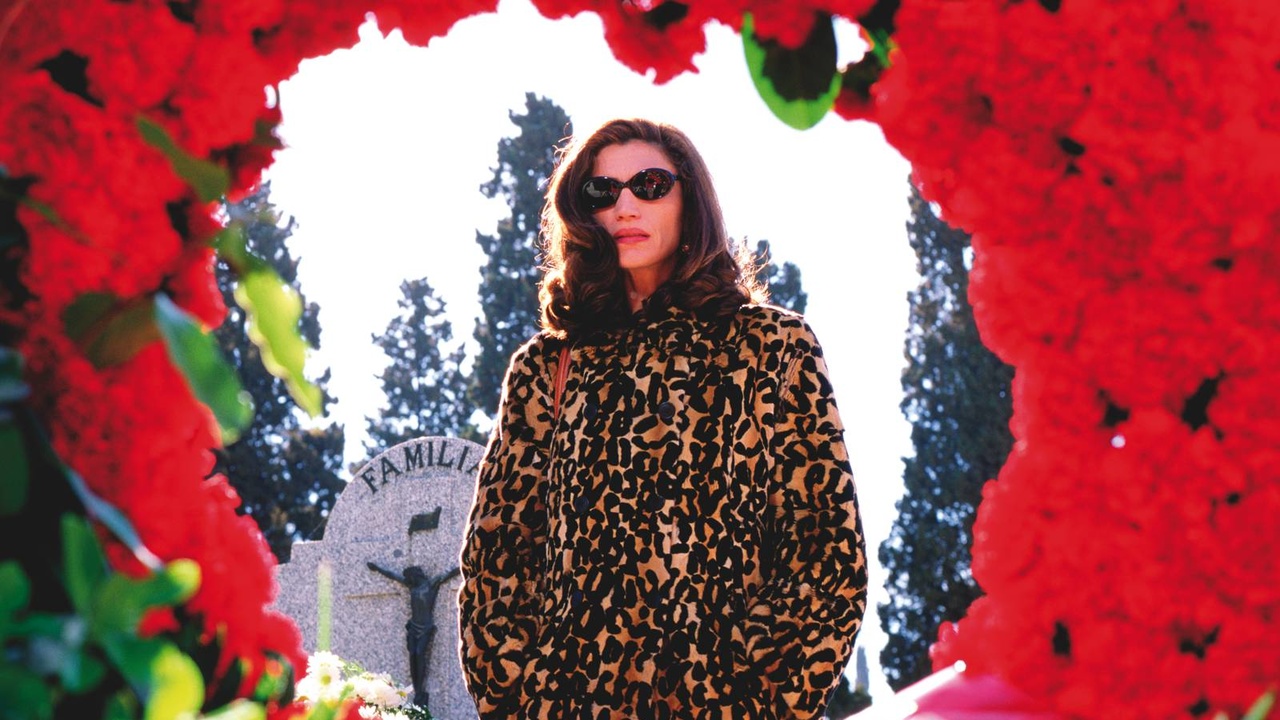

It won’t be surprising to hear that a film called Live Flesh would be all about the body. There are, of course, the sensual scenes that make the movie an erotic drama, but filmmaker Pedro Almodóvar shifts the original psychological thriller novel into an examination of the body, how it’s perceived, and how people break that perception in pursuit of desire. It’s because of this that even with the melodramatic flourish, the disability, abuse, and drug addiction aren’t just plot devices– they’re the natural extension of that discussion after the body has gone through trauma– but Almodóvar expands it further with the fearful time period in which they were born into, and the societal positions they take as a result of it. The excellent ensemble cast and Almodóvar’s signature vivid style bring Carne Trémula to life spectacularly.

"Despite his erotic fixations, Pedro Almodvar is the cinema's last true innocent."
— David Denby
When Victor attempts to seduce Elena, all he gets for his trouble is a one-way, six-year ticket to prison, where he concentrates on strengthening his mind, his body... and his desire for vengeance on the man who put him there. After his release and still madly in love with her, Victor will stop at nothing to win her over even if means revenge, for Elena has married David, the cop who sent him to prison!
When Victor asks out former fling Elena, it ends up in a shootout involving policemen Sancho and David. Six years later, Victor vows his revenge on the now-clean Elena and David, now her paralympic husband, by continuing his affair with Sancho’s wife Clara.
The erotic thriller is no stranger to slow motion, but the moments that it was used in this film will probably be the most memorable because of it.
Let's just say, this would be pleasantly surprising for unfamiliar viewers such as myself to Javier Bardem's Spanish films.

BAFTA
1 nomination
European Film Awards
2 nominations
Goya Awards
1 win, 2 nominations