
Rated 7+ IMDb · 70%+ RT Little-known finds Curated by humans
Rated 7+ IMDb · 70%+ RT Little-known finds Curated by humans
 2017 Movie
Dir. Reginald Hudlin · Hong Kong, United States of America · English
A well-acted biopic that depicts the civil rights lawyer through one of his cases




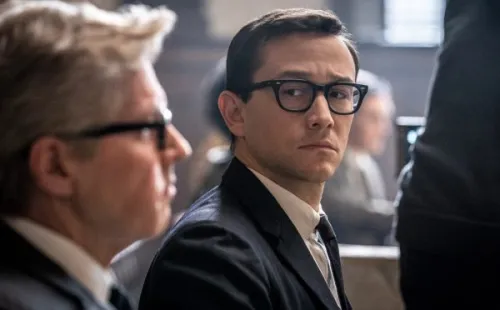
Biopics usually try to capture the entirety of a life, but on occasion, they try to capture that life in a snippet, in a short period of time that could encapsulate what the subject did and what they stood for. One such film that does this is Marshall. It’s not a bad idea to depict the first African-American Supreme Court justice through one of his numerous civil rights cases. It’s a straightforward way to depict his brilliance while also capturing the tangible stakes of every case he took on, and Chadwick Boseman captured that charisma through his excellent performance. That being said, given Marshall’s legacy, it feels disappointing to see his landmark cases only tacked on as a postscript epilogue. While a juicier case could have better captured the man, Marshall nonetheless works because of its performances.
Thurgood Marshall, the first African-American Supreme Court Justice, battles through one of his career-defining cases.

"The movie urgently dramatizes the threat of racist violence that poisons personal relationships and judicial proceedings alike."
— Richard Brody

"It pays attention to issues of racial, religious and gender discrimination without wavering from its main objective: giving us an entertaining film about a couple of guys who are in way over their heads."
— Matt Zoller Seitz
Connecticut, 1941. NAACP lawyer Thurgood Marshall teams up with local Jewish lawyer Sam Friedman to defend Joseph Spell, a Black chauffeur accused for rape.
The choice of the case. It’s interesting to see how this case was used to highlight the racism in the now more liberal East Coast, but given the fact that it’s one of the few cases that involved a white co-counsel, the film ended up devoting time to said lawyer when it could have entirely focused on Marshall. And reportedly, it didn’t even represent Sam Friedman accurately, given that he was already a trial lawyer at the time.
Rest in power, Thurgood Marshall and Chadwick Boseman.
Other
1 nom

Isabella Endrinal is a curator at A Good Movie to Watch. She's now free from the corporate night shift. Previous articles have been published in outlets such as NANG Magazine. She's currently catching up on some classic films… if she isn't coping with the fact that the Haikyu anime will end soon.



Comments