Our take
Danish writer-director Lars von Trier concludes his so-called Depression trilogy with the two parts of Nymphomaniac, an elaborate retelling of the life of a young woman (played by Stacy Martin and then, by Charlotte Gainsbourg) lived from one libidinous pleasure to another. The film’s elaborate subplots have a life of their own and flashbacks often take center stage in Joe’s auto-narration. Nymphomaniac I introduces the audience to adolescence and early adulthood, through disappointments, adultery, death drive, and extreme ambivalence. Joe’s process of self-actualization seems contested and inspiring at the same time, and Gainsbourg is really given the screen time to shine; even more so than in Trier’s previous psycho-social drama, Antichrist. Typically for the rich treasury of cultural references, Bach, Edgar Allan Poe, and Fibonacci play crucial parts in reconstructing the symbolic planes in Joe’s story. Oh, and Part One opens with Rammstein’s “Führe mich”, which in itself is an perfectly valid reason to give it a go.
The story
A man named Seligman finds a fainted wounded woman in an alley and he brings her home. She tells him that her name is Joe and that she is nymphomaniac. Joe tells her life and sexual experiences with hundreds of men since she was a young teenager while Seligman tells about his hobbies, such as fly fishing, reading about Fibonacci numbers or listening to organ music.
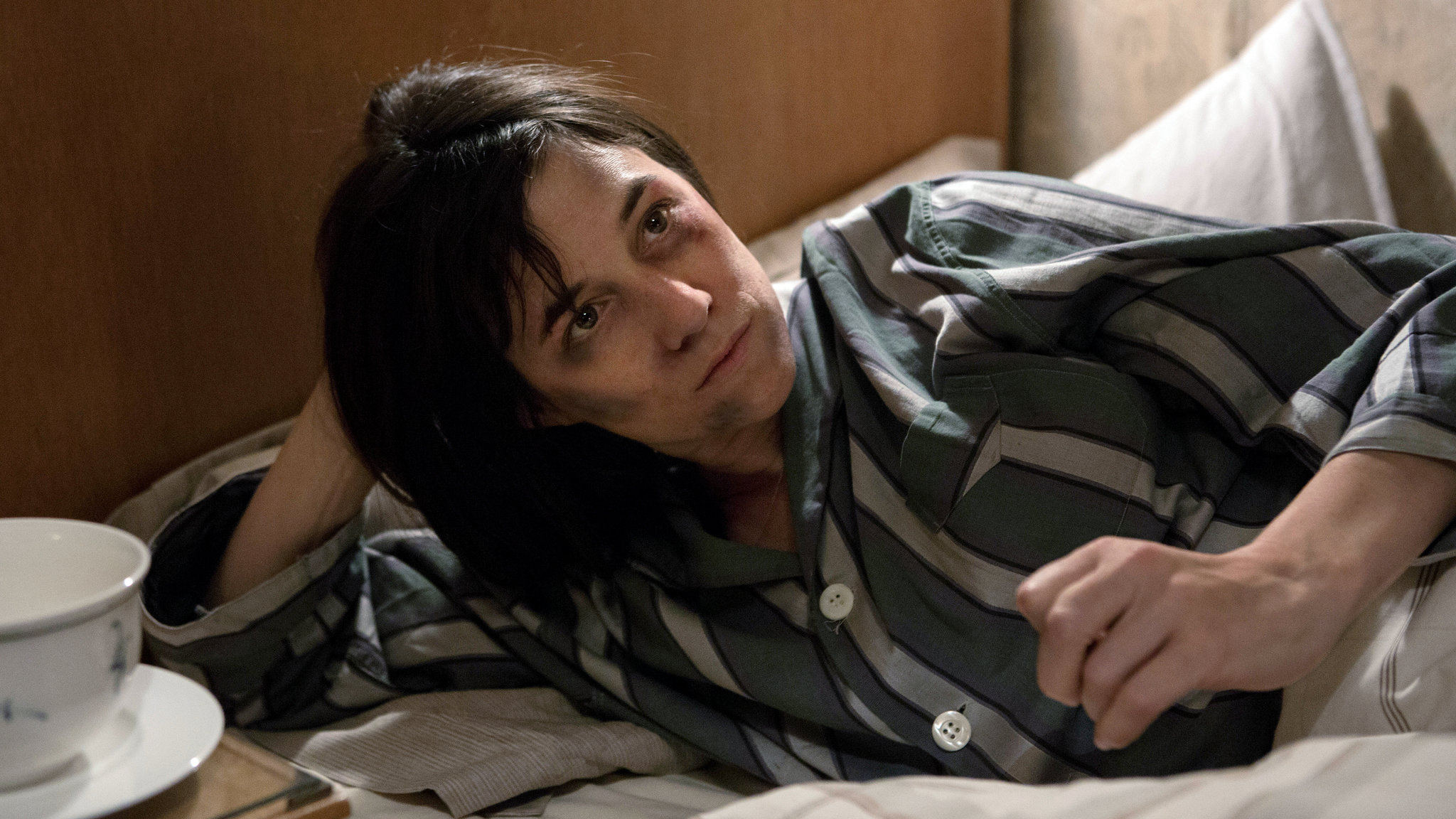
Joe (Charlotte Gainsbourg) recounts her life story as a nymphomaniac (self-diagnosed) to the middle-aged man who found her unconscious in an alleyway and took her in.
It may seem contentious, but all of the film's characters were allegedly based on different parts of von Trier's personality, past, and present. Maybe this is why the Danish maestro treads carefully: Nymphomaniac is not exactly a film about sex addiction—most of all because the protagonist is self-diagnoses and explores her tendencies only in non-conventional ways—but more about the ambivalences of being a creature stuck between love and death. Von Trier is dissecting certain psychological traits, prejudices, and aberrations, but tucked away in the various levels of the film's meta-narrative plot structure. In this way, he asserts a safe distance between what's happening on screen and moral judgements. Similarly, the sex scenes were unsimulated, but performed by body doubles. They were then superimposed over the bodies of the actors, who were, of course, using prosthetics for the purpose, maintaining a healthy distance between act and performance.
Even Lars von Trier can get some things right sometimes
The details



Who picked it

Savina Petkova, PhD, is a Bulgarian film critic and curator based in London whose work has appeared in Sight and Sound, Variety, Little White Lies, Cineuropa, and MUBI Notebook. She is the Programming Lead for Cambridge Film Festival and a senior editor at Talking Shorts, with a focus on contemporary European cinema.