
 2021 Show
Japan · English, Japanese
A white-knuckle thriller with great characters going up against constant, seemingly impossible odds
Intricately constructed and unbearably suspenseful from beginning to end, the first season of The Promised Neverland is a masterclass in using the episodic structure of TV to maximize the effect of a mystery-driven thriller. By placing us firmly within the perspective of its child protagonists (who are, to be fair, incredibly smart and determined), every step towards freedom still feels like a shot in the dark, and every setback becomes increasingly more devastating. Even as the season hurtles towards its conclusion, it never becomes clear how much its characters will succeed, if at all. Intelligent editing and animation that goes from ominous to fully grotesque ensures that something always feels off or too good to be true, no matter what.
And it says a lot about the sheer quality of the first season that it’s still worth recommending despite a truly awful, rushed second season, which ignores its own themes and resorts to lazy animation just to get through the story faster. Viewed as a two-season series, The Promised Neverland can’t help but look disappointing, squandering an exhilarating first half with developments that lead nowhere. But even on its own, season one stands tall as a stunning achievement in anime—a self-contained story of selflessness and hope in the face of dehumanization and despair.
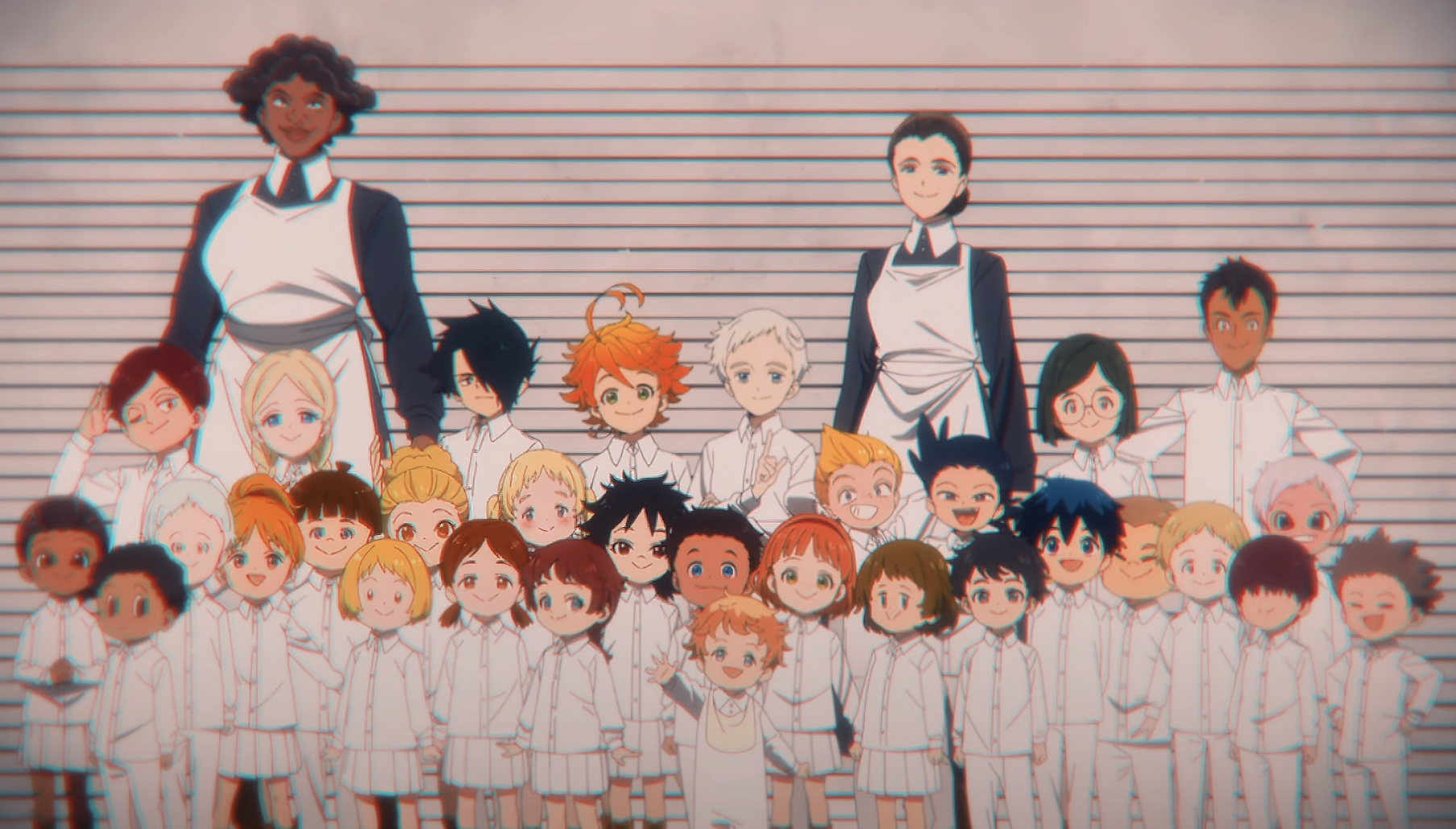
Emma, Norman and Ray are the brightest kids at the Grace Field House orphanage. And under the care of the woman they refer to as “Mom,” all the kids have enjoyed a comfortable life. Good food, clean clothes and the perfect environment to learn—what more could an orphan ask for? One day, though, Emma and Norman uncover the dark truth of the outside world they are forbidden from seeing.
When several orphans living at Grace Field House learn of a dark secret being kept from them, they plot to make their escape from the orphanage.
It's difficult to talk about any aspect of The Promised Neverland without giving anything away, but it should reassure any skeptic to know that the first season boasts both a practically perfect premiere episode and a practically perfect finale. The hook within the very first 20 minutes of the show sets a tone that's impossible to shake, while the conclusion manages to work in just enough unexpected emotion into its breathless set pieces. With such strong bookends, the first season has a rock-solid foundation on which every development in between feels necessary and earned.
The two cardinal rules of watching The Promised Neverland: (1) don't look up a single thing about its plot; and (2) just pretend they never made a second season.

Emil Hofileña is a curator at A Good Movie to Watch. He also writes as a theater critic, with work published in Rogue and Out of Print, among others. He’s probably crying over a movie or an episode as we speak.
Comments