
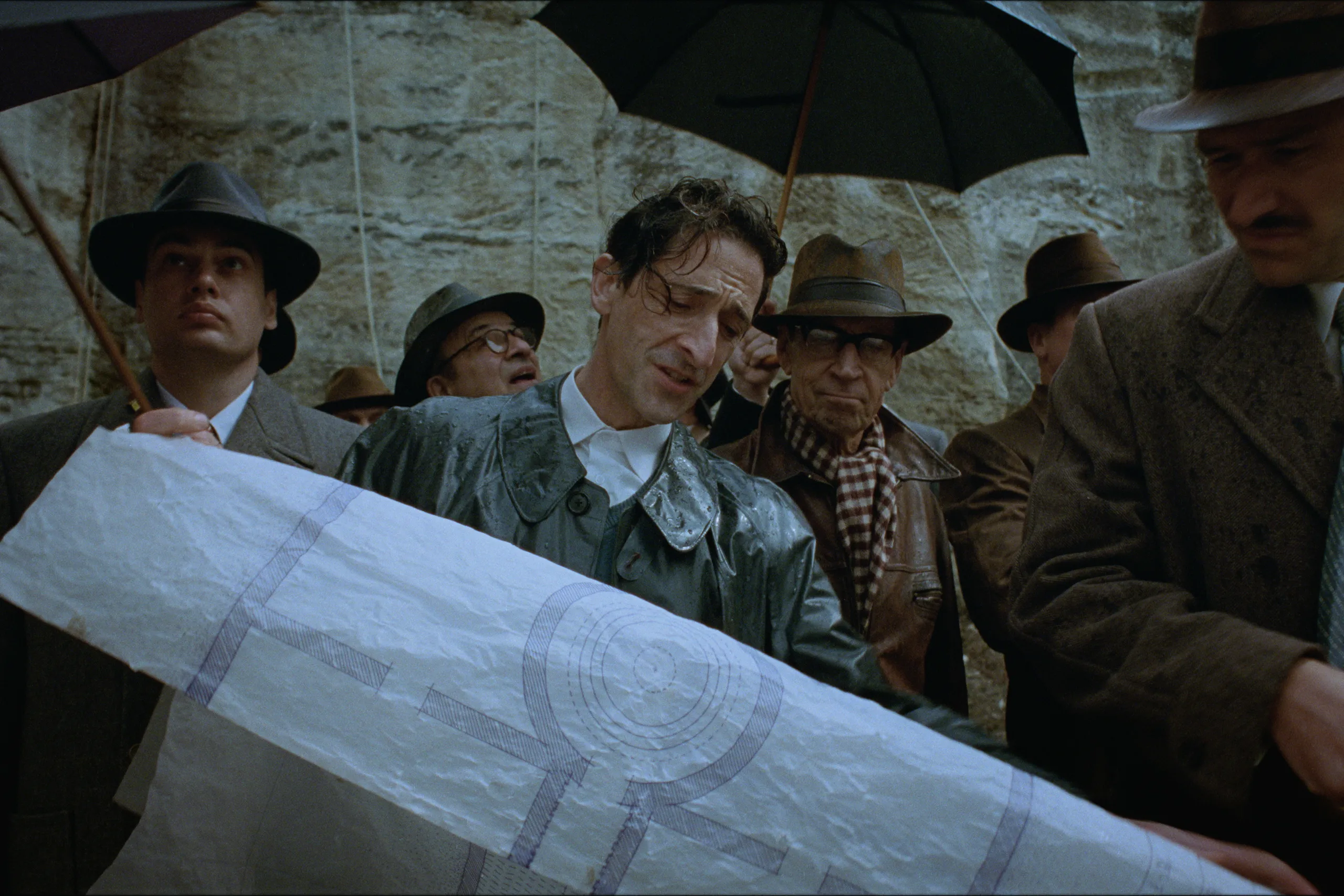
 2024 Movie
Dir. Brady Corbet · United Kingdom, United States of America · English, Hebrew
Epic in scale and substance, The Brutalist is a sobering counterargument of the American Dream
Just a few minutes in, you can already feel the immensity of The Brutalist. The rousing score stirs you. The weight of The Holocaust and Toth’s immigration story, which is also one of xenophobia and addiction, pulls you in. The visuals, shot in VistaVision, demand your attention. The period setting calls for nostalgia, but the inventiveness of the shots and the dizzying angles make them feel fresh. Technically and aesthetically, The Brutalist is near-perfect, and in those aspects alone it’s a marvel to witness. Where it might feel short, however, is intent. The film is politically ambiguous (director Brady Corbet has mentioned that he intended for audiences to interpret it how they wish) and consequently divisive. What could have been a brave and bold statement against the occupation of Palestine, for instance, feels only like a weak suggestion of it. It’s ambitious and epic, no doubt, though it can ring hollow if you’re looking for something more powerful and direct.
When an innovative modern architect flees post-war Europe, he is given the opportunity to rebuild his legacy. Set during the dawn of the modern United States (in Pennsylvania), his wife joins him, and their lives are forever changed by a demanding, wealthy patron.

"In The Brutalist, the artist suffers, but not for art: he suffers simply what history inflicts. Corbet’s film is a grandiose edifice, but he is as interested in the crumbling foundations as the soaring heights."
— John Bleasdale

"It’s a film that turns inward into itself, winding its themes around its characters like a great American novel."
— Brian Tallerico
After surviving the holocaust, renowned Bauhaus architect László Tóth (Adrien Brody) escapes Hungary for America for a better life. There, he awaits his wife Erzsébet (Felicity Jones) and niece Zsófia (Raffey Cassidy).
The imagery is ubiquitous (I’ve seen the upside-down shot of the Statue of Liberty more times than I can count), but the score by Daniel Blumberg deserves just as much attention. It’s thunderous and brassy, reflecting the chaos of construction and Tóth’s life.
Its immensity is impressive, even though character depth and clarity are wanting.

Oscars
3 wins · 7 noms

Venice
1 win

Golden Globes
6 noms

BAFTA
2 wins · 5 noms

SAG Awards
1 nom

DGA
1 nom

Spirit Awards
1 nom

NYFCC
2 wins

LAFCA
1 win · 2 noms

Renee Cuisia is the lead curator at A Good Movie to Watch. In her spare time, she likes to watch K-dramas and analyze them to death. She's also seen You've Got Mail one too many times but is still convinced it's one of the greatest films out there.
Comments