
To access filters, visit our homepage.











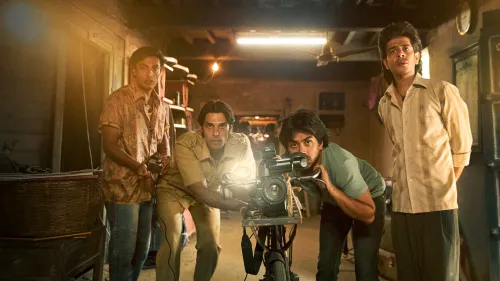
Based on the life of a real small town filmmaker, this coming-of-age film is a familiar underdog story. After their small movie theater shut down due to piracy, Nasir and his friends decide to create their own, in spite of not having the money or connections to do it. You can probably tell what happens next, given the numerous films about artists with humble beginnings. But despite the tropes, the rushed reconciliation, and not delving into some of the religious tension behind Nasir’s retirement, Superboys of Malegaon still feels refreshing, because it truly understands why the underdog is so compelling. With only their love for the craft to guide them, these boys capture the fun and wonder of making films in their own community, for their own community. Superboys of Malegaon truly listened to their story.

John Candy: I Like Me takes a somewhat standard approach in remembering the titular comedian. The film pulls out old footage, brings together his loved ones, and they sing praises of what a good guy he was. Given his profession, there were also certain moments where the film explains some jokes, which kills some of the humor. However, it’s a testament to Candy that it doesn’t come across as totally boring, even for non-comedy buffs. Like looking through old photo albums, and rewatching an actor’s old work, John Candy: I Like Me genuinely likes the guy, celebrating the gentle soul and consummate performer that helped define his generation’s comedy.

Unlike the other documentaries depicting “Hollywood’s smartest dumb blonde”, My Mom Jayne takes on a different approach to Jayne Mansfield. Already the title tells you that it’s from the perspective of one of her children– namely, her youngest daughter Mariska Hargitay– so naturally, it takes a more respectful depiction than what’s been shown of her peers. Hargitay and her siblings present a different kind of retrospective, reassembling the remaining fragments with a more personal touch and an unexpected family mystery. My Mom Jayne is such an excellent portrait of Jayne Mansfield, one that opens surprising layers to the person behind the bombshell persona.
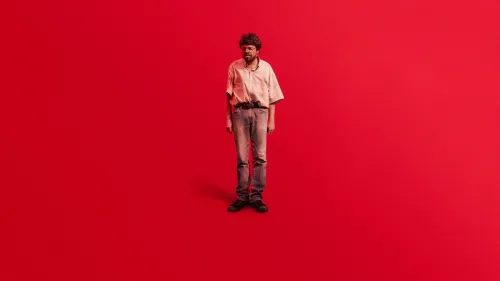
A Poet is one of the funniest, saddest films of the year, and it’s about the exact thing most movies about art are too flattering to touch: what if you love poetry, gave your life to it, and simply aren’t good enough? Simón Mesa Soto’s Colombian tragicomedy follows Oscar, a washed-up Medellín poet who latches onto a genuinely talented teenage girl and tries to make her his project, his redemption, his second chance.
It’s excruciating in the best way, a portrait of a man whose passion has curdled into something needier. Ubeimar Rios plays him without a shred of vanity. The film keeps you laughing right up until it quietly breaks your heart. It won a prize at Cannes and deserved it. Anyone who’s ever wanted something they might not be built for should see it.
 x8
x8
In Sorry, Baby, an unspeakable act of cruelty disrupts Agnes’ ambitious rise to the top. Despite being a literature professor, she struggles to find the words to describe what happened to her. Likewise, the audience isn’t made privy to the details of the incident and relies only on what Agnes chooses to show. It’s a far cry from the sensationalist way trauma is often depicted in films. In place of sexy or valiant acts of revenge, Sorry, Baby focuses on the slow, circular, and confusing process of healing. It hides more than it shows, which, oddly, says more about the reality of assault than most post #MeToo films. Sorry, Baby is an unassuming film, but its honest writing, poetic cinematography, and rich expressions pack a powerful punch.
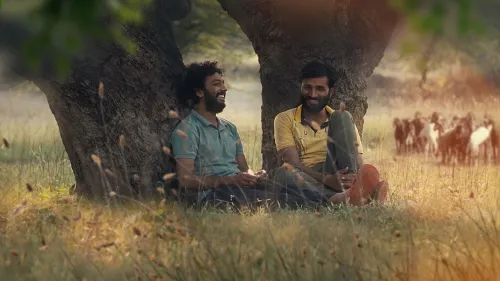
Rohan Parashuram Kanawade came out to his father in 2013 and nothing happened. His father told him he knew himself and that was what mattered, and that was the end of it. Kanawade has said he’d almost never seen that version on screen, where a coming out is usually a door slamming, and his debut is what he built out of the anticlimax. Anand is a call-centre worker who leaves Mumbai for his village in rural Maharashtra after his father dies. Ten days of mourning, a house full of relatives, and every one of them asking when he’s getting married. He doesn’t correct them, because his mother needs those people right now more than he needs the relief. So he starts walking out to the hills with Balya, a farmer he knew as a boy.
There’s no villain here, and that’s the whole achievement. The pressure is just aunties and arithmetic, and it’s heavier for being so ordinary. Vikas Urs shoots the fields in long unhurried takes and Kanawade trusts you to sit in them, which is another way of saying the film is slow and completely earns it. It won the World Cinema Dramatic Grand Jury Prize at Sundance, the first Marathi film ever to play the festival. India makes a lot of films about families. Very few of them let a son be this quietly, unremarkably loved.
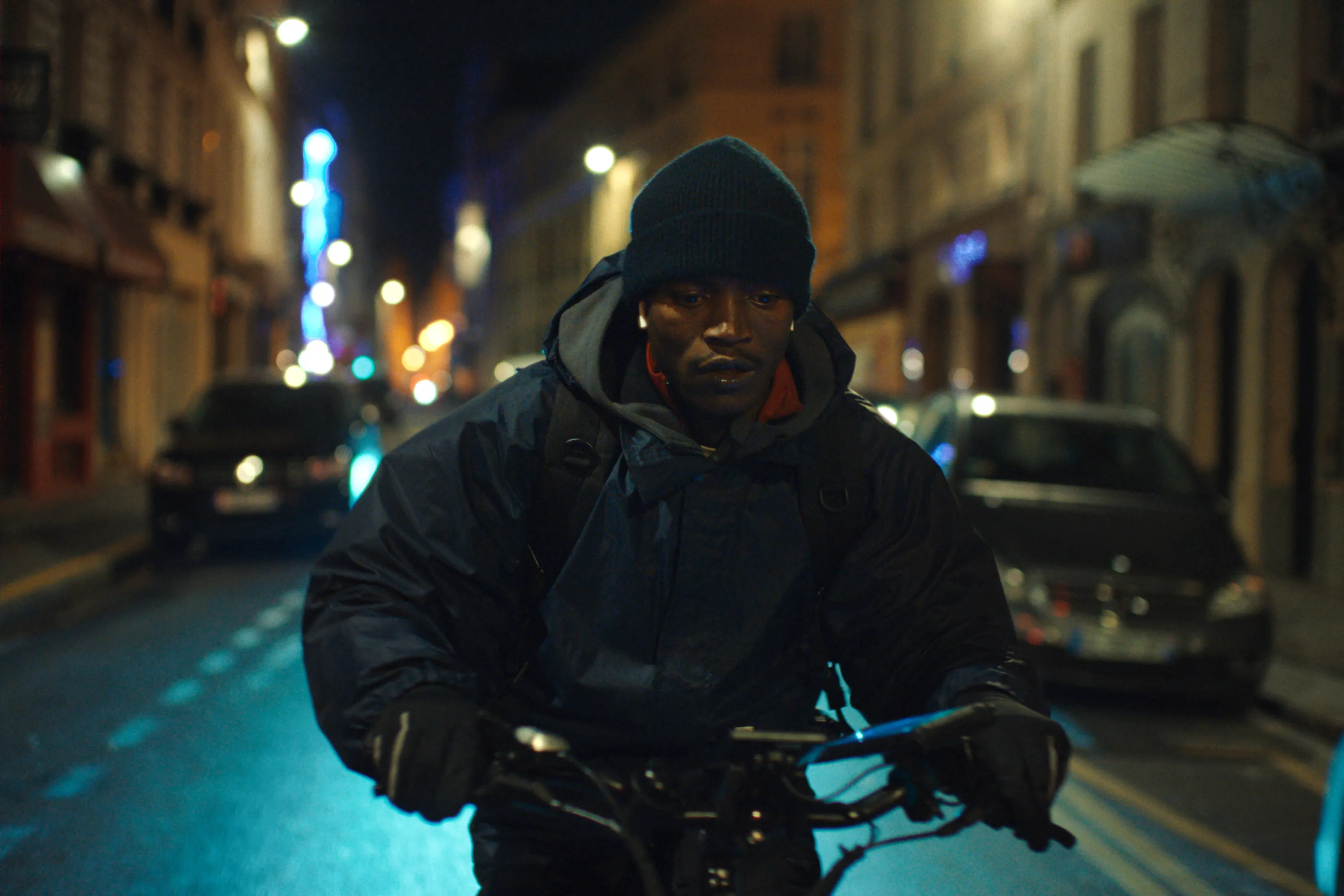
What is Souleymane’s Story? Right off the bat, that’s what everyone asks from Souleymane. It’s what his fellow immigrant asks, while he’s being coached to recite a completely different tale. It’s what his food delivery customers ask, when the app profile doesn’t match his details. And, in an outstanding sequence between newcomer Abou Sangaré and an inscrutably efficient Nina Meurisse, it’s what the OFPRA officer asks, in order for him to secure asylum. The motions of his struggles are familiar. Souleymane rushing all over the city is somewhat reminiscent of Take Out and Man Push Cart. However, the structure and framing highlights exactly why he needs control over that narrative. The story he tells– true or untrue, delivered with a practiced air or stuttering out his mouth– is the only thread he could hang onto for a better life.

In the first twenty minutes, The Remarkable Life of Ibelin seemed to be quite unremarkable, with the usual way a biographical documentary would go, that is, loved ones waxing poetic about how great the dead person was in life. But the documentary takes this to introduce Ibelin the same way his parents discovered the online life Mats Steen lived. It’s a unique documentary, mixing in the usual home videos with the animated gameplay of the archived life Steen lived in Ibelin, but it’s grounded by, and somewhat co-created through the words Steen himself typed about his life as a disabled man, and the game history he shared with the community he formed online. The Remarkable Life of Ibelin ends up being quite a remarkable depiction of living online, that feels much more honest, human, and creative than the condescending or cautious narratives we’ve previously heard about the online world.
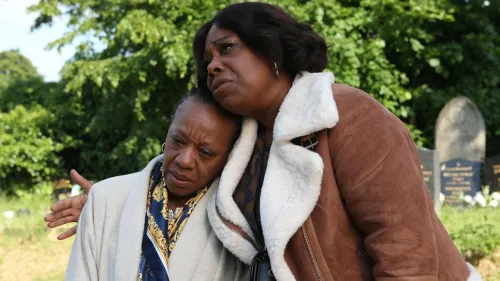
Hurt people hurt people, the saying goes, and nowhere is that more evident than in Hard Truths. Directed by Mike Leigh (Secrets & Lies, Vera Drake, Happy-Go-Lucky), Hard Truths follows two sisters who couldn’t be more different. One is Chantelle, a cheerful hairdresser who has raised equally ebullient daughters, and the other is Pansy, a hardened woman who lashes out at everyone from her family to the people queuing up in the grocery. Pansy is brutal, the sort of person you’d roll your eyes at if you were unlucky enough to encounter her in public. But Leigh gives us a glimpse into her internal struggle; nothing too obvious, as is the naturalistic director’s style, but we feel her pain whenever she goes out of her way to avoid the people closest to her, or when she savors a moment alone and hides her tears. There is no linear plot in Hard Truths; instead, it’s a collection of lived moments and ordinary joys and sorrows. It’s also a welcome reflection of our fractured reality. Loneliness, grief, anger, anxiety—these feelings are often inexplicable, and they come out of us in ways that are never immediately understandable or direct. So why should Pansy be? The film is an exercise in sympathy as well as a mirror to our own complicated and invisible hurt.
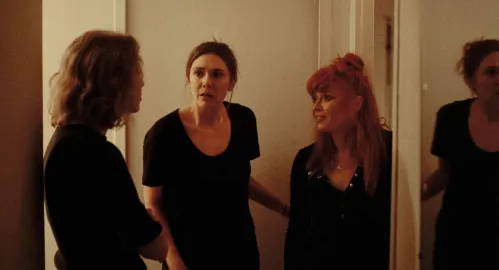
Not everybody holds a good relationship with their sisters, but ideally, we get to reunite and repair things in a good time. Unfortunately, for some families, the only time they reunite is due to a parent nearly dying. This is the case in His Three Daughters, where the three sisters meet after years living apart. It’s a common plotline, mostly depicted in the feel-good, family friendly variation, but writer-director Azazel Jacobs makes the three sisters distinct by taking the easy assumptions many people would make about them, and naturally push them to reveal the opposite. Carrie Coon, Natasha Lyonne, and Elizabeth Olsen form a great trio, delivering equally excellent performances under the same roof.
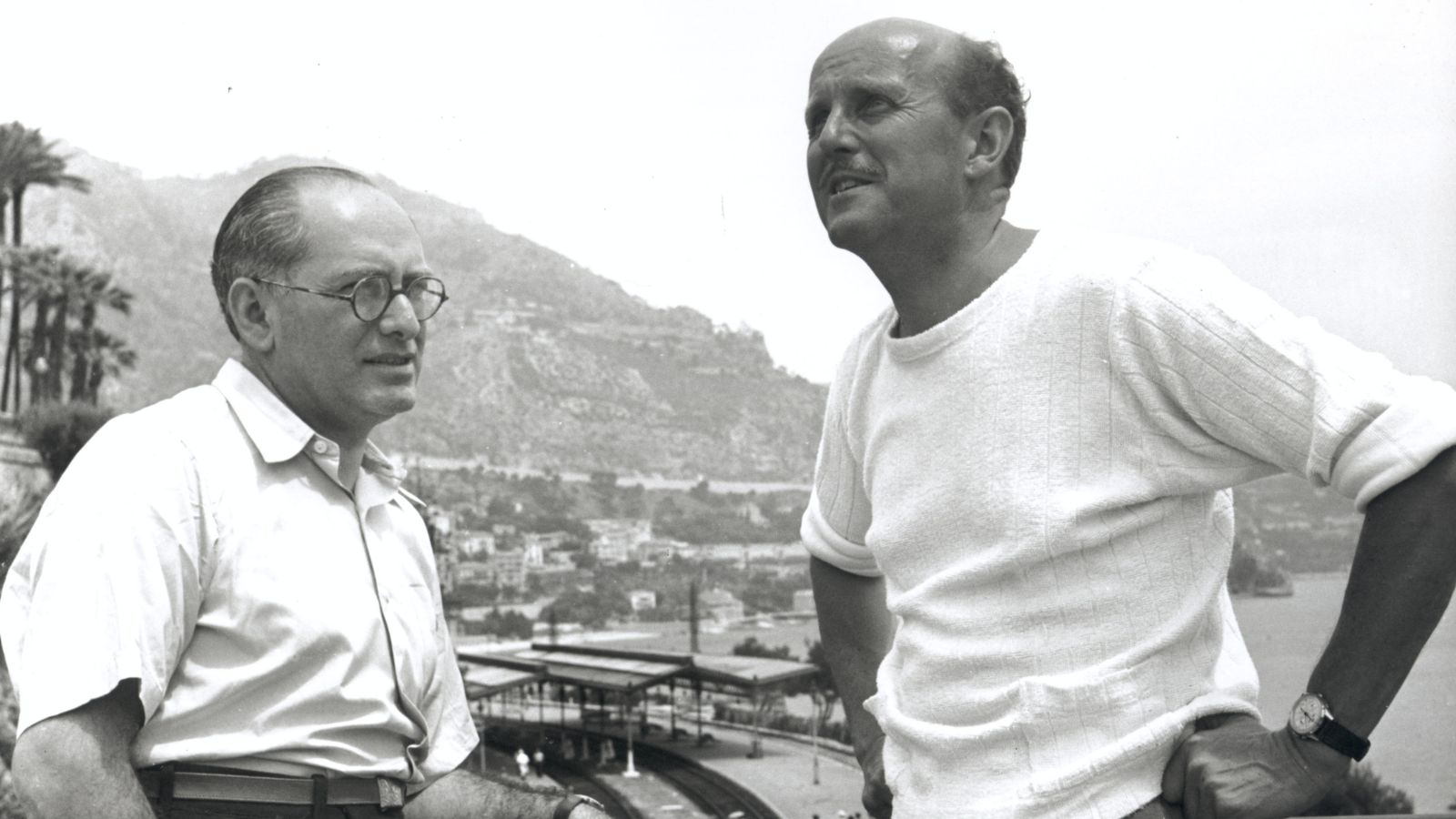
Is there anything more lovely than hearing Martin Scorsese talk about cinema? Maybe it’s just the film nerds in us– we are, after all, always on the hunt for A Good Movie to Watch– but it’s just wonderful to hear Scorsese talk about movies, especially from directors he loves and are inspired by. Made in England: The Films of Powell and Pressburger is about the influence of The Archers, and while it’s mostly a straightforward documentary, director David Hinton makes it something like a cohesive film course on the directors, with Scorsese as lecturer. Oftentimes letting the directors’ shots and music speak for themselves, with Scorsese adding needed context, it won’t be a surprise that Made In England would be a treat for film nerds, but it also would be a great introduction for casual viewers, or viewers that want to start watching classic films, like those of The Archers.
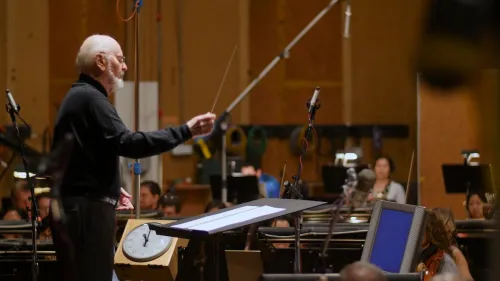
Before this documentary, I didn’t have the faintest clue that the formative films of my childhood—Star Wars, Superman, Indiana Jones, ET, and Harry Potter, to name a few—were scored by one man: John Williams. This film is a loving tribute to Williams, who at 92, is still as lively as ever as he shares how he stumbled into Hollywood and found his calling as the definitive movie composer. It features interviews with frequent collaborators like Steven Spielberg and Yoyo Ma and fans like Chris Martin and Seth MacFarlane, but it’s truly Williams’ music that makes watching this a special experience. As soon as you hear the chilling first notes of Jaws, the brash opening of Star Wars, and the melodic strings of Jurassic Park, you’re hooked. Then Williams, often along with the directors, go on and recount how those came to be, and you find yourself seated, eyes wide with wonder.
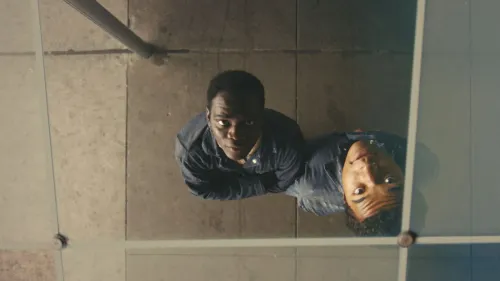
The first things that grab your attention in Nickel Boys are its beauty and technicality. Director RaMell Ross, a large-format photographer, ensures every frame relays something deep, intimate, and moving. Then there’s how he takes these shots: we see things unfold through the POV of Elwood and Turner, students at an abusive reform school in Tallahassee, Florida. The year is 1962, and even though the civil rights movement inspires Elwood and his peers to stand up for themselves, the political climate is as skewed and violent as ever. Nickel Boys tells the unfortunately common story of how Black men, in particular, had to endure unimaginable abuse during the Jim Crow era in the South. What is uncommon, though, is the sensitivity and boundless inventiveness with which Ross tells this story. Yes, violence is unavoidable in a story like this, but Ross swaps trauma porn with something more effective and chilling—a mixture of silence, archival photographs, time jumps, and that immersive POV, which forces you to be in Elwood and Turner’s shoes. The world before them may be brutal, but inside, they hold space for beauty, fun, relationships, and wonder, manifested in the film in dreamy visual sequences. What Ross does is art in the highest form, an unforgettable balance between style and substance.
 x1
x1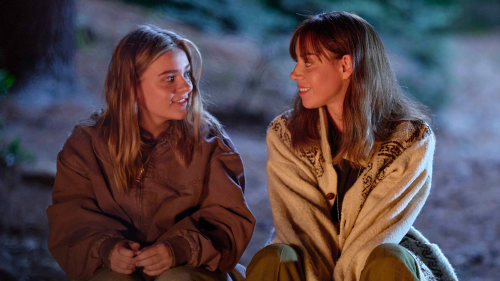
My Old Ass has a very simple premise, one it doesn’t even take the effort of explaining. For whatever reason, 18-year-old Elliot meets her 39-year-old self, and they talk at length about life. Naturally, older Elliot gives her younger self some advice to improve her life. But she also gives her a grave warning: under no circumstances must she be with a man named Chad. The film then follows younger Elliot as she tries to heed her advice and learn a lot about life in the process. Now, on paper, that may sound like sentimental schmaltz, but the two actresses playing Elliot—Stella and Plaza—are what make the film so grounded and enjoyable. Stella is bursting with life and energetic humor, while Plaza delivers her signature stoic wit. That’s not to say she’s lifeless though. By the time the climax rolls in, you’ll be struggling to keep the tears in.
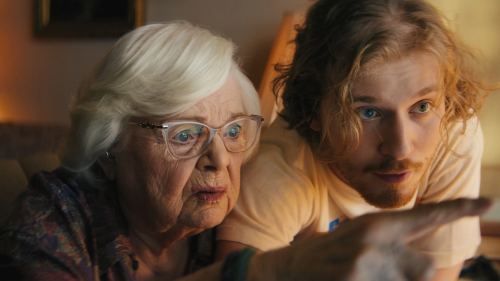
It’s easy to laugh about an old lady being an unwitting lead in an action film, the joke being that they can’t possibly be that. But June Squibb’s Thelma is. She refuses to be infantilized and undertakes a journey that’s dramatized to great effect. It’s still funny, but without Squibb’s character being the butt of the joke. It’s also immensely charming, smart, and moving, without ever being too saccharine or pandering. The performances are wonderful across the board, but it’s Thelma’s intergenerational bond with her 24-year-old grandson Daniel (Fred Hechinger) that’s at the heart of the film. In some ways, both Thelma and Daniel have to prove their worth to a world that gives them little credit for their idleness, even though they’re both happy and make other people happy that way. Parker Posey, who plays Thelma’s daughter and Daniel’s mother, is equally commendable as the seeingly stable but perpetually harried “adult” that keeps the two grounded in reality. Equal parts sweet and bad-ass, Thelma is the movie to see if you want to feel the warm fuzzies (minus the cheese) with the family.
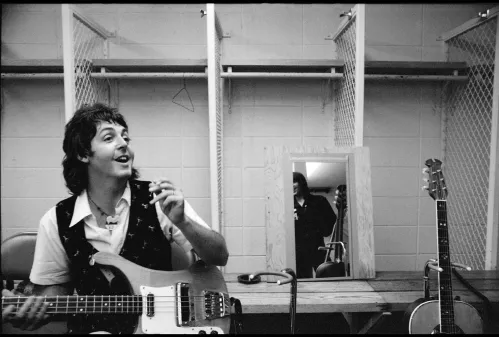
The Beatles is the greatest musical band ever created, or at least the one with the most success, most influence, and most impact in the industry. So, what do they do when that same band breaks up? Fans that have followed their careers since are likely to know what has happened, but the perspective Man on the Run presents is fascinating. Focusing entirely on Paul McCartney, this documentary clears up some of the mystery and confusion that surrounded him, the weight of the expectations and the disappointment of the fans over the break-up. Of course, the archive alone would already please fans. Filmmaker Morgan Neville simply takes that footage to celebrate McCartney’s reinvention.
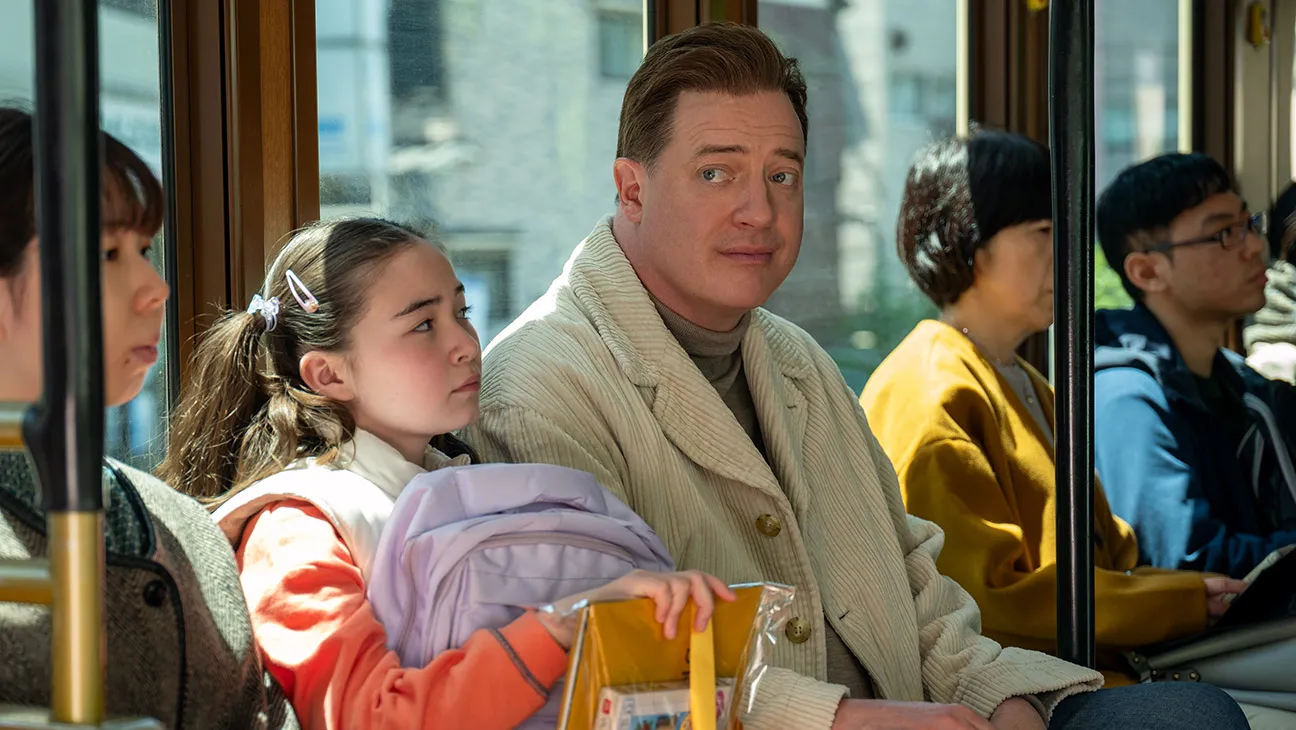
Since the 1990s, Japan has offered the service of pretending to be one’s family, friend, or lover. Rental Family isn’t the first time the West has ever depicted this service, but at a time of increased isolation, division, and loneliness worldwide, the very concept directly addresses that need for perceived connection. Why is there a need to fake it, rather than to form it for real? With Hollywood’s own Brendan Fraser, this comedy-drama considers how that perception has been tied closely to the outcomes of one’s life, gently recognizing how difficult it is to balance it with other concerns. Rental Family doesn’t fully resolve its client characters, but like director Hikari’s previous work, it asks its audience to reconsider the notions surrounding the rental family service.

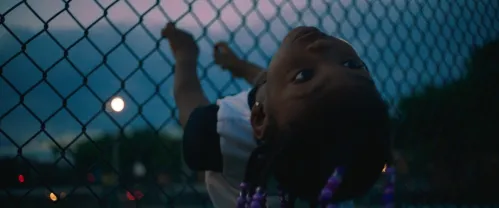
There are three threads in Daughters that directors Natalie Rae and Angela Patton weave beautifully together. The first thread follows the incarcerated men who gather every week to talk about fatherhood, mostly, because of the program that they’re in, but also: masculinity, race, systemic poverty, social mobility, and the skewed prison system in America. The discussions are raw and enlightening. “This isn’t normal, that we’re all in here,” one of the men wisely says, and it feels special to witness that moment of shared empowerment. The second thread follows the daughters, whose ages range from 5 to 15. In line with the film’s honesty, it shows us girls who miss their fathers and girls who don’t; girls who know everything about them and those who can’t even remember their faces. One is oblivious, the other suicidal. This part is enlightening in a different way: you hope the kids are too young to realize what’s going on, but that’s almost never the case. The final thread is where the two others meet: it offers the most heartbreaking parts of the film, but also the most beautiful. Both parties dress up, take pictures, move on the dancefloor, and say their inevitable goodbyes, and all this is captured in the same darklit, grainy color as the film cameras the fathers and daughters are given to document the dance. The direction and editing is artistic, but never in a gratuitious way. Instead, like other parts of the film, it’s filled with gentleness and empathy.

A Real Pain is a deceptively simple film. There’s not a lot going on on the surface, but Eisenberg’s smart script and tight direction, coupled with Culkin’s firecracker performance fuel the film with heart and infectious energy. A Real Pain shines when it focuses on the cousins’ bondat once pained and precious—but it also works as a strong ensemble of realistic characters, and as a heartfelt tribute to the Holocaust victims of the region. Eisenberg does an excellent job of tying the characters’ flaws and emotions with the horrors of the past. It deals with heavy stuff, but there’s an impressive restraint at play here, even during Eisenberg and Culkin’s big moments. They’re moving (but never overly sentimental) and truly memorable.

After more than 400 separate film adaptations, is there anything new to say about the monster that birthed the sci-fi genre? Turns out, yes, there is. Writer-director Guillermo del Toro has long dreamed about adapting his favorite movie monster, and it shows, with the few changes he makes to the story. Some book purists may find these changes off-putting, but the way del Toro structures the film actually lines his version closer to the original novel, remixing its epistolary form through a POV shift halfway the film. The shift does erase some of the ambiguity, as film adaptations often do, but overall, it’s a move that makes sense for del Toro. It’s a change that highlights his fascination for the human in the monster, and it’s a change that the cast gamely takes on with their excellent performances.
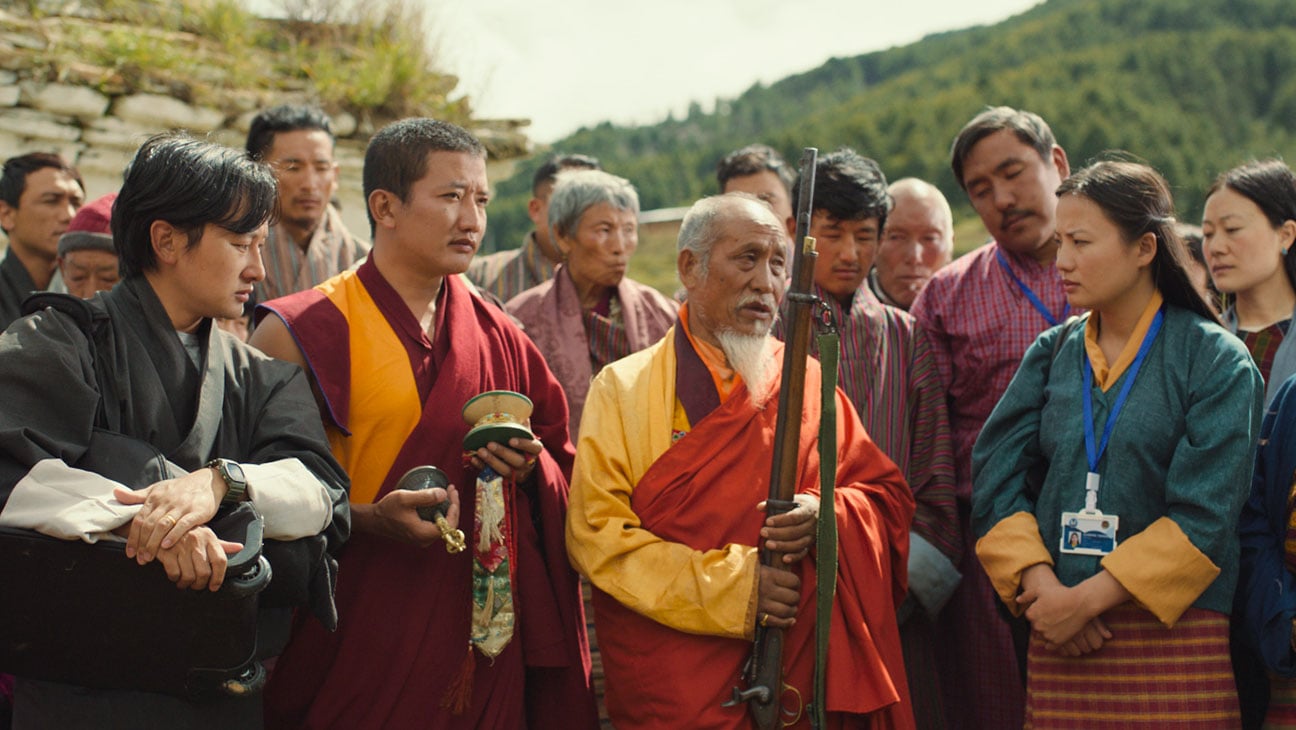
To plenty of countries around the globe, democracy has become so ubiquitous that we forget it’s relatively new, at least relative to the rest of human history. Bhutan is one of the last countries that became a democracy, and writer-director Pawo Choyning Dorji chose to depict a slice of how they made the shift in The Monk and the Gun. As Tashi sets out to obtain two weapons for his mentor, and Ron seeks a specific antique gun, Dorji presents slice-of-life moments of the beautiful Bhutan countryside, intercut with the subtle ways tradition still persists amidst modernity, and the funny ways change can clash with culture. It’s no wonder The Monk and the Gun was chosen as the Bhutanese entry for the Best International Feature at the 96th Academy Awards.
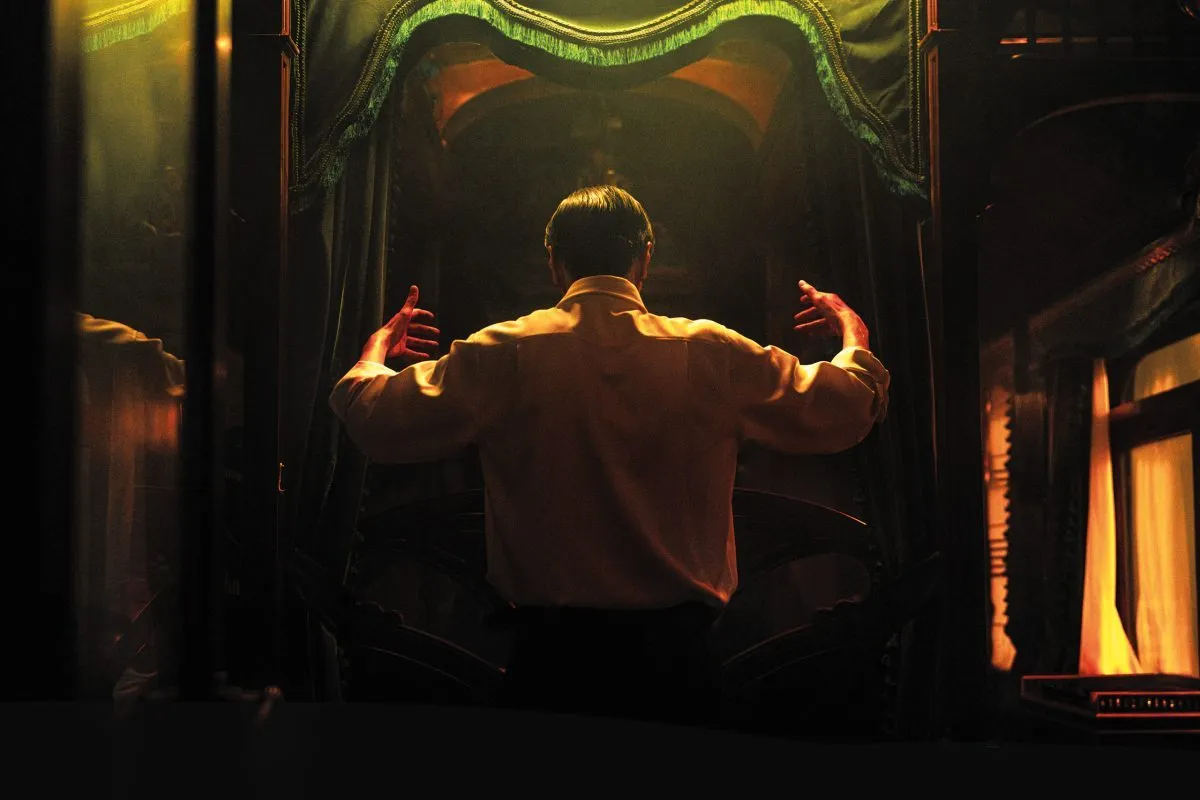
How do you make sense of Resurrection? This dreamlike feature seems rather inscrutable, but there’s no denying how breathtaking it is to witness all the images director Bi Gan offers on screen. These images form the memories of one of the last dreamers on Earth, also known as a Deliriant, one of the few who refused to trade dreams for immortality. Now monstrous and dying, this dreamer has lived a long life, with each chapter mirroring the styles and direction of cinema. Shifting from silent expressionist sets, to wartime noir, and ending in a neon-lit vampire romance, Resurrection obsesses and contemplates over dreams and the senses, pondering the film medium’s capacity to capture something totally elusive.

Though wordless and human-less, Flow might be one of the most charming films about humanity you’ll ever see. It follows a group of different-species animals who’ve formed an unlikely bond as they try to survive a massive flood. There’s a quirky lemur, a friendly dog, a majestic bird, a wise capybara, and connecting them all through its curiosity (and cuteness) is a cat. They go through an adventure of sorts as they look for high ground, but don’t mistake this for a Disney or Dreamworks picture. This independent Latvian film gets unapologetically bleak. And as adorable as it is, there’s also a sense of endless dread coming from the uncertainty of their future. The filmmakers aren’t afraid to show things like death and predation—this is a survival, post-apocalyptic movie after all—but without spoiling anything, it still has a gleaming sliver of hope. That Flow can make ideas like selflessness, cooperation, and community feel like instinctive, animalistic urges is inspiring, and maybe more than we deserve.

There is nothing quite like The Substance right now. It’s unsubtle, it’s provocative, and its satirical humor can be a hit or miss for some viewers, but it strikes at the one thing that’s fundamental to everyone, that can make or break their lives, yet that is rarely given grace and consideration– that is the body. Legions of people have yearned for youth and beauty, but The Substance systematically outlines how much these have been intertwined with our livelihoods, opportunities, and identities, and how other entities would capitalize on this yearning and push many of us to take that out, suck that out, literally, from ourselves. The Substance does this all with insane, frenetic energy.
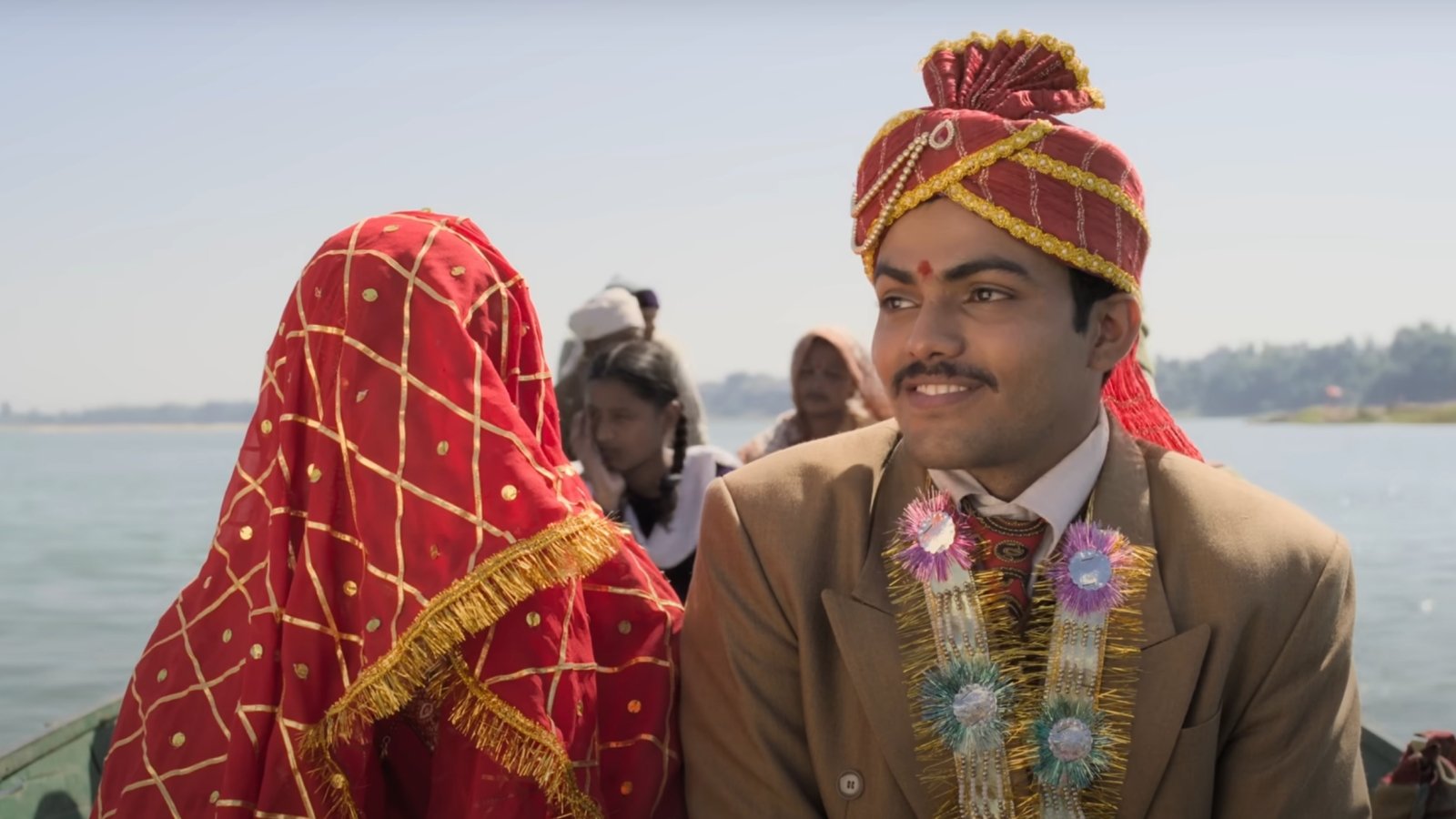
When two young brides are mistakenly swapped on a train, it’s a difficult situation, much more so when the brides in question are both veiled and wearing the same red bridal attire. This seemingly simple swap is the entire plot of Laapataa Ladies, but director Kiran Rao transforms this mishap into a hilarious, yet realistic, satire that challenges plenty of the norms enforced on women in the country. As Phool and Jaya switch places, the film understands where their respective mindsets come from– Phool having not learned much about the world, and Jaya having been jaded by it– but the film doesn’t stop there. It brings them to places that challenge those mindsets, and in turn, they challenge the people around them too, by actively making choices from the mindsets they had to hold to survive. Laapataa Ladies is what it says on the tin– Laapataa is the word for lost– but the sharply written characters, the witty dialogue, and the subtle social commentary make this charming love story one of a kind.

Beautiful in its painterly compositions and gut-wrenching in its storytelling, The Wild Robot has been dubbed one of the best animated features in a while, and rightly so. The film, which is a bit like if Tarzan were a robot, or if Stitch had to assimilate in the wild instead of the city, is a classic tale of an outsider learning to love and be accepted by her community. It’s about many other things, too, like the violence of nature, the supreme power of kindness, and the complexities of parenthood (it’s deeply humanistic for a film that features almost no humans at all). But for all the themes it tackles and the colorful multitude of characters it covers, it feels incredibly light and easy to watch. Perhaps that’s due to its hand-drawn aesthetics, which recall Studio Ghibli films more than anything, and to the voices who bring the characters to life, most notably that of Lupita Nyong’o, who gives the robot Roz so much warmth and depth despite her electronic limitations. All these and more make Wild Robot a must-watch, if not an instant classic.