
10 Highest-Rated Movies on Netflix By Users
A while ago Netflix removed its ratings and replaced them with match percentages. The concept might be interesting but it goes against a very simple principle. Say you watched two good cop movies and liked them, your next viewing should not be a third crappy movie, but a good anything movie. Users will almost always choose a 4 star movie over a 1 star movie, even if the latter matches their preferences by 100%. agoodmovietowatch is a movie suggestion website mainly for Netflix. Here are the 10 highest movies on Netflix, to find all movies and their ratings, please visit agoodmovietowatch.com/netflix.
Jump to the top 10:
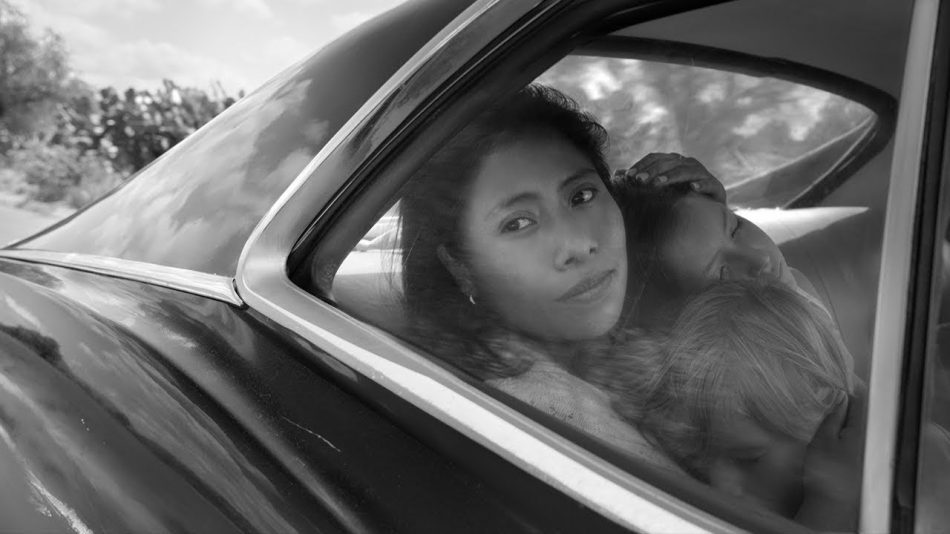
Alfonso Cuaron is a master storyteller, Academy Award-winning director, and the man behind masterpieces such as Y Tu Mamá También, Gravity, Children of Men, and perhaps more importantly, the (uncontested) best Harry Potter movie (Prisoner of Azkaban, of course). In Roma, he tells a different story. His own.
Building on events from his childhood, he tells the story of a young domestic worker in Mexico City’s Roma neighborhood. You get tales of class struggle, family dynamics, and sexism in 1970s Mexico City.
The first hour is slow but so beautiful. All it does is prepare you for the events to come, and those who stick it out will be handsomely awarded.
This is a stunning, wise and deeply personal movie. It’s everything we should ever ask from filmmakers at their prime.

In this powerful documentary, Brazilian filmmaker Petra Costa intertwines her own family history with the democratic journey of her home country. As she says herself, Costa and her country’s democracy are of the same age. This is not the only reason why she was uniquely positioned to make a film like this: her parents were left-wing activists in the 1970s, who went to jail for their beliefs, while her grandparents were part of the ruling class have made Brazil’s strong-man politics and right-wing backlash possible. Her mother was held at the same prison that ex-president Dilma Rousseff (2011-2016) was sent to. Costa tells the story of Rousseff’s demise as well as that of Luiz Inácio da Silva (2003-2011) aka Lula, whose future remains up in the air. The Edge of Democracy is thus a gripping and urgent warning that democracy in the world’s sixth most populous country is under attack. In content and form, Costa is obviously opinionated, but she makes a strong point.

Russel Crowe, Nicole Kidman, and the immensely talented young actor Lucas Hedges (Manchester By the Sea) form an amazing pack of talent in this excellent drama. The story is based on the memoir by Garrard Conley, a true story. Set among deeply pious Christians in Arkansas, Hedges plays 18-year-old Jared Eamons, who discovers that he is gay. Crowe plays the father, a car dealer and a preacher, and Kidman the mom, who is a sweet-natured hairdresser with traditional values. When their son comes out to them after concealing his sexuality for some time, they pressure Jared into going to a Christian conversion camp, where his “lifestyle choice” is to be “prayed away”. The unspeakable camp is led by the Victor Sykes, who is as sinister as he is stupid, played with aplomb by Joel Edgerton, the writer and director. It’s a funny sidenote to a serious movie that many actors in this Southern drama are from Australia, including Edgerton, Crowe, and Kidman as well as Red Hot Chili Peppers bass player extraordinaire, Flea, who plays a drill-instructor-type PE teacher at the camp. The powerful performances are indeed what drive this drama and they contribute significantly to telling a story that needed to be told.

Proving that children’s entertainment can be legitimate art like any other kind of cinema, the sequel to 2014’s Paddington displays a stronger love for community and storytelling than many other adult-oriented productions. It may be cutesy and innocent, but Paddington 2 also uses its stunning visual effects and intricate production design to prop up a sophisticated story about discrimination, staying true to one’s self, and (most surprisingly) the prison-industrial complex. It’s a proper throwback to another era of family movies that offers something far more substantial to young children and genuinely moving moments for the parents and children at heart.

The Teacher’s Lounge is one of those movies where a simple misunderstanding is blown out of proportion, so much so that it causes the fabric of a community to unravel into chaos. Aided by a precise score, it ticks like a timebomb, with every second filled with so much dread and anxiety you have to remind yourself to breathe. It’s an impeccable and taut thriller, but it also works as an allegory about modern-day surveillance and authority. Director İlker Çatak gives the Gen-Z students and their much older teachers a level field where they struggle for control, and the result is both bleak and funny. It’s often said that schools are a microcosm of the real world, but nowhere is that more apparent than here.

Abuse is bad and should be reported, full stop. But it’s not so easy to do so, when abusers stay in positions of power, and the people who are assigned to keep them in check are cowardly against them. Silenced depicts true crime novel The Crucible, which in turn, is based on a real life case of the Gwangju Inhwa School. Through the perspective of a new art teacher, Silenced systematically outlines how difficult it is to deliver justice, from the way the school administration bribed police and the education department, to the way the court didn’t even think to hire a deaf interpreter. It’s a horrific watch, but the intensity of the depiction was needed, given that this film’s release pushed South Korea’s government to change their laws and the actual school shut down within the same year.
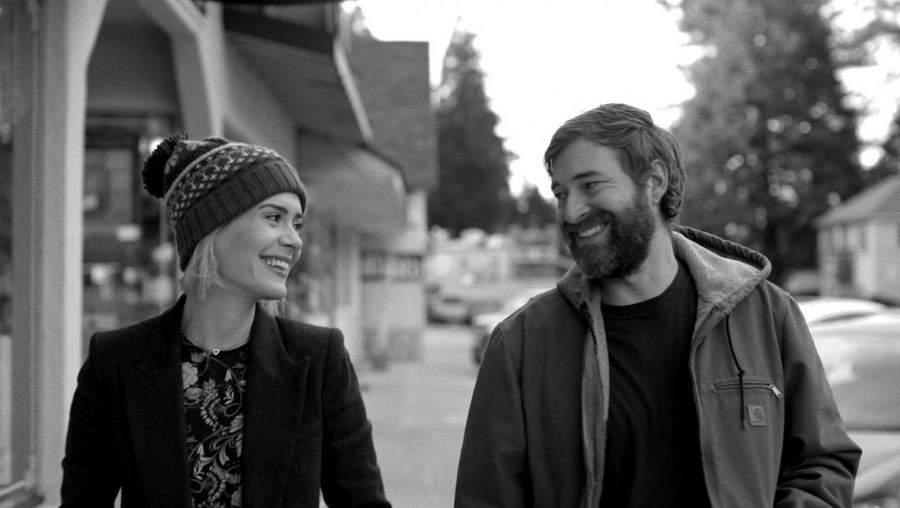
Being an intimate, black-and-white portrayal of just two people, it is worth mentioning the two leads in the very first sentence: Blue Jay stars the incredibly versatile Sarah Paulson, who most of you will know from her depiction of Marcia Clark in The People vs. O.J., and Mark Duplass from Creep. In this incredibly intricate dialogue-driven drama, he is of course named Jim, a regular guy with some issues, who runs into his high-school sweetheart Amanda at the grocery store. She is only in town briefly because her sister is having a baby. Amanda agrees to have coffee with him, later they get beer and jellybeans, and find themselves recreating silly tapes at his late mother’s house that they use to make when they were still at school. This could quickly become a soppy affair if it wasn’t for the heart-felt realness of the acting, for lack of a better term, and all the fine details that the two leads bring to the screen. The chemistry between them is something to behold!
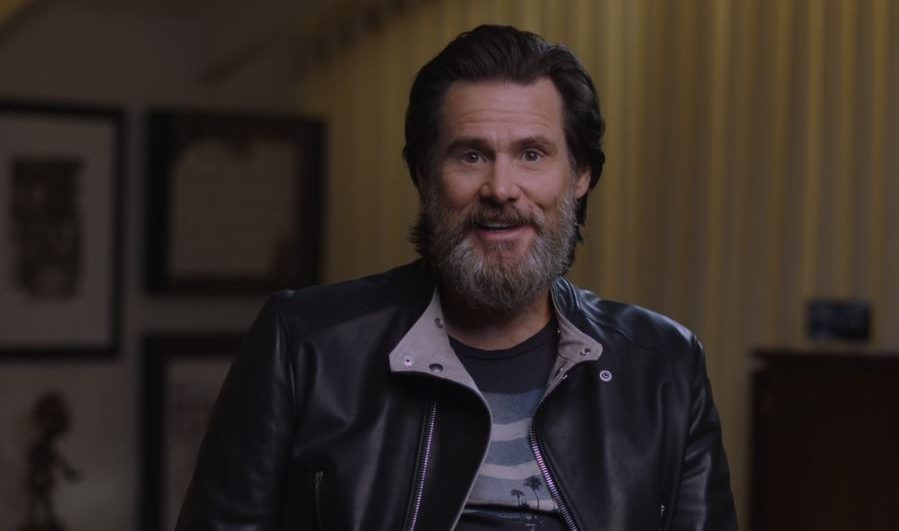
After his first serious role in The Truman Show in 1998, Jim Carrey got a shot at playing his idol, the late comedian and performance artist Andy Kaufmann, in Man on the Moon in 1999. When he got the role, a role of a lifetime, Carrey decided to honor Kaufmann’s legacy by transforming into him (and his alter ego Tony Clifton) and, in true method-acting fashion, never to leave character. Jim & Andy is the result of 100 hours of behind-the-scenes footage shot at the Man on the Moon set, which was withheld for 20 years over fears of Universal Studios that people would think Carrey was an a**hole. While Carrey was a complete and utter imposition to the film’s director, Miloš Forman, and everybody else on set, including Danny DeVito, his transformation (or obsession) was a unique, transformative experience for Carrey, who had been sick of fame and acting before he took on this gig. Whether you buy into this view or see it as a vanity piece of a complete maniac, this is one of the most unique and insane documentaries on Netflix. A mind-blowing portrayal of a complex mind.
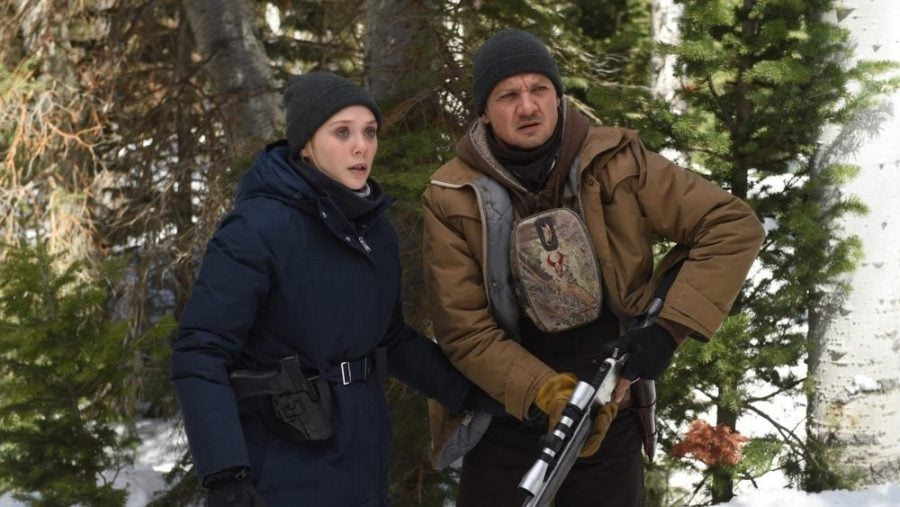
Phenomenal and heartbreaking, Wind River is a true masterpiece by Taylor Sheridan, the man behind Sicario and Hell or High Water. In a Native American Reservation, a local girl is found dead and a young detective (Elizabeth Olsen) tries to uncover the mystery. She is accompanied by a tracker (Jeremy Renner) with his own dark history in the community. It’s not a very rewarding movie at first, so don’t expect an incredibly fast-paced story from the get-go. However, when everything unfolds, it’s not only action-packed, its reflections on indigenous communities are deep and poignant. How this remains a relatively known movie is shocking, it has to be one of the best mysteries of the past 20 years.
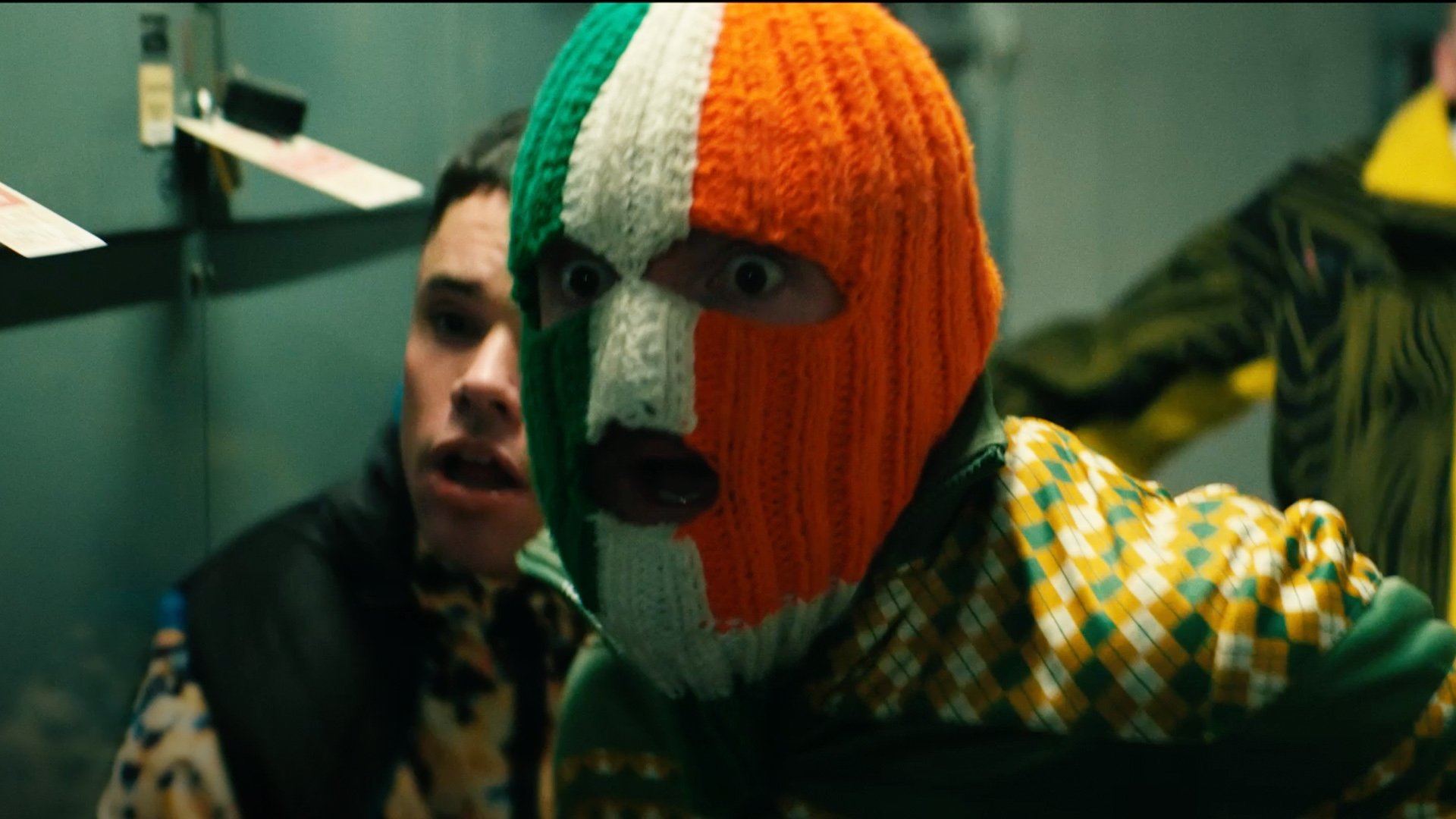
This untamed, high-octane portrait of the Belfast hip-hop trio Kneecap follows real-life members —aliases Móglaí Bap, Mo Chara, and DJ Próvaí, all playing themselves—as they forge a path from lost teens to unlikely cultural icons. Being the first hip-hop act is their native Irish, they’re met with disdain both from their community who think they are misrepresenting the Irish cause (DJ Próvaí translates to DJ Drug Dealer), and from the British for things like playing the same venue where King Charles spoke the night before and one of them exposing their butt with the words “BRITS” and “OUT” written on either cheek.
The story ends up being as much as about the group as it is about identity, artistic freedom, even the Ireland of today – and yet the core of Kneecap, perhaps not just the movie but the group itself, seems focused solely on the importance of having fun while dealing with all of it. The ride is exhilarating, often very funny, and even in tough moments, upbeat. Hang tight.