Movies to Watch With Social & Cultural Documentaries (Page 2)
To access filters, visit our homepage.
Man, don’t watch this show hungry. Each episode traces the traditions, the history, and the lore surrounding much-loved types of food. It’s a food show, to be sure, and it will surely whet your appetite, but award-winning rebel chef and creator of the New-York-based restaurant Momofuku, David Chang, also has a mission: to challenge notions of authenticity, to call out snobbism, and to break down cultural barriers. While exploring pizza, for example, he travels to Japan to check out a new pizza in a Michelin-star restaurant, but also hits up a Domino’s. He talks about why microwaves are good for you and why MSG isn’t bad for you—and why demonizing MSG has a racist history. Despite being an important proponent of the food industry, Chang has a fuck-it attitude towards it. There is a reason the name of his high-brow brand sounds like “m*therf*cker”. Part mouth-watering food TV, part op-ed on foodie culture, this is one of the best cooking shows you can watch today.
After the La Manada rape case in 2016, it was necessary to document this event, especially since the widespread national outrage and demonstrations managed to move the country to change the way Spain defines consent. You Are Not Alone: Fighting the Wolf Pack documents this arduous journey. While it’s done through the familiar Netflix true crime approach, there’s some respect given to the victim that hasn’t been given previously by the media. The film sticks to the actual verbatim words used by the victim, albeit edited for clarity, but they ensured that their words were not accompanied with photos or similar looking actors, keeping the truth of their words without risking their safety. While the documentary’s direction isn’t new, the outrage is still felt, as well as the genuine hope of a country that came together to ensure justice.
Few lived a life as extraordinary as the late Jane Goodall had, and even fewer are captured with such tenderness as this 2017 documentary. Of course, that’s partially because of the material. This film came about when Nat Geo unearthed around 140 hours of lost footage from wildlife photographer Hugo van Lawick, who shot Goodall’s expeditions after intense scientific scrutiny over her observations and methods. But what makes this film compelling is the way director Brett Morgen pieces together that footage. As Goodall fell deeper in love studying chimpanzees, Morgen pairs this devotion with the glimpses van Lawick captured as he and Goodall were falling in love with each other. So even without the insistent score, it’s easy to get swept by Jane’s passion and the confident way she set forth towards her calling.
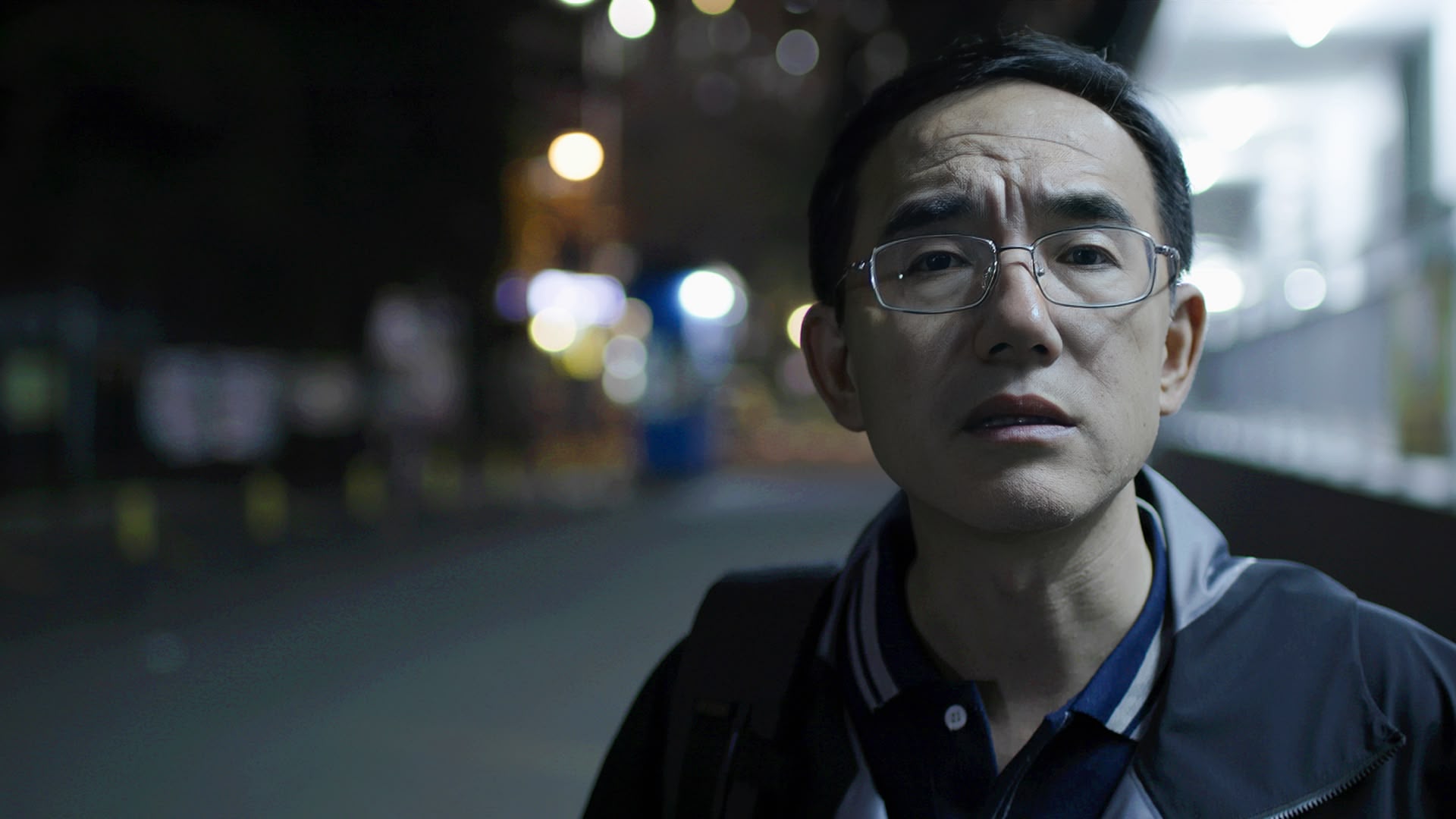
When thinking about buying something, it’s easy to only think about price and quality, but with many investigations around the world about inhumane labor practices, it’s no wonder that more people would like to look at the companies they’re buying from, or at least buy secondhand when possible. One such investigation is depicted in Letter from Masanjia. While it starts first at the discovery of the letter in Oregon, the true story continues on the other side of the world, through the difficult experiences Sun Yi and his fellow detainees were forced to go through when the Falun Gong movement grew greater in number than the Chinese Communist Party. It’s a harrowing tale, with certain sequences being animated due to a natural lack of footage, and it’s one that needed to be made.
In this documentary about John Allen Chau — the American Christian missionary reportedly killed when he tried to preach the Gospel to one of the last uncontacted groups in the world — a participant muses about the “fine line between faith and madness.” The hazy border where one ends and the other begins is the focus of this doc, and it makes for a fascinating challenge of audience’s open-mindedness.
The film presents Chau’s perspective through scattered interviews with friends and readings of the diary he left behind, but it also features interviews with surviving, persistent adherents of the same radical evangelicalism that inspired Chau to preach the Gospel to the North Sentinelese people (something he believed was a prerequisite for the Second Coming of Jesus). The filmmakers treat these highly controversial perspectives with a light touch, never explicitly challenging Chau’s peers, but strong balance is provided via the voices of vehement opponents of this ideology. Providing equal weighting to both sides is an unusually hands-off approach, one that might easily be misread as tacit approval from the filmmakers. Ultimately, though, anyone watching this with an open mind will still come to the same moral conclusion — you’ll just be better informed about it.
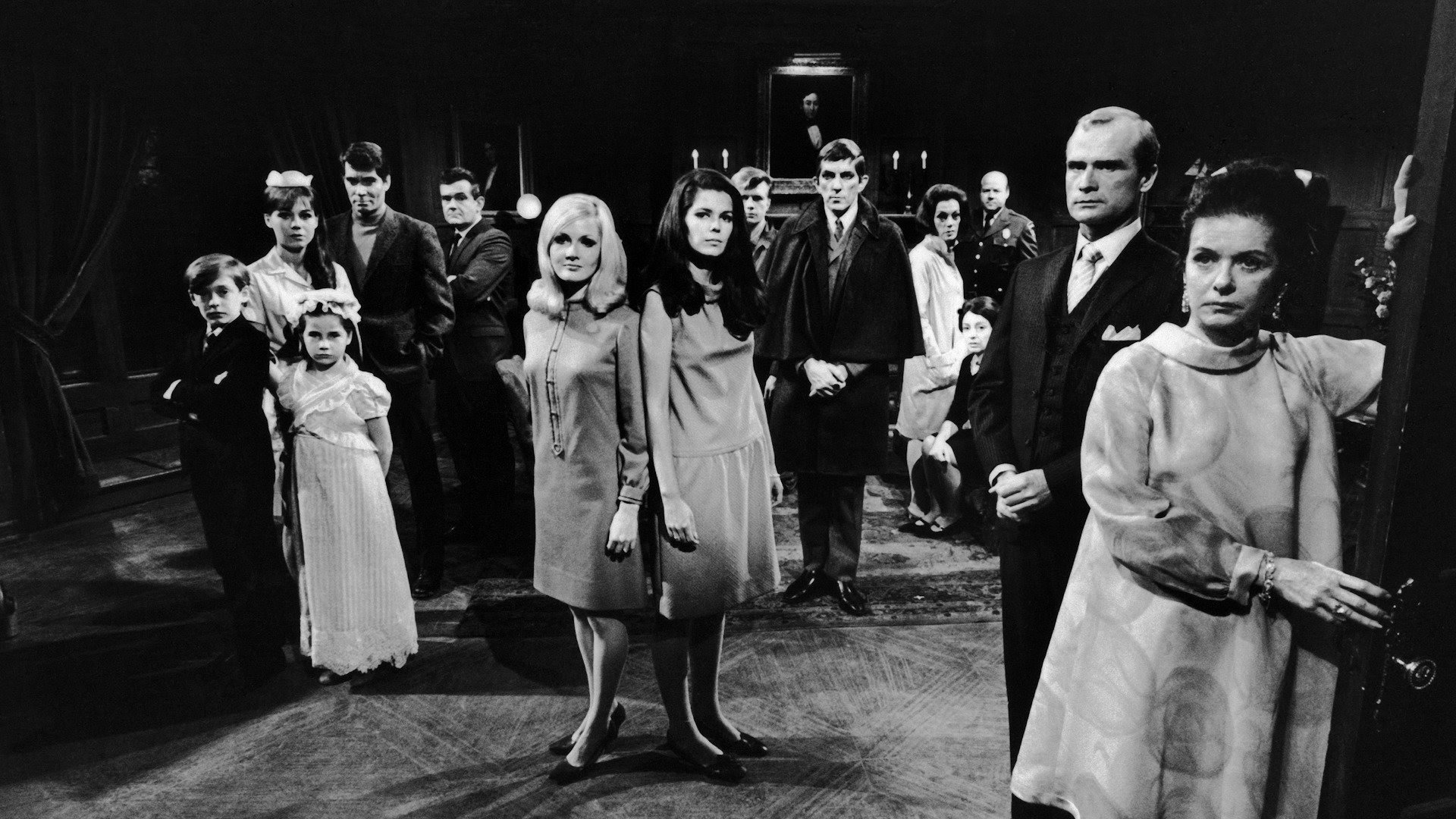
While cable television didn’t have the same prestige as movies for decades, nevertheless the format garnered some influence, even then, with generations of viewers and filmmakers growing up in the medium. Dark Shadows is one such influential television show, and its journey from middling soap opera to groundbreaking drama is depicted in Master of Dark Shadows. Viewers totally unfamiliar with the 60s-70s program might only appreciate the film for its slice of media history, as the documentary takes a rather ordinary, interview-focused approach, but Master of Dark Shadows is clearly a tribute to Dan Curtis, the man behind the midday monsters, and the legions of fans it inadvertently garnered.
The medium of cinema has been used as a tool for revolution, but so too was it complicit in genocide. That was true of the Khmer Rouge regime, as the remaining footage of the time came entirely from the state, to be used in re-education programs and propaganda to hide the difficult realities caused by the administration. In response, three decades later, documentarian Rithy Panh reclaims the medium, juxtaposing archival footage of Pol Pot’s programs and Cambodia before, with clay figurines formed from his memories. It’s a grim recollection, but The Missing Picture takes back cinema to keep a collective memory that must be preserved.
Each episode of Abstract is a look into an art discipline through the lens of a selected contemporary pioneer. From illustration to footwear design, the show follows how the artists create and live, how they got started, etc. The documentary itself is really aesthetically pleasing, which kind of taps into your own creativity. The designers in the series are unknowingly well-known. Does that make sense? You will instantly recognise their work even though you’ve never heard of them before. A light, easy-going and inspirational documentary.
To Kill a Tiger should not be an easy watch. It’s about the gang rape of 13-year-old Kiran, a girl whose small village has shunned and blamed her for “not knowing better,” and who is being forced by community leaders to marry her abuser to “erase the stain” on herself. But instead of leaning on sensationalism, Director Nisha Pahuja tells Kiran’s story with so much care and sensitivity that it feels refreshing and ultimately inspiring to watch. Pahuja hones in on Kiran’s relationship with her father, Ranjit, who stands by her daughter despite the pressure imposed by his community to do otherwise. The filmmakers note that he’s the rare man to pursue justice for his wronged daughter, and we can see through intimate conversations among the villagers, lawmakers, and social workers how brave and novel Kiran and Ranjit’s journey is. To Kill a Tiger is not an easy watch, but under Pahuja’s deft direction, the discomfort feels necessary, and the relationships heart-aching but uplifting.
Documentaries about musicians — or anyone famous, for that matter — are often mythologizing puff pieces, essentially feature-length airings of PR material. But Against All Odds has more to it than flattery. It chronicles the rise of Australia’s first drill rappers, five young men of Samoan origin who soared to fame from their disadvantaged Sydney neighborhood after going viral and catching the eye of artists like the UK’s Skepta and Australia’s own The Kid Laroi.
ONEFOUR’s rise from “the trenches” is compelling in itself — far more so than some of the dull origin stories that often pad out this kind of movie — but the documentary is given even more weight by its examination of the forces that sought to put out their fire: New South Wales police. ONEFOUR’s lyrics, which often reference violence, put them in the crossfires of a police tactical unit determined to, in one officer’s words, “make [ONEFOUR’s] life miserable until [they] stop what [they’re] doing.” Amazingly, the on-camera police interviews feature even more brazen admissions of the ways they “lawfully harass” ONEFOUR, a fact that makes this documentary an eye-opening portrait of both aggressive (and allegedly racist) policing and the resilience of the group in the face of it.
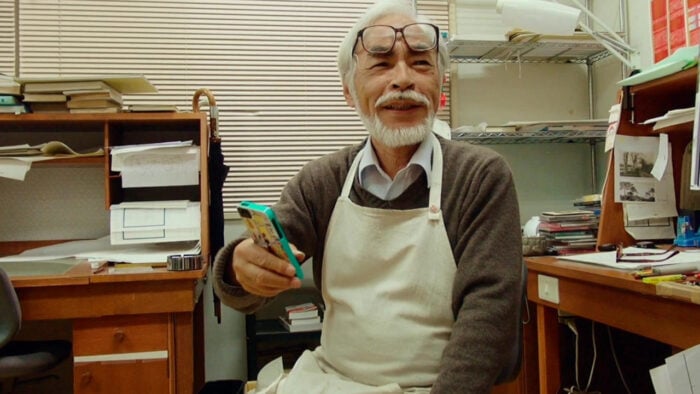
True to form, this documentary about the famed Japanese animation studio enjoys lingering in the ordinary day to day experience of working there. There’s no question that it’s of interest for fans. Documentarian Mami Sunada helpfully introduces some of the faces, the films, and the history of the company while on her visit. However, even non-fans would be intrigued by the creative process, by the mindset and philosophy revealed by their conversations. As the team works on their 2013 slate (The Wind Rises and The Tale of Princess Kaguya), the film reveals how their process pushes them to reckon with the larger scheme, willing their ideas into creation in spite of the difficult world around them. The Kingdom of Dreams and Madness is quite something to behold.
Director Rachel Mason’s first documentary is an amusing study of accidental allies. Her mother Karen insists that there are better subjects for the film, but what would be better than the mom-and-pop bookstore that sells sex toys and gay pornography? The subject alone is inherently interesting, as these mild-mannered Jewish parents describe their unintentional journey through day-to-day selling and distribution. However, Mason is able to expand her discussion by contrasting her parents’ actions against the wider conservative moves done by the US government in the 1980s. Amidst censorship and epidemics, Circus of Books stood as a safe haven for the LGBTQ+ community, made possible by her parents. In learning about the store, we (and Mason) learn more about her parents. While their job choice was unplanned, the journey of accepting those other than themselves is one that we all should take.
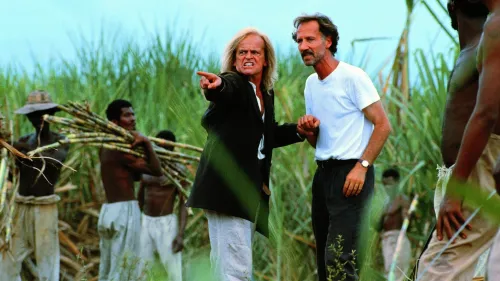
Sometimes, we meet people we don’t like, but in some way or another, we’re forced to keep dealing with them. Most of us would just try to avoid them. But not Werner Herzog, no. Instead, in memory of actor Klaus Kinski, he created a funny documentary about their rather difficult bond, a bond that has stuck through multiple films. It’s not the most flattering portrait of the actor. Oftentimes, Kinski was referred to as a problem in the films’ production, with Herzog recollecting why in the places they shot in. Despite this, however, Herzog chose still to work with him, and the respect he holds for Kinski’s craft adds a fascinating fondness that a standard documentary could never capture.
When people think of football, they think of teams, and if not teams, they think of individual goalscorers. Higuita: the Way of the Scorpion focuses instead on a single goalkeeper from Latin America. To be fair, this goalkeeper is René Higuita – even just checking his Wikipedia is bound to pull some curiosity. But the documentary does a great job in introducing the man and his life story, starting with his fantastic scorpion kick before delving into the more personal and sensitive aspects of his life. With the wild gameplays and crazy controversies linked to the man, it’s actually unbelievable how a documentary like this hasn’t been made yet.
You don’t have to be a tea drinker to enjoy this warm film from documentary legend Les Blank. The passion and eloquence with which the tea connoisseurs interviewed here talk about the beverage is a delight in itself, a soul-nourishing reminder of what worlds of meaning and experience open up when you really love something. Though a few of these enthusiasts are featured — among them, filmmaker Werner Herzog — it’s mainly centered around David Lee Hoffman, an American importer who swims against the tide of capitalism, mass production, and environmental damage to champion the hand-crafted teas he’s so passionate about. As the film chronicles, however, his insistence on buying directly from the boutique farmers — sometimes traveling hours into the remote Chinese countryside to do so — often puts him at odds with the economic interests of the big-time exporters he must work with.
Hoffman isn’t persistent in the face of all these hurdles for the sake of a buck, though: the film follows his linked efforts to encourage organic farming practices and a direct-from-the-source marketplace that will give the farmers a fair price for their hard work. That his love for the drink also encompasses the artisans who make it and the ground that grows it makes this an inspiring watch.
Chinese artist Ai Weiwei directs his attention towards the ongoing refugee crisis, the biggest displacement of people since World War II. His documentary is apolitical and tries to focus on the human side of the picture. It’s not a news report or a commentary on the causes of the situation. Instead, it’s a combination of heartfelt stories spanning 23 countries that showcase people’s battle for dignity and basic rights. A truly epic movie complemented by impressive drone footage that’s as impressive as it is sad.
Hilarious and sweet, Meet the Patels is a charming collaboration between siblings Geeta and Ravi Patel. While the film is a documentary, it feels more like a real-time romantic comedy – which makes sense, given that it’s about Ravi’s quest for the perfect wife. Standard tropes, such as parental disapproval, are present here, but the film keeps it fresh as it focuses on the intricacies of Indian dating, specifically with traditional matchmaking and modern internet dating. However, like some of the best romcoms, the real heart of the story lies outside of Ravi’s love life. What drives the story is the dynamic between Ravi and his family. Balancing parental expectations with personal hopes is a struggle anyone can relate to, though this film presents this through comedic debates about marriage. At the same time, these debates end up insightful and oftentimes reveal fundamental principles the family believes in. It’s only through resolving familial issues that Ravi finally figures out his love life.
There’s more than a touch of Louis Theroux to this engrossing documentary — fronted by New Zealander pop-culture journalist David Farrier — about an innocuous-seeming Internet phenomenon: the actually-sinister subculture of “competitive endurance tickling”, in which young men undergo “tickle torture” for money on camera. When Farrier unassumingly requests an interview with an American producer of tickle content, it kickstarts a bizarre campaign of harassment and opens up a rabbit hole of unbelievable twists and turns. The wild places this documentary goes are best left as unspoiled as possible, but it’s no spoiler to say this emerges from its seemingly lighthearted premise as a deeply unnerving story about money, power, sex, and shame in the Internet age.
New York’s hottest club was Studio 54. It has everything– the lights, the exclusivity, the drugs, the tax evasion legal issues that brought its founders to jail… But in all seriousness, the documentary about the notorious studio-turned-disco already has an interesting story to tell, and while it’s done with the usual Netflix flair, but director Matt Tyrnauer keeps focus on the actual club, rather than the notoriety surrounding it, by interviewing the crew behind Studio 54 rather than the famous celebrities, and thankfully, former studio owner and one half of the duo Ian Schrager finally opened up to talk about the whirlwind success he went through nearly half a century ago. The documentary may be a bit more tame than the real life club, but Studio 54 is a long overdue documentary that’s refreshingly candid, if a bit more calmer than expected.
Part documentary yet part surreal daydream, director Derek Jarman’s final film is one last rallying cry into a blue void. Against an unchanging screen of International Klein Blue, most of the film is Jarman’s voice, drifting through various subjects, from day-to-day complications of AIDS to contemplations about the color blue. Some of his frequent collaborators chime in. Choirs singing about damnation occasionally pop up too. While essentially a radio drama, the combination of voices, foley, and scores all merge together into an ethereal, haunting soundscape, that sticks in your head long after the film ends. Mirroring his partial blindness, Jarman’s last experiment leaves an impression of his own experience. It’s absolutely devastating.
Watch this documentary and find yourself amazed at how much of Hollywood history was determined by one woman: legendary casting director Marion Dougherty. At a time when studios were casting actors based on “type,” Dougherty revolutionized the process with her preternatural ability to see the potential in budding actors like Al Pacino, Dustin Hoffman, Robert Redford, and Glenn Close. Her work in introducing NYC’s theater actors to the silver screen launched countless careers and indelibly shaped iconic films like Midnight Cowboy and Lethal Weapon.
And yet, Dougherty’s work — and that of those who followed in her steps — is criminally underappreciated, as this doc both lays bare and seeks to redress. A largely female profession, casting was long devalued by a casually misogynistic industry, the persistent legacy of which is subtly highlighted in some interviews here. Among the talking heads sharing appreciation and anecdotes are many of the actors and casting directors whose careers Dougherty launched, as well as filmmakers (including Martin Scorsese) testifying to the pivotal role casting has played in their work. Playing the villain is Ray director Taylor Hackford, who believes casting directors add little to the filmmaking process — an argument that the doc wryly disproves with the sheer weight of refuting evidence it offers up.
It’s impossible not to be moved by this passionate love letter to the medium of film and its singular abilities to witness, commemorate, connect, educate, and, yes, entertain. The Living Record is more than that, though: it’s also an urgent clarion call for better support of the infrastructure and people who preserve and restore the celluloid reels that contain so much of our history.
In two hours, it packs in a lot — perhaps even too much, because there is so much fascinating material here that it’s almost overwhelming to take it in all at once. The doc draws on a sweeping line-up of contributors who collectively illuminate every facet of the need for preservation and restoration, from archivists to filmmakers like Jonas Mekas, Ken Loach, and Costa-Gavras. Its scope is just as commendably exhaustive, featuring nuanced discussions of the dangers politics poses to preservation efforts, as well as the particular need for archives in formerly colonized countries to prevent “cultural amnesia.” Despite all the challenges it highlights, its tone isn’t hopeless, as the film draws strength from the tireless efforts of archivists and cinematic saviors like Martin Scorsese. It’s impossible to watch this and not come away affirmed or converted into similarly passionate champions of preservation.
With its detailed portraits of seven of Istanbul’s most adored felines, Kedi affirms what anyone who’s spent some time with a cat will know: they really do all have fully-fledged, complex personalities of their own. More than just a celebration of some supremely cute kitties, though, this documentary about the city’s teeming street cat population also presents a moving example of a way of living that embraces — rather than tramples over — our animal neighbors.
Immersive cinematography from the cats’ eye levels is weaved with interviews with the people who care for them, whether voluntarily or because the cats simply demand it. That independence emerges as a much-admired characteristic in the documentary; as one interviewee puts it, “Dogs think people are God, but cats don’t. They’re not ungrateful, they just know better.” It’s impossible not to read a wistful note in the interviewees’ odes — indeed, for many of the people featured here, cats are a point of spiritual and personal reconnection, a reminder of what life is really about underneath all the mind-numbing dross we’ve made up. The magic of Kedi is that it not only perceptively recognizes the healing effect that cats have on humans, but recreates it so that these 70-something minutes feel like therapy.
This fascinating documentary traces the roots of freestyling back to the rhythmic sermons of Baptist preachers, the improvisational energy of jazz music, and the spoken word artistry of the civil rights era’s Last Poets — but, like the form of rap it chronicles, it largely exists in the moment. The ephemeral nature of freestyling makes it a tricky thing to bottle, but The Art of Rhyme does so by mimicking the freewheeling energy of the MCs onscreen. And there are many legends of the medium featured here: from underground titans like Supernatural and Craig G (whose epic battles are shown here) to big names who crossed over into recording success like Talib Kweli, Mos Def, and even precious footage of a 17-year-old Notorious BIG. It’s as enlightening as you’d hope, but what makes this documentary such an impressive portrait of freestyle are all the ways it mirrors the impulsive, quick-thinking philosophy of the form in little over an hour.
Somewhere near the border between Russia and Ukraine lies a shelter for kids coming from unstable homes. Their parents, either alcoholics or abusers, have nine months to prove that they’re fit to look after their children; otherwise, the kids are sent straight to the orphanage, with no chance of a goodbye. A House Made of Splinters is a documentary that quietly and closely follows the shelter’s occupants amid growing joys and pains, not to mention the ever-present danger of war.
Perhaps one of the most striking things about A House Made of Splinters is how attuned it is to the kids. It serves as a reminder of their immense sensitivity and observational skills (more than once, you’ll hear a child assess their home situation in the calmest of manners), as well as their clever ingenuity (there’s a lot of playing going on despite everything, which is heartwarming to watch.
When Castro took over Cuba in the 1950s, Havana’s nightlife shifted as clubs and casinos were closed down, leading to certain traditional step-based genres like son, bolero, and danzón to decline. A few decades later, prominent American musician Ry Cooder travelled to Cuba with his friend documentarian Wim Wenders, to pay homage to traditional Cuban music in an album and its respective documentary. Wenders weaves in illuminating interviews and shots of Cuba today in between the band’s Amsterdam and Carnegie Hall performances, with a certain intuition that makes each song feel like a triumph. While the documentary does focus more on Cooder, Buena Vista Social Club is a delight to watch, even with its 90s digital grain.
There are moments in cinema when the character and actor are irrevocably linked– to think of one is to think of the other, to the point that the line is blurred between both. One such pair is Spock and Leonard Nimoy, and, after his death, it was inevitable that the documentary about Nimoy would also be a documentary about Spock. For the Love of Spock is the first of two Nimoy documentaries, made by his son Adam, and it’s a lovely tribute to the iconic sci-fi legend that shifted the entire genre and the fan culture that emerged, but it was also a personal film where the family reckons with the fame that occurred as a result. Superfans might not learn that much about Spock (some of them are interviewed in the film), but For the Love of Spock is an excellent profile, even if it’s not as objective and logical as the character itself.
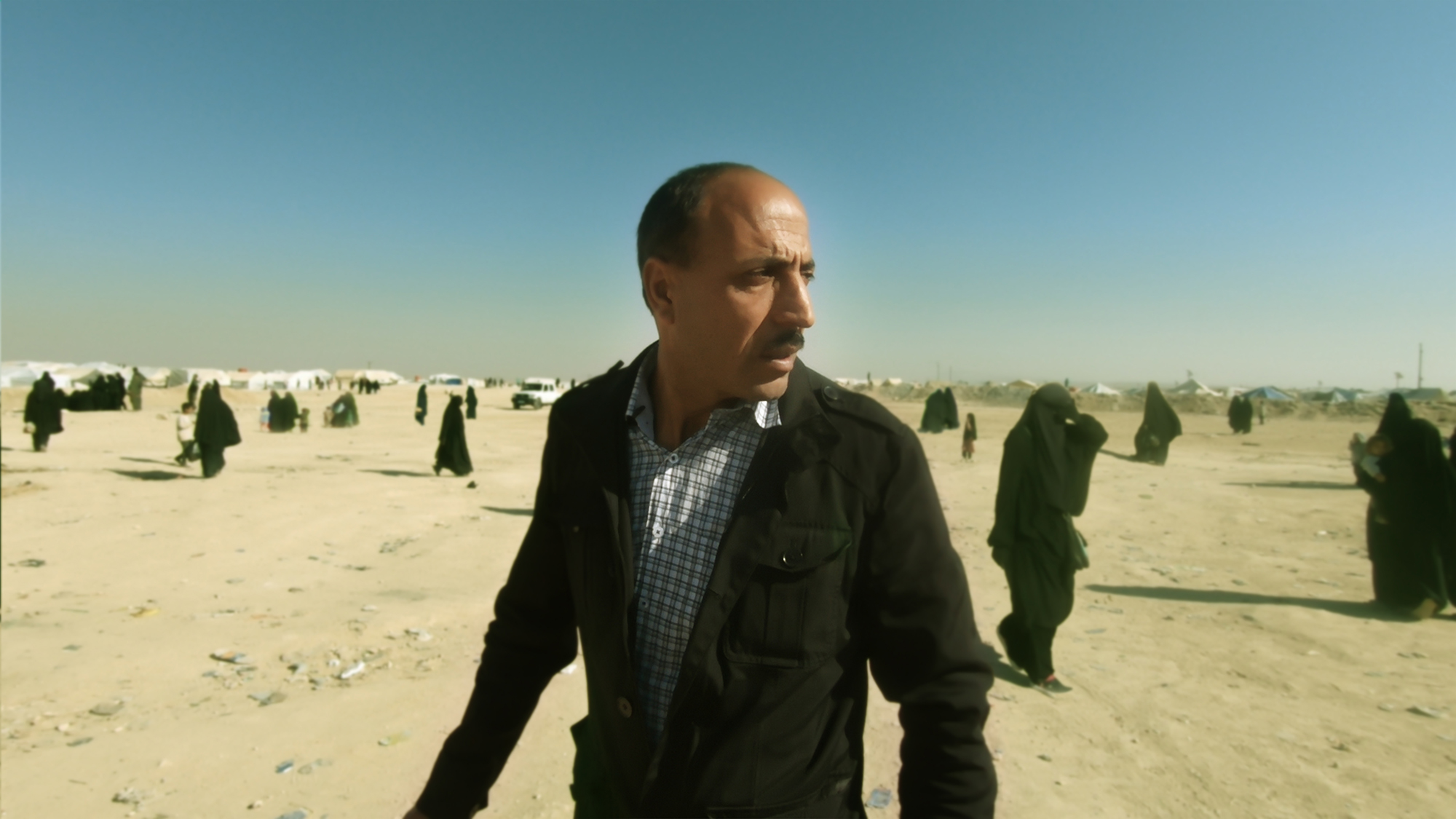
For the longest time, American media coverage was skewed to justify the presence of US forces in Arab states. Control Room unveils that bias by following Al Jazeera at the start of the Iraq War in 2003. One of the biggest Arab media outlets at the time, Al Jazeera dared to cover both sides of the war, but by doing so put a target on its back. It was vilified by both the US government, which called it an Osama mouthpiece and the Arab world, which called it a Bush ally.
Control Room shows the difficulty (if not sheer impossibility) of achieving journalistic balance, objectivity, and integrity. Through interviews with Al Jazeera reporters and US military officers, we witness how lines are blurred, loyalties are tested, and purpose is shifted in a state of war. A seminal work on media bias and press control, Control Room is vital and enlightening, a must-watch to understand the inner workings of the fourth estate.
Whores’ Glory leads us through the hidden world of prostitution in three different countries. The lack of narration is an excellent choice here—all too often, it’s easy to accept preconceived notions about this type of work. Instead, what leads us through the film are words from the sex workers themselves and their clientele. In some ways, these words reveal their differences. The workers pray, worry about money, and share their troubles with each other, but it’s their employers and clientele who reveal their misogyny. Overall, while the Western soundtrack and glamorizing shots can be distracting, it’s clear that the film gives respect to sex workers and prioritizes their perspective.
The Centre Will Not Hold explores the life of the famous Joan Didion – professional observer and cultural spectator. The film gives only a small window into the complexity of her mind and the space in which she processes and understands the world, which stems from her capacity to sit above everything that is happening around her and just observe. From writing for Vogue, to war journalism, to her famous novels – from watching a child do acid, to reporting on the first gulf war – Didion is as prolific as she is insightful and majestic in her writing. Throughout the documentary she gives her first hand perspectives on love, relationships, motherhood, and grief – beautifully articulating it as “a place we do not know unless we’ve been there.” A beautiful woman, and an incredible film.
From countries like Finland to North Korea, this amazing documentary explores the most fascinating active volcanoes on our planet. But as it unfolds you realize that Into the Inferno is a movie as much about volcanoes as it is about the people obsessed with them. And who can be called obsessive more than the film’s own director, Werner Herzog, who, with such an explosive career had to eventually make a film about volcanos (bad pun intended). Beautiful scenery, interesting interviews, and Werner’s majestic delivery all make Into the Inferno both an interesting and satisfying documentary.
An inspiring documentary about famed artist Ai Weiwei who has been the source of arguably the biggest public confrontation with the Chinese government by any artist. His straightforward attitude is made to provoke and to defend the people of China against the totalitarian regime. The film portrays Weiwei’s very visible struggle for redemption and invoke a sense of accountability from the government. The documentary is also about him as a person, his intimate relationships and his interactions with his family as he prepares for a big exhibition. A rare insight into a fascinating mind.
“As fragile as she was strong, as vulnerable as she was dynamic, she was African royalty. How does royalty stomp around in the mud and still walk with grace?”. What Happened, Miss Simone? will surprise you no matter how much you thought you knew about the soul singer – not only in its exploration of Nina Simone’s personal life and complexities, but by being both a personal and political documentary. As you discover an original singer with talents that reach all the way to performance art, you will also learn about a Civil Rights activist’s journey and an unstable woman’s struggle. The documentary is not about answering the question of what happened, Miss Simone? – it’s an exploration of why that question is so important.
Over 100 hours of footage were shot for this documentary chronicling the fraught journey that thousands make to reach the US-Mexico border — but, watching the 93 minutes that made the cut, you get a sense that this is the story that was meant to be told. Editor Sofia Machado whittled down reams of footage into this gently conveyed single account of one woman’s journey. Twenty-nine at the time of filming, Lilian and her four children fled a violent husband and bleak prospects in Guatemala, setting out as part of a migrants’ caravan undertaking the 4000km-long journey separating them from the brighter future they hope is waiting for them in the US.
She meets exploitation, xenophobia, and other perils on the route (not least The Beast, the dangerous freight train she and her kids must hop to reach safety). Remarkably, though, there’s much solidarity and generosity to be found on the way, too, as Lilian and her kids forge moving family-like bonds with fellow migrants. What’s more, as the documentary unfolds, quiet revelations emerge, making it clear that Lilian is also looking for a type of liberation that many on the road already have — a dream that this documentary suggests might blessedly be closer than she originally envisioned.
Stories We Tell got on everyone’s radar when, back in 2015, it made the list of the all-time top ten list of Canadian films. That speaks to both the caliber of this movie and its relevance to North America. It’s in fact a first-person account about (and made by) actress Sarah Polley (Mr. Nobody, Exotica, Away from Her, Take This Waltz). In the film, she investigates the rumor that she was the product of an affair, and that her father might not be her biological father. Her family and suspected fathers are all storytellers, and many of them Academy Award winners. Ultimately, the movie becomes about her family’s remembrance of her now-deceased mother (the famous actress Diane Polley). It’s an examination of how the same story can be told so differently by different people and across time. Lies get added and truths are hidden, and all of that enriches Polley’s pursuit.
A documentary about girls and young women in developing nations around the world facing and confronting a myriad of cultural pressures and injustices. The personal stories of nine girls are written by celebrated female writers from their individual countries (spanning The Americas, Africa and Asia), recreated in dramatic fashion by director Richard Robbins, and narrated by famous actresses including Cate Blanchett and Meryl Streep. Despite the often horrific nature of the girls’ hardships (slavery, rape, forced marriage, etc.), the film is an uplifting testament to the power of hope and determination, and a strong advocate for education as the key to advancement for young women the world over. It’s an important cinematic achievement and an undeniably necessary educational experience.
In this hour-long observational documentary, we’re immersed in the day-to-day life of a Senegalese street vendor in Argentina. Following a stint in Spain, Mountakha arrives in Buenos Aires knowing little of the language, facing intimidation from the police, and, thousands of miles away from his wife and children in Dakar, experiencing loneliness and culture shock, too.
He finds some support from fellow migrants — and is able to tap into a connection with home through cultural events laid on by the local Senegalese community — but mostly, he leans on his deep spirituality for strength and guidance. A devout adherent of a Senegalese Sufi saint, he searches for signs of the divine in the bustling streets of Buenos Aires and on the crowded beaches of a resort town as a way to connect his past to the present. Mountakha understands the winding path of his life as “God’s will,” a go-with-the-flow approach that seems to soothe some of his painful pining for Dakar. It’s these peeks into his coping mechanisms and shifting definition of “home” that make Borom Taxi’s single hour feel so expansive.
As about as good as documentaries come, this is a truly entrancing narrative on famed Serbian artist Marina Abramović as she prepares for her titular 2010 retrospective at the Museum of Modern Art. Equal parts personal history, exposition of her artistic persona and presentation of her ultimate performance: a 736-hour piece where she ensconced herself silently in a chair and allowed museum-goers to sit before her, one at a time. An ostensibly peculiar concept made enchanting and invigorating by supreme cinematography and editing, not to mention the presence of the artist herself – a sensual and fascinating individual. Made me wish desperately that I had waited all those hours to sit before her.
An earnest, simple documentary with an equally as simple premise: four friends travel to Guatemala for 8 weeks and try to live on one dollar a day each. What starts as an experiment for them quickly becomes an illustration of levels of poverty some of us will luckily never experience. More than 1.1 billion people (almost four times the population of the U.S.) do live on less than one dollar a day, and this film is a journey into their world. Other than making you realize the luxury you live in, this film will leave you wanting to do more for your fellow humans.
This documentary is about the life of New York rapper Nas around the time of the release of his first album, Illmatic.
It spans a quick and summarized 74 minutes and, while embellished by the direction of street artist One9, it remains a great snippet of recent American history. Nas’s album was a reflection of many realities that characterized his upbringing, while the movie serves to further explore those very realities.
In 2013, following the Ukrainian government’s termination of an EU agreement (in blatant disregard of what its citizens have been calling for), a wave of peaceful protests start to crop up at the country’s capital. Things escalate when the police violently disperse the protestors, but the people of Ukraine are not so easily held down. They fight back, growing in number and conviction each time they do, until an all-out war finally breaks out.
Winter on Fire documents this series of events, staying close to the ground and allowing bits of humanity to shine through its subjects. In between chilling clips of the clashes, we’re shown intimate interviews with people of all walks of life. They’re doctors, actors, students, bankers, lawyers, and clergymen, from various classes, races, religions, and genders. Despite their many differences, all of them share one hope: to secure a better future for the people of Ukraine.
Man on Wire is a true technical masterpiece. You can almost feel the director telling the cameraman what angle to choose, or thinking about the questions that will generate the most resounding answers. However, this does not diminish the story this documentary tells one bit. It’s one that is glorious, riveting, and fun. It’s one where you feel like an insider to a world lived on and below wires, with high-stake risks. Hopefully the edge of your seat is comfortable, because this is where the movie will keep you till the very end.
After the 1975 release of the Maysles brothers’ Grey Gardens, Big and Little Edie Beale’s story captivated viewers and spawned a musical and a dramatized biopic about the reclusive, impoverished socialite mother-daughter duo. The Beales of Grey Gardens is a compilation of the remaining unreleased archival footage, released after the death of both subjects and David Maysles. For those unfamiliar with their story, the film might feel a bit random and contextless. But for Beale fans, and those familiar with their first documentary, this sticks close to the classic cinema vérité style of the Maysles, while also uncovering other sides of these interesting, eccentric former socialites, becoming a lovely tribute for them and their fans.
Even when it necessarily tackles the difficulties that are part and parcel of same-sex love in the 20th century, there’s something pleasant about the way A Secret Love is told. The documentary puts Terry and Pat’s love above all else, so even though we hear about how they had to tear the bottom pages of their letters to avoid getting caught, or how they had to split from close family members after coming out, things never feel too heavy or dire because at the end of the day, they’re still together, their decades-old companionship a beautiful example of how love wins. And aside from giving us an intimate look at this rare win for elderly closeted couples, A Secret Love serves as an insightful portrait of elderly life. Terry and Pat, with their perseverance and unyielding support, make aging look beautiful rather than scary.
With nearly a century to cover, If These Walls Could Sing had the daunting task of giving justice to the history of the iconic Abbey Roads Studios. In 89 minutes, Mary McCartney outlines the studio’s history through archival footage and a stacked selection of artist interviews, popping only in random moments to organize the timeline. With the wide selection of artists, the film can feel scattered, as it jumps from classical music, to rock and roll, and to film scoring. The documentary doesn’t really go in-depth into how the studio developed its sound, but there are some interesting insights into certain tracks, like how the studio approached contracts, experimentation, different genres, and technology. While the film relies too much on nostalgia, it’s still an interesting tour based on the subject matter alone.
An insightful documentary that profiles several video game developers who have eschewed mainstream opportunities in order to pursue their dreams of self-employment and independent game production. The film follows four developers over the months, days and hours leading up to looming launch dates for their creations, and captures many of the difficulties and anxieties therein. It’s an incisive peek inside the minds and hearts of four incredibly talented individuals, providing a unique perspective on their creative processes as well as their individual motivations, vulnerabilities and aspirations. You don’t need to be a gamer or have ever purchased a game console in order to enjoy this one — it’s a far more universal depiction of hard work, resiliency and accomplishment that virtually any viewer is bound to appreciate.
This documentary… man, where do I even begin? It captures the lives of the Friedmans and how their world turned upside down when their father, Arnold, and brother, Jesse, were both convicted of sexually abusing children. The filmmaker interviews victims, family members, and experts to strike you with the two sides of the story. The Oscar nominated film shows real footage from the family which makes it even more of an authentic experience. I won’t tell you much more about it- but let me just say, this documentary will leave you speechless.
In Waltz with Bashir, director Ari Folman grapples with the trauma and dehumanization of war by examining the role he played in the 1982 Invasion of Lebanon. But his memories are fractured, so in an attempt to piece them back together, he visits his comrades and has them recall the events for him. The result is both poignant and painful, a horrific tell-all of what happens on both sides of the battleground. The film is a documentary, chillingly honest and straightforward, but it’s also an animation gem that continues the legacy that Persepolis started and Flee continues. By combining the harshness of war with the lightness of animation, all three films effectively deliver their anti-war message with a much-needed human and personal touch.


x4
x1