
Movies Like Reality (2023)
To access filters, visit our homepage.











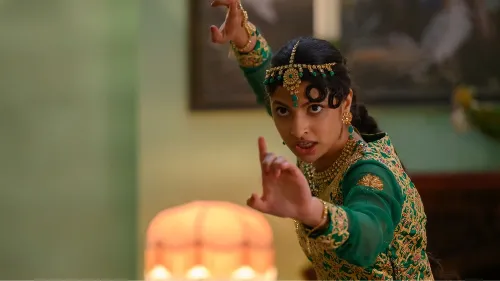
Kill Bill meets Bend It Like Beckham in this wild ride about a martial arts-obsessed British-Pakistani teenager who views her older sister’s impending marriage as a catastrophe to be averted at all costs. Aspiring stuntwoman Ria (Priya Kansara) can’t stomach the idea of free-spirited Lena (Ritu Arya) giving up on her creative dreams to marry a nauseatingly perfect man — not least because art school dropout Lena is her hero for refusing to conform to their community’s traditional ideas about respectability and success.
Polite Society makes room to sensitively explore Ria’s disappointment and the loneliness of rebellion, but writer-director Nida Manzoor doesn’t stop there, throwing in a sharp allegory disguised as a zany twist. Rather than upending our expectations for upending’s sake, the surprise metaphor refigures the movie as perceptive cultural commentary on the age-old devaluation of women as mere vessels for the next generation. What’s more, Manzoor takes the analogy full circle to thoughtfully imagine how this kind of dehumanizing misogyny might have affected previous generations, suggesting that the real villains lie offscreen. Movies as inventive and intelligent as this don’t come around often, but one that’s this funny, visually bold, unabashedly feminist, and full of stars-in-the-making is rarer still.

Led by Rosy McEwen’s commanding performance brimming with fear and self-loathing, Blue Jean pours all of the anguish and defiance felt by the LGBTQ+ community under Margaret Thatcher’s administration into a single character. Writer-director Georgia Oakley keeps her plot light, but through conversations with other beautifully portrayed queer women (especially those played by Kerrie Hayes and Lucy Halliday), she piles on one conflicted emotion after another about what this lesbian woman’s responsibility is toward herself and her community when they find themselves threatened. But even as the film takes a definite stance, it validates every response as authentic—borne out of a need to protect the people whom one loves.
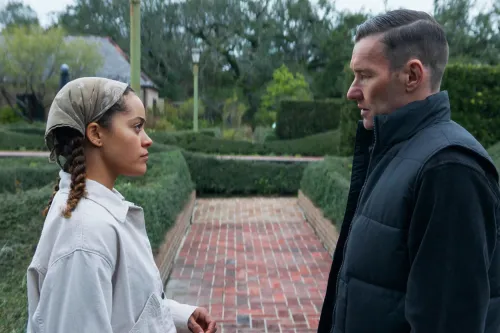
As the third instalment in Paul Schrader’s “man in a room” trilogy after First Reformed (2017) and The Card Counter (2021), Master Gardner rounds up the issues at stake in a most profound way. For anyone who’s seen a film either scripted by Schrader (such as Taxi Driver) or directed by him, there will be no surprises here: lost men, despairing men, men who are desperate to believe in something. But the salvation of love lurks around the corner and the new film makes no exception. An unconventional couple, Joel Edgerton and Quintessa Swindell (as Maya) make up the beating heart of this suspenseful drama with an emotional push and pull delivered in small doses. What could have been a kitschy, insensitive work blossoms into a treatise on how gentle the harshness of life can be.
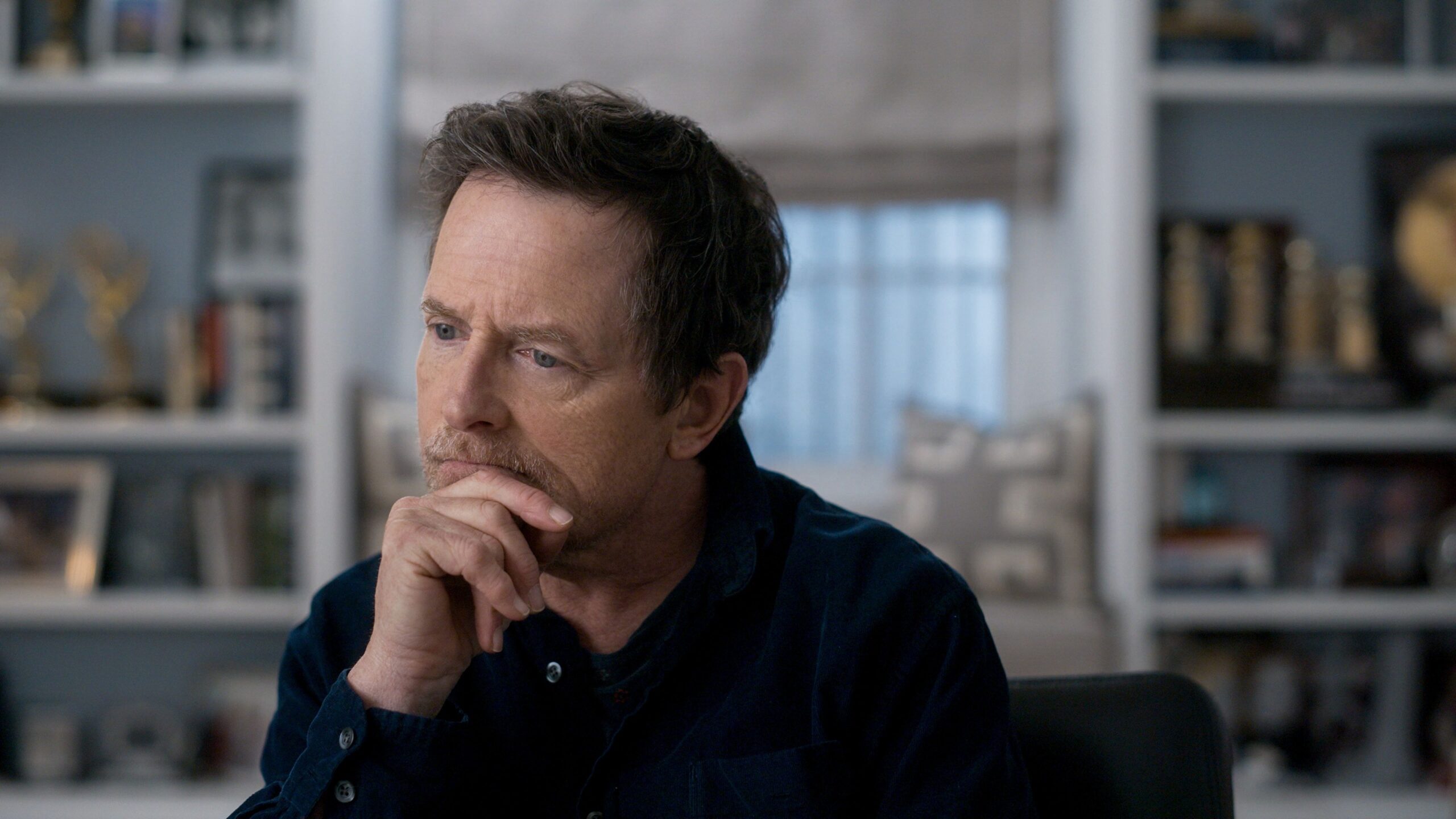
There’s a scene early in the documentary when present-day Michael J. Fox, who famously suffers from Parkinson’s Disease, swaggers along a street and greets a fan, only to stumble at that very moment and have people surround him with concern. Instead of giving into their pity or pretending nothing happened, he cooly tells the fan, “It was so nice meeting you, you knocked me off of my feet!”
This brief moment tells you all you need to know about the ‘80s icon—Fox refuses to be a victim. Still is his brilliant and admirable attempt at telling his well-known story on his own terms. It covers everything from his childhood and early work in Hollywood to his life-changing roles in Family Ties, Teen Wolf, and most memorably, Back to the Future. It also sheds light on Fox’s life as a husband, father, and Parkinson’s sufferer. Director Davis Guggenheim (An Inconvenient Truth) does a genius job of using faceless reenactments and cuts from films and TV shows to accompany Fox’s narration, which pumps the film with a dynamism that matches Fox’s resilient spirit.
Urgent, clever, and exciting, Still is one of the rare celebrity biographies that serves a higher purpose than just recounting a famous person’s life. Anyone who understands the importance of constantly moving and evolving will appreciate this film’s existence.

At once intimate and sweeping, A Thousand and One seamlessly weaves Inez’s personal turmoil and familial troubles with the systemic inequality that was rampant in ’90s New York. The hideous faces of gentrification, poverty, and police brutality are constantly appearing in the film, not merely because they lend weight to the story, but because they are inevitable for people like Inez. People who, despite their best efforts at achieving upward mobility are continually pushed down by self-serving institutions.
It’s easy for social issue dramas like this to buckle under the weight of their lofty goals, but nothing about A Thousand and One feels forced. Just the opposite, the film has an authentic quality to it—almost documentary-like in its precise depiction of Harlem throughout the years. It’s deeply personal and achingly tender, and everything else—the social commentary and the political beats—stems from that specificity.
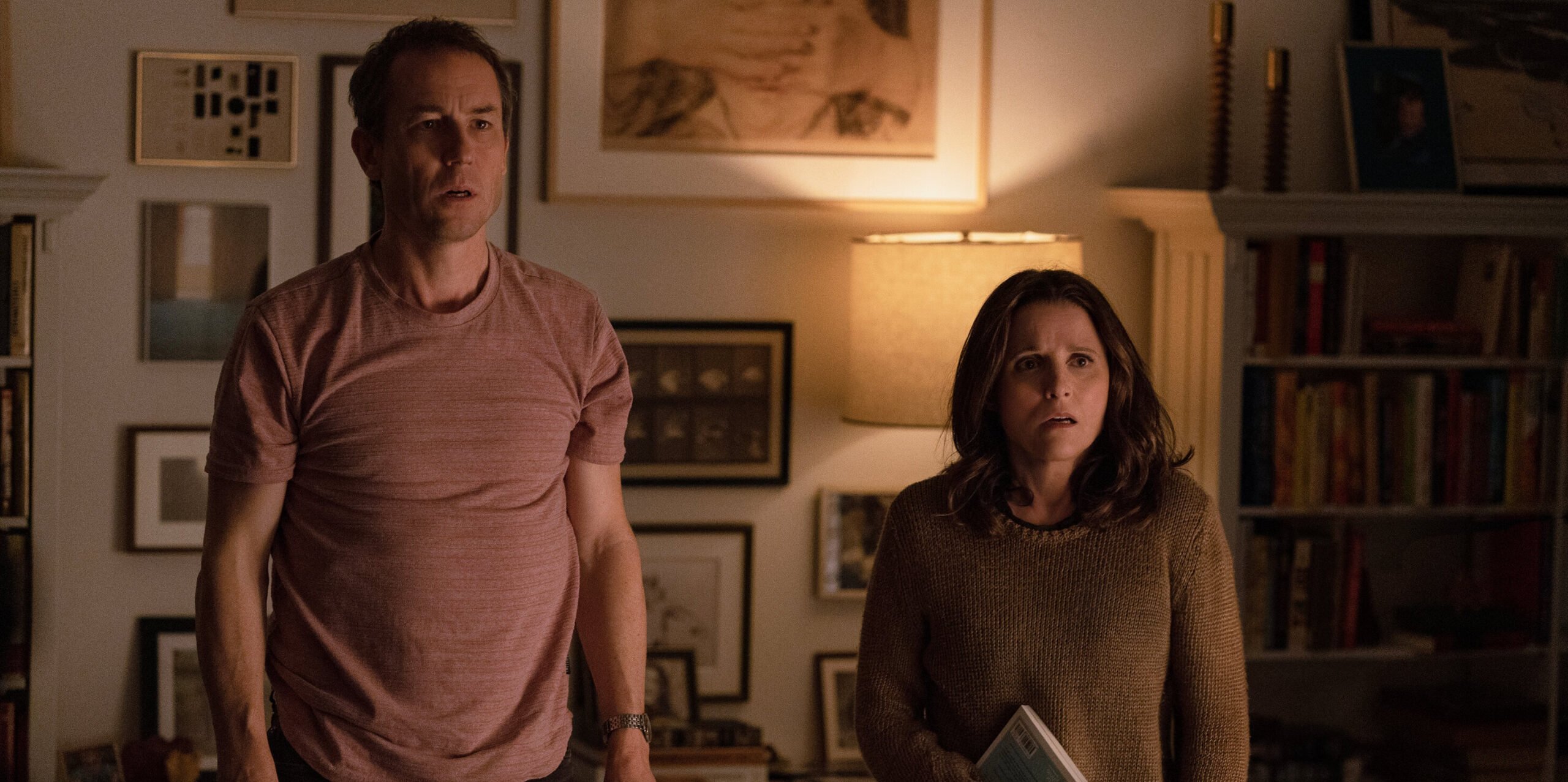
Who among us hasn’t committed a white lie to save a relationship? And who among us hasn’t yearned for the full and brutal truth? In You Hurt My Feelings, Nicole Holofcener digs into that paradox and delivers a film that is honest and funny in equal measure. Here, the writer-director doesn’t just use a hilarious situation to make relatable observations and clever witticisms; she also extracts the nuances of it. She is aware, for instance, that her well-to-do characters exist in a world where it’s possible to only care about this, and not much else. And she likewise knows that Beth’s (Julia Louis-Dreyfuss) and Don’s (Tobias Menzies) trust issues are complicated by their age and respective mid-life career troubles. But rather than stay stuck in the specificity of those details, Holofcener uses her perceptive script to highlight the relatable and the universal. These characters hurt just the same—they’re plagued with the same insecurities and seek the same validation—and they express that hurt in the petty and unvarnished language everyone else does. Watching all this come to play is a comforting delight.
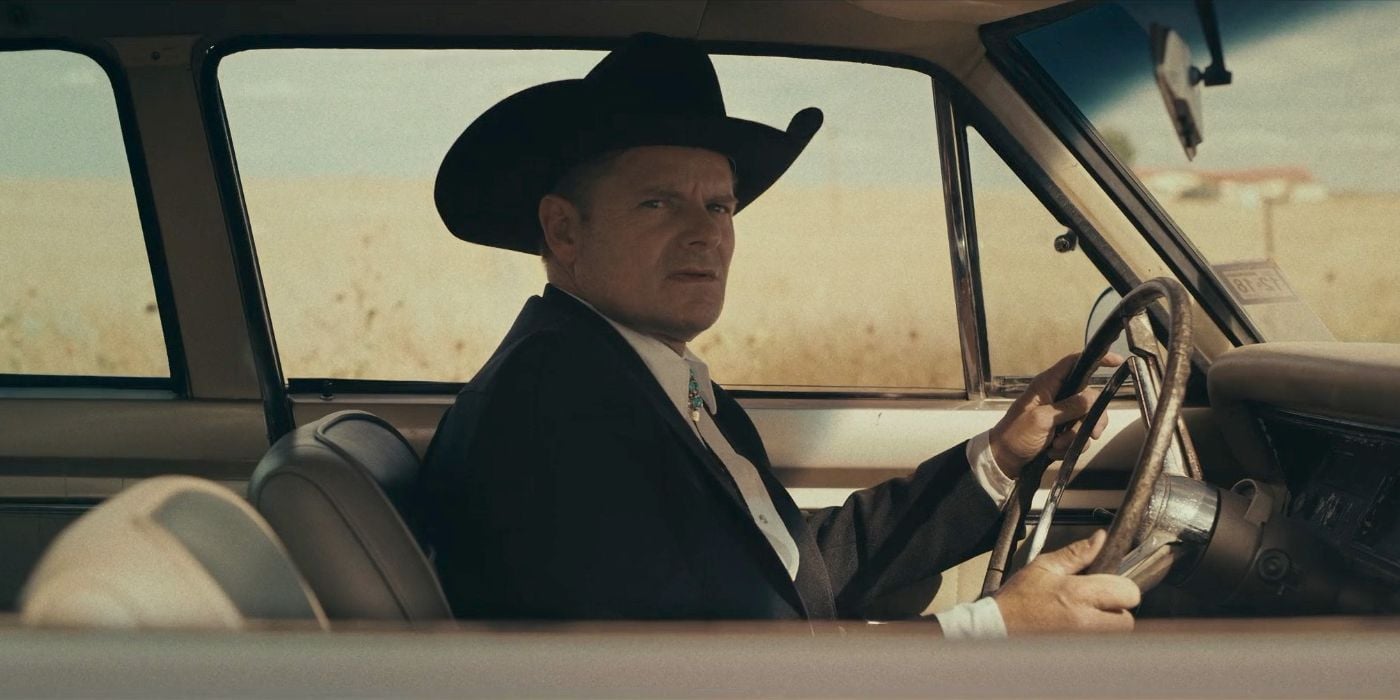
Sometimes, especially when you’ve gone without it for so long, you would do anything for a shred of respect. LaRoy, Texas depicts exactly that, with a store owner Ray being so unwilling to stand up for himself that his wife cheats on him with his brother, who steals from the family business. It’s a terrible situation to be in, of course, but it’s played out in a dry, comedic way, as detective-wannabe Skip pokes on the wound when trying his best to solve the case, and as each surprise reveals how terribly incompetent the small town deals with things. While it doesn’t quite compare to the neo-Westerns of Coen brothers it’s inspired by, LaRoy, Texas is both fun and tragic, and a promising debut for writer-director Shane Atkinson.

To Leslie follows the eponymous Leslie (Andrea Riseborough), a Southern woman who finds herself at the bottom of the barrel after finally using up every penny of her $190k lottery win. Out of work, friends, and family, she drowns herself in alcohol—that is until a kind soul in the form of motel owner Sweeney (Marc Maron) takes her in and gives her a shot.
To Leslie starts off a bit slow, and its premise may seem like it’ll give way to weepiness, but it’s worth sticking by till the end. The film only gets better, especially with the arrival of Maron, whose presence lends the film a much-needed buoyancy. It’s also worth noting that unlike many of its kind, To Leslie avoids the poverty porn trap by depicting issues like addiction and indigence with nuance, honesty, and humanity.
There’s something rich at the heart of Afire that, whether intentionally or not, is kept at arm’s length from the viewer. Over the course of Leon’s (Thomas Schubert) quiet summer retreat to work on the manuscript for his second book, we come to understand his generally irritable nature as not just creative but existential. Through his eyes and writer-director Christian Petzold’s expertly restrained sensibilities for drama, every moment becomes tinged with a vague jealousy—insecurity about other people leading satisfied lives, and his inability to let anything be without finding fault in it first. Leon is meant to be difficult to sympathize with, but at his core is an emptiness that comes with the acknowledgement of how limited one’s future really is.
And on the opposite end is Nadja (Paula Beer), a woman who just happens to be staying at the same vacation home due to an overlap in booking, whom Leon sees as a reminder for everything he lacks: romance, thoughtful attentiveness, and a love of life that helps her to stop focusing on what she thinks she lacks. The film stops short of having these characters undergo change that feels truly meaningful, but just seeing them dance around each other with a sharpening tension is well worth the experience.
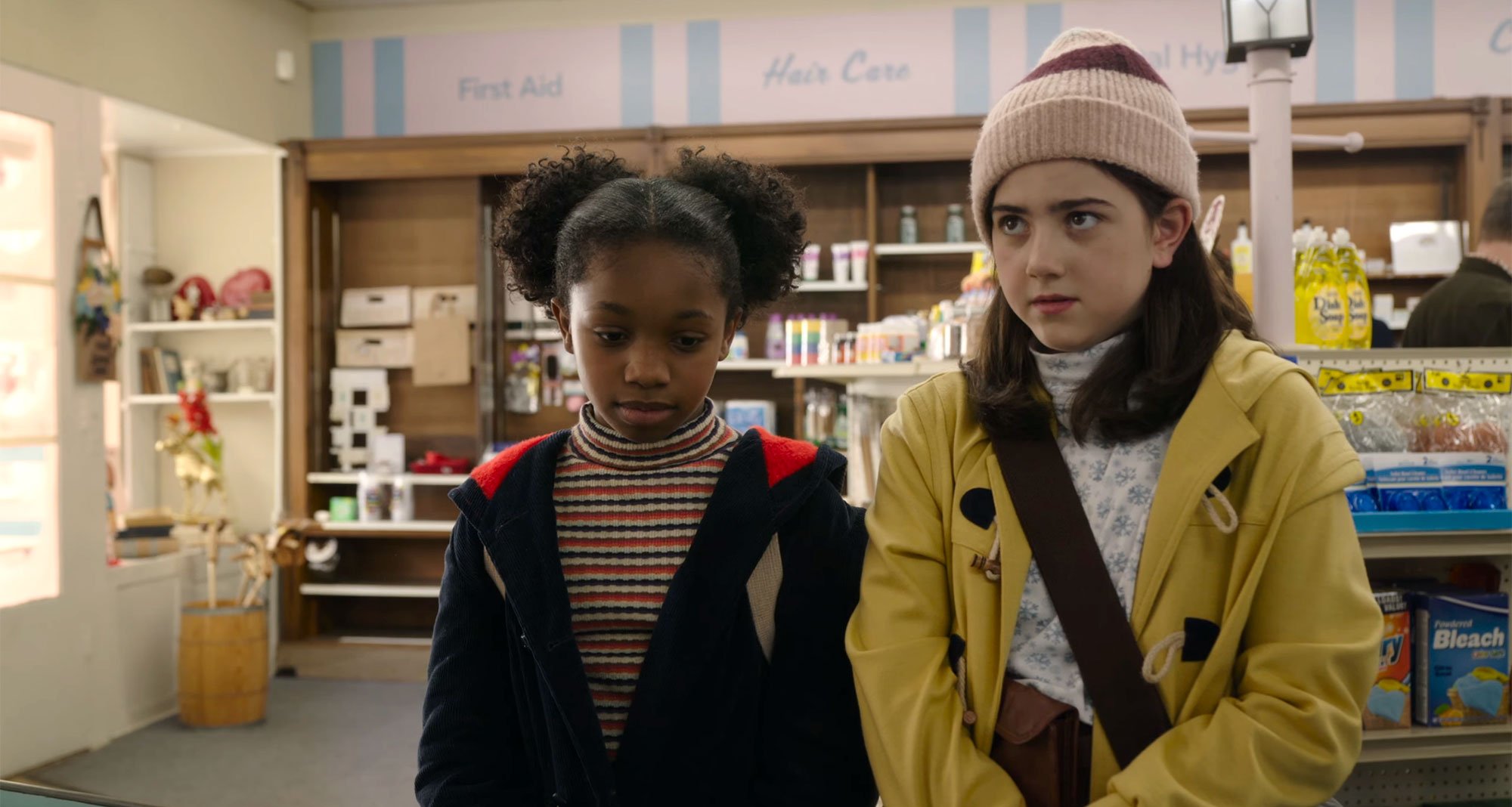
That this film, an adaptation of a beloved classic and girlhood staple for 50 years and counting, is able to retain the same power, charm, and wisdom as the source material by Judy Blume is impressive in and of itself.
Director Kelly Fremon Craig (Edge of Seventeen) turns the must-read novel into a must-see film, as urgent and relevant as ever in its frank portrayal of feminine woes and joys. Buying your first bra, getting your first period, losing a friend, doubting your faith, seeing—really seeing—your family for the first time, and knowing in your heart what you stand for…these are some of the thorny requisites of womanhood, and Craig navigates them with a bittersweet ease that never feels pandering nor patronizing. Like the book, the film honors this young person’s big feelings by centering them in a sprawling story that involves other characters, who are just as fleshed-out as the lead. Rachel McAdams deserves special mention for turning in a sweetly nuanced performance as Margaret’s mother Barbara, an artist attempting to balance her domestic role with her career goals.
The film may be 50 years in the making, but it tells a timeless tale that will continue to hold the hands of teenage girls for generations to come.

A great example of frank, emotionally honest filmmaking with three totally vulnerable lead performances, Passages takes a subject that can so easily be reduced into clichés—infidelity—and approaches it with a genuine sense of melancholy. It can still be frustrating to watch fully developed adults refuse to communicate more clearly about their feelings, but director and co-writer Ira Sachs also understands the nuanced gender dynamic that informs some of these bad decisions. Tomas understands that his commitment to Martin may not give him the “easy” satisfaction of a traditional romance, but there is also a sense that his attraction to Agathe (supposedly the first time he’s truly fallen for a woman) might be more of an impulsive attempt to settle for something safer, something that he has more control over.
Ben Whishaw is reliably sympathetic as Martin, and Adèle Exarchopoulos carries herself with the unembellished authenticity that many of the best French actors do. And Franz Rogowski makes Tomas both entirely pathetic and still so very heartbreaking in the predicament he’s put himself into. There are no cheap histrionics or outbursts of emotion here—just performers living fully within each moment and selling us on the situation they’re in.
Irish director Lorcan Finnegan’s follow-up to the social dystopia Vivarium, too, centers around the trials and tribulations of a nuclear family. Overwhelmed by work and struck by an inexplicable disease, Christine (played by Eva Green) seems to have forgotten she employed a caretaker for her daughter Bobs. The plot thickens when a Filipino woman named Diana rings the door bell: what kind of mother forgets something like that? What follows is as nightmarish as it sounds, the film’s visual potency summoning one’s deepest fears and anxieties about reality slipping away. Green and Chai Fonacier (Diana) play an exquisite game of cat and mouse, but even the psychological thrill of that chase is not significant enough to overthrow the dubious racial politics at play. By the end, Nocebo makes an effort to position itself on the right side of history, but the power of its political critique wanes and wanes.

Unlike other films about great inventions of a bygone era, BlackBerry isn’t nostalgic nor sentimental in the least bit. Instead, it’s chilly, calculating, and surprisingly comic (it has to be, with comedians Jay Baruchel and Glenn Howerton as leads). And it’s less about the brilliance of this one product than the cycle of greed, corruption, and vanity that eventually traps its too-ambitious creators.
It’s a smart film that refuses to dumb down the tech and business side of things, and what it lacks in characterization (there is little to no backstory to be found), it more than makes up for in drama and a superb pace, which propulsively and practically brings you to its wonderful peak and bleak end. Equipped with a no-nonsense yet thrilling approach to facts, BlackBerry is a refreshing entry into the biopic genre.
 x5
x5 x28
x28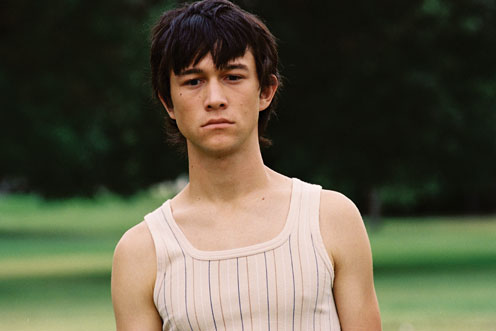
When Brian was eight years old he lost five hours of his life to a black out. Now ten years later he is searching for the truth. His search leads him to Neil, a boy who was on his little league team the summer of the blackout. Brian has always believed he was abducted by aliens from the dreams he had with Neil in them. Neil however knows the truth. Neil had just left the small town life and moved to New York. When he comes home for Christmas and meets Brian will he finally tell him the answers he has been looking for? This is the story of one boy who can’t remember and a boy who can’t forget.
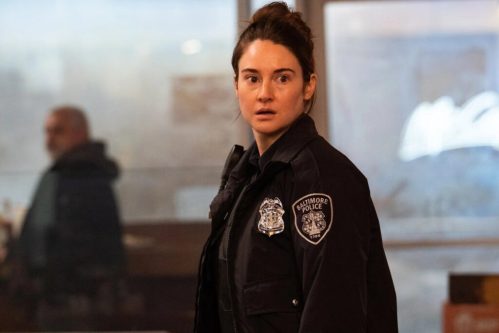
To Catch a Killer feels like a limited series shrunken down to fit a movie’s runtime: its many ideas, though potentially compelling on their own, are so underserved by the breezy treatment here that they lose all value. The film wants to hit every hot button — misogyny in the police force, demagoguery on TV news channels, high-level corruption, white supremacy, and the mental health crisis — but its frantic box-ticking makes it feel like a speed-run of topical issues rather than anything genuinely reflective.
The characters feel similarly underdeveloped, not least star Shailene Woodley’s, a Clarice Starling wannabe who winds up delivering emotional counseling to the film’s bafflingly motivated serial killer in just one of many implausible scenes. Add to that the cringe-inducing dialogue, which is crammed to bursting point with clunky metaphors, and you can call off the manhunt — the script is the real killer here.
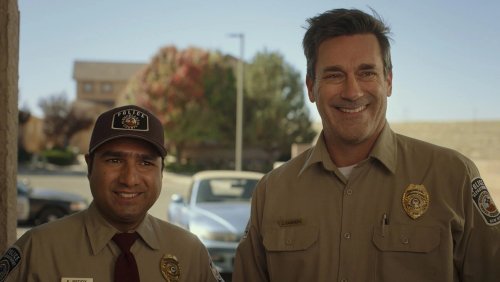
This a small-town, true-crime thriller that has John Hamm (Mad Men) as the detective, Nick Mohammed (Ted Lasso) as the trusty sidekick, and Tina Fey (30 Rock) as the love interest. They’re a charismatic cast helming a bizarro story whose real-life details are already teeming with juicy details, and yet, the resulting film, directed by John Slattery, is as lackluster and forgettable as can be. There is no sense of mystery, the jokes fall flat, and every scene looks like it’s shot from a studio lot. There is plenty of better fare out there for anyone looking for comedy capers, and I bet the true crime documentary of the real-life Maggie Moore case is infinitely more engaging than its filmic counterpart.

This B-movie sci-fi-action-thriller from co-writer-director Robert Rodriguez starts out like a hammy pastiche of (the already overdone) Taken, but its interminable succession of galaxy-brain twists reveals other obvious influences — among them Inception, Memento, and Shutter Island. Fine ingredients, but the recipe is all wrong, as a gravelly-voiced, seemingly barely awake Ben Affleck sleepwalks his way through the cringy dialogue. Alongside William Fichtner in shady supervillain mode, Affleck is joined in that endeavor by Alice Braga as the psychic who is (seemingly) helping his Detective Rourke track down his (again, seemingly!) kidnapped daughter, though what Braga mostly does is hold the audience’s hand and explain the plot’s increasingly convoluted sci-fi elements to us. At one point, she tells Rourke that “pain keeps the mind awake” — and, while the excruciating script doesn’t seem to have that effect on Affleck (judging from his lethargic performance), it’s hard not to find yourself a little enlivened by Hypnotic’s sheer absurdity.
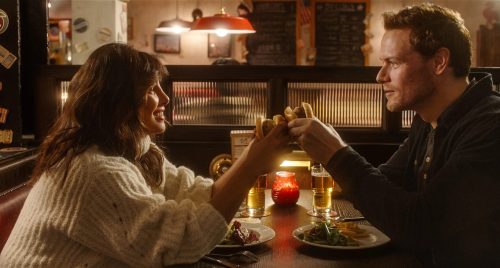
Love Again is cute. It’s cheesy and predictable, but it’s cute. Chopra makes for a fine leading lady who is able to switch between sorrow and sappy in a heartbeat. Heughan, though painfully generic, isn’t all that bad either; his hopelessly awkward attempts at getting Mira’s attention provides much of the film’s needed laughs. But outside of the bare minimum, Love Again doesn’t give us anything of value. The jokes are few and far between and the chemistry, if you can believe it, is even thinner. And for two people who are supposedly writers (Mira is children book’s author and Rob is a music journalist), none of their writings, much less their texts to one another, are particularly good.
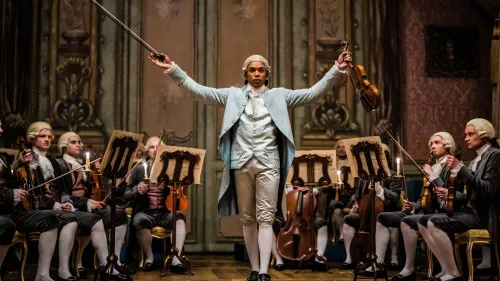
This biopic of the little-known Chevalier de Saint-Georges, the world’s first prominent Black classical composer, opens with a fierce indictment of history’s ignorance of its subject. Even if it’s one example of the movie’s dramatic license-taking, the scene — in which the Chevalier (Kelvin Harrison Jr.) challenges his eminent contemporary Mozart to an onstage musical “duel” and easily bests him — is a dramatically thrilling statement of intent for the movie.
Unfortunately, the rest of its overlong runtime doesn’t quite fulfill the promise of that opener. That’s largely because of the writing, which leaves uber-talented performers like Harrison Jr. with only a limited range of notes to play. What’s more, Chevalier stops short of exploring some of the most fascinating facts of its multihyphenate subject’s life — like the role he played in the French Revolution, commanding the first all-Black regiment in Europe — in favor of hewing to a predictable screenwriting formula that demands a romantic element to the plot, even if the one in question is only thinly backed by actual evidence. Still, while some of Chevalier’s filmmaking choices seem to misjudge what makes its subject so interesting, the key facts of his life — his extraordinary skill at music and fencing, the role racism played in blocking his greatest ambitions — still get enough exposure here to make it an enlightening watch.