/* ═══════════════════════════════════════════════════════════════ OUT-OF-CATALOG ARRIVALS (the /new/ surfaces only) OOC titles are auto-ingested and not yet hand-reviewed, so they stay out of fv_build_index() and off every browse page — that index is what /all/, the archives and the homepage rows all read, and every pick there is curator-vouched. "New on" is a different claim: it says a title landed on a service, not that we vouch for it. So the /new/ pages and the homepage's New shelf pull OOC arrivals from here and merge them in, and nothing else sees them. Entries are shaped like fv_build_index() entries so the callers need no special case beyond the merge. Cached for an hour; bump the key to force a rebuild. ═══════════════════════════════════════════════════════════════ */ function agmtw_ooc_arrivals( $geo = 'US' ) { static $memo = []; $map = [ 'US' => 'usa', 'CA' => 'canada', 'GB' => 'uk' ]; if ( ! isset( $map[ $geo ] ) ) $geo = 'US'; if ( isset( $memo[ $geo ] ) ) return $memo[ $geo ]; $key = 'agmtw_ooc_arrivals_v1_' . strtolower( $geo ); $cached = get_transient( $key ); if ( is_array( $cached ) ) return $memo[ $geo ] = $cached; global $wpdb; $prefix = $map[ $geo ]; $cutoff = time() - ( 90 * DAY_IN_SECONDS ); // 1) Arrival stamps first: only OOC titles that actually landed somewhere // recently are worth loading at all. $rows = $wpdb->get_results( $wpdb->prepare( "SELECT m.post_id, m.meta_key, m.meta_value FROM {$wpdb->postmeta} m JOIN {$wpdb->posts} p ON p.ID = m.post_id WHERE p.post_status = 'outofcatalog' AND p.post_type IN ('post','shows') AND m.meta_key LIKE %s AND m.meta_value REGEXP '^[0-9]+$' AND CAST( m.meta_value AS UNSIGNED ) >= %d", $prefix . '-%-date', $cutoff ) ); if ( ! $rows ) { set_transient( $key, [], HOUR_IN_SECONDS ); return $memo[ $geo ] = []; } $plen = strlen( $prefix . '-' ); $slen = strlen( '-date' ); $arrivals = []; foreach ( $rows as $r ) { $streamer = substr( $r->meta_key, $plen, -$slen ); if ( $streamer === '' || $streamer === 'arrival' ) continue; $pid = (int) $r->post_id; $ts = (int) $r->meta_value; if ( ! isset( $arrivals[ $pid ][ $streamer ] ) || $arrivals[ $pid ][ $streamer ] < $ts ) { $arrivals[ $pid ][ $streamer ] = $ts; } } $ids = array_keys( $arrivals ); $ids_csv = implode( ',', array_map( 'intval', $ids ) ); // 2) Titles + type, 3) the taxonomies the /new/ table prints, 4) the // streamer tags an arrival has to be backed by. $meta_rows = $wpdb->get_results( "SELECT ID, post_type, post_title FROM {$wpdb->posts} WHERE ID IN ($ids_csv)" ); $tax_rows = $wpdb->get_results( " SELECT tr.object_id, tt.taxonomy, t.slug FROM {$wpdb->term_relationships} tr JOIN {$wpdb->term_taxonomy} tt ON tr.term_taxonomy_id = tt.term_taxonomy_id JOIN {$wpdb->terms} t ON tt.term_id = t.term_id WHERE tr.object_id IN ($ids_csv) AND tt.taxonomy IN ('category','language','released','post_tag') " ); $sr_rows = $wpdb->get_results( "SELECT post_id, meta_value FROM {$wpdb->postmeta} WHERE post_id IN ($ids_csv) AND meta_key = 'staffrating'" ); $genres = $langs = $years = $streamers = []; foreach ( $tax_rows as $t ) { $pid = (int) $t->object_id; if ( $t->taxonomy === 'category' ) $genres[ $pid ][] = $t->slug; elseif ( $t->taxonomy === 'language' ) $langs[ $pid ][] = $t->slug; elseif ( $t->taxonomy === 'released' ) $years[ $pid ][] = $t->slug; elseif ( strpos( $t->slug, $prefix . '-' ) === 0 ) { $streamers[ $pid ][ substr( $t->slug, $plen ) ] = true; } } $sr = []; foreach ( $sr_rows as $r ) $sr[ (int) $r->post_id ] = (int) $r->meta_value; $out = []; foreach ( $meta_rows as $p ) { $pid = (int) $p->ID; // An arrival with no matching tag means the title has since dropped // off that service; same guard the main index applies. $arr = []; foreach ( ( $arrivals[ $pid ] ?? [] ) as $s => $ts ) { if ( isset( $streamers[ $pid ][ $s ] ) ) $arr[ $s ] = $ts; } if ( ! $arr ) continue; $out[] = [ 'id' => $pid, 'type' => $p->post_type, 'title' => html_entity_decode( $p->post_title, ENT_QUOTES, 'UTF-8' ), 'staffrating' => $sr[ $pid ] ?? 0, 'isPro' => false, 'isOOC' => true, 'streamers' => array_keys( $streamers[ $pid ] ?? [] ), 'genres' => $genres[ $pid ] ?? [], 'languages' => $langs[ $pid ] ?? [], 'released' => $years[ $pid ] ?? [], 'moods' => [], 'countries' => [], 'arrivals' => $arr, 'latestArrival' => max( $arr ), ]; } set_transient( $key, $out, HOUR_IN_SECONDS ); return $memo[ $geo ] = $out; }
The Time That Remains (2009) | agoodmovietowatch
Back
Movie

The Time That Remains 2009

Elia Suleiman remembers his family in this absurdist, slice-of-life comedy

Our Take (by Isabella Endrinal)

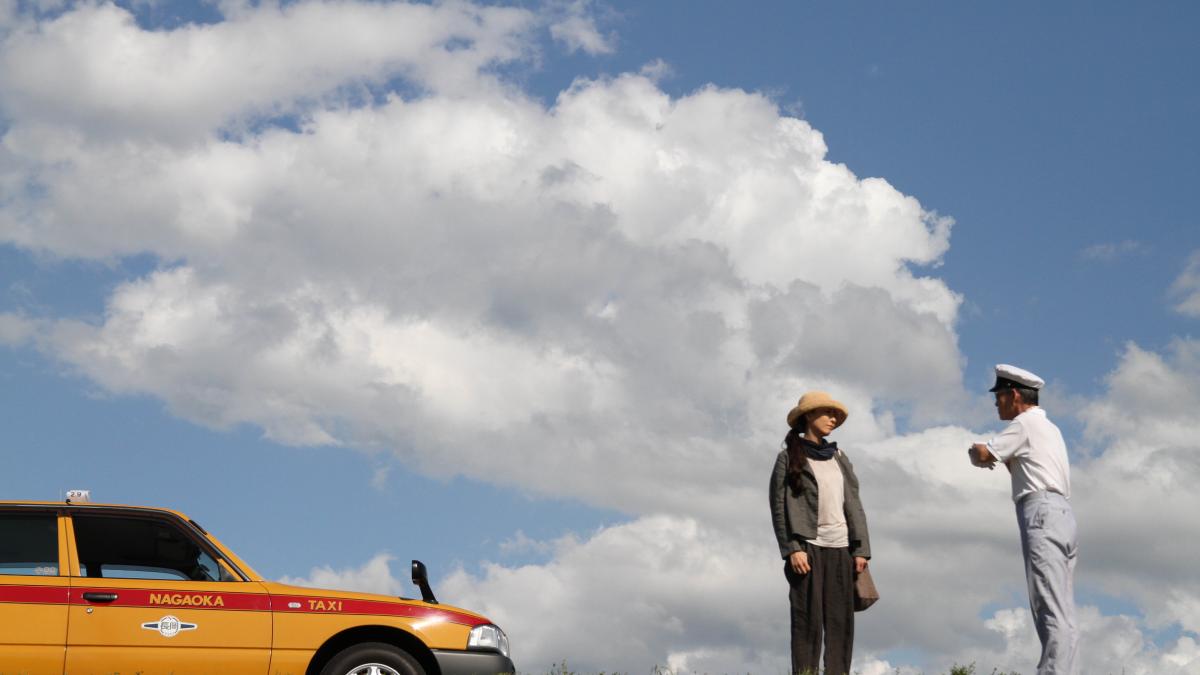
While many Palestinians had to leave their homeland, there are some families that stayed within the region. One such family is that of Palestinian director Elia Suleiman. The Time That Remains is a semi-biographical film that depicts each generation of the family in excellently framed, colorful shots, but while each scene is a beauty to watch, there’s an ugly undercurrent with the way one group is treated over the other. The film contrasts the stoic actions of Elia’s father Fuad and that of the Israeli soldiers, teachers, and nurses around them, and the contrast channels a dry sort of humor that pokes at the absurdity the occupation places 20% of its citizens through. It’s a smart, subtle way to depict the rage felt by the many people that remained in the area, as well as the sadness they must have felt with the loss, the pain, and the displacement they’ve gone through.

Notable Critics

"To keep a steady gaze, the film suggests, is not just a virtue but a form of orderly protest, when your world is breaking apart."

— Anthony Lane

"Suleiman's approach, anchored as it is in minutiae and the absurd, manages to rescue the Arab-Israeli issue from its usual hijacking by ideology."

— Joumane Chahine

Synopsis

An examination of the creation of the state of Israel in 1948 through to the present day. A semi-biographic film, in four chapters, about a family spanning from 1948 until recent times. Combined with intimate memories of each member, the film attempts to portray the daily life of those Palestinians who remained in their land and were labelled "Israeli-Arabs," living as a minority in their own homeland.

More about it

What happens

The region of Mandatory Palestine, 1948-present. During the creation of the Israeli state, a Palestinian family remains in their homeland, eventually labelled as Israeli-Arabs.

What sets it apart

Saleh Bakri looks and moves like he comes straight from the Golden Age of Hollywood.

TL;DR

It’s easy to compare Suleiman to Wes Anderson, but should we? They have completely different points to make.

Awards

Cannes

1 nomination

Nominated: Official Selection

Comments

Add your review

Your email address will not be published.*

About the author

Isabella Endrinal

Isabella Endrinal

Isabella Endrinal is a curator at A Good Movie to Watch. She's now free from the corporate night shift. Previous articles have been published in outlets such as NANG Magazine. She's currently catching up on some classic films… if she isn't coping with the fact that the Haikyu anime will end soon.