Movies to Watch From Romania
To access filters, visit our homepage.











With a title like this, it was expected that Do Not Expect Too Much from the End of the World would be critical of today’s current circumstances, but the film takes a more startling approach. Radu Jude’s longest narrative feature is a day in the life of a disgruntled, underpaid production assistant, and as she drives between interviewees injured from work accidents, the film alternates between the black-and-white, terribly mundane reality, her Tiktok-filtered satirical rants as Bobiță, and an old colored film of a Romania decades past. It’s a cynical depiction of how vulgar it is to be alive today, but it’s also more honest as Jude refuses to cling to the past.
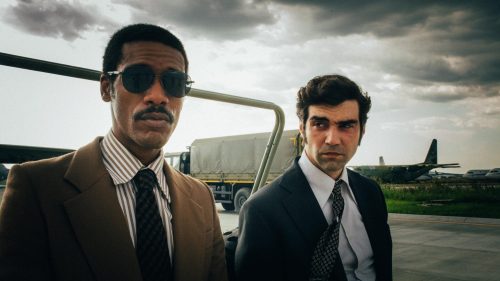
Stylishly shot and perfectly paced, Spy/Master is the kind of political thriller that will have you pressing play on the next episode as soon as possible. It starts in media res, losing no time in backgrounders (the artful opening credits efficiently fills you in on Romania’s role in the Cold War) as we follow Victor Godeanu (Alec Secareanu) simultaneously serve the Romanian dictator Nicolae Ceaușescu, work with the KGB behind his back, and cooperate with the CIA behind their backs. There is a lot going on, but by keeping the focus on Godeanu, the series remains gripping through and through. I just wish that, at least in the first three episodes screened for review, the show delved deeper into Godeanu’s motivations for double-crossing and defecting. I get that it’s aiming for a brooding anti-hero in Godeanu, but there don’t seem to be enough heroic traits to justify that title. The show hints that he had a poor upbringing, leading him to learn how “game the system” at a young age: this is a potentially rich backstory that hopefully gets explored more in the future.
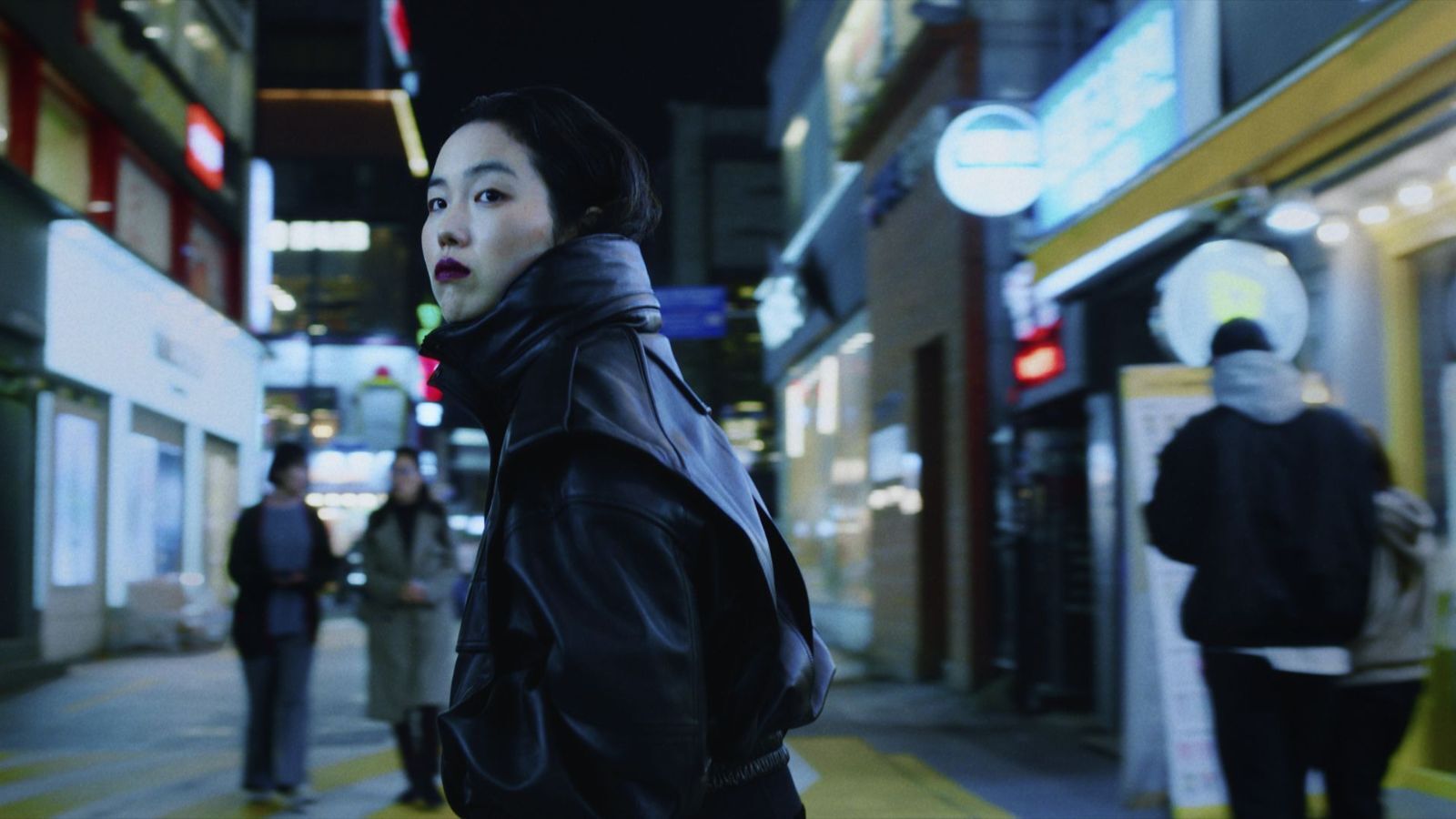
In both documentaries and films, adoptees meeting their biological parents for the first time is an event often painted in a sweet light. Never mind the child’s mixed feelings about it or the tragic reality that caused the split in the first place—it’s a reunion between family members, so it must be unequivocally special. In Return to Seoul, director Davy Chou doesn’t just debunk that myth, he subverts it by making the adoptee, Freddie, as unapologetically complex and emotionally enigmatic as possible. She resists affection but wallows in loneliness. She craves reinvention but stays in the same place for years. She’s in constant motion while being absolutely stuck in life. In other words, she’s a realistic embodiment of a person struggling to find some semblance of home. Chou displays an intimate understanding of the foreign experience, and he couples it with captivating cinematography, a rousing soundtrack, and fantastic performances across the board to make a daring, inventive, and thoroughly exciting film.

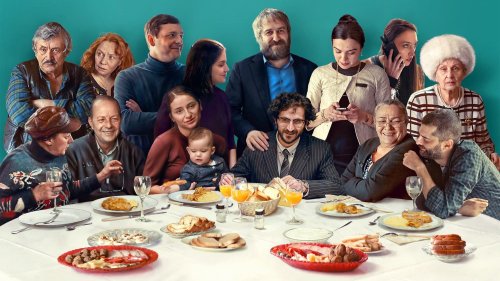
Sieranevada spends nearly three hours mostly through conversations and a memorial ceremony in just one family apartment. That wouldn’t be a problem, if all the members were likeable and if they shared at least some warmth for each other. Except, given the conversations circling around the 9/11 conspiracies, the former monarchy, and communism, it’s not really pleasant. But rather than excusing us from this family gathering, writer-director Cristi Puiu takes it to examine Romanian society as a whole, acutely observing the ways through which each member tries to navigate their dynamics, despite all the ideological struggles the country has gone through. Sieranevada finds a bridge to these heavy topics through a familiar family set-up.
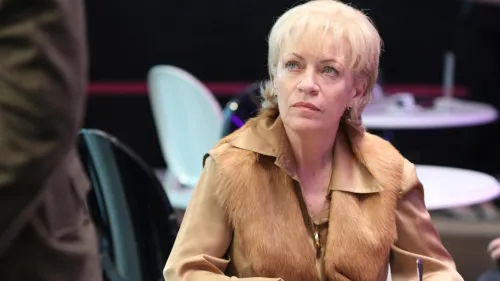
With drastic consequences and the existence of the law, how do the rich get away with anything? Child’s Pose doesn’t fully answer the question, but it does present this error of justice through the awful, toxic co-dependency between a son and his overbearing mother. With a car crash serving as an example, the film follows Cornelia Keneres as she does all she can to keep her baby boy from jail. Luminița Gheorghiu excellently portrays Cornelia with the devotion she’s lavished onto her son, and with each new breach, each person she’s had to pay off, and each time she interferes, the film depicts how thankless her efforts actually are. Child’s Pose understands how pathetic these rich bastards are, and rightfully mocks them for it.

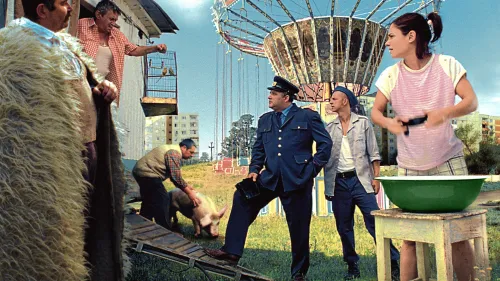
Stories are only called tales when they can’t be called true. Of course, it’s easy to give that designation when the story in question has magic, myth, and morals. But the six shorts comprising Tales from the Golden Age could mirror the mishaps that could happen anywhere, specifically under a regime steadily losing its hold to incompetence, corruption, and greed. It just so happens that pointing these mistakes out was forbidden at this particular time. Linking these humorous incidents under the last 15 years of Nicolae Ceaușescu’s rule, the film pokes fun at the chaos of this time, cheekily claiming deniability by calling all six shorts urban legends.
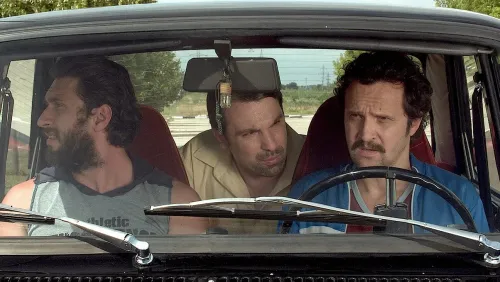
The Romanian New Wave’s predilection for bleakness gets a tongue-in-cheek dig in this buddy comedy from the same country: “Romanians are bad at making movies,” Pompiliu (Alexandru Papadopol) complains. “They only show doom and gloom.” Indeed, the premise here could easily make for a miserable movie: three hapless working-class pals win a multimillion lottery jackpot but lose their ticket — and, with it, the chance for Dinel (Pedro Pascal-lookalike Dorian Boguță) to pay off the mafia don that’s holding his wife hostage in Italy.
But Two Lottery Tickets takes a decidedly droll view of their predicament. Part of that approach is achieved via the trio’s characterizations: they’re all goofy in different ways, from the ridiculous conspiracy theory-spouting Pompiliu and the gullible Dinel to sleazy chancer Sile (Dragoș Bucur). The rest of the film’s breezy comic tone comes thanks to their amusingly convoluted journey to retrieve the ticket, which they believe is in a bag that was stolen when Dinel was mugged by two thugs. These many segues implicate a cross-section of Romanian society into the film, making it a wry social commentary in places. Mostly, though, Two Lottery Tickets has modest ambitions — to be, simply, an enjoyable comedy — a goal it surpasses thanks to its absurdist humor and pitch-perfect performances.
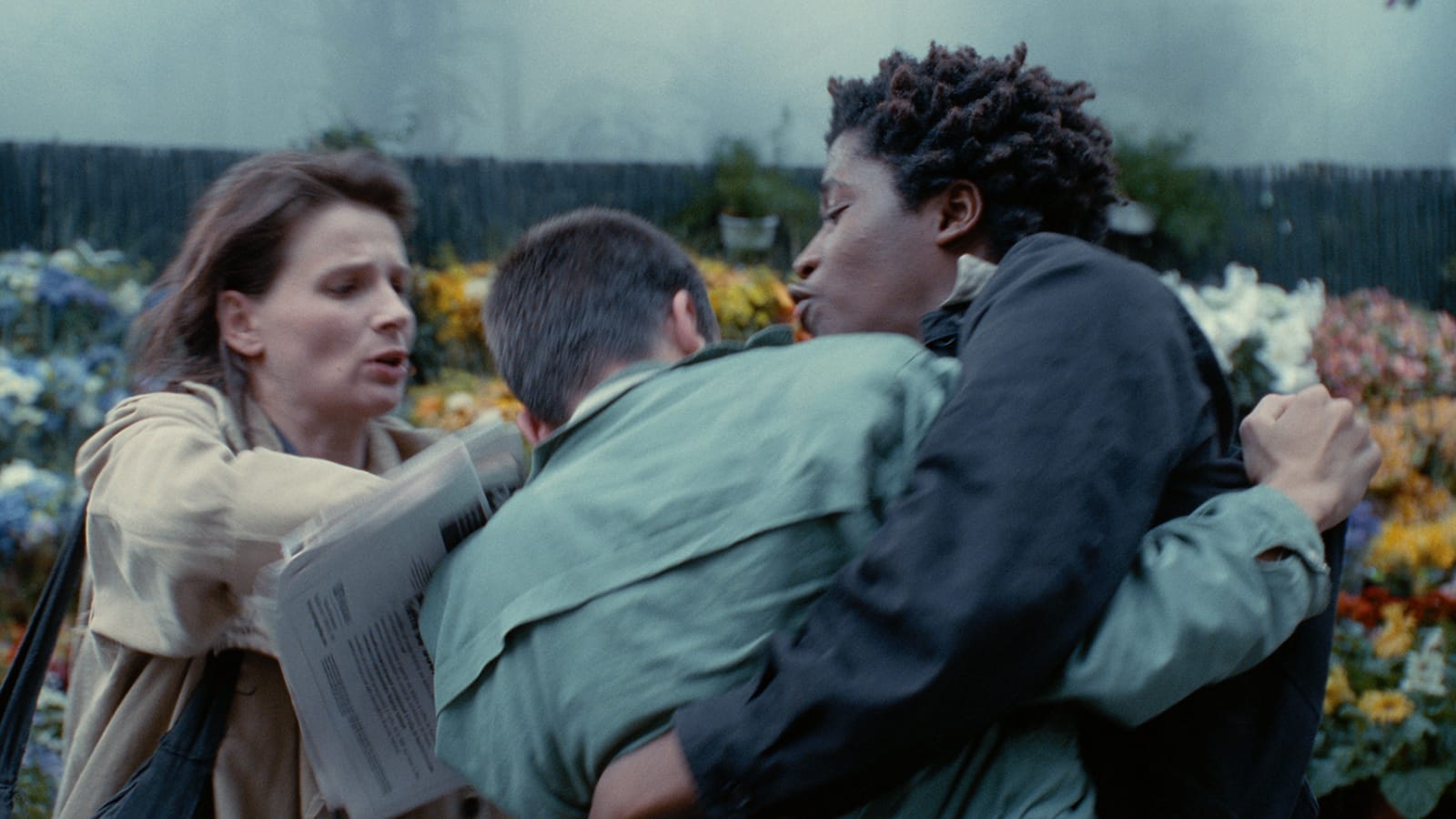
Any time someone does something, in public, one mostly thinks about how it affects them personally. We only have one life, after all, working from one timeline, one narrative, and one perspective that naturally forms when we go through it. Code Unknown plays with this idea. It’s as if writer-director Michael Haneke wanted to recreate sonder into film form, as a single littering incident instigates a series of vignettes, each shot in real time, that cuts only when shifting between the strangers who witnessed the incident. Each cut feels intentional, with the way certain scenes linger, while some are cut short before fully concluding, and contrast between the scenes that are shown, and therefore, the treatment given after the incident, is pointedly different, with some finding it inconsequential to their day, and others becoming burdened with subsequent harassment and mistreatment that could have been avoided. Haneke, of course, remains as cryptic in the way he’s best known for, but Code Unknown, nonetheless, reveals just how much empathy is needed and is lacking in real life.

Generally, most people would like foreigners to like their country, but most people can’t control what their fellow countrymen have done abroad, good or otherwise. And while now these opinions are relegated to most only on online spaces, there are some incidents when this actually affects real world crises. California Dreamin’ is based on the real life delay of NATO forces during the Kosovo War, but it’s less concerned with the actual war, and more concerned about the village itself, and their perspective on the NATO troops intruding in their way of life. Co-writer and director Cristian Nemescu depicts this event with a slice-of-life approach, with the culture clash between American soldiers and Romanian village folk forming most of the comedy, but it never forgets the way American aid was once requested but denied in black-and-white memories of World War II. While the length and editing wasn’t completed due to the death of Nemescu, Nesfârșit still keeps its edge, slicing through satire the difficult dynamic between the two countries.
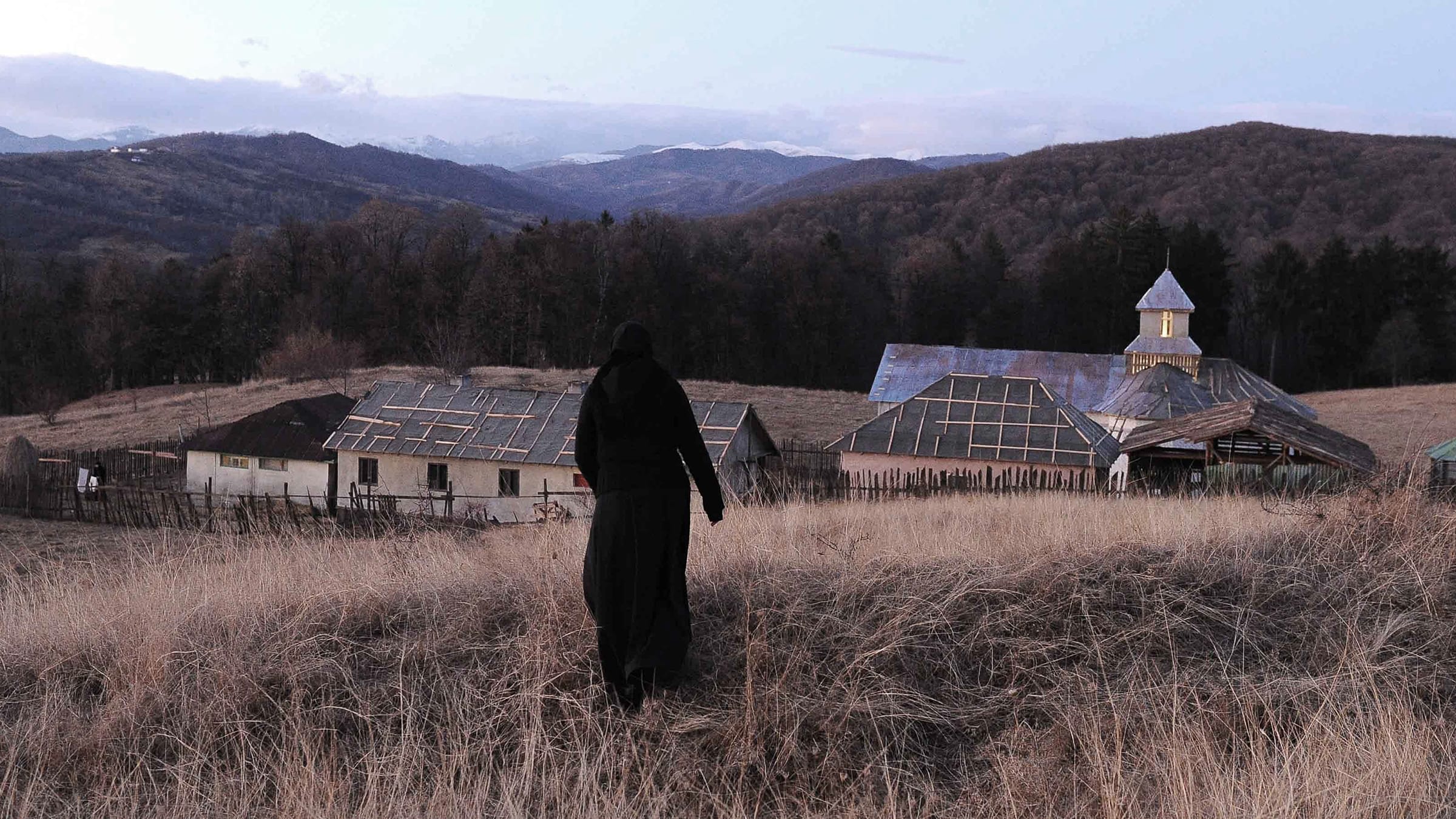
In modern day Europe, demonic possession seems to be a thing of the past, something most likely to be attributed to mental illness, and something that can be dealt with through modern medicine, not exorcism. Still, exorcisms are conducted in certain areas in the continent, and some instances don’t go the way they should. Inspired on the real life Tanacu exorcism, Beyond the Hills doesn’t depict the event through a horror or melodramatic lens– instead the film is stoic, naturalistic, with long single takes that linger uncomfortably and repetitively. As Alina pleads to Voichița to help her, to choose her and their bond, Voichița grapples with wanting the modern yet isolating freedom she knows Alina has found elsewhere, while still wanting the refuge religious tradition has granted her, but also has made her dependent on. It does take a while to reach its conclusion, but Beyond the Hills is a deeply unsettling and striking movie to watch.
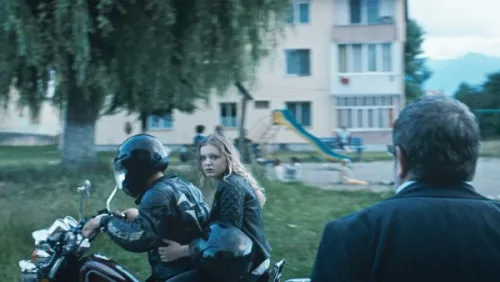
Graduation is a Romanian movie from the director of the Palme d’Or winner 4 Months, 3 Weeks and 2 Days (also number 15 in the BBC’s 100 Greatest Films of the 21st Century.)
Romeo is a 49-year-old doctor in the city of Cluj-Napoca. He is immensely proud and dedicated to his daughter, Eliza, who gets awarded a scholarship to go to Cambridge provided that she does well in her last high-school exam.
The day before this exam, Elisa is sexually assaulted outside her school, and her wrist is broken. The event haunts the family and jeopardizes Elisa’s chances of succeeding in her exam.
Romeo, still determined to ensure his daughter’s success, vows to do anything to not let the assault ruin his daughter’s future. Graduation is about this father and daughter duo as they go against a corrupt but quickly changing Romanian system.
 x6
x6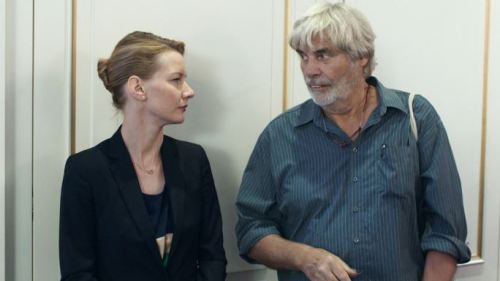
Good movies usually aren’t lengthy movies, unless we’re talking about cases like Toni Erdmann. It’s a supremely smart German-Austrian comedy that depicts the story of a Father-Daughter tandem in light of life’s weirdest, most inconvenient moments. Deciding to visit his daughter on a whim after his dog dies, Winfried (Peter Simonischek)—a man known for his outrageous pranks and many a disguise—flies to Bucharest. Ines (Sandra Huller), the daughter, buzzing with work to the brim in a very challenging job, to say the least, isn’t impressed. This leads to even more uncomfortable encounters as the estranged father poses as the title character, life coach to the disapproving daughter’s boss. On top of being a shrewdly observed and relevant movie, the brilliant writing by Maren Ade crafts something thoroughly enjoyable and heartfelt here, highlighting the importance of family bond in an oddly sweet way, and criticizing modern-day work ethic and the toll its taking on us. The beginning is a bit slow, but if you’re a bit patient you will be surprised how much this movie will reward you.
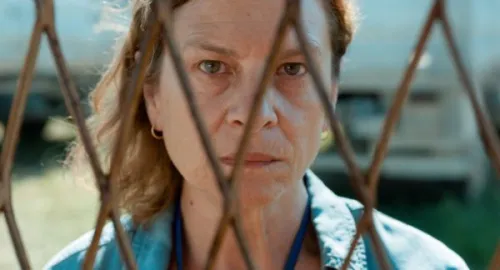
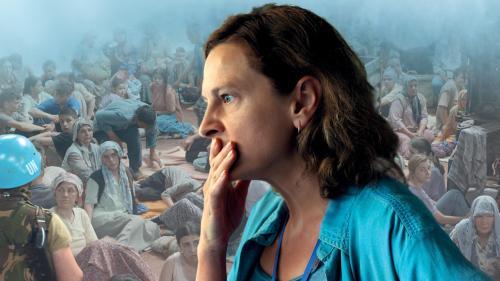
This Oscar-nominated drama tells the story of the events leading up to the Srebrenica massacre, in which 8372 Bosnian Muslims were killed. It focuses on one U.N. worker who was caught between trying to protect her family, herself, and helping people in need.
The film is as horrific as it is relevant: up until the actual killing starts, people are constantly being assured that everything is under control and that there is no reason to panic. This gives an eerie feeling of resemblance to the tone many minorities in distress receive nowadays.
Still, Quo Vadis, Aida? stops at depicting any of the acts that were committed that day. Instead, it focuses on Aida’s unrelenting race against the clock to save whatever she can.
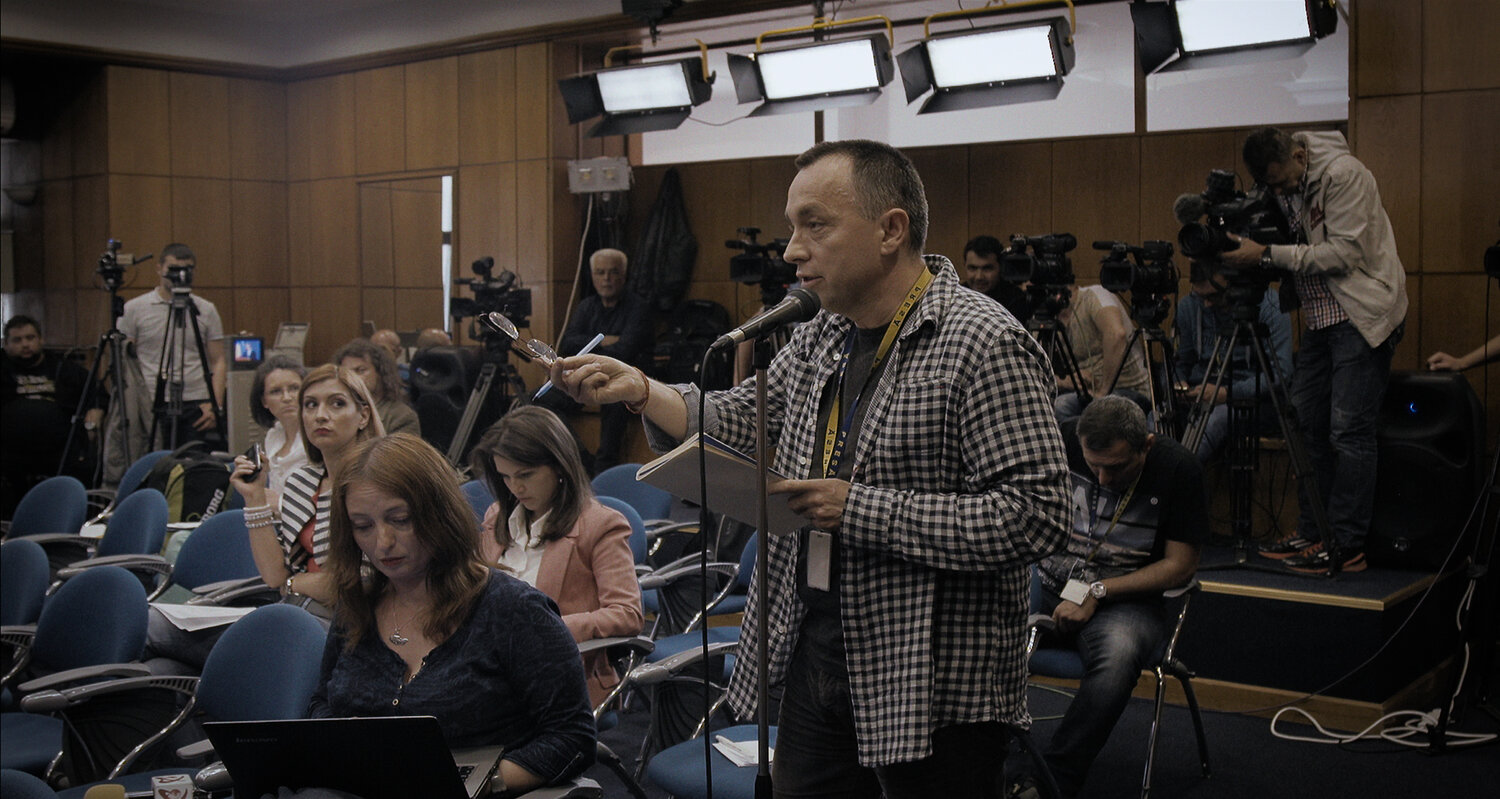
Following a group of journalists uncovering an entire architecture of institutional corruption in Romania, Collective makes for an inspiring watch—not just because these people are pursuing a story outside their usual wheelhouse, but because their enemy really is so much greater than they can handle. Yet they continue chipping away, never once backing down from speaking truth to power. Director Alexander Nanau understandably might not have much access to the government’s side, but he still manages to portray them as an ever-present, omnipotent invisible force, giving the film a thick atmosphere of dread and paranoia. But still, in the face of such overwhelming odds, the best thing to do is refuse to be scared into silence.
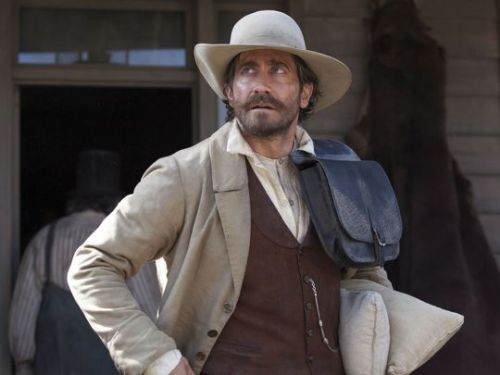
This is a star-packed movie about two brother assassins played by John C. Reilly and Joaquin Phoenix, and starring Jake Gyllenhaal. You might have read the book of the same name, and it is always hard to make a great film out of a great book but the brilliant director of A Prophet Jacques Audiard has done it (again). He is aided by a superb darkly comic script and fantastic acting from the entire cast. Audiard is French, but his take on the American Western is filled with epic violence but also witty dialogue, brotherly love, and male camaraderie.
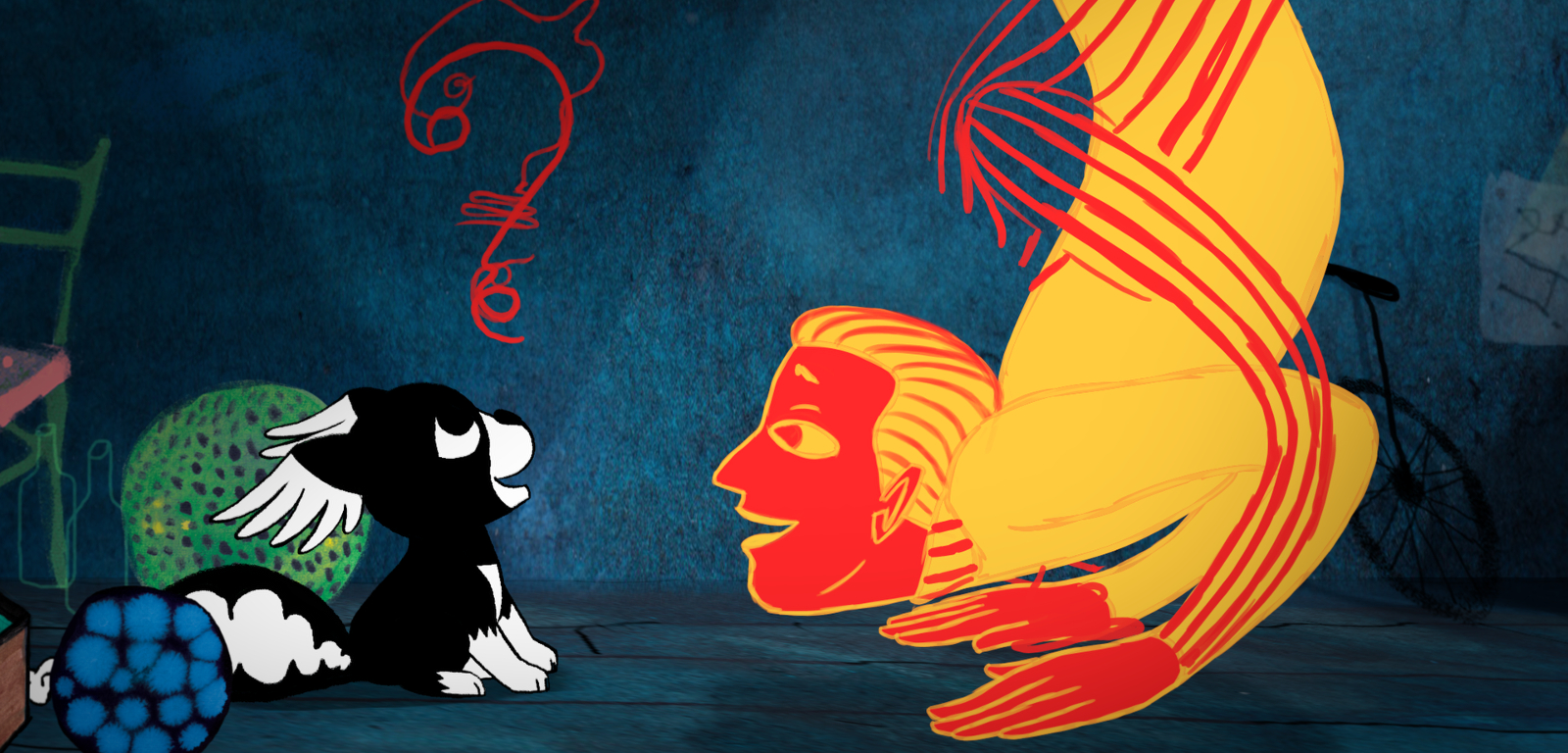
Marona’s Fantastic Tale is a rich story about life and death and everything in between, told entirely through the eyes of a dog. With breathtaking visuals and unmatched empathy, the film implores us to think about what might count as joyous and heartbreaking for our four-legged friends. Told normally and in any other way, we might not care as much, but in a story as artful and compassionate as this, we can’t help but listen.
Unlike other films about pets, Marona’s Fantastic Tale isn’t cutesy—its art is dizzying and demanding, but beautiful nonetheless. And isn’t afraid to confront tragedy (in fact, it begins with it). But it buoys reality with dreamy art sequences and even finds humor along the way. All in all, it’s a mature film that poses big existential questions that will intrigue adults as well as kids.
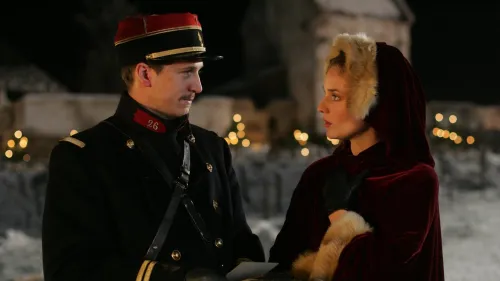
Christmas isn’t usually the best time to watch a tense war drama, but there were some Christmases where war was still active, including, of course, the Great War. Joyeux Noel (or Merry Christmas in French) depicts one such time. Of course, as a depiction of a real historical event, it’s possible that you might have already heard about the Christmas truce of 1914. However, there’s something extraordinary about the way writer-director Christian Carion depicts the humanity shared by all fronts, the very humanity that made such a miracle possible. With the awards it won, it’s easy for those who haven’t watched this drama as mere Oscar bait, but Joyeux Noel balances each side, each country, and each language with care, turning this international co-production into a miracle of its own.

A crazy, high-speed movie about double-dealing crooks and thieves living along the Danube River in Serbia. Such a description probably makes this movie sound dark and menacing, trust me it is anything but. It is filled to the brim with delightful music, slapstick humor, bizarre contraptions, shotgun weddings — with a sweet romantic caper at its center. If winter weather is getting you down, consider watching this film as a fun & sunny antidote.