
Farah Cheded: My Curated Picks on Streaming Services (Page 2)
Farah Cheded is a UK-based curator at A Good Movie to Watch and a Rotten Tomatoes-approved freelance critic whose work has been published at outlets including The Playlist, Paste Magazine, and Film School Rejects. She lives in fear of the day she runs out of ‘Columbo’ episodes to watch.
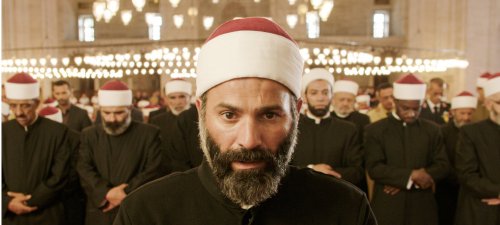
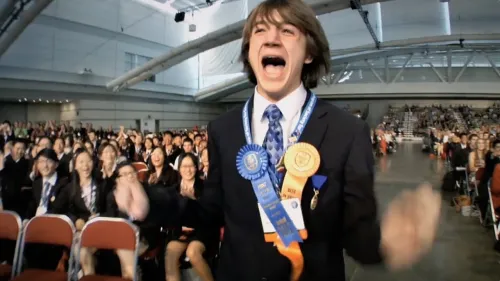
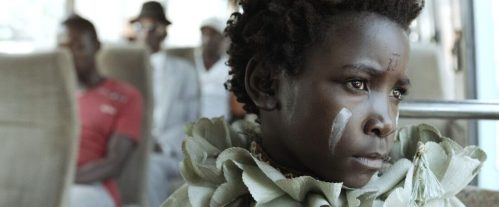
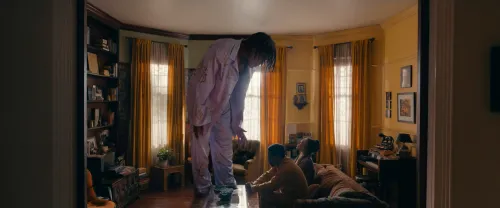
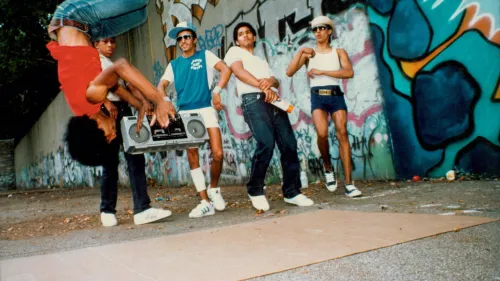
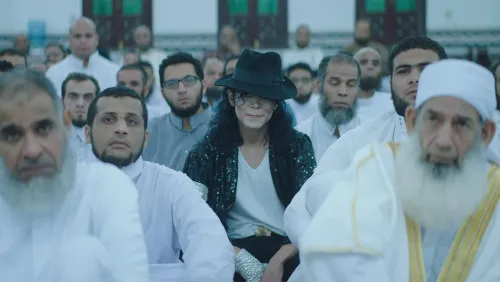
Michael Jackson’s death triggers the sudden unraveling of a young imam’s buttoned-up life in this idiosyncratic Egyptian character study. The news of the singer’s passing sets Khaled (Ahmed El-Fishawy) straining against reawakened memories of his youth as a mullet-sporting MJ fanatic, before his joyful creative spark was stamped out by two disparate forces: a mocking, macho dad who punished Khaled for his vulnerability and the conservative uncle who took him under his wing.
Sheikh Jackson mostly takes place across two intertwining timelines: Khaled’s free-spirited adolescence and his adulthood, which has so far been defined by a self-flagellating, fire-and-brimstone brand of Islam. These two strands form a neat illustration of the binary options Khaled was led to believe he had to choose from — but, as the movie’s title hints, he might not have to choose at all, a revelation that doesn’t come easy because it flies in the face of everything he’s been taught. Free from the judgemental impulses of Western cinema when it comes to characters like Khaled, Sheikh Jackson is both an introspective portrait of the universal struggle of defining one’s own identity and a refreshingly nuanced look at how that experience might play out in the modern Arab world.
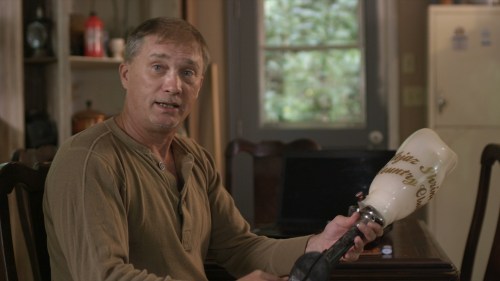
A wacky viral story — the kind that gets played for laughs at the end of news broadcasts — gets uncommonly deep consideration in this documentary gem. That’s not to say that Finders Keepers ignores the surreal comedy of the situation that John Wood and Shannon Whisnant, two star-crossed North Carolina men, found themselves in in 2007: battling over the custody rights of John’s mummified amputated leg. The humor in this bizarre tale and all the myriad eccentricities of its real-life characters is never left untapped, but to simply focus on that would add nothing new to the way the story had been told thus far.
Unlike the many clips from news segments and reality TV that we see in the film, Finders Keepers instead looks beyond the low-hanging fruit and finds deep pathos simmering under the surface of this wacky tale. What emerges is a complex, often tragic, and very American picture of the way traumas shape our lives, the addictive pull of drugs and attention, and fate’s habit of twisting nightmares into blessings and vice versa. It’s the kind of film that makes you wonder how many other unexpectedly poignant stories have been short-changed by our impulse to be flippant.
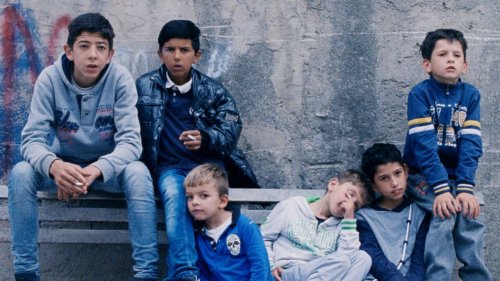
This fiery coming-of-age drama has an unlikely origin story: director Jonas Carpignano was first introduced to the sprawling Roma clan that makes up most of the movie’s cast when one of them stole his car while he shot another film. The charismatic Amato family made such an impression on him that he decided to center a movie around their real lives, naming it for the insular neighborhood they live in on the outskirts of a Southern Italian town.
The Amatos are part of a much-maligned ethnic minority, but not the only one in the film. The Ciambra pokes at the idea of solidarity between the Amatos and local African migrants: while his elders are quick to reject the idea, plucky 14-year-old Pio (Pio Amato) flits across these invisible borders and bonds with Ayiva (Koudous Seihon). But Pio is desperate to win the respect of the men in his family, who might then allow him to take part in their criminal exploits — a crisis point The Ciambra chronicles with raw emotion. This is a movie whose grit and bleakness often recall the uncompromising gaze of neo-realist classics, as a child is heartbreakingly forced to declare his allegiances in the dog-eat-dog world his elders can’t imagine an alternative to.
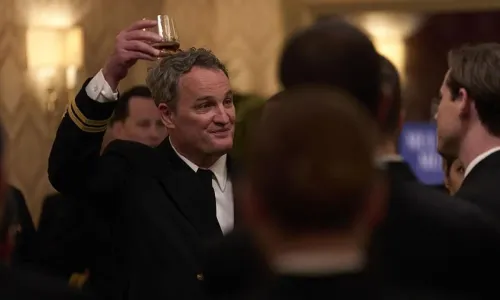
The late, great William Friedkin’s final film is staged with all the military precision of its naval court setting. We never leave the courtroom from the moment we’re plunged into it — the first minute — meaning the contentious action around which the film revolves happens only in our imagination, spurred on by the competing accounts of Lieutenant Maryk (Jake Lacy) and Commander Queeg (Kiefer Sutherland). Maryk is accused of mutiny, but, as he tells it, he only seized command from Queeg during a typhoon because he feared that the Commander was experiencing an episode of mental instability that would endanger the lives of everyone onboard.
The lack of flashbacks to this crucial moment places the burden of bearing out the truth on the cast, which includes Jason Clarke as Maryk’s lawyer, Monica Raymund as Queeg’s counsel, and Lance Reddick — the naturally authoritative late actor to whom the film is dedicated — as the judge. The film’s lack of visual pizzazz is to its advantage, then, because it allows this excellent cast (and Friedkin’s searing script) to flex under the full, burning gaze of the spotlight. Clarke, in particular, emerges as the standout as the reluctant navy lawyer — a man caught between the impulse to expose one truth and conceal another.
Initially, The Change’s premise might seem as eccentric as its kooky characters, but this comedy series set in ancient woods makes a compelling case for itself over six short episodes. When Linda (writer Bridget Christie) is diagnosed as menopausal, it triggers a flash of clarity: she’s tired of being reduced to “wife” and “mother.” Depressed by all her ledgers recording every second she’s spent doing unappreciated housework, Linda decides to reclaim a few thousand minutes, and takes off on her motorbike to the Forest of Dean to look for the time capsule of cherished belongings she hid there as a child following her mother’s death.
Because this motivation is only explained later, the show has a somewhat perplexing beginning, but a couple of episodes in, it finds its footing. The Change makes sharp punchlines out of boorish man-children — and, although it has varying success getting laughs out of its more bigoted characters, it does decenter them and dole out acceptance to the overlooked, making it refreshingly divergent from “topical” comedies’ usual flippancy. The spiritual link it draws between its apparently unrelated focuses — menopause and the natural environment — adds to its originality and empathy, making this a comedy of untypical thoughtfulness.
Sandra Oh earned her breakout in this warm, candid Canadian indie, which — not uncoincidentally — shares its name with that of a decorative Chinese symbol associated with marriage. The movie’s title is also a reference to 22-year-old Jade Li’s (Oh) struggle to pursue her own ambitions and meet the clashing romantic and professional expectations her disapproving first-generation immigrant parents have for her. As she puts it, “Double happiness is when you make yourself happy and everyone else happy, too.”
An aspiring actress who dreams of playing Blanche DuBois, Jade is instead asked by unimaginative casting directors to adopt a pronounced Chinese accent for tiny bit parts. In essence, she’s typecast everywhere: on set, and at home, where she struggles to play the good daughter who’ll give up acting for a more conventional job and will only marry a man her parents approve of. It’s a jarring existence, but Double Happiness never feels claustrophobic because it gives Jade the freedom to finally be herself via witty, confessional monologues and fantasy sequences. There’s undoubtedly bittersweetness to this portrait of a young woman fighting to be herself on every front, but that it’s nevertheless such an irresistibly charming, never-flippant watch is a testament to first-time director Mina Shum and Oh’s already mature talents.
Documentaries about musicians — or anyone famous, for that matter — are often mythologizing puff pieces, essentially feature-length airings of PR material. But Against All Odds has more to it than flattery. It chronicles the rise of Australia’s first drill rappers, five young men of Samoan origin who soared to fame from their disadvantaged Sydney neighborhood after going viral and catching the eye of artists like the UK’s Skepta and Australia’s own The Kid Laroi.
ONEFOUR’s rise from “the trenches” is compelling in itself — far more so than some of the dull origin stories that often pad out this kind of movie — but the documentary is given even more weight by its examination of the forces that sought to put out their fire: New South Wales police. ONEFOUR’s lyrics, which often reference violence, put them in the crossfires of a police tactical unit determined to, in one officer’s words, “make [ONEFOUR’s] life miserable until [they] stop what [they’re] doing.” Amazingly, the on-camera police interviews feature even more brazen admissions of the ways they “lawfully harass” ONEFOUR, a fact that makes this documentary an eye-opening portrait of both aggressive (and allegedly racist) policing and the resilience of the group in the face of it.
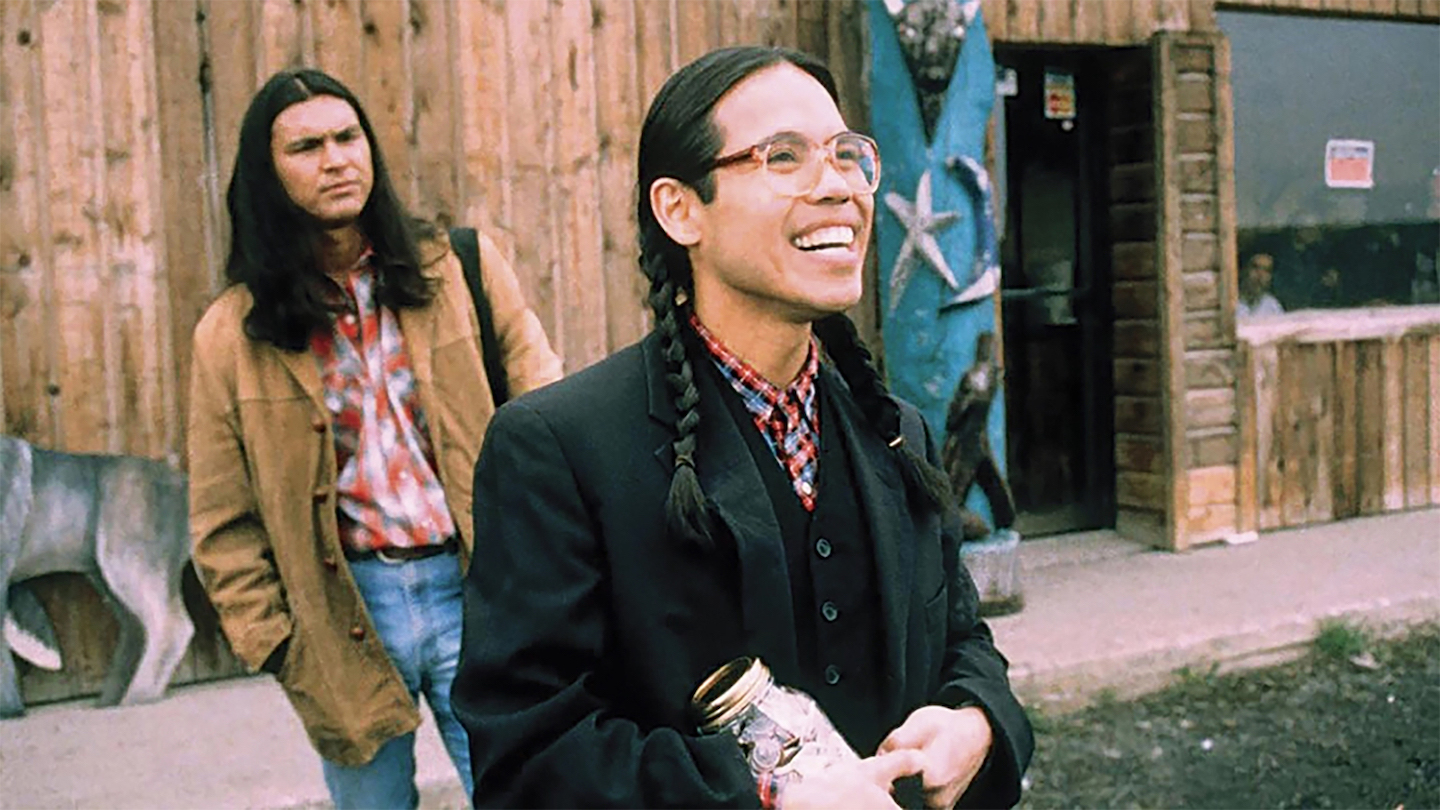
To Hollywood’s shame, it wasn’t until 1998 that a major feature made by Native American filmmakers was released. It was this charming indie gem that belatedly broke that new ground: based on author Sherman Alexie’s The Lone Ranger and Tonto Fistfight in Heaven, Smoke Signals retains the irreverent humor hinted at in its source material’s title while also being a genuinely heartfelt drama. Set across two cleverly interweaving timelines, it follows the fraught relationship between Victor and Thomas, two young men living on Idaho’s Coeur d’Alene Reservation who are forever linked by tragedy: as a baby, Thomas was saved from the house fire that killed his parents by Victor’s father Arnold (a great Gary Farmer), who soon spiraled into alcoholism and abandoned his young son. When Arnold dies suddenly, then, the duo embark on a perspective-changing road trip to collect his ashes.
Thomas’ nerdy earnestness and happy-go-lucky personality have always gotten on the nerves of the stoic Victor — who’s eaten up by resentment at his father for leaving — but the trip brings the disparate duo together. Though the movie honors their meaningful journey with a serious dramatic focus, it’s also shot through with sharp humor satirizing clichés about Native American people — a tonal complexity that makes it uncommonly accomplished, even without the added value of its all-too-rare perspective.
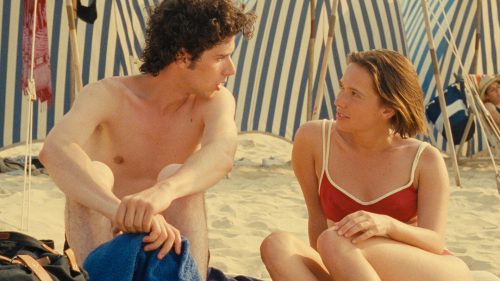
The sunniest installment of Éric Rohmer’s Tales of the Four Seasons series is a sly, slow burn of a character study. Everything looks sensuously beautiful in the honey-toned French sunshine, except for the ugly egotism of Gaspard (Melvil Poupaud), the full extent of which is gradually revealed over the film’s runtime to amusing — if maddening — effect.
A brooding twenty-something, Gaspard has the traumatic task of having to decide between three beautiful and brilliant young women while vacationing alone on the French coast one summer. He dithers and delays his choice, each woman appealing to a different insecurity of his — but, as frustrating and plainly calculating as he is, you can’t help but be charmed by Gaspard. That’s partly because of Poupaud’s natural charisma, but also because Rohmer grants Gaspard as many searingly honest moments as he does deceitful ones. These come through Rohmer’s hallmark naturalistic walking and talking scenes (a big influence on the films of Richard Linklater), coastal rambles that produce conversations of startling, timeless candor. That inimitable blend of breeziness and frankness is never better matched in the director’s films than by the summer setting of this one, the sharp truths going down a lot smoother in the gorgeous sunlight.
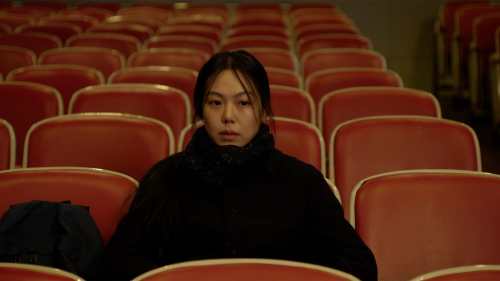
There’s an intriguing meta appeal to this drama, the plot of which is a thinly veiled reference to the scandal that erupted around South Korean director Hong Sang-soo and star Kim Min-hee’s extramarital affair. Here, Kim plays an actress who flees to Germany amidst a media storm swirling around a similar relationship and then returns home to skirt prying questions from friends and — maybe — confront her now-distant lover.
But beyond its references to salacious real life, On the Beach at Night Alone is also a fascinating conversational movie, one that explores with gentleness all the messy feelings that Kim is having in her physical and professional exile (offers of acting roles having dried up because of the scandal). That tone isn’t permanent, though, because the film reaches a violently emotional crescendo with two extremely raw and strange outbursts at dinner parties — a strangeness echoed by the lightning bolts of surreality that break up what is otherwise a naturalistic film (and filmography, for Hong). This might make an unconventional entry point if you’ve never seen a Hong film before (he’s averaged two films a year since 2017, so there are plenty of other options), but it’s an illuminating introduction for newcomers all the same, and a fascinating evolution for confirmed fans.
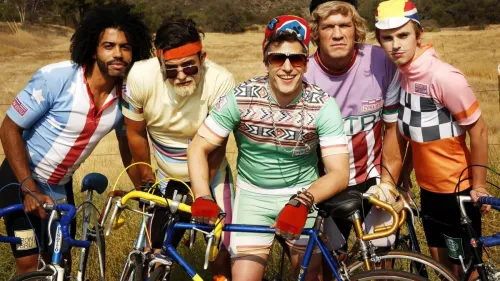
This HBO mockumentary is part-pastiche of the mythologising sports documentary, part-zany comic creation of its own. Tour de Pharmacy tells the incredible untrue story of the 1982 Tour de France, the most chaotic iteration of the race that never happened. Of the original 170 cyclists, all but five were disqualified for bribing the deep-in-debt president of cycling’s governing body (Kevin Bacon), leaving only Italian-a sensation-a JuJu Peppi (Orlando Bloom); secret female racer Adrian Baton (Julia Ormond and Freddie Highmore); frustrated nephew of Jackie Robinson, Slim (Daveed Diggs); a roided-out Austrian (John Cena); and Marty Hass (Andy Samberg), a Nigerian cyclist despised by his country.
Tragedy, scandal, and surprising romance unfold across the documentary’s chronicling of the race’s 21 stages, with plenty of digressions along the way — from a riotous interview with the head of the sport’s anti-doping agency (played by Nathan Fielder) to an animated explanation of red and white cells that devolves into a surreally bloody civil war. The humor zooms between the high-brow (French New Wave references delivered by JJ Abrams) and the R-rated from scene to scene, making this breezy mockumentary a wild ride of its own.
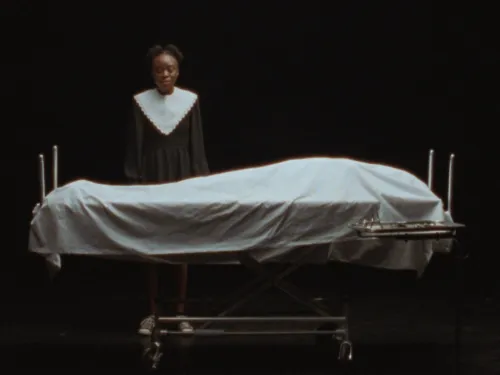
A harrowing family loss sets off a poetic exploration of grief in this experimental film from Haitian-Canadian filmmaker Miryam Charles. The focus of the movie is Charles’ own cousin, who was found murdered in her Connecticut bedroom in 2008. Rather than let her cousin’s life remain frozen at that point in time, Charles unmoors her film from the cold realities of time and space to suggest new perspectives on the girl’s past and imagine a future that never came. While events like the family’s decision to move to the US are recast as portends of tragedy, there’s also deep generosity in the movie’s ghost story — such as the joyous scenes it depicts from a mother-daughter trip to the family’s home country of Haiti, a trip that never actually took place.
It’s not always easy to discern where or when we’re at in its liberal toggling between time and space, but once Cette Maison establishes its unconventional visual language, everything comes into poignant focus. Given the reality on which it’s based, this is undoubtedly a heartbreaking watch, but the way Charles’ movie evokes the ability of imagination to both deepen and assuage the pain of grief is nothing short of revelatory.
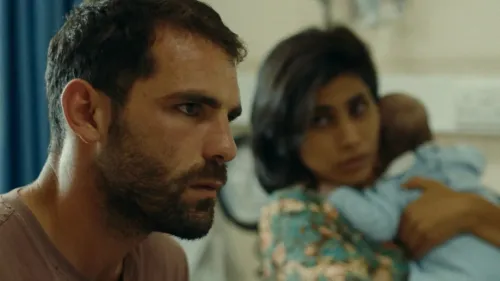
Our Children opens at the harrowing end of the true story it’s based on: with the image of a distraught mother (Émilie Dequenne) in a hospital bed, begging a police officer to ensure that her children — who have just predeceased her — are buried in Morocco. From this ominous beginning, the film rewinds into a jarringly sunny flashback of lovebirds Murielle (Dequenne) and Mounir (Tahar Rahim) to tell this horrifying story from the start.
What follows is much less obviously dramatic: Our Children shifts into slow-burn psychological thriller territory as we watch the gradual breaking down of Murielle at the hands of Mounir’s adoptive father André (Niels Arestrup), a wealthy white doctor who has used his status to insinuate himself into the lives of Mounir and his family back home in Morocco. This is a very subtle study of manipulation, one that hinges entirely on the performances of the trio, who fill with nuance roles that could easily have been tabloid caricatures. Above all, though, this is Dequenne’s film, and it’s the devastating ways she shows the life gradually being sucked out of Murielle that makes Our Children so difficult to shake off.
Rosetta begins fiercely, with a shaky handheld camera chasing the eponymous teenager (Émilie Dequenne) as she storms across a factory floor and bursts into a room to confront the person she believes has just lost her her job. The film seldom relents from this tone of desperate fury, as we watch Rosetta — whose mother is a barely functioning alcoholic — fight to find the job that she needs to keep the two alive.
As tough as their situation is, though, Rosetta’s fierce sense of dignity refuses to allow her to accept any charity. A stranger to kindness and vulnerability, her abject desperation leads her to mistake these qualities for opportunities to exploit, leading her to make a gutting decision. But for all her apparent unlikeability, the movie (an early film from empathy endurance testers the Dardenne brothers) slots in slivers of startling vulnerability amongst the grimness so that we never lose sight of Rosetta’s ultimate blamelessness. Its profound emotional effect is corroborated by two things: that it won the Palme d’Or at Cannes, and that it helped usher in a law protecting the rights of teenage employees in its setting of Belgium.
Anyone who’s seen Pietro Marcello’s Martin Eden will likely recognize the director’s fingerprints all over Scarlet. There’s the same haunting collage of colorized archival documentary footage and fictional scenes here, the same fascination with physical labor and historical moments of transition, the same loose approach to literary adaptation. Scarlet’s story is drawn from a 1923 Russian adventure novel but the action is transposed to post-WW1 rural France, where soldier Raphaël (Raphaël Thiéry) returns from the war to discover his wife has died and left him with a daughter, Juliette (Juliette Jouan). The local townsfolk reject the duo, but they manage to keep their head above water thanks to a kindly landlady with a storybook belief in magic and Raphael’s Geppetto-like skills at whittling beautiful toys from blank blocks of wood.
The fairy tale touches don’t stop there: the color grading and bucolic setting give the movie the look and texture of a fable, while Juliette is enraptured by a prophecy — given to her by a witchy forest woman — that tells her she’ll one day be swept away by scarlet sails in the sky. It’s a charming, if airy, yarn, but the craftsmanship in front of and behind the camera makes Scarlet a gorgeous escape.
Éric Rohmer movies are what you watch when you want to experience the thrill of someone putting into words something you might never have been able to express yourself. The magic of his characters is that they’re breezily candid, even if that honesty doesn’t protect them from committing the same contradictory foibles we all do. Pauline at the Beach is a dazzling example of that quality; it may even be more honest than usual, because it also tells a truth about its characters that they’re not even aware of themselves.
The most perceptive character is actually the youngest: 15-year-old Pauline (Amanda Langlet), who’s vacationing with her older cousin Marion (Arielle Dombasle). Having never fallen in love herself, Pauline receives a thorough education in the matter by observing the love triangle that Marion becomes entangled in with needy Pierre (Pascal Greggory) and predatory Henri (Féodor Atkine). Though the adults give the film its brilliantly articulate philosophical meditations on love — ranging from the idealistic to the dispassionate — their actions often fall short of their words. Shot through Pauline’s keen eyes, Rohmer’s film wryly reveals the decisive role that delusion and unchecked ego play in so many grown-up lives — ironically making the self-aware and measured teenager the most mature of all.
Renowned choreographer Benjamin Millepied brings an 1875 opera leaping into the 21st century with this modern retelling — through dance and drama — of Carmen. The plot is reimagined along the US border and recenters the titular character (Melissa Barrera), a newly orphaned refugee from Mexico making her way to her godmother (a fabulous Rossy de Palma) in LA. In places, Carmen recalls Baz Luhrmann’s Romeo + Juliet: aided by Nicholas Britell’s operatic score, it embraces its grand origins to evoke a star-crossed sense of looming tragedy over the romance that blossoms when reluctant border patrol guard Aidan (Paul Mescal) saves Carmen’s life and flees with her to California.
Where Carmen really soars is in its translation of drama into dance. It’s an inspired move, pairing this almost mythical story with such a primal medium — but, while the movie achieves visceral emotion that words would struggle to produce in its choreographed scenes, there’s something lacking in the moments where dialogue is crucial. The conversations never move as fluidly as the dancing bodies do, and the passion and the fury falter as a result. That being said, this is largely still a boldly inventive filmmaking experiment, one that spotlights the thrilling potency of pure movement as a storytelling medium.
The title of Paweł Pawlikowski’s sophomore feature has a double meaning: it’s not only about the extraordinary lengths a Russian mother goes to remain in the UK, but it’s also set in the last seaside resort anyone would ever want to visit. While travelling to meet her English fiancé, Tanya (Dina Korzun) and son Artyom (Artyom Strelnikov) are detained at customs after failing to satisfy the immigration officer’s queries. With her fiancé refusing to answer her calls, Tanya panics and claims political asylum, not knowing that doing so means she’ll have to wait for over a year in a grim coastal town requisitioned as an asylum-seeker “holding area.”
Pawlikowski uses realism to highlight the crushing bureaucracy, dehumanizing conditions, and threats of exploitation that come with being an asylum seeker, but remarkably, bleakness isn’t the overriding tone. Local arcade worker Alfie (Paddy Considine) takes a shine to the duo and does what he can to brighten their gloomy situation — and, in the cruel limbo they find themselves in, his warm generosity and fondness for them imbues the film with an undeniable sense of hopefulness. It never detracts from the film’s realism (see: its bittersweet ending) but neither does Pawlikowski allow the precious gift of someone who genuinely cares to go ignored.
A family-friendly, Disney-backed movie is not something you’d expect from cinema’s surrealist master, but The Straight Story marks a surprisingly winning stylistic departure for David Lynch. It tells the true story of Alvin Straight (Richard Farnsworth), an ailing 73-year-old who, upon hearing that his estranged brother has suffered a stroke 240 miles away, decides it’s time to patch things up. Unable to drive due to poor eyesight, Alvin modifies a ride-on lawn mower and sets off on the six-week-long journey it will take to reach his brother while traveling just five miles an hour.
Lynch’s film is set at a similarly patient pace: contemplative shots of Mid-Western America’s cornfields fade in and out as Alvin chugs along and experiences profound, fleeting connections with the strangers crossing his path. Alvin refuses to accept any offers of a ride: he wants to finish this pilgrimage on his own terms. Angelo Badalamenti’s elegiac score emphasizes just how much this journey means to Alvin — who, in his last chapter of life, uses it both to reflect on all that’s come before and treasure every experience, big or small, that the present offers. The sense of this being a swan song for Alvin is always palpable, making The Straight Story deeply moving down to its bones.
You don’t have to be a tea drinker to enjoy this warm film from documentary legend Les Blank. The passion and eloquence with which the tea connoisseurs interviewed here talk about the beverage is a delight in itself, a soul-nourishing reminder of what worlds of meaning and experience open up when you really love something. Though a few of these enthusiasts are featured — among them, filmmaker Werner Herzog — it’s mainly centered around David Lee Hoffman, an American importer who swims against the tide of capitalism, mass production, and environmental damage to champion the hand-crafted teas he’s so passionate about. As the film chronicles, however, his insistence on buying directly from the boutique farmers — sometimes traveling hours into the remote Chinese countryside to do so — often puts him at odds with the economic interests of the big-time exporters he must work with.
Hoffman isn’t persistent in the face of all these hurdles for the sake of a buck, though: the film follows his linked efforts to encourage organic farming practices and a direct-from-the-source marketplace that will give the farmers a fair price for their hard work. That his love for the drink also encompasses the artisans who make it and the ground that grows it makes this an inspiring watch.
2005 was a banner year for British period dramas, apparently: first, there was Joe Wright’s Pride & Prejudice (still arguably the genre’s crowning achievement), and then came Under the Greenwood Tree, a delightful made-for-Christmas-TV romance loosely based on the eponymous Thomas Hardy novel. Anyone familiar with the author’s typically tragedy-tinged stories — think Tess of the D’Urbervilles and Far From the Madding Crowd — will find themselves surprised by the light, pleasant tone of this one, in which the closest anyone gets to violent revenge is sabotaging a church organ by pouring a flagon of cider into it.
The romance here is threefold: when Keeley Hawes’ spinster schoolteacher Fancy Day (genuinely her name) arrives in an English village, she ignites a rivalry between wealthy farmer Shiner (Steve Pemberton), haughty clergyman Parson Maybold (Ben Miles), and James Murray’s die-hard romantic Dick Dewy (again: the names in this are a choice). The trio’s simultaneous attempted courting of Fancy doubles as both the entertaining will-she-won’t-she stuff of romantic dramas and a conduit through which the movie explores the class dynamics in England during the 19th century. It’s this deft intertwining of satisfying romantic period drama tropes with genuine reflection on the historical period itself — all while remaining lighthearted — that makes this underseen adaptation worth watching.
Celebrated Malian filmmaker Souleyman Cissé crafted Yeelen (which means ‘brightness’) as an explicit antidote to the “ethnographic” lens through which Western directors often told Africa-set stories. That intention is certainly felt, because Yeelen doesn’t trouble itself to translate its folklore-drawn premise for audiences unfamiliar with 13th-century Malian myths. Rejecting Western storytelling conventions, it instead uses those of the culture it depicts — a looping approach to time and matter-of-fact magical realism — to present the tale of Nianankoro (Issiaka Kane), a supernaturally gifted young man whose sorcerer father (Niamanto Sanogo) plots to kill him because of the threats he poses to the elder man’s power.
A basic primer to the customs central to Yeelen is provided in the opening titles, but knowledge of the culture it communicates through isn’t a prerequisite to watching and enjoying the film because its epic conflicts — both Oedipal (father versus son) and religious (flesh versus spirit) — and otherworldly sensibilities make it both instinctively familiar and mesmerizing. A deserved winner of the Cannes Jury Prize, though the fact that it was the first African film to win one of the festival’s awards — 40 years into its existence — makes this an unjustly belated milestone.
There’s more than a touch of Louis Theroux to this engrossing documentary — fronted by New Zealander pop-culture journalist David Farrier — about an innocuous-seeming Internet phenomenon: the actually-sinister subculture of “competitive endurance tickling”, in which young men undergo “tickle torture” for money on camera. When Farrier unassumingly requests an interview with an American producer of tickle content, it kickstarts a bizarre campaign of harassment and opens up a rabbit hole of unbelievable twists and turns. The wild places this documentary goes are best left as unspoiled as possible, but it’s no spoiler to say this emerges from its seemingly lighthearted premise as a deeply unnerving story about money, power, sex, and shame in the Internet age.
Although it opens on Janet Frame’s first steps as a baby, this Jane Campion-directed biopic of the celebrated New Zealand writer doesn’t take an exhaustive approach to its subject’s life. We frequently only learn of milestones — the many awards she won, the death of her mother — later on and in passing. In a beautiful gesture that feels like a tiny righting of the many wrongs done to Janet, it’s her perspective that guides the film.
That embedded approach also makes the emotions that come with her heartbreaking yet uplifting story more profound. And there is much heartbreak here: alongside the several tragic losses Janet experienced as a child, she was misdiagnosed as schizophrenic as a young woman and spent eight harrowing years in psychiatric hospitals. Throughout all of this, she wrote fiction and poetry, work that saved her life in more ways than one: as well as being a rare constant source of joy, it won her a literary prize just days before she was scheduled for a lobotomy, prompting her doctors to reconsider. Neither Campion nor Janet allowed this experience to define her, however, and the film empathetically grants her real moments of joy and choice throughout — making for a deeply sensitive and uplifting watch.
In Ken Loach’s conspiracy thriller, an American human rights activist (Frances McDormand) and a no-nonsense UK police officer (Brian Cox) work tirelessly to uncover the truth behind a suspicious death — but this is no rousing triumph of good over evil, only a bitter pill about corruption and complicity. Human rights lawyer Paul (Brad Dourif) and girlfriend Ingrid (McDormand) are in Troubles-era Belfast wrapping up their report into the UK government’s shoot-to-kill policy when Paul is shot dead by mysterious assailants while on his way to speak to an informant. Police investigator Kerrigan (Cox) is flown in from England to look into the death; Cox plays him as a stickler for the rules and fierce agent of justice, inspired by a real-life official who was abruptly suspended from the police before he could deliver his findings into the UK government’s alleged death squad in Northern Ireland.
But the network of high-level corruption that Kerrigan and Ingrid uncover poses a direct challenge to those values, ultimately forcing him to choose between revealing the conspiracy — and risk destroying his life — or concealing the truth and betraying his ethics. A fascinating look at the slippery slope to complicity, this is a gripping, unabashedly ideological conspiracy thriller blending Hollywood polish with gritty reality.
Watch this documentary and find yourself amazed at how much of Hollywood history was determined by one woman: legendary casting director Marion Dougherty. At a time when studios were casting actors based on “type,” Dougherty revolutionized the process with her preternatural ability to see the potential in budding actors like Al Pacino, Dustin Hoffman, Robert Redford, and Glenn Close. Her work in introducing NYC’s theater actors to the silver screen launched countless careers and indelibly shaped iconic films like Midnight Cowboy and Lethal Weapon.
And yet, Dougherty’s work — and that of those who followed in her steps — is criminally underappreciated, as this doc both lays bare and seeks to redress. A largely female profession, casting was long devalued by a casually misogynistic industry, the persistent legacy of which is subtly highlighted in some interviews here. Among the talking heads sharing appreciation and anecdotes are many of the actors and casting directors whose careers Dougherty launched, as well as filmmakers (including Martin Scorsese) testifying to the pivotal role casting has played in their work. Playing the villain is Ray director Taylor Hackford, who believes casting directors add little to the filmmaking process — an argument that the doc wryly disproves with the sheer weight of refuting evidence it offers up.
It’s impossible not to be moved by this passionate love letter to the medium of film and its singular abilities to witness, commemorate, connect, educate, and, yes, entertain. The Living Record is more than that, though: it’s also an urgent clarion call for better support of the infrastructure and people who preserve and restore the celluloid reels that contain so much of our history.
In two hours, it packs in a lot — perhaps even too much, because there is so much fascinating material here that it’s almost overwhelming to take it in all at once. The doc draws on a sweeping line-up of contributors who collectively illuminate every facet of the need for preservation and restoration, from archivists to filmmakers like Jonas Mekas, Ken Loach, and Costa-Gavras. Its scope is just as commendably exhaustive, featuring nuanced discussions of the dangers politics poses to preservation efforts, as well as the particular need for archives in formerly colonized countries to prevent “cultural amnesia.” Despite all the challenges it highlights, its tone isn’t hopeless, as the film draws strength from the tireless efforts of archivists and cinematic saviors like Martin Scorsese. It’s impossible to watch this and not come away affirmed or converted into similarly passionate champions of preservation.
With its detailed portraits of seven of Istanbul’s most adored felines, Kedi affirms what anyone who’s spent some time with a cat will know: they really do all have fully-fledged, complex personalities of their own. More than just a celebration of some supremely cute kitties, though, this documentary about the city’s teeming street cat population also presents a moving example of a way of living that embraces — rather than tramples over — our animal neighbors.
Immersive cinematography from the cats’ eye levels is weaved with interviews with the people who care for them, whether voluntarily or because the cats simply demand it. That independence emerges as a much-admired characteristic in the documentary; as one interviewee puts it, “Dogs think people are God, but cats don’t. They’re not ungrateful, they just know better.” It’s impossible not to read a wistful note in the interviewees’ odes — indeed, for many of the people featured here, cats are a point of spiritual and personal reconnection, a reminder of what life is really about underneath all the mind-numbing dross we’ve made up. The magic of Kedi is that it not only perceptively recognizes the healing effect that cats have on humans, but recreates it so that these 70-something minutes feel like therapy.
The Romanian New Wave’s predilection for bleakness gets a tongue-in-cheek dig in this buddy comedy from the same country: “Romanians are bad at making movies,” Pompiliu (Alexandru Papadopol) complains. “They only show doom and gloom.” Indeed, the premise here could easily make for a miserable movie: three hapless working-class pals win a multimillion lottery jackpot but lose their ticket — and, with it, the chance for Dinel (Pedro Pascal-lookalike Dorian Boguță) to pay off the mafia don that’s holding his wife hostage in Italy.
But Two Lottery Tickets takes a decidedly droll view of their predicament. Part of that approach is achieved via the trio’s characterizations: they’re all goofy in different ways, from the ridiculous conspiracy theory-spouting Pompiliu and the gullible Dinel to sleazy chancer Sile (Dragoș Bucur). The rest of the film’s breezy comic tone comes thanks to their amusingly convoluted journey to retrieve the ticket, which they believe is in a bag that was stolen when Dinel was mugged by two thugs. These many segues implicate a cross-section of Romanian society into the film, making it a wry social commentary in places. Mostly, though, Two Lottery Tickets has modest ambitions — to be, simply, an enjoyable comedy — a goal it surpasses thanks to its absurdist humor and pitch-perfect performances.
This fascinating documentary traces the roots of freestyling back to the rhythmic sermons of Baptist preachers, the improvisational energy of jazz music, and the spoken word artistry of the civil rights era’s Last Poets — but, like the form of rap it chronicles, it largely exists in the moment. The ephemeral nature of freestyling makes it a tricky thing to bottle, but The Art of Rhyme does so by mimicking the freewheeling energy of the MCs onscreen. And there are many legends of the medium featured here: from underground titans like Supernatural and Craig G (whose epic battles are shown here) to big names who crossed over into recording success like Talib Kweli, Mos Def, and even precious footage of a 17-year-old Notorious BIG. It’s as enlightening as you’d hope, but what makes this documentary such an impressive portrait of freestyle are all the ways it mirrors the impulsive, quick-thinking philosophy of the form in little over an hour.
A classic text of English literature classes is handsomely brought to life in this screen translation of the still-radical play An Inspector Calls. The Birlings, a wealthy industrialist family thriving in 1912 England, have a cozy family celebration shattered by the arrival of a police inspector investigating the suicide of a young working-class woman. But that’s not the only bubble that’s burst: as Inspector Goole (David Thewlis) interviews the family — gradually revealing the part each played in forcing the woman to such a desperate state — he holds a mirror up to the casual cruelty and entitlement with which the Birlings move through the world. Part of what makes JB Priestley’s original play so enduring is how these characters are used as a wider metaphor for their social classes, and that translates with delicate but undeniable force here. A damning indictment of individualism and blind privilege on original publication in 1945, this is a story that retains the same relevance and power today.
Bad Lieutenant is no misnomer: Harvey Keitel’s policeman really is one of NYPD’s worst. Already corrupt, abrasive, and abusive at the film’s outset, the movie chronicles his coked-out descent into total depravity after he’s called to investigate a heinous crime amid rapidly worsening personal circumstances. The brilliance of Bad Lieutenant is therefore a counterintuitive one: as awful as the Lieutenant is, we can’t help but feel emotionally involved because, in Keitel’s bravura performance, we can see the glint of pain — and thus of a person — within.
Always one for provocation, director Abel Ferrara pushes our empathy to — and maybe even beyond — its natural limits, only to break with the film’s hitherto unrelenting grit and dangle the glinting possibility of transcendent redemption in front of us. Anyone familiar with Catholic guilt cinema (movies like Martin Scorsese’s Who’s That Knocking At My Door and Mean Streets) will instantly recognize the same undercurrent running through Bad Lieutenant — even if Ferrara takes the idea of juxtaposing the profane with the sacred to the extreme here.
Even a director of William Friedkin’s caliber had his work cut out for him with this remake of the towering 1957 drama tracking a jury’s fraught deliberations in an apparently open-and-shut murder trial. Wisely, he changes little: most of the incisive dialogue remains the same, and the film still only takes place in one sweltering room on New York’s hottest day.
There are some key differences, though: namely, in a few of the characters (most notably Mykelti Williamson’s ex-Nation of Islam member Juror #10, who helps update the story to the ’90s) and the intensification of the ensemble’s star power. The all-star quality of the cast is never wielded to call attention to itself, though; everyone, from James Gandolfini and William Petersen to Tony Danza and Edward James Olmos is on fine character acting form here. Replacing the unforgettable Henry Fonda is Jack Lemmon (exuding warmth and good sense) as the principled lone dissenter who calmly wages a war of words with George C. Scott’s bigoted Juror #3 to give real justice a chance. The 1957 version is admittedly a timeless classic, but Friedkin’s version isn’t very far off from reaching its predecessor’s dazzling heft — plus, this stands as a compelling argument that every era should have its own 12 Angry Men.
There’s a natural competitive thrill to this chronicle of the 1999 Scripps National Spelling Bee and eight of its bright young participants, but Spellbound has more than an edge-of-your-seat pull going for it. For one, there’s its holistic approach to profiling the competitors: director Jeffrey Blitz makes this as much a portrait of the village that raises these kids by interviewing their proud families and supportive communities. We get intimate snapshots of each of their disparate young lives, which together represent a cross-section of American society: from Angela — the self-taught daughter of Mexican ranchers who don’t speak English — to Neil, whose parents employ an army of tutors to prepare him for the oncoming “war.”
Spellbound ultimately sees the good in everyone — even the pushiest parents — and charitably foregrounds the obvious love and pride they all have for their kid geniuses, no matter what happens. What’s even more impressive, though, is the inspiring resilience and emotional intelligence of the young competitors themselves, some of whom have transcended deeply entrenched social inequalities to earn their place in the contest. Even those who don’t have a stirring backstory are nonetheless compelling characters (see: the delightful Harry), making Spellbound an alternately emotional, funny, and always gripping watch.
Theeb is set in the Hejaz (now part of Saudi Arabia) on the eve of the Great Arab Revolt against the Ottoman Empire in 1916 — but you don’t need to be clued up on its historical backdrop, because its protagonist isn’t. Jacir Eid plays the titular adolescent (the name meaning “wolf”), the youngest son of a now-dead Bedouin leader. When his older brother Hussein (Hussein Al-Sweilhiyeen) is called upon to help guide a suspiciously tense British soldier (Jack Fox) to a well, Theeb disobeys an order to stay put and follows them into the unforgiving desert. Then, tragedy strikes in the middle of nowhere, throwing him into an uneasy alliance with an enemy, without whom he won’t survive the treacherous journey home.
Era-ending political machinations are unfolding all around him, but Theeb lends the film his childlike perspective so that it plays out more like the coming-of-age story of a young cub than a Lawrence of Arabia-style epic. Even as it boldly subverts that classic, though, Theeb’s cinematography mirrors the haunting, hostile beauty of David Lean’s film — making the desert feel as much a character as the boy. Deftly balancing a sense of earth-shattering personal stakes with one of looming historical portent, Theeb earned a well-deserved nomination at the 2016 Oscars.
There is so much simmering under the surface of Monica. When her mother Eugenia (Patricia Clarkson) falls gravely ill, the titular character (played by Trace Lysette) returns home for the first time since being turned out as a youngster for her transgender identity. But whatever illness Eugenia has has addled her brain, and she seemingly doesn’t suspect that the woman who has come to help care for her is the daughter she rejected all those years ago.
Co-writer and director Andrea Pallaoro puts an understated spin on what could be an explosive scenario by letting much go unspoken, frequently framing Lysette’s face in long and wordless static shots. If the filmmaking edges towards being a little too patient at times, the naturally engaging Lysette keeps a firm hold of our attention with a vulnerable performance that expresses much without words. These infrequent wobbles aside, Monica’s restraint is to its credit: by not laying the drama on thick, all sorts of poignant nuances are allowed to bubble up, like the paradoxical difficulties and extraordinary intimacy that come with physically caring for a loved one. In choosing not to give Eugenia and Monica a direct confrontation or moment of revelation, too, the movie opens up to another beautiful possibility: acceptance, finally.
The curious link between smell and memory forms the basis of this intriguing — albeit uneven — exploration of the supernatural ties between mother and child. Eight-year-old Vicky (Sally Dramé), daughter of the unhappily married Joanne (Adèle Exarchopoulos) and Jimmy (Moustapha Mbengue), has a sense of smell so fine-tuned she can identify a catalog of notes in any scent. Smells are so evocative for Vicky that they can also send her hurtling into someone’s past, like her mother’s thorny teenage history with Jimmy’s sister Julia (Swala Emati).
The film makes mostly effective use of its fascinating premise and brilliant (partly non-professional) cast. Set in the glacial Alps, the film dives under icy exteriors to find the tension smoldering between the family and their tight-knit community. Like Céline Sciamma’s Petite Maman, it uses time-bending magical realism to articulate the elemental force of maternal bonds and a child’s shock at realizing their parents led a full life before them. It’s less illuminating about its central conceit, though, and some of the less fantastical elements are also underdone, coming off melodramatic in a way that clashes with its overall understatedness. Despite this, The Five Devils is a bewitching watch, particularly in its goosebump-inducing final shot.
You don’t have to have seen a single game of tennis to enjoy this mockumentary about the longest match that (n)ever took place in the sport’s history. Andy Samberg plays Aaron Williams, the mullet-sporting adopted brother of Serena and Venus (whose family “reverse Blind-Sided” him) made immortal by his record-smashing, week-long battle with posh, dim-witted English prodigy Charles Poole (Kit Harington) at Wimbledon. Things only get more riotously ridiculous from the premise: the team behind sports spoof Tour de Pharmacy chronicle the winding journeys the rivals took to that climactic seven-day showdown, from forays into the world of innovative underwear design to stints in Swedish jails, by way of a surreal tangent into the storied faux-history of courtroom sketch art. Suffice it to say: the tennis isn’t really the point here.
Real-life figures from the sport (including Serena Williams and John McEnroe) ground the spoof in enough reality to make the zany humor pop, with the comedy coming from a very game Fred Armisen, Michael Sheen, Lena Dunham, Will Forte, and Howie Mandel. With eccentric humor in spades — from the puerile to the surreal — and a lean runtime, 7 Days in Hell packs in as many dizzying jokes as Aaron and Charles do volleys in their absurd history-making rally.
I’m Not There is an unusual biopic in that it never refers to its subject, Bob Dylan, by name. Instead, Todd Haynes’ portrait of the singer mimics his constant reinvention by casting six separate actors to play as many reincarnations of the same soul. It’s an ingenious spin on a usually stale genre, one that liberates the film from the humdrum restrictions of a literal retelling of Dylan’s life.
If there’s anyone who warrants such an inventive approach to biography, it’s Dylan, whose public and private personas are so numerous that it’s only by angling six different mirrors at him that Haynes can hope to catch some of his essence. Impressionistic editing toggles freely between these vignettes, each visually distinct: from the 11-year-old Woody Guthrie-obsessive (Marcus Carl Franklin) and the black-and-white Super 16mm-shot poet (Ben Whishaw) to the aging cowboy outlaw (Richard Gere), all by way of Christian Bale, Heath Ledger, and Cate Blanchett’s incarnations. To be sure, this is a somewhat challenging film, reflecting, in places, the enigmatic surrealism of Dylan’s lyrics and his refusal to be pinned down to one thing. But, as Blanchett’s embodiment says, “Mystery is a traditional fact,” and that’s no more true than of Dylan, making Haynes’ film a fascinatingly fitting spiritual biopic.
The single-take conceit of this high-camp whodunnit set in the world of competitive hairdressing is not without its knots. Without the charity of a cut, it falls on the screenplay to pull us through the film’s murder mystery in real-time, and the result contains more than a few inorganic segues, despite the cast’s best efforts at smoothing things out. What’s more, when the mystery does eventually unravel, it feels unsatisfying in a way that even a heavy round of conventional editing couldn’t resolve.
And yet, with its very game cast; razor-sharp one-liners; inspired hairdos; Robbie Ryan’s wheeling, smartly perspective-hopping cinematography; and a wry chamber-piece premise — in the midst of a cutthroat contest, a senior stylist is found with his scalp removed — Medusa Deluxe still bristles with passion and wit. It’s abundantly clear that first-time director Thomas Hardiman and his crew are as ostentatiously die-hard about their film as the catty characters are about their hair design, and the sheer force of their enthusiasm is enough to zhuzh up even the plot’s flattest moments. A feature debut doesn’t often come without flaws, but it’s equally as rare for one to be as boldly ambitious or as irreverently fun as this.
The poetic title of this debut feature from Chilean filmmaker Francisca Alegría does not tell a lie: a cow does indeed sing. More than one, in fact, because the film uses an entire herd — plus a flock of birds and a school of fish — as a kind of Greek chorus to comment on human mistreatment of animals and the wider environment. The Cow Who Sang never approaches sanctimonious territory, gently weaving from these ideas an expansive and evenly empathetic worldview. The magical realism that allows the animals to speak is the same device that brings the long-dead Magdalena (Mia Maestro) back to life — and, as her family’s fraught history is gradually revealed, it’s movingly suggested that the objectification that the cows and the local polluted river are subjected to is part of the same culture of devaluation that marred the lives of Magdalena and her female descendants. If there’s one complaint to be had, it’s that the relatively short runtime limits the film’s ability to really expound on its many threads — the bond Magdalena instinctively forges with her trans granddaughter, for example. Ultimately, though, its symbolic storytelling and emotionally articulate cast allow The Cow Who Sang to communicate much of its sweeping philosophy to profound effect.
Daniel Day-Lewis earned his breakout performance as Johnny, a reformed skinhead in this tale of interracial gay romance in Thatcher’s Britain. Gordon Warnecke plays Johnny’s lover Omar, the aimless son of a Pakistani intellectual who is given a leg-up by a successful uncle when he’s put in charge of rescuing a failing laundrette in gritty South London. Remarkably, Omar and Johnny’s romance isn’t presented as all that transgressive; far more central are the experiences and attitudes towards “assimilation” of Omar’s British-Pakistani family, the elders of whom live double lives and indulge both their financial and sexual greed. My Beautiful Laundrette is transgressive in many ways, but mostly in the dizzying array of tensions it sets its sights on — racial, ideological, class, generational, and gender — an ambitious quality that can, admittedly, overwhelm at times. But ambition is an admirable flaw for a film to have, particularly one as sharp and groundbreaking as this.
The Dardenne brothers deliver one of their characteristic tests of empathy with this social realist tale centered around an apparently irredeemable soul. Bruno (Jérémie Renier) and his girlfriend Sonia (Déborah François) are childish teenagers who have just welcomed their first baby, a boy named Jimmy. But the fact that he’s now a father and jointly responsible for a new life doesn’t seem to register with Bruno, a small-time criminal whose thoughts don’t extend beyond his next job and what he’ll buy with the takings.
Sickeningly, Jimmy’s birth gives the vacant-headed, impulsive Bruno an idea for a quick buck: he’ll use the black market to sell the baby to a family hoping to adopt. This awful act sets in motion a frantic set of events as Sonia’s horrified reaction signals to Bruno that he might have gone too far this time. Strikingly, though, we’re never sure if Bruno is experiencing a moment of genuine reflection — perhaps the first of his life — even up to the film’s dam-break of a final scene. The ghastliness of Bruno’s actions makes this a challenging watch, but the Dardenne brothers’ restraint and resolute refusal to moralize about their easily condemnable protagonist open it up to being a compelling reflective exercise on the limits of redemption.
The title of this small-scale comedy drama alludes to an aspect of creativity that isn’t inherently cinematic but which is necessary if you’re going to make anything: just showing up and doing the work. Kelly Reichardt’s filmmaking is in keeping with that focus: this is a gentle movie, full of the patience the art-making process requires and which has always characterized her contributions to “slow cinema.”
The film is set in a small creative community where the prickly Lizzy (Michelle Williams) works in administration at an arts center and perfects her sculptures for her upcoming solo show. Her efforts are hampered by small daily dramas, though, like the pigeon whose wing her naughty kitty has broken or the friends of her father who lightly exploit his hospitality. And then there’s her neighbor and landlord Jo (Hong Chau), a rising star of an artist who inspires thorny feelings of inadequacy in the only moderately successful Lizzy. Reichardt and Williams deftly explore these insecurities, subtly suggesting that one-sided resentments like Lizzy’s are easily dissolved with a bit of human connection. These gentle moments of insight are rewarding, but it should be noted that your mileage may vary with Showing Up’s insular art world focus and Reichardt’s more unhurried-than-ever pace.
Low-budget but imagination-rich, this singular sci-fi crosses a vintage found-footage aesthetic with an inspired time-travel concept. It’s 1938, and two brilliant sisters — Thomasina (Emma Appleton) and Martha (Stefanie Martini) — have invented a machine that can anticipate future radio and television broadcasts. The device (named Lola) allows them to support themselves with bullseye bets on upcoming horse races, as well as revel in the cultural output of the decades to come. When WW2 strikes, however, Lola takes on life-saving potential.
As with every time-travel story, there’s the domino effect to be considered. Lola ends the Blitz, but its timeline-meddling paves the way for a darker future — chillingly realized by the film’s clever manipulation of real archival footage — and an ideological schism between the sisters. The movie’s tight runtime doesn’t allow for full exploration of this emotional fallout, but the actors fill in the outlines enough to make this flaw less gaping than niggling.
Shot with vintage film cameras, the movie looks like a product of its setting, but it absorbs some of the modernism of the contraption’s intercepted broadcasts — and it’s this beguiling anachronism (plus its narrative ingenuity) that ultimately win out to make Lola a fascinating sci-fi, despite some tantalizingly unrealized potential.
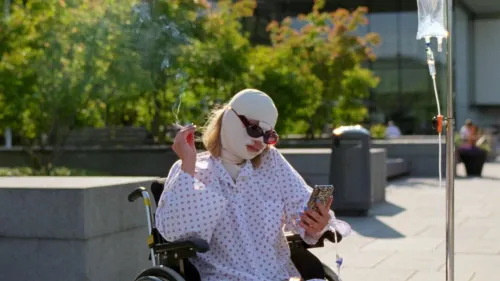
This taut chamber piece about NSA whistleblower Reality Winner (yes, that’s her real name) is based on the FBI’s account of her interrogation one June day in 2017. “Based on” doesn’t quite capture Reality’s exhaustive commitment to the facts, though, because this movie is essentially a dramatic reading of a verbatim transcript of the FBI agents’ recording that day. The only time it breaks with reality is when it reaches a redacted portion of the transcript, at which point characters glitch out of view, leaving us staring into the blank set around them. Otherwise, every cough, false start, and even every off-topic remark is recreated with exacting precision here, lending the film a paradoxically stilted, slightly stagy air. But rather than pull you out of the proceedings, Reality’s palpable artificiality only immerses us into the uneasy tension and surreality that its anxious protagonist must have been feeling that day.
That anxiety is contagious, thanks to the movie’s clinical style and central performance. The camerawork is largely unblinking, moving in uncomfortably close on Reality (Sydney Sweeney) as two FBI agents (Josh Hamilton and Marchánt Davis) subject her to their bizarre hot-cold interrogation, which ranges from seemingly friendly inquiries about her dog to jugular-aimed questions about the allegations against her. Sweeney shoulders all this pressure remarkably well, deftly keeping us as much in the dark as Winner tried to keep the FBI in — which makes not knowing the real story a benefit, rather than a barrier, to watching Reality.
Outside of Sweeney’s commanding performance, Reality feels somewhat limited by its absolute loyalty to the FBI’s transcript, though. Much of the film’s 83-minute runtime is dedicated to recreating the text, which leaves only a few minutes at the end for it to express its own point of view on Winner’s actions. Though these scant moments make for a compelling reframing of the charges against Winner, they feel overshadowed by and separate from the movie’s rigorous devotion to the transcript, which ultimately means Reality can’t quite transcend its status as merely an interesting filmmaking curio.
The Sweet Hereafter is the kind of movie that feels very different from the one you might imagine when reading the plot synopsis. The tragic accident at its center doesn’t form a dramatic crescendo as you might be primed to expect — and, despite revolving around a lawsuit, this is no courtroom drama. Instead, the ironically titled The Sweet Hereafter deals with the messy, difficult emotions that come with grief, survival, and blame in the aftermath of a bus crash, with the film largely taking place in a snowy Canadian town rent apart by the loss of nearly all its children in the accident. Ian Holm plays the out-of-town lawyer battling to unite the bereft parents behind a class action lawsuit, all while struggling to deal with the quasi-loss of his own drug-dependent daughter. Non-linear chronology means the before-the-crash and the after intermingle, scene after scene; it’s an unorthodox remix of the way we’re used to seeing this kind of story unfold, but it allows the movie to home in on the complexity of the community’s pain. Unsparing performances, haunting music, and meditative cinematography plunge us into it all, recreating the terrible iciness of grief in a way that is difficult to shake off.
The key to what makes this apocalyptic thriller from Mr Robot and Homecoming showrunner Sam Esmail so unnerving is how resolute it is about not taking place in an alternate timeline. Making references to memorable events in recent history and namechecking real brands and cultural touchstones (like Tesla and Friends), Leave the World Behind is uncannily familiar — which, when combined with the film’s meticulous crafting of tension, makes it all the more unsettling.
Though taking place amidst an ambiguous national emergency, the film is largely set in one house — a claustrophobic setting that puts the characters’ self-conceits and prejudices under a microscope and forces them to confront their own impotence in an analog world. If it all sounds a bit “we live in a society,” be assured that Leave the World Behind cleverly manages to avoid the pitfalls of seeming like a bad Black Mirror ripoff by sidestepping expectations and deploying all the atmospheric tools in its arsenal. Withholding key plot and character information to increase our own paranoia means the movie always runs the risk of disappointment when explanations are finally given, but its focus on the human drama and its well-set-up ending ultimately eclipse any niggling frustrations.
Before he developed his signature dollhouse visual style, Wes Anderson made his feature debut with this lowkey, heartwarming, and decidedly not-symmetrically-perfect comedy about a bunch of misfits. Bottle Rocket isn’t as much of an outlier in its director’s storied filmography as might initially seem, however. Written in partnership with college buddy Owen Wilson — who, along with brothers Luke and Andrew, made his acting debut here — the film is delightfully offbeat and unexpectedly moving in the way we’ve come to expect from Anderson.
Dignan (Owen Wilson) and Anthony (Luke Wilson) are two drifting, boyish twenty-somethings, although only Anthony seems aware of his directionlessness, as Dignan has graciously developed a 50-year life plan for the two of them (complete with hilariously vague bullet-points such as “Make wise investments” and “Own multiple accommodations”). The means to these ambitious ends is a life of crime — specifically, pulling off grand heists. But Dignan’s meticulousness hasn’t accounted for distractions, and his madcap scheme falls at the first hurdle when Anthony falls in love with a housekeeper at the motel they hide out in (Lumi Cavazos). Their sweet romance is one of the film’s many delights, as is its barrelling deadpan humor, which never betrays the warmth of the Wilson brothers’ heartwarming depiction of ride-or-die friendship.


x2
x18