The Best TV-MA Movies to Watch (Page 3)
Put the kids to bed before you go through this list of great titles to stream. These are the very best movies and shows with a TV-MA ratings, intended for mature audiences only.
To access filters, visit our homepage.
In Shrinking, Jason Segel plays Jimmy Laird a newly-widowed therapist who’s trying to make amends with his loved ones after isolating himself for so long. It sounds depressing, but Shrinking has the delightful buoyancy of a show like Ted Lasso (which makes sense given that they’re created and directed by the same person) and even Trying, that other Apple TV+ show that masterfully balances seriousness and silliness. Like them, Shrinking is warm and affecting, but it has one undeniable advantage: Harrison Ford. Ford plays Segel’s boss, and if you aren’t onboard yet, Shrinking is definitive proof that Harrison is actually, objectively hilarious.
Full of twists and turns, Queenmaker is a corporate turned political K-drama where a corporate fixer plays campaign chess against her former employers and retail conglomerate the Eunsung Group. Centered on her and the earnest human rights lawyer she’s trying to get elected, the show has Do-hee mentoring Kyung-sook in the art of PR, this time for the good. Even as the show reuses the genre’s classic tropes, the series’ plot points are entertaining, with each new twist naturally occurring as each side tries to dig dirt on the other and use it for political clout. It’s one of the most intriguing K-dramas we’ve seen this year.
Viewers are familiar with cuisines around the world such as the food from France, Italy and Japan, but now it’s Filipino cuisine that takes the spotlight. Replacing Chef Chico portrays different Filipino dishes in each of its eight episodes, but these meals are great side dishes to sous chef Ella’s journey in managing the Hain fine dining restaurant. Alongside this journey of self-discovery comes heartwarming stories from the Hain restaurant’s customers, the receptionist’s cheeky commentary, and sweet tracks from Leanne & Naara. They all mix into a lighthearted, if a tad bit familiar, cooking drama series, and it does so with the breezy and calm attitude of lead character sous chef Ella.
The bizarre case of Kathleen Peterson’s death, which has yet to be fully resolved to this day, has been the subject of many a media article. The press covered it relentlessly when it all started in 2001, then a critically-acclaimed documentary was released in 2004. This was followed up with a sequel in 2018, and now more than 20 years after the deed, a dramatization has come out in the form of a miniseries. You’d be forgiven for thinking the latter couldn’t possibly have anything new to offer, but you would also be wrong. In fact, the series is a masterclass in storytelling. Led by an a-list cast (of which Colin Firth is the absolute standout) and told with such layered depth, The Staircase is a must-watch not just for true crime but for film and TV fans everywhere.
Utilizing time jumps and crafty transitions, The Staircase isn’t set at one particular time, which is fitting considering the trial lasted for 16 years. It also isn’t centered on just the mystery or the family, but instead is just as interested in the making of the 2004 documentary that introduced (and humanized) the case to an even wider sect of people. If you’re looking for a neat ending or some form of satisfying retribution, you won’t find it here. But you will be getting an engrossing meditation on truth and its elusiveness
From poaching elephants and smuggling sandalwood to killing people in the most ruthless manner possible, Koose Munisamy Veerappan’s crimes are manifold, and they engulfed all of Southern India. The first half of this four-part series chronicles his early life and the escalation of his criminal affairs through talking heads and archival footage. The documentary balances the perspective of the authorities with that of Veerappan’s gang in interesting ways; where officials saw him as cunning, people close to him, like his wife Muthulakshmi, praised his desire to create wealth for his people, regardless of caste. By the end of the pilot, you’re sure to be at the edge of your seat as the series raises the stakes and promises to be as challenging and compelling as the first episode.
Child kidnapping is any parent’s nightmare, and it’s the nightmare that drives the events of Spanish crime thriller The Snow Girl. Based on the 2020 novel of the same name, the limited series takes a unique double-pronged approach to the case at hand. The show goes through the regular police investigations we’ve seen previously, but it also comes mainly from the perspective of journalist Miren Rojo, whose previous trauma understandably limits her trust with the authorities. As the show moves the story from New York to Malaga, and switches between perspectives, and timelines, The Snow Girl adeptly maintains the novel’s original suspense, without over sensationalizing the crime at hand.
The Fall of the House of Usher isn’t an exact one-to-one television adaptation of the titular short story. Instead, the original story from Edgar Allan Poe is used as a frame to introduce a whole Succession-like miniseries, with names and subplots coming from other stories from Poe. Because of this, fans of the author might feel disappointed at the lack of old gothic flair, as the story is set a whole century and a half after, and the tone shifts as the show shifts from character to character. However, Mike Flanagan’s whole ensemble still proves to be entertaining as the Usher family deals with sci-fi mishaps, internal sabotage, and a possible supernatural element haunting the whole brood.
With games creating whole virtual worlds, with stunning landscapes, powers, and storylines, it’s easy to escape into the fictional simulations, to the point of being addicted. Good Night World reimagines this idea in the present as a family drama, where video game addict Tachiro Arima struggles to relate with his family because of his addiction. As the show progresses, the game integrates with the real world, with real life-threatening consequences, but the show slowly uncovers how this game unraveled the Arimas’ family bonds, through neglect, depression, and shared trauma. It’s an interesting series about connection and video games, if you can get into the world of the series.
With its first episode, The Changeling might feel less scary and more romantic and historical than how a horror fantasy would seem like. The series shifts in and out of flashbacks, sometimes even having a flashback within a flashback, with dreamlike sequences that makes it take a while to figure out when and where the story is taking place. This causes the series to have some unusual pacing that might turn off viewers wanting a quick scare. But there’s a certain mystery to it, a certain anxiety captured as Apollo and Emmy disobey the Brazilian witch, as it recalls those negligent parents in familiar fantastic fairy tales. And as the series makes their flashbacks, there’s a certain fear that Apollo and Emmy might redo the same mistakes their immigrant parents have done before them. It makes for an intriguing take on the novel by Victor LaValle, one that captures a realistic fear that isn’t easy to depict.
In Love All Over Again has many of the romance tropes fans of the genre would enjoy. The star-crossed lovers, the gay best friend, the absent-minded but well-meaning parent, and the classic romance drama jobs are present in the series. However, unlike other series, the show literally starts off with a bang. The main couple don’t get separated because of toxic dynamics or tragedy, but literally because of the 2004 Madrid train bombings. But this isn’t just a one-off event, it’s the event that shifts Irene’s life forever, as she tries to heal and process the event as best as she can. Some of the series’ plot points may not be new, but it’s sincere in examining how that event affected people’s lives, without being overly dramatic. The resulting series is sweet and it captures the Y2K nostalgia that’s currently en vogue.
Mask Girl is a dark comedic thriller that follows people on the fringes of beauty norms trying to live with their pain and shame. Low self-esteem and a desire for attention are at the center of the drama, making it relatable and easy to empathize with even when everything goes awry. Although Mo-mi, the titular Mask Girl, is at the forefront of the narrative, subsequent episodes switch to new perspectives, allowing us to interact with Mo-mi in different ways. And with each new character’s POV, we witness how other ostracized people find comfort in and hurt each other when there’s no one else to turn to. The first three episodes are intense and surprisingly violent, but ultimately seeing the extremes of the discrimination that beauty standards perpetuate makes the story worthwhile.
Even without doing the important and long overdue work of uplifting Native American voices, Dark Winds manages to be an intriguing mystery, layered with complex performances and bolstered by the majestic expanse of the American Southwest (in the ‘70s no less!). Finally released from the shackles of supporting roles, Zahn McClarnon shines here; he’s in top form as the gritty but softhearted police officer who protects his tribe from encroaching federal forces. The mysteries that propel the show are compelling too; they have the same beats as any you’d expect from a crime thriller, but they’re seeped deep into Native American mysticism, making them intriguing and wholly unique.
Any parent would defend their kid in court, though, sometimes it depends on the case. A Nearly Normal Family brings one such Swedish family through a case, as their nineteen year old daughter is accused of murdering a man, four years after the family decides not to prosecute their daughter’s rapist without evidence. The thriller series unfolds into a compelling murder mystery, as the show plays with the family members’ different perspectives that expands and continues the show’s intrigue, even if you think you have it all figured out. And as the investigation continues, the family’s secrets slowly get unveiled, threatening to break the Sandells apart, with their conflicting morals and unresolved trauma. While some viewers might not appreciate the slow burn, it’s an interesting crime thriller-family drama mix that questions how far we’re willing to go for our loved ones.
Fear and paranoia are the hallmarks of plenty of thriller series, but Who Were We Running From? takes this paranoia on a whole other level. Based on a 2007 novel, the Turkish mystery series is centered around a mother-daughter duo with a codependent relationship. Flitting from hotel to hotel, what’s normal for Bambi is an unhealthy bond with her mother, to the point where they personally believe that it’s them against the world. Yet, on some level, as they attract scrutiny, this paranoia feels almost justified. Through cinematic visuals, contrasts between them and everyone else, and near silence from the mother’s perspective, Who Were We Running From? creates a compelling mystery that stands out from other crime series available on the platform.
The real-life Tapie may be more or less interesting than the Tapie Laurent Lafitte brings to life in Class Act, but that doesn’t really matter. The series introduces the French tycoon as if he were a completely new character, which is helpful to those of us going in the series blind. There is drama, there is scandal, and since Tapie is so tied to French life, there is also history. But more than anything else, there is business. Tapie is by no means perfect, but he is a smart businessman, and Class Act’s sharp and strong writing brilliantly conveys the addictive highs and soul-crushing lows of commerce. Narrative cliches are inevitable, but that doesn’t make this well-crafted series any less enjoyable.
Grief can make you see things you don’t normally see. For most people, it means seeing your life in a new way, but for Alex in The Last Night at Tremore Beach, it means seeing terrifying visions of a future that he must figure out how to stop. It’s an interesting idea, especially as it contemplates the way we also grieve over lives not lived, but the Spanish adaptation of the Ireland-set book takes a long time to get there, taking such a slow pace that can try plenty of viewers. Still, with a bit of patience, the show eventually unfolds to a twisty mystery thriller with excellent shots and impeccable sound design. While less scary than expected, The Last Night at Tremore Beach nonetheless is worth watching, especially for fans of the supernatural mystery.
It’s one of the oldest problems in the history of mankind: can men and women be friends? Romantic comedies, since their inception, have tried to answer this question in various quirky ways, and almost always, the answer is a resounding no. The two leads must end up together because the chemistry is too strong, and besides, love can only end in romance. Right? Platonic is one of a handful of shows that knows there’s no straightforward answer to that question. It’s thoughtful and nuanced as it subverts rom-com expectations and refuses to rush into a template happy ending. Even more impressive is the fact that it gives us a hefty dose of reality while still being light-hearted, funny, and charming. Whether that’s thanks to the easy chemistry between Sylvia and Will (played by longtime collaborators Rose Bryne and Seth Rogen) or to the refreshing experience of having a familiar dilemma be treated with newfound profundity, there’s no doubt that Platonic puts a fresh new spin on the genre.
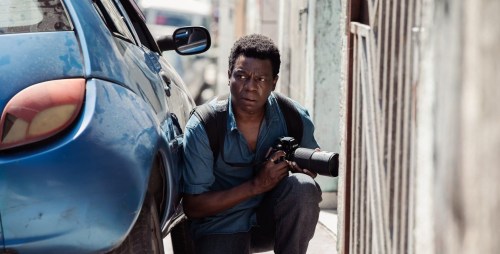
The Kings of the World is a surreal coming-of-age movie that follows Rá, Culebro, Sere, Winny, and Nano, street kids who are on their way to claim land that’s rightfully theirs. Their one goal is to finally make a home after living without one for so long, but they’re hindered by the inevitable tragedies that befall kids of their kind: impoverished, alone, and abandoned.
The title is ironic, but it also hints at their state of mind: these boys are unstoppable, rabble-rousers who live like there’s no tomorrow. They tear down private property and invade inns not out of spite, necessarily, but out of a knowledge that whatever they do they’re gonna be put down anyway, so they might as well live without rules.
Tackling powerful themes like land restitution and youth neglect, The Kings of the World is one of the most agonizing movies you’ll ever see. It’s also Colombia’s official Best Foreign Language Film entry in the 2022 Academy Awards.
With Sweet Home and Stranger Things, we weren’t surprised that Netflix opted to create a live-action Parasyte, but we were surprised it comes from the other side of the sea. Based on the iconic Japanese manga, Parasyte: The Grey is a Korean spin-off with different characters but the same titular aliens, with a more serious approach to the concept. The series alternates between the Grey Team, the leading government agency that aims to eradicate the alien parasites at all cost, and with Jeong Su-in, who, like the original Shinichi Izumi, co-exists with her parasite, as they try to figure out their strange existence. Fans of the original might be disappointed at the lack of humor, but some viewers might appreciate the unflinching, gruesome way The Grey deals with the parasitic nature of human society, as well as the gross and scary transformations these aliens make of their hosts.
Knowing better than to dwell on its title character’s early life in bondage, Lawmen: Bass Reeves grants him his freedom early on and establishes him as a man of inherent dignity and complex emotion. Even in the first two episodes watched for this review, Reeves (thanks to a stellar performance by David Oyelowo) is defined by a wide range of relationships and skills—all of which is unified in the character’s realization that emancipation has not automatically led to peace, and that America remains a relatively lawless land. It’s all handsomely mounted, with high production values and a willingness to breathe through quiet moments that give its somewhat obligatory western action the gravity it needs.
Continuing on the 2021 film, which in turn, was the prequel to the Belgian-Dutch series Undercover, Ferry: the Series now delves into the titular mob boss’ start of his ecstasy empire. While the drug lord was suitably menacing in Undercover, Bouman in his beginnings is broke, trying to create bigger deals that would allow him to continue sustaining his small-scale drug pushing, and personally bumping with the cops in some botched buyings. As the future kingpin deals with day-to-day mishaps, there’s an old-school, lightly comedic tone as Bouman tries to gain the same respect he’ll get in Undercover. It makes for a goofier and less serious side on the all-too-familiar organized crime plotlines, and makes it a fun series to watch.
Despite the abundance of true crime dramas, A Friend of the Family stands out because of how effectively frustrating (and, at times, nauseating) it is to watch. Broberg is abducted more than once in plain sight, and during the investigation of her case, officers encounter dark secrets and sick twists made even more unbelievable by how seemingly perfect the families involved are. Of course, the shocking true events are one thing, but the way they’re told by creator Nick Antosca and reenacted by a stellar cast that includes Anna Paquin, Colin Hanks, and Jake Lacy transform the horrifying true story into a disturbing work of art. Completing the picture is the show’s commitment to replicating the era as accurately as possible. Everything from the title cards, needle drops, costume, and color grading works to immerse you into the distinct world of 70s suburbia. Even the Peacock symbol was given the 70s treatment, which says something about the show’s dedication to the minutest details.
Reporting for Duty is a delightfully chaotic workplace comedy that seeks nothing more than to entertain, and it fulfills this mission by packing each of its 30-minute episodes with lovable characters and silly plotlines. This alone makes it worth the watch, but it has layers to it that give it more heart and nuance than you’d initially expect. For instance, both the show and the precinct are led by the soft-hearted Suzano (Leandro Hassum), who proves to his team that you don’t always have to be tough and violent to get results. His presence also inspires the precinct to adopt a wider perspective and appreciate life outside the grind-and-hustle culture expected of them. To be sure, Reporting for Duty is a breezy, lighthearted watch, but I appreciate the underlying ideas that fortify its comedy.
Demons don’t seem to have the same scariness that terrified previous generations. That’s because there are more immediate, realistic horrors that can possibly happen, like other people. My Demon takes a humorous approach to this diminished reputation, as the titular demon has his powers transferred to a modern day capitalist. Without these mystical powers, Jung Gu-won falters hilariously while collecting the souls he needs to obtain, while Do Do-hee remains confused as she’s dragged along to his shenanigans. All the while, they have to deal with corporate sabotage, the risk of spontaneous combustion, murder plots, and of course, the connection Jung and Do need. After all, who’s a better match for a demon than a capitalist?
With the show transporting us straight into its colorful alien world without context, The Second Best Hospital in the Galaxy may not be the best animated sci-fi comedy out there, but it’s fairly entertaining once you get into it. It’s a strange amalgamation of genres, as the workplace issues and medical technobabble are made much more colorful, wacky, and fun with its alien sci-fi, but the show mostly works through the empathizable characters, led here by the comedic personalities of Stephanie Hsu and Keke Palmer. The Second Best Hospital in the Galaxy is not quite out of this world, but if you’re a fan of American animated sitcoms, this might be right up your alley.
Domestic abuse is a delicate matter, and onscreen depictions always run the risk of being either too sensational or mopey. The Lost Flowers of Alice Hart, thankfully, is neither. It sensitively and creatively tells the story of Alice and all the other survivors who June shelters on her flower farm. More than just decor, these flowers serve as a lifeline to the girls: not only do they grow and sell them to earn a living, but they’ve also made a special secret language out of them. Different blooms mean different things, and when you live in a world where your pain is systematically ignored, it makes sense to communicate in hiding. Granted, the Lost Flowers of Alice Hart can get overly dramatic at times. Some plotlines include hiding who the child’s real father is and fighting to get custody of said child. But it’s unfair to dismiss the series as mere melodrama. It’s doing important work by shedding light on the manifold ways women are mistreated, and it does so in a commendably original and artful way.
Detective Forst isn’t a mindbending, totally original crime thriller that would revolutionize the detective genre, but sometimes we just want something familiar. The thriller adaptation of Remigiusz Mróz’s book series mostly sticks to the classic tropes, with eerily strung up bodies being investigated by the gruff, hardened detective, portrayed well by Borys Szyc. It’s not immediately clear what brought Forst to the mountains– whatever it was, it’s enough to gain the mistrust of his new station, and it’s possibly the reason behind his splitting migraines– but that’s part of the fun, as an additional mystery alongside who is behind the murders. That being said, the show plans to depict a whole series, so the ending of its first season might exasperate viewers who just want a complete story. Still, with the striking scenery of the Tatra Mountains, Detective Forst is at least stunning enough to watch, even with all the moody murder mystery tropes onboard.
Daisy Jones & The Six is riddled with rock and roll clichés—sex, drugs, and alcohol abound—but the series has enough strengths to save it from sheer banality, the most prominent of which is the music. The original songs, performed by the actors themselves, are genuinely good. They’re true to the times and recall the likes of Fleetwood Mac and Buffalo Springfield, but they also sound fresh, modern, and invigorating. The showrunners seem to know this since each performance, whether onstage or in-studio, is given ample focus in each episode, and the show is all the better for it.
Aside from the stellar music, the show also has chemistry and production quality going for it. Riley Keough and Sam Claflin as the Stevie Nicks and Lindsey Buckingham of the fictional band are fiery and magnetic, while the authentic setting feels like an old polaroid come to life.
Daisy Jones & The Six might not be for everyone, but if you enjoy musical dramas and nostalgia trips, then the show is a sure banger.
Released just a few weeks after Amazon Prime’s three-parter on the same subject, Netflix’s Escaping Twin Flames focuses on the victims of the cult, their recovery, and how some of them are making amends for the harmful things they’ve done while part of the cult. Director Cecilia Peck is a careful storyteller, balancing cold hard facts with heavy emotion so that the overall tone is respectful and never overly sentimental or sensational. Notably, Peck doesn’t shine too much light on the perpetrators themselves, Jeff and Shaleia Ayan, but this leaves plenty of room for the victims to share their manifold stories. The three hours pass by swiftly, and the build-up to its heartbreaking end feels very much earned.
Self-proclaimed scumbag Sam Lipman-Stern opens the series by explaining how long he’s wanted to make a documentary on the telemarketing company Civil Development Group (CDG). What follows is a massive deep dive into how the CDG used lies and a happy-go-lucky/free-for-all work environment to scam everyday people out of money for a non-existent charity. The first episode covers much of CDG’s background with footage of the dysfunctional office and its rowdy (mostly high and drunk) workers who manage to get their work done. The tone is somewhat jovial as you watch these people reminisce on having fun despite the lawsuits, changing scripts, and constant calls. But as it draws to a close, with Lipman-Stern and Pespas determined to bring down the telemarketer industry, we’re left with a warning that CDG isn’t their biggest villain.
Stories about cults have fascinated viewers because of how absurd their ideas can get… And how easy these ideas can lure in lost and broken people. Plenty of these cults tend to stick with ideas that sound similar with the world’s major religions, but not many claim to be able to clone humans. Raël: The Alien Prophet plays out like the regular cult playbook, with a regular man suddenly amassing riches, power, and fame through charisma, and abusing his followers to obtain more, but the show keeps the viewers’ interest by primarily focusing on what sets the movement apart: the aliens and the human cloning.
The way we are introduced to sex does shape the way sex features in our lives, whether that be an unintended glimpse into the wrong room, or an accidental encounter to NSFW media, or a proper discussion towards sex. Being inspired by, but not entirely accurate to the life of prolific Italian porn star Rocco Siffredi, sex is central to Supersex not just as his job, but as the way his family, relationships, and his concept of love is irrevocably affected by it. It’s fixated on sex, yes, but showrunner Francesca Manieri stirs the discussion not towards how hot it can be, but towards the various ways sex affirms and negates his masculinity, as well as the conceptions that determine that, and how it can slip into vice rather than healthy pleasure. There are moments where the series falters, particularly the way it depicts internalized homophobia, but overall, Supersex is a well-meaning exploration of sex work and masculinity.
While it’s becoming increasingly difficult to stand out among a throng of Netflix True Crime specials, Till Murder manages to hold its own by squarely and concisely centering on the main conflict: Soering vs. Haysom. It’s his word and against hers, his show of love and logic versus her natural charm and charisma. Was he a hopeless romantic who was manipulated into slaying the two people he thought tormented his beloved? Or was she the victim of a murderous and obsessive boyfriend who couldn’t stand the thought of anyone else owning her? The framing, while simplistic and a tad sensational, helps in quickly grabbing your attention and holding it for all four hours.
Based on true events, A Spy Among Friends tells the story of Kim Philby (Guy Pearce) and Nicholas Elliot (Damian Lewis), best friends who worked for MI6, that is until Philby defected to the Soviet Union. Subject to inquisition and intense scrutiny, Philby and Elliot test the strength of their friendship against growing political turmoil.
The series starts slow and the dialogue, while smart, can get heavy-handed. But if you give it some time, the payoffs are rewarding. The sets are immersive as it spans different eras and countries; the actors are charismatic as they present enigmatic layers for us to unfold; and the particulars of espionage manage to feel freshly shocking in a story told many times before.
Artful, well-performed, and gripping, A Spy Among Friends is a great watch for fans of voluble but intelligent thrillers.
With a ludicrous amount of cash, and one of the perpetrators escaping into a luxurious European life posted on Facebook, it’s no wonder Netflix decided to create Baby Bandito. The source material practically writes itself, and it’s easy to fictionalize some details for added drama. The show does this, turning the original robber into a well-meaning skateboarder Kevin Tapia that steals the plans of a mob in order to escape his rough neighborhood, but some of the characterization falters, specifically when it involves his girlfriend Génesis. There are moments it goes into generic territory, but the series is certainly well-shot, full of charm, and daring in the way it focuses more on the consequences rather than the heist itself.
Bernie Madoff, the former financier turned fraudster, is a monster. As the mastermind of the largest Ponzi scheme to date, he stole billions from unwitting investors and almost singlehandedly contributed to the economic downturn of the late aughts. But before he was discovered and committed for his crimes, Madoff was beloved and brilliant—a living legend not just on Wall Street but in the world. Using a mix of reenactments, archival footage, and expert testimonies, this four-part docuseries dissects Madoff to reveal and even explain the history and possible motivations behind the man.
As true-crime series go, Madoff: The Monster of Wall Street is riveting and enlightening, paced in such a way that will have you gasp intermittently even if you’re no stranger to his story. Madoff is humanized here but never romanticized or lauded, making it a fair but moving watch at once.
Bookie’s very premise is funny: it follows old-school bookmakers Danny (Sebastian Maniscalco) and Ray (Omar Dorsey) as they manage bets via phone calls and actual visits to their clients’ (swanky) whereabouts. They have to do all this the hard way because, in Los Angeles, gambling has yet to be legalized, so the sneaking around makes for an entertaining watch. In true sitcom fashion, their increasing bad luck equals more zany misadventures, but there’s a grimness and darkness to it too as Bookie explores the struggles of Danny and Ray’s paycheck-to-paycheck living. They feel like real people, people you can bet on to have a good time.
A parody of the true crime industry, Based on a True Story is as dark as a comedy can go. It follows Ava and Nate (Kaley Cuoco and Chris Messina), a couple who, in an attempt to save their marriage and bank accounts, partner up with serial killer Matt (Tom Bateman) to create a podcast about Matt’s killing sprees. It proves to be a hit in murder-obsessed America, but Ava and Nate soon realize that their success comes with a bloody price.
Based on a True Story is the type of show that has a lot of fun trying on different hats—all at once, it’s a satire, thriller, horror, and romance—and though it’s not always successful at balancing them out, there’s something addictive about watching it try. Even when the constant tonal shifts and murky morals threaten to tear the show down, you can’t bring yourself to look away. This is mostly thanks to Cuoco and Messina, whose dynamic chemistry and live-wire performances all but prove their status as sitcom veterans. Bateman is also effectively terrifying, able to maintain his killer guise amidst ever-shifting genre backgrounds.
Often, the show treads the fine line between making light of and shedding light on violence in modern-day America. But the risk pays off, making it a killer watch for anyone willing to give it a try.
Song of the Bandits takes time to gain momentum, but when it does, it crackles like gunpowder. The first few episodes take great pains to explain occupied Korea’s complicated political situation (China, Japan, and a few Western bodies fight over its resources), and unsurprisingly, Song of the Bandits champions the motherland’s cry for independence. It’s a very patriotic show that doesn’t leave a lot of room for other sides, often even bordering on melodrama in its calls for justice, but that should be expected in any war-set story. Once it gets into gear, however, it delivers all the thrills you’d expect from a neo-Western. There’s a lot of gunslinging, backstabbing, espionage, and sure enough, bandits chasing a loaded train on horseback. Depending on where you stand, it also comes as a satisfying revenge thriller, one that distorts history to give this fictional Korean rebel army their due. It’s a bit like Inglorious Basterds in that it follows a paramilitary group comprised of offbeat but vicious characters, but I’d say it’s mostly similar to another Netflix history K-drama, Mr. Sunshine. If you like either (or better, both), then you’ll love Song of the Bandits.
Glamorous could easily fit in the 2000s-era boom of workplace romantic comedies. Like Ugly Betty and The Bold Type before it, it follows a group of fashionable twenty-somethings hoping to climb the corporate ladder with their ideals intact, all while trying to impress their diva of a boss, who guides them with a sparkling iron first. But Glamorous is also very much of its time. Instead of a white heterosexual woman, a queer person of color leads the show. Marco is a new hire in a legacy business, and his youthful presence and acumen inspire the company to take bigger risks in capturing the Gen Z market.
Interestingly, Glamorous skips a lot of tropes that used to be par for the course in queer narratives—in this post-Glee world, gay people are no longer anomalies, so you won’t find a lot of the usual coming out and fitting in stories here. This, in turn, leaves a lot of room for the show to tackle newer issues, like how the gay community is painfully divided between masculine and feminine types (Marco’s frequent nemesis is Chad who, while openly gay, is hypermasculine and disapproving of Marco’s “Yas Queen energy”), or how corporations capitalize on queer markets (one of the best episodes in the series hilariously explores the icky gray area corporations enter whenever they launch pride campaigns). It’s easy to dismiss Glamorous as fluff, but it’s actually much smarter and more relevant than it seems.
Directed by Steven Soderbergh (Oceans trilogy, Erin Brockovich, and more recently, Kimi), Full Circle is a twisty and stylish noir that takes a while to grasp, what with its epic ensemble and sweeping storylines, but once that first thread of connection is made, it becomes a series that’s very hard to leave. Each episode leaves you excited for the next, which in turn ups the ante even more. Soderbergh is in his element, and aided by a stacked cast of veterans and newcomers alike, he turns in a series that’s expertly tense and watchable throughout.
While this spin-off of Netflix’s previous Castlevania series doesn’t have the most interesting take on vampires, Nocturne’s stellar action scenes and its use of the French revolution as a historical backdrop are enough to give it a personality worth keeping an eye on beyond the first two episodes watched for this review. There isn’t all that much plot in these early installments, and neither are there memorable vocal performances that really capture these characters. But when the show has to be grisly and exciting (which is often), it hits the stake on the head. And even in its more static moments, the vampire characters cast a large shadow over everything, appearing exactly as seductive and monstrous as they’re meant to be—just like the aristocracy they’re meant to represent.
After wars and revolutions, there tends to be the nostalgia of the “good old days”– days before the terror and violence have completely and irreparably changed one’s course, whether that be of one’s life, or that of a whole country’s. A Gentleman in Moscow displays that same nostalgia for aristocracy and their way of life before the October Revolution, with Rostov remembering the old days through the classic aspect ratio. It’s a decently made show, and it’s helped by casting Ewan McGregor, who brings the same sort of whimsy he brought to Christopher Robin, and the impeccable soundtrack from Federico Jusid. It’s also helped by expanding the role of Anna Urbanova, performed by Mary Elizabeth Winstead. But this nostalgia feels a tad out of place, considering that nothing about the show, except perhaps some of the score, has been created by any Russian, or those that descended from the Russian immigrants that wanted a different life from the Bolshevik regime.
It’s ironic that Pete Davidson is the least interesting part of Bupkis, an autobiographical series about the ins and outs of Davidson’s life. The half-hour comedy takes on the same raunchy, stoner, and self-deprecating humor Davidson is known for, so if you’ve seen some of his stand-up specials, SNL segments, and the film The King of Staten Island (a much better outing, in this writer’s opinion), you’ll know what to expect in Bupkis: a lot of Davidson revisiting his childhood trauma and poking fun at himself for being the internet’s reluctant star.
That’s all fine and funny enough, but what really makes Bupkis much better than your standard sitcom is the people around Davidson. If you can appreciate anything about Davidson, it’s his appreciation for the people most others would usually forget after fame. Hometown locals, childhood friends, extended families—they’re all here and they all shine much brighter than the series’ star. Brilliantly, Joe Pesci plays Davidson’s grandfather, Edie Falco his mother, and Bobby Cannavale his uncle. They’re fully fleshed and superbly acted, bringing much-needed tenderness and humbleness to the picture. It’s a pleasant surprise to see them in a series that is teetering on the verge of self-indulgence. So with Bupkis, you can come out of curiosity, but you will stay for the supporting characters, who truly live up to their role and hold this show up with mighty skill.
As one of the biggest political scandals in recent memory, Watergate has had its fair share of film and TV adaptations. But while plenty fixed their eyes on President Richard Nixon and his men, only a handful focused on the surrounding but equally vital participants. Gaslit seems like an attempt to fix that—it’s a political thriller that looks at the affair’s forgotten players and examines how their seemingly trivial actions formed ripples and grew into the massive wave that brought a presidency to an end.
One such player, the main one in this limited series, is Martha Mitchell, played to jumpy perfection by Julia Roberts. Previously dismissed as a hysterical gossip, here Martha is finally given her due as a political whistleblower. Sean Penn, Shea Whigman, and Betty Gilpin make up an all-star cast, but along with Roberts, it’s Dan Stevens who really steals the show. He’s a chameleon as junior counsel John Dean, deeply immersed in the character’s confused but well-meaning intentions.
Another thing that sets Gaslit apart from the others is its self-aware humor. It has a bumbling quality to it—where others replay the infamous break-in with solemnity, Gaslit pokes fun at its absurdity. It’s a series that knows when to be serious and when to dole out the jokes, making it a finely balanced and refreshing political drama.
With the popularity of the Villenueve films, it’s no surprise that Warner Bros. Discovery would want to expand on the Dune franchise. Because of this, they decided to make HBO’s Dune: Prophecy– a mini-series centered around the mysterious Bene Gesserit. It’s an interesting premise, with the group’s strange supernatural powers, and it makes sense for HBO, too. After all, they love to make shows centered around power plays, deception, and the upper class. So it’s not surprising that Prophecy is more-or-less the same, albeit sandy and sci-fi flavored. There are some anachronicities to the series– after all, technology ten thousand years from the Dune movies should feel a bit more different– but Dune: Prophecy is not terrible, especially with the excellent performances of Emily Watson and Olivia Williams.
Often overlooked, overshadowed, and overwritten, the contributions of Black women in the 50-year history of hip-hop are seldom celebrated. In the four-part series, the hip-hop legends (Sha Rock, Roxanne Shanté, Queen Latifa, MC Lyte) all the way to the current stars of the genre (Tierra Whack, Saweetie, Chika, Latto) break down the history and hardships of being a woman in hip-hop. From misogynistic treatment and predatory contracts to the reclamation of sexuality and autonomy, the docu-series covers a broad enough spectrum to be an introduction to the women at the forefront and cornerstones of the beloved genre. The tone is positive and uplifting, building an overall bright sisterhood vibe that never breaches the more tumultuous in-fighting/policing and equally influential controversies. This isn’t necessarily bad but is, instead, limiting for viewers that won’t dig deeper. But in the spirit of celebrating, this series gives these women their flowers, pays homage to the pioneers, and shine a light on the future of hip-hop that fights for inclusivity, representation, and equality.
A man living in the countryside, going through a fairly mundane but happy life, until his violent past comes back to take it away… It’s a familiar story, one that studios keep returning to time and time again. Newcomer studio E&H Production has taken this story for Ninja Kamui, but with Jujutsu Kaisen’s director Sunghoo Park at the helm, the trope isn’t used for a safe bet– instead, it’s a great choice to showcase what the studio can offer. The action sequences feature his signature flair, with stunning detail, excellent choreography and point-of-view shots that place the viewer in the fight themselves. That being said, it’s also Park’s first time on an original work that isn’t an adaptation, or inspired by an already existing franchise. The show still needs to build up its world and the emotional stakes around Joe Higan, but so far, Ninja Kamui is a pretty decent introduction to Park’s new studio.
Upon first watch, it’s easy to relegate Fallout to the heap of video game adaptations that are all show and no substance. There’s the Twisted Metal adaptation that came out with zero fanfare earlier this year, and the Halo series that continues to divide fans and critics alike. Thankfully, Fallout escapes that curse: it’s genuinely good, not because it strains itself to remain faithful to the source material, nor because it strays too far, but because it builds on the existing world with plenty of imagination and original characters. These characters are complex, too, with conflicting morals that are challenged in interesting ways. Lucy is a principled do-gooder, but whether that’s because of her nature or privileged circumstance is continually questioned in the Wasteland. Maximus is a brave warrior you want so badly to root for, but his end-justifies-the-means approach complicates that urge. But probably the best thing about Fallout is its incisive commentary on the evils of capitalism. “The future is management” and “We are all products” are genuinely scary themes that could lead to the end of our world too.
We Own This City is a six-part miniseries following the ins and outs of the Baltimore Police Department’s Gun Trace Task Force. Hailed by critics as the “spiritual successor to The Wire” (both shows were developed by David Simon), the gritty crime drama works as a smart and gripping exposé not just of the Baltimore police department, but of big and flawed institutions, in general, and the seeming inherence of corruption. The series is based on the book We Own This City: A True Story of Crime, Cops and Corruption by Baltimore Sun reporter Justin Fenton.
With stories like Gone Girl and the true crime boom of the 2010s, it’s easy to believe that these depictions are harmless– fake crime stories are fictional, after all, and surely, it’s important to discuss real crime in order to prevent it. New Netflix docu-series American Nightmare portrays a real life case itself, but it questions the impact these stories have towards real life. It depicts what used to be called the “real life Gone Girl” kidnapping, whose investigation and media speculation was colored by these stories, which hindered Huskins’ rescue. The case eventually led to the real culprit, but American Nightmare challenges the viewers themselves, as it stretches the case across three episodes, portraying each angle in the true crime flair we’re used to speculating with.
The success of Average Joe’s humor lies in showing how ordinary people realistically react to extraordinary events (in this case, being hunted down by the Russian mafia). Joe and his friends are blue-collar workers who barely make ends meet, so it makes sense that they won’t immediately know expert self-defense. They’re no John Wick, they don’t have combat skills hidden up their sleeves. And even with a police accomplice, they wouldn’t know how to hide bodies and launder money. But they’re forced to try, and those attempts are as clumsy as they are darkly funny. One of Joe’s friends fumbles over a body part they try to hide and vomits at the sight of blood. Meanwhile, his wife comes up with all sorts of uncanny solutions, like slathering peanut butter on dead bodies to attract hungry animals in the woods. The tonal shifts can be jarring sometimes, but the show is consistently funny and frightening. It’s also just refreshing to see everyday people go through all the fuss action stars do. What would we really do when placed in their shoes? Joe and his friends are just like us, but funnier and way more prone to gore.
This six-episode whodunit isn’t breaking any new ground, but it’s entertaining and engaging, especially with the rebellious Lidia Poët (Matilda De Angelis) as the lead. She’s smart and determined but not wholly immune to weaknesses—a sort of Enola Holmes for the more mature crowd. Her story is also a timeless reminder of the uphill battle women have fought (and are continuing to fight) for visibility and equality.
The familiar setup might also work for classic mystery fans. It’s a treat to dive into each episode knowing a new case is to be solved and a new lesson to be learned. The ending might be predictable at times, but this is one of those shows where the journey matters more than the destination. Italy in the early 20th century was a surprisingly restrictive and patriarchal society, making Lidia’s successes all the more noteworthy and resonant.
After having just lost her sister Holly, Sam (Bridget Everett) is in a bit of a midlife crisis. Work feels meaningless, singing doesn’t bring as much joy as it used to, and her family isn’t exactly the most supportive bunch out there. When a colleague introduces Sam to his friends (a lively, welcoming group of choir singers), she slowly regains hope and even confidence to start a new life in her 40s.
Produced by the comedic Duplass brothers, Somebody Somewhere finds joy in everyday life. Office gossip provides respite at work, local talents transform into stars during choir practice, and drive-thrus for coffee become stalking escapades to find out if Sam’s brother-in-law is a drug dealer. This slice-of-life journey is at once funny and poignant, as well as incredibly perceptive about issues like grief and depression. Everett was most known for her stand-up and comedic sketches, but after her turn as Sam, she’ll no doubt make a name for herself as one of the most layered and nuanced actresses of her generation.
A murder mystery on one hand and a supernatural dramedy on the other, School Spirits is an engaging teen series that recalls plenty of past movies and shows before it. Like Ghost and The Lovely Bones, the protagonist is a murder victim attempting to solve the mystery of her death, and like the BBC/CBS show Ghosts, it gathers an eclectic group of spirts from different eras and plays off their obvious differences.
It’s spirited and spunky, and though it sometimes edges on soapy territory, it’s mostly saved by the confident performances of its young actors. Watch this if you’re looking for to binge a good whodunnit or an unconventional high school drama (or both)—it’s both those things, and little more.
Mo is the semi-autobiographical tale of creator and star Mo Amer, whose tricky bouts with immigration, interfaith relationships, and growing up Arab-American all figure in the show. It’s a bittersweet series that brings the Palestinian and immigrant experience to the forefront—a tricky act that’s dealt with deft ease here. The series may be rife with social, cultural, and political issues, but there’s a big and heartfelt message at the center of it, and Amer tells it with genuine warmth and humor without ever being too self-serious and preachy, making Mo a breezy but meaningful watch.
Shining Girls is painful to watch. How could it not be, when it follows the serial and brutal murders of female victims? Even when the series is told through the lens of sole survivor Kirby (played by the excellent Elisabeth Moss), we witness the indelible effects of assault and trauma. Kirby’s sense of reality shifts; time is circular and memories are provisional. She’s an unreliable source in her own story.
And yet Shining Girls is also necessary to watch. It’s one of those stories where pain is the point, and it brings you close enough to the scene of the crime that it feels wrong to pull away too soon–not until you pull through the ending.
As always, Moss is unrelentingly intense as she takes us through the deepest corners of the victim she portrays, but a strong supporting cast also rounds off the performances. Jamie Bell is particularly haunting as the yet-to-be-discovered killer.


x7