
Movies to Watch From Japan
To access filters, visit our homepage.











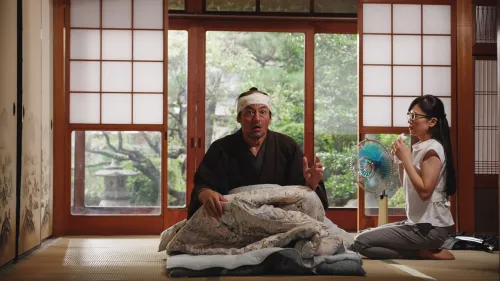
Usually, time travellers journey back to the past. This indie comedy takes the other path instead, with one samurai travelling forward to the 2000s. Luckily, he’s transported to the most fitting place in the modern era– a film set for a period drama set in the same time he came from. This unexpected journey is rather entertaining. On one hand, it’s hilarious to see him stumble, trying to make sense of the new Japan he’s in. His appreciation for today’s modern-day conveniences highlights how freedom ordinary folk now experience. On the other hand, the film juxtaposes his predicament with national history and the jidaigeki genre, grounding the comedy with the sincere belief in Japan’s ability to transform. A Samurai in Time takes a pretty funny premise to an entirely surprising conclusion.
 x1
x1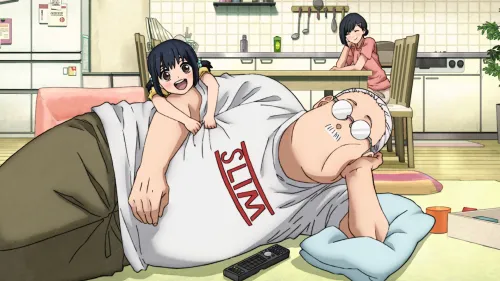
Hitmen are just cool. But rather than bring us the same fists and bullets that we usually see with these killers, Sakamoto of Sakamoto Days does his best to keep to his normal humdrum life, rather than jump back into the bloodshed. It’s an interesting twist to the gangster thriller. Rather than try to surpass any choreographed fights, or bring up the angst by killing everyone dear, the series humorously contrasts the over-the-top drama these assassins have over the straightforward ordinary life, which, as Shin realizes, is actually great. Sakamoto Days celebrates ordinary life as something worth protecting, and it’s pretty fun to see the crew do so.
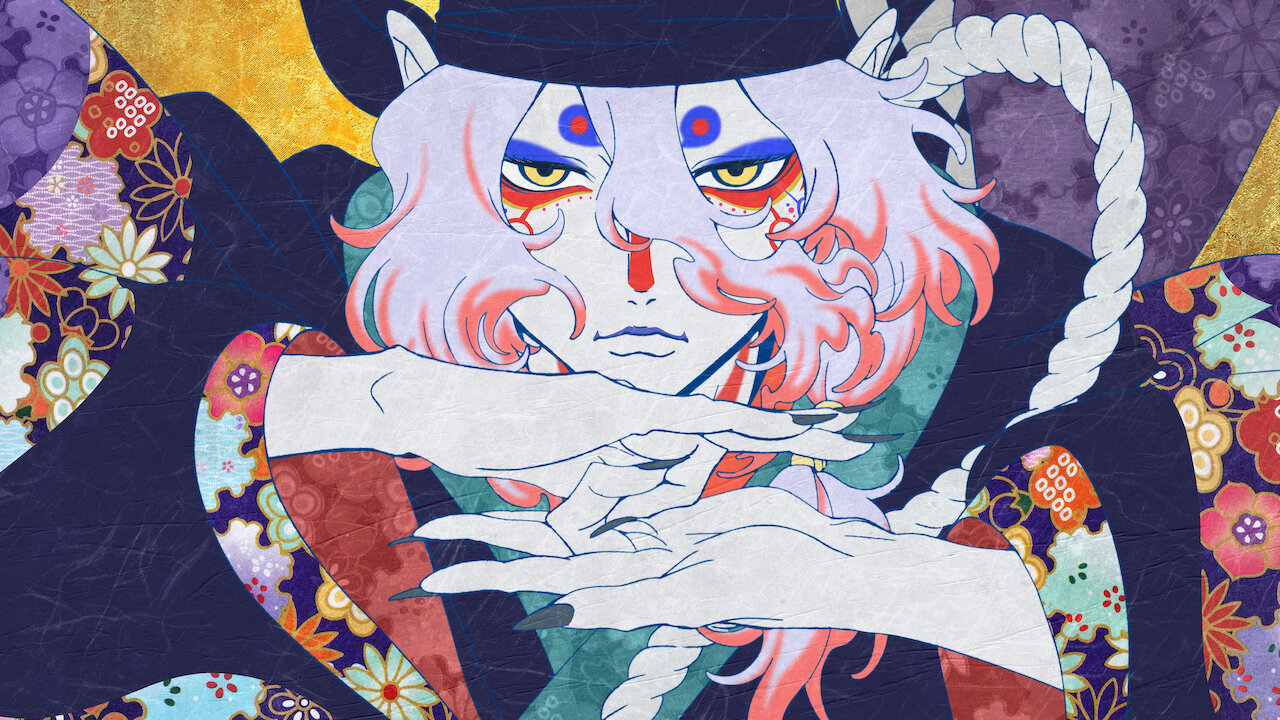
While based on the Mononoke series, which is in turn, a spin-off of Ayakashi: Samurai Horror Tales, it might seem that Mononoke The Movie: The Phantom in the Rain would require some background reading for people new to the story. Thankfully, there’s no need to do homework for this beautifully designed masterpiece, as the Medicine Seller takes on a new case with every installment. 2024’s Phantom in the Rain (also known as Paper Umbrella) unfolds its world with ease, with doors opening and closing to a select few for a high-pressure, hierarchical imperial household. Immediately, the visuals are stunning, with traditional ukiyo ink and paper mixed with modern kaleidoscopic fill and movement, but even without the gorgeous art, the first Mononoke movie works with its eerie horror, intense sound design, and a compelling mystery driven by court intrigue and vengeful spirits.
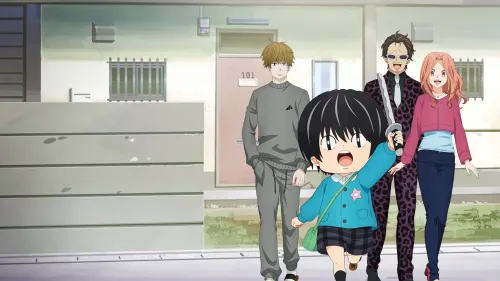
The title character of Kotaro Lives Alone is such an unusual child. Sure, he plays pretend as an old feudal lord, has the characteristic precociousness main characters have, and he is drawn in the old school blocky anime style for young kids’ shows. But despite these markers for lighthearted entertainment, there’s something undeniably poignant behind this quirky character that his adult neighbors thankfully notice. As lazy next door neighbor Shin Karino gets to know him, and the residents of the complex band together, this slice-of-life series brings on the laughs, while simultaneously stabbing the heart with each realization. Kotaro Lives Alone works because it examines the actual ramifications of living without parents.

Continuing her fight to tell the world the truth about her sexual assault case, journalist Shiori Ito released Black Box Diaries. Like her book, it’s a powerful documentary. Filmed with actual CCTV evidence, with some witness accounts, and with recordings she made while investigating her case, Ito’s first foray into film is personal, vulnerable, and intimate, going through the events as it naturally unfolds. While it is depressing to witness the ways investigators, lawyers, politicians and other people have failed her, Black Box Diaries immediately reveals Ito’s resolve for the truth, and how taxing the toll was for survivors that chose to take the same path.

When a show is focused on a kid and their sport, chances are, the main character holds a passion for the sport itself. They saw it, they thought it was cool, and they tried it out. Blue Box, however, takes an unconventionally depicted, but no less honest, motivation– the energizing power of having a crush. The way Taiki goes about it feels reminiscent of that first childhood crush, with the excitement, the determination, and the pure mortification each time he perceives to have jumped the gun, but it’s all made endearing with the characterization, writing, and the beautiful render, and it’s easily driven by the familiar device of having to share the same residence. Blue Box is just so darn cute.
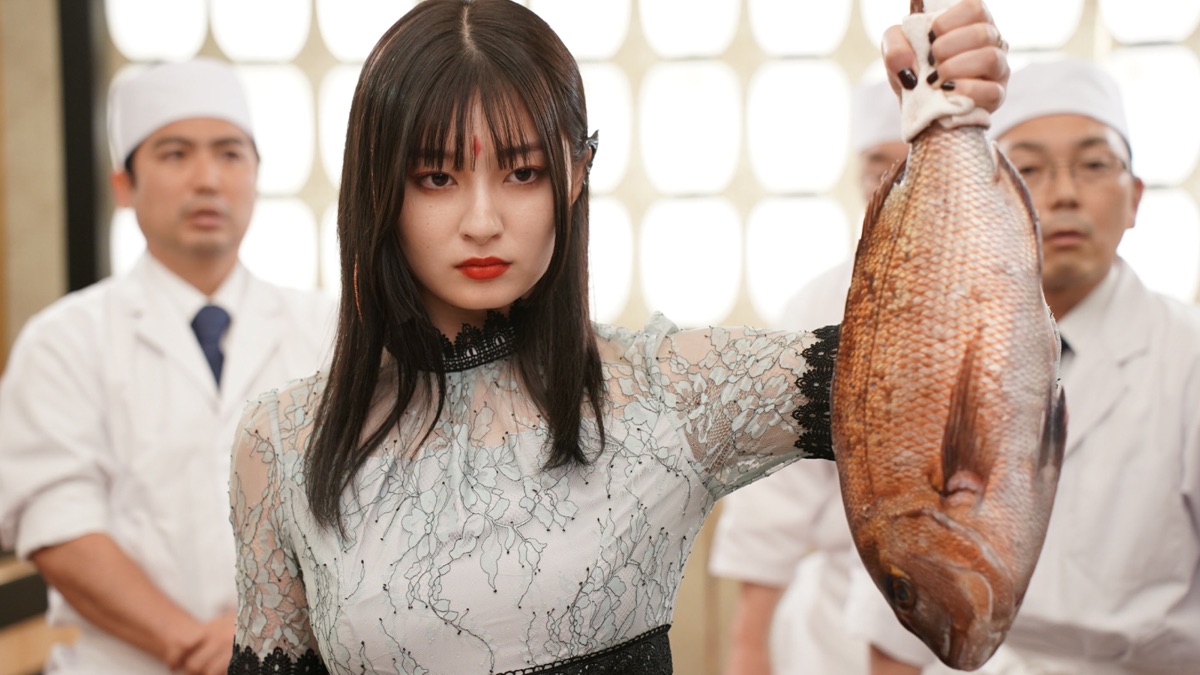
Some people can get totally desperate when it comes to their love life, but rarely does this desperation end up with summoning an ancient warrior princess spirit. My Undead Yokai Girlfriend plays on this desperation, hilariously juxtaposing modern day love troubles with an ancient demonic revenge plot, and the mix plays out in a fun and cutesy way, with Hachi understandably over-the-top stressed out over the fact he accidentally summoned and bonded with a yokai spirit that can drain his life force. As Hachi tries to solve this through smartphone technology and research, Izzy learns more about modern day Japan, all while they both evade Hachi’s police father assigned to investigate Izzy’s victims. It’s silly, but it’s fun, and surprisingly introduces Japanese mythology in an engaging way.
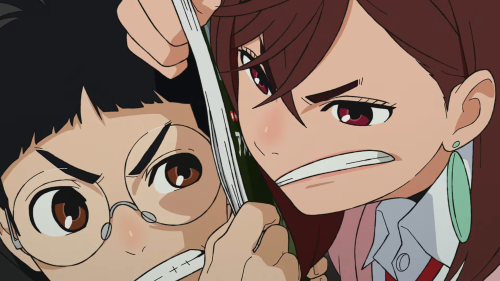
During adolescence, teenagers get to learn and discover themselves and the world, but for most people, this means going through puberty, maybe taking up a sport or hobby, and not the occult vs alien shenanigans of DAN DA DAN. The science fiction-fantasy mix is unhinged and chaotic, throwing Momo and Ken directly into the worlds they didn’t believe in, and with each crazy encounter, they gain insane powers that are rendered into (literally) out-of-this-world, kaleidoscopic animation. But it’s their comedic dynamic that makes the show work, as each absurd situation pushes them to share what makes them vulnerable and challenge each other on their beliefs. DAN DA DAN is spectacularly unpredictable, and is a standout from 2024’s anime fall lineup.

On the surface, The Makanai is a simple, slice-of-life show about food and friendship. While it is that, to be sure, it’s also a substantial drama that tackles questions about art vs. love, and love vs. companionship, and career vs. purpose. Under the gentle guidance of showrunner Hirokazu Kore-eda (Still Walking, Shoplifters, Broker), who generously allows up-and-coming directors to take the helm on certain episodes, The Makanai feels at once light and hefty, comforting and challenging. We’re seeing mundane events unfold before us as if we were bystanders, but we also understand that there is so much more happening than what meets the eye. A prolonged gaze, a lovingly prepped meal, an especially sharp wing-eye, all of these have much to say about the state of mind of these girls.
It’s a supremely gentle and culturally rich show with a tender heart; a truly great watch on all accounts.
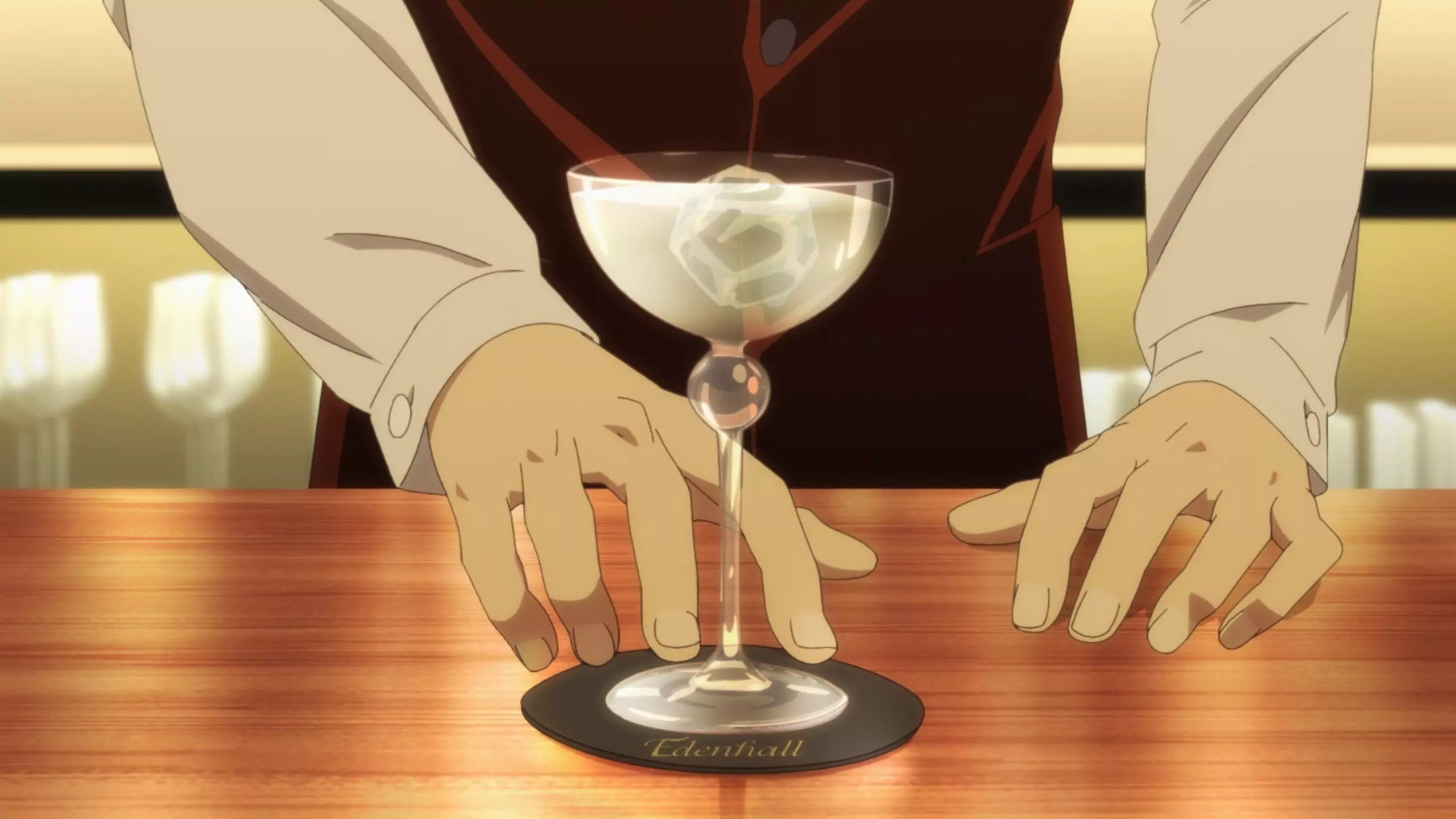
Regardless of age, most viewers would be familiar with the way alcoholic drinks are portrayed in the media as a gateway to uncontrollable debauchery and addiction, but rarely has the art of mixing them been depicted. Bartender: Glass of God mixes cocktails in a refreshing way, portraying the bar not just as a glamorous place for adults to have fun and meet people, but as a place to feel human, to be truly seen as a person at a certain point in time and to be treated with compassion just through a simple beverage. With bar culture around the world having been slowly closing down, Bartender: Glass of God remembers the artistry and care behind each drink.
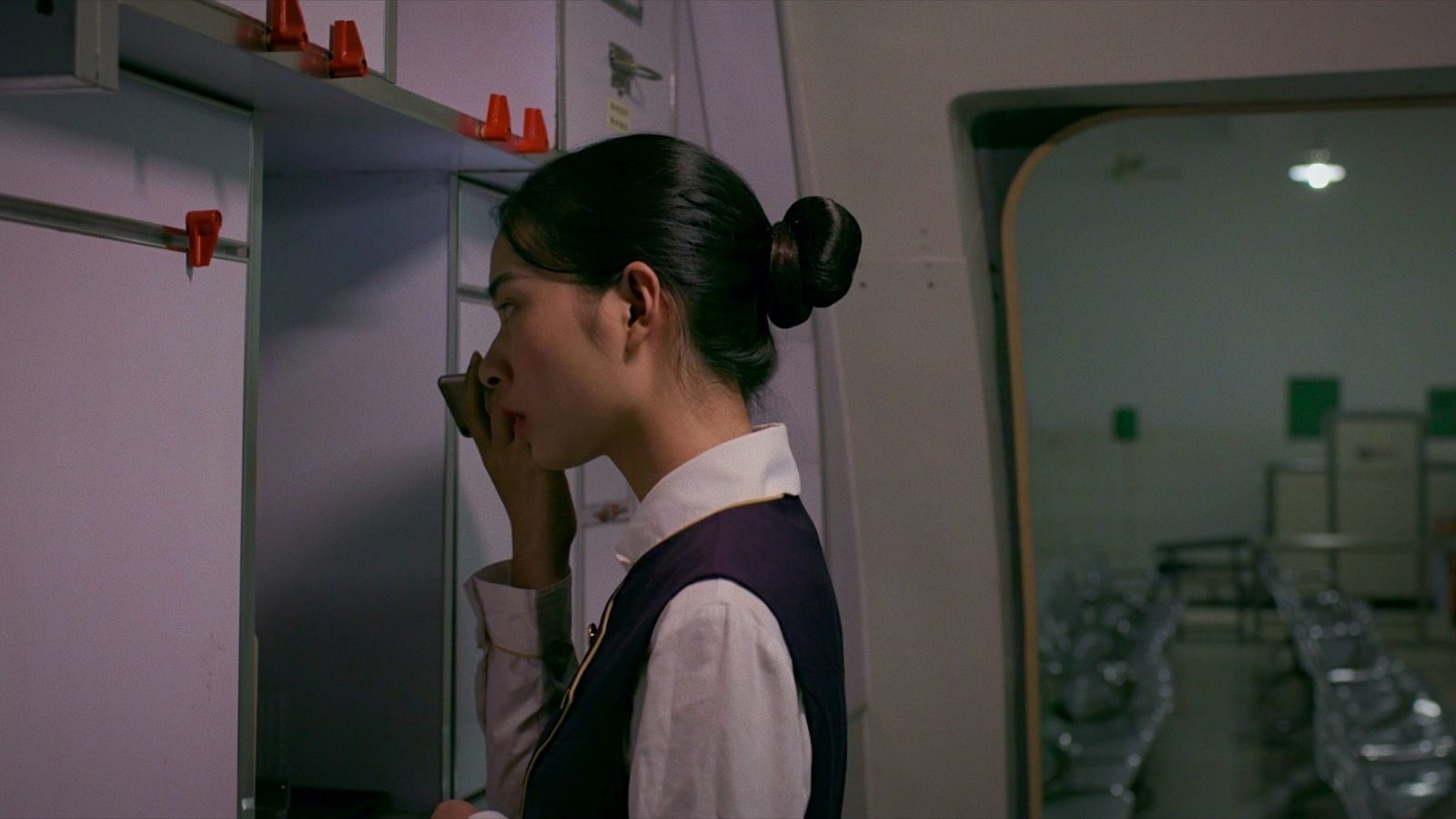
At two hours and nearly 30 minutes, Stonewalling is quite long. The third film from spouses Ryuji Otsuka and Huang Ji takes place in slow, slice-of-life moments, centered around a female lead that mostly doesn’t actively make choices for her own life, so it can feel frustrating to watch. But as the film unfolds, Lynn’s passivity turns out to be the tragically familiar surrender of today’s working class. Lynn tries to make choices to pay out her mother’s debt, to ensure that she’s not indebted herself, through jobs that commodify her youth, her beauty, and even her body, but each move consequently limits her next options. She tries to bargain for other solutions, but it turns out these solutions were never there in the first place. All she can do is quietly adapt, with each failed promise culminating into a baby’s cry.
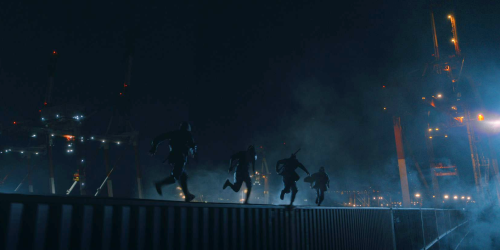
From the fantasy-powered folktales to superhero-like depictions, ninjas have captivated the world, but seem to be a relic of the past, with modern day warfare and weaponry turning them obsolete. House of Ninjas imagines a world where ninjas still exist, centering a clan stuck between wanting to abandon the old ways but also having skills that seem wasted in contemporary life. Because of this, the show at first seems boring– the family is severely demotivated, with some members acting out through petty theft, and with out-of-place jazzy musical tracks that undercut the action of the first few episodes. However, House of Ninjas gets better as the Tawara clan gets its act together, revealing the hidden heart each of them has for each other, one that’s been hidden because of the grief that struck the family. The show may be less action-packed than expected, but House of Ninjas comes across as an off-kilter family drama with just enough heart to work.
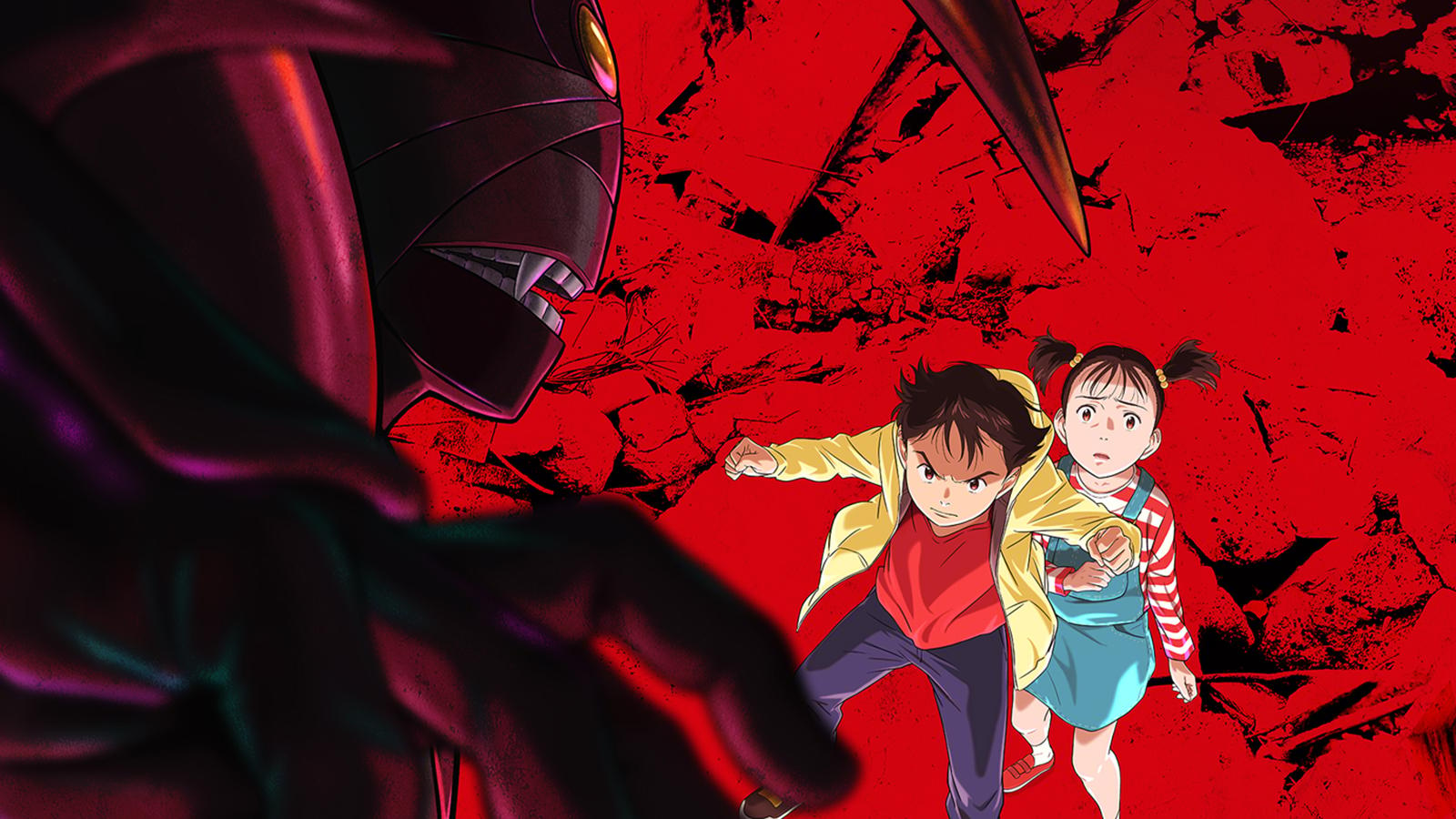
Reimagining a children’s classic as a mature serial killer mystery, PLUTO already had high expectations for its anime adaptation. The limited series adds an additional challenge, with only hour-long episodes dedicated to each of the series’ eight volumes, which follows not only Gesicht’s own investigation, but also in-depth stories of each of the remaining Great Robots. However, the anime, now showing on Netflix, is able to meet this challenge with its deep understanding of the source material. It’s not just a straightforward police procedural, or just futuristic dream of how AI and humans can co-exist. PLUTO is a robot series that strikes at the heart of what it means to be human.

By now, it’s pretty clear that Apple TV+ follows a less-is-more philosophy when it comes to content. Sure, it doesn’t release a million new titles in a year like Netflix or Prime, but the few originals that it does put out are almost always good (and occasionally great), backed by an astounding budget and ambitious vision. Sunny is the latest addition to that category. The multi-genre show is a deceptively simple robo-buddy comedy that is engaging through and through. Yes, it’s futuristic—and fantastic in that regard—but it’s also funny, heartwarming, thrilling, and tragic. And it juggles all these effortlessly so that the other aspects of the show, such as the artful blend of tradition and tech, can shine through.

With a wolf deity, wheat harvesting rituals, and farmtown folklore, it may seem that Spice and Wolf: Merchant Meets the Wise Wolf would be a traditional fantasy, filling in the genre void after Frieren’s finale. However, new viewers such as myself would be surprised that this series is known as the “Economics anime”, a reboot of the 2008 series that hasn’t met its ending yet. Of course, older fans might be disappointed at the lack of a season 3, but with its striking first episode, 2024’s Spice and Wolf reassures both old and new fans that there’s still an exciting adventure up ahead, with medieval markets, clashes with the church, and of course, the partnership between wolf girl Holo and merchant Lawrence. And this time, they promise to finally complete this adventure on screen.
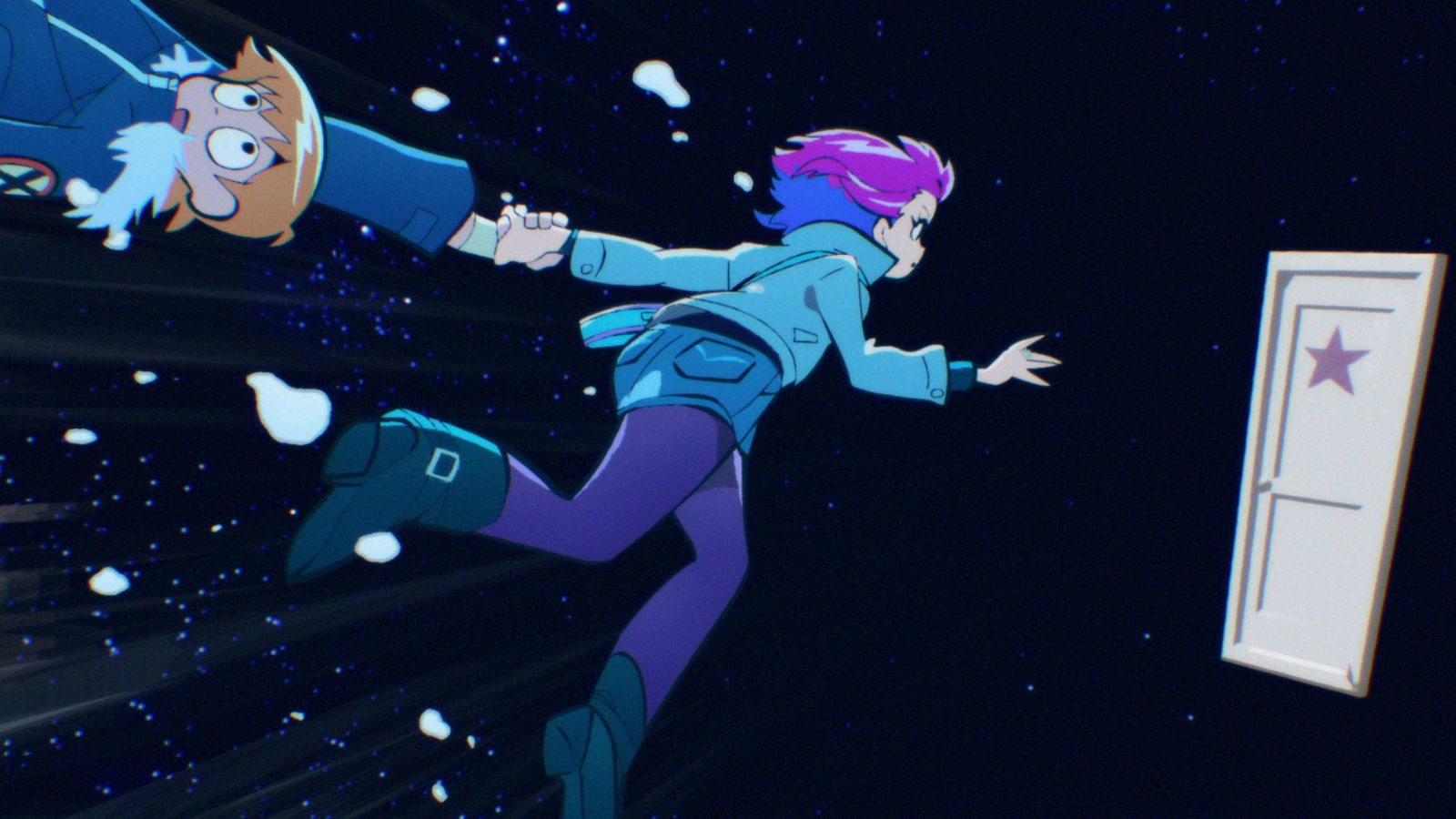
Watching the trailers, and even the first ten minutes, Scott Pilgrim Takes Off just seems like a rehash of the prominent Edgar Wright film, especially since his cast reprise their roles in this new anime. However, when that episode ends, even the most ardent fans of both the film and the original comic book series would have no idea where this would go. It’s a fearless, daring approach, from the original creator Bryan Lee O’Malley, and it’s met with the wackiest, spectacular animation from Japanese animation studio Science SARU, remixing O’Malley’s designs with 8-bit, fighting video game action.

When watching fantasy anime, there’s a wonderfully whimsical world that viewers can fully explore. Spectacular magic, brave warriors, and strange creatures are all expected, but every exploring troop needs supplies. Money, weapons, and of course, food are needed to survive the wondrous yet perilous adventures they set out to embark on. Delicious in Dungeon recognizes these practicalities, and creates a whole episodic adventure that focuses more on the possible food ecosystems of a fantasy world rather than the seemingly serious quests they embark upon. It makes for a slightly silly approach poking fun at the fantasy genre, but it’s definitely something unique, especially when it brings about mouthwatering exotic dishes made from monsters.
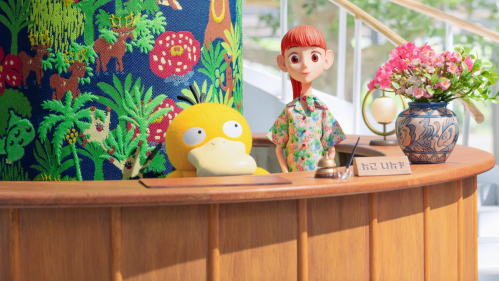
Pokémon is one of the world’s most popular franchises, and it’s mainly centered around the idea of cute, colorful creatures with special powers to be caught, trained, and put into battles. Pokémon Concierge is a different side to the franchise, but instead of the high-octane action and world-ending fights, the four-episode series contemplates the idea that maybe these cuddly creatures need to rest too. As anxious newbie Haru adjusts to the laidback, paradisal resort, and acquaints herself with felt-fabric versions of the familiar cartoon creatures, Pokémon Concierge is an excellent reminder to enjoy yourself once in a while.
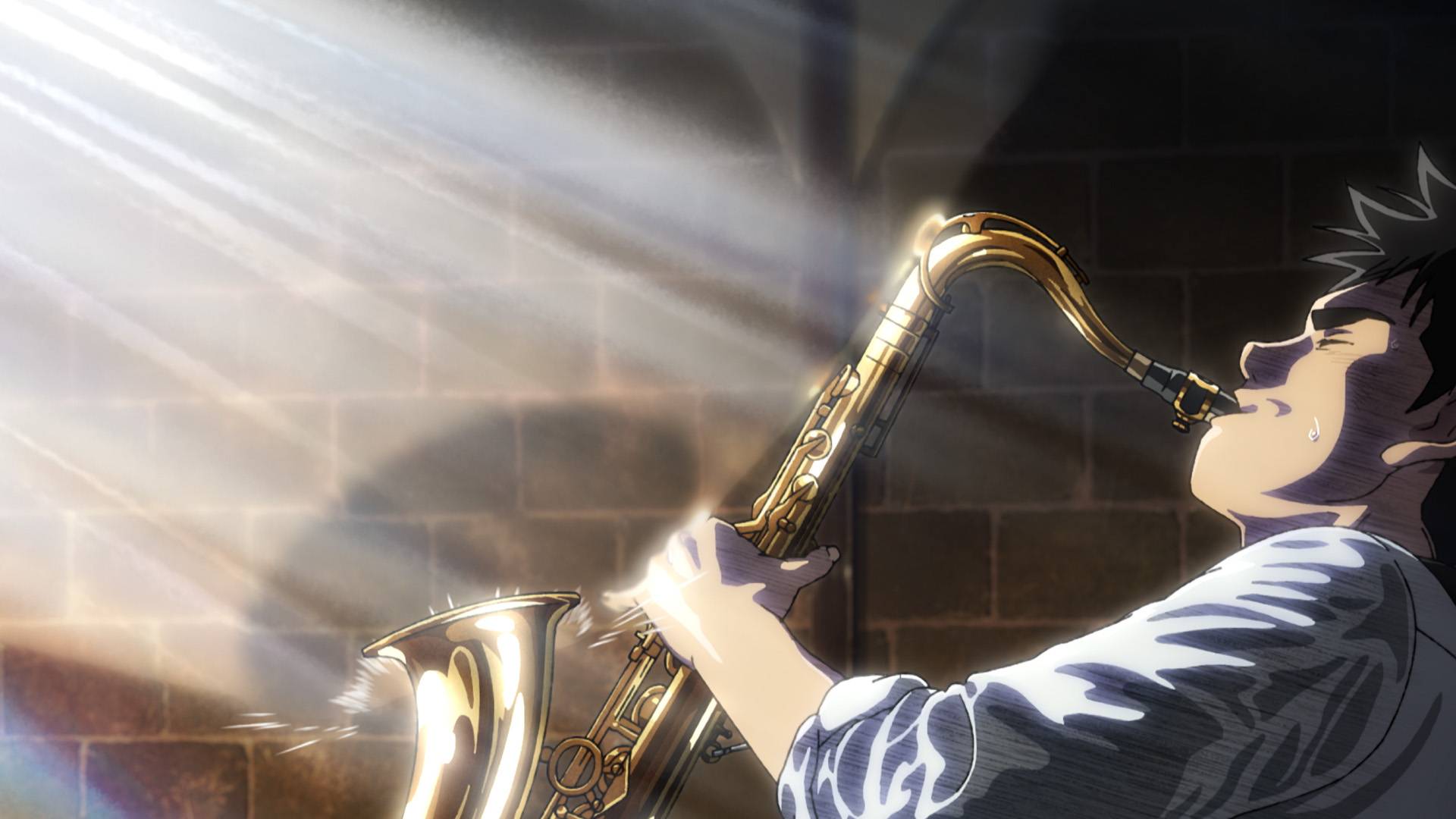
2023 was a great year for animation with films like Spider-Man: Across the Spider-Verse, Nimona, and The Boy and the Heron, but there was another animated gem that flew under the radar and that’s jazz drama Blue Giant. It’s a pleasure to both the eyes and the ears as Dai Miyamoto blows on his saxophone, adding Hiromi Uehara’s incredible soundtrack and Yūichi Takahashi’s dynamic animation to the high contrast manga visuals, and the way the story unfolds the different avenues of pure passion these three have for jazz is absolutely captivating. Blue Giant is just so well-done that it’s no surprise it garnered a bigger-budgeted encore eight months after its premiere.
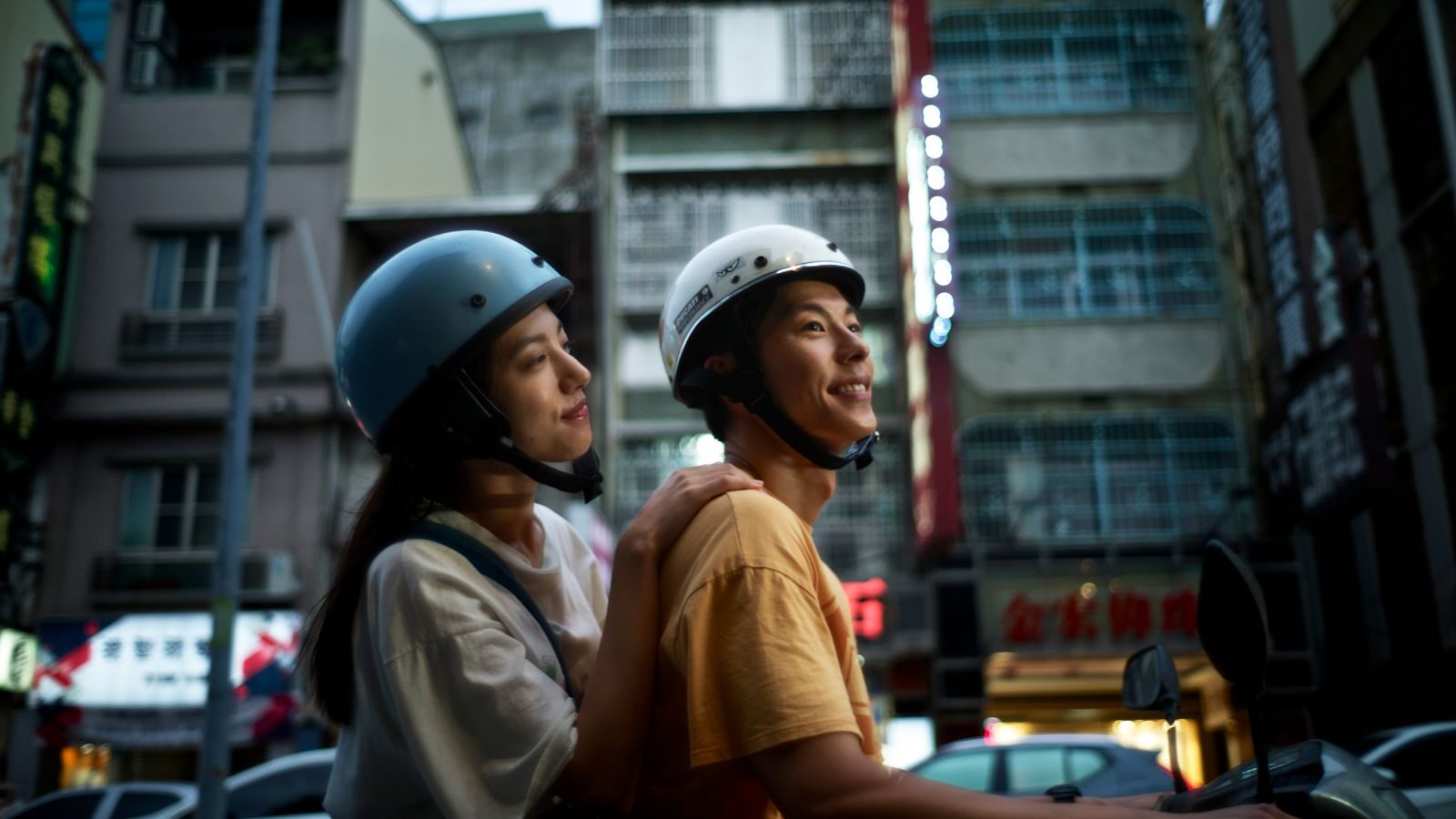
We sacrifice so much for our dreams, so if it all fails, whether that be because of ourselves or because of extenuating circumstances, sometimes, a bit of perspective is needed to get back up. The Taiwanese-Japanese romantic drama 18×2 Beyond Youthful Days is centered on two young adults that meet in a karaoke bar in Tainan, one who hopes to pass the summer with some money, and the other hoping to fulfill her dream of travelling the world. It’s a familiar coming-of-age concept, but it’s done so bittersweet and beautifully as the adult Jimmy recalls each moment they shared while on the journey to fulfill their promise to meet each other after they reach their dreams. 18×2 Beyond Youthful Days doesn’t tread new paths, but the film’s way of depicting memories as well as the charming chemistry of the leads transforms the real life travelogue into a moving testament of the connections we form while travelling.
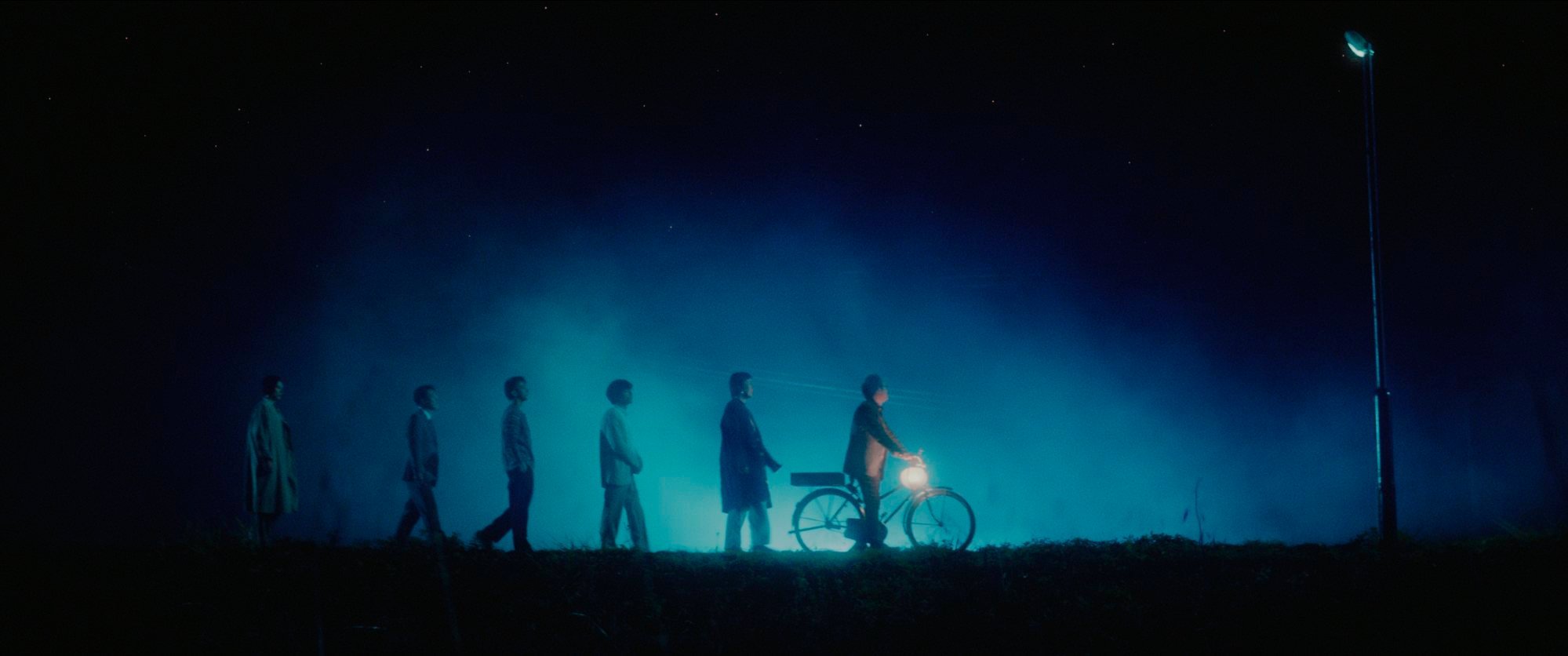
When it comes to ghosts, plenty of films are centered around personal, unresolved business in the living world, but rarely do films examine how the spirit world would be, unless it’s for fantastical fights or horrific terror. The Parades instead focuses on a world of lost, but ordinary, and thankfully kind, souls. And as the film builds its calm world, Minako (and the viewers) get to meet the people who would form her eventual found family, whose various lives uncover the intimate and personal hopes of ordinary people, shaped by the events of their respective times. While the film doesn’t fully resolve all their stories, The Parades celebrates life, in all forms, and the powerful ways storytelling and community helps us go through it.
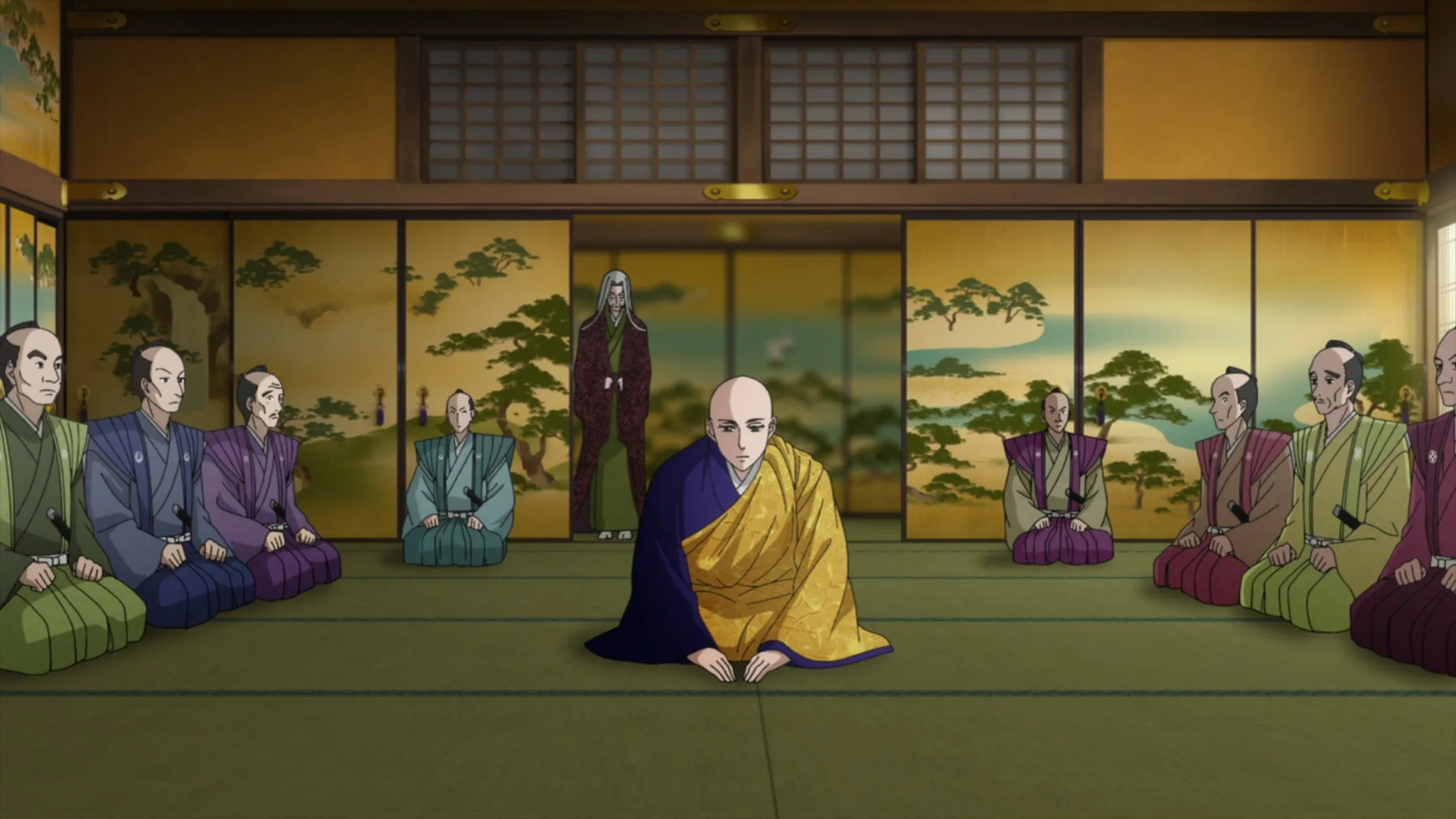
Set in a fictionalized version of Japan’s Edo period, where a deadly disease affecting only men has led to women taking traditionally-male roles, Ōoku is steeped in social commentary on gender and sexuality. The concept is well-established in its 70+ minute first episode, allowing the story to set a foundation for a fascinating progression in this world. By centering the powerful warlord figure, the Shogun, it illuminates the shadows women occupy to support a country with little to no recognition. With a political throughline and an inherently feminist lens, Ooku: The Inner Chambers offers a beautifully-animated series with few gimmicks and lots of depth.
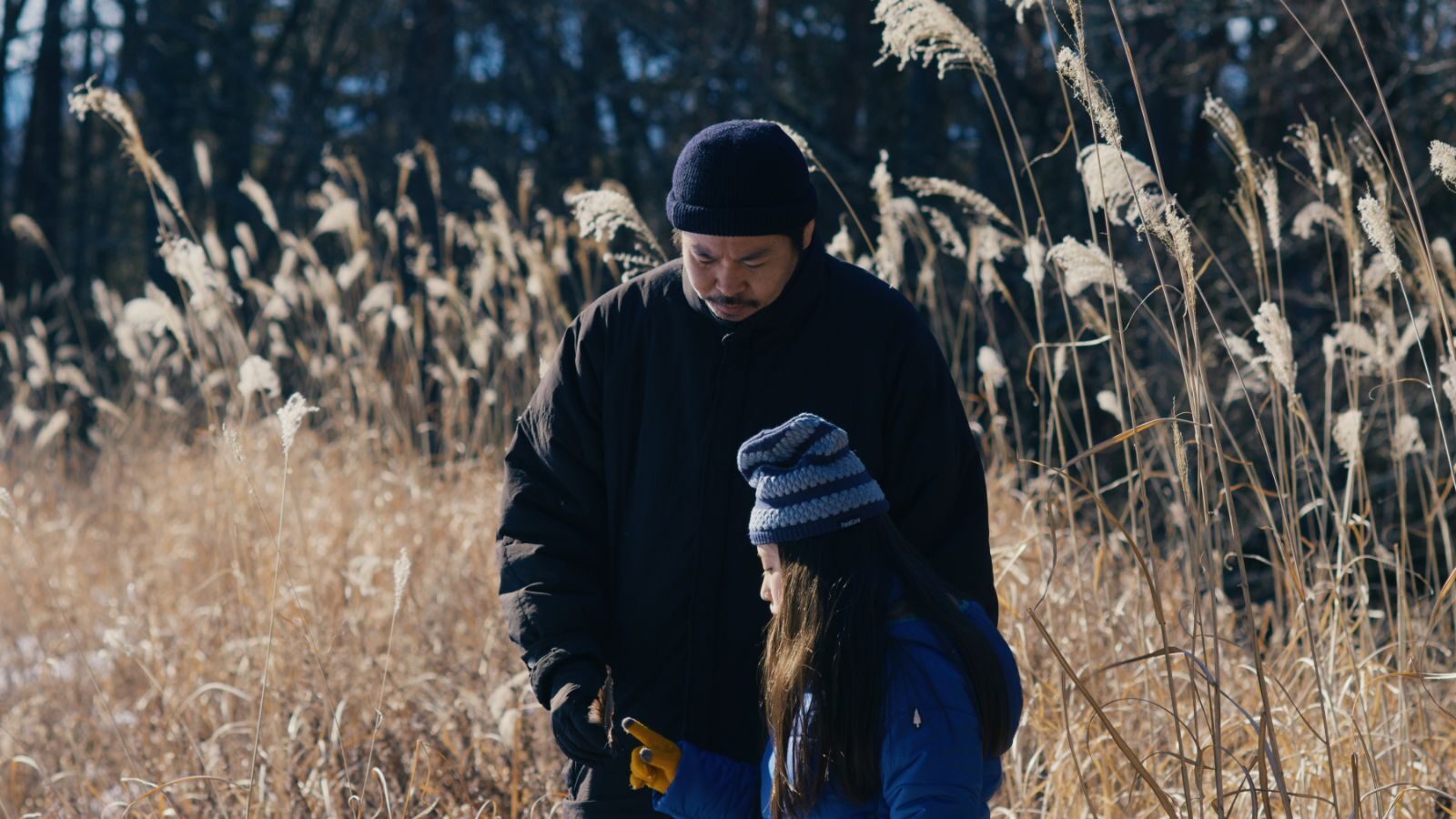
Evil Does Not Exist begins a simple enough parable about the dangers of disrupting the delicate balance of nature, particularly through capitalistic greed. It’s easy to follow and root for the right characters, while the majestic views of rural Japan and the curious ways the film is edited (all abrupt musical cuts and shaky cameras) add to the movie’s charm. But fans of director Ryusuke Hamaguchi (Drive My Car, Wheel of Fortune and Fantasy) know better than to trust a seemingly straightforward path, which is of course not what you get in Evil Does Not Exist. The film takes a turn for the supernatural, maybe too late in its run, but it’s beguiling and thought-provoking nonetheless. It’s worth watching for many reasons, but the jarring realization that you might not know what this film—and indeed life—is really about is the true highlight.
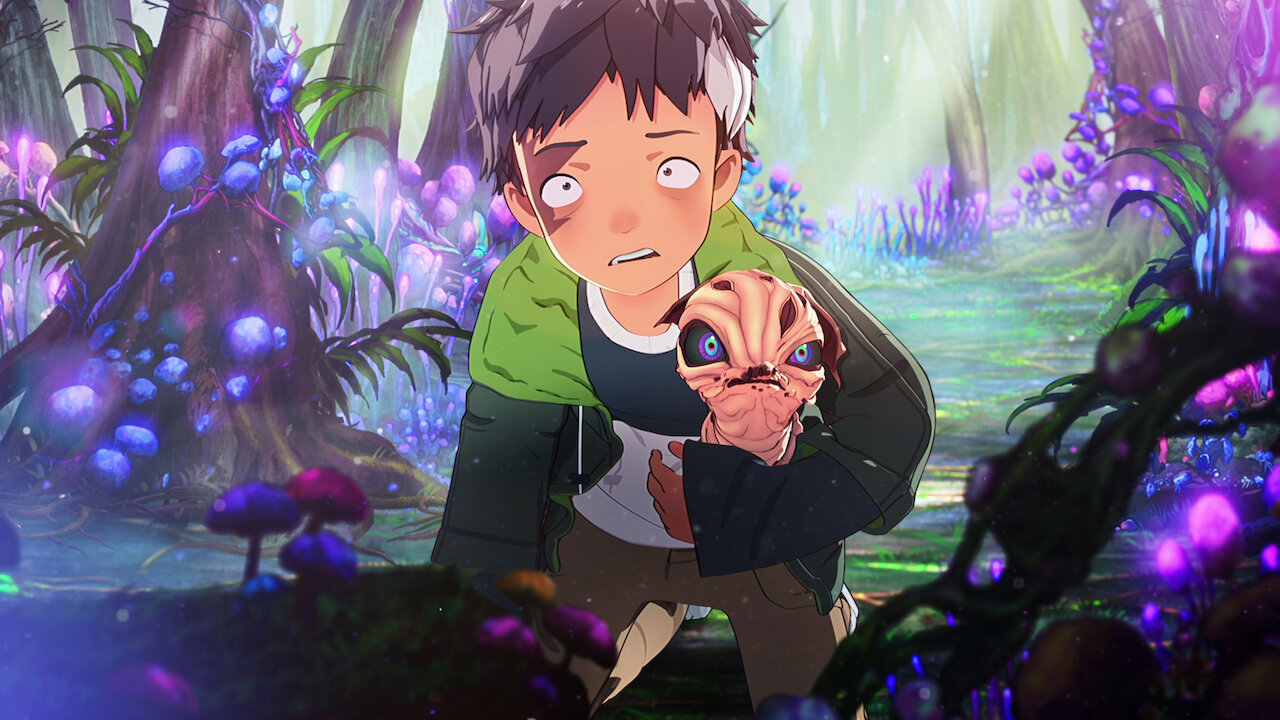
You know how How to Train Your Dragon has a town terrified of dragons, but it turns out they’re actually cute? My Daemon has a similar situation, except this happens after a nuclear explosion, plenty of these monsters are still murderously terrifying, and even the cute ones are fairly creepy. But that doesn’t keep elementary schoolkid Kento Tachibana from adopting one, even as they get hunted down by bounty hunters. The bond between boy and his daemon is a heartwarming one, but the treatment between the various monsters questions the different ways we treat different animals, and whether or not we can successfully live alongside them. With its unique art style, it’s a totally stunning adventure, though with some creepy crawlies along the way.
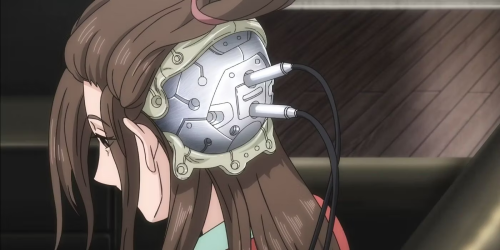
In a world acclimated to the technological advancements and integration of AI, Sudo Hikaru offers illegal medical procedures in the hopes of finding the people behind his mother’s stolen data. The Gene of AI takes an interestingly neutral tone towards the integration of humanoids among the population (akin to our current normal with social media and smartphones). Even as the question of ethics and legality weaves through everyday conversations, the idea of AI being inherently bad is never the conclusion. So far, the narrative follows a procedural format that feeds each new case/scenario back into Hikaru’s search.
With a small primary cast and a heavy hand on CGI (which feels deliberate given how the show discusses the human-technology relationship), the show has the potential to deliver a memorable narrative in the transhumanism genre.

In the multilingual Drops of God, French author Camille and Japanese sommelier Issei battle for a wine expert’s multi-billion-dollar inheritance. Camille may be the expert’s daughter, gifted with an incredible sense of smell and taste, but Issei is the so-called “spiritual son,” the protégé who filled in Camille’s shoes upon her abrupt departure from her father’s life. Whoever wins a series of wine-related tests gets to keep the expert’s estate and continue his legacy.
Based on the Japanese manga of the same, Drops of God is strangely but enjoyably competitive as it plunges you deep into the complex world of wine—through intense competitions, we get a closer look at the drink’s many layers, long history, and even its cultural connotations. This nice blend of knowledge and rivalry makes it a thrilling watch, but the show also has an unexpected but welcome family element to it that softens the edge a bit and gives it a sweet aftertaste. If you were ever looking for a smart but heartfelt show about wining and dining, this is it.

Undead Unluck is such a strange anime with such a strange duo. Named after their respective powers, the undead Andy seems familiar with his Deadpool-like regeneration, albeit with such a fast rate that he can shoot out body parts with such gruesome animation. However it’s the unlucky Fuuko that brings them to the most absurd comedic scenarios, including, but not limited to, surviving a giant truck crash, a lightning strike, and a whole meteor. In order to achieve their goal of dying, they have to build up a bond to maximize her unluck. As they learn more about Fuuko’s abilities, as well as the organization hunting them down, it’s likely that they’ll go through wackier situations that will escalate as the show progresses. It’s definitely something uniquely watchable, if you can handle the off-putting gore that’s part and parcel of Andy’s powers.
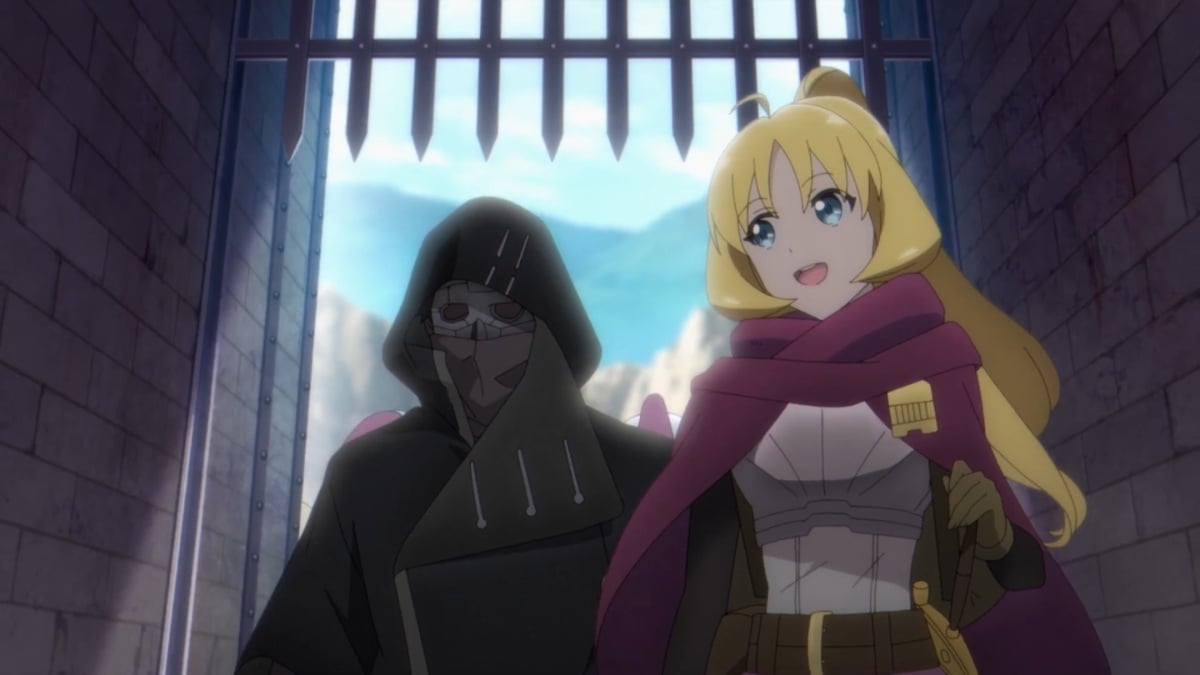
Usually, being swallowed up by a dragon means death. However, for Rentt Faina, The Unwanted Undead Adventurer, becoming a skeleton is just a little setback in achieving his dream of becoming an defender for the kingdom. That’s because in this world, dying doesn’t mean dying– it just means that he has to kill other monsters and absorb their spirit in order to evolve into more human forms, like ghouls and vampires. It’s a strange premise, and the first episode relies on internal monologues, because, well, he doesn’t have the muscles to speak, but it’s intriguing to see someone persevere despite having to start all over again. After obtaining the respect of novice adventurer Rina, the show plays out in a fairly entertaining way, with decent visuals, coherent storyline, and a more cautious protagonist we haven’t seen from previous shonen fantasy.

With an accounting mistake leading to being stranded in the desert, it’s hard to predict where VIVANT would lead us to. As corporate employee Yusuke tries to undo his supposed accounting error, he gets into a series of surprising events including having to negotiate with a terrorist, being accused of a bombing, and escaping to a Japanese embassy… and that’s just in the first episode. But rather than feeling overly complicated, the story feels exciting, like something akin to a spy thriller, with its large-scale sets, multi-country stakes, and the mystery of a secret organization. Vivant feels totally unexpected and out of left field, but it’s definitely a unique and entertaining watch.

Usually, when whisked away to a fantasy world, there’s usually some grand reason, like a prophecy or a destined quest to go on or a villain to defeat, with the hero having some secret powers to discover. The Wrong Way to Use Healing Magic instead, starts with an unintentional, average protagonist that gets accidentally transported with his popular, more accomplished classmates, but he does have the healing magic that hasn’t been focused on in most isekai anime. And as Usato acclimatizes himself to the world, the show suggests that even average people can rise up to extraordinary challenges, if only given the expectation to succeed. While his journey would gradually come closer and closer to regular isekai, The Wrong Way to Use Healing Magic still makes the journey there fun.
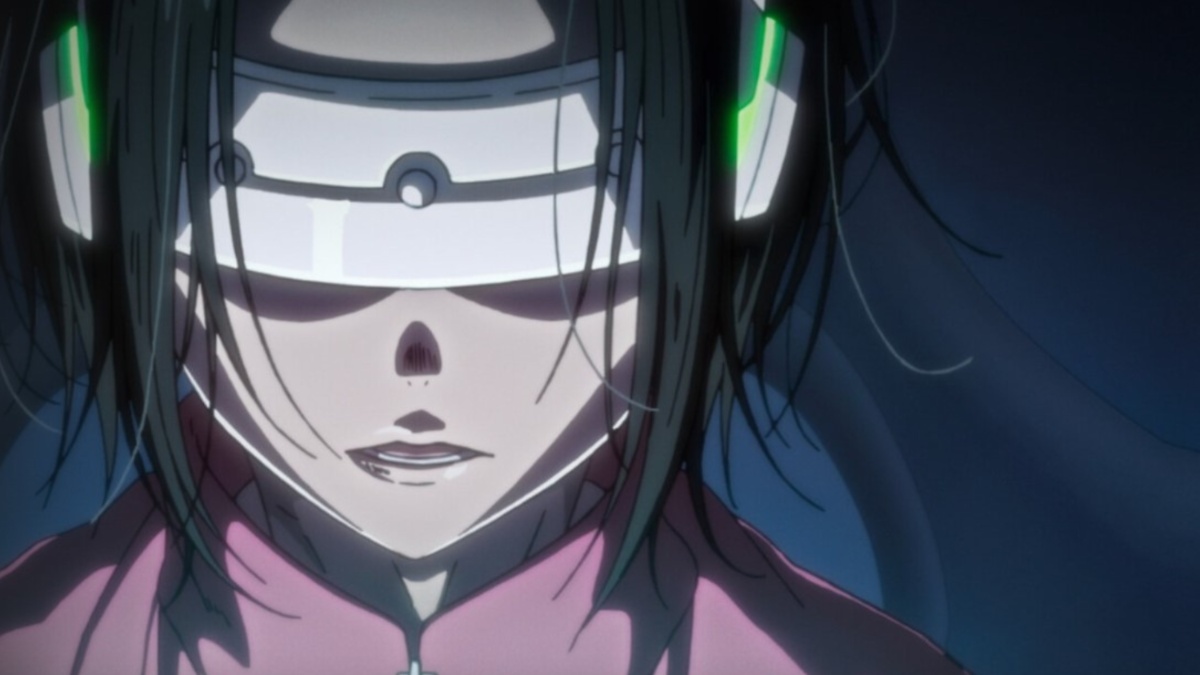
With games creating whole virtual worlds, with stunning landscapes, powers, and storylines, it’s easy to escape into the fictional simulations, to the point of being addicted. Good Night World reimagines this idea in the present as a family drama, where video game addict Tachiro Arima struggles to relate with his family because of his addiction. As the show progresses, the game integrates with the real world, with real life-threatening consequences, but the show slowly uncovers how this game unraveled the Arimas’ family bonds, through neglect, depression, and shared trauma. It’s an interesting series about connection and video games, if you can get into the world of the series.
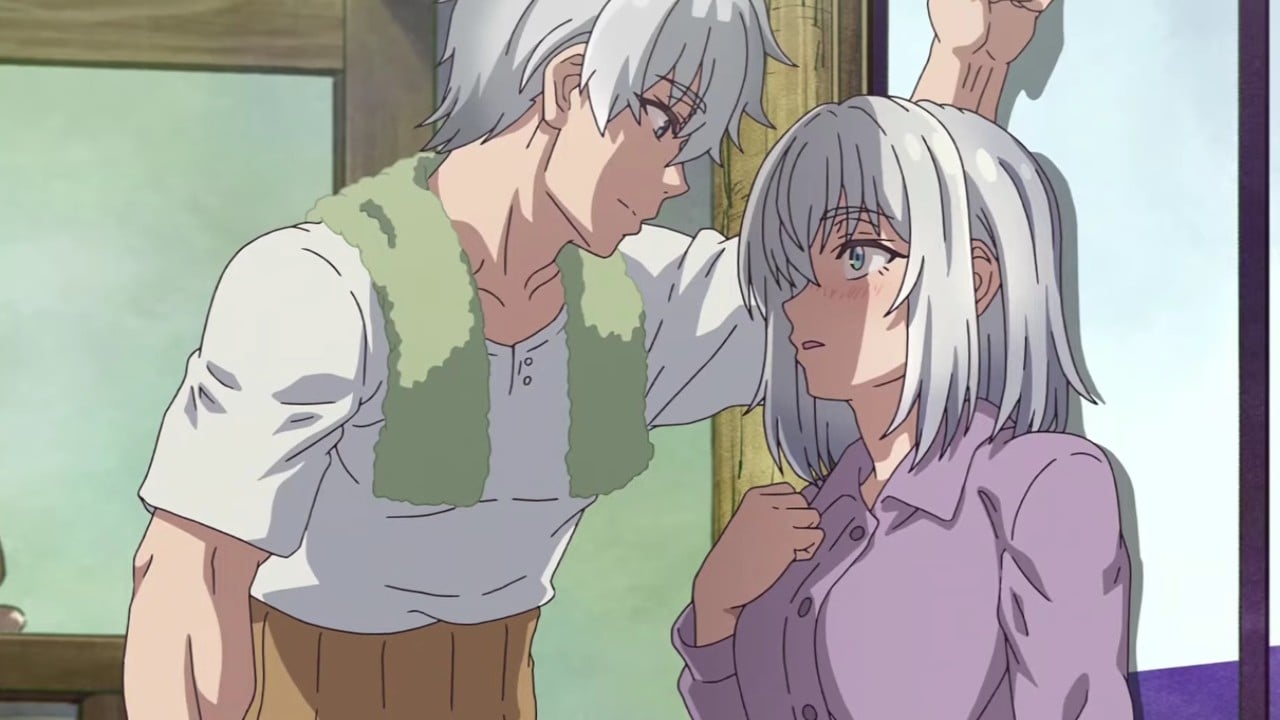
As one grows older, only then do they realize the benefits of youth. It’s all there in the title, but unlike other transformation stories where the protagonist reincarnates into a different, younger persona, Grandpa and Grandma Turn Young Again is much more mundane as they turn into their younger selves, but still keep to their calm, small town suburban lifestyle. It’s less exuberant than other stories– there’s no mystery to solve, no conspiracy to uncover– but it’s just so funny to see everyone around them react to the youth they attained, like make them enter their district’s sports team. But as the show progresses, and they continue their day-to-day lives, the show reveals itself as the celebration of the simple, small town life that once wasn’t a guarantee due to the war, the good life that many forgo for the city.

While live-action manga adaptations are known to have a bad rap, Netflix’s Trillion Game is quite entertaining. Striving to earn a million, maybe even a trillion dollars, is something that many people aspire to do, but the way Haru and the team do it is so unexpected. Ren Maguro keeps a great balance between Haru’s unpredictable yet charismatic nature, while Hayato Sano keeps the shyness of Gaku endearing. They go into the most random situations such as winning millions of yen in investments, going into a hacking tournament, and faking an AI. Is this really how aspiring trillionaires succeed? Maybe not, though they do teach some start-up strategies. But, it’s definitely still a fun ride as Haru bluffs his way into ballsy situations for Gaku to solve through computer engineering.
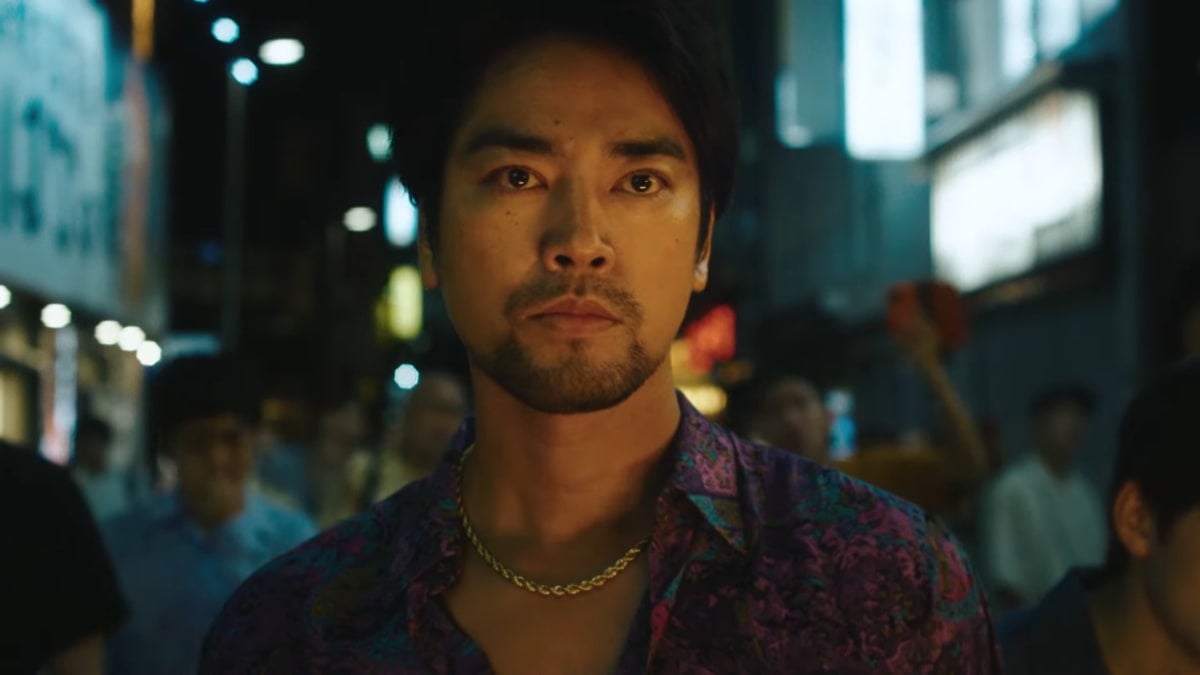
Informa is a thrilling and fun look into the world of yakuza informants. As the titular character Keijiro Kihara takes new writer Kanji Mishima around town to show him the ropes, the series plays with a buddy cop dynamic without the restrictions that police have. Fresh-faced Mishima remains wide-eyed, as Kihara brings him to yakuza hotspots, sometimes intentionally provoking situations with the yakuza through taunting words, but walking away without harm. The series sometimes makes weird shifts, with the first episode halving a serious torture sequence of one gang, and inserting a more lighthearted sequence with Mishima’s crew in between. However, the strange edits don’t distract from the overall mystery and vibe of the series. Informa feels as intriguing but as chaotic as its titular protagonist.

For the unfamiliar, isekai is the fantasy subgenre where a character is transported into a different world. Usually, this is just one transfer, with an everyday character being transferred to a more fantastical world. Doctor Elise isn’t just a reverse isekai– with a surgeon transported to medieval royalty– it also happens to be a double isekai– the titular doctor was initially royalty in the same country before her stint as a medical doctor. While we don’t get to see Elise’s growth as a surgeon, it’s refreshing to see an isekai anime celebrate the simple privileges of ordinary modern life, namely the medical knowledge that we take for granted, and the lack of absolute power that corrupts most characters. The ridiculously successful surgeries might be the ludicrous fantasy that drives Doctor Elise, but it’s lovely to see knowledge and power used for the common good, rather than the superiority complex common in isekaied protagonists.

With its slice-of-life approach, A Sign of Affection immediately tugs at the heartstrings with its sweet romance between a deaf university student and a multilingual traveller from manga duo Suu Morishita. The anime adaptation sees the world in Yuki’s eyes, with delicately lined shapes and pink-tinted watercolor paired with Sumire Morohoshi’s sweet voice, and it’s lovely to see the unjaded, kind way she interprets the world. The series does have some of the familiar romance tropes, like love triangles, wingman friends, and the glowy, bokeh lighting, but it’s sort of the point in this charming show. A Sign of Affection likens the careful, hesitant way of falling in love with the way Yuki interacts with the world, or rather, the reactions abled people have to her disability.
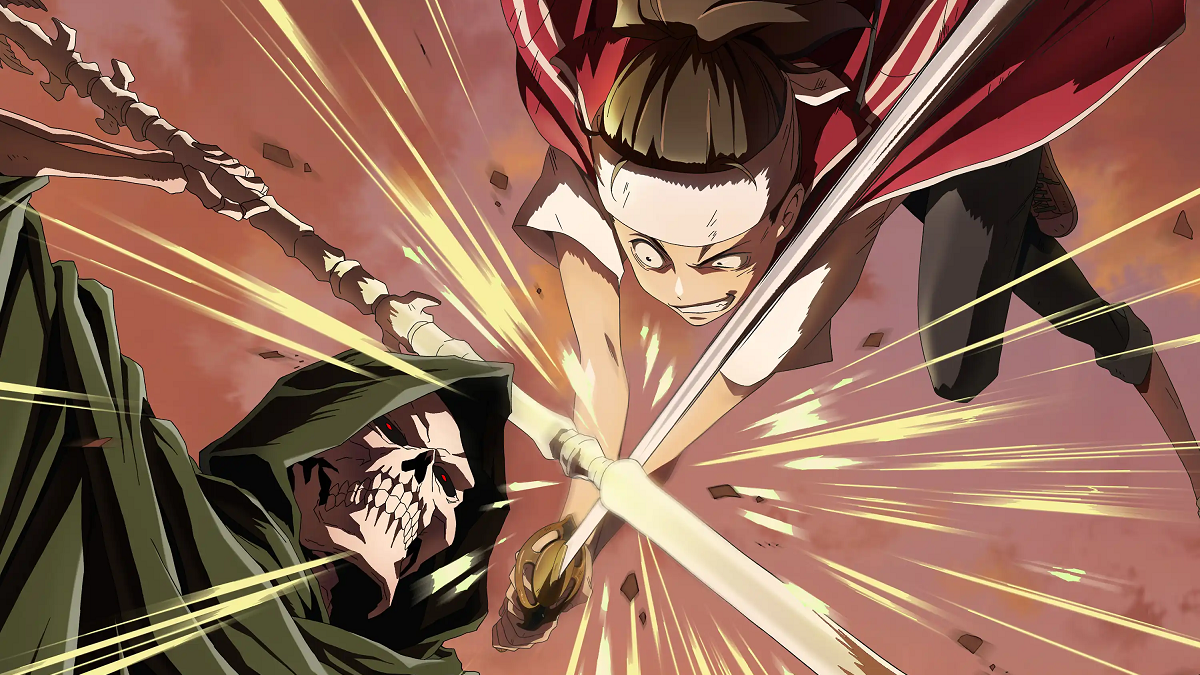
Fantasy shows usually follow one hero into their quest, but the newest isekai anime on Hulu has plenty of them, and instead of straightforward awe, the people they save hold unexpected emotions to the power they wield. Ishura starts with this– its first few episodes are dedicated to introducing each hero, or Shura, that would fight against each other, and possibly take over the world. Through this approach, Ishura has plenty of spectacular action, as each of the heroes have to prove themselves somehow, and has plenty of fantastical powers that look great on-screen, even when the CGI sometimes falters in certain moments. It’s a wild ride, and some deaths can certainly be brutal for some viewers, but it’s an interesting approach in building a fantasy world that values strength above all else. Ishura is a great start to fantasy anime this year, if you can stomach the gore.
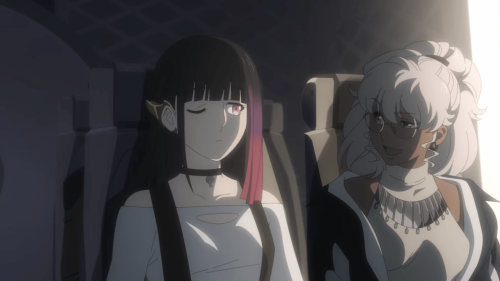
With most of early January 2024’s slate focused on fantasy, Metallic Rouge is a fairly decent cyberpunk refresher. With fantastic, mostly 2D animation, studio Bones’ 25th Anniversary project has spectacular mecha match-ups between government android Rouge Redstar versus various members of the excellently designed Immortal Nine, as well as humorous, expository banter from Rouge’s human partner Naomi Orthmann. But it’s the mystery that drives interest in the show, as Nean androids and humans share a world, but not the same status, and the origins of the artificial intelligence bots seem to link with a previous alien invasion that pushed humanity into further space exploration. It’s an interesting premise, and the structure is definitely unusual, but with Bones’ track record, we’re expecting that it’ll all come together by the end of Metallic Rouge.
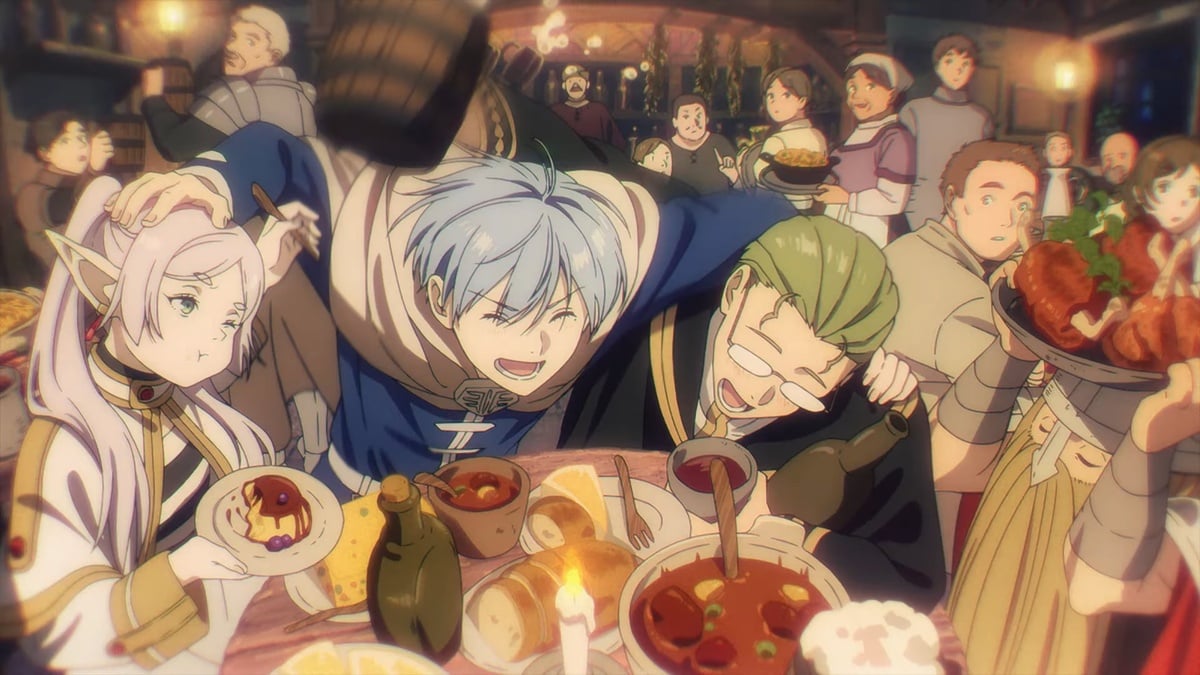
In fantasy worlds, races with different lifespans are a given, but rarely does a work actually contemplate how these variations would affect relationships between them. Frieren: Beyond Journey’s End starts after a great war, at the moment of peace, and to the titular elf, her shared journey with the human Himmel and their party feels like a blip in her life, their ten years of friendship blurred amongst her thousand years… until Himmel dies, which shifts her perspective on mortality. Frieren won’t have that much extravaganza we’re used to in other fantasy shows, but the way Frieren tries to reconnect with her former comrades, and the way she remembers their memory through flashbacks, all become a gentle and moving meditation on purpose, meaning, and connection, all paired with outstanding art and some of the best worldbuilding we’ve seen in anime.
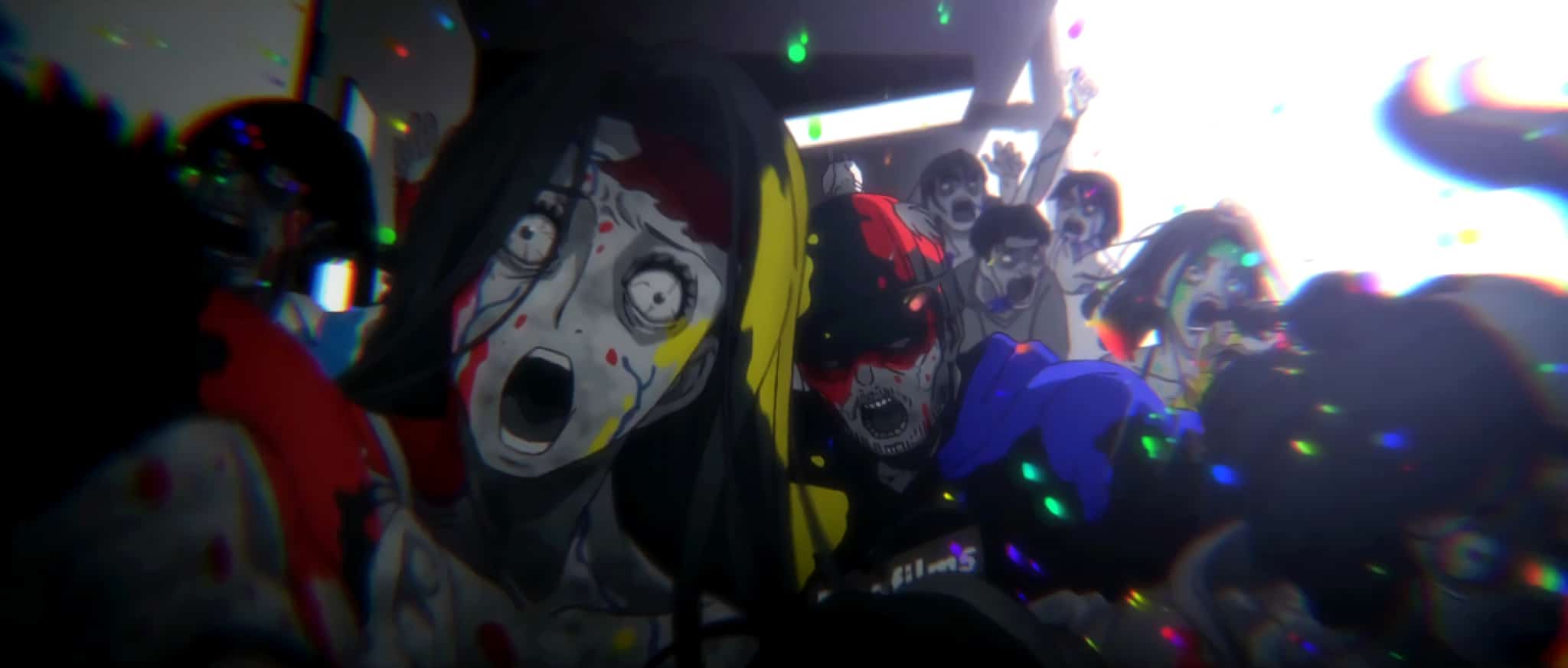
Making a bucket list at the height of a zombie outbreak seems ridiculous, yet totally reasonable when you’ve spent the last three years overworked and undervalued. In real life, our workforce already feels zombified as higher-ups enslave the working class to high production and insufficient pay, so it’s nice to see Zom 100 exemplify that notion. Zom 100 also immediately captures that essential reminder to “live now,” which has become especially relevant as the Covid-19 pandemic found most people rekindling old hobbies and discovering new ones as death and sickness felt ever near.
Though there isn’t a lot of character-building in episode one, the titular 100-item bucket list promises an eye-opening, personal journey with our protagonist Akira. Thankfully, the opening didn’t shy away from the gore and electrifying tension of the zombie attacks, making this an interesting horror/slice-of-life/coming-of-age/drama to keep an eye on.
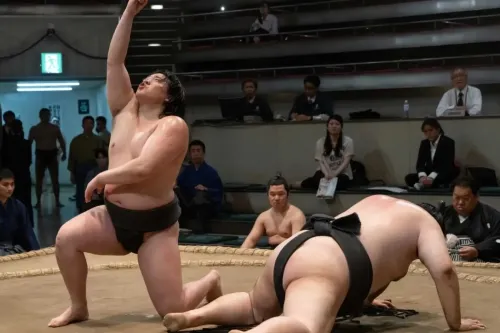
There’s not a lot of good sumo representation out there. The ancient Japanese sport is often caricatured for laughs; in fact, it has a rich and complex history spanning centuries. It’s cultural but questionably brutal, revered but unable to compete against newer combat sports. And while sumo negotiates its role in an increasingly modern world, its participants continue to rely on it for a living, making it at once outdated and necessary.
Enter Sanctuary, a Japanese Netflix original that captures all this nuance to the best of its ability. The drama is a gritty and realistic behind-the-scenes look at the sport, a raw portrait of all the literal blood, sweat, and tears that go into it. If you can stomach a fair amount of violence and gore, then you’ll appreciate what Sanctuary tries to do, which is smartly reintroduce sumo to a new generation.
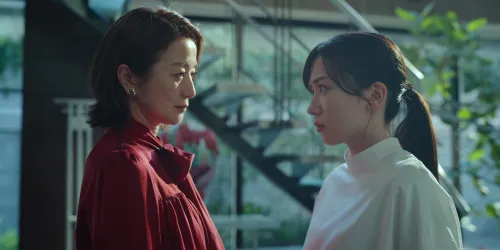
Not fully a mystery and not entirely a thriller, yet on the cusp of both, the initial setup of Burn the House Down promises a definite answer and dismantles it in every episode. Sure that her mother was framed, Anzu infiltrates Makiko’s new lavish life to prove that the fire set to her home thirteen years ago was no accident. She knows the culprit but lacks evidence, but when she’s reacquainted with Makiko’s eldest son, his reclusive demeanour takes a sinister turn. The premise is straightforward, yet it’s hard to look away from Anzu skulking around as she finds remnants of her mother’s old life and sweet-talking the family that destroyed hers. Trying to piece together that fateful night isn’t simple but feels worth the unexpected detours three episodes in.
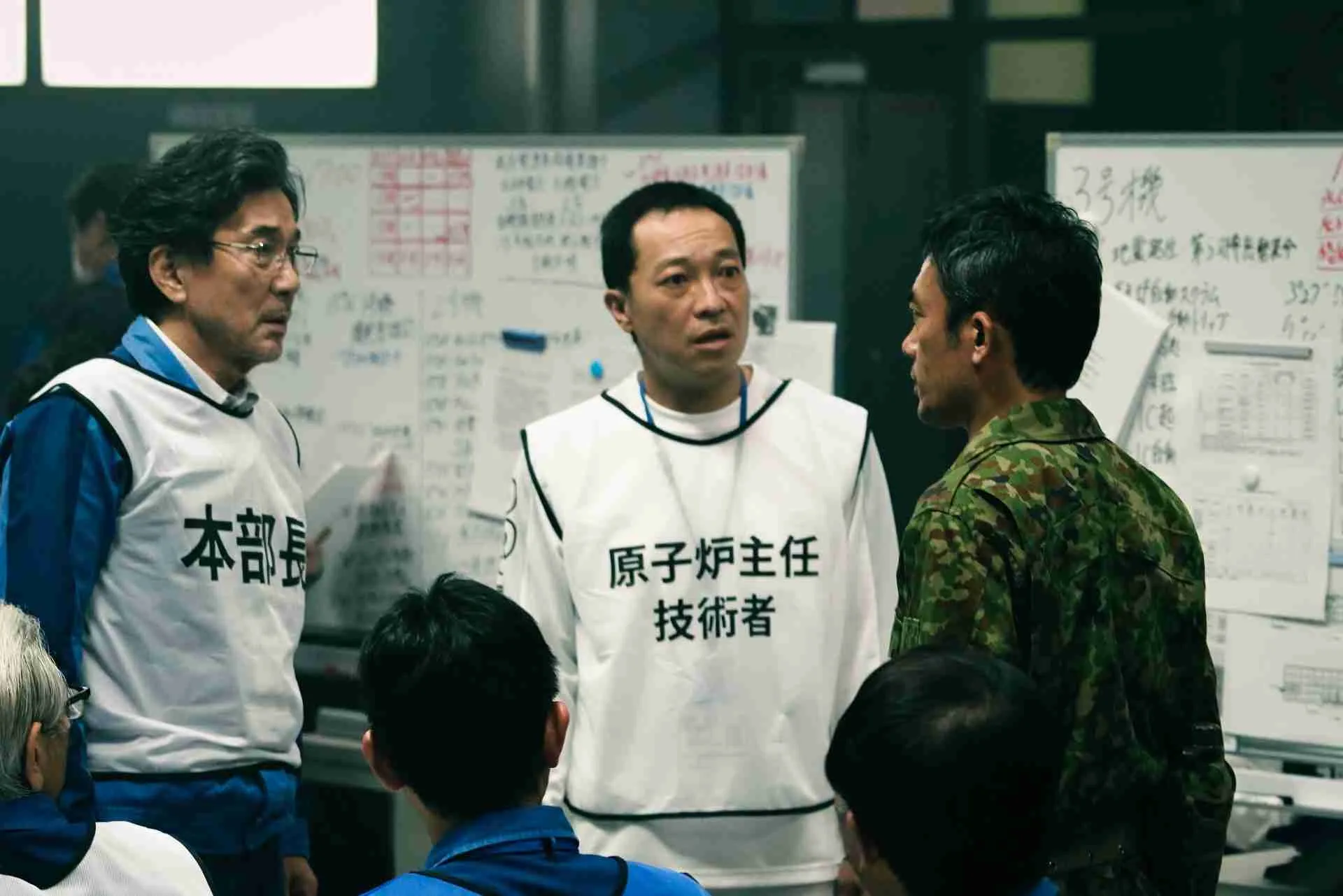
The series follows three perspectives: a government official, a Tokyo Electric Power Company employee, and a worker at the Fukushima Daiichi Nuclear Power Plant, each with their respective teams tackling the aftermath of the March 11, 2001 earthquake and tsunami. From the reporting updates to the public to the dedication of first responders, ‘The Days’ excels at piecing together the macro- and micro-decisions that went into saving the residents of Fukushima. The series deepens the narrative to be more than a mere recollection with its scenes of the families of the victims and the residents as they evacuate their homes. Its steady pace, emotional close-ups, and suspenseful score capture the harrowing atmosphere of Japan’s worst natural disaster.
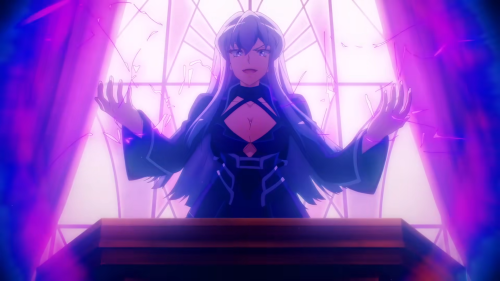
It’s a new term at Kimberly Magic School, an academy with an 80% survival rate. Immediately we are introduced to the school’s magical compound and our two main leads, Oliver Horn and Nanao Hibiya. Nanao, in particular, sticks out in her samurai garb and nonchalance toward danger (and most social cues), which is saying something since this is already an odd world filled with talking plants, magical creatures, and a busty, threatening headmistress. Because it chooses worldbuilding over backstories, the fantasy series doesn’t seem as formulaic as it could be. But it does expertly set up the dangers the students will experience in the next seven years. It’s also interesting that the magical students rely on swords instead of the usual wands; the possibility of even deadlier fights later in the series makes it an easy draw.

A man living in the countryside, going through a fairly mundane but happy life, until his violent past comes back to take it away… It’s a familiar story, one that studios keep returning to time and time again. Newcomer studio E&H Production has taken this story for Ninja Kamui, but with Jujutsu Kaisen’s director Sunghoo Park at the helm, the trope isn’t used for a safe bet– instead, it’s a great choice to showcase what the studio can offer. The action sequences feature his signature flair, with stunning detail, excellent choreography and point-of-view shots that place the viewer in the fight themselves. That being said, it’s also Park’s first time on an original work that isn’t an adaptation, or inspired by an already existing franchise. The show still needs to build up its world and the emotional stakes around Joe Higan, but so far, Ninja Kamui is a pretty decent introduction to Park’s new studio.
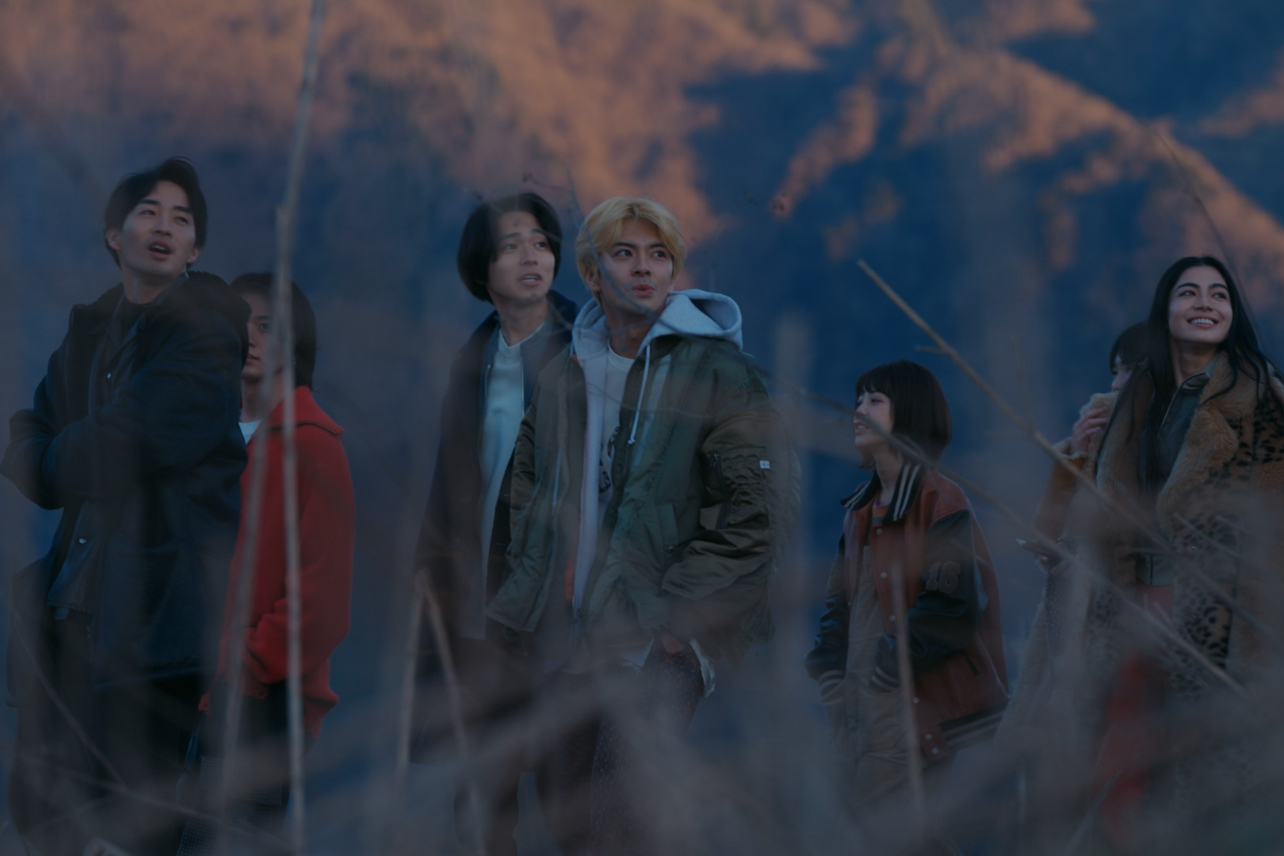
Even within the first two episodes of the Japanese reality series Is She the Wolf? (a spin-off of parent show Who Is the Wolf?), it admittedly isn’t very clear how the premise works. At least one female contestant in this pool of 22- to 32-year-olds—all of whom happen to be performers of some kind—has been told that they ultimately cannot reciprocate when somebody chooses them by the end, though they don’t seem to be told what they win if they comply. And with the reveal of who one wolf is during the first episode, the twist starts to feel more cruel than intended, with the chosen woman feeling genuinely heartbroken about not being able to get closer to the man she’s interested in.
But it sure makes for good TV. With this layer of suspicion and heightened emotional stakes, even watching the supposedly regular contestants becomes more engrossing: are they sincere, or are they using their performance backgrounds to good use? And despite the central twist, there’s still something calming about Is She the Wolf?, as all of the contestants are refreshingly polite and soft-spoken—avoiding the kind of trashy behavior that often makes American dating shows equal parts exciting and irritating. These are just well-adjusted adults with jobs exercising caution as they get to know one another.
It’s chilly this summer with vengeful spirits, cursed hands and double pupils in the horror-comedy Dark Gathering. Keitarō Gentōga has always attracted ghosts, and despite his fear, he is ready to socialize again after two years. Unlucky for him, his first student as a tutor is Yayoi Hôzuki, his best friend’s cousin obsessed with finding the ghost that stole her mother. Although Yayoi’s obsession with using a reluctant Keitarō is played up for laughs, her moe appearance preserves a level of disturbing (thanks to her double pupils). By episode two, the story still feels shallow, but there’s enough spook to carry you through the heat.
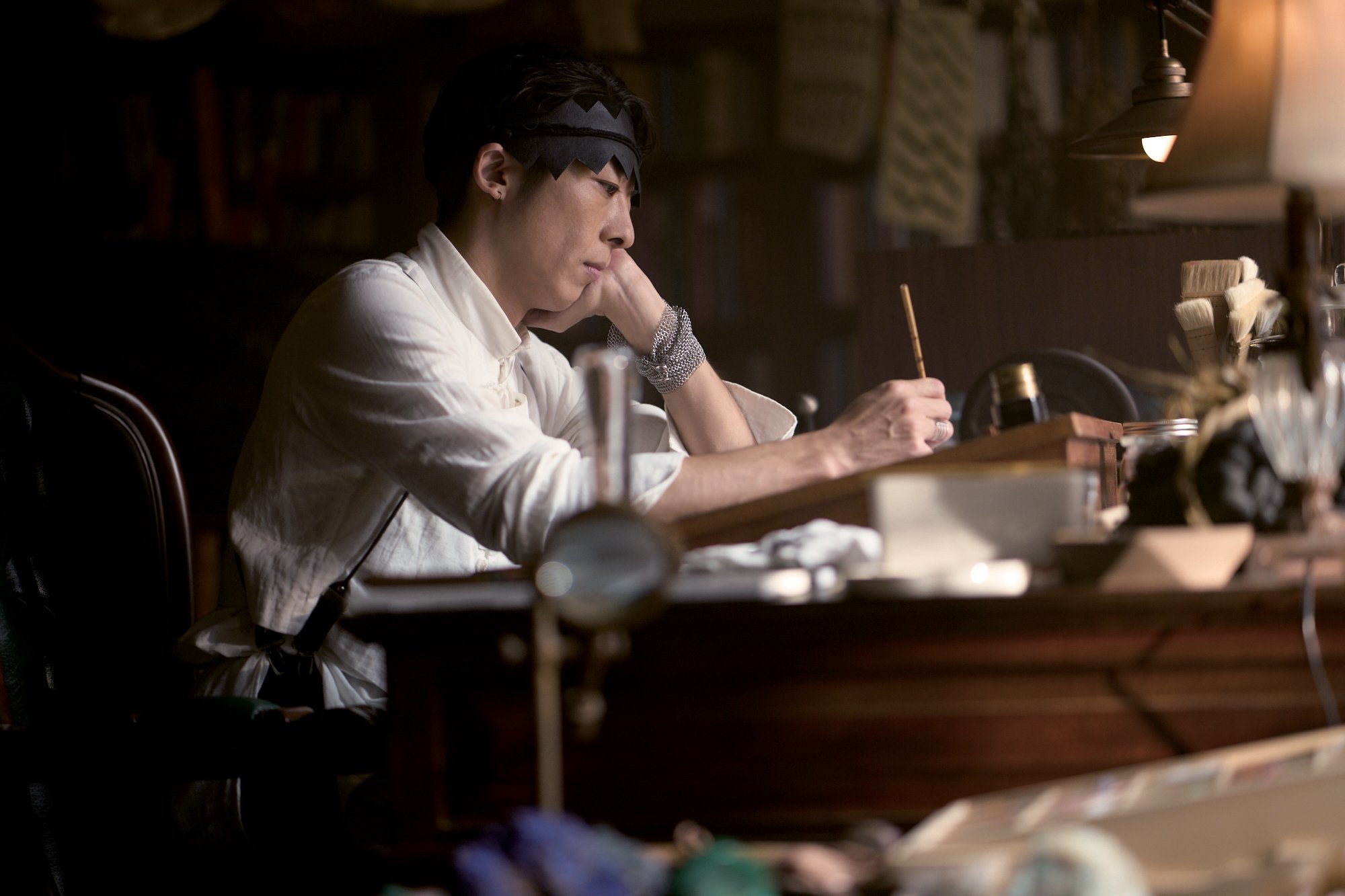
As an adaptation of a story written to commemorate the Louvre’s comics-focused exhibit, Rohan at the Louvre expands the short story into a riveting, nearly two-hour supernatural mystery film that contemplates Japanese art in context with the world. The original story is a spin-off of the popular manga Jojo’s Bizarre Adventure, so this film adaptation may shock fans expecting the same plot points and the vibrant, colorful style of the manga. However, the shadow-heavy cinematography, alongside Issey Takahashi’s performance, casts the eeriness needed to make this story work on film. It’s a change that fits a story all about art as a depiction of pain and desire, severing the self from the past, and escapism through stories.

Best known for its cute characters, Sanrio has partnered with Netflix to deliver a children’s adventure mini-series centered on their laziest egg yolk Gudetama. If you’d like to know how an egg like Gudetama can exist, this show conceives of a world where once out of their shells, all eggs have sentience, from regular chicken eggs, to eggs of other species, and to various forms of egg dishes like omelets and flans. While it’s slightly horrific to imagine eating these kawaii creatures, the show embraces the absurdity of its premise, depending heavily on food-based puns, as well as contemplating the purpose of raw eggs. This show may not be to everyone’s taste, but it’s certainly one of a kind, and short and sweet enough to swallow.
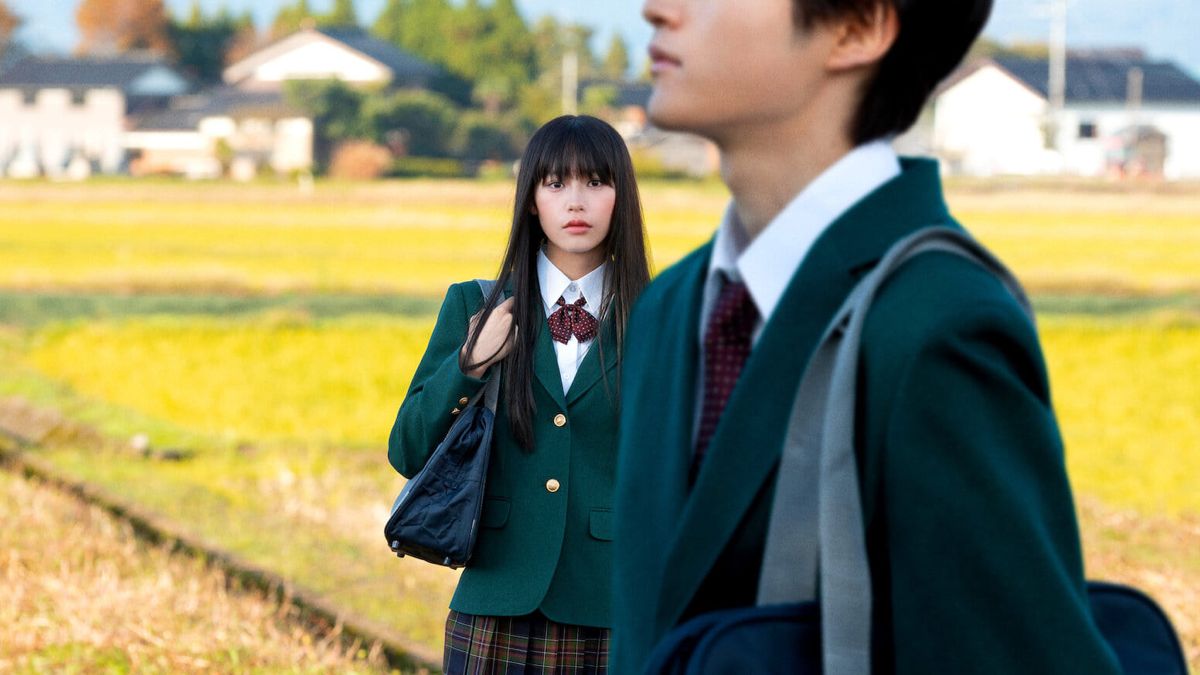
From Me to You: Kimi ni Todoke is a high school romance drama. It’s sweet, it’s wholesome, and it’s comfortingly familiar. It leans more on its romance than its comedy. It doesn’t have high stakes fantasy or action-packed battles, but it captures the high school experience in such a lovely way. Of course, the show would likely reach its romantic happy ending, but what makes the show compelling isn’t just the thrill of connecting with a crush– it’s the inspiration for Sawako to open up, and enable her to connect and have friends. The live action adaptation may not fully capture everything from the original and it speeds through the plot, but it retains the parts that make it work, even for viewers totally unfamiliar with the story.

After his team loses in the prefectural tournament finals, Yoichi Isagi is invited to join an isolated training program designed to create the best striker in the world in hopes of Japan winning the World Cup. The program’s designer believes that great strikers are selfish and egoistic players. As a more intense sports anime, the stakes of becoming the best striker in Japan (and the world) or never playing football again keeps the suspense high. The series does a great job of balancing the action and taking the time to develop the characters and their motivations. Blue Lock is a solid, high-concept anime for the world’s most beloved sport.

Modern dating can seem so frustrating, because it feels like there’s a set of nebulous, unwritten rules behind it, and every single player in the game has different levels of awareness and variations to each rule. Turn to Me Mukai-kun depicts this through the titular office worker, who happens to be out of the dating scene for ten years. As he tries to go back into the dating market, he’s well-meaning, but totally ignorant, so he stumbles at certain moments in his quest to cease his loneliness. It’s very relatable, and Eiji Akaso’s doe-eyed cluelessness makes Mukai seem more endearing than foolish. While there are certain moments that falter, and certain relationships that lack a spark, Turn to Me Mukai-kun is a lighthearted yet unpredictable dorama that might charm you into binge-watching the whole series.
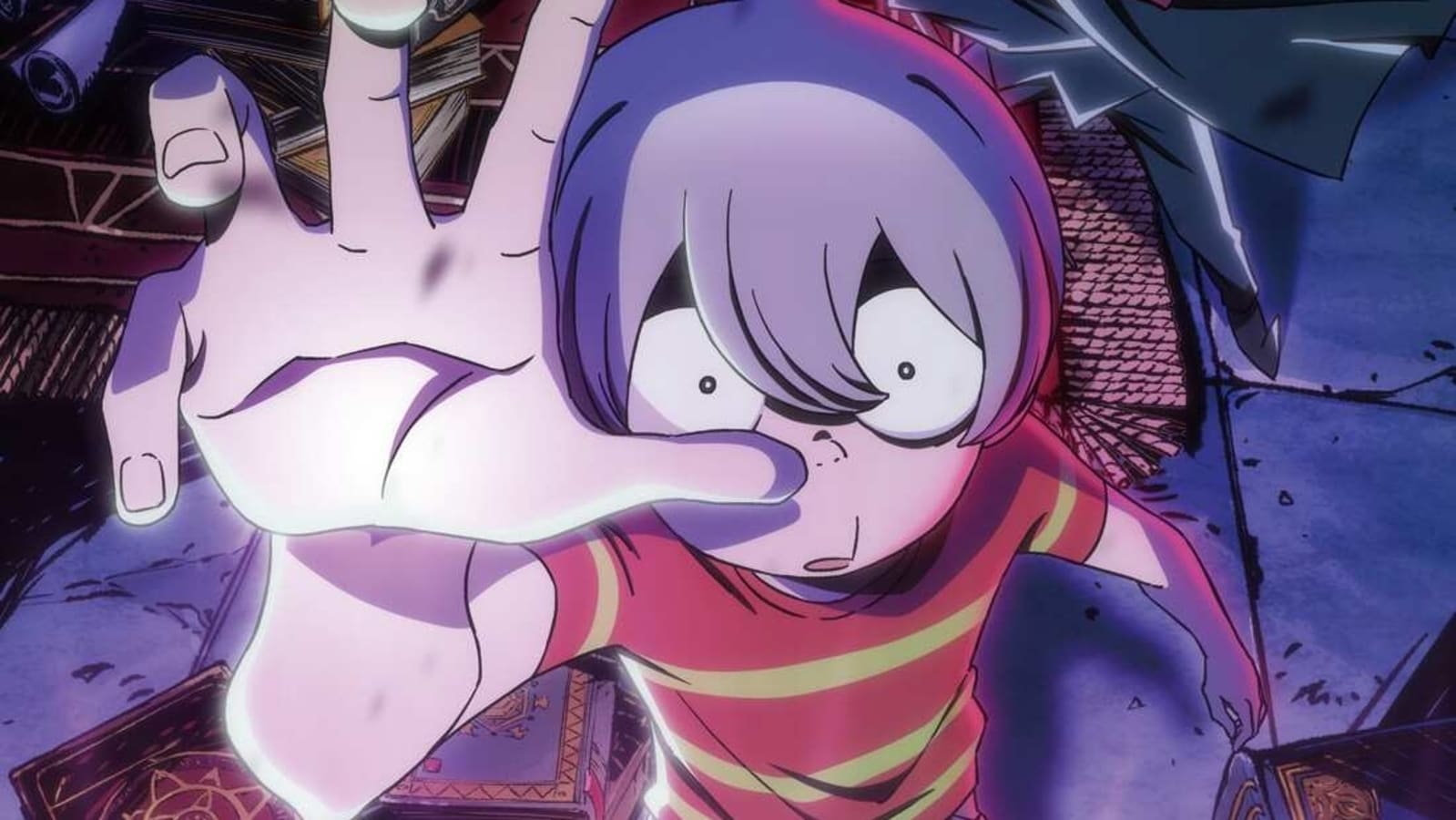
With a turbulent publication history – rebooting three times with three separate publishers – the Netflix adaptation of Akuma Kun doesn’t have the exact same plot or protagonists. Instead of the original Shingo Umoregi from the 60s manga and 80s anime, this show hands it off to Shingo’s successor and son Ichiro, who conducts the same magical experiments but also investigates rogue paranormal activity. However, this anime doesn’t stray too far from the original, taking inspiration from the 60s with its ink scratched art style, and even calling back the original director and voice actors. It makes for a weird and quirky supernatural series that stands out from today’s anime, while still honoring the original creator, the late Shigeru Mizuki, on his 100th birthday.

There’s a classic male character trope of stoic guys that don’t seem to be fazed by anything. Play It Cool, Guys has an ensemble cast of four of these cool characters, but they aren’t quite put together as others might think. While on the outside, they seemingly handle setbacks easily, the show’s short vignettes and corresponding internal monologues reveal their relatable day-to-day clumsiness. The contrast makes these characters feel so endearing, more so as they get to know each other. As the show progresses with their friendship, the series feels like kind reassurance for all clumsy people out there.

Everyone has those days where nothing goes right, but no one’s having as bad of a day as detective Yuji Kudo is in Hard Days. It isn’t just that nothing goes right– everything goes wrong, and he’s just a hair away from losing it all each time. This Japanese adaptation might take a slightly more serious tone than the South Korean original, but it does retain its ridiculous escalation of increasingly terrible things that could possibly happen, with Junichi Okada and Go Ayano letting loose in their detective characters’ morally dubious behavior. Hard Day is a decent watch, if a bit bloated, especially for those familiar with the story.

It’s hard not to roll your eyes at what looks like yet another white-centered story set in a foreign land. But Tokyo Vice, thankfully, is hardly that. Co-produced by crime drama auteur Michael Mann (Heat, Collateral, Miami Vice), the HBO series is a stylishly thrilling and comprehensive look at the yakuza crime ring running Tokyo from the underground.
Ansel Elgort’s Jake, an investigative journalist, may be our way in, but it’s the rest of the characters who grip our interest. They’re gangster tropes fleshed out with rich and complicated backstories. Ken Watanabe’s Katagiri is a hardboiled detective—so effectively cool and scary—who you’d like to believe is good, but also has his own secrets lurking in the shadows. Rachel Keller’s Samantha is a sultry hostess who, unlike in mob films past, actually has character, motivation, and specific problems she figures out on her own. Sato (Sho Kasamatsu) and Emi (Rinko Kikuchi), Jake’s yakuza friend and newspaper editor respectively, are also given stories that genuinely intrigue and compel on their own.
Lit by Tokyo’s neon glow and set to Mann’s signature fast pace, this is a series not to be missed by action-crime fans.
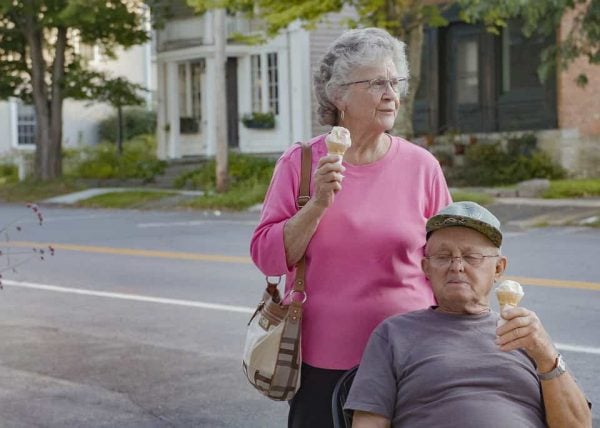
This docuseries follows six couples from Japan, the U.S., Spain, Brazil, and India, as they share their stories of a lifelong partnership.
It might sound like any other Netflix Original, but there are no twists or turns, and it never feels forced or aimed at a trend. Instead, it’s a mirror of the peacefulness that the couples have built together: a tender and simple existence that’s impossible not to aspire to.
The first episode follows a couple in Vermont who maintained the last farm in their area until passing it on to their son. Once high-school sweethearts, Ginger and David went on to have six children, and stay married for 60 years.
This life of quiet doesn’t necessarily mean an easy life, especially as the two have to pick between expenses like affording care or getting their grandchildren birthday gifts. Their biggest concern at this point is making it easy for their children after their passing, which carries its own weight.