Movies to Watch From Netherlands
To access filters, visit our homepage.
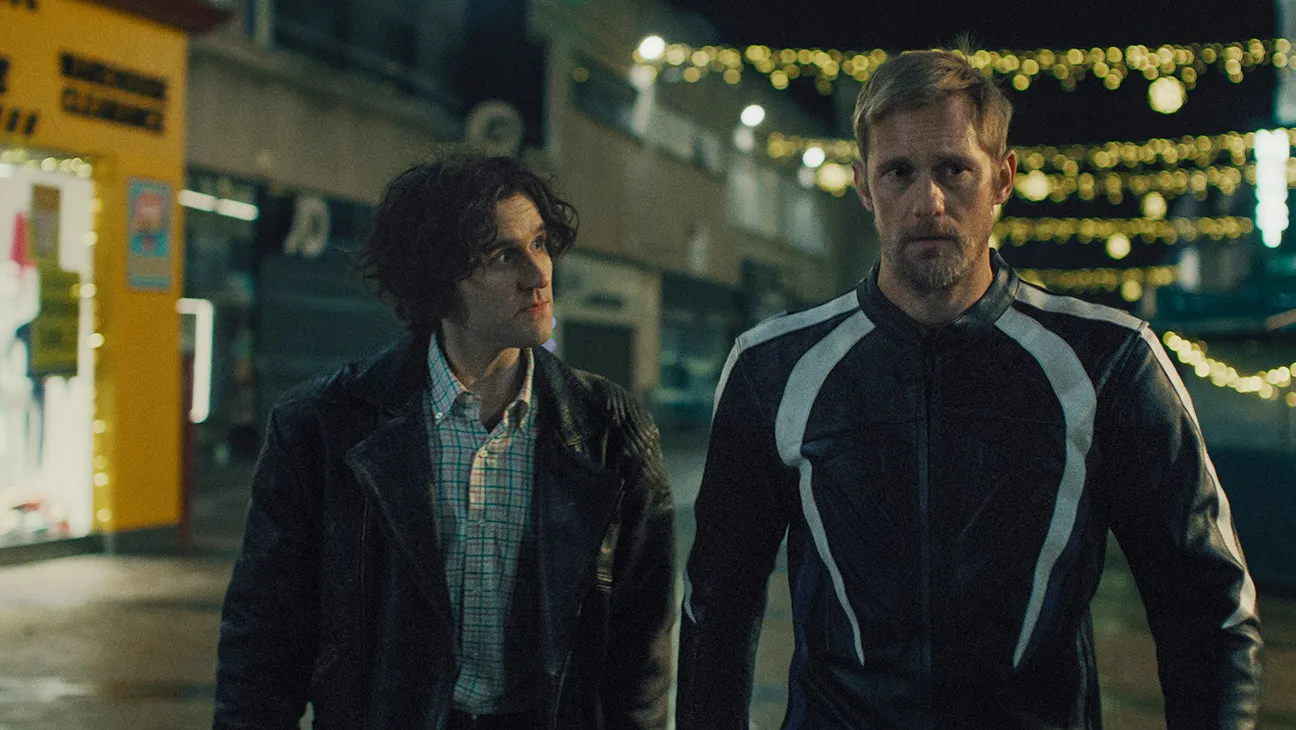
Given the other depictions of BDSM on film, we weren’t sure how Pillion would turn out. Much more so with a first-time feature director and two actors taking on their first leading gay roles. Thankfully, the way they portray this unconventional relationship is undeniably stellar. It’s non-judgemental, yes, but it’s not cloying; Sweet, while still fully recognizant of their incompatible desires; Humorous, though not at the community’s expense. Like Colin, Pillion takes on a wide-eyed curiosity towards a world whose few portrayals only focus on the salacious, and brings us to feel his yearning for more than what Ray is willing to give. Ray shouldn’t be your personal example of what a good dom should be and Colin was definitely unprepared for their dynamic, but Pillion ultimately works because of how freely it lets them explore their wants and change as a result.
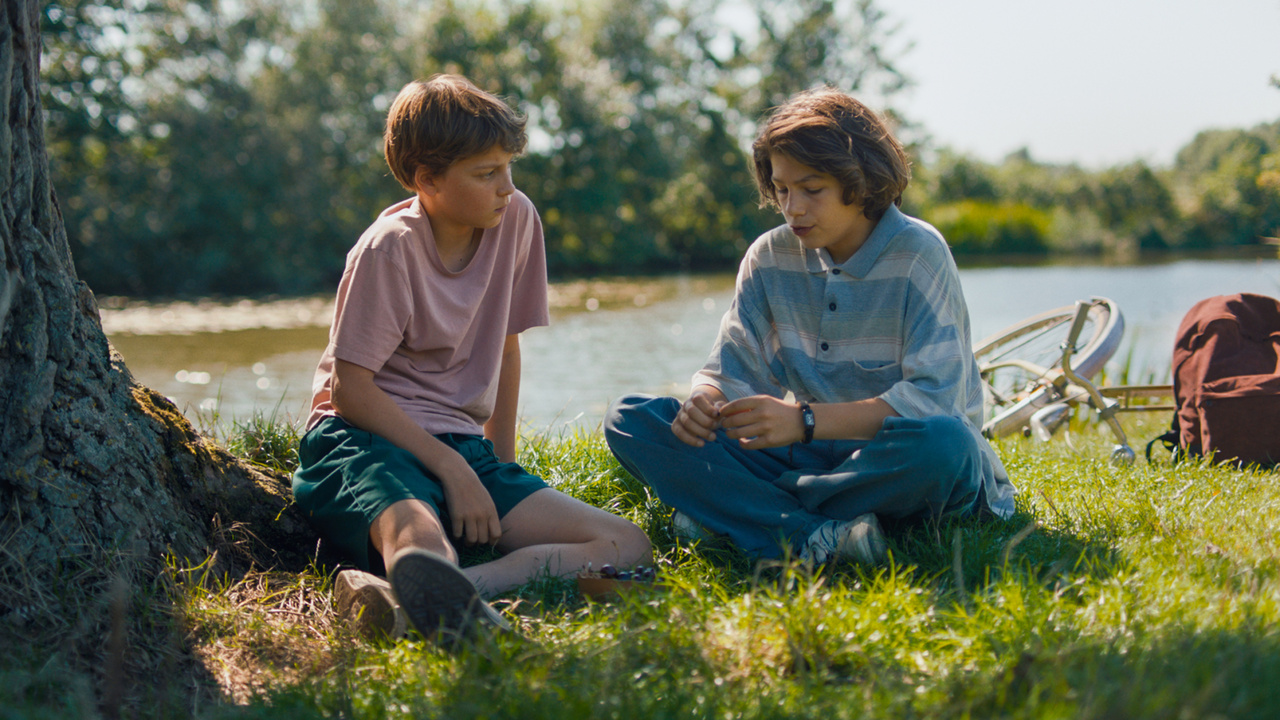
Because of the progress society has made, modern day gay romances don’t need to rely on tragedy for conflict. That’s because many of the societal barriers gay people used to face are now broken. But that doesn’t mean it’s now easy to come out and call it a day. In this Belgian-Dutch drama, Elias still has to figure out his own feelings, a struggle that any kid goes through when they have their first crush, same sex or otherwise. Young Hearts simply acknowledges that it’s normal, and shows to those still figuring it out that it’s all part of the process.
All We Imagine as Light is a political film that has many smart and moving things to say about the loneliness of migrating from the country to the city, the double standards women face on the daily, and the ever-widening gap between the rich and poor. But thanks to director Payal Kapadia’s deft hands, these weighty themes don’t hit you like a brick in the face. Intertwined in the rich inner lives of the two Malayali nurses and the Marathi cook who lead the film, they come off as subtle and poetic, like everything else about the film. There’s a quiet power at work here, and it will entrance you till the end.
In the 1950s and 60s, as Congo freed itself from Western rule, it also played a vital role in the Cold War and worldwide emancipation of colonized countries. The documentary unearths this often-forgotten part of history in an unconventional manner. Instead of using talking heads and chronologically going through past events, it uses activist musicians Abbey Lincoln and Max Roach as a starting point. It borrows their language—jazz—to tell their story. The result is mesmerizing. Many things are happening all at once; there’s the quick flash of images, the jarring cut from archival footage to live performances; and the bold text on screen, which serves as our narrator in a way. There are excerpts from newspapers as well as poets, diplomats as well as musicians. Then there’s the music, of course, whose fast-paced and unpredictable beats match the anger mounting in the film. Soundtrack to a Coup is strong, inventive, and further proof that there are more ways than one to teach history.
Teenagers forced to grow up quickly and spend their prime years wiling away at garment factories sounds like a grim reality, and it is, but in Youth (Spring), Chinese documentarist Wang Bing captures more than just the inherent tragedy of young labor. Here, they build friendships, find love, discover an affinity for their craft, stand up for themselves against exploitative bosses, and look for ways to have fun. Even if it’s just as simple as eating street food, spending the night at an internet cafe, or finding nice clothes, we’re with them in every way. Though it’s never explicitly political, the documentary makes you think about the conditions that put the kids there in the first place, such as our insatiable need for cheap and trendy clothes, governments turning a blind eye to child labor, and a skewed system that favors these above people’s—especially young people’s—well-being and welfare.
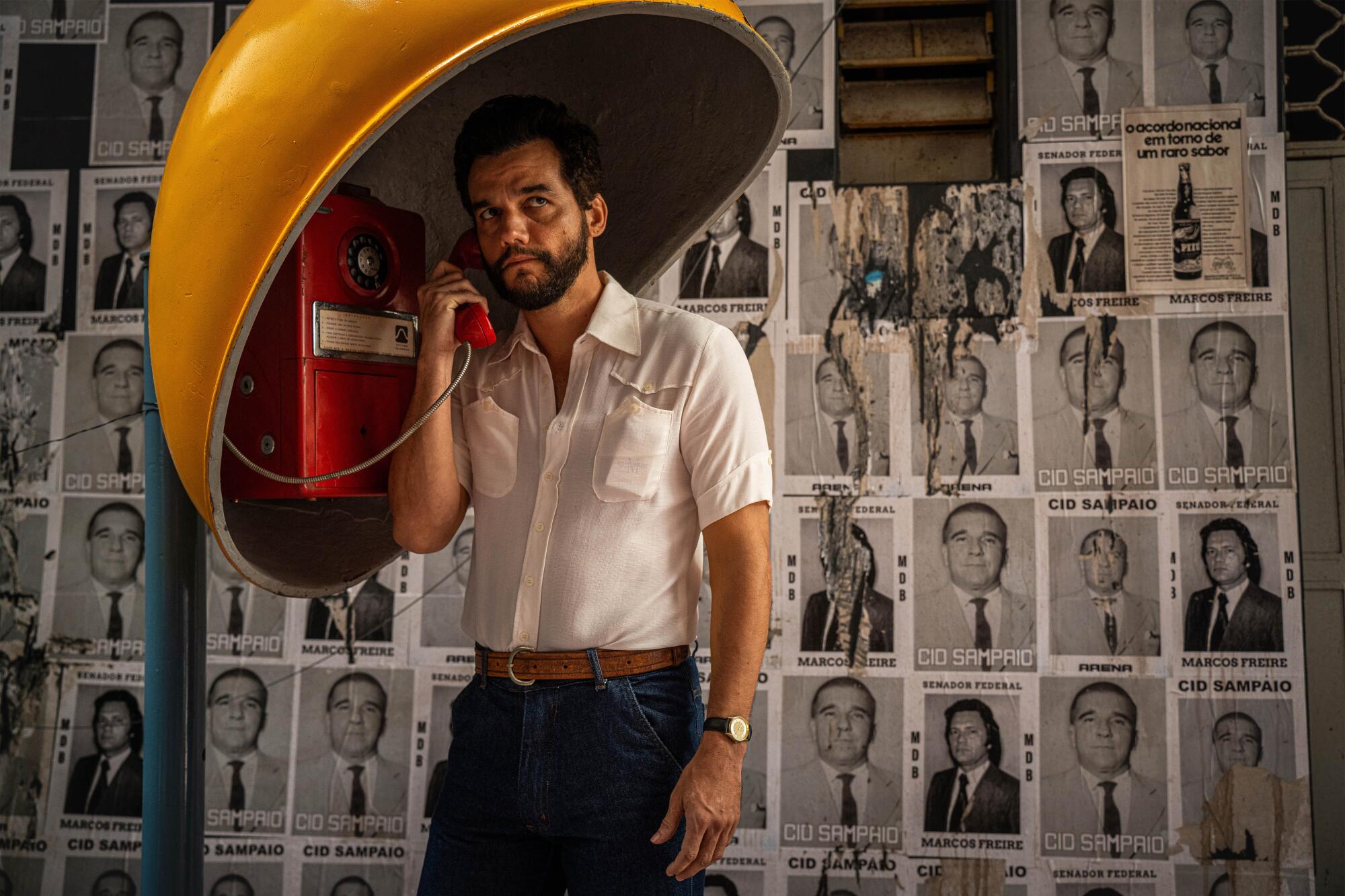
From 1964-1985, Brazil was under a military dictatorship. If you’re looking for films about this period of time, you can check out 2024 Oscar winner I’m Still Here, which poignantly depicted the memoir in a straightforward manner. But if you’re looking for another approach, you should check out this political thriller. The Secret Agent takes on a more exhilarating spin, with the main character Armando right in the action. Narcos’ Wagner Moura delivers an excellent performance of a former professor who isn’t actually an agent, but is somewhat forced to act like one, with his role to forge his passport and to find information on his missing mom. And as he tries to flee the country, his story echoes the genres of the time, with slow, intense zoom-ins that remind us of Cold War spy paranoia albeit more sunny, and a series of tiger shark attacks that reminds us of thrillers like Jaws (1975). It’s this approach that makes The Secret Agent an exciting and original take on this tense time period.
This sociologically revealing documentary follows the attempts of the largely “snow-white” staff of Amsterdam’s Stedelijk art museum to refresh the institution’s collection, just 4% of which was by women artists at the time of filming. The museum also featured exactly zero works by artists of color — another embarrassing truth that the Stedelijk’s staff, headed up by (white) museum director Rein Wolfs, work frantically to rectify by acquiring new works and “turning the mirror around” on the canon to contextualize whiteness as a distinct category of its own, rather than “the standard” (as the museum’s own Charl Landvreugd puts it).
Though it features discussions on such worthy topics as artistic canons (who defines them?), linguistic nuances (should works with problematic titles be renamed?), and how to decide which art will be put into storage to make room for works that better reflect Amsterdam’s diverse population, this documentary is less interested in delving into the dark side of art history itself than the human behavior that arises when confronted with such uncomfortable truths. More than anything, what director Sarah Vos is perceptively spotlighting here is the intense discomfort and self-consciousness of the museum’s white staff when confronted with these historic issues — when, in a sense, the mirror is “turned around” on them.
In this documentary by Bianca Stigter, a three-minute home video of a nondescript Jewish town in Poland is examined in great detail to reveal the history and humanity behind it. Taken just before the Holocaust, it’s one of the few remaining proofs of life the town has before its population was decimated in the war. And so the footage is repeated and stretched in this documentary, because as the narrator puts it, “as long as we are watching, history is not over yet,” and the people have yet to be gone.
Glenn Kurtz, the grandson of the person who shot the home video, takes it upon himself to investigate the history of the town and its citizens: what they were and what became of them. The results are often grim and unsettling, and the eerie editing matches them with great effect. But when it’s not haunting, the film is oddly hopeful—for a future that remembers its past and preserves it in meaningful ways. Couple this sentiment with the narrator’s own poetic observations, and you get a powerfully moving elegy about loss and memory.
Prayers for the Stolen takes more time to observe life in its rural town, than to showcase the action and violence inflicted by the cartels that pass by. It’s a needed perspective. This move drives home how long these cartels were left unaddressed, as the women of the town have gotten used to the danger and were unable to leave for whole generations. It makes clear how their lives have been interrupted, limited, and held hostage at the whims of whichever group takes over the village. But it also allows writer-director Tatiana Huezo to help us witness the love and tenderness Ana holds for her mom and friends. Prayers for the Stolen is tough to watch because of the safety they lack, but it’s also a beautiful tribute to the relationships they’ve forged despite that.
It’s tempting to say that Heartbreak High, with its gloriously unfiltered takes on relationships of all kinds, is just another Sex Education replica, especially since both shows don the same multicolored fashion and Commonwealth accent. But while Heartbreak High isn’t breaking new ground by having kids and adults talk openly about sex and gender, it’s also bold, funny, and insightful in its own right. The characters are well-drawn and the problems are relatable; the show itself is sometimes annoying but also, more importantly, authentic. It’s perfectly imperfect in that contradictory teens can only be.
Narrated by the familiar voice of Jack Black, Apollo 10 ½ is a throwback story told with admirable specificity and imagination. Black plays a grown-up Stan, who looks back on his younger years with a mix of fondness and wonder: how did they get away with the things they did then? American suburbia in the 1960s was both loose and conservative, caught between a generation holding on to the reins of the earlier century and one eager to launch into the next.
Stan, as the youngest child of a big, rowdy family, gives us a charming look into the times, as well as a projection of his own fascination: Apollo 11 and the space age. He inserts himself in this monumental narrative and generously brings us along in his fantasy. Sometimes it’s hard to tell whether Stan’s recruitment by NASA is actually fact or fiction, but that’s part of the fun, especially since Stan himself doesn’t seem to mind at all.
There are many ways through which a friendship can form, but sometimes, it’s due to compassion for someone who needs help. Despite the somewhat fantastical clairvoyant premise, Beautiful Beings is mostly about this simple friendship formed with a bullied kid, which turns out not to be so simple at all. From a bummed cigarette, the friendship grows into a protective support system, filling up parental neglect with teaching each other how to live, but while some of these moments are totally wholesome, other moments lean into mischief, and sometimes violent danger. It may be a fairly familiar coming-of-age premise about male friendship, but Berdreymi executes it well, has a compelling cast, and isn’t afraid to go dark when necessary.
Leo and Remi are close. They play, eat, and sleep together, and in between those moments, they share every thought they have with each other, no matter how big or small. Theirs is a precious friendship, as pure and as intimate as can be, but all that changes when they begin middle school. Subject to heteronormative norms and preteen mockery, their friendship starts to crack as Leo and Remi’s different definitions of manhood emerge.
Subtle but evocative, quiet but deeply powerful, Close takes a closer look at boyhood and male friendships—how they’re lived, defined, and seen. Plenty of questions go unanswered in this film, but if you’re comfortable with simply empathizing with the characters rather than knowing every answer, then Close comes highly recommended.
This crazy adventure thriller was Colombia’s nomination for the 2020 Oscars. “Monos” translates to monkeys, the nom de guerre of a group of teenagers holding an American hostage in an isolated bunker. Other than the occasional visit from their supervisor, they’re left to their devices, forming relationships, smoking weed, drinking, and eating psychedelic mushrooms. One day, on top of the hostage, they’re also trusted with a milk cow, named Shakira. A party goes wrong and one of the Monos accidentally kills Shakira, triggering a series of events that sends them deep into the jungle, and deep into despair.
Monos is not an action movie, it’s more of a character study. It was loosely based on The Lord of the Flies.
Going deep undercover, integrating one’s self into a group without any suspicion, and passing out information to another party… That’s the job of a mole. While they mostly lurk in various government agencies, laboratories, and other special circles of power, The Mole Agent instead goes deep undercover in a Chilean retirement home, having stakes that may not be world-ending, but take more personal, domestic weight as Sergio befriends the residents, records and reports on their well-being, and tries to figure out what exactly Romulo wants as evidence. It’s a funny situation, one that depicts the resident home with warmth, albeit with the occasional spy cams and an old-fashioned piano score, but it can be difficult to figure out where the line is between truth and fiction, as some scenes can feel a bit staged. Still, The Mole Agent is a charming portrait of old age, made so compelling with director Maite Alberdi’s unusual perspective.
There’s plenty of things happening in folk horror film November. With devils snatching livestock, magical automatons called kratts, and trying to trick the Plague while in the form of a pig, love surely can’t bloom strong in these circumstances. And this would be correct, but the way this tragic romance unfolds is through eerie, yet captivating, black-and-white dream sequences made up bits and pieces of Estonian folklore, and the film shines best when focused on these sequences. The love triangle will be familiar, but the approach, the offbeat humor, and the raw practical effects would be bewitching until the end.
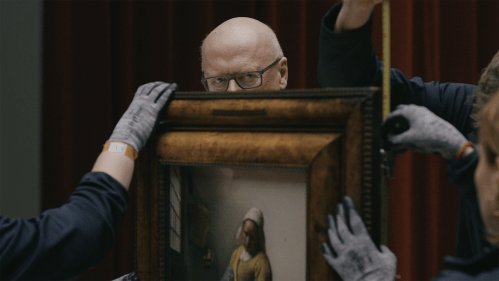
Less a documentary on Johannes Vermeer himself and more about the art scholar’s mission to study ideas of beauty and aesthetics from various perspectives, this documentary successfully takes an admittedly very esoteric subject and makes it compelling. Director Suzanne Raes easily gets to the essence of the complex questions and insights that these Vermeer experts have, but without dumbing them down or reducing them into generic academic talking points. In fact, the thing that really comes through in the film’s discussions is the emotion that these people feel in figuring out how Vermeer managed to paint such stunning images, and what the man was drawn to in human beings. It’s oddly persuasive; whether or not you’re a fan of 17th-century artists, watching Close to Vermeer feels like finally solving a puzzle.
While best known for his provocative, existential dramas, Lars von Trier also made a provocative mini-series with surprising supernatural horror. Set at Denmark’s leading public hospital, The Kingdom takes familiar medical drama conflicts in handheld camera and sepia tone, but infused with an unsettling understanding of how the finest minds can fail, and how small science can feel in the face of the unexplained. That being said, the horror is much more wacky than spine-tingling or terrifying, but it’s played off through von Trier’s signature absurdism, taking a more humorous and sardonic approach. Riget may be an unexpected entry for those who have heard of von Trier, but it’s a must-watch for the auteur’s fans, showing a different side to the notorious director.
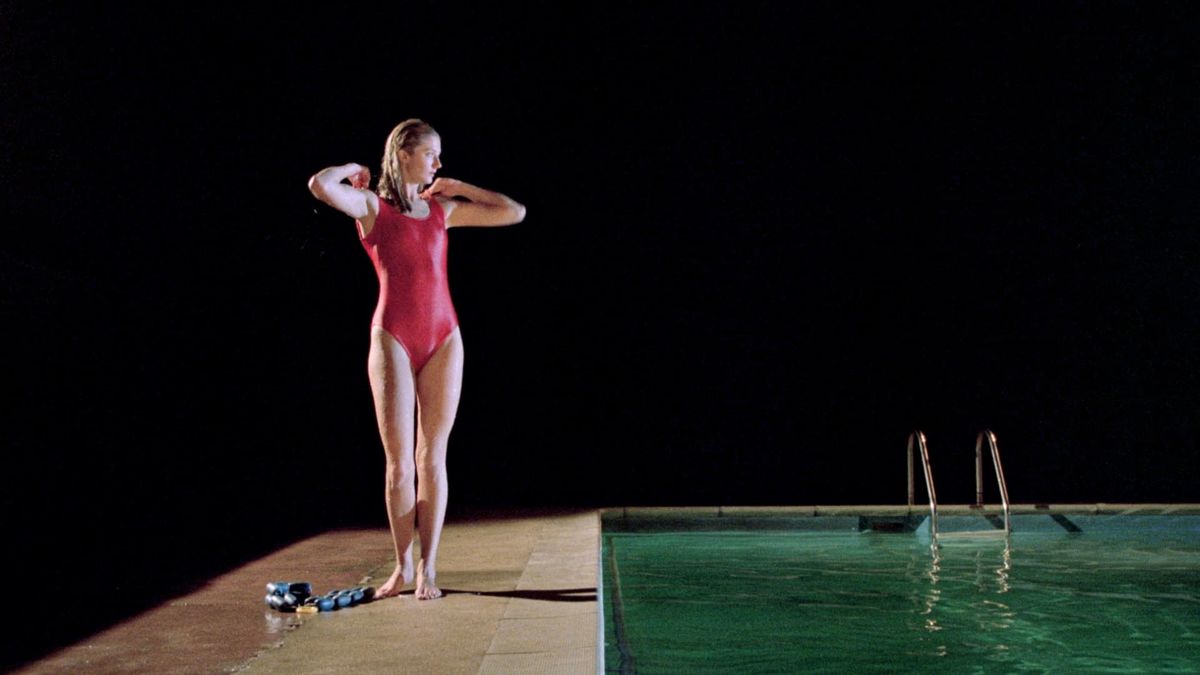
Murdering your spouse is bad, so it’s slightly bizarre how Drowning by Numbers has an unbothered, even amused, attitude towards its murders. Moments seem randomly placed, like the first scene of a girl jumping rope while listing the stars by name, and the film can be hard to follow, even if the production design and cinematography keep you drawn in. But as the film progresses, and Madgett’s son Smut enumerates the fictional games as if he was a historian of sorts, writer-director Peter Greenaway meticulously crafts a quirky, twisty crime comedy, where, like children’s games and the men in their lives, the murdering wives do what they do because they can get away with it. Drowning by Numbers cleverly plays with the way we treat folklore, structure, and rules, even down to the very medium Greenaway works with.
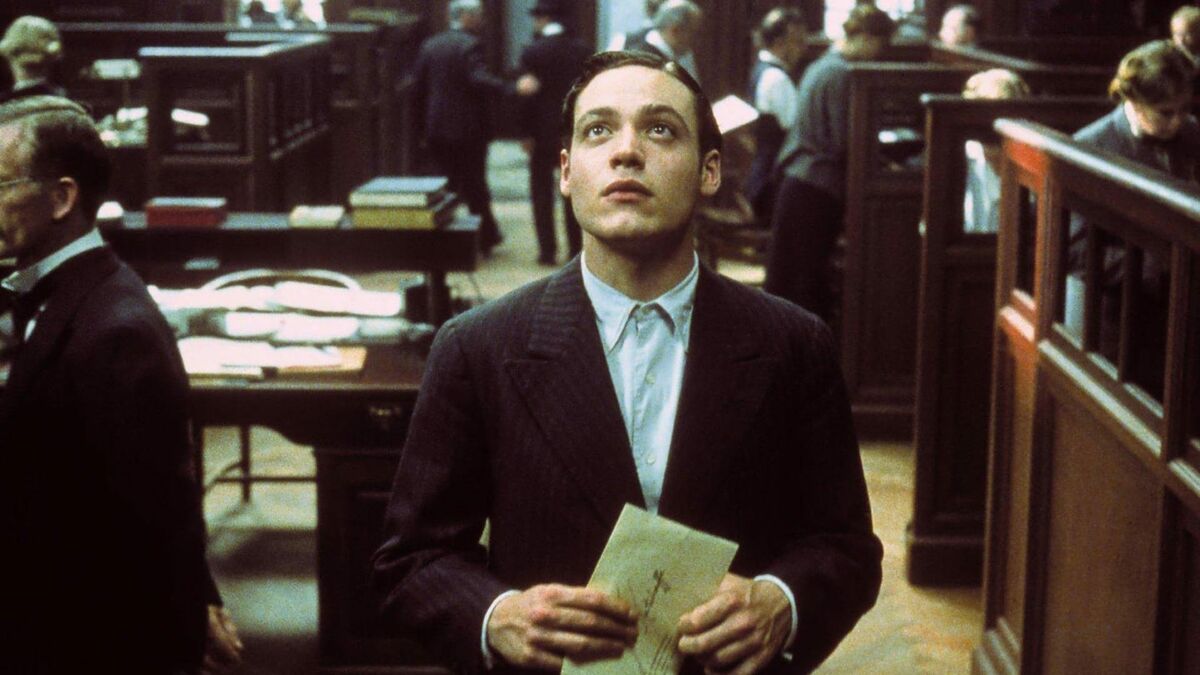
When someone does everything they can to stop you, even to the point of irrationality, that’s hater behavior. This is exactly what drives Dutch-Belgian drama Character. The murder mystery, that is, whether or not Katadreuffe actually killed Dreverhaven, is surprisingly not the most interesting part about this movie– it’s actually what the hell Dreverhaven has against Katadreuffe, because, as the film unfolds, the petty, irrational actions the older bailiff done against the newbie lawyer starts to add up, piece by piece, to the point that this actually starts to matter in Katadreuffe’s life, to the point that it wouldn’t be a surprise if Katadreuffe actually killed him. Gloomy, moody zoom-ins into their faces emphasize the leads’ intense performances, which they infuse with an understanding of the stakes that aren’t obvious to even their own characters. Karakter adapts the bestselling Dickens-like novel with style and subtlety.
In 1994, Danish auteur Lars von Trier came up with a TV series called The Kingdom, an absurd supernatural comedy that takes place in a rundown hospital in Copenhagen. The show was well-received enough to warrant a second season, but just as von Trier was polishing up the third and final installment, the deaths of more than one lead actor pressed pause on the project, till now.
More than 10 years in the making, The Kingdom part III, also called Exodus, is still very much centered on the weird patients and staff members that populate the Riget hospital, as well as the possible evil buried beneath it. The comedy/horror has a robot dishwasher and a giant head. Danes and Swedes are perennially at war with each other. Willem Dafoe and Alexander Skarsgard make odd cameos.
I’m not sure it’s possible to write a coherent synopsis without sounding like I’ve fallen off the rails, but know that it is a unique headscratcher of a show, more interesting as an experience than anything else. Von Trier was also openly inspired by Twin Peaks, in making it, so David Lynch fans in particular will truly enjoy diving into this world.
Known for his horror films, Kiyoshi Kurosawa shifts gears and presents a family drama in Tokyo Sonata. In the film, father Ryuhei, who’s expected to be the breadwinner, loses his prestigious job and chooses to hide his firing from his family. While this premise isn’t overtly scary, the film understands the terror of being unable to maintain the current comforts of your family. And the consequences: lose your status (at best) or your life (at worst). Teruyuki Kagawa’s performance crystallizes that sense of losing control, as each expression on his face betrays how secretly afraid Ryuhei feels. The disasters that this family faces threaten to never stop, and Kurosawa executes them perfectly through excellent story structure and performance.
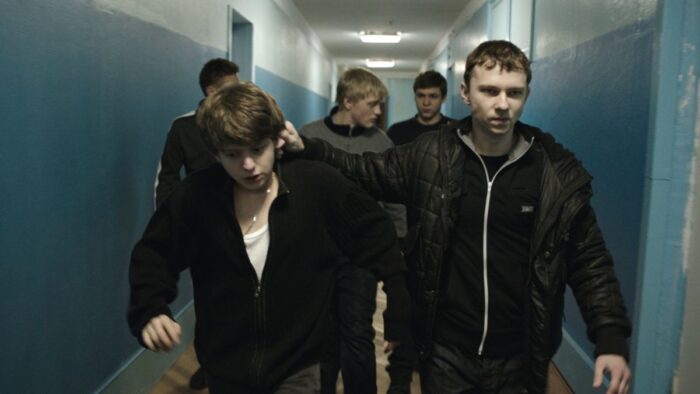
This teenage crime drama contains enough grit to stand on its own, but The Tribe’s real hook is in the way it’s told: entirely in Ukrainian sign language, without subtitles. Set in a boarding school for deaf students, new arrival Sergei must contend with an institution that’s run like a gang. His journey through the ranks is extremely violent and graphic, including unflinching depictions of rape and a back-alley abortion that lingers long in the mind.
Its unpleasantness will be a barrier for some, but for the curious, it’s an oddly balletic film. Among the misery, actors communicate the entire story via body language. Emphatic dialogue delivery conveys the mood of each scene (which often changes for the worse), and the characters’ actions speak loud and clear. Narratively it breaks little ground, and its darkness can’t be overstated, but there’s grace to its reliance on everything but words to tell its story. A film you won’t stop thinking about.
Gangsters usually deal in guns and drugs, but occasionally they branch out into other paraphernalia. Bullhead depicts one such gang. Nicknamed by the media as the Hormone Mafia, the crime thriller captures an organized crime network that threatens local cattle farmers to buy their stock of illegal growth hormones. Of course, the setting makes for a distinctly pastoral twist to the usually urban-set gangster thriller. The protagonist’s traumatic incident and the way he attempts to resolve it could only happen in a farm like this. However, fans of the genre will still enjoy the familiar themes of masculinity, revenge, and betrayal, especially with the intense breakthrough performance of Matthias Schoenaerts.
Travelling across the country is the plot of plenty of coming-of-age films, but for Ahmed in the Son of Babylon, it’s a much more harrowing journey. It’s easy to see why writer-director Mohamed Al-Daradji would select this familiar plotline. There’s the inherent tragedy of his separation from his father, which triggered the trip in the first place, but after a war, the uncertainty, the hope, and the potential dangers easily drive the film forward. But it’s also a straightforward way for Al-Daradji to take a snapshot of the country as Ahmed and his grandmother get to know various characters along the way, getting to see how the war waged for Arabization affected different parts of the nation, but more so on the ordinary person. Son of Babylon treads familiar ground, but as Ahmed grows up through this journey, the film smartly parallels his coming of age to that of a changing country.
If you’ve watched any World War II film, the plot of this historical drama would be familiar. A boy grows up not fully understanding the danger he’s in, and stays shielded until he meets a wounded British soldier. Of course, he gets into a situation way over his head. However, we won’t deny this familiar story works. Anchored by then-newcomer Martijn Lakemeier’s performance, this coming-of-age drama adapts the beloved Dutch novel in an empathetic lens, with the cinematography echoing the ways the adults around him attempt to shield him, as well as the way his curiosity pushes him to bear witness to what they’re hiding. Winter in Wartime won’t be the most groundbreaking wartime drama, but it does depict its story well.
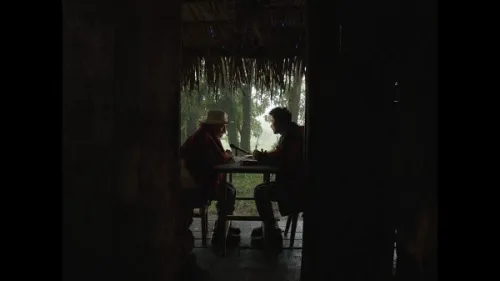
An indigenous language is dying, and the last two people who speak it have not spoken to each other in 50 years. In this calm drama from Mexico, linguists are sent to try to get them to talk so they can document the language.
The story goes that two men have stopped talking because they fell in love with the same woman, so there is a romance wrapped neatly within the linguistic story. What truly steals the show, however, is the breathtaking nature in which it’s all set – the stunning region of Chiapas.
Meditative, slow, and peppered with mysticism and subtle humour, Syndromes and a Century is a truly unique Thai drama. With a male and female doctor as the central protagonists, the story is split into two settings, in different hospitals and 40 years apart. This is not a plot-driven movie by any means. Patiently paced scenes weave together the protagonists’ memories with their current lives, in a hypnotic thread that touches on Buddhist themes as it explores the timeless human experiences of love, relationships, illness, and death.
The movie was originally intended to be a tribute to the parents of writer and director Apichatpong Weerasethakul, himself the son of physicians who worked in a hospital. Though he went on to claim that the movie took a different path eventually, it does recall the enigmatic spirit and ethereal quality of childhood memories. Despite—or maybe thanks to—the absence of narrative, Syndromes and a Century remains a beguiling watch from start to finish.
A wonderful homage to the woman, actress, and mother based largely on her own archives and interviews with her four children. Bergman was an avid photographer, filmographer and letter writer. What emerges is a loving portrait of an adventurous, driven, complex, and loving woman. Not to be missed.
Lauren Greenfield’s film follows the Siegel family’s decline from opulent abundance to gaudy ruin. Mega wealth, delusions of grandeur, and grotesquely opulent taste—the Siegel family were the perfect subjects for the film, which sets out to document their most lavish expense: their Versailles home, a mansion sprawling more than 85,000 square feet and modeled after the Palace of Versailles.
The Siegels, no doubt, are entirely out of touch with reality. David Siegel, the owner of one of the world’s largest timeshare developers, married Jackie, a former Mrs. Florida who is 30 years younger. The Versailles home is to be Jackie’s castle, an enormous home for her eight kids and numerous pets.
But the 2008 recession does not spare the Siegels, and their company is devastated. After layoffs and desperate attempts to recover financially, the family struggles to pay back the banks. Construction halts. The Versailles home remains vacant and unfinished.
While the film does not sympathize with the Siegels, Greenfield creates a space where pity is possible as well as criticism. And from there comes the universal: desperation, longing, hope for better, if not also more, more, more.
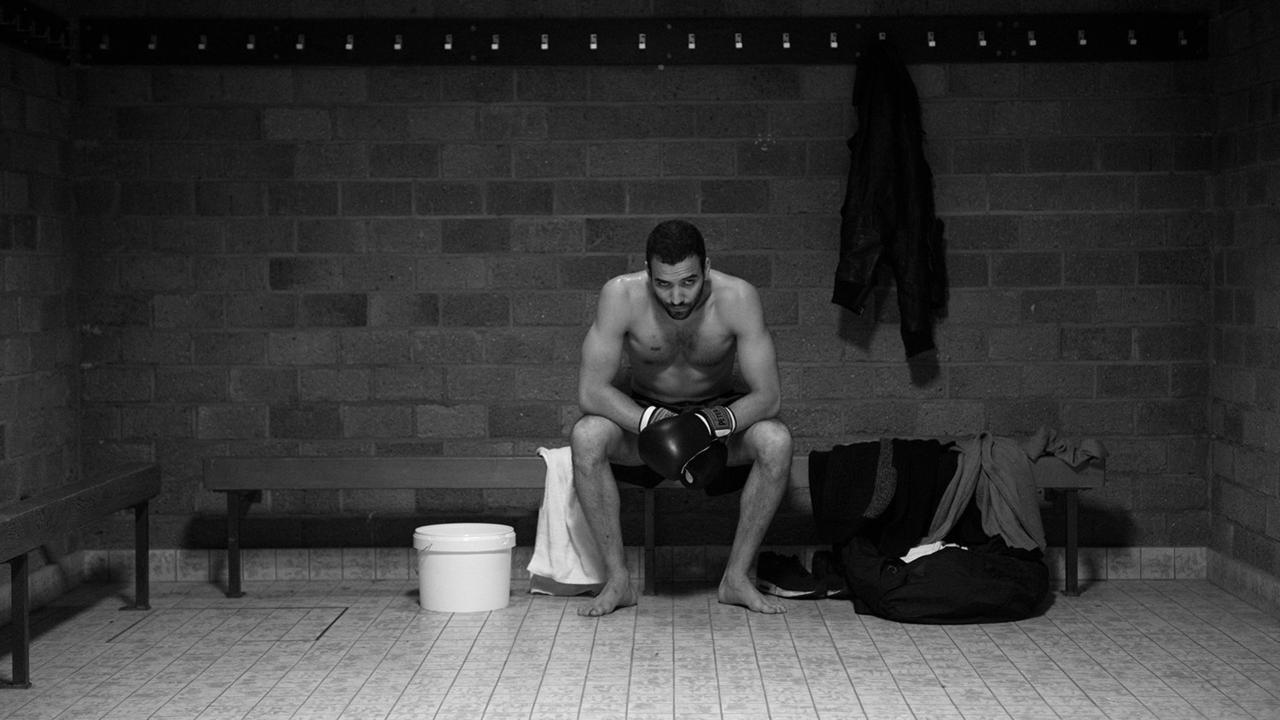
Look, Wolf has a familiar, even cliché, plot. The idea of having a lead wanting to shift their life around through kickboxing is the usual stuff of cheesy sports dramas that want more viewers to watch the matches, or to learn to play the sport. But rather than take this path, Wolf instead delves into the other reasons why people might want to join the sport in its story– the money, the physical venting of frustration, and making use of skills. It’s also why, for Majid, the passion proves to falter in the face of his character. His loyalty to others, his spite, and the unresolved anger he holds paints a literally black-and-white picture of what inevitably pushes him to the film’s end. Wolf is familiar, yes, but it takes this plot to a different place that Dutch cinema doesn’t usually visit.
Going through troubles can be made easier by having a friend. That’s true in Mexican drama Violet Perfume: Nobody Hears You, alternatively titled No One is Listening. It follows high school transferee Yessica who befriends the quiet kid in her new class, Miriam, which becomes an unexpected bright spot in her tough life. It’s a hard watch because of how tough her life gets– the bleak and depressing circumstances of her family life require trigger warnings, to say the least– but the film needed to illustrate how far abuse can go unnoticed, and how abusers can take advantage of that lack of awareness. Ultimately, Perfume de Violetas is a tough watch, but through the film’s sensitive depiction and the leads’ masterful performances, it’s an essential one.
This Oscar-nominated drama tells the story of the events leading up to the Srebrenica massacre, in which 8372 Bosnian Muslims were killed. It focuses on one U.N. worker who was caught between trying to protect her family, herself, and helping people in need.
The film is as horrific as it is relevant: up until the actual killing starts, people are constantly being assured that everything is under control and that there is no reason to panic. This gives an eerie feeling of resemblance to the tone many minorities in distress receive nowadays.
Still, Quo Vadis, Aida? stops at depicting any of the acts that were committed that day. Instead, it focuses on Aida’s unrelenting race against the clock to save whatever she can.
When Brian was eight years old he lost five hours of his life to a black out. Now ten years later he is searching for the truth. His search leads him to Neil, a boy who was on his little league team the summer of the blackout. Brian has always believed he was abducted by aliens from the dreams he had with Neil in them. Neil however knows the truth. Neil had just left the small town life and moved to New York. When he comes home for Christmas and meets Brian will he finally tell him the answers he has been looking for? This is the story of one boy who can’t remember and a boy who can’t forget.
Normally, when your beloved wife dies in a car crash, you would be angry at the driver responsible, maybe even avoidant, sad, or incredibly triggered. Instead, in A Zed & Two Noughts, the twin zoologists with dead wives become addicted to the idea of life and death, obsessed with watching and rewatching the origins of life, captivated in photographing decay in time lapse, and strangely attached to the one-legged driver. Because of this, the film is quite bizarre, grotesque, and it definitely wouldn’t be for everyone, even for fans of Peter Greenaway. But the way it’s all filmed is striking, which is probably why Greenaway continued collaborating with cinematographer Sacha Vierny, until his death, and with the film’s unpredictability and excellent scoring, it’s hard to look away.
A sincere portrayal of the gritty British working class life through the coming-of-age story of a girl who loves rap music and dancing to it. It features a stunning and powerful performance from newcomer Katie Jarvis who had no acting experience whatsoever, and who was cast in the street after she was spotted fighting. She plays Mia, a 15 year old teenager whose world changes drastically when her mother’s new boyfriend (played by Michael Fassbender) turns his eyes to her. Don’t watch this movie if you are looking for a no-brainer, definitely do watch it if you are interested in films that realistically portray others’ lives and let you into them.
“California Dreamin'” by the Mamas and the Papas. You will fall in love with that song (if you haven’t already) after watching this movie. Two stories, entangling into one; both about Hong Kong policemen falling in love with mysterious women. It was recommended by my friend after I said I loved Frances Ha. I don’t know whether you can call this as offbeat romance.. but to me it was, and it’s well worth the watch.
There are plenty of LGBT stories made in film, but not all of them have to end in tragedy– some, especially in recent years, are relatively sweet, lighthearted, and merely focused on the simple experience of a first love. Boys has the classic coming-of-age romance moments we’re familiar with, such as the first kiss, training camps, and after school fair dates, and even though it’s just made for television, it’s beautifully captured, including that stunning overhead lake shot where Sieger and Marc swim together. If you’re craving for a sweet and easy LGBT romance without the heartache, or if you’re new to watching LGBT films altogether, Boys is a decent entry-level movie to start with.
Director Thomas Vinterberg (The Hunt) reunites with Mads Mikkelsen to tell the story of four teachers going through a mid-life crisis. They’re not sad, exactly—they have homes and jobs and are good friends with each other—but they’re not happy either. Unlike the ebullient youth they teach, they seem to have lost their lust for life, and it’s silently eating away at them, rendering them glassy-eyed and mechanic in their everyday lives.
Enter an experiment: what if, as one scholar suggests, humans were meant to fulfill a certain alcohol concentration in order to live as fully and present as possible? The teachers use themselves as the subjects and the tide slowly starts to turn to mixed effects. Are they actually getting better or worse?
With an always-satisfying performance by Mikkelsen and an instant classic of an ender, it’s no surprise Another Round took home the award for Best Foreign Film in the 2020 Academy Awards.
Released in the same year as the title, Nineteen Eighty-Four stands as a picture of a future that has not come to pass, at least as of writing. It’s a bleak vision. The novel’s world has been adapted to the screen in the grayest and coldest of settings, as the mass populace eat slop, dress plainly, live in war perpetually, and hold no pleasure other than what was allowed by the ruling Party, not even able to enjoy their own thoughts. So, while there is much more from the novel that this adaptation could have fleshed out further, Nineteen Eighty-Four nonetheless works because the worldbuilding is fleshed out. It effectively captures a world so emptied out by totalitarian rule and surveillance with no escape.
This visually stunning thriller is about a young man called Raza who is hired by a counter-terrorism officer as his informer. If you liked Netflix’s Bodyguard, you will love this, which in my opinion is has much more substance.
Originally a photographer with no link to the world of crime or terrorism, the color of Raza’s skin and his accent make the authorities believe he would be a valuable asset. And quickly, he falls into a web of crime, giving this show the appeal of the fantastic HBO series The Night Of.
This Dutch movie is a wonderful family story about a young boy who meets a peculiar girl while on vacation. He helps her find out more about her father who she has never met.
In its essence, this story is an uplifting coming-of-age story, not only because it was based on a young adult novel by Dutch writer Anna Woltz, but also because of a Moonrise-Kingdom-like staging. But like all great movies of its kind, it carries an emotional twist that packs enough depth even for not the not so young adult.
War doesn’t take place in just one battle– it takes multiple battles in certain strategic places across a country or even a continent. It’s because of this that when one group claims victory, it’s not immediately obvious across all territories. This is what happened in The Forgotten Battle. The film’s title refers to the Battle of the Scheldt, where Allied forces won over an important supply route between Belgium and the Netherlands, in the final year before both countries were totally liberated. In line with this, the film creates tension by ratcheting up the uncertainty the people felt through three different perspectives. By focusing on a disillusioned Dutch volunteer, a privileged British glider pilot, and a reluctant Dutch resistance fighter, The movie highlights the conflict between their personal hopes with the dreadful circumstances war forced them into and the moral dilemmas they had to face to survive. It’s not a totally original idea– many war films are based on this theme– but The Forgotten Battle adeptly balances these perspectives with a decent script and great production value.
While being known for co-writing the Dogme 95 manifesto, Lars von Trier’s first film after breaks his rules with built sets and music added in post. Still, Breaking the Waves has plenty of von Trier’s thematic preoccupations, challenging the notions between faithfulness and sexuality by positing a married couple who cannot indulge in marital pleasure, due to being paralyzed. While the premise leads to explicit scenes, it’s more harrowing than sexy, really. It’s terribly heartbreaking as Bess does all she can for her marriage, first by praying for her husband’s return, and then following his perverse wish, partly from guilt, but partly from pleasure, even when it goes contrary to her repressive church and community. Breaking the Waves may not be an easy watch, but regardless of what you personally feel about the morality of Bess’ actions, von Trier will nevertheless bring you to empathy.
Incorporating traditional animation, Surrealist art style, and scenes from Luis Buñuel’s own films, Buñuel in the Labyrinth of the Turtles is a portrait of a brilliant yet eccentric artist who is stubborn in his ideals. The film is a series of dreams—visions from a life often disrupted by war and ideology—but is more structured and coherent than its inspirations, and striking in the commentary it makes on art. Within the film’s story, Buñuel’s character initially takes on a documentary project through a more dramatic and staged approach that separates him from his crew and his producer Acín. However, his nightmares stemming from childhood trauma eventually lead him to focus on the people he’s filming and advocating for. Historical yet surreal, highly political yet personal, this film is an apt celebration of a divisive artist.
A young girl is looking for her father while struggling to care for her family. The film is bleak and slow but great performances from the cast, especially the lead, will keep you engaged throughout. The story has a very real, raw, and natural feeling to it, so natural in fact that at times, you will forget it is a movie. And in many ways, it feels that Winter’s Bone is to Jennifer Lawrence what The Believer was to Ryan Gosling, as her performance is nothing short of perfect.
A married Palestinian deliveryman starts seeing a wealthy Israeli café owner in this gripping romance/thriller. Their seemingly low-stakes encounters in the back of a van take geopolitical dimensions when Saleem, the deliveryman is suddenly arrested. Based on a true story.
Girl won four awards at the Cannes Film Festival last year and was nominated to 9 Magritte Awards. It was also Belgium’s entry to the Oscar for best foreign-language film. When a dance school accepts her, Lara has the opportunity to realize her dream and become a professional ballerina. The dancing takes a toll on her body, but her biggest obstacle is that she was born into the body of a boy. Girl illustrates the trans teenage experience with sensitivity, slowly and humanly making Lara’s anguish become the viewer’s. Based on a true story.
After neglecting previous invitations, Leyla, a lawyer and a poet, decides to take an overnight train to finally attend a school reunion. On the train, she meets Canan, a young nursing student who dreams of becoming an actress. The two of them form a unique connection that will lead them to an unusual journey.
Something Useful is about how, when dealing with pain and disappointment, art—and especially poetry– can help by revealing the beauty behind everyday moments. It’s a wonderful film with beautiful photography and impressive performances.
How to Change the World is an insightful and candid documentary about the formation of Greenpeace in 1971 by a small group of environmentalists and activists in Vancouver, British Columbia. Beginning with their attempt to disrupt U.S. nuclear testing in Amchitka, Alaska, the film follows their subsequent efforts to thwart commercial whaling in the Pacific, their anti-sealing campaign in Newfoundland, and their ongoing efforts to defend the natural world against what they perceive as excessive human intervention and abuse. How to Change the World is as much a poignant tale of inspired activism as it is an interesting study of the organization’s early tribulations: idealism vs. anarchy, social movement vs. organizational structure (or lack thereof) and leadership vs. disunity. The voice of co-founder Robert Hunter (de facto leader of Greenpeace from inception) is heard posthumously throughout via narrator Barry Pepper, and it adds an impassioned air of gravitas to the film, detailing the many complexities Greenpeace experienced over the course of its early years of growth and development. A compelling and educational viewing experience.


x1
x1