
Movies to Watch From Philippines
To access filters, visit our homepage.











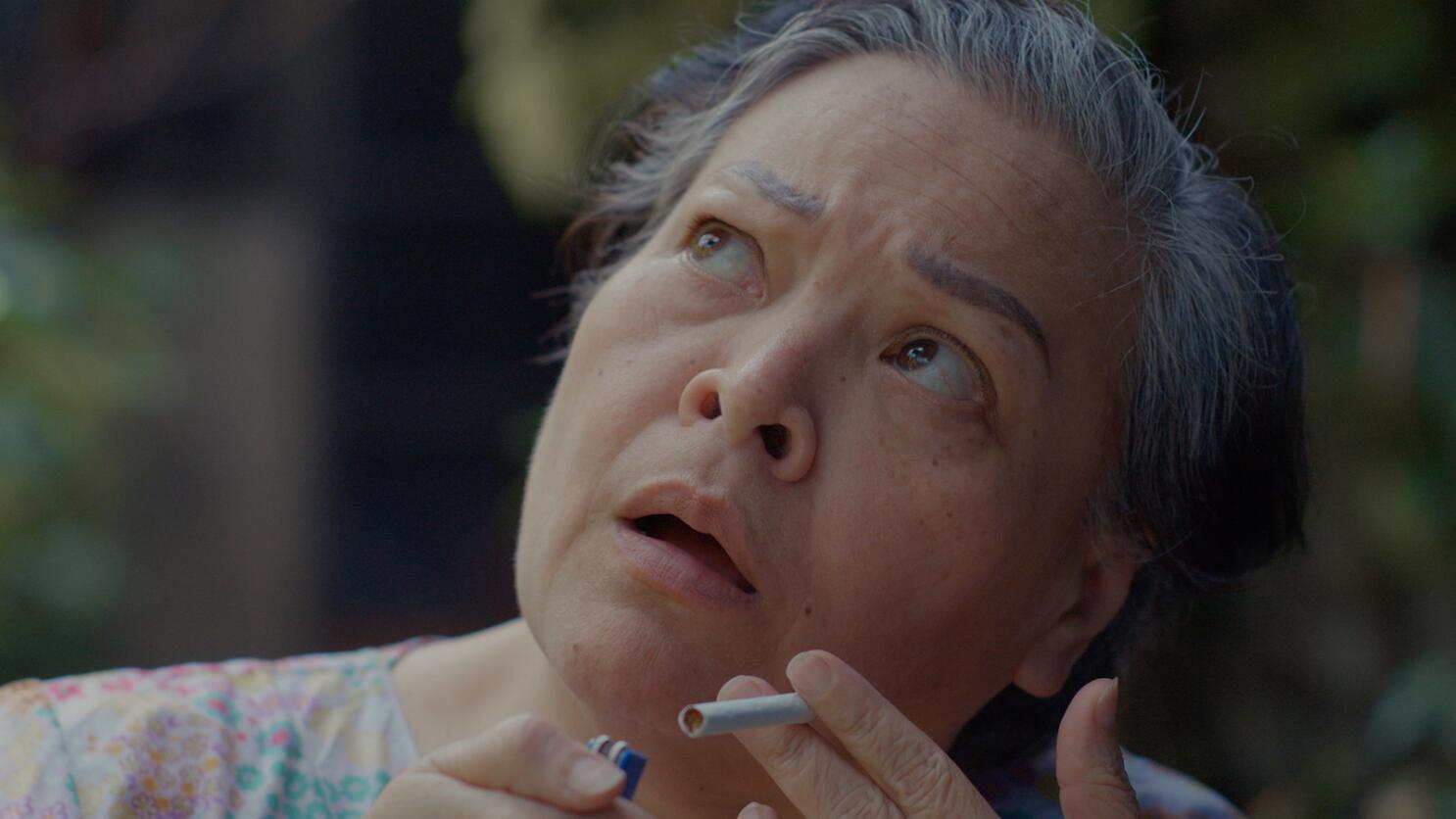
At times looking and sounding like a real Filipino action film from 50 years ago, while painstakingly edited to juggle storylines across several realities, Leonor Will Never Die is worth seeing for its originality and ambition alone. Among so many other films that function as sanitized “love letters to cinema,” this one bears the distinction of still feeling charmingly scrappy and improvised even with how meticulously it’s crafted. It doesn’t simply pine for a bygone era of movies, but it actively explores what purpose movies serve to us as individuals and as communities. Where it arrives with regard to healing and acceptance and bringing people together feels entirely earned, even if it might not always be easy to understand.

There’s a cruelty to In My Mother’s Skin that may seem off-putting at first, but one must reckon with the sheer scale of the violence already occurring before these characters are even introduced to us. The Japanese occupation of the Philippines was a particularly vicious period in the country’s history; if Filipinos weren’t fighting or hiding from their invaders, many of them were trying to maintain a precariously submissive, neutral existence, or they were being turned against each other due to the conflict of war trickling down between the social classes. All these things are implicit throughout Kenneth Dagatan’s film, which doesn’t try to reenact World War II but capture the total absence of hope during this period.
Dagatan’s style of horror insists on a very slow pace, emphasizing every footstep leading to a horrifying reveal, and not just the main scare itself. This choice doesn’t always work, especially as certain beats begin to repeat themselves, but the film’s incredibly confident visual style fills every moment with an eerie paranoia. Gothic, shadowy interiors, nasty gore, and one opulently costumed fairy make everything perpetually unsettling—gradually forcing us to accept that these contradictions are just the reality of life under war.

Viewers are familiar with cuisines around the world such as the food from France, Italy and Japan, but now it’s Filipino cuisine that takes the spotlight. Replacing Chef Chico portrays different Filipino dishes in each of its eight episodes, but these meals are great side dishes to sous chef Ella’s journey in managing the Hain fine dining restaurant. Alongside this journey of self-discovery comes heartwarming stories from the Hain restaurant’s customers, the receptionist’s cheeky commentary, and sweet tracks from Leanne & Naara. They all mix into a lighthearted, if a tad bit familiar, cooking drama series, and it does so with the breezy and calm attitude of lead character sous chef Ella.

In Letterboxd, Cleaners was once the highest rated film of 2021, and was once in the list of the top 250 narrative features overall before the rating system changed in 2023. To viewers outside the Philippines, this might have been mind-boggling, especially since the film wasn’t yet released internationally the year it premiered, but it shot up the ranks for a reason. The coming-of-age anthology just looks so different, being filmed live, then xeroxed and highlighted, frame by frame, just like print-outs for school. The unique approach evokes a sense of nostalgia in high contrast print and blurred movement, and it’s matched with the classic Filipino coming-of-age moments that has rarely been seen before.

A great example of a documentary that covers a marginalized community without imposing the gaze of a detached, “superior” filmmaker, Last Days at Sea chronicles daily life in a Filipino fishing town but remembers to contrast its images of hardship with the care of a community. There are times when the film’s director, Venice Atienza, might insert herself into the picture a little too much, but for the most part this movie feels uniquely co-authored by the people it follows on screen. A subtle sadness permeates through every interaction, as memories are brought up of those who used to live here, and as those who remain acknowledge that everyone is fated to leave the warmth and safety of the town at some point—an injustice if ever there was one.
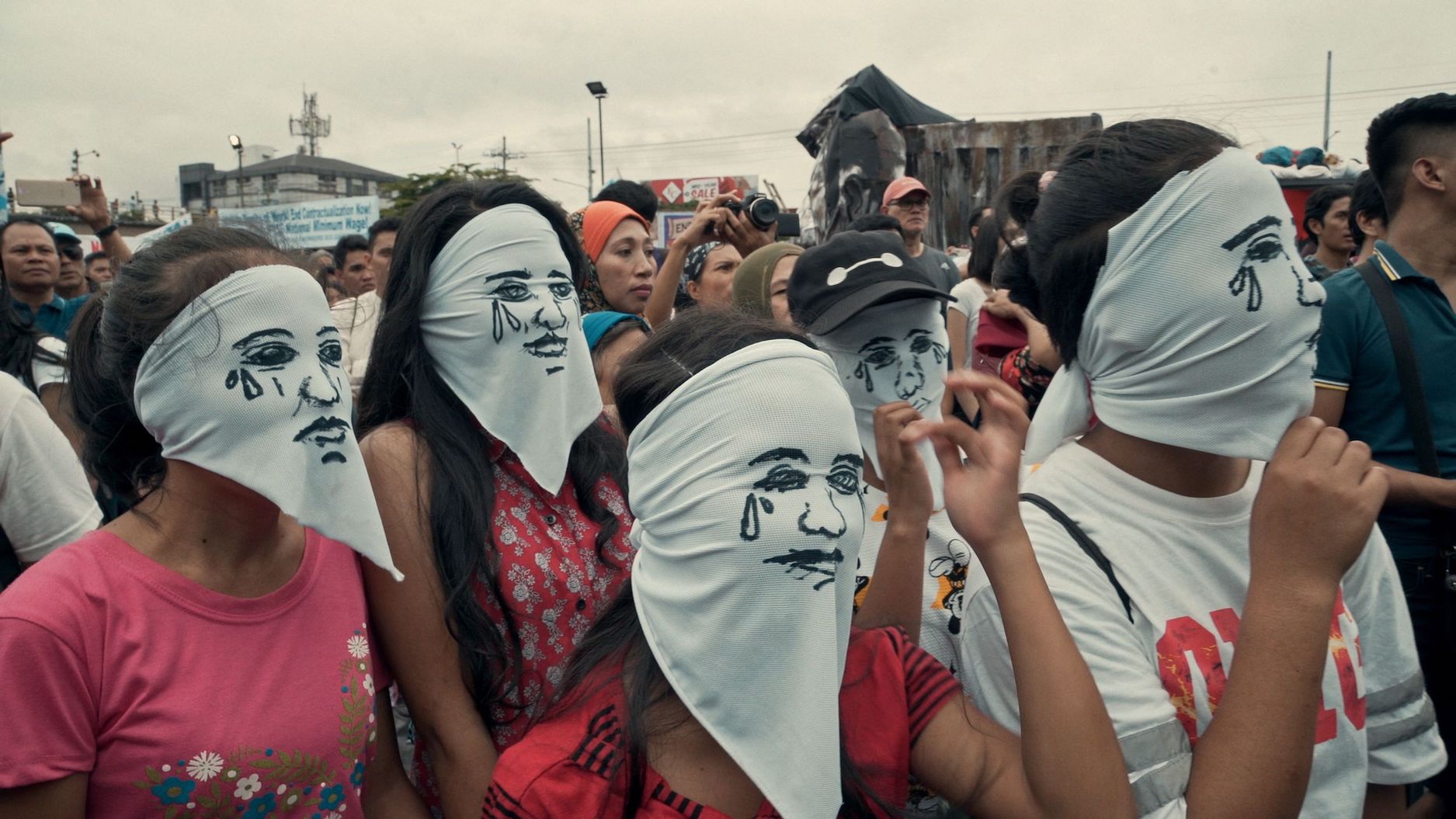
As courageous now as it was when it was first released domestically in the Philippines, Aswang stands as an essential act of bearing witness to a “war on drugs” that the government continues to deny or justify to this day. Director Alyx Arumpac remains firmly by the side of these ordinary people who have to live through the nightmare of their friends, relatives, and neighbors being slaughtered in the streets. There seems to be little editorializing on the part of the filmmakers, as they allow the people to walk us through their own stories—even if larger powers would have us believe that the poor are dangerous, volatile, and in need of disciplining through death. It’s a harrowing watch that presents on-the-ground stories with clarity, tenacity, and a surprising level of polish to boot.

Unlike in other films that only seem to evoke a previous era to make a target demographic feel warm and fuzzy inside, there’s something vaguely artificial about Death of Nintendo’s air of nostalgia—which is exactly what helps it tell its story. There isn’t anything particularly novel about this movie’s plot or characters, but Raya Martin’s direction has us consider various themes between all the stuff you’d expect to see in a young adult movie. In moments of quiet unease that seem to punctuate every other sequence, we’re drawn towards the absence of father figures, the inability of the women to get through to their sons (already embedded in patriarchal customs), and the idea that one’s childhood in a Catholic country seems to be marked by physical pain. Beyond the film’s feathery lighting and colorful production design, there’s a surprising amount to think about.
In the years since Fan Girl’s original release in the Philippines, its ultimate message and execution has become polarizing: is it enough that the film shows the corruption of a parasocial relationship into an abusive one, without offering much hope? Is its vision of justice actually constructive or disappointingly limited? No matter where you fall, it’s exciting that a movie can stir up these kinds of questions through a bizarre dynamic between characters, in a place that’s clearly set somewhere between reality and delusion. The narrative is circular and frustrating for a reason—a constant push and pull as the titular fan girl keeps getting drawn back into the celebrity’s orbit—and the film only grows more disturbing with each repetition.
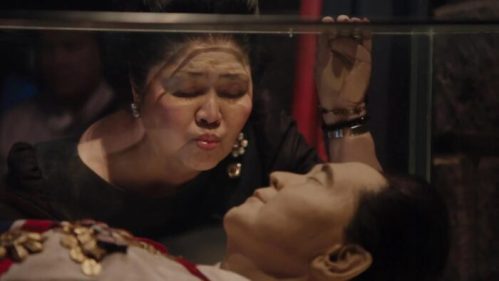
There is no shortage of resources—be it books, films, articles, or interviews—about the atrocities Ferdinand Marcos unleashed on the Philippines. And yet, in the years since his exile and eventual death, his family has returned to power in the country, winning the hearts and (manipulated) minds of the masses.
In The Kingmaker, director Lauren Greenfield (who earlier directed the equally revealing The Queen of Versailles) exposes how this came to be, with a focus on the titular kingmaker herself, Imelda Marcos. It’s chilling how much of Imelda’s stated goals in this documentary, which spans five years, have come true. History repeats itself, and Greenfield skillfully and delicately captures the delusion, irony, and blatant corruption of a family dead set on owning a country, as if it were another luxury to purchase (or in the case of the Marcoses, pocket).
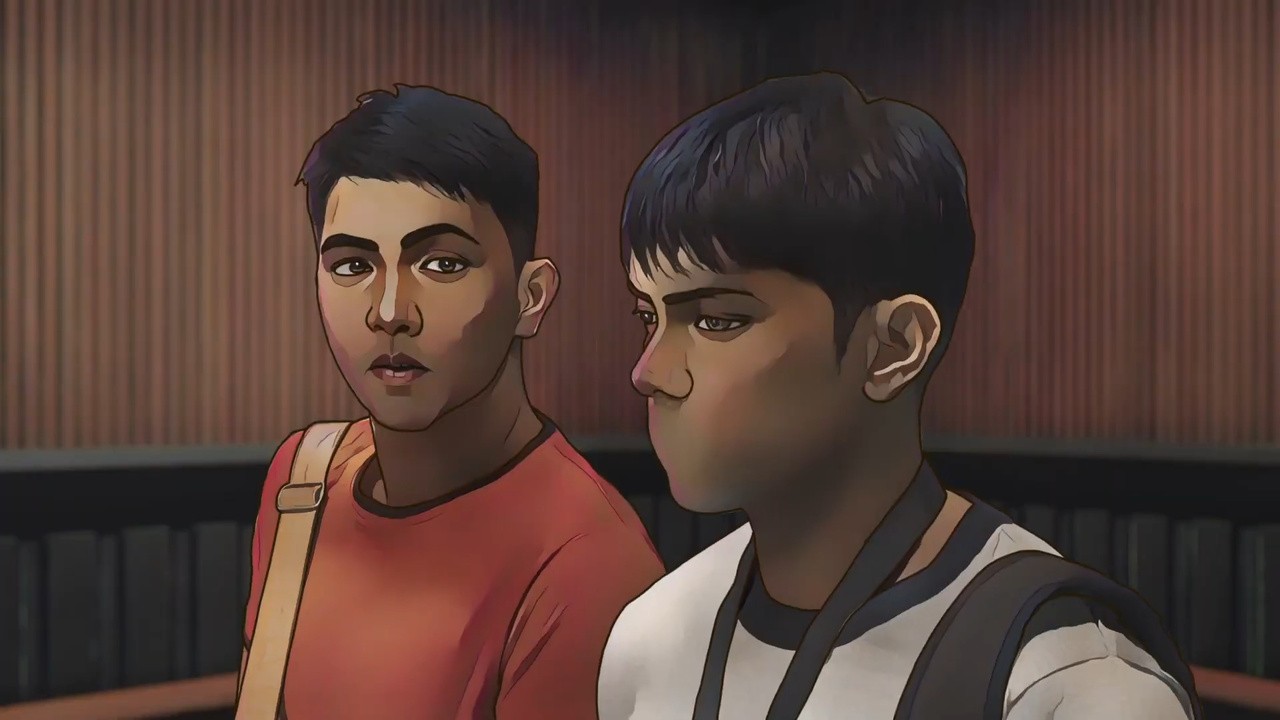
As one of the few animated Filipino films ever made, there’s a question as to why The Missing should use the animation in the first place. The animation here is much more rough than the ones from other countries, and while it’s a bit more pricey, the filmmakers could have filmed this in live action with practical SFX and CGI. But there’s a big reason why it was animated anyway– It’s because of the story. It’s not just because the protagonist Eric is an animator– it’s because animation, to that specific lead, was the way through which he was able to form a life after trauma, becoming the livelihood that allowed him to move out of his childhood home, and far far away from the trauma he faced. Writer-director Carl Joseph Papa also takes advantage of the medium by creating designs that match Eric’s current state of mind– regular, day-to-day life is rotoscoped, while the blank portions of his memory are traditionally drawn in the style Eric would have had during that age. It’s an unusual approach, but whether or not the story was adjusted to the budget, Iti Mapukpukaw is undeniably a touching and inventive drama that depicts the complexities of grief.

The Fabella Hospital in the Philippines is clearly overburdened and understaffed, and though it offers some of the lowest pregnancy delivery rates in the country, it remains unaffordable to most of its patients. It has been dubbed the world’s busiest maternity hospital because of this, and its boundless flurry of activity is what Ramona Diaz tries to capture in her cinéma-vérité film Motherland.
What’s interesting and ultimately heartening about the documentary is that despite the difficulties the subjects face, they are always presented with warmth and humanity. We don’t observe them from a strict or stylized distance, but rather, we move with them when they laugh, befriend each other, worry about their babies, curse their partners, and eventually leave. Indeed, the film is a land of mothers, filled with their authentic stories before anything else.
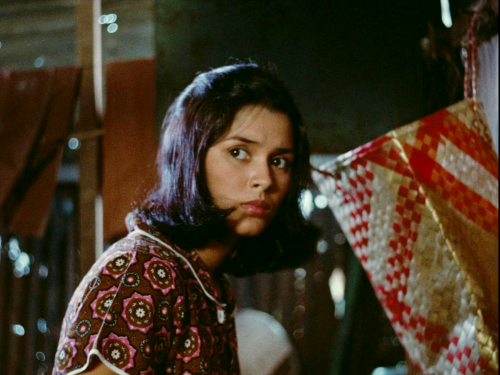
Insiang is not an easy film to watch. It’s hard to look at, not because the sprawling slums of Manila itself are ugly– the scenes are excellently blocked, shot, and edited, actually– but because of the way poverty has further degraded the status of women in the area, with the lack of resources keeping them vulnerable to violence. It’s unrelenting. From the casual jokes made in the background, to the physical harm actually wielded against the title character, director Lino Brocka systematically outlines the way poverty has cut off Insiang’s options, being forced to rely on a resentful mother and lustful men. It makes for an unflattering, claustrophobic depiction of the capital, which is why it was temporarily banned from screening, but Insiang was a necessary, ugly portrait of what the then-administration allowed to flourish.
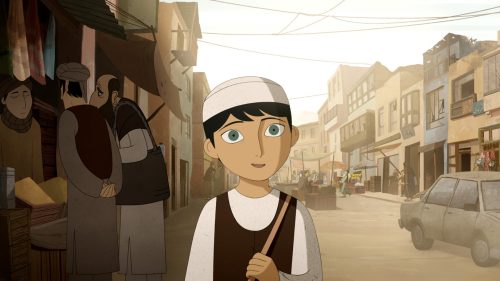
The Breadwinner is as beautiful as it is heartbreaking. The animation is magical as it seamlessly jumps back and forth between Parvana’s stark reality and richly detailed fantasy. It’s a wonder to just look at, but it’s a tapestry brought to life by the story at the center of it.
Set in 2001, at the height of Taliban rule in Afghanistan, the film follows Parvana, a young girl driven to desperate measures to keep her family alive. Because of the violent restrictions imposed on women (they’re not allowed to buy, sell, study, or practically do anything without a male chaperone), Parvana disguises herself as a boy so she can work for a living. The more she gets away with it, the bolder her attempts get. It’s a story of survival and standing up, but it’s also a sobering reminder of what fundamentalism is capable of doing (or more accurately, ruining). As long as cruel systems like this are taking place in the world, Breadwinner remains essential viewing for all.

If there are parts to Rookie’s story that seem too easily resolved—for the sake of making this more of a feel-good movie—these shortcuts still serve a genuinely romantic central relationship that develops in the most organic way possible. Besides the school’s stifling conservatism, there’s nothing that really stands in the way of Ace and Jana’s blossoming connection. By immediately advancing its depiction of queer love beyond the self-acceptance stage (where so many other films get stuck), Rookie is allowed to show us two girls in love and supporting each other, as the normal and beautiful thing it should be. It doesn’t hurt either that the movie is pretty entertaining as a sports film, with just enough flash in its editing and sound design to sell the frantic energy of a game wherein you want to impress the person you have a crush on.
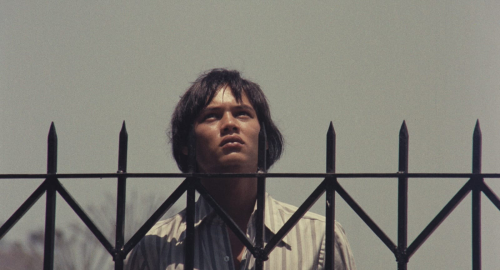
Filmed in 1970s Manila, at the height of dictatorship in the Philippines, Manila in the Claws of Night is above all else a political statement—against tyranny, yes, but more significantly, against imperialism, capitalism, and class divide. It’s a weighty film, but director Lino Brocka, with help from cinematographer Mike de Leon, balances his potent ideas with stunning visuals. He captures Manila’s essence perfectly: neon signages point to its crippled reliance on capitalism, while the clash of old structures and weak new buildings point to colonialism’s reigning grip. Those familiar with the wrought history of the Philippines (or other third-world countries subjugated and then forgotten by Western powers, for that matter) will relate to Julio’s struggles. Those who aren’t, however, are in for an eye-opening experience.

Made with the modesty and authenticity of modern indie cinema from the Philippine regions, Scarecrow (or in the Ilocano language, Bambanti) uses the disappearance of a watch to paint a vivid picture of faith and judgment in a small town. There is no formal legal investigation into this supposed theft; what guides these characters instead are an unwavering belief in religion and folk traditions, and long-repressed resentment toward those who choose to disturb the peace. It quickly becomes evident that this witch hunt targeting a single mother (an incredible Alessandra de Rossi) and her son is about something else entirely—unresolved grief, economic struggle, and the fear and prejudice that the middle class can still harbor towards the least privileged among us.
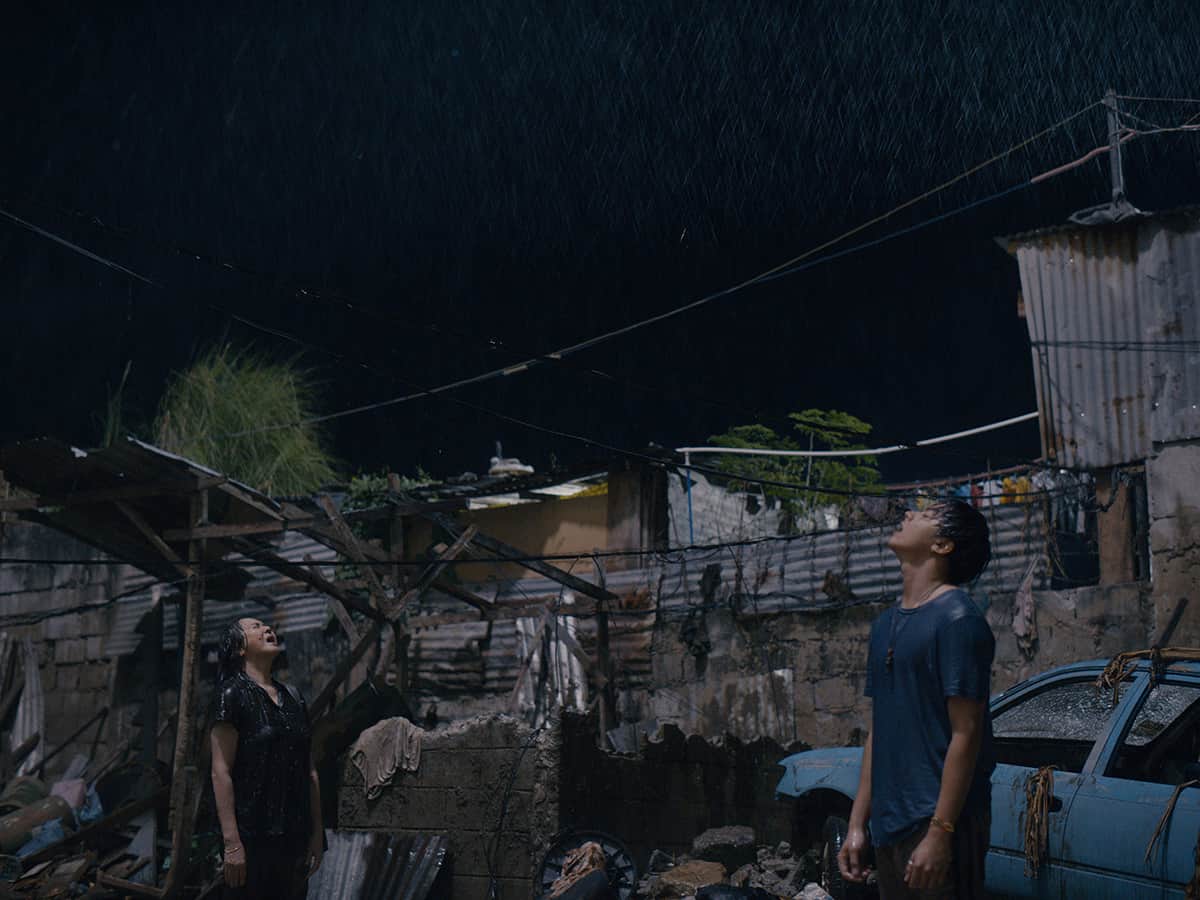
Though only currently available on Prime Video Philippines, Carlo Francisco Manatad’s critically acclaimed drama boasts the kind of directorial vision and technical brilliance that deservedly kept it on the international festival circuit throughout 2021 and 2022—and that deserves to be seen around the world. Through textured cinematography and sound design, and art direction that situates its story halfway between reality and a dazed state of mind, Whether the Weather Is Fine isn’t so much a factual retelling of life after Typhoon Haiyan but a meditation on what home and freedom mean to those who no longer seem to have it.
Manatad’s background in experimental short filmmaking shines through in how the film seems comprised of so many irregular parts, but the emotional through line is unmistakable. Three incredible performances—from Daniel Padilla, Charo Santos-Concio, and Rans Rifol—illustrate the different ways that people try to escape or cling to hope in the wake of devastation. It’s the furthest thing from “resilience porn,” as the different perspectives of these characters clash and inevitably push each other away. And while that might not sound like the film offers a constructive point of view on disaster management, its intense psychological focus feels like something we haven’t seen on screen before.

Sunday Beauty Queen starts with a basic but startling fact: there are about 190,000 Filipina domestic workers in Hong Kong. They toil for six days a week, with little breaks in between, but on Sundays, the one day they are given rest, they choose to take part in a fabulous beauty pageant.
More than just a mere show, the pageant is a source of joy and relief for the migrant workers who, despite earning significantly more abroad than they would back home, are mired in a host of problems, including discrimination, loneliness, and underemployment. Because of the Philippines’ and Hong Kong’s stringent statutes, some helpers are also forced to go into hiding, unsure of who will protect them each time.
It’s to director Baby Ruth Villarama’s credit that the film feels both like a criticism and celebration of this migrant reality. She exposes the rotten system that forces these women to flee their country but doesn’t forget to highlight the humanity that keeps them going. This result of this deft balance is a story that is just as warm and exacting as any old home.
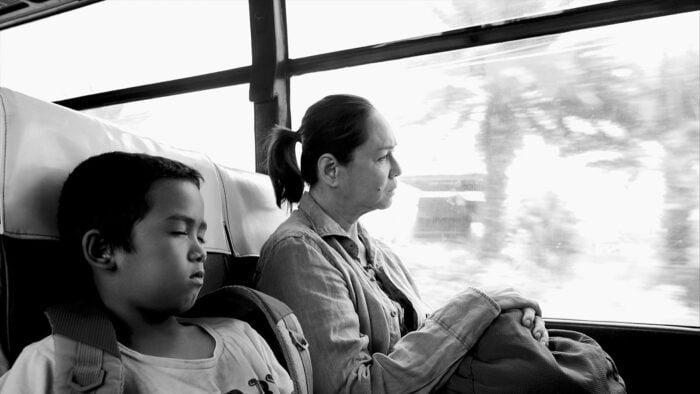
Based on the short story “God Sees the Truth, But Waits” by Leo Tolstoy, The Woman Who Left is a film about people with nowhere to go. Set in 1990s Philippines, the film follows Horacia, an ex-convict seeking revenge on her former lover who masterminded her unjust 30-year imprisonment. Along the way, she meets various people—a hunchback balut vendor, vagabonds, and an epileptic trans woman, among others—all downtrodden in their own unique ways and united only by their nightly wanderings, with whom Horacia’s true nature is revealed and reconfigured with every encounter.
Lav Diaz’s signature slow cinema minimalism and sharp chiaroscuro lighting allow for a meditative experience, further enhancing the film’s immersive quality. Despite its bleak atmosphere, The Woman Who Left remains hopeful amidst moral quandaries, where things eventually fall into their rightful place, albeit in unexpected ways.

Irish director Lorcan Finnegan’s follow-up to the social dystopia Vivarium, too, centers around the trials and tribulations of a nuclear family. Overwhelmed by work and struck by an inexplicable disease, Christine (played by Eva Green) seems to have forgotten she employed a caretaker for her daughter Bobs. The plot thickens when a Filipino woman named Diana rings the door bell: what kind of mother forgets something like that? What follows is as nightmarish as it sounds, the film’s visual potency summoning one’s deepest fears and anxieties about reality slipping away. Green and Chai Fonacier (Diana) play an exquisite game of cat and mouse, but even the psychological thrill of that chase is not significant enough to overthrow the dubious racial politics at play. By the end, Nocebo makes an effort to position itself on the right side of history, but the power of its political critique wanes and wanes.

Joy is a dutiful, overseas Filipino worker supporting her entire family back home. Ethan is a well-off bartender who has, time and again, put himself first before others. They couldn’t be any more different, yet in Hong Kong, their alien status and ambitious goals make them kindred spirits. What starts as a low-stakes bond quickly turns into an essential relationship, one that puts their personal commitments to the test.
Hello, Love, Goodbye may appear formulaic at first, but it is heightened by a keen understanding of life overseas. It avoids romanticizing the migrant experience and sees it for what it truly is: a harsh but necessary means to an end. If this seems too severe, it’s also softened by an enchanting romance and some welcome comic relief in the form of the pair’s friends. Because of this nice mix, it’s no surprise that Hello, Love, Goodbye instantly broke domestic records and remains the highest-grossing Filipino movie of all time.
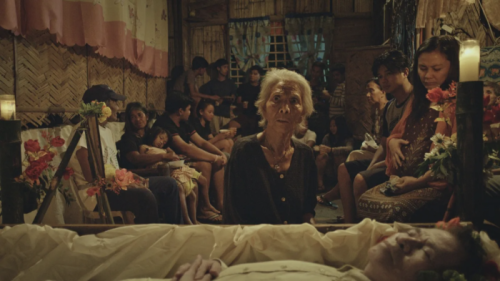
Unlike in many films about old people on the doorstep of death, the titular grandmother in this movie is excited to leave for good. But when her town insists on celebrating her bid to be named the oldest in the world, unresolved conflict among her descendants begins to resurface. Quiet and unabashedly sentimental, Lola Igna offers a uniquely offbeat perspective on death—one that starts from a place of contentment, and only gets more conflicted as more characters reveal how much still has to be said and done. It has all the charm of a low-budget Filipino film, made all the more poignant by Angie Ferro’s authentic and deceptively layered performance.

 x1
x1

Many telenovelas and soap operas make a bid for the ridiculous, and in general the world is better off for it. But if a soap can’t stick the landing when it tries to manufacture conflict, it just ends up becoming infuriating to watch. Such is the case with Linlang, a Filipino drama that already sets itself up weakly from the outset through the idea of cheating as a plot device, and fails to give us anything crazy enough to earn its sudden bursts of action and perpetually intrusive score. It’s almost impressive how none of these characters seem to be capable of communicating with each other like adults—which can be fun in small doses, as these people leap to conclusions with full aggression at the drop of a hat. But these misunderstandings also just stretch out plot points unnecessarily, ultimately reinforcing very tired, very traditional family values.

If Red Ollero’s first special on Netflix doesn’t have the most consistent laughs or the most original punchlines to make, it still serves as a good introduction for users of the platform to crass, everyday Filipino humor. Whether due to editing or Ollero’s writing itself, there are a number of times during his set when he stays on a topic for far too long without adding much insight to it or building on things he’s already said. But as the special goes on, there’s still something to be taken from how Ollero treats the mundane with an almost hyperfixation. Intentionally or not, he sketches out an absurd view of ordinary life in the Philippines with the self-assurance of someone who doesn’t care whether you’re grossed out or not.
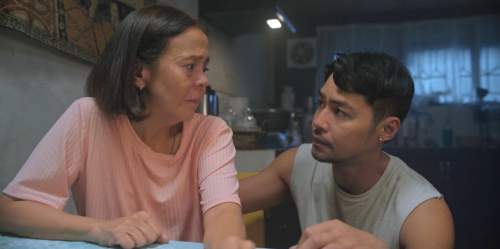
A remake of the 2018 South Korean film of the same name, Keys to the Heart never really seems like it comes together as a thematic whole. In its bid to be a modest slice of life—as a story that just happens to feature boxing and classical music amid family conflict—its separate parts wind up feeling underdeveloped. So despite admirable work from its cast and big emotional moments that are treated with a surprising level of sensitivity, there’s always a sense that the film is constantly trying to be a soap opera instead of simply being a messier, more organic thing.
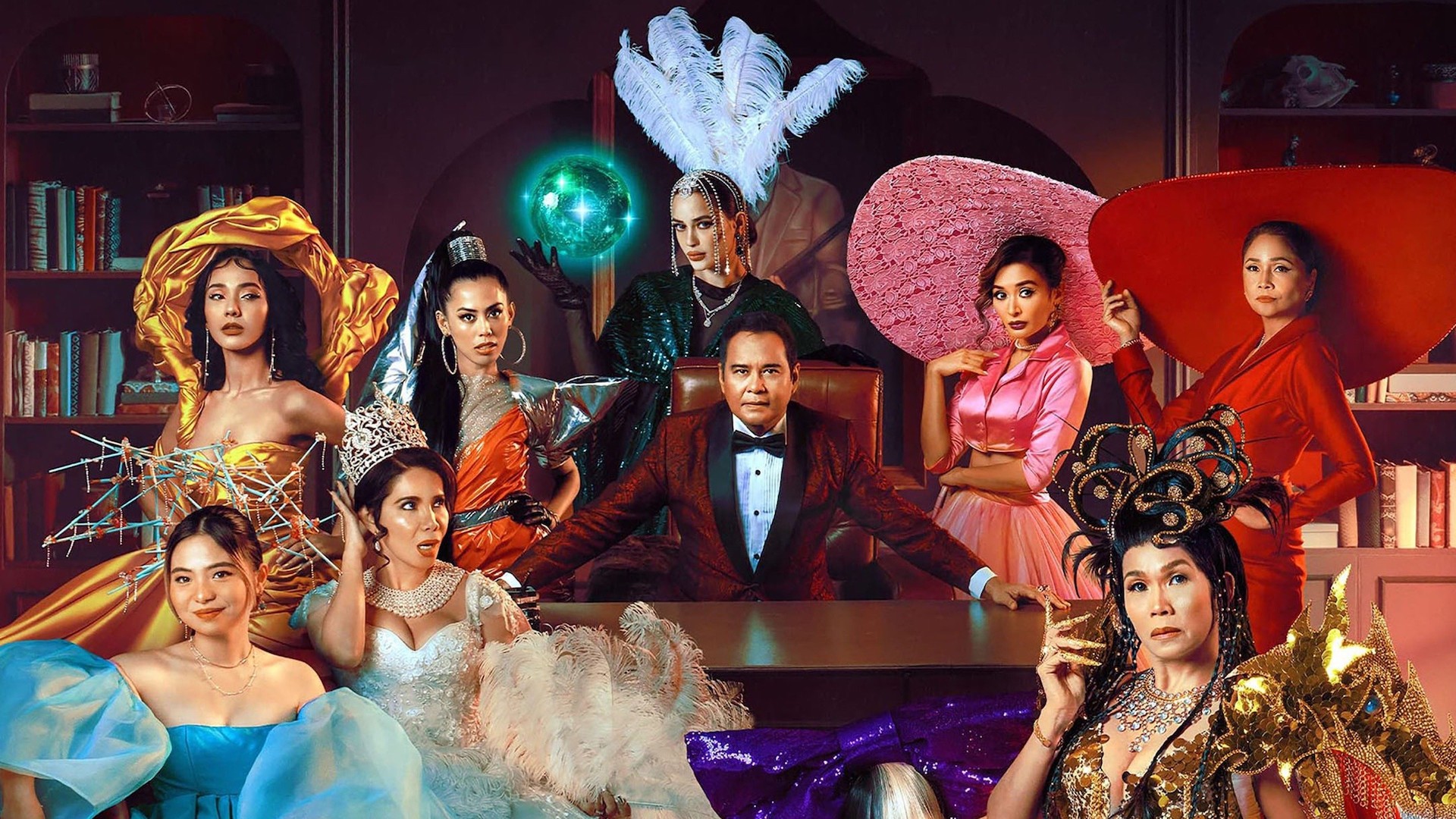
As the first original Filipino film on Prime Video, Ten Little Mistresses can often feel stuck as an entertaining pitch for a film rather than a fully fleshed out story. Like many mystery-comedies, this is a movie that relies on its star power and its big twists over any convincing narrative or thematic ideas. But oddly enough, the sooner you accept this, the easier the film goes down. As a loud and proud example of camp comedy, even its most ridiculous and incongruous elements feel like an authentic expression of Filipino humor; it never tries to pander to a Western audience that might be expecting something more familiar to their sensibilities. And with a cast this dedicated to out-chewing the scenery from each other, it’s hard not to get swept up in the insanity of it all.


One day, Filipino romances will wean themselves away from the tropes that keep their stories circling back to the same conclusions, undermining the bold narrative ideas on which that they establish themselves. Nothing Like Paris still doesn’t break free, but its commitment to a more serious, modern view of romance set against the loneliness of migration is surprising given director Sigrid Andrea Bernardo’s previous collaboration with her lead actors (the inadvertently creepy I See You, set in Japan). Here, the possibility of romance built on little more than one’s shared nationality and language is explored with real maturity, through two performers who prove that subtlety will always leave more room for complex emotion than ugly crying and cutesy, empty gestures.

With their personal life offered for consumption, carefully curated for viewers and sponsors, the social media influencer has become a fascinating character to study, especially with the job becoming Gen Z’s top career aspiration. As If It’s True examines this character through Gemma Stone, using the fake relationship trope to examine the lengths to which she would cling to her clout. John Roger’s debut feature blurs the line between real and the fake, not just for Gemma and James but also for the viewers, and it brings up much to say about how this aspiration can ruin people. However, the lines are blurred too much, as the ideas don’t mesh cohesively as it could. As If It’s True is an interesting character study, but the film hasn’t allowed itself to see the human side of the people highly incentivized to be fake for views.

Stories like Il Mare and Your Name/Kimi no Na Wa work because, unlike other romances, the conflict is understandably difficult. After all, how the heck can anyone fight against time and space? Love You Long Time takes a stab at the unique time-bending premise, with one main difference: the movie’s main lovers can talk to each other directly through an old pair of two-way radios. There’s no need for the two to depend on physical letters or texts. This difference is interesting – immediately, it allows Director JP Habac to play with cinematography, editing, and acting, to make us fall in love with the couple. Split between 2018 and 2022, the film makes meaningful points about the past and present, the years lost to the pandemic, and separation. However, without spoiling anything, the film’s third-act plot twists don’t land as well as they could have. Having them back to back made the plot nearly incomprehensible, and sadly, doesn’t resolve the conflict driving the film.

Being a priest requires full devotion to God, so falling in love would naturally challenge a seminarian and make them question whether priesthood is the right path for them. I Love Lizzy portrays this conflict as the seminarian Jeff falls in love with Bicol tour guide Lizzy, on the break where he’s supposed to make his discernment. It’s an intriguing love story, especially as Jeff and Lizzy heal past wounds with each other, and Carlo Aquino adeptly navigates his second seminarian role with ease. However, it’s clear that more care and attention was given to Jeff’s storyline rather than Lizzy’s. Despite this, I Love Lizzy is a unique, if a bit uneven, take on the seminarian love story that continues to captivate the predominantly Catholic country today.

Third World Romance is what it says in the tin– it’s a love story that blooms in the rundown side of the capital of a developing country. The plot is familiar, especially for people familiar with Filipino rom coms, but writer-director Dwein Baltazar approaches this with a grounded approach. With fancy dinner dates substituted with shared packed rice meals and emotional apologies interrupted by their shifts in the grocery, Bree and Alvin carve out a love that still feels passionate, perhaps made even more so, as they navigate a city where they are disenfranchised. Charlie Dizon and Carlo Aquino’s excellent performances keep their characters’ struggles real, but also make their love feel joyful in spite of that.
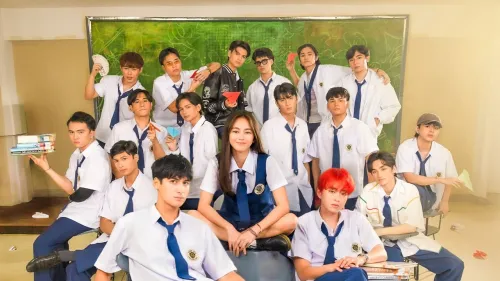

Trying to make a mostly two-hander drama with one primary location is much harder than it looks, and What If unfortunately doesn’t succeed in taking on the challenge. It has a list of relationship issues that it wants to address (which, to be fair, come off as plausible sources of tension once they’re finally brought up) and the performance from Alessandra de Rossi is reliably affecting. But a lack of chemistry between her and JM de Guzman—as well as a tedious first half that shows us their characters’ blossoming relationship in the cheesiest ways—makes it very hard to care about them when the arguing eventually starts. Without a strong dramatic foundation, the conflict feels shallower than it should. And without a good use of setting, it all becomes tedious to watch.

The level of access that A Thousand Cuts gets to both the side of the press and of the administration is ultimately what makes it valuable. By being on the ground with journalists doing honest-to-goodness hard work, the film reframes Duterte’s war on drugs (really a campaign to terrorize the poor into submission) as an information war between news outlets and government propaganda. Unfortunately, in the process, the film also winds up excluding the voices of working class people and how they both engage and are engaged by all this information. There should be a way to honor the work of these journalists without accidentally positioning them above the public they serve.
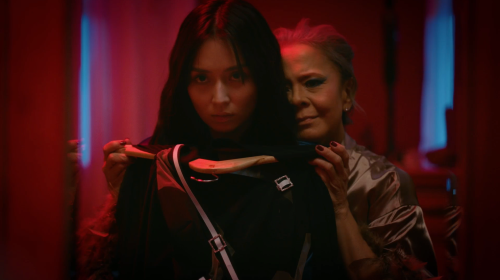
Built entirely around the star power of its lead performers, A Very Good Girl does, indeed, provide ample opportunities for both Kathryn Bernardo and Dolly de Leon to chew the scenery with wild abandon. But even their most campily delivered one-liners are only entertaining in the moment, as the film twists itself into increasingly complicated (and still oddly sanitized) knots to keep its thrills going. It ends with an incredibly muddled view of the kinds of violence perpetrated by the wealthy and the less fortunate, as if the studio funding the movie prevented it from becoming the bolder, edgier story it seems to want to be.