Movies to Watch With International Comedies
To access filters, visit our homepage.
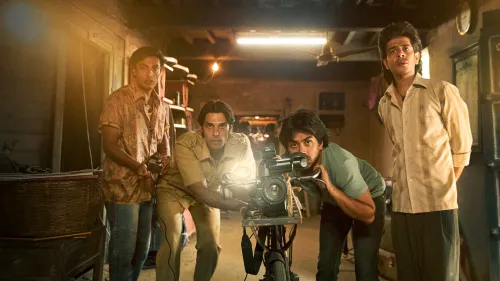
Based on the life of a real small town filmmaker, this coming-of-age film is a familiar underdog story. After their small movie theater shut down due to piracy, Nasir and his friends decide to create their own, in spite of not having the money or connections to do it. You can probably tell what happens next, given the numerous films about artists with humble beginnings. But despite the tropes, the rushed reconciliation, and not delving into some of the religious tension behind Nasir’s retirement, Superboys of Malegaon still feels refreshing, because it truly understands why the underdog is so compelling. With only their love for the craft to guide them, these boys capture the fun and wonder of making films in their own community, for their own community. Superboys of Malegaon truly listened to their story.
Admittedly, half the fun of Nouvelle Vague would only be understood by cinephiles, film history students, or anyone with a passion for the titular film movement. The naturalistic, black-and-white style mirrors the very style Jean-Luc Godard employs in Breathless, which is fitting for a film about the making of said movie, and considering his own oeuvre, it’s clearly a style director Richard Linklater is at home in. Still, even without the full context, there’s undeniably funny about the way Linklater depicts Godard behind the scenes. He’s presented as this baffling figure that does things simply because it’s different, which ironically echoes many artists’ biopics, but Nouvelle Vague pulls everything all together with a charm only Linklater could bring.
Usually, time travellers journey back to the past. This indie comedy takes the other path instead, with one samurai travelling forward to the 2000s. Luckily, he’s transported to the most fitting place in the modern era– a film set for a period drama set in the same time he came from. This unexpected journey is rather entertaining. On one hand, it’s hilarious to see him stumble, trying to make sense of the new Japan he’s in. His appreciation for today’s modern-day conveniences highlights how freedom ordinary folk now experience. On the other hand, the film juxtaposes his predicament with national history and the jidaigeki genre, grounding the comedy with the sincere belief in Japan’s ability to transform. A Samurai in Time takes a pretty funny premise to an entirely surprising conclusion.
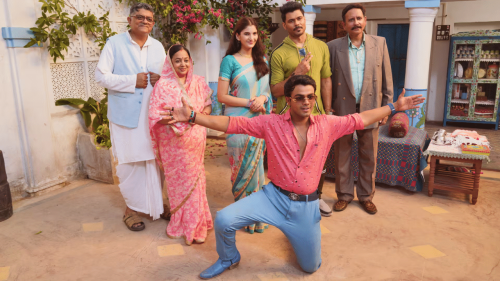
A town with no crime is a dream everywhere. It means safety, security, and trust for the residents within, so surely anyone would like to preserve that. That’s the case for the fictional town of Dhadakpur, the setting of Dupahiya. As the robbery happens, it understandably causes chaos in the town, but as the Jha family tries to solve the mystery, they also introduce us to the villagers– the humorous synchronicities that the town has, their simple but honest hopes and dreams, and the wit they have precisely because of their shared community– through various interconnected quests to preserve their individual, familial, and town’s reputations. It takes a while to all come together, but Dupahiya effortlessly weaves its threads through thoughtful writing and care for its characters.
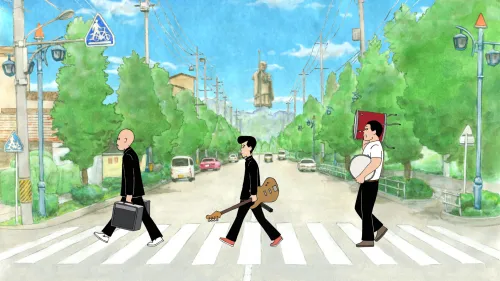
At first, On-gaku: Our Sound seemed to be a classic coming-of-age story centered around a battle of the bands. The delinquent kids find a new outlet through music, and thus, change as a result of the art. But the indie animated drama proves to be different, because the band Kobujutsu don’t transform into rock stars over a quick montage and a dash of inspiration. They don’t even look the part, with the scribbled art design. Instead, these kids make sounds through two bass guitars, a snare drum, and a tom drum, purely using rhythm to make music. And as these kids dabble with their instruments, On-gaku: Our Sound marvelously unfolds to a funny but sincere slice-of-life tale that celebrates their passion.
Given today’s access to cameras, it’s so easy to peek into the lives of other people. Sometimes those peeks seem much more exciting than our entire lives, but as most people know by now, what we see on screen can be so different to what’s really happening. Rather than social media, however, the two broke nobodies in The Great Buddha+ get their entertainment from the dashboard camera of their rich and famous boss, Kevin, though the recordings eventually reveal a darker side to the artist-philanthropist business owner. Alternating from their black-and-white lives to their boss’ colorful one, this dark comedy satirizes that gap between classes, the ones being watched and the ones who could only watch, with the narrator, and sometimes the characters, helpfully explaining on occasion what you’re seeing on screen. The Great Buddha+ gleefully mocks its ensemble, while still being cognizant of the real injustices they face.
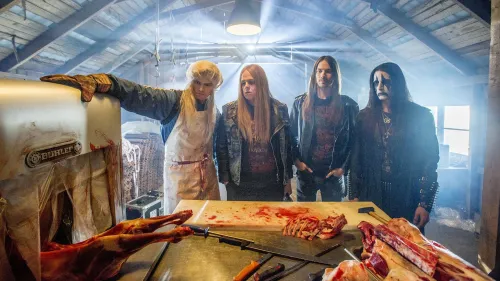
Heavy Trip is a comedy about a heavy metal band, but unlike many mainstream portrayals, it doesn’t dismiss the genre and its fans as overly aggressive, overly serious, or satanic. Instead, these misfits are endearingly goofy. While they growl over their frustrations, they’re totally sincere about their passion, willing to headbang even in the places they earn their living. So when they finally get a chance of a lifetime, it’s so easy to root for their success in spite of all the things that go wrong (maybe even because of all the ridiculous incidents that happen). While it won’t be the smoothest watch for non-metal fans, Hevi Reissu is a crowdpleaser. Just make sure to prepare your ears.
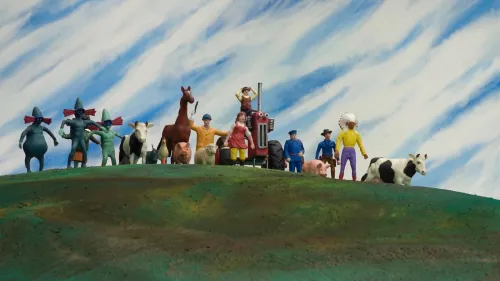
If you’re looking for a straightforward, reasonable plot for children, you’re not going to find it in this eccentric stop-motion animated comedy. That’s because from the reasonable panic over forgetting a friend’s birthday, A Town Called Panic spirals into a series of fantastical consequences, including an order of 50 million bricks, a journey to the center of the earth, and their unexpected detour to the northern tundra. But to be fair, logic is not really what children look for. If anything, the weirdness of Cowboy, Indian, and Horse’s adventures feels reminiscent of a child playing with mishmashed toy sets. Like the stop-motion medium, anything can happen, with enough imagination, and A Town Called Panic has quite the amount of frenzy to spare.
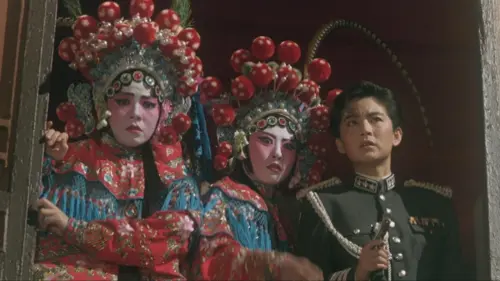
How do we explain Peking Opera Blues? It’s a film set earlier in history, but it’s not as sepia-toned, slow, and depressing as other historical dramas. In fact, it’s the exact opposite. It’s colorful, with all the bright reds and blues on all sets and costumes. It’s comedic, as the three leads– Brigitte Lin, Cherie Chung, and Sally Yeh– get roped into each other’s affairs through unfortunate coincidence. And because of Tsao Wan’s mission, it’s quite fast-paced, driving the action towards a stellar operatic climax. While juggling the frenzy of this thrilling tale, Peking Opera Blues looks to the past to contemplate Hong Kong’s future.
Dear Ex is a family drama that explores LGBT+ issues in contemporary Taiwan. As much as it is a movie about how people cope with loss, it’s a powerful, heartwarming, and intimate portrait of the relationship between Jay and Song Zhengyuan and all the obstacles they face.
While the themes of Dear Ex are heavy, the director makes the viewing experience easier for the audience thanks to humorous and witty dialogue. Meanwhile, the history between Jay and Song Zhengyuan’s relationship unfolds in a very beautiful, almost poetic way, and by the end of the movie, we understand that everyone gets their own kind of forgiveness. The way the characters effortlessly show that love is something beyond genders is admirable, and it is great to see how everyone gets their own kind of forgiveness whether it’s from themselves or from others by the end of the movie.
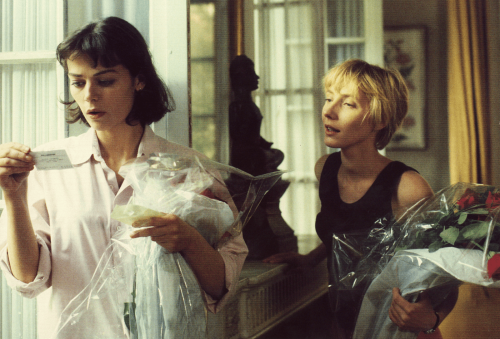
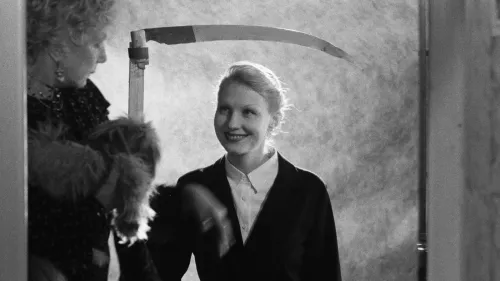
Up, Down, Fragile is a musical, but you wouldn’t know it until past the first hour. That’s because it doesn’t start with a spectacular dance number, characters spontaneously bursting into song. Even when the tunes start, they start diegetically with a nightclub performance both the viewers and the characters witness. But further along the film, as the three women’s lives start to intersect, filmmaker Jacques Rivette plays with perception, flitting between song and reality to better capture the moods and growing bonds between its three leading ladies. Up, Down, Fragile pays homage to the classic Hollywood musical, while having fun playing with its rules.
What is there to know about Persian cats? Well, one, pet owners have to make sure they’re staying at home to be safe. And two, unlike their humans’ government, they apparently like rock music. Their similarities to an underground rock band forms the basis of this humorous docufiction dramedy. As the band tries to make music, and tries to get out of the country to do so, this film captures their complex relationship with the city that brought them up, but also would arrest them for their craft. No One Knows About Persian Cats breaks out of the social drama mold, which is rather fitting with the soundtrack’s genre distinctly being anti-establishment.
The fantasy of being able to have the body you once had is impossible in real life, but we can watch it play out in fiction. While previous depictions of this idea rightfully point out ageism and how much worse people treat the old, Miss Granny also celebrates the wisdom and experience that could only come from the years Oh Mal-soon has gone through, through an engaging script and the quirky performance of Shim Eun-kyung. It’s so funny seeing people taken aback, surprised, and astounded by old Oh Mal-soon in her young body, but what makes it work is the way director Hwang Dong-hyuk introduces her to us bit by bit, crafting a character that at first glance seemed to be a rude and controlling grandma, but is actually a woman that didn’t get to enjoy her youth due to the sacrifices she made for her loved ones. Miss Granny makes the case that there are timeless things that we can return to and appreciate, but there are also things that we’re willing to let go of our youth for.
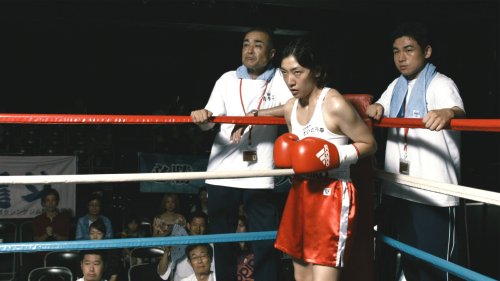
Unlike the scrappy fighters we’ve seen in other sports films, Ichiko Saito of 100 Yen Love is an unmotivated recluse that does only the bare minimum to survive. Hardly an underdog to root for. Still, when Ichiko spots a boxing gym, the film transforms into something special. In spite of the disappointments that follow, the gym moves her into action, into picking a goal and moving after it, rather than the usual makeover we’ve seen done for other female protagonists. Ichiko actively tries to take control of her life. The hope grows as we follow her journey, especially with Sakura Ando physically transforming Ichiko’s slouch into an upright, confident stance. 100 Yen Love reveals what’s at the heart of a loser like Ichiko, someone who just needs one win after all of life’s disappointments.
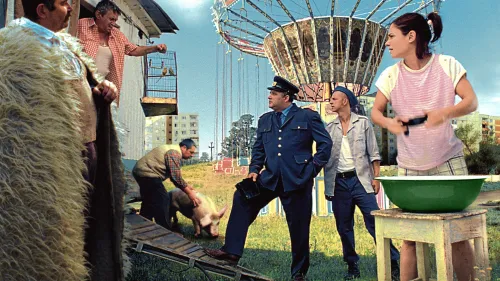
Stories are only called tales when they can’t be called true. Of course, it’s easy to give that designation when the story in question has magic, myth, and morals. But the six shorts comprising Tales from the Golden Age could mirror the mishaps that could happen anywhere, specifically under a regime steadily losing its hold to incompetence, corruption, and greed. It just so happens that pointing these mistakes out was forbidden at this particular time. Linking these humorous incidents under the last 15 years of Nicolae Ceaușescu’s rule, the film pokes fun at the chaos of this time, cheekily claiming deniability by calling all six shorts urban legends.
The situation in No Man’s Land isn’t something we usually see in war movies, considering how often the genre has been used to criticize war, to examine people’s true nature, and to affirm a deeper love for humanity. There’s no time to have fun when these ideas are at stake. Yet, the awkward situation of being stuck where you shouldn’t have is likely to be true in reality. Wars like the Bosnian War did use landmines, causing situations for soldiers on both sides to unexpectedly end up stuck with each other. But if anything, the humor highlights the very same war film themes, albeit in a fresh way. Mirroring the historical indecision of the world leaders outside the trench, No Man’s Land takes this possible scenario to contemplate war’s absurdities.
A life lived for loved ones is a good thing, but there’s always a risk that that sacrifice goes unnoticed, since the opportunity cost was never fully concrete in the first place. That is what happens in Whisky. With his brother Herman visiting from greener pastures, Jacobo has not much to show for his choice to stay home. While that choice was made to care for their mother, who passed away, Jacobo only has the sock factory to fill his days, and thus only has his co-worker Marta to rely on for a fake marriage scheme. It sadly doesn’t play out the way we’ve seen in romantic comedies, but Whisky pokes fun at Jacobo’s insistence on misery and his misguided notions on what it means to be successful.
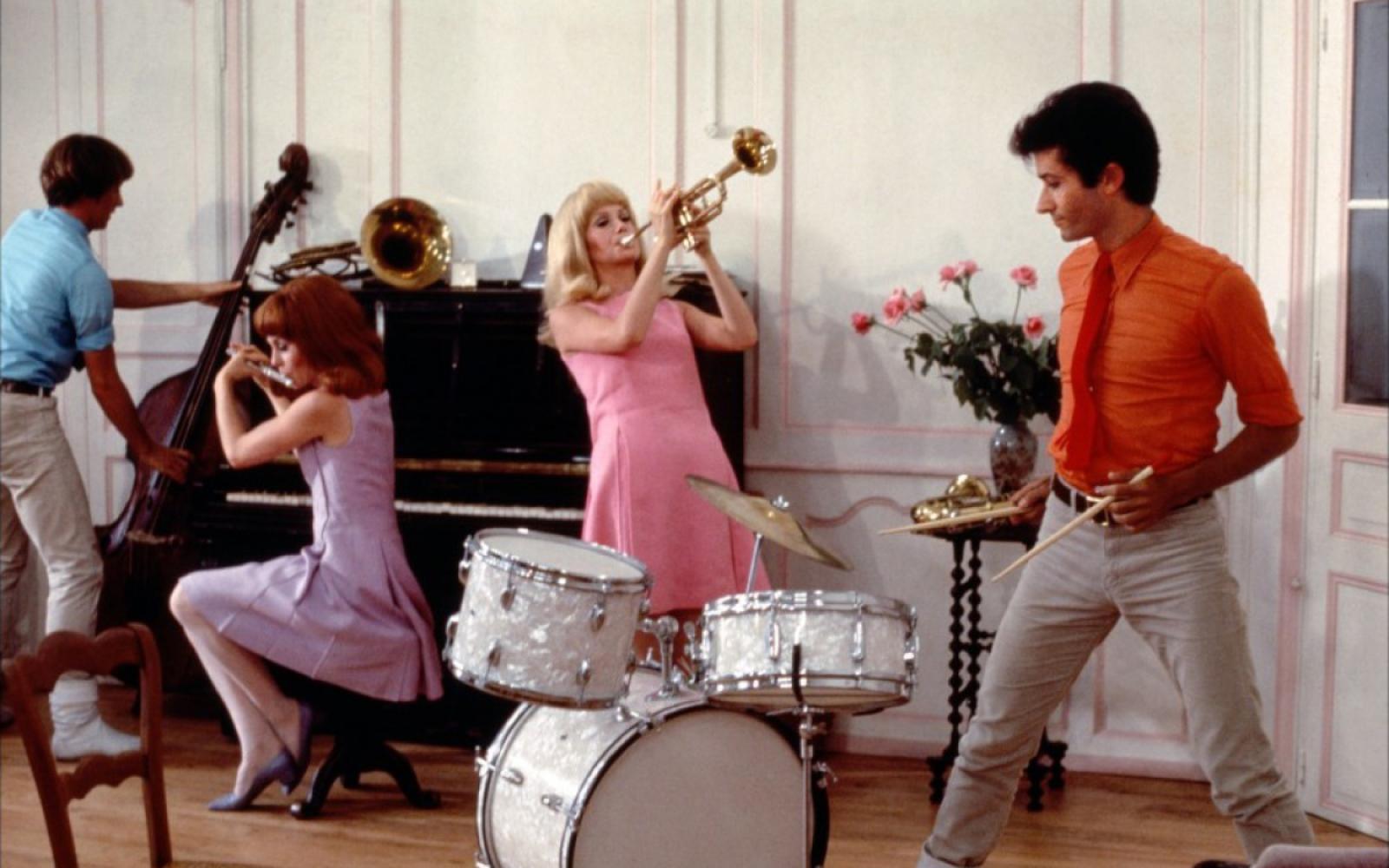
Where The Umbrellas of Cherbourg lamented the tragedy of one missed connection, Jacques Demy follows it up with a much more upbeat love story in The Young Girls of Rochefort. It’s more hopeful. Even before you watch the end, it’s clear that there’s not one, but two chances at a happy ending, since there are two couples. But on top of that, it’s the girls’ conviction in love that makes everything brighter. Despite the logistics of their act, or the coincidences that had to align, or even the serial killer mentioned, The Young Girls of Rochefort remains bright-eyed and bushy-tailed, celebrating the bubbly optimism that musicals would have us believe in.
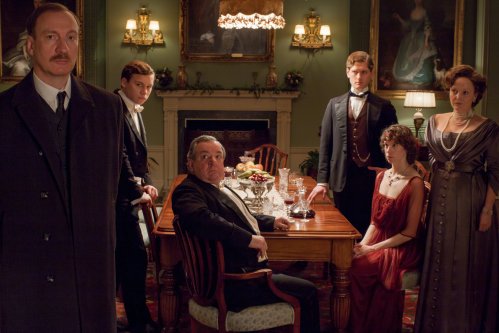
A classic text of English literature classes is handsomely brought to life in this screen translation of the still-radical play An Inspector Calls. The Birlings, a wealthy industrialist family thriving in 1912 England, have a cozy family celebration shattered by the arrival of a police inspector investigating the suicide of a young working-class woman. But that’s not the only bubble that’s burst: as Inspector Goole (David Thewlis) interviews the family — gradually revealing the part each played in forcing the woman to such a desperate state — he holds a mirror up to the casual cruelty and entitlement with which the Birlings move through the world. Part of what makes JB Priestley’s original play so enduring is how these characters are used as a wider metaphor for their social classes, and that translates with delicate but undeniable force here. A damning indictment of individualism and blind privilege on original publication in 1945, this is a story that retains the same relevance and power today.
Given the time period, it’s easy to see The Teacher as a satirical critique of the communist regime. Through the parent-teacher conference in a small high school, director Jan Hřebejk depicts a community shaken by the placement of a new teacher aligned with the Party. The new hire in question is nasty. While outwardly amiable, the subtle way she tries to extract favors, from simple repairs to hard-to-get medicine, feels terribly slimy as the kid’s grades are held in the balance. Zuzana Mauréry balances that two-faced dynamic with excellent skill, making her character someone we’d love to hate. And it all culminates into an intriguing ending that proves that while corruption has flourished under the regime, the following administration hasn’t done much to address it. The Teacher is a hilarious black comedy that isn’t afraid to bite.
What does a filmmaker do when you’re banned from making movies? For their safety, they might move abroad or switch professions altogether. For director Jafar Panahi, it means doing things differently. Taxi was made in the titular vehicle, with a camera simply placed on the dashboard as Panahi poses as a driver. It’s a simple approach, but quite fitting for what he’s going for. Like the way taxi drivers face so many different kinds of passengers, Taxi introduces various characters and scenes in Iran, mixing the normal and humorous with the violence some people face. It paints a balanced picture, though the government in question disagrees. Taxi warmly depicts Panahi’s fellow countrymen, but dares to acknowledge the country’s flaws.
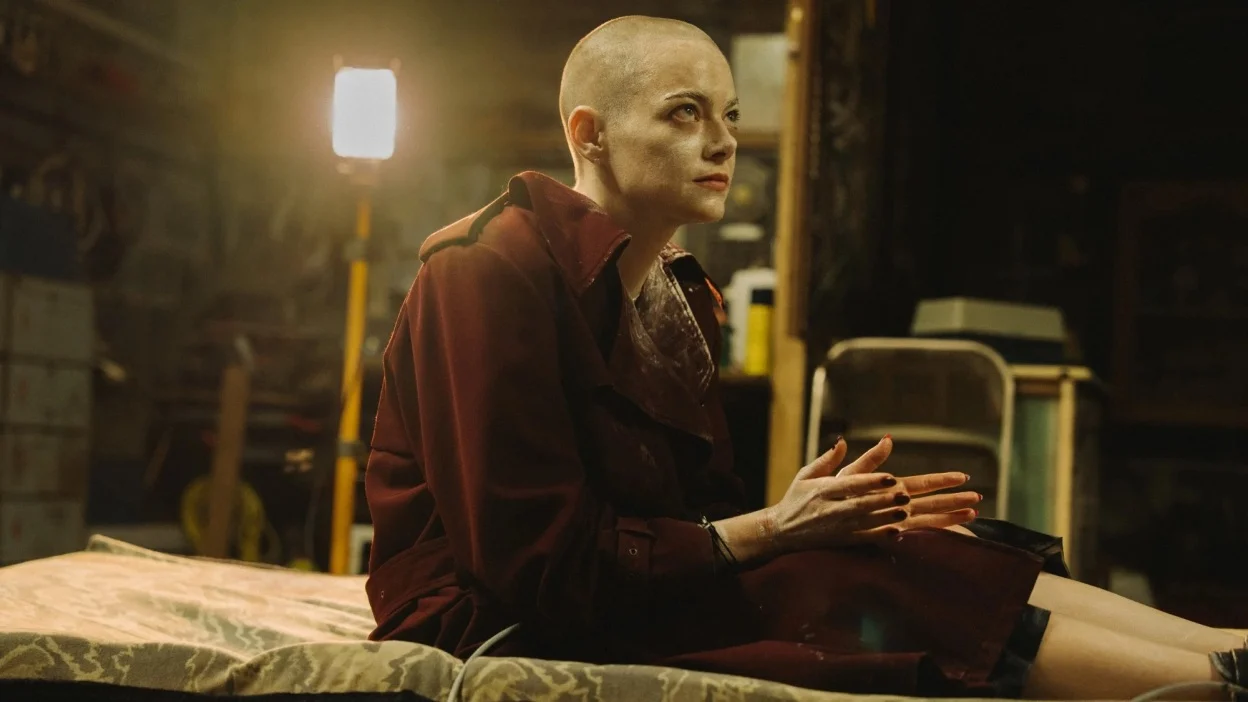
If it weren’t for the people involved, the English-language remake of the Korean sci-fi comedy Save the Green Planet might have gone the direction of many English-language remakes– that is, not well. Good news is that producer Ari Aster got the best people involved. Of course, that includes the original director Jang Joon-hwan, who had to step down from directing due to health issues, but their team-up with Greek filmmaker Yorgos Lanthimos, who too is known for twisted comedies, was truly inspired, as the original story’s off-kilter, eclectic alien plot fits in just right with Lanthimos’ distinct style. Bugonia is the insane and terrific consequence of such an incredible collaboration.
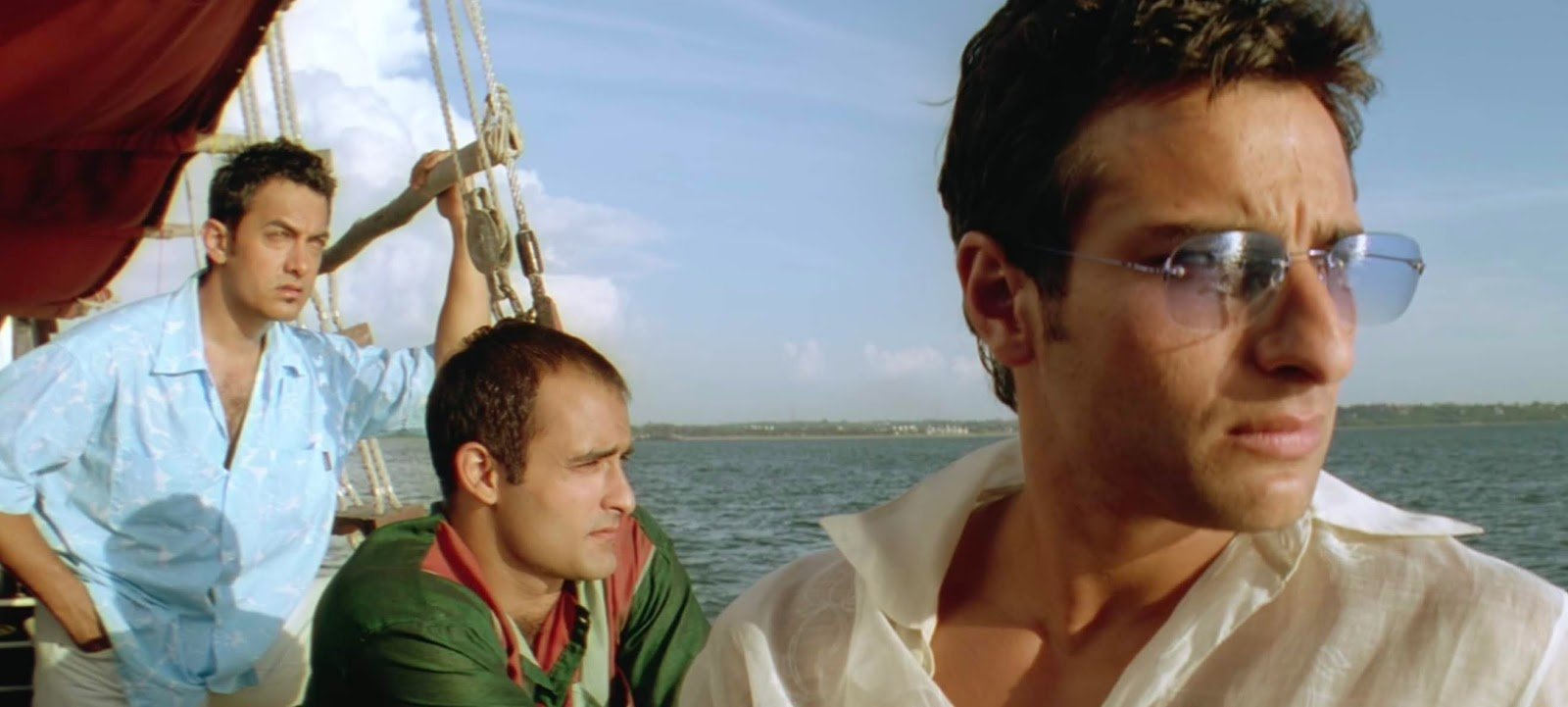
At first glance, Dil Chahta Hai is an ordinary ensemble romcom. There’s some guys, there’s some girls, and they fall in love in their own special way as befitting the general archetype of protagonists we’ve seen in other romcoms. But to the film’s credit, it’s made pretty well. Many viewers can appreciate the catchy songs, the charismatic leads, and the spectacular way writer-director Farhan Akhtar stages each number, but what makes his debut work is how in tune it was with modern Indian youth, and the way it grounds all three love stories through the friendship of three young men fresh out of college. Dil Chahta Hai balances its romantic drama with the support of friends, similar to how relationships work in real life.
A funny, feel-good French movie about a man who joins a synchronized swim team to get over his depression. Comprised only of other middle-aged men, they decide they want to compete for the world championship. Sounds like an unlikely story? It’s actually based on a real-life documentary from Sweden called Men Who Swim. If you get French humor, this will make you laugh (a lot), and if not, you’ll surely enjoy the easygoing tone of Sink or Swim.
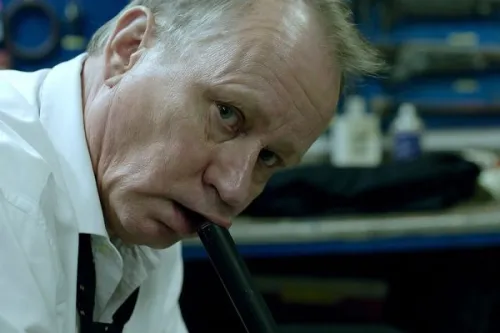
This movie is pretty much in every regard a Norwegian Kill Bill. It’s a dark gory comedy where, naturally, the substitute for Uma Thurman doing damage is an emotionless Stellan Skarsgård.
After his son is killed by a drug gang, Skarsgård’s character, fresh off a win of a “citizen of the year” award, embarks on a ruthless journey to track and kill the murderers. This takes place in one of the most remote areas in Norway, where the main character works as a snowplow driver. You guessed it, some people will get snowplowed.
Seems familiar? That’s because this year it was turned into a horribly sub-par American movie called Cold Pursuit, with, ugh, Liam Neeson.
We Are the Best! is one movie that may be overlooked largely by viewers, though it perfectly captures counterculture, and relates to the misfit young and old. The movie is an adaptation of Moodysson’s wife Coco’s graphic novel “Never Goodnight”. Set in Stockholm, Sweden in 1982, Klara (Mira Grosin) and her best friend Bobo (Mira Barkhammar) are junior high teenage girls who believe in their heart that punk rock is alive and well. With both of their home lives not so pleasant, the girls spend their time at the local youth center while taking up the time slot in the band room to get revenge on the local metal band. That’s when they find themselves starting a punk band without even knowing how to play an instrument. We Are the Best! is a fun and deeply sincere exploration of adventure, friendship, love, and betrayal in adolescence.
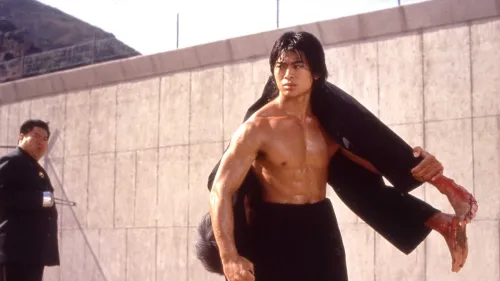
Admittedly, the English dub of Riki-Oh: The Story of Ricky can sound quite goofy. The American-accented voices don’t quite match the Asian characters, and because the characters are easily provoked into violence, they all talk in an exaggerated way. As such, the film is absurdly funny. It’s unclear whether or not that was intended. The action sequences are equally intense, choreographed and staged in order to maximize ridiculous spurts of blood, so it’s possible that the campy approach was on purpose. However, underneath this over-the-top, violent veneer, is a surprising premise that tackles the worries towards a privatized prison system albeit through some of the most wacky stunts ever put on film. Riki-Oh: The Story of Ricky won’t be the prison film for everyone, but there’s no denying its ludicrous appeal.
A black and white movie, A Coffee in Berlin is an early Woody Allen reminiscent film with a great emphasis on the emotions it handles. It flows naturally, telling the story of Niko, a young college dropout in a period of his life where he has to face loneliness and lack of money and success. He goes from observing the people of Berlin to first realizing he is becoming a stranger to them and then lastly deciding to do something about his life. It’s a whimsical German film with a lot of heart, as much of a tribute to youth as it is a tribute to the city of Berlin.
The Square is a peculiar movie about a respected contemporary art museum curator as he goes through a few very specific events. He loses his wallet, his children fight, the art he oversees is does not make sense to an interviewer… Each one of these events would usually require a precise response but all they do is bring out his insecurities and his illusions about life. These reactions lead him to very unusual situations. A thought-provoking and incredibly intelligent film that’s just a treat to watch. If you liked Force Majeure by the same director, The Square is even better!
Youth is a film about Fred Ballinger (Michael Caine) a famous composer vacationing at a resort in the Swiss Alps with his friend Mick (Harvey Keitel), an accomplished filmmaker, and his daughter Lena (Rachel Weisz). While Fred shuns his work (including an opportunity to play for the Queen of England) and muddles himself in disillusionment, Mick works fervently on his final film, intended to be his life’s crowning achievement. Their remaining time is spent intermingling amongst the guests and reminiscing upon their lives, their achievements, their failures and their undying yearnings. From writer/director Paolo Sorrentino (The Great Beauty), Youth is another charming work offering an array of eccentric characters and quirky scenarios, while also serving as a touching examination of age, wisdom and ultimately personal reckoning.
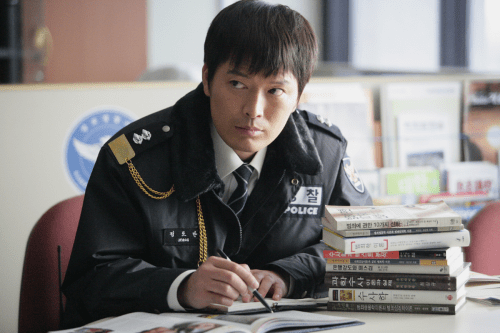
Going by the Book is quite absurd. Of course, most people would understand not to take an assignment like this too literally, so when this deadpan, fastidious cop does so, it brings this mere simulation into an unpredictable, fascinating situation. It’s so funny. The film leans into the humor by depicting the horrifying possibility before pulling the curtain to the silly actions he actually does. It’s a clever concept that pokes fun at his colleagues’ complacency, as it highlights the gap between the needs of a situation and how unprepared institutions are to meet it, as well as how rules are made and practiced. While not as fast-paced as the original, Going by the Book is a hilarious thriller comedy that’s so fun to watch.
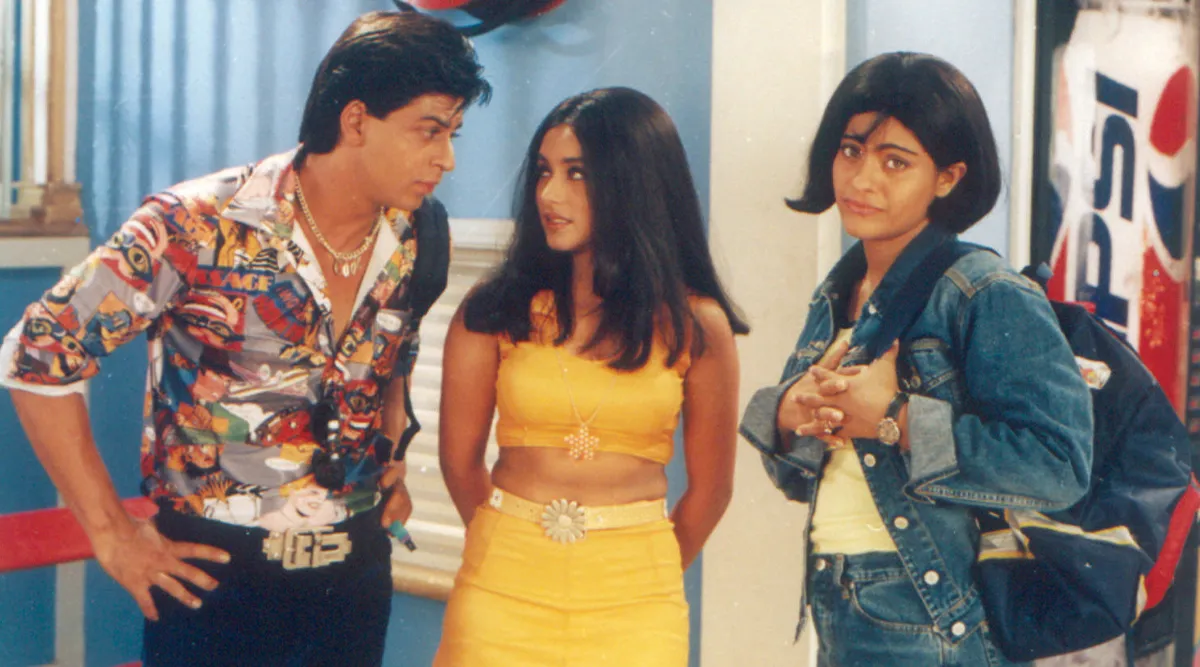
When the love triangle is set between the most popular guy in school, his tomboyish best friend, and the beautiful principal’s daughter, Kuch Kuch Hota Hai unsurprisingly goes through the inevitable who-would-he-choose romantic storyline. We’ll say it outright: It should be cliché. And yet, we’re surprised to tell you that it works. Part of it is because of how it’s framed– before we get into the youthful shenanigans that plague schools all over the globe, we learn about them from the future outcome, namely from Rahul’s child, reading a letter from the mother that passed away. But even when we get into the overly glowy memories of the time, Kuch Kuch Hota Hai still feels different because of the way it cares about its characters. Neither Anjali or Tina are made into villains for no reason– they’re all friends that have fun together, have incredible chemistry, and care about each other. Maybe in another universe, they would have been polyamorous. Kuch Kuch Hota Hai somehow does the impossible in such a refreshing way.
Before anything else, your mileage of The Brand New Testament will likely depend on your beliefs. We would say, however, that for most people, this satire is frankly so absurd that it’s more likely to baffle rather than offend. That’s because of its central premise– what if God is just a modern day man on his computer? It makes for a novel way to depict divinity, to reinterpret Judeo-Christian thinking, and to reckon with the question of evil through stylistic shots and whimsical fantasy rather than philosophical dissertations. Playful, irreverent, and mostly bizarre, The Brand New Testament won’t be for everyone, but it’s certainly going to be a unique experience.
After an initially disappointing breakthrough attempt to Hollywood, Jackie Chan pivoted back to Hong Kong, unexpectedly creating an iconic film franchise and maybe perhaps one of the best martial arts movies ever made. Police Story seems to be a simple story at first, but it was through this film that Chan’s spectacular stunts evolved for a more modern setting, incorporating slapstick and action choreography into a definable style, while also questioning the ways Hong Kong police conducted themselves at the time. Police Story is Jackie Chan at his best, pushing an entirely new standard for action films all over the world.
Given the fact that it’s dialogue heavy, some of the humor in this two hour and a half crime comedy might fall flat for viewers unfamiliar with the Russian language. It really takes a while for Andrei to run his con, considering how often he gets roped into performing some tunes and listening into lengthy gossip sessions with his wealthy old clientele. But rather than rely on lazy stereotypes, filmmaker Kira Muratova instead takes the time to get to know these characters in the gloriously maximalist house and the absurd differences between them. The Tuner won’t be for everyone, but it might resonate to those familiar with post-Soviet Ukraine.
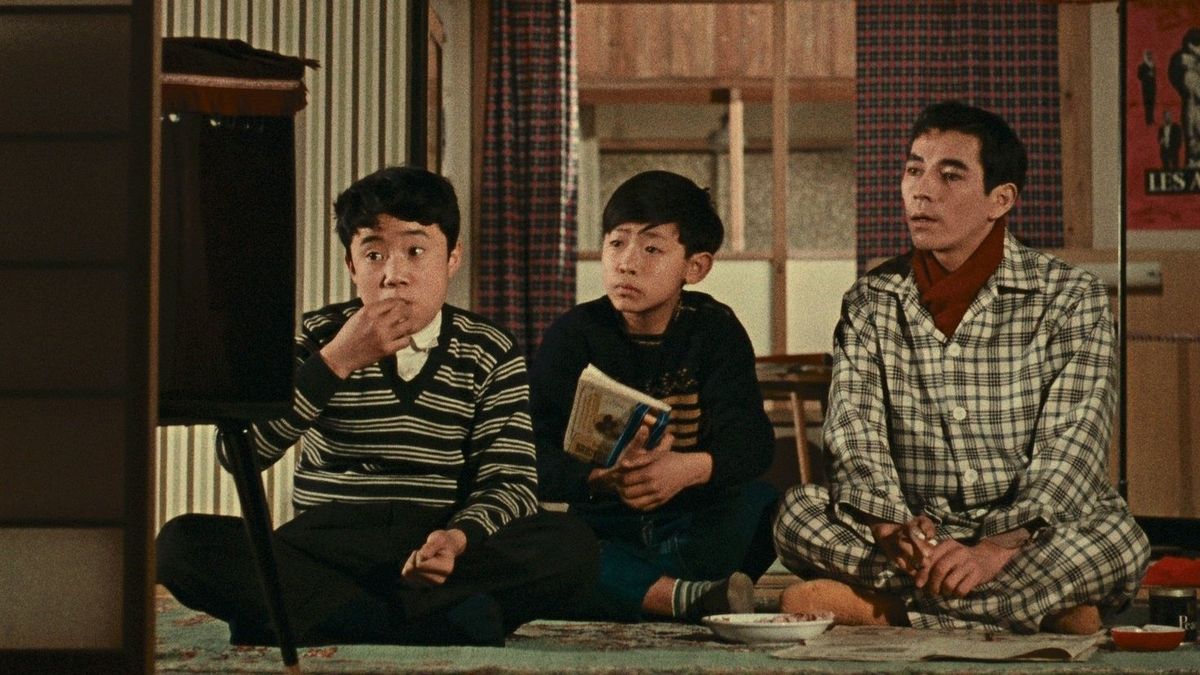
There’s something so delightful about watching Good Morning, the second of Yasujirō Ozu’s films in color. It’s easy to see why– the conflict is relatable, Ozu’s shots are immaculately framed in warm colors, and of course, the pouting children hoping to get a television of their own are just pinch-worthy adorable. But through the neighborhood conversations, the different generational concerns of each Hayashi, and a surprising amount of fart jokes, Good Morning subtly ponders on social niceties, the consideration we learn to give to others in silence, as well as the freely given affection that becomes harder to share as adults. Good Morning may not be Ozu’s most famous feature, but it’s nonetheless one of his most delightful to watch.
Deception aside, there’s something charming about the way Rab Ne Bana Di Jodi brings romantic comedy tropes into an arranged marriage. For one, the girl isn’t the one with the Cinderella makeover– It’s the guy. It probably helps that the guy is portrayed by Shahrukh Khan, out of type as a nerdy teacher’s pet-turned-salaryman pretending to be, well, him. It also helps that RNBDJ has a completely different aim: it’s out to satirize the way Suri, and Bollywood itself, misinterprets Taani’s ideal leading man. Still, even as it pokes fun, RNBDJ is a sincere Bollywood romcom, unabashedly celebrating the devotion Suri has in trying to understand his wife, and his openness to be transformed for it. RNBDJ should not be emulated in real life. But perhaps it’s a sweet reminder to let in a bit of romance into the everyday, show a little vulnerability, and maybe try on a new look once in a while.
This is a hilarious political comedy starring the ever-great Steve Buscemi. Set in the last days before Stalin’s death and the chaos that followed, it portrays the lack of trust and the random assassinations that characterized the Stalinist Soviet Union. Think of it as Veep meets Sacha Baron Cohen’s The Dictator. Although to be fair, its dark comedy props are very different from the comedy that comes out today: where there are jokes they’re really smart, but what’s actually funny is the atmosphere and absurd situations that end up developing.
The Guard played by Brendan Gleeson is a new character in cinema that appeals to the funny bone inside all of us. A character like this can make any movie lovable. It also features Don Cheadle playing an FBI agent who is in town to solve a crime under Gleeson’s jurisdiction. An overall great movie with great writing. Please note, for those who have a hard time understanding different accents, subtitles are advised.
When Sr. Lino started his warehouse job, he had to work for 11 years before being able to sit down during work hours. This is because there was one chair, and he had to wait for his more senior colleague to retire before he could have his turn.
Now, many years later, he’s about to retire. A new recruit is sent to replace him just five days before he leaves. Sr. Lino is disgruntled that the new kid will only have to stand for five days, but on the second day, the kid brings a chair from home and sits.
Warehoused is a comedy about these two characters with completely different personalities as they interact during the few days left in Sr. Lino’s career. The most interesting thing is perhaps how little seems to happen: the warehouse is empty, unvisited, and yet religiously maintained by Sr. Lino.
It’s such a joy to watch the two actors carry this movie. And behind the funny and simple premise, there is a lot that this movie tries to deal with: deceit and lies, the weight of modern working life, and more.
In between his own Shakespeare adaptations, filmmaker Kenneth Branagh created this black-and-white comedy drama about a group of aspiring actors staging their own Hamlet production. Who would do Hamlet, of all plays, on Christmas? Apparently these losers will, mostly because they don’t have anything else. They haven’t gotten other opportunities to perform. But as these misfits, black sheep, and has-beens cobble up something together, Branagh’s script celebrates the craft, the bonds that form under the stress, and the hope that each production gives, even if it is just another Shakespeare adaptation. In the Bleak Midwinter celebrates the human need to create despite a lack of economic incentive.
The Young Offenders is a comedy about two Irish teenagers who go on a 160km bicycle trip to salvage 7 million euros worth of lost cocaine. As they sit on a hill overlooking their city, they imagine what they would do with that money. The answer is building a house that has lava lamps, “big gold walls”, Spanish girls, and an English butler to wake them up every morning with the phrase “what’s happenin’?”. You get the vibe. It’s is a silly movie, although the premise is actually based on a real-life event where cocaine from a capsized smuggling boat washed up on the Irish coast. The Young Offenders wears its heart on its sleeve. It’s a sweet funny movie, half slapstick and half plot, which sports an infinity of highly quotable one-liners.
I can’t get a song out of my head from this movie: the 1985 UK hit Desire As from Prefab Sprout.
It plays when the two main characters, a sensitive kid who’s bullied by his school for not liking rugby, and the school’s rugby star; talk over the “Berlin Wall” that separates their dorm room.
The song echoes “It’s perfect as it stands, so why then crush it in your perfect hands?”. These two seemingly incompatible personalities form a friendship that comes under threat from their school’s traditional authority, especially as one of them is revealed to be gay.
It might seem like a tough premise, but Handsome Devil is actually a comedy. It’s a sweet and easy coming-of-age comedy.
Duck Season happens within the span of a normal Sunday afternoon. At first, when the electricity stops, it’s boring. The first two kids stare at each other in black and white, just looking for something to do. But it’s that exact boredom that gets the ensemble to meet each other, getting them to break out of their normal cycle, and question things in their life that they haven’t thought about, like what the heck are they going to do with their life moving forward. And like that pivotal afternoon many of us might have gone through, the film is simple, understated, and surprisingly deep. Duck Season takes its sweet time to unfold into an honest conversation between friends.
In this French movie based on a true story, a med-school graduate from Congo is offered a job as the doctor to the president of Zaire. He refuses and chooses instead to move to a small town in France in hopes of getting French citizenship and securing a better future for his children.
The story, which starts in 1975, is set in a village where people had never seen a Black person. To that, Seyolo, the doctor, says: “so what? Now they will.”
The culture clash is both villagers-to-new-arrivals and the other way. Seyolo tells his family that he was hired in a village “north of Paris”, but all they hear is “Paris”, only to be shocked by the state of the rainy and muddy countryside village.
There is no shortage of offensive jokes in this comedy about a man who tries to prove to his girlfriend that he is dad-material. Think Borat, but Danish, and with brothels.
The man in question tries to change his lifestyle after his girlfriend, not thinking he is responsible enough, hides the fact that she is pregnant. To prove her wrong, he takes his nephew on a canoeing trip with his equally as disastrous friend.
A unique movie about a near-future society obsessed with couples; viewing couples as the norm, as opposed to single people who are viewed as unproductive and undesirable. In that way, the film shows David (Colin Farrell), a newly single person who is transferred to the Hotel, a place where single people have just 45 days to find a suitable mate, and if they fail, they would be transformed into animals of their choice. While the film’s original premise may not be everyone’s cup of tea, The Lobster will prove a goldmine for people who are into a Kafkaesque, absurdist mentality, or anyone looking for an idea-driven experience.
Shaolin Soccer is hilarious. It takes all the familiar elements of the sports drama and kung-fu action flicks, and uses it to create ludicrous stunts, jokes, and slapstick that poke fun at how self-serious the genres tend to be. It helps that the jagged edges of both types fit quite well– “Golden Leg” Fung may not know kung-fu, but the former athlete turned coach makes for a great unexpected mentor that Shaolin monk Sing could learn from. Likewise, Sing having learned a different craft makes him the perfect underdog Fung can teach. However, what makes Shaolin Soccer work is its heart. As the Shaolin style of kung fu has been ignored for more marketable, fighting-focused styles, and as Fung’s career has ended due to sabotage, their team-up allows them to fight for their respective passions. It just so happens to be downright hilarious.
A lot of things steal your attention in All About My Mother, Spanish director Pedro Almodovar’s ode to women. There are the colorful characters, which include a transgender sex worker, a pregnant nun, and a red-haired theater diva. There are the vibrant primary colors, the jokes that catch you off-guard, and the powerful dramatic performances. It could’ve easily been a mess, but Almodóvar—in a way that only he can—makes everything coexist beautifully. The dramedy is just as much about mothers as it is about homosexuality, found families, grief, and love. Although it’s in Spanish, it conveys impactful, universal themes. It’s no surprise that it swept awards around the world, including the Oscars, Goya, and the Golden Globes.
Who doesn’t love a good wedding? It’s a lovely celebration anywhere in the world, but Hum Aapke Hain Koun depicted the Hindu wedding as one of a kind. The film depicts a traditional engagement and wedding ceremony in its most spectacular form, with catchy songs, elaborate sets, and colorful attire that set the standard for many South Asian weddings today. It’s so captivating that it’s easy to forgive the film’s long runtime and slow pace. That being said, certain aspects, such as the roles women take on, might not have aged well for modern viewers. Still, Hum Aapke Hain Koun remains a Bollywood classic for its undeniable impact.
Sometimes it’s hard to relate to foreign movies because of the different cultures, languages and actors. But Miracle in Cell No. 7 transcended the language barriers for me and delivered one of the most touching stories I have ever seen. It’s a Korean film about the intricate yet simple love story between a mentally challenged father and his daughter. When the father is wrongly accused of a crime he did not commit and is sent to prison, his personable character eventually causes the prisoners around him to help reunite him with his daughter in prison. Warning: many tissues will be needed.
An intriguing, funny and rather bizarre movie which serves as a fantastic introduction to ‘new-wave’ German cinema. Featuring a cast of young talented actors and excellent direction, this movie takes place around the time the Berlin wall fell and East and West Berlin were still united. Christiane, a devout socialist activist in East Berlin suffers an accident which leaves her in a coma, during which time the Berlin wall comes down and Western capitalism encroaches on her beloved East Berlin. Fearing that she may relapse into a coma after waking up, her doctors warn that she must remain calm and not endure any shocks. Despite the somewhat contrived premise, the film really takes off from this point as her son Alex and his friend aim to hide this fact from her, by faking news reports on the television, coming up with excuses for a giant Coca Cola banner and a whole host of other amusing exploits to prevent her from knowing. While categorised as a comedy, it is also a moving portrayal of a loving family enduring great, historic change.
A French romantic comedy set in the 1950s, it’s like a “She’s All That” with Mad Men aesthetics. Sounds like an odd mix? This film is odd, but does it so well. It’s a quirky and triumphant look at women’s rise to respect in the workforce. A girl destined for a quiet life sees her true potential come to life when she joins an insurance agent as his secretary. Together they train for a speed-typing contest, and together, they fall in love.
Written, directed and starring the auteur Stephan Chow, Kung Fu Hustle is a distillation of decades of Hong-Kong Cinema’s greatest export : the martial arts comedy. Full of numerous allusions and witty nods to other greats in the genre, this film is nonetheless entirely fresh and new. Equal parts hilarious and breathtakingly action-packed, Kung Fu Hustle showcases an enormous amount of raw talent, cinema magic and ass-kicking for any true cinema connoisseur.


x1
x13