
The Best Not Rated Movies to Watch
Find the best movies rated Not Rated, as per MPAA rating standards. These recommendations are at the same time acclaimed by critics and highly-rated by users.
To access filters, visit our homepage.











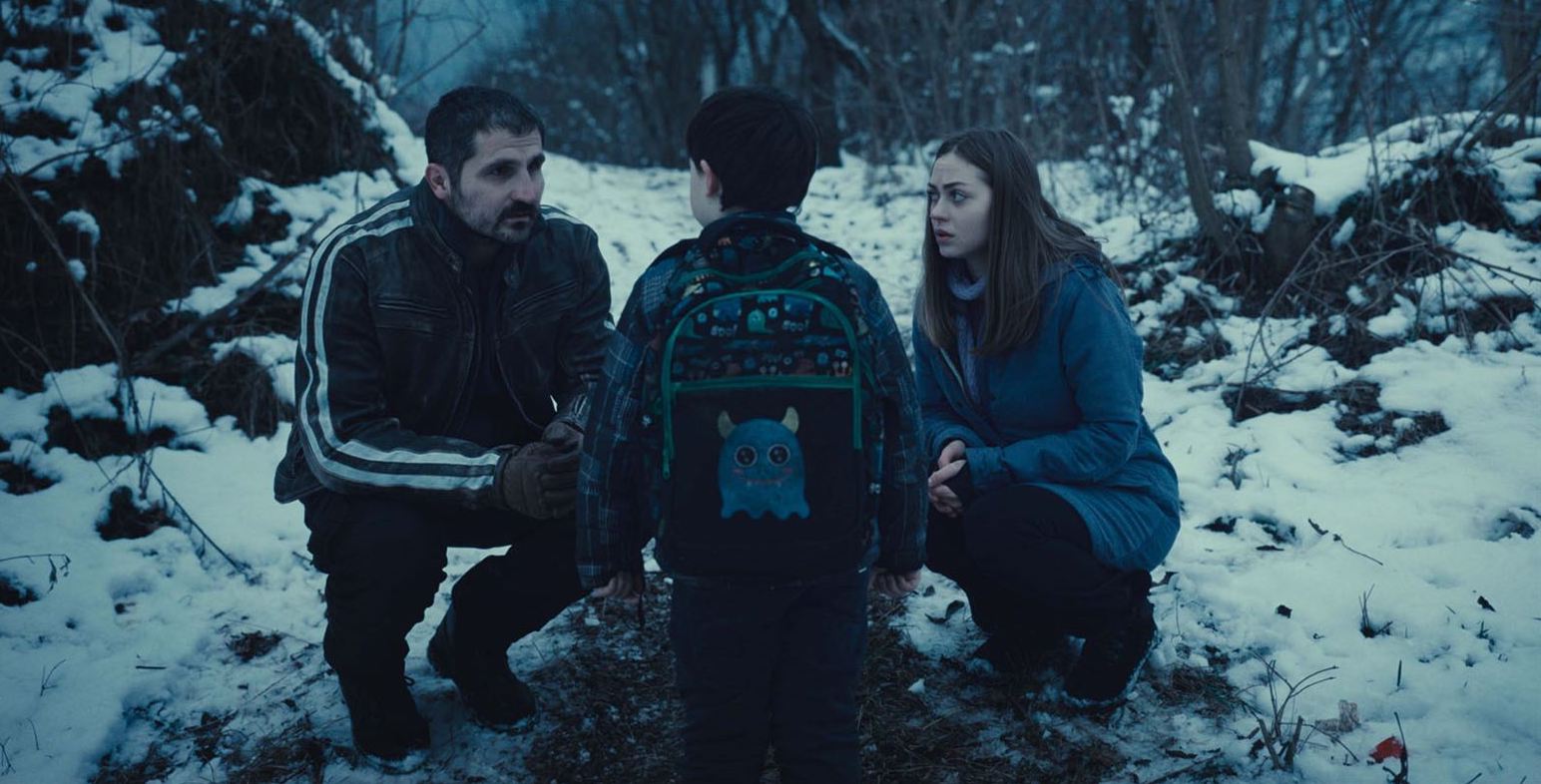
Set in a small town in Romania, R.M.N. is a challenging slow-burn that explores what happens to an insular community upon the arrival of immigrants from South Asia. Initially, the discrimination thrown at them seems tame; at the very least, it’s how you’d expect a homogenous and tight-knit group to react to outsiders. But more and more, the prejudice takes on cruel forms. Stakes are raised until it becomes life or death for the people involved.
It’s a chilling examination of society, of the lengths people are willing to go to to avoid change and prolong their ignorance. But while there are few things scarier than the violence brought on by racism, the phantom elements in this film come close. Director Cristian Mungiu does an impressive job of painting his picture with a haunting tone; there are streaks of the supernatural in this film, making it a biting horror in more ways than one.
As is often the case in great filmmaking, it’s hard to pin R.M.N. down to one genre, but thanks to its eerie perceptiveness, it goes down in history as one of the best films about xenophobia made.

Nothing Compares weaves a poignant story about one of the most misunderstood artists of our time, Sinéad O’Connor. The iconoclast first made waves in the ’80s with her catchy music, but she quickly reclaimed the reins of her own fame and used her platform to champion marginalized causes, long before pop stars were expected to do so.
The documentary zeroes in on this part of O’Connor’s life: what prompted her to music and how she used it as a tool of activism. The answers are multi-faceted and handled here with extreme grace. Like the many from her generation, O’Connor struggled with religion and abuse, such was the Catholic Church’s hold on Ireland at the time time.
The film contextualizes her once-shocking moments and reveals how they were all grounded on things she cared about. It’s a beautiful piece of work that reassesses and redeems a wronged artist who was ahead of her time.
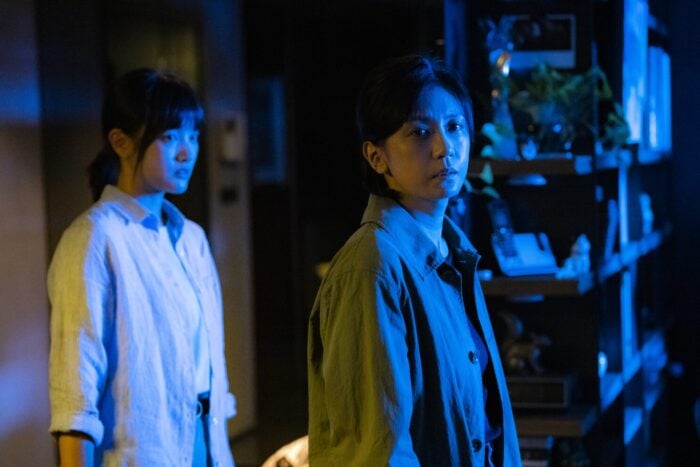
All the synopses going around the internet won’t fail to let you know that The Falls takes place at the height of the COVID-19 crisis. The film is certainly marketed that way, with commercial posters featuring the leads in ubiquitous face masks, socially distanced from the blurred crowd.
But interestingly, The Falls is not just a situational, pandemic-era story. More than anything else, it tells the story of Pin-wen and Xiao Jing, mother and daughter who, despite previously living a life of comfort, are now dealt with unfavorable circumstances (exacerbated but not entirely caused by the pandemic). Now, they are forced to navigate life with only each other, and it’s in the isolation they instate from the rest of the world do they forge a genuine and heartwrenching bond any and all family members will immediately recognize and perhaps even sympathize with.
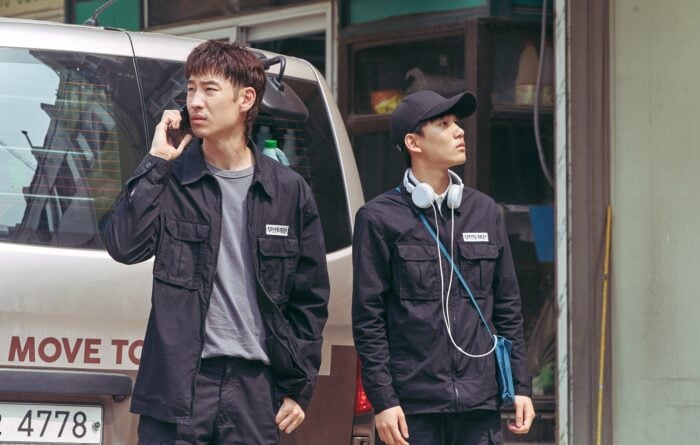
In Move to Heaven, a man and his son clean up after the dead—specifically, the dead who have no one else to look out for them. Believing that no one should be robbed of a respectable farewell, they piece together the deceased’s possessions and celebrate them postmortem. It’s a noble job, but its existence is threatened when the father passes away. It’s now up to the ruffian uncle with a heart of gold to continue the business and bond with his nephew, who himself struggles with Asperger’s.
It’s easy for Move to Heaven to feel weighed down by all the important stories it tries to tackle; represented here are disabled people, depressed people, queer people, overworked people. But it breathes so much life into these stories that they hardly feel like the drag other shows and movies make them out to be. Tragedy here is expertly blended with humanity, and the result is a moving and compassionate series that stands out even in the saturated content space that is Netflix.

Based on the 1992 classic of the same name, A League of Their Own tells the story of the Rockford Peaches—how the women’s baseball team came to be, who its eccentric members are, and what life was like in wartime America, especially for driven women with unconventional goals.
More than a remake, 2022’s A League of Their Own actually updates the premise to be more conscious of sexuality and race, making it feel very modern and up-to-date despite its period setting. It’s a funny and enlightening show with some anachronistic tendencies here and there (expect non-1940s pop music to play), which might rebuff historical purists but will likely charm everyone else.
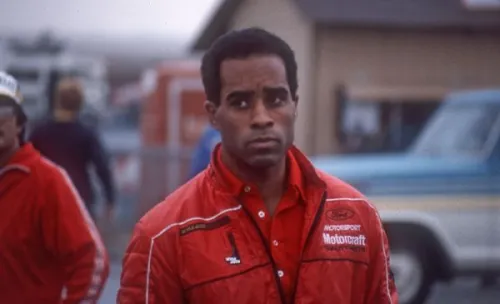
“They called me uppity. Uppity n*****. And I loved it”. That’s how this excellent documentary, about the first professional black racing driver Willy T. Ribbs, starts. It summarizes the strong personality of a champion who excelled in tracks that were filled with confederate flags.
The documentary explains the details of the difficulties that Ribbs went through in the 70s and 80s, but also the people who supported him and recognized his talent. It’s by no way a sad movie, on the contrary, even when Ribbs is talking about people spitting wherever he walks or about the death threats escalating, his unharmed determination is at the center of the story.
This is an inspiring documentary about a character who never got his worth in the history books. I was full of shivers by the first half-hour mark.
 x1
x1
In Motherwell, you either “get locked up or knocked up,” or so says Gemma, a teenager on the cusp of adulthood growing up in an old Scottish steel town. Gemma runs among a tight-knit group of friends, at the center of which is ordinary mischief, routine, and roughhousing. And beneath that lies a certain kind of everyday violence.
As Gemma enters young motherhood, she reckons with how to reconcile her own aggressions with the protective tenderness she feels toward her newborn. Beautifully and thoughtfully directed by Ellen Fiske and Ellinor Hallin, Scheme Birds never feels invasive. Rather, their documentary lets Gemma speak for herself—and in doing so, illuminates not just her life, but the complicated lives that intersect hers, too.
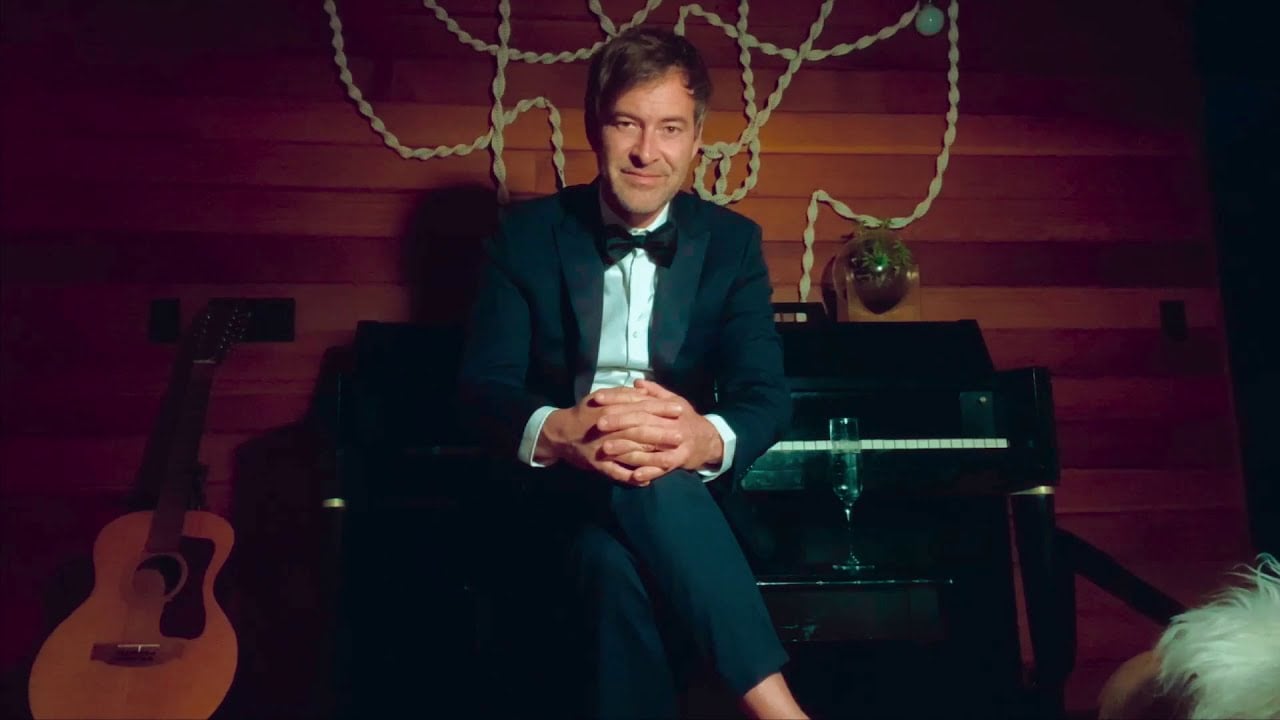
Most computer screen films take the horror film route as a cautionary tale about technology and how we use it. However, when the world was on lockdown, one screenlife film takes a look at its positive side. Simple, straightforward, and comforting, Language Lessons celebrates technology as a means for connection. Through surprise Spanish lessons purchased by his husband, Adam (Mark Duplass) forms a friendship with his instructor Cariño (Natalie Morales). At times, watching the film feels like listening into someone else’s Zoom call, however, their back-and-forth feels engaging because of Morales and Duplass’ chemistry. And when loss hits, on both sides, it’s only natural that their relationship deepens as they console each other. Expressive without being melodramatic and intimate without being too pushy, Language Lessons is a rare optimistic take towards the way we connect to each other through technology.
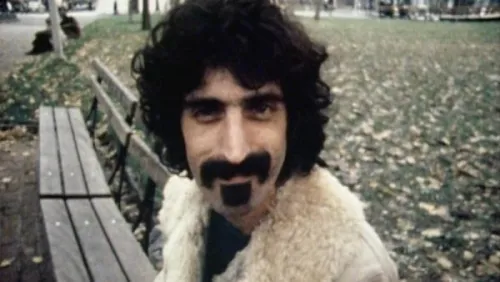
Frank Zappa’s creative scope could barely be defined – a mix of rock, composition, design, and in his early days even filmmaking. This documentary does its best to summarize the un-summarizable, starting with Zappa’s last time playing guitar and going back to early details like an infatuation with explosives as a kid.
Zappa’s overwhelmingly full life is focused on the documentary in the study of his incredible work ethic and unique creative philosophy. Far from the drugged hippie perception he was often met with, Zappa was hard-working, business-aware, and didn’t take drugs.
The manifestations of his exceptional intellect and unique character are abundant in a film that will please his fans and send anyone new to him into a deep Wikipedia rabbit hole.
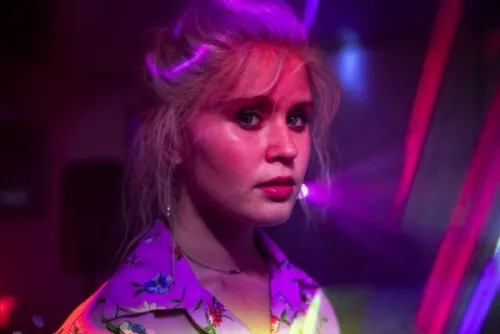
This artistic Australian coming-of-age drama stars Eliza Scanlen (Little Women, Sharp Objects) as Milla, a teen from a dysfunctional family. The father is a psychologist and the mother suffers from depression, so he medicates her under the table. Meanwhile, Milla, a 16 year old, starts dating a charismatic almost-homeless 24 year old drug dealer. Unusual circumstances make the family tolerate the relationship in this story where every character feels like the main one.
If you’re looking for something different, you will love Babyteeth. Something happens to Milla in the 10 minute mark that descriptions and reviews online all mention – but is definitely a spoiler. Just know that it’s not all romance and coming-of-age, there is slow-burning darkness to this movie.
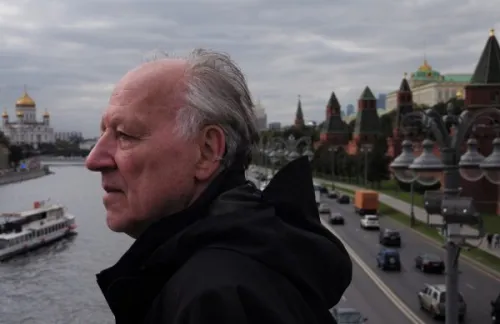
This informative documentary about the former president of the Soviet Union Mikhail Gorbachev is set against modern-day interviews with him that span 6 months. Sitting opposite of him is the Gorbachev equivalent in filmmaking: Werner Herzog. The prolific director asks interesting questions and narrates events that illustrate Gorbachev’s forgotten importance: ending the cold war, a push for denuclearization and avoiding bloodshed during the fall of the Soviet Block. The fact that Gorbachev is loved by so many, including Herzog – who at some point actually says “I love you” – might be the only problem with this documentary. It’s a great reminder of why people loved the Soviet leader, a phenomenon otherwise known as “Gorbymania”, but it does very little in portraying him in a critical light.

Going deep undercover, integrating one’s self into a group without any suspicion, and passing out information to another party… That’s the job of a mole. While they mostly lurk in various government agencies, laboratories, and other special circles of power, The Mole Agent instead goes deep undercover in a Chilean retirement home, having stakes that may not be world-ending, but take more personal, domestic weight as Sergio befriends the residents, records and reports on their well-being, and tries to figure out what exactly Romulo wants as evidence. It’s a funny situation, one that depicts the resident home with warmth, albeit with the occasional spy cams and an old-fashioned piano score, but it can be difficult to figure out where the line is between truth and fiction, as some scenes can feel a bit staged. Still, The Mole Agent is a charming portrait of old age, made so compelling with director Maite Alberdi’s unusual perspective.
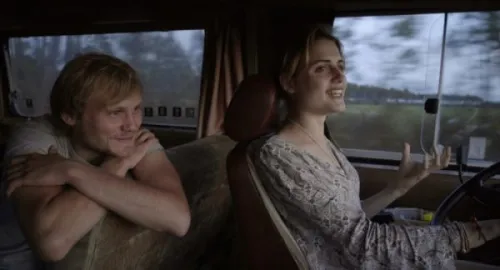
A sweet and romantic German movie about two Berliners who meet randomly and go on a road trip to the south of Europe. It might seem like a silly premise but it’s actually a philosophical movie, one that feels very realistic. The two characters debate human nature, politics, relationships, etc; almost throughout their trip. And they’re played by excellent newcomers who ooze charisma and make the question of what will happen between them incredibly thrilling.
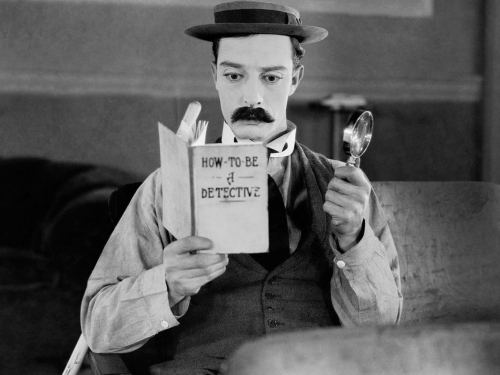
In his last film, American Serb film historian Peter Bogdanovich celebrates silver screen legend Buster Keaton. The subject alone is compelling to watch. It would be easy to pull clips from Keaton’s works, dig through the headlines, pull in some celebrity interviews, and call it a day. However, in Bogdanovich’s hands, this documentary handles Keaton with respect. Instead of focusing on the scandals, Bogdanovich focuses on Keaton’s brilliant work. Instead of reciting facts, Bogdanovich highlights how his bits influenced film today. Excellent editing – cuts, structure, and scoring – helps us glide through Keaton’s work. The film truly understands Keaton’s life and exactly why he’s brilliant. Comprehensive yet very focused, this documentary honestly feels better than film school.
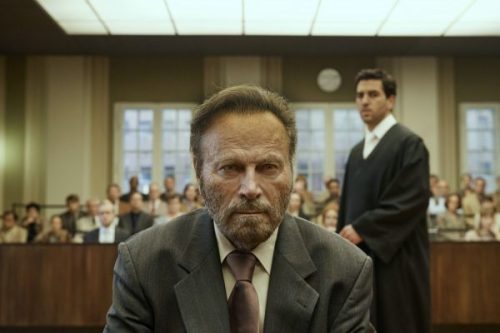
A young lawyer has to defend a murderer after passing the bar only three months prior in this satisfying German drama. To make matters worse, the victim happens to be his mentor, a wealthy and seemingly kind-hearted business man. As for the perpetrator, he refuses to say a single word. Caspar, the lawyer, is from a German-Turkish background, which is a hint to where the complexity of this legal drama lies: in Germany’s history and racial legacy. The Collini Case is satisfying to a fault, but if you’re looking for substance-filled entertainment, this is some of the best you’ll get.

Disproving the notion that American animation is only for kids, the latest project from Genndy Tartakovsky (most known for Dexter’s Laboratory and Samurai Jack) is an uncompromising action epic that puts most multimillion-dollar live-action blockbusters to shame. Though Tartakovsky has stated that Primal will continue on as an anthology series, the first two seasons tell a surprisingly character-driven story about a caveman and a mother Tyrannosaurus teaming up to survive in the prehistoric wild—with nearly zero dialogue.
It’s a highly entertaining riff on the man vs. nature story that ends up creating a fleshed-out world full of monsters and magic and families destroyed by all this chaos. And this initial set-up only becomes stronger in its second season, as the warmongering nature of man becomes the real threat. It’s all wrapped up in a beautiful technical package that makes a case for traditional (2-D) animation as a vital art form.
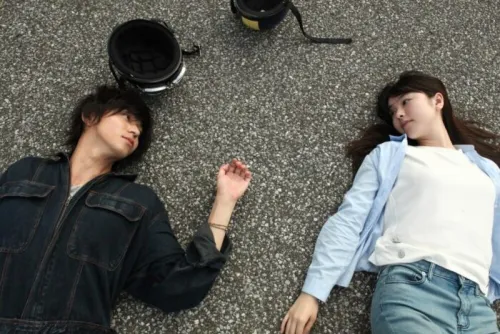
Asako is in love with Baku—deeply and almost delusionally, in a way that can only manifest in young love. But when the freewheeling Baku ghosts Asako for good, she moves from Osaka all the way to Tokyo to start a new life. Years later, she’s startled to meet Baku’s doppelganger in Ryohei, an office man whose solid dependability and lack of artfulness, while endearing, could not place him any further from Baku. Confused and lonely, Asako tiptoes around her feelings for Ryohei and, in the process, raises thought-provoking questions about the meaning, ethics, and true purpose of love.
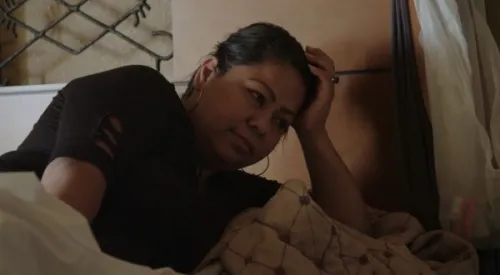
The 400 billion (!) dollar industry of medical devices is director Kirby Dick’s latest fascination (Oscar winner Twist of Faith, Oscar nominated The Invisible War). This is one of those documentaries that will raise your awareness about a topic from 0 to I-should-do-something, as the number of victims and the negative impacts these devices are having are astounding. Of course, just like with any other careless American industries, greed, money, and lobbying are the culprits. This is an important watch that will probably come in very handy when you or a close one needs a medical device.
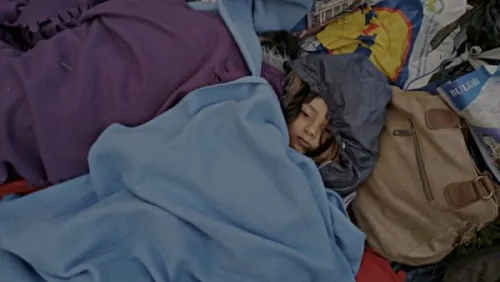
Hassan Fazili and Nargis Fazili are two filmmakers who, faced with death threats, escape their home in Afghanistan and start a journey to Europe that millions of others have taken over the past few years. But unlike most others, the Fazilis filmed everything on their way.
The result is not only a portrayal of the dangers they go through but it’s also about less obvious and possibly more common aspects of the refugee experience. It’s about the wait in refugee centers (that can last many years), the anticipation and also what it means to do all of this with children. Because watch out for the little Fazilis, who travel with their parents, for they will steal your heart.
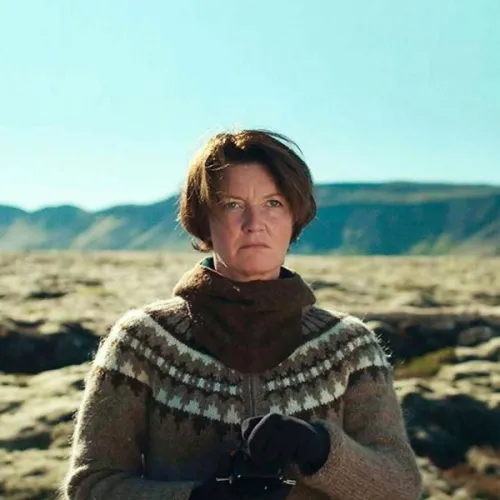
A calm choir leader lives a secret life as eco-warrior in this visually stunning and intelligent story about our complex times. If you’re familiar with Icelandic movies, this one has just the right amount of that Icelandic quirkiness – making it a proper feel-good movie with a message. This is added to the superb acting and an off-beat musical score. Not to be missed.
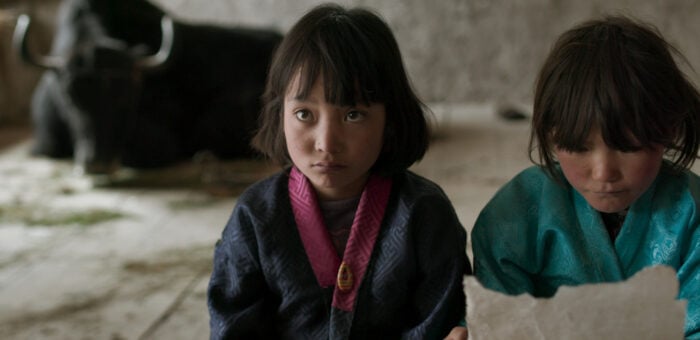
On his first day of class in the remote village of Lunana, the city teacher Ugyen asks his students what they want to be when they grow up. One of the children, a young boy named Sangay, answers that he aspires to be a teacher “because a teacher touches the future.” Lunana: A Yak in the Classroom, however, subverts this thematic by spending most of its runtime showing how the villagers touch Ugyen’s heart through genuine acts of kindness, forcing him to rethink his long-term dream of becoming a singer in Australia.
Not only does Lunana: A Yak in the Classroom succeed in its heartfelt dramatization of a Gen Z finding his place in the highlands, it also serves as a propagandistic validation of Bhutan’s “happiest country in the world” epithet. In doing so, the film presents the Bhutanese mountains in as breathtakingly picturesque a manner as possible, limning a paradise through the grassy meadows and children’s faces.

Sincere and direct, Ana Rocha de Sousa’s debut feature is a tragic portrayal of an immigrant family in the United Kingdom. Known best abroad for her role in Love Actually, Lúcia Moniz shines as devoted mother Bela, who, along with Jota (Ruben Garcia) struggles to keep their family together. The couple and their three children, including the deaf middle child Lu (Sophia Myles), come under the scrutiny of social services, especially after the unexplained bruises. While at times heavy-handed, the film raises important questions on family separation and social services, especially with their limitations with children with disabilities.
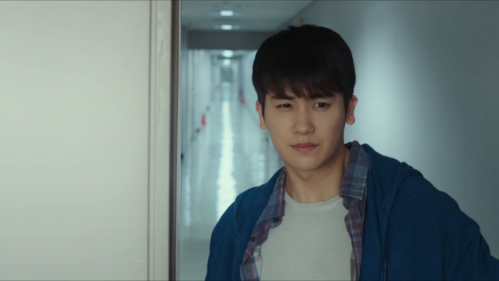
Based on the first jury trial in South Korea, Juror 8 tells the story of eight ordinary citizens with different backgrounds who are summoned to be the jurors of a case that’s believed to be a murder. These characters who have no background or knowledge in law find themselves able to decide someone’s fate. Unlike 12 Angry Men, Juror 8 delivers a lot of cunning and humorous dialogue between the characters. It’s a good mix between comedy and mystery.
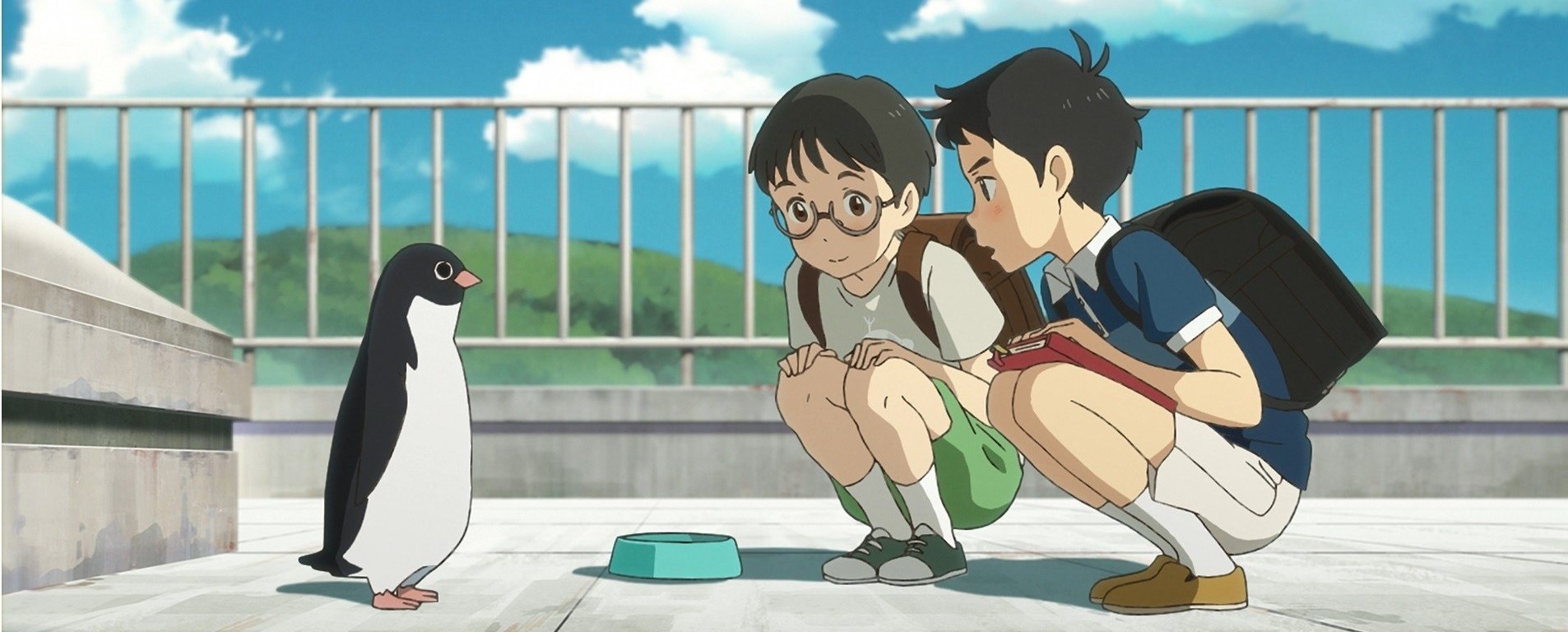
Surreal, strange, yet wondrous, Penguin Highway never takes a straightforward approach to its story. Penguins pop up out of nowhere, leading the nerdy and precocious Aoyama to study them via empirical observation and logical deduction. These studies don’t end up with a feasible explanation– in fact, by the final act, the film abandons all laws of physics. But the journey to that act feels intuitively right. This journey feels like an indescribable formative experience. Aoyama may be obsessed with growing up and committing to the reasonable adult mindset, but he is still a child. From fending off bullies to forming connections with others, his childhood imagination served him better than science could. The film reveres this discovery as well as it should.
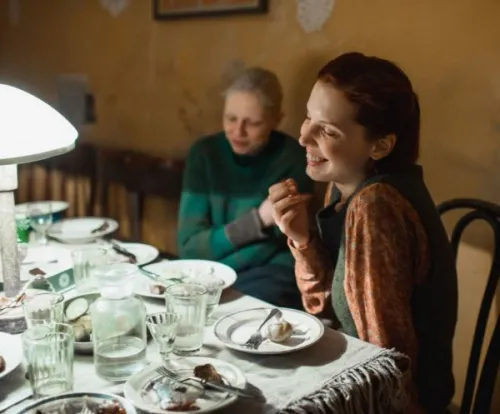
This heartbreaking Russian drama takes place in Leningrad six months after the end of the war. A boy is asked to do an impression of an animal, any animal, but the boy stands still. “Just do a dog then”, one person says, to which another remarks “he’s never seen one, they’ve all been eaten.”
In this bleak context, two friends meet again and try to restart their lives. Masha is a soldier who has just come back from the war in Berlin, and Iya, a tall woman nicknamed “Beanpole”, is a nurse who suffers from PTSD episodes that freeze her body. Both characters, so brilliantly acted, personify the thin line between desperation and hopefulness in this difficult but incredibly well-made drama.
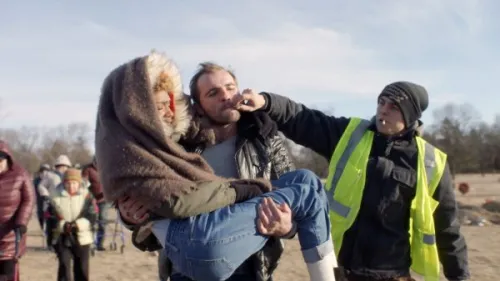
This movie is a wild ride, literally, since it mostly takes place on a bus driving really fast. It’s about one Russian-American social worker who gets hung-up between helping his community driving a group of elderly Russians to a funeral or helping the people he’s hired to help.
In its essence, Give Me Liberty is a comedy where the chaos doesn’t stop escalating, but thanks to impeccable character work and excellent acting, it’s a relevant and poignant movie. You will find yourself in the same position as the social worker, trying to decide who needs his help more.

Man, don’t watch this show hungry. Each episode traces the traditions, the history, and the lore surrounding much-loved types of food. It’s a food show, to be sure, and it will surely whet your appetite, but award-winning rebel chef and creator of the New-York-based restaurant Momofuku, David Chang, also has a mission: to challenge notions of authenticity, to call out snobbism, and to break down cultural barriers. While exploring pizza, for example, he travels to Japan to check out a new pizza in a Michelin-star restaurant, but also hits up a Domino’s. He talks about why microwaves are good for you and why MSG isn’t bad for you—and why demonizing MSG has a racist history. Despite being an important proponent of the food industry, Chang has a fuck-it attitude towards it. There is a reason the name of his high-brow brand sounds like “m*therf*cker”. Part mouth-watering food TV, part op-ed on foodie culture, this is one of the best cooking shows you can watch today.
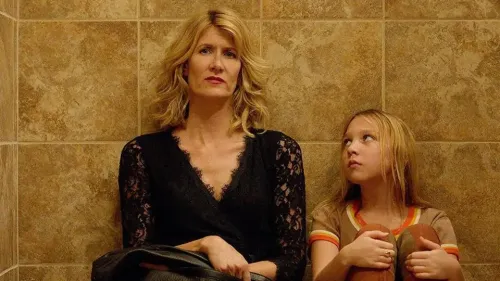
Sometimes you can just tell a movie means way too much to the people who made it. That makes me want to watch it more than once, which is what I wanted to do with The Tale. But while I think it’s such an amazing movie and everyone should watch it, I don’t think I can stomach a second watch.. It is based on the director/writer Jennifer Fox’s own story – recounting her first sexual experience at a very young age. It’s about the stories we tell ourselves to deal with trauma, and in that sense, and with utmost honesty, it invites grief and closure for similar experiences. A powerful movie led by a powerful performance by Laura Dern as Jennifer.

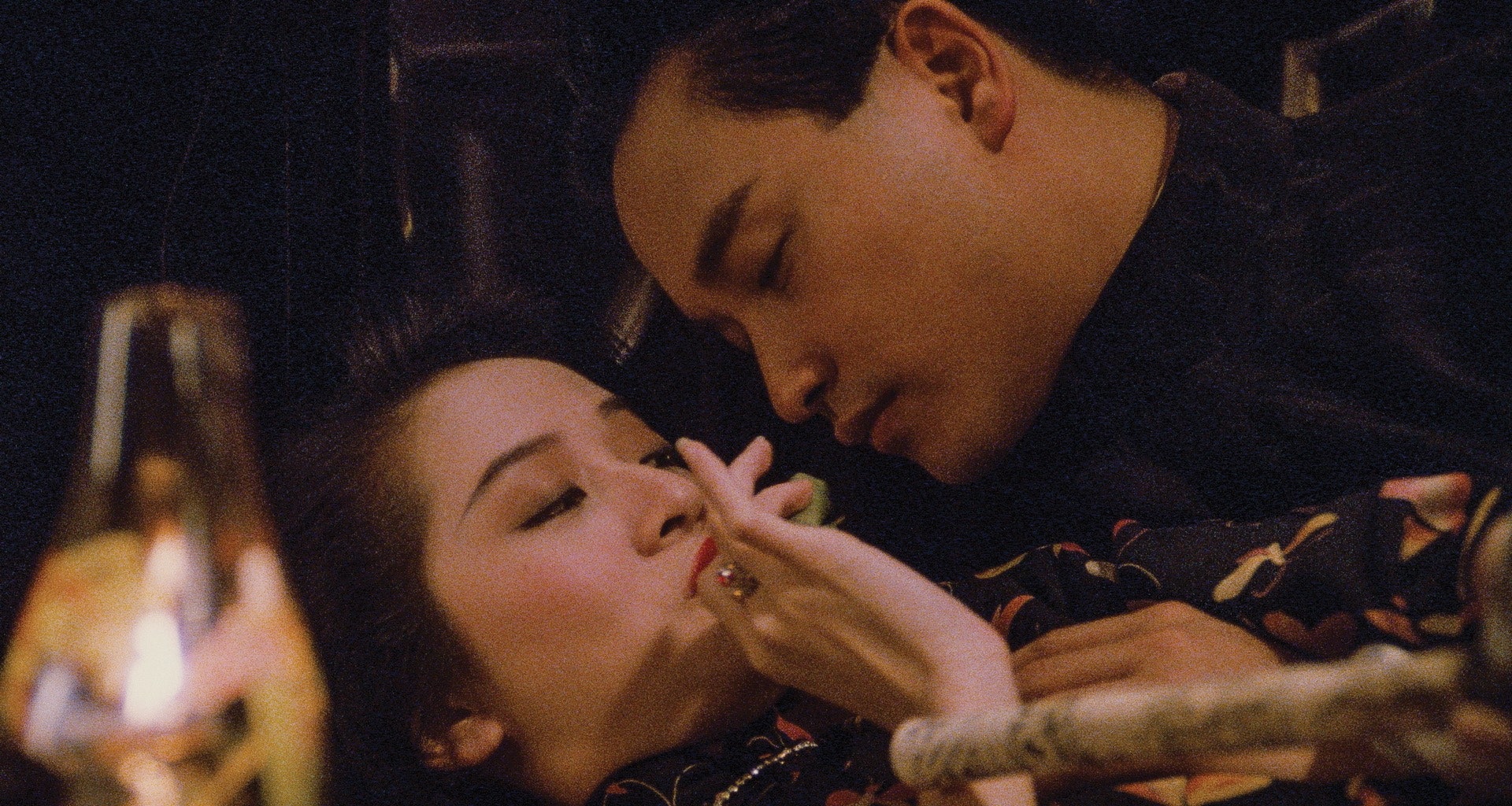
Vivid, seductive, and highly romantic, Rouge starts as an enchanting tale of a ghost courtesan that haunts a modern-day couple to look for her lost lover. It’s easy to be swayed by the ghostly lovers – the courtesan Fleur (Anita Mui) and wealthy pharmacy chain heir Chan Chen-Pang (Leslie Cheung) start off the film courting each other (and the audience) through lush visuals, dramatic declarations, and Cantonese song. They agree to a suicide pact and promise to find each other in the next life. However, as Fleur haunts newspaper journalists Yuen and Chor, it’s clear how different Hong Kong has become. From its culture to its attitudes towards romance, Rouge suggests that while modern day Hong Kong may be more cold and standardized, the past as we know it is only a gorgeous dream. And that dream hides a tragic, sordid reality.
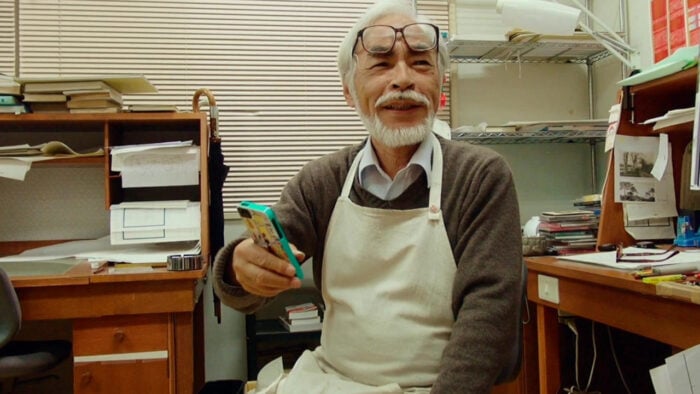
True to form, this documentary about the famed Japanese animation studio enjoys lingering in the ordinary day to day experience of working there. There’s no question that it’s of interest for fans. Documentarian Mami Sunada helpfully introduces some of the faces, the films, and the history of the company while on her visit. However, even non-fans would be intrigued by the creative process, by the mindset and philosophy revealed by their conversations. As the team works on their 2013 slate (The Wind Rises and The Tale of Princess Kaguya), the film reveals how their process pushes them to reckon with the larger scheme, willing their ideas into creation in spite of the difficult world around them. The Kingdom of Dreams and Madness is quite something to behold.

Director Rachel Mason’s first documentary is an amusing study of accidental allies. Her mother Karen insists that there are better subjects for the film, but what would be better than the mom-and-pop bookstore that sells sex toys and gay pornography? The subject alone is inherently interesting, as these mild-mannered Jewish parents describe their unintentional journey through day-to-day selling and distribution. However, Mason is able to expand her discussion by contrasting her parents’ actions against the wider conservative moves done by the US government in the 1980s. Amidst censorship and epidemics, Circus of Books stood as a safe haven for the LGBTQ+ community, made possible by her parents. In learning about the store, we (and Mason) learn more about her parents. While their job choice was unplanned, the journey of accepting those other than themselves is one that we all should take.

This Canadian drama produced by Clint Eastwood is based on the true story of Saul Indian Horse, a famous indigenous hockey player who survived Canada’s residential school system. As recently as 1996, indigenous children were taken away from their families to attend brutal assimilation boarding schools.
Indian Horse, by virtue of being based on true events, is not an against-all-odds story. The main character goes through a series of ups and downs between the 70s and 90s, when the movie is set, which reflect the recent history of abuse that Indigenous communities suffered in Canada.
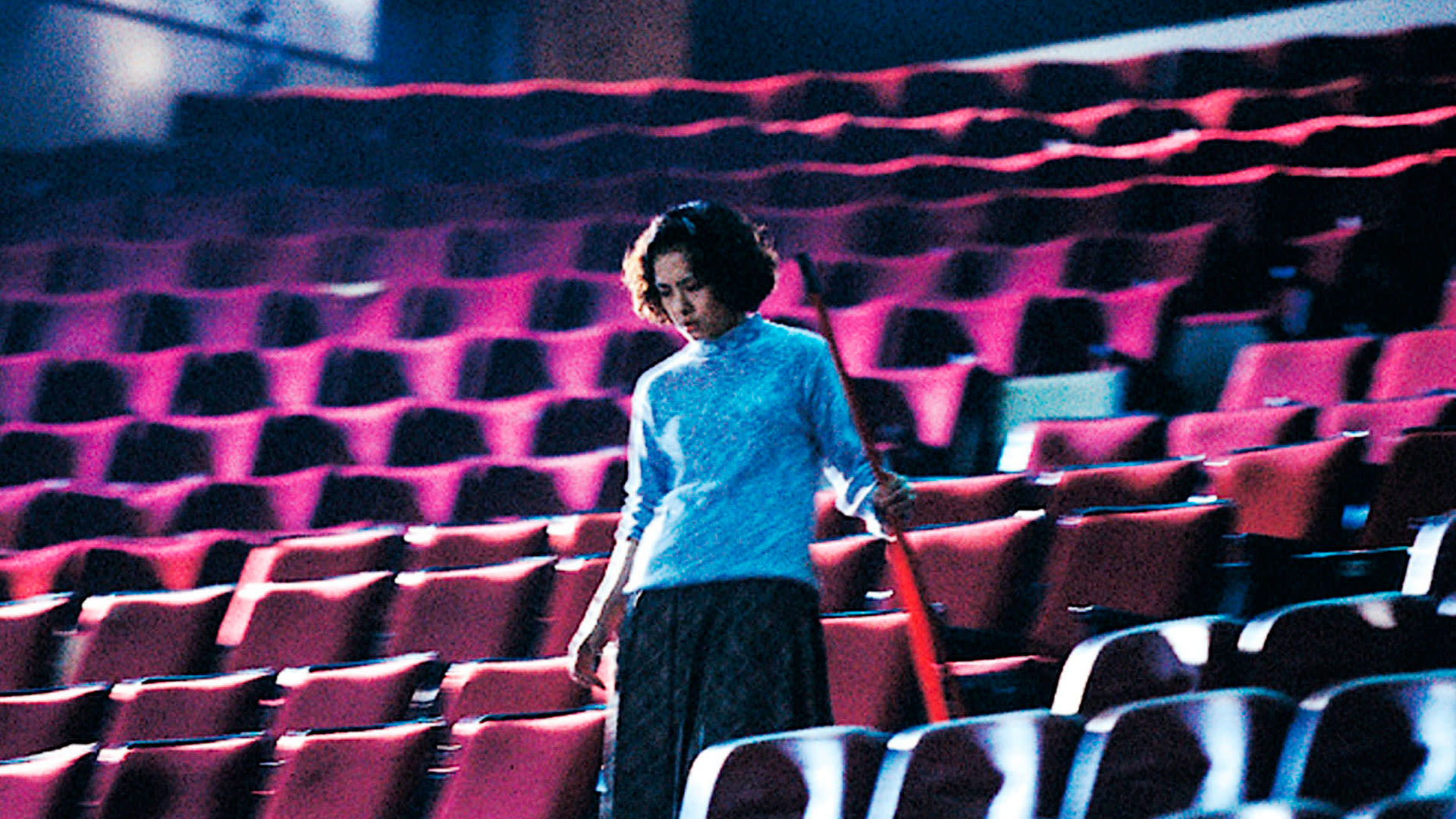
Serene and almost silent, Goodbye, Dragon Inn is a film contemplating an old movie theater in Taipei. In its heyday, this cinema was jam-packed and full of eager eyes watching the 1967 Wuxia classic Dragon Inn, but now it’s nearly empty for its last screening. Despite the lack of attendees, this cinema still has some life. Like the annoying audience members we’re all familiar with, the moviegoers still noisily chew on popcorn, put their feet on the headrest in front of them, and refuse to remain silent when walking. Director Tsai Ming-liang affectionately captures moviegoers in their natural element, recreating an experience so nostalgic it makes me want to go back to the theaters. Watching this, post-pandemic in the age of streaming, reminds us of the ways we still try to connect in the cinema in real life.
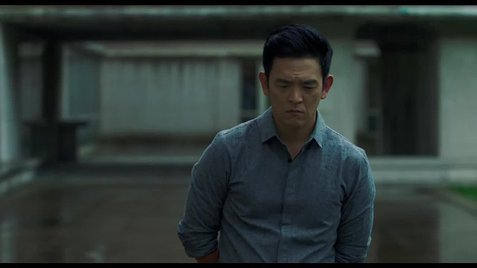
What goes well with a love story? Creative architecture. Columbus the movie is such a great and genuine exploration of this idea, filmed in Columbus the city – a weird experimental hub for architecture that actually exists in real life! After his architect father goes into a coma, Jin (John Cho), a Korean-born man finds himself stuck in Columbus without a foreseeable end. In Korean tradition when a parent dies, the son should be in the same place physically otherwise they can’t mourn. While waiting to see what will happen to his father he meets Casey (Haley Lu Richardson), an aspiring architect herself, who’s also stuck in Columbus because of her mother. This is a beautiful movie with real-life issues and situations, to be especially appreciated by viewers who don’t mind a slow narrative in exchange for a meticulously-crafted movie.
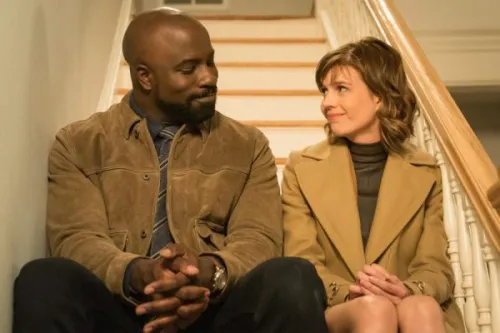
This thriller is about a modern-day Catholic “assessor” who investigates supernatural cases to see if an exorcism is needed. Don’t believe it? Neither does his partner, a prosecution psychologist.
The two join forces because, according to the assessor, “possession looks a lot like insanity”, and she can help him distinguish between the two.
The heavy religious connotations might bother some they’re nothing but a starting point (every supernatural TV show requires a supernatural premise). If you liked the X Files, for example, you will love this.
 x1
x1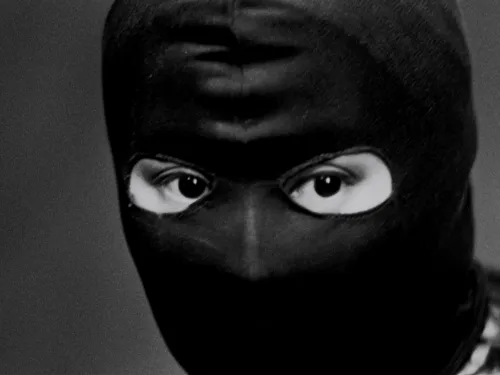
In this film-within-a-film, we and a fictional version of actress Maggie Cheung are brought through the disorienting experience of French filmmaking. The film’s washed-up director wants to remake the classic silent film Les Vampires to revive his career. But as with all plans, everything inevitably goes wrong. On top of depicting the regular chaos of a movie set, this film presents the anxieties of the modern-day French film industry—about how it may be past its prime, and how it can still compete on a global level. And through the steady, inscrutable face of Maggie Cheung, we remember the creative collaborations we’ve had ourselves—the energetic passion, the behind-the-scenes power dynamics, and the pure chaos of the process.

Set in the small town of Åmål, western Sweden, the debut feature by Lukas Moodysson (We Are the Best), is itself a metonymy for the bigger questions of life. It’s playful and dead serious at the same time, in the way it portrays teenager Agnes, who, after two years of living in Åmål, still hasn’t made any friends that would attend her birthday party. Instead, she spends her time typing away on her computer, poetic diaries and love confessions to a girl from school named Elin. She’s the popular one and therefore, out of reach. The amount of tension and escalating ambivalence the film conjures with just a simple narrative decision—a bet, a kiss, an apology—is palpable throughout the 86 minutes of its runtime. A perfect capsule of lesbian desire and first love, Show Me Love is a gem of a movie; one that would make you think Close was a tad overrated. Oh, and don’t forget to add the titular song by Swedish pop star Robyn to your Spotify favorites.

Part documentary yet part surreal daydream, director Derek Jarman’s final film is one last rallying cry into a blue void. Against an unchanging screen of International Klein Blue, most of the film is Jarman’s voice, drifting through various subjects, from day-to-day complications of AIDS to contemplations about the color blue. Some of his frequent collaborators chime in. Choirs singing about damnation occasionally pop up too. While essentially a radio drama, the combination of voices, foley, and scores all merge together into an ethereal, haunting soundscape, that sticks in your head long after the film ends. Mirroring his partial blindness, Jarman’s last experiment leaves an impression of his own experience. It’s absolutely devastating.

Watching A Silent Voice, sensitive viewers will likely feel repulsion toward the main character, Shoya Ishida — and maybe you should, for the awful things he did as a kid. You might even feel the urge to jump into your screen and protect Shouko Nishimiya, the deaf girl who is new at school. A beautifully crafted anime, the story captures a high-school bully’s remorse and despair as he tries to redeem himself from past wrongdoing, demonstrating that even the cruelest among us can become vulnerable to feelings of shame and regret. While it is heart wrenching, the story is also full of hope, showing how to ask for forgiveness, as well as how to give it. Beyond the great script, animation, colours, and scoring, each shot of A Silent Voice is a masterpiece in and of itself.

Not many places are worse to find a dead body than in the border of North and South Korea. The tensions are high, the trust is low, and the conflict between them hasn’t been resolved in more than half a century. Joint Security Area is centered on a whodunit surrounding two North Korean soldiers at the border, but Park Chan-wook crafts a compelling mystery not caused by international politics, but rather by friendship between soldiers in the lower ranks, a unity and brotherhood that’s tragically hidden and forced to separate because of lines made by their higher ups. It may not compare to Park’s more famous films, but Joint Security Area hinted at the filmmaker that was to come.

Most people aspire to have families, deciding to form their own by marrying, bearing children, and if fertility makes that impossible, adopting one. The Official Story is centered on upper middle class Alicia, who’s already made the idyllic family life, with the last piece completed with her adoption of Gaby, but there are secrets held from her, or rather, there are realities that she chose not to listen to because of the painful implications. Writer-director Luis Puenzo juxtaposes the family secret to the violent ones the Argentine junta government kept from its citizens. It’s not a subtle comparison– Puenzo makes it obvious– but it’s an effective one, as Alicia has to reckon with the fact that she lies in bed with a stranger, as Argentina has to reckon with the remaining junta members and enablers.

Based on a forthcoming memoir by queer music duo Tegan & Sara, High School follows the twin sisters in ’90s Canada as they figure out their place in school, in family, and ultimately in each other’s lives. Despite the well-worn premise and the throwback setting, High School feels fresh and honest in ways that are not always present in teen stories. It’s delicate and subdued while still being potent and edgy—a great alternative if Netflix’s brasher teen fare isn’t for you. High School has been likened to other great authentic coming-of-age shows like Freaks and Geeks and My So-Called Life.