
The Roku Channel Suggestions - Highly-Rated Movies & Shows on The Roku Channel
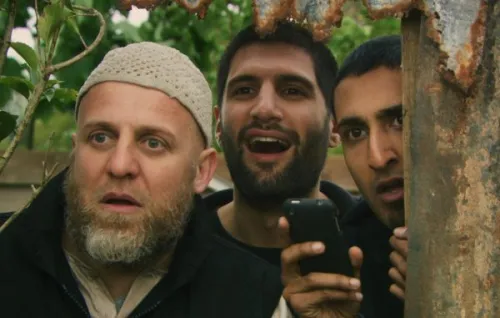
Four Lions is as black and as dark as a movie can ever get, mixing cultural relevancy with humor and ridiculousness. It is insensitive to Islam, insensitive to terrorism and insensitive to the viewer. But it is hilarious. The director spent three years talking to Imams, terrorism experts and basically everyone. The result? A legit 97 minutes that will dazzle even extremists with its knowledge of Islam and the accuracy of its lines. Needless to say that it will upset quite a few people, but that is always a good sign for black comedy movies, right?
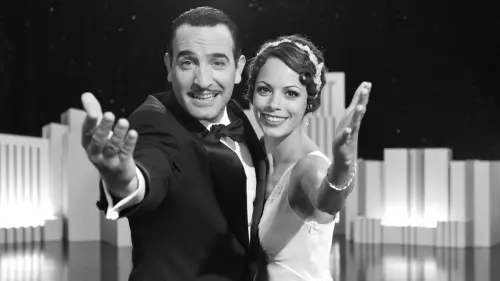
What was popular back then isn’t popular today for a reason. In film, that’s because the technology’s improved, the audience gets too used to the trend, and what once worked fades into the background. Once in a while, however, someone brings back nostalgia for a certain style. This happened when filmmaker Michel Hazanavicius created The Artist. Set in the transition between silent film and talkies, The Artist cleverly takes on the silent film form, but makes it suitable for today’s moviegoers. The ears are never left empty, thanks to the bouts of score and few foley that focuses attention. The camera shoots mostly in black and white, but shoots in various styles across the Golden Age. Even the story itself is classic melodrama– Sunset Boulevards and A Star is Born comes to mind– but it’s treated with the genre mixing the 2010s started to play with, the postmodern revue that recontextualizes the past. The Artist brings back what cinema has long discarded, and remembers what made these styles classic.
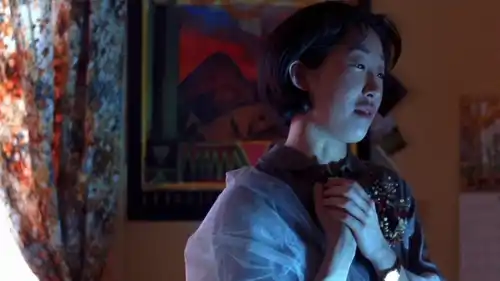
Sandra Oh earned her breakout in this warm, candid Canadian indie, which — not uncoincidentally — shares its name with that of a decorative Chinese symbol associated with marriage. The movie’s title is also a reference to 22-year-old Jade Li’s (Oh) struggle to pursue her own ambitions and meet the clashing romantic and professional expectations her disapproving first-generation immigrant parents have for her. As she puts it, “Double happiness is when you make yourself happy and everyone else happy, too.”
An aspiring actress who dreams of playing Blanche DuBois, Jade is instead asked by unimaginative casting directors to adopt a pronounced Chinese accent for tiny bit parts. In essence, she’s typecast everywhere: on set, and at home, where she struggles to play the good daughter who’ll give up acting for a more conventional job and will only marry a man her parents approve of. It’s a jarring existence, but Double Happiness never feels claustrophobic because it gives Jade the freedom to finally be herself via witty, confessional monologues and fantasy sequences. There’s undoubtedly bittersweetness to this portrait of a young woman fighting to be herself on every front, but that it’s nevertheless such an irresistibly charming, never-flippant watch is a testament to first-time director Mina Shum and Oh’s already mature talents.

What’s great about this highly inventive film is that it doesn’t look like it was shot through three iPhone 5s. Instead of using shaky cameras and static shots, Tangerine glides us through saturated, orange-toned scenes that evoke the Los Angeles sunset. Launching director Sean Baker into prominence, Tangerine is an innovative film that, at heart, is a nuanced comedy about the trans sex worker community. Newcomers Kitana Kiki Rodriguez and Mya Taylor run the show, and their performances create a vivid, electric drive that powers the whole movie. But it’s the quieter moments, the moments after betrayal, the moments of recovery, that make this movie truly special.

Director Thomas Vinterberg (The Hunt) reunites with Mads Mikkelsen to tell the story of four teachers going through a mid-life crisis. They’re not sad, exactly—they have homes and jobs and are good friends with each other—but they’re not happy either. Unlike the ebullient youth they teach, they seem to have lost their lust for life, and it’s silently eating away at them, rendering them glassy-eyed and mechanic in their everyday lives.
Enter an experiment: what if, as one scholar suggests, humans were meant to fulfill a certain alcohol concentration in order to live as fully and present as possible? The teachers use themselves as the subjects and the tide slowly starts to turn to mixed effects. Are they actually getting better or worse?
With an always-satisfying performance by Mikkelsen and an instant classic of an ender, it’s no surprise Another Round took home the award for Best Foreign Film in the 2020 Academy Awards.
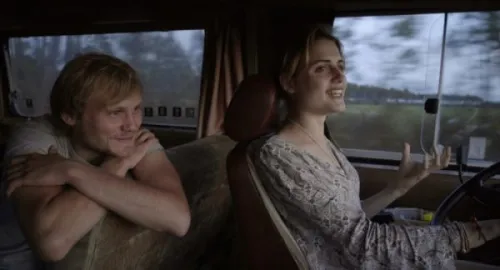
A sweet and romantic German movie about two Berliners who meet randomly and go on a road trip to the south of Europe. It might seem like a silly premise but it’s actually a philosophical movie, one that feels very realistic. The two characters debate human nature, politics, relationships, etc; almost throughout their trip. And they’re played by excellent newcomers who ooze charisma and make the question of what will happen between them incredibly thrilling.
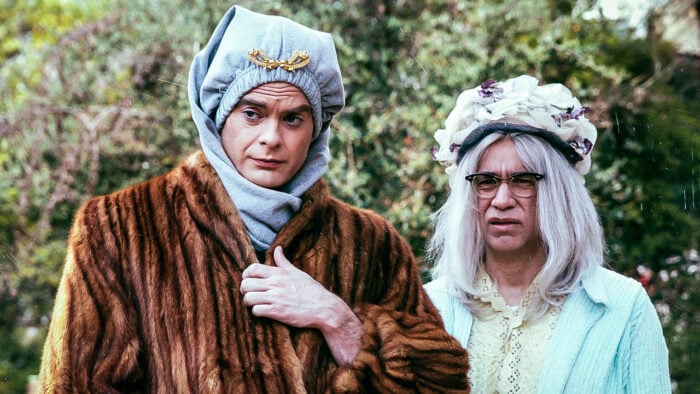
Fans of sketch comedy, documentaries, and the always-hilarious duo of Bill Hader and Fred Armisen are in for a treat with Documentary Now!, a delightful miniseries that both satirizes and pays tribute to the non-fiction format. Each episode parodies a particular documentary and tone, bringing the comedians and their ever-revolving roster of guest stars to different eras, regions, costumes, accents, and more.
With SNL veterans Hader and Armisen at the helm, this mockumentary is sure to amuse and impress even the most stoic among us, if not for the show’s humor, then for its sharp attention to detail and endlessly creative references.

At first glance, those who enjoyed Hulu’s Ramy might be tempted to view this as the UK version of it. However, Man like Mobeen is a bit more street than Ramy and a lot more British. It’s also not so much about being a good Muslim. Mobeen (Guz Khan), Eight (Tez Ilyas), and Nate (Tolu Ogunmefun) are three mates from Birmingham. Two of them happen to be Muslim but it’s not a big deal. Except it is because of the way Western society sees them. Mobeen, the head of the group, takes care of his sister, Aks (Dúaa Karim), in the absence of his parents, trying to be a good guy, while also trying to escape his past as a drug dealer. In the first episode, a transaction to buy a laptop results in three SWAT teams closing in on them for no reason. (When Nate runs off, the police officer asks the others why he ran, and Mobeen says: “If I had to guess, I’d say it’s because he’s black.”) Much of Man like Mobeen is laugh-out-loud comedy, but there’s a healthy dose of wokeness to be found here, too. Teenage knife crime (in the second season), the rise of right-wing sentiment, and the police’s history of violence towards immigrants are effortlessly woven into gags. Very funny!
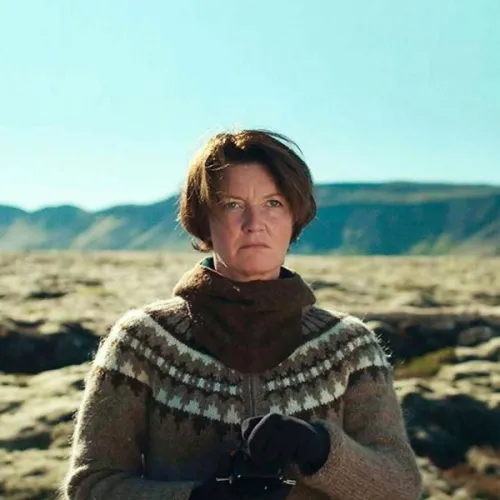
A calm choir leader lives a secret life as eco-warrior in this visually stunning and intelligent story about our complex times. If you’re familiar with Icelandic movies, this one has just the right amount of that Icelandic quirkiness – making it a proper feel-good movie with a message. This is added to the superb acting and an off-beat musical score. Not to be missed.
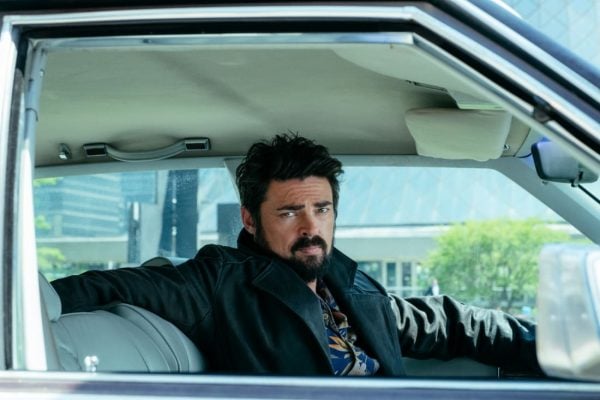
From the producers of Superbad and Pineapple Express, stoner filmmakers Seth Rogen and Evan Goldberg, comes a deft deconstruction of the ubiquitous superhero genre on Amazon Prime. Based on the comic book of the same name by Garth Ennis and Darick Robertson, it is set in a world where god-like superheroes, or Supes, are recognized as heroes but are increasingly self-absorbed, arrogant, and corrupt underneath their flying capes. The best of them are called The Seven, aggressively marketed and monetized by the Vought Corporation, complete with Instagram likes, energy drink advertisements, and TV appearances. It all starts to slowly deteriorate when the girlfriend of Hughie Campbell (Jack Quaid) gets obliterated by A-Train (Jessie Usher), a super-fast hero modelled on Flash, galvanizing The Boys, a crazy normal-human vigilante group led by Butcher (Karl Urban, pictured above), who are sick and tired of the Supes and their corruption. This show packs a multitude of wacky characters, including Frenchie, our favorite, a hilarious and romantic French bomb expert. Don’t forget to fasten your seatbelts because this is a fast-paced, mean-spirited bloodbath that is as wild as it is entertaining.
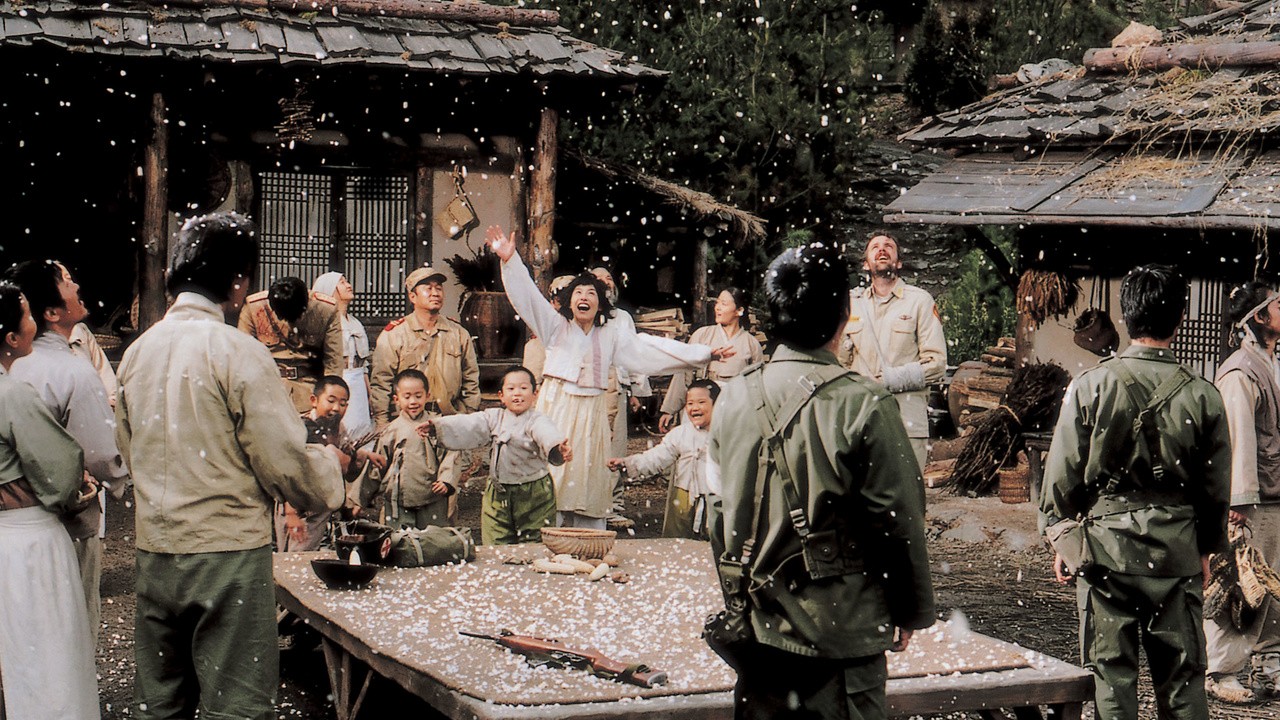
War changes the way we view people from the other side. On the most fundamental level, seeing an enemy combatant can mean death, but this eventually bleeds out into anger and hatred towards the enemy, because of the loss, the pain, and the fear war tends to wage. War drama Welcome to Dongmakgol understands this, but rather than delve into the painful separation of the Korean peninsula in ways that have been depicted before, the film instead plucks a few soldiers from both fronts and drops them into an isolated village far from the battleground. This scenario is quite unlikely, after all, the mountainside town without technology would probably not be as idyllic as portrayed. Nevertheless, it’s an interesting thought experiment to see the simple, straightforward peace that was forgotten with foreign intervention and global geo-politics. Welcome to Dongmakgol can be quite goofy at times– see the green screen wild boar scene– but the comedy is a standout anti-war film because of its optimism towards human nature.
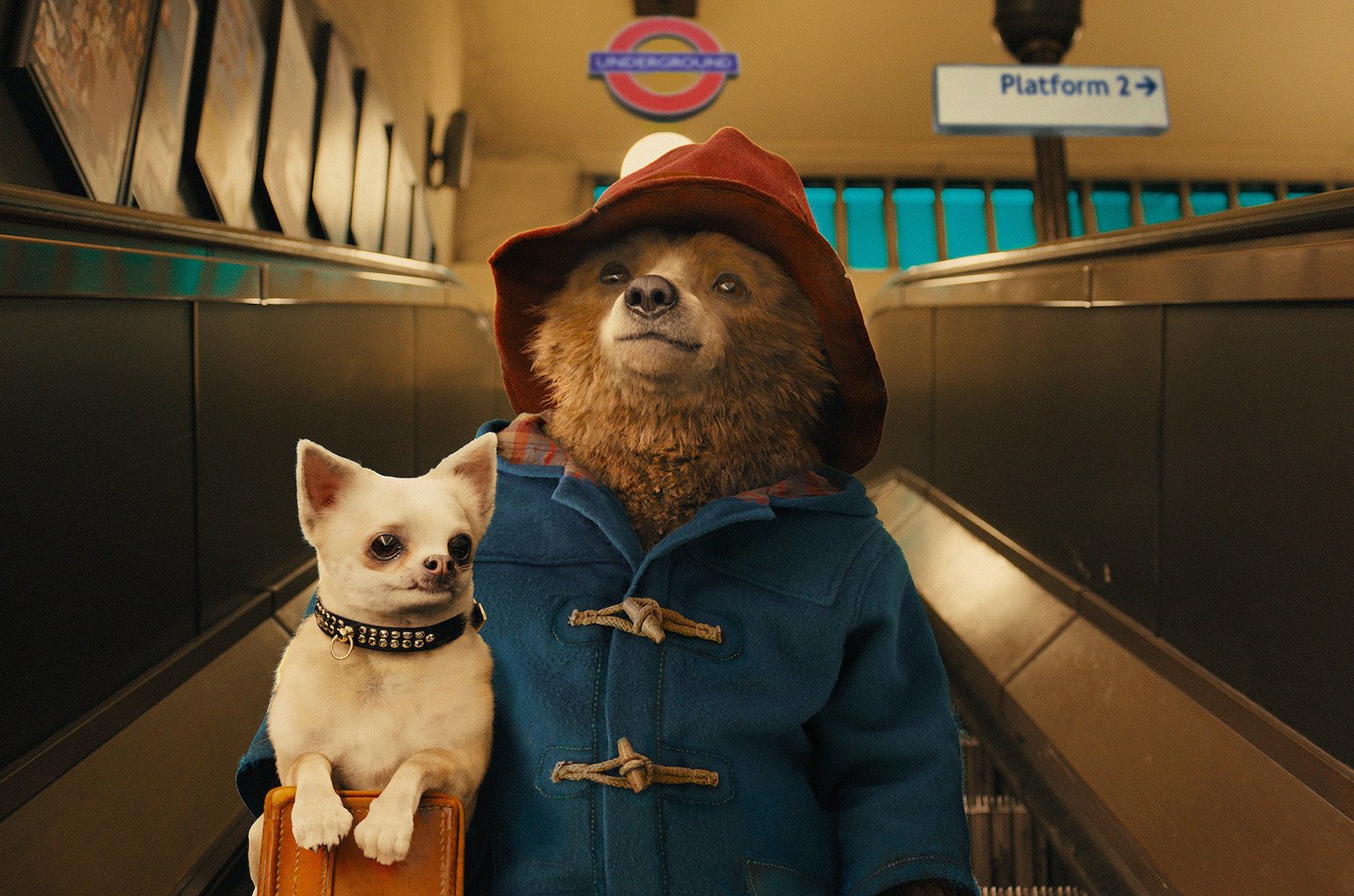
In a global movie industry of children’s entertainment that often feels like it isn’t even trying, this little Peruvian bear coming to England is a wonderful reminder that films aimed at younger audiences aren’t inherently limited. If anything, Paddington challenges itself to come up with a far more creative (and effective) way to talk about the lingering scars of colonialism manifesting as discrimination in everyday “civil” society. It sounds like heavy stuff, but Paddington approaches its fish-out-of-water story with the exact counterbalance of silliness, and a riotous cast that’s far funnier than anyone would have expected them to be.

The simple premise of this series, about real couples going to therapy, shouldn’t feel as revolutionary as it does. And yet, Couples Therapy feels like radical reality-TV, a focused and coherent undertaking.
Couples of different histories, ages, races, and sexual orientations walk into Dr. Orna Guralnik’s New York office. Their problems are as diverse and unique as they are, but there is also a painful universality to them. Couples Therapy becomes a portrayal of human partnership period, a TV show in which to see oneself at times and to learn from the different webs couples get tangled in over time.
Never before has reality TV been the best vehicle to portray something so serious.
From the producers of Superbad and Pineapple Express, stoner filmmakers Seth Rogen and Evan Goldberg, comes a deft deconstruction of the ubiquitous superhero genre on Amazon Prime. Based on the comic book of the same name by Garth Ennis and Darick Robertson, it is set in a world where god-like superheroes, or Supes, are recognized as heroes but are increasingly self-absorbed, arrogant, and corrupt underneath their flying capes. The best of them are called The Seven, aggressively marketed and monetized by the Vought Corporation, complete with Instagram likes, energy drink advertisements, and TV appearances. It all starts to slowly deteriorate when the girlfriend of Hughie Campbell (Jack Quaid) gets obliterated by A-Train (Jessie Usher), a super-fast hero modelled on Flash, galvanizing The Boys, a crazy normal-human vigilante group led by Butcher (Karl Urban, pictured above), who are sick and tired of the Supes and their corruption. This show packs a multitude of wacky characters, including Frenchie, our favorite, a hilarious and romantic French bomb expert. Don’t forget to fasten your seatbelts because this is a fast-paced, mean-spirited bloodbath that is as wild as it is entertaining.

Even without doing the important and long overdue work of uplifting Native American voices, Dark Winds manages to be an intriguing mystery, layered with complex performances and bolstered by the majestic expanse of the American Southwest (in the ‘70s no less!). Finally released from the shackles of supporting roles, Zahn McClarnon shines here; he’s in top form as the gritty but softhearted police officer who protects his tribe from encroaching federal forces. The mysteries that propel the show are compelling too; they have the same beats as any you’d expect from a crime thriller, but they’re seeped deep into Native American mysticism, making them intriguing and wholly unique.
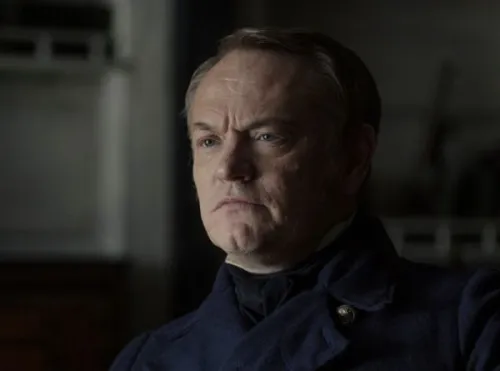
In 1845, two huge and aptly named ships, the HMS Terror and Erebus, were sent on an expedition to the Arctic to find the Northwest Passage, a century-old dream of connecting Asia and Europe through North America. Now, even when all went well, an Arctic expedition in the mid-19th-century was a pretty horrific affair by today’s standards, and, as you can imagine, all does not go well. In addition to the bitter cold, the cannibalism, and the malnutrition, The Terror throws in some hideous creatures from Inuit folk tales into the mix that hunt and maim the poor sailors. At its core, however, this is not fantasy horror. Co-produced by Ridley Scott and starring Jared Harris from Chernobyl, The Terror is unrelenting in the depiction of the hopelessness on board the two ships. Great timing and a pervasive sense of dread make this a must-watch for every fan of period-piece horror movies.

While it certainly has a gorgeous world to show off, with lots of colorful art direction and varied landscapes to explore, Unicorn Academy can’t help but buckle under its own weight. Its first couple of episodes (starting with a feature-length premiere) want to establish fun relationships between its characters; set up an epic, world-ending conflict; reflect on its protagonist’s grief; and sell merchandise all at once. But the show is both too aimless with its writing and too sluggish in its pacing to allow these disparate parts to cohere under a unified tone. It constantly feels like it’s having trouble deciding what to be—which isn’t helped by the fact that the first episode has two, awkwardly-placed musical numbers, and the second episode features no singing whatsoever.
Four Lions is as black and as dark as a movie can ever get, mixing cultural relevancy with humor and ridiculousness. It is insensitive to Islam, insensitive to terrorism and insensitive to the viewer. But it is hilarious. The director spent three years talking to Imams, terrorism experts and basically everyone. The result? A legit 97 minutes that will dazzle even extremists with its knowledge of Islam and the accuracy of its lines. Needless to say that it will upset quite a few people, but that is always a good sign for black comedy movies, right?
What was popular back then isn’t popular today for a reason. In film, that’s because the technology’s improved, the audience gets too used to the trend, and what once worked fades into the background. Once in a while, however, someone brings back nostalgia for a certain style. This happened when filmmaker Michel Hazanavicius created The Artist. Set in the transition between silent film and talkies, The Artist cleverly takes on the silent film form, but makes it suitable for today’s moviegoers. The ears are never left empty, thanks to the bouts of score and few foley that focuses attention. The camera shoots mostly in black and white, but shoots in various styles across the Golden Age. Even the story itself is classic melodrama– Sunset Boulevards and A Star is Born comes to mind– but it’s treated with the genre mixing the 2010s started to play with, the postmodern revue that recontextualizes the past. The Artist brings back what cinema has long discarded, and remembers what made these styles classic.
Sandra Oh earned her breakout in this warm, candid Canadian indie, which — not uncoincidentally — shares its name with that of a decorative Chinese symbol associated with marriage. The movie’s title is also a reference to 22-year-old Jade Li’s (Oh) struggle to pursue her own ambitions and meet the clashing romantic and professional expectations her disapproving first-generation immigrant parents have for her. As she puts it, “Double happiness is when you make yourself happy and everyone else happy, too.”
An aspiring actress who dreams of playing Blanche DuBois, Jade is instead asked by unimaginative casting directors to adopt a pronounced Chinese accent for tiny bit parts. In essence, she’s typecast everywhere: on set, and at home, where she struggles to play the good daughter who’ll give up acting for a more conventional job and will only marry a man her parents approve of. It’s a jarring existence, but Double Happiness never feels claustrophobic because it gives Jade the freedom to finally be herself via witty, confessional monologues and fantasy sequences. There’s undoubtedly bittersweetness to this portrait of a young woman fighting to be herself on every front, but that it’s nevertheless such an irresistibly charming, never-flippant watch is a testament to first-time director Mina Shum and Oh’s already mature talents.
What’s great about this highly inventive film is that it doesn’t look like it was shot through three iPhone 5s. Instead of using shaky cameras and static shots, Tangerine glides us through saturated, orange-toned scenes that evoke the Los Angeles sunset. Launching director Sean Baker into prominence, Tangerine is an innovative film that, at heart, is a nuanced comedy about the trans sex worker community. Newcomers Kitana Kiki Rodriguez and Mya Taylor run the show, and their performances create a vivid, electric drive that powers the whole movie. But it’s the quieter moments, the moments after betrayal, the moments of recovery, that make this movie truly special.
Fans of sketch comedy, documentaries, and the always-hilarious duo of Bill Hader and Fred Armisen are in for a treat with Documentary Now!, a delightful miniseries that both satirizes and pays tribute to the non-fiction format. Each episode parodies a particular documentary and tone, bringing the comedians and their ever-revolving roster of guest stars to different eras, regions, costumes, accents, and more.
With SNL veterans Hader and Armisen at the helm, this mockumentary is sure to amuse and impress even the most stoic among us, if not for the show’s humor, then for its sharp attention to detail and endlessly creative references.
At first glance, those who enjoyed Hulu’s Ramy might be tempted to view this as the UK version of it. However, Man like Mobeen is a bit more street than Ramy and a lot more British. It’s also not so much about being a good Muslim. Mobeen (Guz Khan), Eight (Tez Ilyas), and Nate (Tolu Ogunmefun) are three mates from Birmingham. Two of them happen to be Muslim but it’s not a big deal. Except it is because of the way Western society sees them. Mobeen, the head of the group, takes care of his sister, Aks (Dúaa Karim), in the absence of his parents, trying to be a good guy, while also trying to escape his past as a drug dealer. In the first episode, a transaction to buy a laptop results in three SWAT teams closing in on them for no reason. (When Nate runs off, the police officer asks the others why he ran, and Mobeen says: “If I had to guess, I’d say it’s because he’s black.”) Much of Man like Mobeen is laugh-out-loud comedy, but there’s a healthy dose of wokeness to be found here, too. Teenage knife crime (in the second season), the rise of right-wing sentiment, and the police’s history of violence towards immigrants are effortlessly woven into gags. Very funny!
War changes the way we view people from the other side. On the most fundamental level, seeing an enemy combatant can mean death, but this eventually bleeds out into anger and hatred towards the enemy, because of the loss, the pain, and the fear war tends to wage. War drama Welcome to Dongmakgol understands this, but rather than delve into the painful separation of the Korean peninsula in ways that have been depicted before, the film instead plucks a few soldiers from both fronts and drops them into an isolated village far from the battleground. This scenario is quite unlikely, after all, the mountainside town without technology would probably not be as idyllic as portrayed. Nevertheless, it’s an interesting thought experiment to see the simple, straightforward peace that was forgotten with foreign intervention and global geo-politics. Welcome to Dongmakgol can be quite goofy at times– see the green screen wild boar scene– but the comedy is a standout anti-war film because of its optimism towards human nature.
In a global movie industry of children’s entertainment that often feels like it isn’t even trying, this little Peruvian bear coming to England is a wonderful reminder that films aimed at younger audiences aren’t inherently limited. If anything, Paddington challenges itself to come up with a far more creative (and effective) way to talk about the lingering scars of colonialism manifesting as discrimination in everyday “civil” society. It sounds like heavy stuff, but Paddington approaches its fish-out-of-water story with the exact counterbalance of silliness, and a riotous cast that’s far funnier than anyone would have expected them to be.

Remarkably for a movie about women being shunned and exploited by those more powerful than them, I Am Not A Witch is often wryly funny. That’s because this satire about Zambia’s labor camps for “witches” is told with a matter-of-fact-ness that brings out both the heartbreak and absurdity of the film’s events. The bitter gravity of the predicament nine-year-old Shula (Maggie Mulubwa) finds herself in — she’s been accused of witchcraft on the back of some very flimsy evidence — is never glossed over, but neither is its farcicality. Appropriately for its subject, there are also touches of magical realism here, notes that elevate the film into something even more complex than a wry commentary on this morbidly fascinating form of misogyny. This hybrid tonal approach is executed with the kind of fluidity filmmakers might hope to one day master late on in their career — which makes the fact that this is director Rungano Nyoni’s debut all the more extraordinary.

This is a hilarious political comedy starring the ever-great Steve Buscemi. Set in the last days before Stalin’s death and the chaos that followed, it portrays the lack of trust and the random assassinations that characterized the Stalinist Soviet Union. Think of it as Veep meets Sacha Baron Cohen’s The Dictator. Although to be fair, its dark comedy props are very different from the comedy that comes out today: where there are jokes they’re really smart, but what’s actually funny is the atmosphere and absurd situations that end up developing.
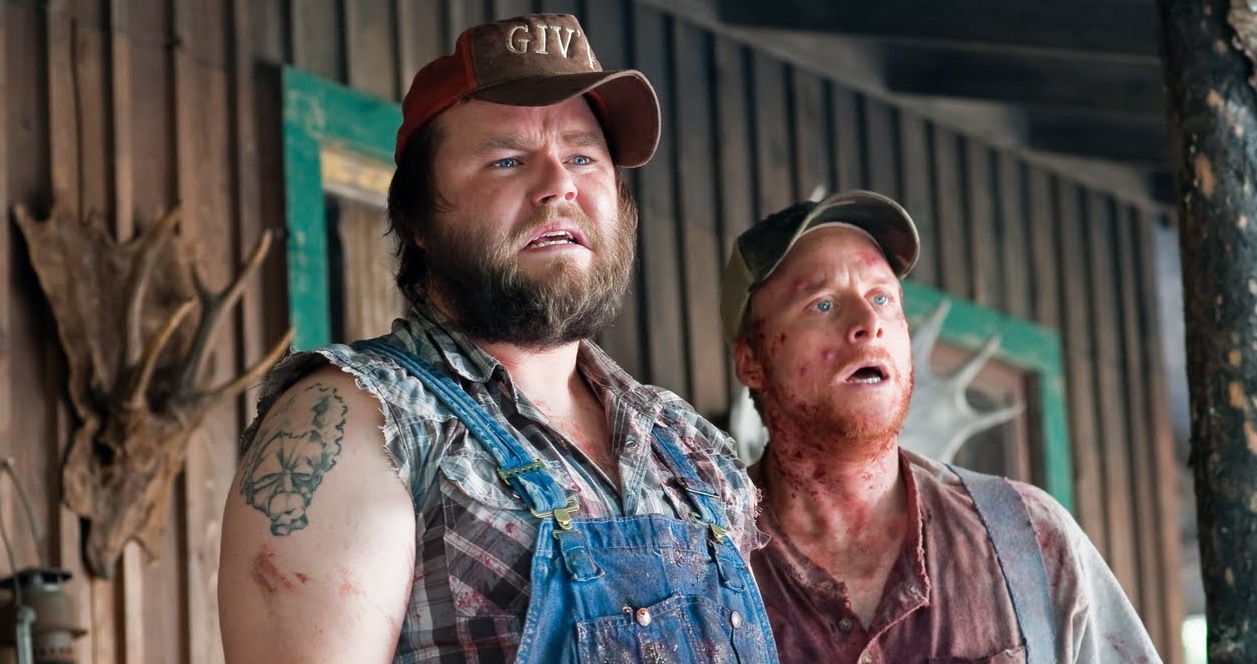
Full of twists on classic horror themes, this hilarious and gory comedy will have your sides aching, and still you’ll want more. The plot centers on two rednecks who are trying to have a good time while fixing up a summer home. True to horror movie form, a group of college kids set up camp nearby, and naturally evil begins to happen. This well-written, entertaining story even has some heart to it.
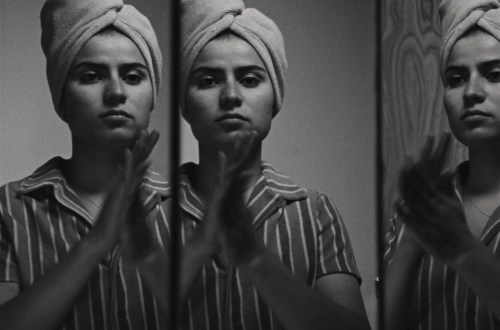
Aptly for a film partly set in a fortune cookie factory, Fremont deals with luck — specifically, the other side of good luck: survivor’s guilt. Donya (played by real-life Afghan refugee Anaita Wali Zada) is a former translator for the US Army who fled her home city of Kabul on an emergency evacuation flight when the Taliban took over in 2021. Now living a safe, if drab, existence in the titular Californian town, insomniac Donya struggles to embrace her freedom, tormented by the knowledge that she lost some of her old colleagues to reprisal attacks and that her loved ones are still living under repressive rule in Afghanistan.
As Donya shuttles between her little apartment in Fremont, her job writing cryptic one-liners for a fortune cookie factory in San Francisco, and appointments with her eccentric psychiatrist (Gregg Turkington), Fremont balances a moving study of her melancholy with deadpan humor. Despite its black-and-white cinematography and tight Academy ratio, this is no austere drama, but an endlessly warm and understated portrait of someone rediscovering themselves and all of life’s unexpected moments of connection, like chance romantic encounters and sudden tears at karaoke.
Four Lions is as black and as dark as a movie can ever get, mixing cultural relevancy with humor and ridiculousness. It is insensitive to Islam, insensitive to terrorism and insensitive to the viewer. But it is hilarious. The director spent three years talking to Imams, terrorism experts and basically everyone. The result? A legit 97 minutes that will dazzle even extremists with its knowledge of Islam and the accuracy of its lines. Needless to say that it will upset quite a few people, but that is always a good sign for black comedy movies, right?
Director Thomas Vinterberg (The Hunt) reunites with Mads Mikkelsen to tell the story of four teachers going through a mid-life crisis. They’re not sad, exactly—they have homes and jobs and are good friends with each other—but they’re not happy either. Unlike the ebullient youth they teach, they seem to have lost their lust for life, and it’s silently eating away at them, rendering them glassy-eyed and mechanic in their everyday lives.
Enter an experiment: what if, as one scholar suggests, humans were meant to fulfill a certain alcohol concentration in order to live as fully and present as possible? The teachers use themselves as the subjects and the tide slowly starts to turn to mixed effects. Are they actually getting better or worse?
With an always-satisfying performance by Mikkelsen and an instant classic of an ender, it’s no surprise Another Round took home the award for Best Foreign Film in the 2020 Academy Awards.
From the producers of Superbad and Pineapple Express, stoner filmmakers Seth Rogen and Evan Goldberg, comes a deft deconstruction of the ubiquitous superhero genre on Amazon Prime. Based on the comic book of the same name by Garth Ennis and Darick Robertson, it is set in a world where god-like superheroes, or Supes, are recognized as heroes but are increasingly self-absorbed, arrogant, and corrupt underneath their flying capes. The best of them are called The Seven, aggressively marketed and monetized by the Vought Corporation, complete with Instagram likes, energy drink advertisements, and TV appearances. It all starts to slowly deteriorate when the girlfriend of Hughie Campbell (Jack Quaid) gets obliterated by A-Train (Jessie Usher), a super-fast hero modelled on Flash, galvanizing The Boys, a crazy normal-human vigilante group led by Butcher (Karl Urban, pictured above), who are sick and tired of the Supes and their corruption. This show packs a multitude of wacky characters, including Frenchie, our favorite, a hilarious and romantic French bomb expert. Don’t forget to fasten your seatbelts because this is a fast-paced, mean-spirited bloodbath that is as wild as it is entertaining.
Remarkably for a movie about women being shunned and exploited by those more powerful than them, I Am Not A Witch is often wryly funny. That’s because this satire about Zambia’s labor camps for “witches” is told with a matter-of-fact-ness that brings out both the heartbreak and absurdity of the film’s events. The bitter gravity of the predicament nine-year-old Shula (Maggie Mulubwa) finds herself in — she’s been accused of witchcraft on the back of some very flimsy evidence — is never glossed over, but neither is its farcicality. Appropriately for its subject, there are also touches of magical realism here, notes that elevate the film into something even more complex than a wry commentary on this morbidly fascinating form of misogyny. This hybrid tonal approach is executed with the kind of fluidity filmmakers might hope to one day master late on in their career — which makes the fact that this is director Rungano Nyoni’s debut all the more extraordinary.
This is a hilarious political comedy starring the ever-great Steve Buscemi. Set in the last days before Stalin’s death and the chaos that followed, it portrays the lack of trust and the random assassinations that characterized the Stalinist Soviet Union. Think of it as Veep meets Sacha Baron Cohen’s The Dictator. Although to be fair, its dark comedy props are very different from the comedy that comes out today: where there are jokes they’re really smart, but what’s actually funny is the atmosphere and absurd situations that end up developing.
Full of twists on classic horror themes, this hilarious and gory comedy will have your sides aching, and still you’ll want more. The plot centers on two rednecks who are trying to have a good time while fixing up a summer home. True to horror movie form, a group of college kids set up camp nearby, and naturally evil begins to happen. This well-written, entertaining story even has some heart to it.
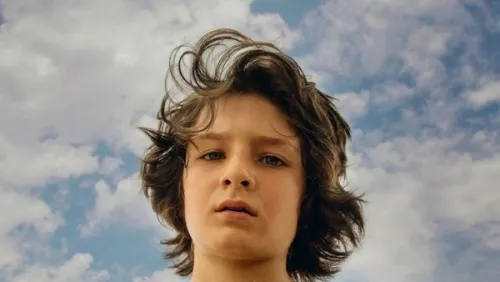
It wouldn’t be too far of a reach to evoke Kids (1995) while diving into Mid90s. But instead of taking on the HIV crisis, Mid90s is a much more tender, poignant reflection on coming of age in 90’s skate culture. Jonah Hill, writer and director, examines the complexities of trying to fit in and the difficult choices one has to embrace individualism. From an opening of physical abuse to scenes of drug usage and traumatic experiences, Mid90s is a meditation not only on culture, but also a subtle examination of what it means to be human, to reach emotional and physical limitations, and to seek acceptance. Filmed in a 4:3 aspect ratio, Mid90s doesn’t concern itself with grandiose filmography, but instead the aspect ratio almost reflects the tonal and metaphorical aspects played out on screen. With a smaller dynamic range of color and the familiar dust/scratches, the 16mm film compliments gritty and emotional moments of Mid90s. The emotional range of the film will take the audience from the depths of empathy to laughing out loud, but there is no compromise to the weight of each moment. Jonah Hill’s directorial debut is beautiful in every sense of the word.

The Square is a peculiar movie about a respected contemporary art museum curator as he goes through a few very specific events. He loses his wallet, his children fight, the art he oversees is does not make sense to an interviewer… Each one of these events would usually require a precise response but all they do is bring out his insecurities and his illusions about life. These reactions lead him to very unusual situations. A thought-provoking and incredibly intelligent film that’s just a treat to watch. If you liked Force Majeure by the same director, The Square is even better!
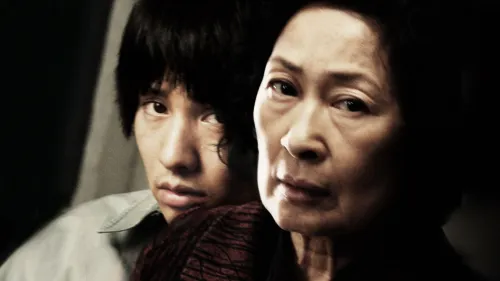
Many films centered around a mother’s love rarely dares to question it. For most people, the fundamental relationship between mother and child is a given, so viewers might be shocked at the way this murder mystery explores how much this bond can be tested. Centered on a murder case with a mentally disabled suspect, Mother unfolds in ways we rarely expect, with the unnamed protagonist going so far in her devotion that leads to darker and terrible discoveries for this small town, not just about the family in question. It’s not the cathartic pursuit of justice Hollywood is accustomed to, but it’s what makes Mother such an outstanding crime thriller.
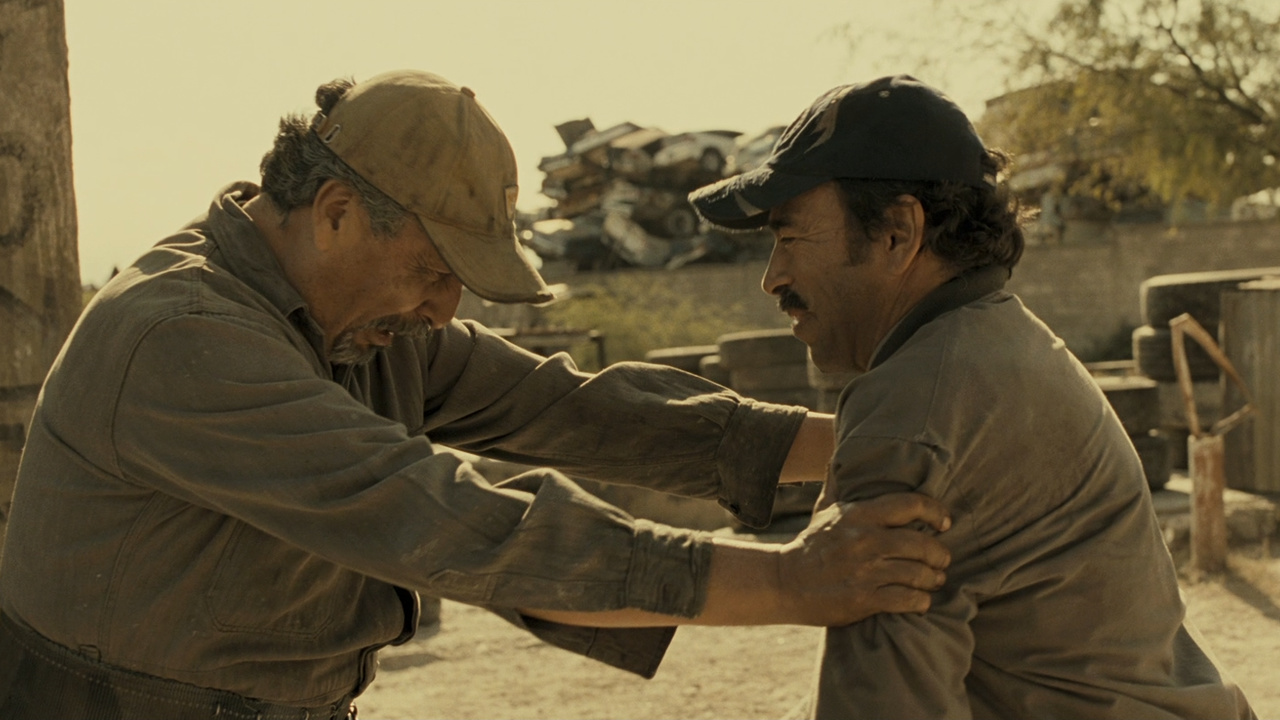
Better known through its original Spanish name El Infierno, Hell is an underrated crime thriller that satirizes Mexico at the time of the Drug War. It follows an immigrant, Benjamin Garcia, who subsequently dives into a life of crime, though it’s not as lucrative as he expects. What ensues ends up becoming a darkly humorous, Western-inspired take on the issue, flipping from funny to dramatic at a turn of a hat, and smartly pointing out the absurd in the violence that still grips the country today. While underseen abroad due to its NC-17 rating, it’s a fitting installment for director Luis Estrada’s penchant for bold political satires, garnering a cult following in the country itself.
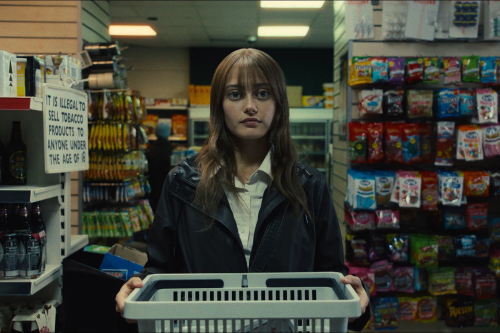
In Sweetpea, every element comes together to make an addictive watch. The premise is amusing on its own—a shy girl is pushed so far into the edge she sees murder as a viable option—but brought to life by stylish direction, witty lines, and an irresistibly endearing Ella Purnell, you get great TV. It’s not exactly novel (the underrated Hulu series Obituary has a similar premise) but it benefits from having more than a few twists hidden up its sleeve, not to mention a complex anti-hero in Purnell, who you know is wrong but feel bad for anyway. Who doesn’t want to root for the little girl standing up to her bully, the girl who stomps her foot down and demands her hard-earned respect at the workplace? Of course, it’s never that simple, and it’s that conflicting feeling of liking and abhorrent Purnell’s character that makes it an intriguing show.
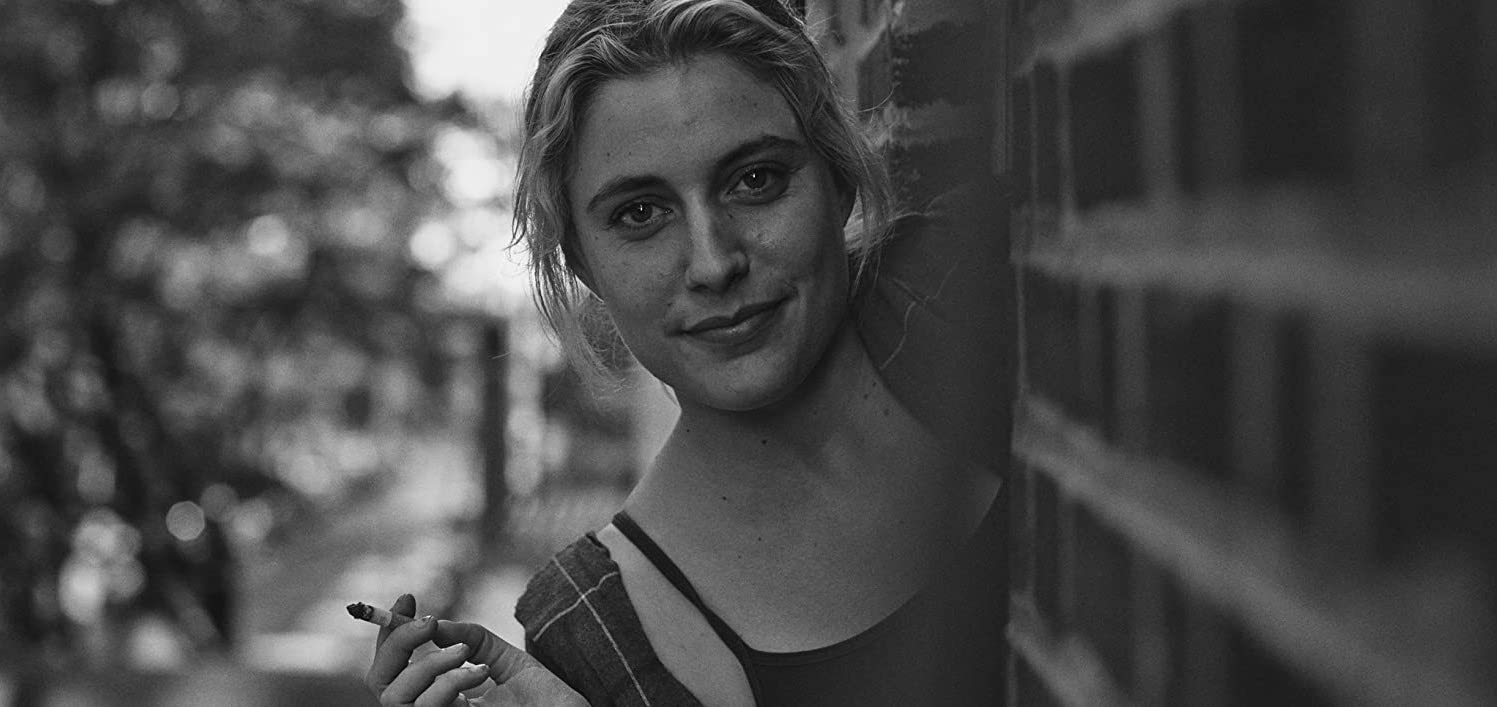
Frances (Greta Gerwig) lives in New York – but not the glamorous NYC of Woody Allen movies. Taking place primarily in the gritty and rapidly gentrifying North Brooklyn, the black and white film paints a picture of an extended adolescence. Focusing on the goofy and carefree Frances, who loses her boyfriend, her best friend and her dream of being a dancer. She moves in with two guys, both of whom are more successful than her, and becomes even more determined to fulfil her goals, impractical as they may be. Fans of HBO’s Girls and other odes to not being a “real person” yet will love this film.
What was popular back then isn’t popular today for a reason. In film, that’s because the technology’s improved, the audience gets too used to the trend, and what once worked fades into the background. Once in a while, however, someone brings back nostalgia for a certain style. This happened when filmmaker Michel Hazanavicius created The Artist. Set in the transition between silent film and talkies, The Artist cleverly takes on the silent film form, but makes it suitable for today’s moviegoers. The ears are never left empty, thanks to the bouts of score and few foley that focuses attention. The camera shoots mostly in black and white, but shoots in various styles across the Golden Age. Even the story itself is classic melodrama– Sunset Boulevards and A Star is Born comes to mind– but it’s treated with the genre mixing the 2010s started to play with, the postmodern revue that recontextualizes the past. The Artist brings back what cinema has long discarded, and remembers what made these styles classic.
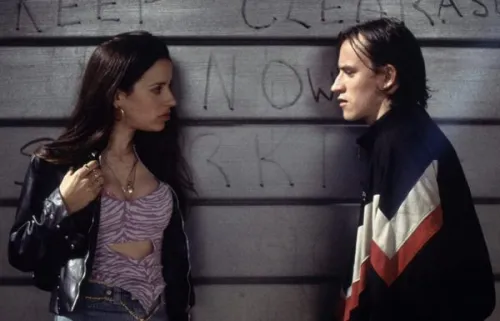
Grounded by Lesley Manville and Timothy Spall’s powerhouse performances, this gut-wrenching family drama from Mike Leigh is an acting juggernaut. Penny and Phil are a working-class couple whose marriage is rapidly deteriorating and pushed to the brink when their son, played by a young James Corden, is hospitalized.
While Manville and Spall are centered as the leads, Leigh draws a staggering amount of depth from Corden as well as a young Sally Hawkins who plays a neighbor. Despite being one of Leigh’s grimmest films, there is still a profound sweetness lingering at the edges as the story teeters between despondency and hope.
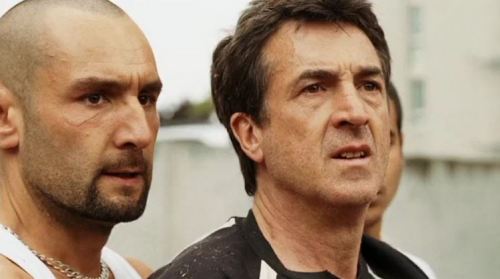
Francois Cluzet, who you may remember from The Intouchable, plays a man whose wife is killed and is accused of murdering her. To make matters even more confusing, signs that his wife is actually still alive surface. This well thought out thriller is at all times the furthest thing from boring and has, among other great components, well crafted chase scenes as the protagonist looks for 8 years of unanswered questions.
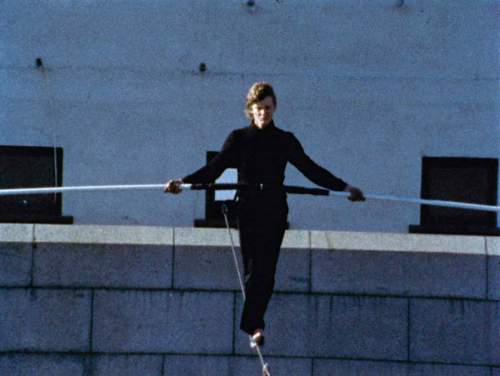
Man on Wire is a true technical masterpiece. You can almost feel the director telling the cameraman what angle to choose, or thinking about the questions that will generate the most resounding answers. However, this does not diminish the story this documentary tells one bit. It’s one that is glorious, riveting, and fun. It’s one where you feel like an insider to a world lived on and below wires, with high-stake risks. Hopefully the edge of your seat is comfortable, because this is where the movie will keep you till the very end.

British period dramas usually tend to fall under two categories: traditional or contemporary. The former risks being boring while the latter risks being obnoxious. Vanity Fair, the miniseries, thankfully falls somewhere in the middle. It sticks to the source by presenting Emma Sharpe as an unapologetic social climber, but expounds her character so that we sympathize with her circumstances. Of course she’s cunning, she has to be in order to survive. Of course she’s a flirt, she wasn’t raised to be as conservative as her contemporaries. Because of updates like these, the series feels invigorating and refreshing to watch, even though rags-to-riches and princess-and-the-pauper-like stories have been told many times. Often, it veers towards soapy territory, but it’s nonetheless fun and exciting (and sparkly for avid gown fans!) to watch.

Leo and Remi are close. They play, eat, and sleep together, and in between those moments, they share every thought they have with each other, no matter how big or small. Theirs is a precious friendship, as pure and as intimate as can be, but all that changes when they begin middle school. Subject to heteronormative norms and preteen mockery, their friendship starts to crack as Leo and Remi’s different definitions of manhood emerge.
Subtle but evocative, quiet but deeply powerful, Close takes a closer look at boyhood and male friendships—how they’re lived, defined, and seen. Plenty of questions go unanswered in this film, but if you’re comfortable with simply empathizing with the characters rather than knowing every answer, then Close comes highly recommended.
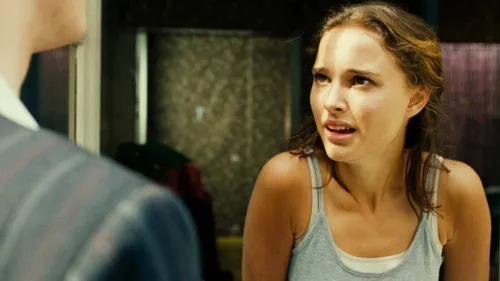
This anthology of 18 short films — directed by the likes of the Coen brothers, Gurinder Chadha, Wes Craven, and Olivier Assayas — is a cinematic charcuterie board. Each director offers their own creative interpretation of one north star: love in Paris. Romantic love is heavily represented, naturally, but in diverse forms: love that’s run its course, dormant love in need of rekindling, electric chance encounters, and, apt given the location, honeymoon love. Segments like the one starring Juliette Binoche and Alfonso Cuarón’s five-minute-long continuous take opt to focus on parental love instead, with the former also exploring love through the frame of grief.
If this all sounds a little syrupy and sentimental, fear not: there are dashes of bubble-bursting humor from the Coens, whose short stars a silent Steve Buscemi as a stereotypically Mona Lisa-obsessed American tourist who commits a grave faux pas in a metro station. Instead of sightseers, some directors offer more sober reflections on the experience of migrants in the city, which help ground the film so it doesn’t feel quite so indulgent. Still, the limited runtime of each vignette (sub-10 minutes) doesn’t let any one note linger too long, meaning the anthology feels like a series of light, short courses rather than a gorge of something sickly.
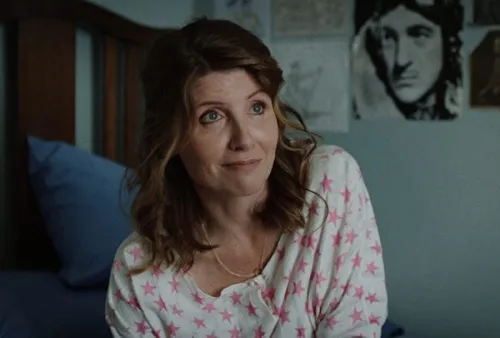
This lovely comedy-romance from Ireland is about a closeted gay teen and his lesbian schoolmate who pretend to be in a relationship to avoid being bullied at their school.
This premise makes Dating Amber an original story in a genre in which that’s increasingly rare. This is added to the setting, in 1995 rural Ireland, which is executed to gorgeous perfection in everything from the clothes to the music.
Dating Amber ends up being more coming-of-age than a comedy-romance. It’s a tale of friendship and self-acceptance.
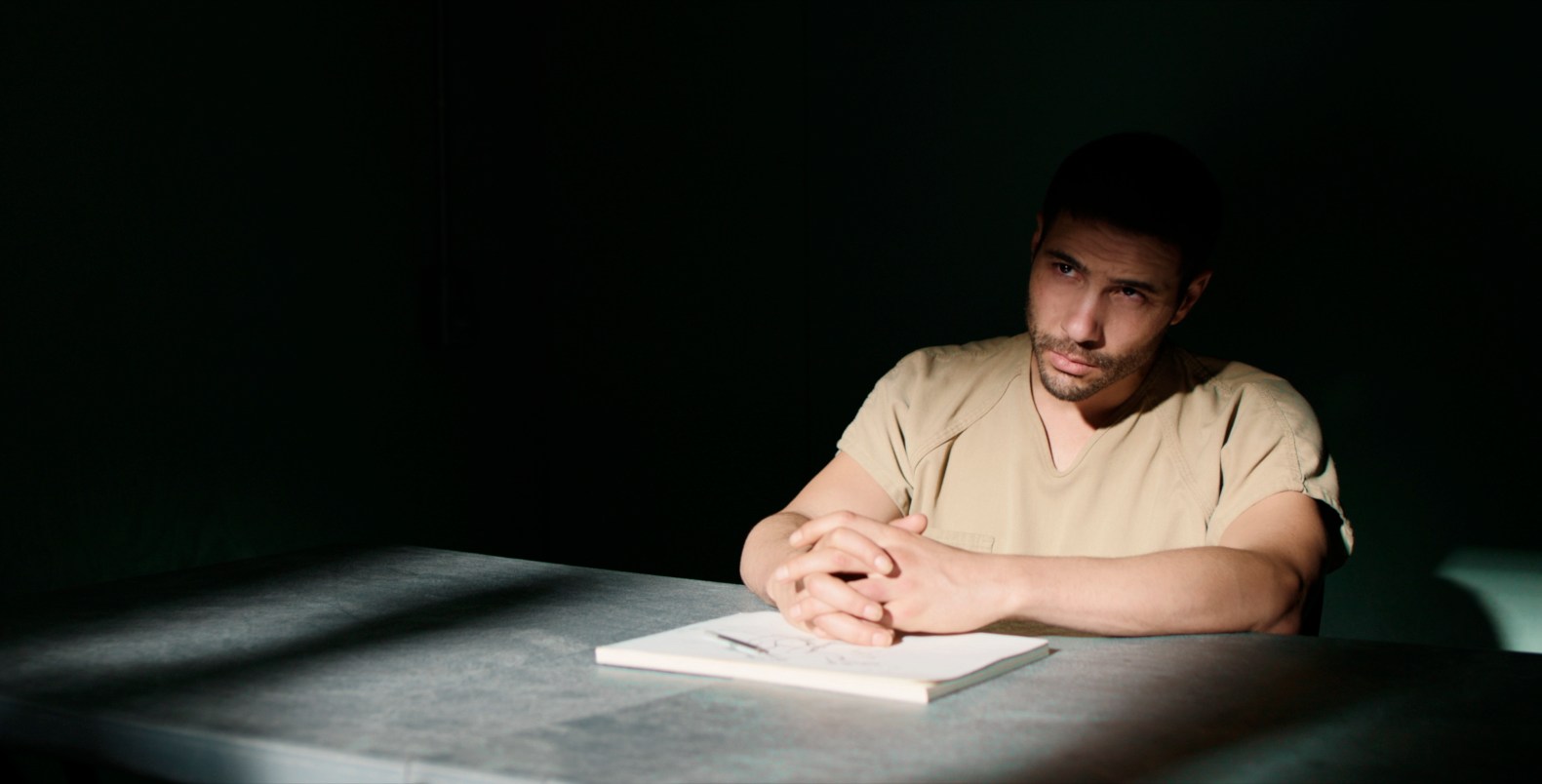
Given the political nature of the story, it’s not surprising that The Mauritanian takes a somewhat safe and simple approach in depicting the real life Guantanamo Bay prisoner who was unjustly detained for more than a decade. Nevertheless, sticking to familiar procedural beats is effective, because of the powerful story itself, and the outstanding performances of Jodie Foster and Hollywood newcomer Tahar Rahim, who won and was nominated for a Golden Globe respectively. The formulaic approach helps the film carry the complexities of the case in a more concise manner, and sticking close to the story without much flair helps keep the focus on the real injustice. The Mauritanian thankfully works because of its talent.
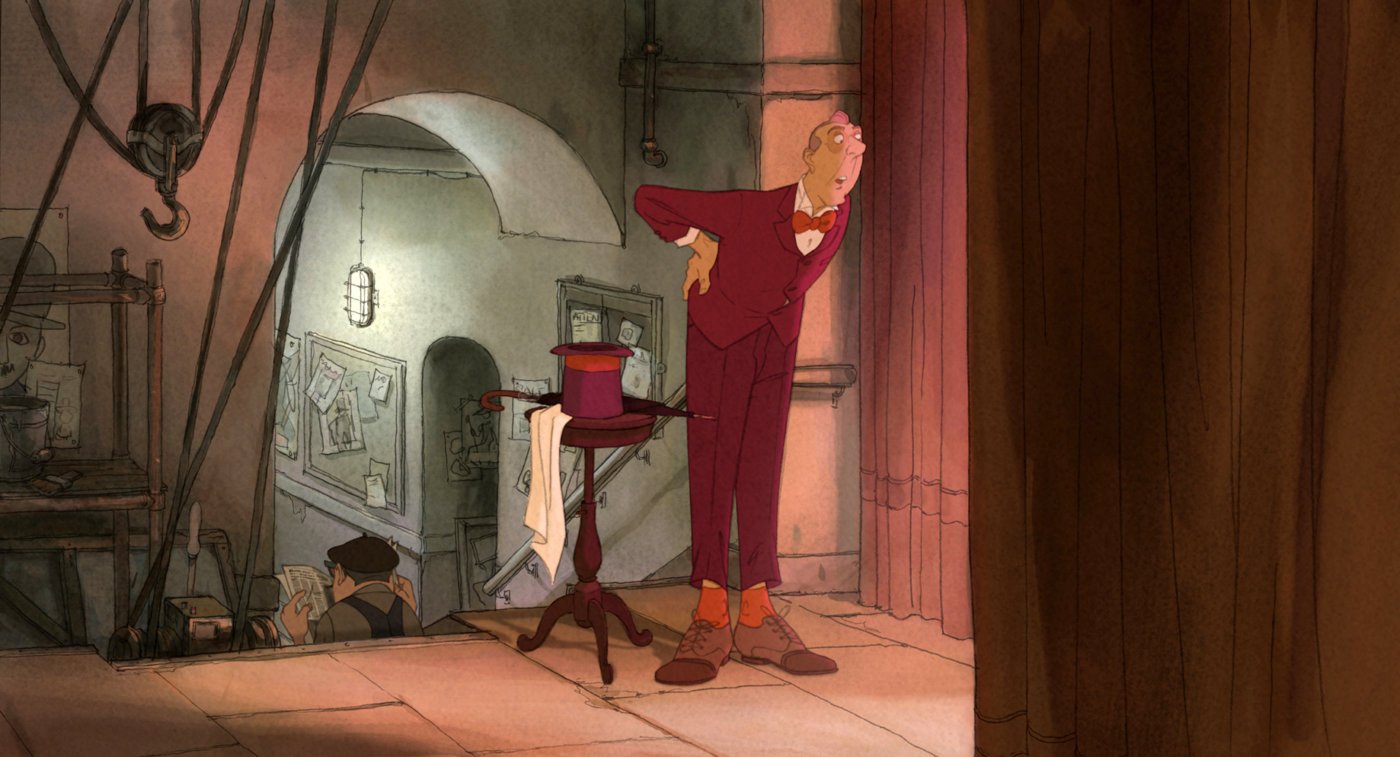
Even for the greatest, things can change enough that what was once popular is now ignored, what was once appreciated is now neglected, and things eventually lose their spark. Originally written by iconic French filmmaker Jacques Tati for one of his daughters, the screenplay for The Illusionist landed in the hands of Sylvain Chomet, who turned Tati’s live-action script into a devastating animated father-daughter drama, where the titular Tatischeff meets Alice, whose childlike belief sparks inspiration again in his own art, whether it be straightforward vaudeville acts or advertisements he resorts to in order to sustain their living. While the hand-drawn animation enables the physical comedy, it does conceal the tragic reality behind Tati’s script, but even as it does so, it somehow mirrors how both Tati and Chomet’s genre created magic, however ephemeral it may be.

There isn’t a single moment of unnecessarily exaggerated emotion or comedy in this French-Danish animated film, which may keep its world very small compared to its peers, but it portrays everything with arguably more depth and beauty. Long Way North moves with a stately pace, giving it more dramatic heft and allowing us to take in all of the film’s painterly surfaces and soft silhouettes. But it’s not just the art style that sets the film apart; it also avoids what we expect from a traditional adventure, keeping the most important character beats private and internal. This may make the movie feel a little more distant than it should be, but the feeling that it leaves you with is undeniable—a sense that everything is connected, and those who are lost will always find a way home.

A War (Krigen) is a Danish war drama that focuses on Commander Claus Pedersen (Pilou Asbæk) as he leads a company of soldiers in modern day Afghanistan, while his wife at home in Denmark struggles to care for their three children. During a mission to rescue a family from Taliban threat, Claus’ unit is overcome by enemy fire, forcing him to make a dramatic decision that has a complicated effect upon himself, his fellow soldiers, and his family back home. A War is a tense yet thoroughly involving drama that offers a profound example of moral ambiguity and the repercussions of warfare. The acting and direction are utterly superb across the board—another enthralling and superbly humanistic affair from Danish filmmaker Tobias Lindholm (A Hijacking).
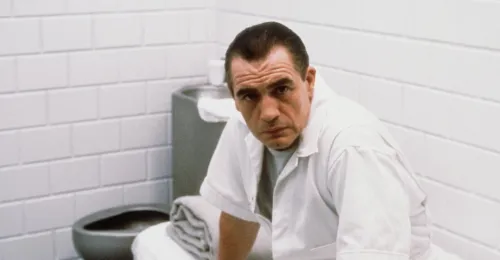
Before The Silence of the Lambs and Anthony Hopkins’ Hannibal, there was Manhunter and Brian Cox’s deeply unnerving Dr. Lecktor. Michael Mann’s neon-lit serial-killer thriller follows Will Graham (William Petersen), a retired FBI agent lured back to work by a psychotic mass murderer whom no one at the Bureau can catch. But Will has something no one else on the force does: he was so committed to tracking down the now-imprisoned Lecktor that he developed an ability to warp his mind into that of a deranged killer, seeing a kind of logic in their madness that allows him to hunt them down.
While that’s a professional superpower of sorts, it’s also a point of insecurity and a source of deep torture for Will, who struggles with the burden of his extraordinary empathy. Manhunter is thus a different kind of psychological thriller: while its dive into the depraved minds of Lecktor and the Tooth Fairy is certainly disturbing, it’s the obsessive, sanity-smashing effect the investigation has on Will that is most terrifying. Add to that Dante Spinotti’s impossibly vivid cinematography, Tom Noonan’s shudder-inducing performance as the voyeuristic Tooth Fairy, and the film’s surprisingly layered treatment of the murderer, and this is the serial-killer movie to end all others.
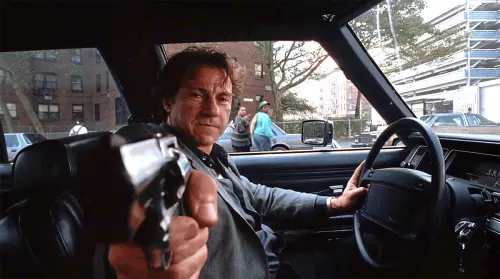
Bad Lieutenant is no misnomer: Harvey Keitel’s policeman really is one of NYPD’s worst. Already corrupt, abrasive, and abusive at the film’s outset, the movie chronicles his coked-out descent into total depravity after he’s called to investigate a heinous crime amid rapidly worsening personal circumstances. The brilliance of Bad Lieutenant is therefore a counterintuitive one: as awful as the Lieutenant is, we can’t help but feel emotionally involved because, in Keitel’s bravura performance, we can see the glint of pain — and thus of a person — within.
Always one for provocation, director Abel Ferrara pushes our empathy to — and maybe even beyond — its natural limits, only to break with the film’s hitherto unrelenting grit and dangle the glinting possibility of transcendent redemption in front of us. Anyone familiar with Catholic guilt cinema (movies like Martin Scorsese’s Who’s That Knocking At My Door and Mean Streets) will instantly recognize the same undercurrent running through Bad Lieutenant — even if Ferrara takes the idea of juxtaposing the profane with the sacred to the extreme here.
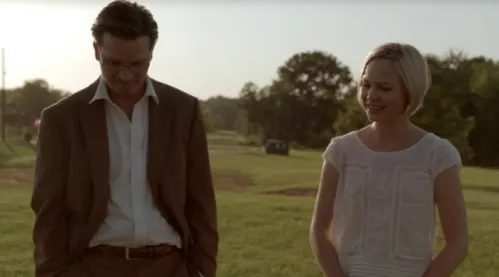
Some of the best novels of all time will probably take a few pages to introduce their premise, backstory, and key characters, and might demand some patience until the plot fully unfolds. This might be a hard sell in today’s world of short attention-spans, but some stories just need the time. Rectify is one of those stories. We meet Daniel Holden, played by Aden Young, after he is released from death-row prison after 19 years. While smart and thoughtful, Holden is obviously a damaged man, slightly out of synch with the world outside. His release affects his family very differently – some, like his sister, Agatha, had been fighting for his release since the day he was arrested. Others, like his brother-in-law, suspect he’s guilty of the crime he was accused of. Still others, like the fictional town’s sheriff, are bent on finding new evidence to lock him away again. So, in addition to awe-striking Southern landscapes, thought-provoking themes, subtle writing, you get a deep and detailed character-driven plot played by amazing actors. It might be too slow for some. This is not a who-dunnit or true-crime voyeurism. But you will be hard-pressed to find someone who isn’t enveloped by torrent of emotion when Daniel meets his mother and sister outside of a prison cell for the first time in nearly twenty years in the very first episode. And it really gets better and better with every season.
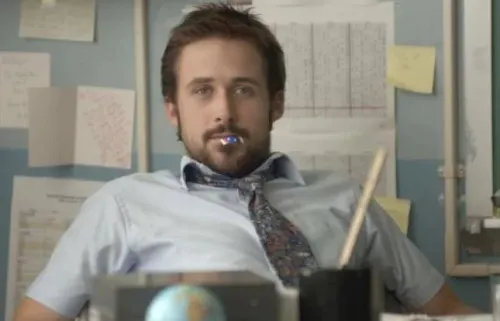
The self destructive, substance abusing history teacher Dan (Ryan Gosling) works in a Brooklyn middle-school and is constantly at odds with the curriculum, preferring to teach 13 year old kids Marxist theory in class. Meanwhile, his student Drey (Shareeka Epps) has to go through struggles of her own, her brother being in jail on drug charges and her single mother having to work long hours to make ends meet. Slowly, an unlikely and tender friendship between teacher and student evolves, in which it becomes less and less clear who of them is the adult part. Steering away from cliches, Half Neslon is not your typical social drama. Its intelligent plot twists, great cast (with outstanding performances by both Gossling and Epps) and slow, non dramatic storytelling makes this a highly underestimated movie that, although treating depressive topics without any easy relief for the viewer, will leave with an inner smile, albeit a sad one.

Undefeated won an Oscar but since it’s a documentary, few sadly paid attention to it. It tells the story of a football team in a poor area in Tennessee. Kids without a bright future, until the new coach arrives. Yes, that sounds like a very old, cliché tale. But keep in mind it is a documentary, and the story it tells is powerful, gripping, and any familiarity quickly becomes irrelevant. Even if you have no interest in American football, or in sports in general, you will love it and more than likely find yourself reaching for the Kleenex at least a few times before the credits roll.
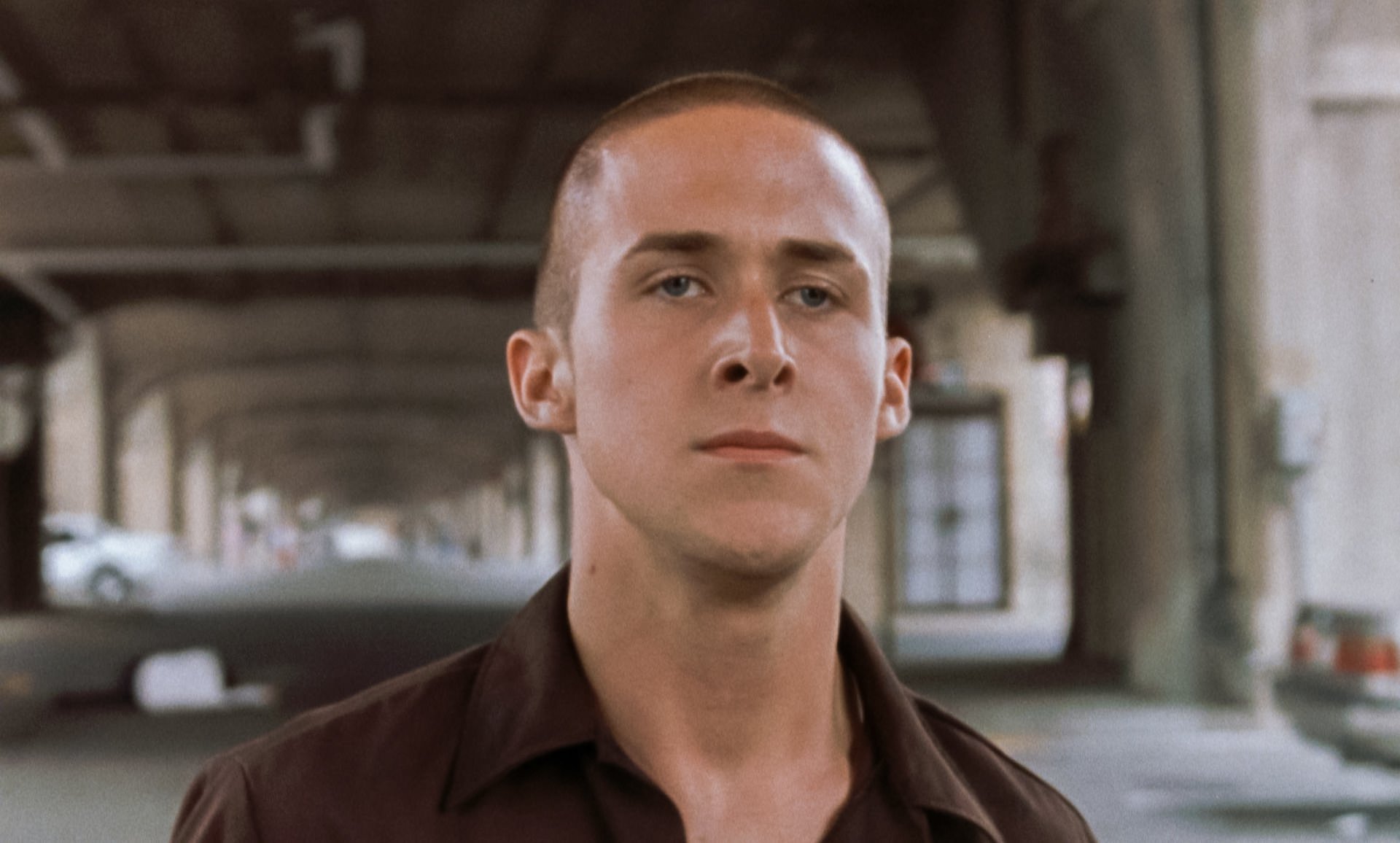
Ryan Gosling plays a Jewish Neo-Nazi in this extremely riveting window into the definition of inner conflict. It is a prime example of how character development should be done and it put Gosling on the map for me. He starts out as an exemplary student in Hebrew school until he starts questioning his teachings and exploring alternative ideologies, leading him to the neo-Nazi movement. Won the Grand Jury Prize at Sundance
What’s great about this highly inventive film is that it doesn’t look like it was shot through three iPhone 5s. Instead of using shaky cameras and static shots, Tangerine glides us through saturated, orange-toned scenes that evoke the Los Angeles sunset. Launching director Sean Baker into prominence, Tangerine is an innovative film that, at heart, is a nuanced comedy about the trans sex worker community. Newcomers Kitana Kiki Rodriguez and Mya Taylor run the show, and their performances create a vivid, electric drive that powers the whole movie. But it’s the quieter moments, the moments after betrayal, the moments of recovery, that make this movie truly special.
Director Thomas Vinterberg (The Hunt) reunites with Mads Mikkelsen to tell the story of four teachers going through a mid-life crisis. They’re not sad, exactly—they have homes and jobs and are good friends with each other—but they’re not happy either. Unlike the ebullient youth they teach, they seem to have lost their lust for life, and it’s silently eating away at them, rendering them glassy-eyed and mechanic in their everyday lives.
Enter an experiment: what if, as one scholar suggests, humans were meant to fulfill a certain alcohol concentration in order to live as fully and present as possible? The teachers use themselves as the subjects and the tide slowly starts to turn to mixed effects. Are they actually getting better or worse?
With an always-satisfying performance by Mikkelsen and an instant classic of an ender, it’s no surprise Another Round took home the award for Best Foreign Film in the 2020 Academy Awards.

Every once in a while there are movies that expand the definition of quality film-making. This is one of those movies.
Here is an incredible, yet delicate film that follows three children from poor families who are stuck living in subpar motels. Their lives and friendships are portrayed with honesty and precise aesthetics. It’s a story that at first seems as plot-free as life itself.
It succeeds in capturing an innocence that is usually reserved to a child’s imagination: a precarious living condition full of adventures and fun. It’s hard to describe it beyond that; it’s the kind of film that must be seen to be fully understood.
And it ends on a very high note.
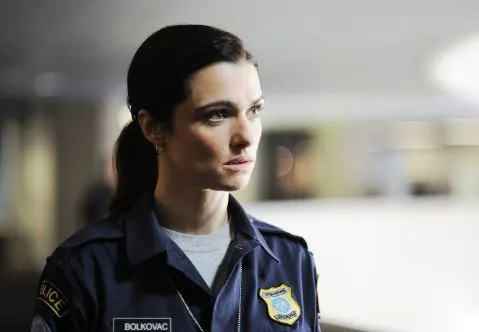
Based on a true story, The Whistleblower is the biography of a once Nebraskan police officer who volunteers for the U.N. peacekeeping mission in post-war Bosnia. Once there, she uncovers a human trafficking scandal involving peacekeeping officials, and finds herself alone against a hostile system in a devastated country. Rachel Weisz plays the whistleblower in a powerful lead role, but the true star of the movie is its director, Larysa Kondracki, who thanks to near documentary-style film-making delivers a perfectly executed political thriller with utmost authenticity.
Fans of sketch comedy, documentaries, and the always-hilarious duo of Bill Hader and Fred Armisen are in for a treat with Documentary Now!, a delightful miniseries that both satirizes and pays tribute to the non-fiction format. Each episode parodies a particular documentary and tone, bringing the comedians and their ever-revolving roster of guest stars to different eras, regions, costumes, accents, and more.
With SNL veterans Hader and Armisen at the helm, this mockumentary is sure to amuse and impress even the most stoic among us, if not for the show’s humor, then for its sharp attention to detail and endlessly creative references.
The simple premise of this series, about real couples going to therapy, shouldn’t feel as revolutionary as it does. And yet, Couples Therapy feels like radical reality-TV, a focused and coherent undertaking.
Couples of different histories, ages, races, and sexual orientations walk into Dr. Orna Guralnik’s New York office. Their problems are as diverse and unique as they are, but there is also a painful universality to them. Couples Therapy becomes a portrayal of human partnership period, a TV show in which to see oneself at times and to learn from the different webs couples get tangled in over time.
Never before has reality TV been the best vehicle to portray something so serious.
Every once in a while there are movies that expand the definition of quality film-making. This is one of those movies.
Here is an incredible, yet delicate film that follows three children from poor families who are stuck living in subpar motels. Their lives and friendships are portrayed with honesty and precise aesthetics. It’s a story that at first seems as plot-free as life itself.
It succeeds in capturing an innocence that is usually reserved to a child’s imagination: a precarious living condition full of adventures and fun. It’s hard to describe it beyond that; it’s the kind of film that must be seen to be fully understood.
And it ends on a very high note.
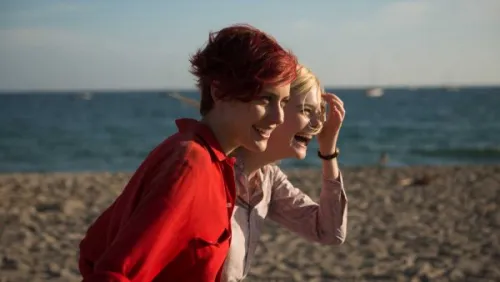
Annette Bening, Greta Gerwig, and many other big names star in this comedy-drama directed by Mike Mills (Beginners, Thumbsucker.) The story spans multiple generations but starts in 1979, where Dorothea Fields (Bening) is finding it increasingly difficult to raise her son alone. She enlists the help of two other women, one her son’s age and the other a New Yorker in her twenties who is very active in the punk scene. The three women, of three different generations and personalities as well as takes on the concept of “only a man can raise a man,” play different roles in this kid’s life. 20th Century Women is based on director Mike Mill’s own upbringing in Southern California.
It wouldn’t be too far of a reach to evoke Kids (1995) while diving into Mid90s. But instead of taking on the HIV crisis, Mid90s is a much more tender, poignant reflection on coming of age in 90’s skate culture. Jonah Hill, writer and director, examines the complexities of trying to fit in and the difficult choices one has to embrace individualism. From an opening of physical abuse to scenes of drug usage and traumatic experiences, Mid90s is a meditation not only on culture, but also a subtle examination of what it means to be human, to reach emotional and physical limitations, and to seek acceptance. Filmed in a 4:3 aspect ratio, Mid90s doesn’t concern itself with grandiose filmography, but instead the aspect ratio almost reflects the tonal and metaphorical aspects played out on screen. With a smaller dynamic range of color and the familiar dust/scratches, the 16mm film compliments gritty and emotional moments of Mid90s. The emotional range of the film will take the audience from the depths of empathy to laughing out loud, but there is no compromise to the weight of each moment. Jonah Hill’s directorial debut is beautiful in every sense of the word.
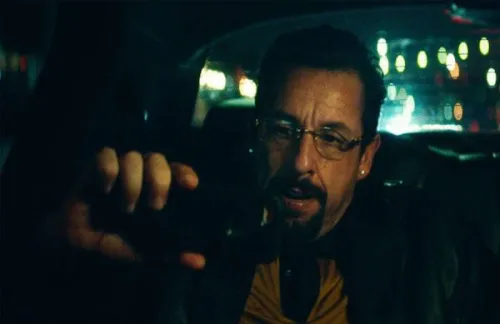
A crazy, anxiety-inducing thriller that turns Adam Sandler into a thrill-generating machine, which in its own speaks volumes about the rhythm of this movie. It follows a jeweler who gets himself in trouble with what feels like all of New York – a gang, Kevin Garnett (the NBA player), other jewelers, his family, odd twins that appear out of nowhere – everyone. This all happens in the backdrop of him feeling he has “hit big” and is on the verge of receiving a lot of money.
If you watched Good Time, you know what to expect from directors Safdie brothers: excruciating tension that keeps building up when you thought it wasn’t possible. And that might be the only problem with Uncut Gems; the tension doesn’t feel that different from Good Time, and having watched one you can guess where the other one is going.

You live in a strange world. Or at least, that’s what the generation before you thinks. Eight Grade is a movie that follows a girl going through her generation’s strange world. Social media, selfies, Youtube; you name it. But also, the weight of her expectations (as shaped by the internet) versus her reality. Written and directed by famous comedian Bo Burnham, it’s a gentle and often funny look at our anxieties and how they shape our growth. Prepare for a lot of cringes.
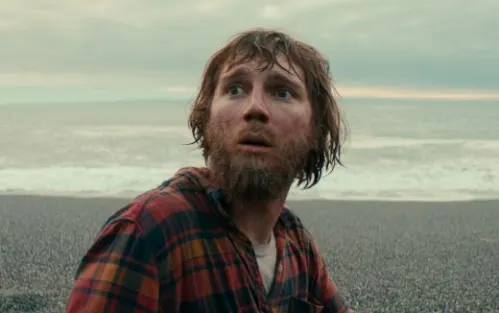
Probably the weirdest film you’ll ever see. Paul Dano plays a borderline suicidal man who befriends a farting corpse that washed up from the sea as played by Daniel Radcliffe. It’s an adventurous, witty and hilarious film yet it is filled with discreet and very deep lessons about society and norms. The soundtrack is so charmingly unique as well, it’s a definite must-watch for anyone looking for a refreshing comedy.
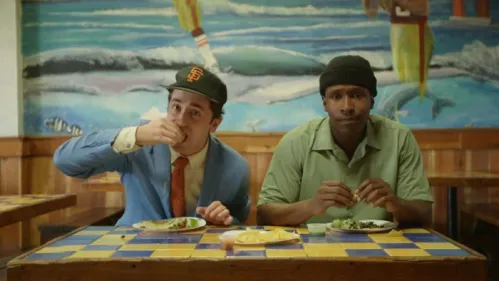
Like a Wes Anderson movie, The Last Black Man in San Francisco takes artistic risks and nails every one of them. There are many quirky, aesthetically well-studied, and even funny aspects to this moving story.
Jimmie has been maintaining a typical San Francisco Victorian house, regularly painting the windows and watering the plants. One small problem: other people live there and they don’t want him around. It turns out this was once Jimmie’s family house, having been built by his grandfather in 1948, and he misses it deeply.
This story is based on writer Jimmie Fails’ life, as he tried to reclaim his family home in SF. However, it’s not a movie that limits itself to gentrification. It transcends that to being about the universal yearning to find a place to call home.
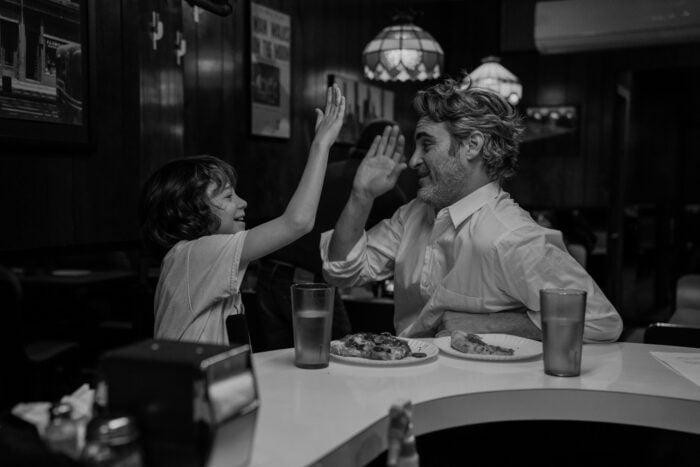
Mike Mills has always had an obsession with childhood and parenthood, often honing in on the beautiful, frustrating, and inevitable mess that comes with them. C’mon C’mon is no exception, but here, Mills blurs the lines between the two even more. Sometimes the kid acts more like an adult, and the adult more like a kid; sometimes the uncle acts as a surrogate mother, and the mother (unsurprisingly) takes on the role of an everywoman, attempting to be breadwinner, caretaker, and friend all at once.
C’mon C’mon has no allegiances; it simply shows us the dynamics between one family and mirrors what we already know about ours. Shot in black and white, grounded in simple conversations, and interwoven with moving essay excerpts and real interviews, C’mon C’mon feels at once personal and universal; a moving feat of a film.
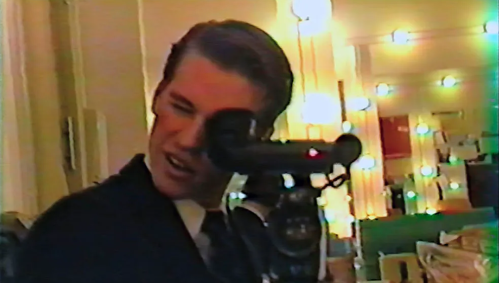
The late Val Kilmer is best known for his roles in Top Gun and Batman. If you’re from an earlier generation, you might also recognize him in the tabloids as that famously difficult actor to work with, always demanding perfection in every scene. The documentary Val sheds those outer layers to reveal a man who was, above all else, sensitive, ambitious, creative, and resilient. Through intimate home videos, which Kilmer started taking when he was very young, we see him as a playful kid, a talented prodigy, a playwright, a painter, a father, and a deeply committed actor. Misunderstood and miscast, yes (for reasons that will be divulged in the film), but undeniably talented and committed as well. Val is a beautiful portrait of a complicated man in his twilight years. He’s an actor who could’ve done more if the industry had been kinder and who, thankfully, had the good sense to document almost every minute of his life with a good ol’ camera.
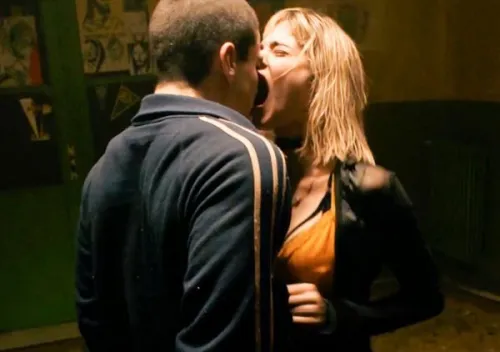
This twisted movie is actually two movies, the credits even roll in between. The first half is gorgeous: talented dancers get together for a party and perform beautiful contemporary dance sequences. They introduce themselves through their audition tapes to join the dance group, but also through conversations at the party. The second half is less fun. It turns out someone had laced the sangria they’ve been drinking with a psychedelic drug. Not for the faint of heart or anyone who didn’t like director Gaspar Noé’s past movies (Enter the Void, I Stand Alone, etc).

A beautiful coming-of-age story that is mixed with one of the best depictions of a mother character in movie history both make Lady Bird an absolutely exquisite film. Its slice-of-life story taps into the universal issues, dreams, and frustrations that almost every small-town kid has faced; and it manages to do all of this without feeling forced or cliché. This is because of the attention and care that were given to it but also because of how tightly it’s based on the life of its writer / director Greta Gerwig. A wonderful movie.
Four Lions is as black and as dark as a movie can ever get, mixing cultural relevancy with humor and ridiculousness. It is insensitive to Islam, insensitive to terrorism and insensitive to the viewer. But it is hilarious. The director spent three years talking to Imams, terrorism experts and basically everyone. The result? A legit 97 minutes that will dazzle even extremists with its knowledge of Islam and the accuracy of its lines. Needless to say that it will upset quite a few people, but that is always a good sign for black comedy movies, right?
The self destructive, substance abusing history teacher Dan (Ryan Gosling) works in a Brooklyn middle-school and is constantly at odds with the curriculum, preferring to teach 13 year old kids Marxist theory in class. Meanwhile, his student Drey (Shareeka Epps) has to go through struggles of her own, her brother being in jail on drug charges and her single mother having to work long hours to make ends meet. Slowly, an unlikely and tender friendship between teacher and student evolves, in which it becomes less and less clear who of them is the adult part. Steering away from cliches, Half Neslon is not your typical social drama. Its intelligent plot twists, great cast (with outstanding performances by both Gossling and Epps) and slow, non dramatic storytelling makes this a highly underestimated movie that, although treating depressive topics without any easy relief for the viewer, will leave with an inner smile, albeit a sad one.
Ryan Gosling plays a Jewish Neo-Nazi in this extremely riveting window into the definition of inner conflict. It is a prime example of how character development should be done and it put Gosling on the map for me. He starts out as an exemplary student in Hebrew school until he starts questioning his teachings and exploring alternative ideologies, leading him to the neo-Nazi movement. Won the Grand Jury Prize at Sundance
What’s great about this highly inventive film is that it doesn’t look like it was shot through three iPhone 5s. Instead of using shaky cameras and static shots, Tangerine glides us through saturated, orange-toned scenes that evoke the Los Angeles sunset. Launching director Sean Baker into prominence, Tangerine is an innovative film that, at heart, is a nuanced comedy about the trans sex worker community. Newcomers Kitana Kiki Rodriguez and Mya Taylor run the show, and their performances create a vivid, electric drive that powers the whole movie. But it’s the quieter moments, the moments after betrayal, the moments of recovery, that make this movie truly special.
Every once in a while there are movies that expand the definition of quality film-making. This is one of those movies.
Here is an incredible, yet delicate film that follows three children from poor families who are stuck living in subpar motels. Their lives and friendships are portrayed with honesty and precise aesthetics. It’s a story that at first seems as plot-free as life itself.
It succeeds in capturing an innocence that is usually reserved to a child’s imagination: a precarious living condition full of adventures and fun. It’s hard to describe it beyond that; it’s the kind of film that must be seen to be fully understood.
And it ends on a very high note.
Based on a true story, The Whistleblower is the biography of a once Nebraskan police officer who volunteers for the U.N. peacekeeping mission in post-war Bosnia. Once there, she uncovers a human trafficking scandal involving peacekeeping officials, and finds herself alone against a hostile system in a devastated country. Rachel Weisz plays the whistleblower in a powerful lead role, but the true star of the movie is its director, Larysa Kondracki, who thanks to near documentary-style film-making delivers a perfectly executed political thriller with utmost authenticity.
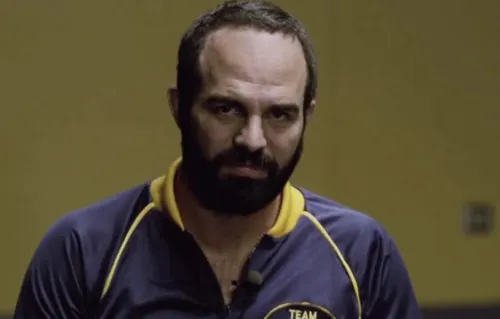
From the director of Moneyball, Foxcatcher is a true-story-based thriller centered around Olympic wrestlers and brothers Mark Schultz (Channing Tatum) and Dave Schultz (Mark Ruffalo) and multimillionaire John du Pont (Steve Carell). When the latter invites both brothers to move to his estate and train there, with seemingly patriotic motives, only Mark accepts. As training for the 1988 Olympic Games starts, and Du Pont’s motives become clearer, tragedy hits. This film is a slow-burning celebration of the exceptional talent it features, both Ruffalo and Carell received Oscar nominations for their roles.
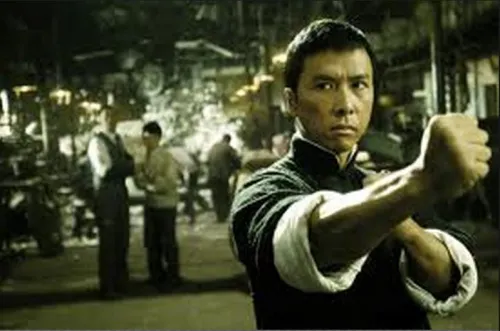
It’s been acclaimed as one the best Kung Fu movies ever made. You are probably wondering why this contemporary movie made that short list when its genre had its peak decades ago: it is visually striking and at the same time surprisingly story-oriented. As you would expect of course, there is quite a fair amount of action scenes, but the characters are also brilliant which is very uncommon in this type of movie. It is an exciting movie, and worthy of any compliment or good rating it may get.
Grounded by Lesley Manville and Timothy Spall’s powerhouse performances, this gut-wrenching family drama from Mike Leigh is an acting juggernaut. Penny and Phil are a working-class couple whose marriage is rapidly deteriorating and pushed to the brink when their son, played by a young James Corden, is hospitalized.
While Manville and Spall are centered as the leads, Leigh draws a staggering amount of depth from Corden as well as a young Sally Hawkins who plays a neighbor. Despite being one of Leigh’s grimmest films, there is still a profound sweetness lingering at the edges as the story teeters between despondency and hope.
This is a hilarious political comedy starring the ever-great Steve Buscemi. Set in the last days before Stalin’s death and the chaos that followed, it portrays the lack of trust and the random assassinations that characterized the Stalinist Soviet Union. Think of it as Veep meets Sacha Baron Cohen’s The Dictator. Although to be fair, its dark comedy props are very different from the comedy that comes out today: where there are jokes they’re really smart, but what’s actually funny is the atmosphere and absurd situations that end up developing.

David O. Russel (Silver Linings Playbook, American Hustle) is one of those directors who the more you dig into his past, the more you are rewarded. I Heart Huckabees is a great example of this, as is The Fighter (both are must-watch if you haven’t seen them). But it is Three Kings that truly presented him as someone who can give great substance to big-budget movies. It stars George Clooney, Mark Wahlberg, Ice Cube, and even director Spike Jonze (Her, Adaptation), in other words, a festival of talent at its peak. And it follows three soldiers who want use the end of the Gulf War as an opportunity to get rich. Their journey through a devastated and uncertain Iraq is a thrilling one, as Three Kings is action-packed. But the purpose of this movie lies somewhere between political satire around American interventionism and social criticism of the main characters. However, none of that stands in the way of this movie being an entertaining and exhilarating movie.
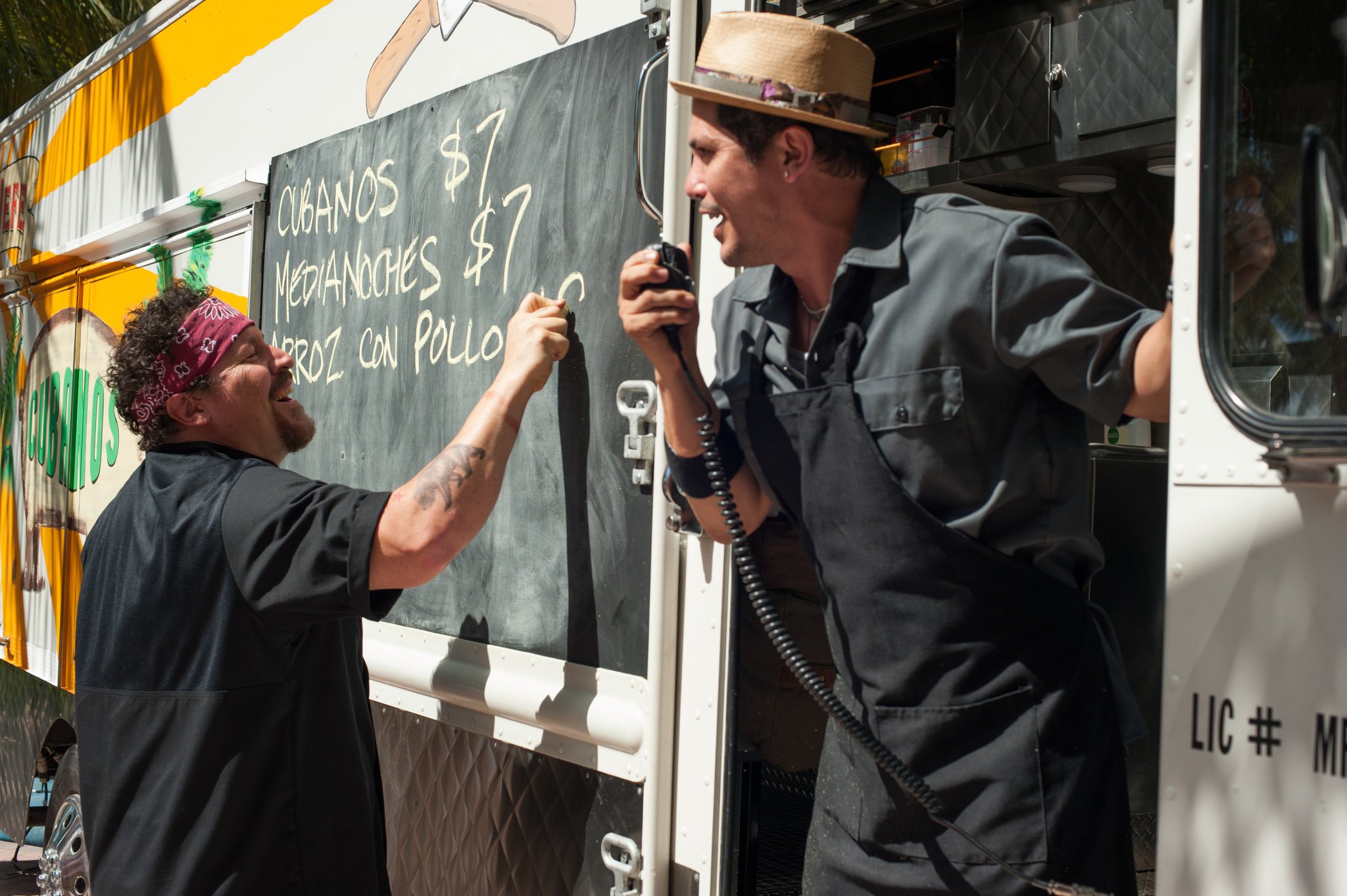
A popular chef loses his job and respect after a bad review. He ends up with a food truck and tries to show the world he still has his creative side, while at the same time trying to fix his broken family. Chef is a heartwarming feel-good movie, after you finish it you will want to cook, love your family, travel, and spread the love. One of my favorite movies, I see myself happily watching it again numerous times.