
The Best PG-13 Movies to Watch (Page 2)
Most audience members assume that PG-13 rating automatically indicates a show is not for adults, but you’d be surprised at how many excellent series can be enjoyed by the whole family, across generations. Here are the very best PG-13-rated movies and shows to stream.
To access filters, visit our homepage.
After drawing controversy for the embellished, modern day-set Sound of Freedom, director Alejandro Monteverde and writer Rod Barr pivoted to the past to tell the story of Cabrini. It’s a straightforward biopic. It seemed like a safer story to tell, with the protagonist being a literal Catholic saint, who also happened to have an undisputed historical record of uplifting deeds. Francesca Cabrini is the sort of main character whose story writes itself. That being said, choosing to tell her particular story of helping immigrant orphans through her women-led order is an interesting choice at a time when immigration has become a point of contention. While rough in some scenes, Cabrini’s story proves to hold relevance in modern day America.
This difficult movie is about a seventeen-year-old from the U.S. underclass who has to deal with an unplanned pregnancy. Autumn is creative, reserved, and quiet, but those are not qualities that her environment in rural Pennsylvania seems to value. On the opposite, she is surrounded by threats, including disturbing step-father and boss characters.
Dangers escalate as Autumn decides to travel to New York to have an abortion. Never Rarely Sometimes Always is about unplanned pregnancies as much as it is about just how dangerous it is to be a teenage girl living in America.
Revolutionaries come in many forms. Some prefer to rally in the streets, while others, like the businessman Bernard Garrett, championed race equality in his field of finance. Discreetly and rather dangerously, he purchased buildings and offered loans to his fellow Black men at a time when they were denied these rights and more. It was an ingenious plan hatched at a precarious time, and the film captures how Garrett (Anthony Mackie) managed to pull it off (for the most part).
The Banker doesn’t get as thrilling as it could be, but it is fueled by a smart script that unapologetically gets to the nitty-gritty math of it all, as well as engaging performances by Mackie, Samuel L. Jackson, and Nicholas Hoult. The film effectively revives Garrett’s inspiring story for a modern audience, turning it into an important piece of American history that won’t soon be forgotten.
This new documentary is about the exact scale to which social media is harming us, as testified to by people from the industry: ex-executives at Google, Instagram, Facebook, and even the ex-President of Pinterest. All have left their companies for (incredibly valid) ethical concerns that they share here.
It’s a blend of interview footage and a fiction film that follows a family who feels more distant because of social media. This allows to see the implications of what the interviewees are saying in real life but quite frankly it also serves as a welcome break from the intensity of their words. How intense? One of them predicts civil war within 20 years.
That this film, an adaptation of a beloved classic and girlhood staple for 50 years and counting, is able to retain the same power, charm, and wisdom as the source material by Judy Blume is impressive in and of itself.
Director Kelly Fremon Craig (Edge of Seventeen) turns the must-read novel into a must-see film, as urgent and relevant as ever in its frank portrayal of feminine woes and joys. Buying your first bra, getting your first period, losing a friend, doubting your faith, seeing—really seeing—your family for the first time, and knowing in your heart what you stand for…these are some of the thorny requisites of womanhood, and Craig navigates them with a bittersweet ease that never feels pandering nor patronizing. Like the book, the film honors this young person’s big feelings by centering them in a sprawling story that involves other characters, who are just as fleshed-out as the lead. Rachel McAdams deserves special mention for turning in a sweetly nuanced performance as Margaret’s mother Barbara, an artist attempting to balance her domestic role with her career goals.
The film may be 50 years in the making, but it tells a timeless tale that will continue to hold the hands of teenage girls for generations to come.
Even if you’re a huge Broadway fan, you’ve probably never heard of the “industrial musical.” While it no longer exists in practice, in the 1970s industrial musicals were shows that corporations commissioned for some of the biggest Broadway names to produce. The script would be based on the company’s offerings and history, and privately performed by real Broadway actors to audiences made up exclusively of company and factory staff.
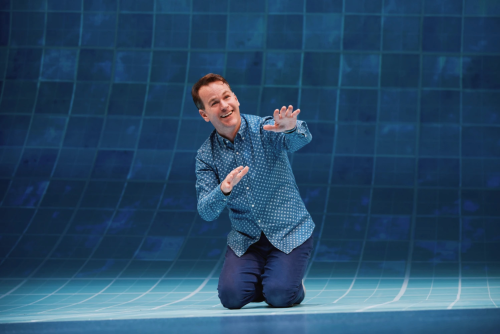
Now, a documentary about industrial shows doesn’t scream “entertaining,” but to describe Bathtubs Over Broadway in such a manner would be selling it way short. It’s really about Steve Young, a comedy writer for David Letterman, and how his life changed when he found his first industrial musical LP when leafing through a crate of old records for a Late Night segment he was working on.
Ultimately, what makes this such an enjoyable watch is the protagonist’s enduring passion over what at first appears to be nothing but a niche obsession. But with time, as he connects with other collectors and the people who were involved in the original industrial musical productions, his passion breeds community and lifelong bonds. Even if you’re no fan of Broadway, this makes for a great pop culture documentary and an unexpectedly touching story of human connection.
An incredible documentary about Matt Green, a man who decided to walk every street in New York City. That’s more than 8000 miles (more than the diameter of Earth) that he had been walking for six years up to the point of making this movie.
Matt stops. And that’s the beauty of this documentary, where the filmmaker joins him for part of the journey. You quickly realize that the intrigue is not so much about Matt’s challenge, but about who he meets and what kind of experiences he goes through. You also realize (if you didn’t already) that New York is a place of unimaginable size, with incredibly lively and diverse human stories. Plus lots of other forms of life too: Matt doesn’t have a fixed place, so he cat-sits for shelter.
Fun fact: this is the first movie that actor Jesse Eisenberg ever produced!
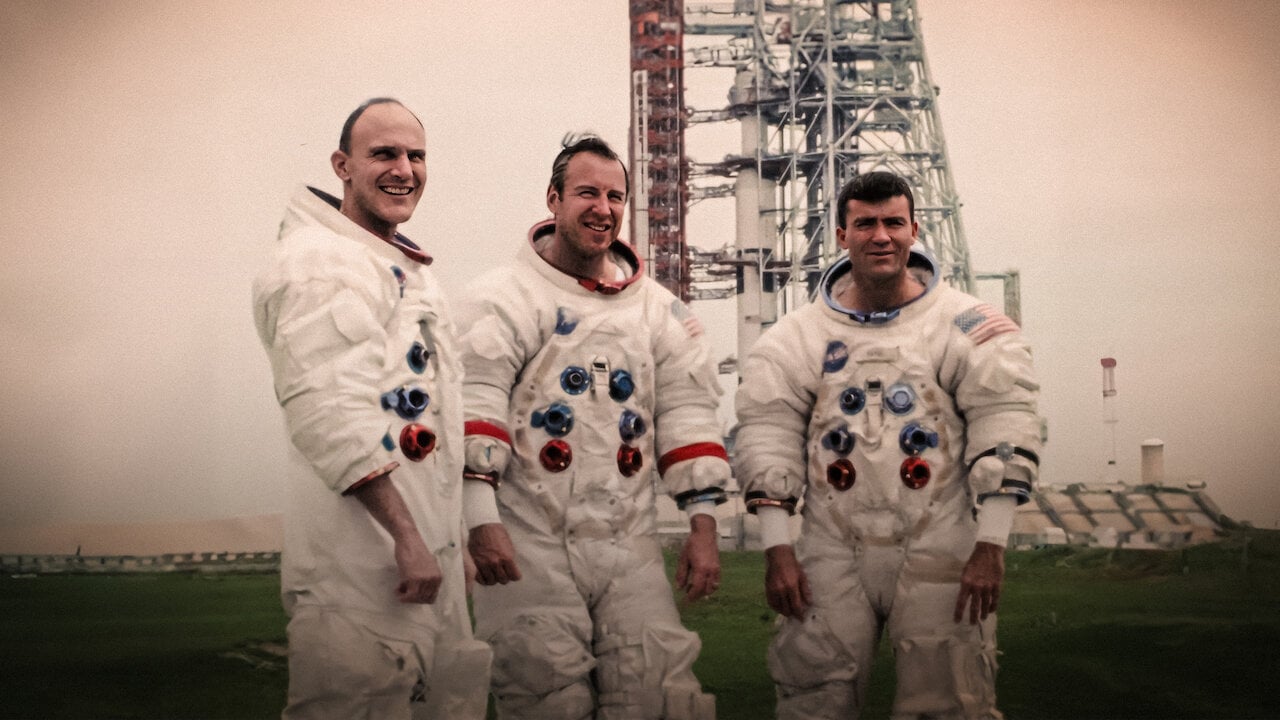
In 1914, Sir Ernest Shackleton set out to the Antarctic in the hopes of making the first land crossing on the continent. His ship, the Endurance, couldn’t complete the journey, and so Shackleton and his crew had to pivot from setting a record to simply surviving. Almost a century later, a group of scientists are determined to find Shackleton’s abandoned ship. This documentary, directed by the award-winning duo behind Free Solo, The Rescue, and Nyad, alternates between The Endurance’s magnificent past and tragic present and mostly succeeds in telling a balanced story. The past, unsurprisingly, is more intriguing. It’s a nail-biting tale of survival, amplified by the use of colorized footage shot by one of the crewmen. The present is informational, but it struggles to match the scope of Shackleton’s journey. Both tales are inspiring nonetheless, and woven together as expertly here, prove to be an educating and entertaining watch.
We’ve already seen the coming-of-age conflict presented in Música in other films– namely, where parents, society, and loved ones expect things from a male protagonist, but he has a passion for his creative endeavors, only awakened by a gorgeous girl that recognizes his talent. It’s a cliché storyline, even for a musical, but we’ve never heard it this way before, the way Rudy Mancuso takes in the day-to-day noise of his Brazilian neighborhood in Newark and turns it into a musical soundscape paired with rhythmic dancing, theatrical set pieces, and a metanarrative portrayed by his puppets that he says is unfortunately real. There’s something special in the way Mancuso’s directorial debut unfolds, so visually and sonically creative, with a lot of heart that we’ve been missing.
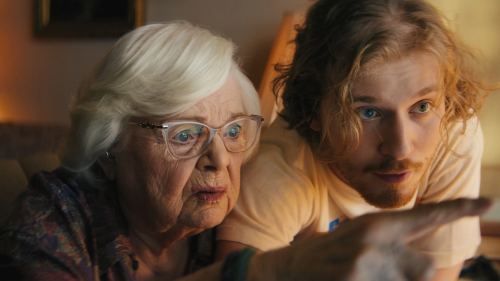
A sweet feel-good movie starring Nick Offerman as a dad who has to deal with his only daughter leaving for college and his record store struggling. The daughter is played by Kiersey Clemons who you might recognize from the show Easy. And Ted Danson has a great role too. This is a relatable and heartwarming movie, one of the best the so-called “indie” genre has known in a long time.
Terrence Malick (The Tree of Life) is back in full form with this three-hour movie based on a true story. His creation has one of the most beautiful depictions of happiness ever seen in film, portraying the simple yet joyous life of a farmer in the Austrian mountains. You’d have to see it for yourself to understand, but how Malick depicts this character’s love for his wife (and her love for him), their children, and even their farming rituals are nothing short of cinematic wizardry.
This peaceful existence changes when World War 2 intensifies and this farmer is called to serve for the Nazis. He refuses to enroll out of principle and puts himself and his family at great danger and alienation from their village. The question at the center of the film is one that other villagers and the church ask him a lot: what good can his actions do? And the title of the movie is taken from A George Eliot quote: “The growing good of the world is partly dependent on unhistoric acts; and that things are not so ill with you and me as they might have been, is half owing to the number who lived faithfully a hidden life, and rest in unvisited tombs.”
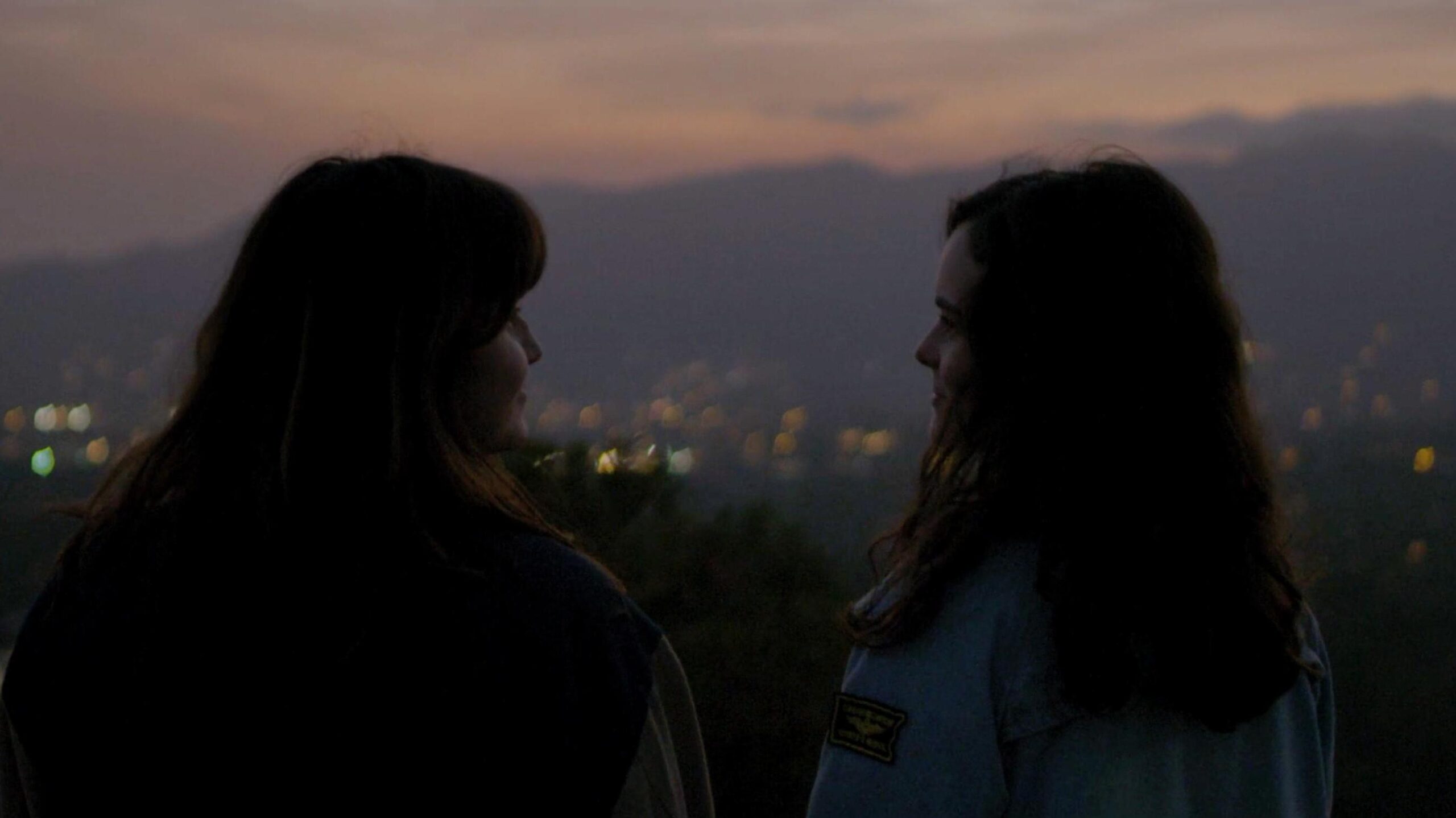
This lovely romance is about Ellie, a straight-A student who takes money from a classmate, Paul, to write love letters for him. Ellie does this to help with the household bills but there is one big problem: the girl Paul is in love with is also the girl Ellie has a crush on.
This might seem like the set-up for a standard Netflix comedy (and if you’re thinking Bergerac, you’re right, it is based on the famous play) but as the introduction of the film reads: “This is not a love story … not one where anyone gets what they want.”
It is in fact, personal work from a brilliant and quality-focused director, Alice Wu. Her last movie, Saving Face, a pioneering lesbian romance set in an Asian American context, was released a long 15 years ago.
A biopic is only as big as the personality at its center, and what a personality Pavarotti had. The Opera singer that crossed into the mainstream from his humble upbringings in Modena, Italy, exuded happiness and had a great outlook on life. And even as the attention he would eventually attract takes its tole, he’s able to maintain his positivity and his dedication to his art. This documentary on his life and his work will be even more interesting to you if like me you didn’t know who Pavarotti was, or the impact he’s had.
At first, you wonder, couldn’t this behind-the-scenes look at the making of The Boy and The Heron just be a DVD special? But a few minutes in, it becomes clear how rich the material is. It’s not just about Miyazaki and the making of a movie, it’s about him grappling with grief and transforming it into art. A surprising chunk of this documentary is about death. Miyazaki’s friends and colleagues are passing away, it seems, every month, and the only way Miyazaki can mourn and honor them is through his (their) art. The Boy and The Heron itself is a fulfillment of a promise Miyazaki made to his closest friend, Isao Takahata, or Pak-san, as Miyazaki lovingly calls him. It’s Pak-san whom he mourns the most in the movie, but almost everyone who’s passed makes an appearance both in the documentary and the film. The lines between the two are often blurred by Miyazaki, in his failing memory, and by documentary director Kaku Arakawa. Arakawa’s editing is chaotic, if not experimental. He cuts between reality and fiction—documentary footage and Ghibli clips—faster than you can make sense of it all. “I opened my brain way too far for this project,” Miyazaki claims, and you can feel the exhilaration and fear in every second of this brilliant film.
The Great Lillian Hall doesn’t do anything particularly great to a familiar premise, but it’s still worth watching for the knockout performances. There’s Lange, whose dementia both complicates her desire to mount one last performance and resurfaces her guilt for being an absent mother. There’s Bates, who offers both sympathy and tough love. And then there’s Rabe, who’s gut-punching as the pained daughter crawling her way into her mother’s stiff arms. Everything else about the film is not as noteworthy as it drags on for way longer than it should. But that trifecta of performances makes it all worthwhile.
In this documentary about John Allen Chau — the American Christian missionary reportedly killed when he tried to preach the Gospel to one of the last uncontacted groups in the world — a participant muses about the “fine line between faith and madness.” The hazy border where one ends and the other begins is the focus of this doc, and it makes for a fascinating challenge of audience’s open-mindedness.
The film presents Chau’s perspective through scattered interviews with friends and readings of the diary he left behind, but it also features interviews with surviving, persistent adherents of the same radical evangelicalism that inspired Chau to preach the Gospel to the North Sentinelese people (something he believed was a prerequisite for the Second Coming of Jesus). The filmmakers treat these highly controversial perspectives with a light touch, never explicitly challenging Chau’s peers, but strong balance is provided via the voices of vehement opponents of this ideology. Providing equal weighting to both sides is an unusually hands-off approach, one that might easily be misread as tacit approval from the filmmakers. Ultimately, though, anyone watching this with an open mind will still come to the same moral conclusion — you’ll just be better informed about it.
While the YA genre doesn’t have the best track record with regards to mental illness representation, there’s a funny, surprisingly accurate, and, dare I say, relatable approach to Words on Bathroom Walls that makes the topic of schizophrenia feel approachable. It helps that the cast was well-picked, with festival favorites Charlie Plummer and Taylor Russell forming a compelling pair, but what makes the film work is director Thor Freudenthal, whose previous experience in directing classic teen franchises can be seen through the way he portrays Adam with heart, rather than with stereotypes, just like the original novel. Words on Bathroom Walls is an unexpectedly fresh take on an often misrepresented condition.
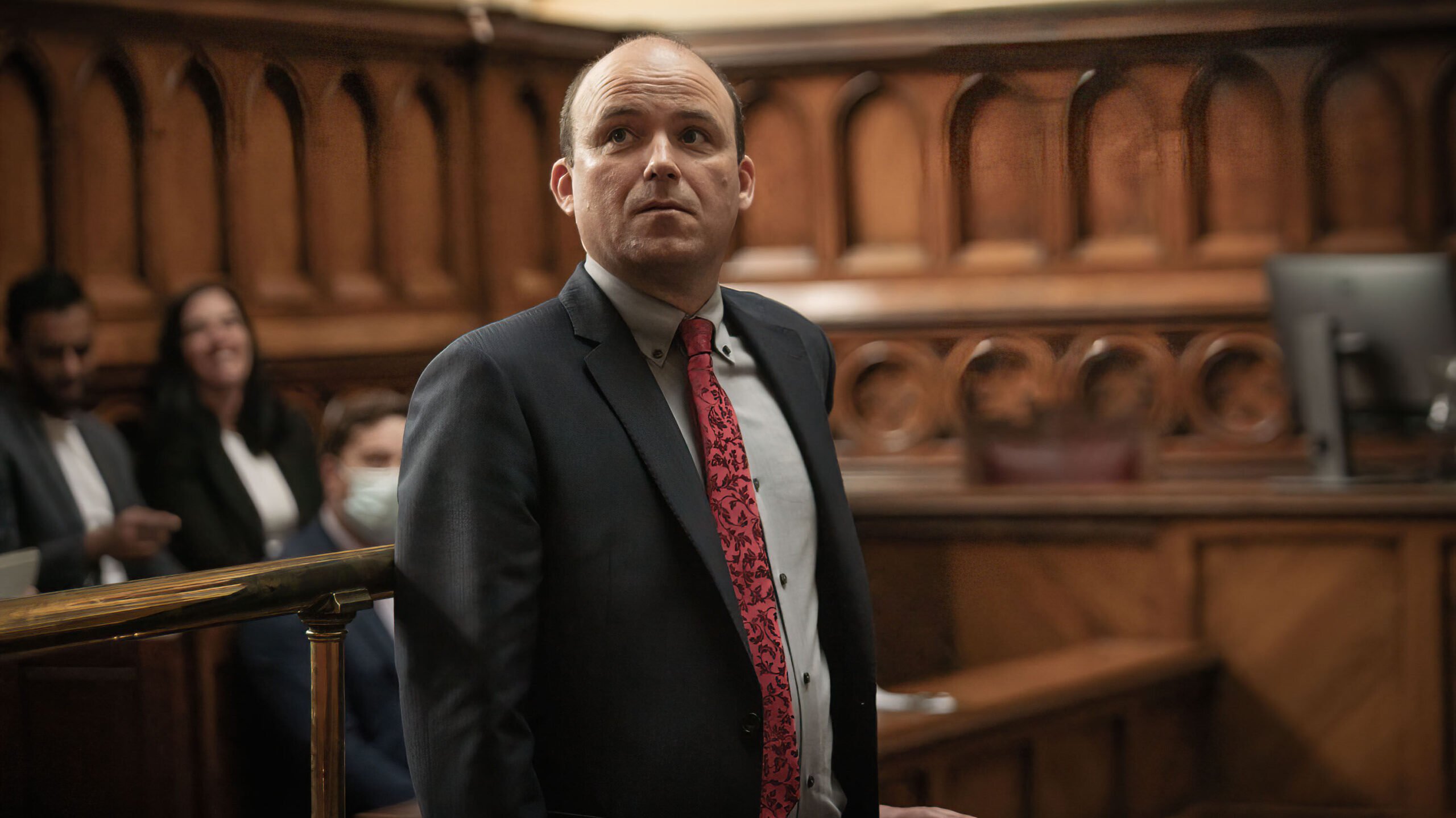
Juror #2 is the kind of film that doesn’t waste time: it’s immediately compelling as it throws questions about morality, guilt, and conscience straight to your face. There are familiar people in this stacked cast, including Chris Messina and J.K. Simmons, but it’s Nicholas Hoult as the titular second juror and Toni Collete as the ambitious prosecutor who stand out. The weight of the film’s heavy questions lies on their shoulders, and they convey every feeling—from doubt and remorse to exaltation and hope—with painful clarity. I only the film hadn’t taken the easy way out, and that the debate among the jury could have been thornier and trickier, but as it is, Juror #2 is a compelling addition to our book of excellent courtroom dramas.
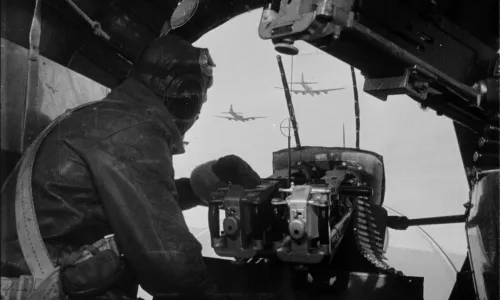
The late, great William Friedkin’s final film is staged with all the military precision of its naval court setting. We never leave the courtroom from the moment we’re plunged into it — the first minute — meaning the contentious action around which the film revolves happens only in our imagination, spurred on by the competing accounts of Lieutenant Maryk (Jake Lacy) and Commander Queeg (Kiefer Sutherland). Maryk is accused of mutiny, but, as he tells it, he only seized command from Queeg during a typhoon because he feared that the Commander was experiencing an episode of mental instability that would endanger the lives of everyone onboard.
The lack of flashbacks to this crucial moment places the burden of bearing out the truth on the cast, which includes Jason Clarke as Maryk’s lawyer, Monica Raymund as Queeg’s counsel, and Lance Reddick — the naturally authoritative late actor to whom the film is dedicated — as the judge. The film’s lack of visual pizzazz is to its advantage, then, because it allows this excellent cast (and Friedkin’s searing script) to flex under the full, burning gaze of the spotlight. Clarke, in particular, emerges as the standout as the reluctant navy lawyer — a man caught between the impulse to expose one truth and conceal another.
A powerful but quiet movie directed by Paul Dano and based on a novel of the same name by Richard Ford. It stars Carey Mulligan and Jake Gyllenhaal as a couple who move to a new town with their only child during the 1960s. Their relationship transforms after Gyllenhaal’s character loses his job as a butler and chooses to leave for a more dangerous profession, firefighting. This movie is about his wife’s response to this event and the implications of both parents’ behavior on their kid. There are no twists or turns, exciting action or plot; but Wildlife doesn’t need any of that. This moving story about a decaying family unit is portrayed in the sadness that comes with such events. The only joy comes from watching the outstanding (but expected) performances of the cast.
Minari is a film written and directed by Lee Isaac Chung, about a Korean-American family in search of the so-called American Dream. It is an intimate drama that is powerful yet quiet, and filled with moments of innocence. With dreamlike scoring, unique characters, and a captivating climax, this movie tugs on the heartstrings, and serves as a great reminder of the beauty of gratitude.
Thanks to these, plus winning performances across the board, Minari earned plenty of nominations at the 2021 Oscars, with Youn Yuh-jung eventually bagging the Best Supporting Actress award—a monumental first for South Korea.
To Hollywood’s shame, it wasn’t until 1998 that a major feature made by Native American filmmakers was released. It was this charming indie gem that belatedly broke that new ground: based on author Sherman Alexie’s The Lone Ranger and Tonto Fistfight in Heaven, Smoke Signals retains the irreverent humor hinted at in its source material’s title while also being a genuinely heartfelt drama. Set across two cleverly interweaving timelines, it follows the fraught relationship between Victor and Thomas, two young men living on Idaho’s Coeur d’Alene Reservation who are forever linked by tragedy: as a baby, Thomas was saved from the house fire that killed his parents by Victor’s father Arnold (a great Gary Farmer), who soon spiraled into alcoholism and abandoned his young son. When Arnold dies suddenly, then, the duo embark on a perspective-changing road trip to collect his ashes.
Thomas’ nerdy earnestness and happy-go-lucky personality have always gotten on the nerves of the stoic Victor — who’s eaten up by resentment at his father for leaving — but the trip brings the disparate duo together. Though the movie honors their meaningful journey with a serious dramatic focus, it’s also shot through with sharp humor satirizing clichés about Native American people — a tonal complexity that makes it uncommonly accomplished, even without the added value of its all-too-rare perspective.
Watching Love at First Sight, there are times you catch it almost falling into eye-rolling clichés, like when Hadley loses Oliver’s number or when their first kiss is interrupted by someone suddenly opening the door. But the film’s self-assured and self-aware charm subverts conventions and saves it from being just another cheesy rom-com you’d sooner skip on Netflix. The statistic-heavy narration by Jameela Jamil manages to be both amusing and romantic, and casting Jamil as an omnipresent chameleon who is fate-personified is an inspired move that helps the film move along smoothly. Though they lack sensual chemistry, Richardson and Hardy are individually, abundantly charming. It’s hard not to be moved by their stories, as common as they may be in movies like this. Love at First Sight is fluffy and familiar, but it is also the sort of heartwarming fare you’ll want to watch again and again, especially at Christmastime, when the movie is set.
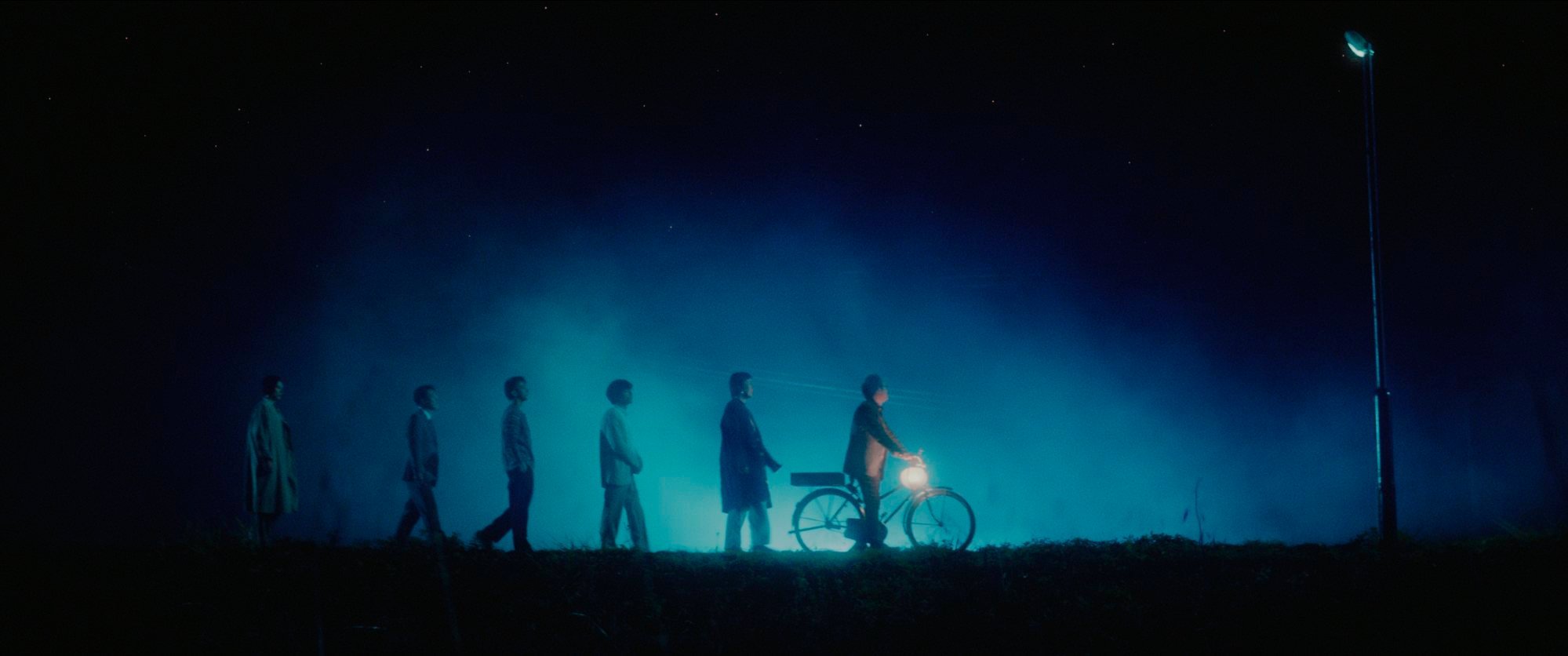
Unlike plenty of time torn films, Maboroshi is the kind of film that doesn’t have a straightforward explanation for the town of Mifuse standing still in time. But even when it doesn’t have a logical reason, the way the film unfolds has a distinct feeling as it explores the illusions the town either could cling to, or release to grow. This kind of storytelling would be familiar to fans of the prolific screenwriter Mari Okada, who just started directing in 2018 with Maquia: When the Promised Flower Blooms, but even those new to her work would appreciate the pure emotion driving Maboroshi, if they can let go of reality and enjoy MAPPA’s exquisite art for a moment.
This is a documentary with a dark underbelly. When Bobby Shafran goes on his first day at college, everyone seems to recognize him. The person they’re actually recognizing is his twin brother, as the two were separated at birth by an adoption agency. A third brother surfaces to make the story even crazier, but things take a darker turn when questions arise about why they were separated as toddlers and to what end. If it wasn’t a documentary, this story would be an unusual science fiction on the themes of identity and nature vs. nurture.
You wouldn’t expect two old men discussing God and politics to be deeply intriguing, but I suppose it’s different when you have Hopkins and Pryce leading the whole thing. Nothing overly dramatic happens between the two (those parts are saved for the flashbacks, which are just as compelling), but they manage to make every discussion, every point, and even every word feel heavy with the weight of their guilt and hope. These two are proof that good acting can be carried by the tiniest lilt in tone and shift in gesture. You don’t have to be a Catholic or be interested in God at all to appreciate the great performance and touching vulnerability at the heart of The Two Popes.
Set in 1970s Italian countryside, this is a quirky movie that’s full of plot twists.
Lazzaro is a dedicated worker at a tobacco estate. His village has been indebted to a marquise and like everyone else, he works without a wage and in arduous conditions.
Lazzaro strikes a friendship with the son of the marquise, who, in an act of rebellion against his mother, decides to fake his own kidnapping. The two form an unlikely friendship in a story that mixes magical realism with social commentary.
While many Palestinians had to leave their homeland, there are some families that stayed within the region. One such family is that of Palestinian director Elia Suleiman. The Time That Remains is a semi-biographical film that depicts each generation of the family in excellently framed, colorful shots, but while each scene is a beauty to watch, there’s an ugly undercurrent with the way one group is treated over the other. The film contrasts the stoic actions of Elia’s father Fuad and that of the Israeli soldiers, teachers, and nurses around them, and the contrast channels a dry sort of humor that pokes at the absurdity the occupation places 20% of its citizens through. It’s a smart, subtle way to depict the rage felt by the many people that remained in the area, as well as the sadness they must have felt with the loss, the pain, and the displacement they’ve gone through.
The fantasy of being able to have the body you once had is impossible in real life, but we can watch it play out in fiction. While previous depictions of this idea rightfully point out ageism and how much worse people treat the old, Miss Granny also celebrates the wisdom and experience that could only come from the years Oh Mal-soon has gone through, through an engaging script and the quirky performance of Shim Eun-kyung. It’s so funny seeing people taken aback, surprised, and astounded by old Oh Mal-soon in her young body, but what makes it work is the way director Hwang Dong-hyuk introduces her to us bit by bit, crafting a character that at first glance seemed to be a rude and controlling grandma, but is actually a woman that didn’t get to enjoy her youth due to the sacrifices she made for her loved ones. Miss Granny makes the case that there are timeless things that we can return to and appreciate, but there are also things that we’re willing to let go of our youth for.
Chinese artist Ai Weiwei directs his attention towards the ongoing refugee crisis, the biggest displacement of people since World War II. His documentary is apolitical and tries to focus on the human side of the picture. It’s not a news report or a commentary on the causes of the situation. Instead, it’s a combination of heartfelt stories spanning 23 countries that showcase people’s battle for dignity and basic rights. A truly epic movie complemented by impressive drone footage that’s as impressive as it is sad.
The Breadwinner is as beautiful as it is heartbreaking. The animation is magical as it seamlessly jumps back and forth between Parvana’s stark reality and richly detailed fantasy. It’s a wonder to just look at, but it’s a tapestry brought to life by the story at the center of it.
Set in 2001, at the height of Taliban rule in Afghanistan, the film follows Parvana, a young girl driven to desperate measures to keep her family alive. Because of the violent restrictions imposed on women (they’re not allowed to buy, sell, study, or practically do anything without a male chaperone), Parvana disguises herself as a boy so she can work for a living. The more she gets away with it, the bolder her attempts get. It’s a story of survival and standing up, but it’s also a sobering reminder of what fundamentalism is capable of doing (or more accurately, ruining). As long as cruel systems like this are taking place in the world, Breadwinner remains essential viewing for all.
Undefeated won an Oscar but since it’s a documentary, few sadly paid attention to it. It tells the story of a football team in a poor area in Tennessee. Kids without a bright future, until the new coach arrives. Yes, that sounds like a very old, cliché tale. But keep in mind it is a documentary, and the story it tells is powerful, gripping, and any familiarity quickly becomes irrelevant. Even if you have no interest in American football, or in sports in general, you will love it and more than likely find yourself reaching for the Kleenex at least a few times before the credits roll.
There’s a pervasive myth in movies that struggle (financial, physical, or otherwise) makes you stronger, but the truth is that struggle makes you weaker. Adversity makes you more resilient and resourceful, sure, but it takes a lot more to be stronger. The Fire Inside, a biopic about American Olympic athlete Ressa Shields, understands that truth, so instead of being a romanticized rags-to-riches picture, it’s instead a sympathetic and thoughtful film about how Shields and her trainer, Jason Crutchfield, navigate the many hurdles and biases that they encounter as a Black and poverty-stricken athletic team. The film is a sports drama, but the excellent dialogue (written by award-winning filmmaker Barry Jenkins) hits just as much as the boxing scenes. Unlike most sports movies, The Fire Inside’s story doesn’t stop at the crucial match—we get to see how Shield fares after all the hype and fanfare, which makes it all the more compelling and memorable.
Known for his horror films, Kiyoshi Kurosawa shifts gears and presents a family drama in Tokyo Sonata. In the film, father Ryuhei, who’s expected to be the breadwinner, loses his prestigious job and chooses to hide his firing from his family. While this premise isn’t overtly scary, the film understands the terror of being unable to maintain the current comforts of your family. And the consequences: lose your status (at best) or your life (at worst). Teruyuki Kagawa’s performance crystallizes that sense of losing control, as each expression on his face betrays how secretly afraid Ryuhei feels. The disasters that this family faces threaten to never stop, and Kurosawa executes them perfectly through excellent story structure and performance.
As a popular fairytale, Snow White has been depicted many, many times, but never quite like the 2012 Spanish film Blancanieves. For starters, it’s the only version where the titular lady is a bullfighter. It was also made as a black-and-white silent drama at a time when color and sound are the norm. But beyond these immediate differences, Blancanieves transforms the original fairytale into a mortifying body horror, where love can’t overcome the body’s destruction, and where death isn’t the only terror that awaits. Blancanieves won’t be the Snow White you remember, but she will be a version you won’t forget.
A slice-of-life true-story-based film on growing old and in love. When on his own land, Craig Morrison (played by James Cromwell) starts building a more convenient house for his ailing wife Irene (Geneviève Bujold), he is faced with crippling bureaucracy. The state gives him the choice between stopping the construction or going to jail, while he is witnessing his wife’s health deteriorating even further. The act of going against the system brings out both how beautiful his relationship with his wife is, as well as his own resilience in this moving, insightful drama.
Even a director of William Friedkin’s caliber had his work cut out for him with this remake of the towering 1957 drama tracking a jury’s fraught deliberations in an apparently open-and-shut murder trial. Wisely, he changes little: most of the incisive dialogue remains the same, and the film still only takes place in one sweltering room on New York’s hottest day.
There are some key differences, though: namely, in a few of the characters (most notably Mykelti Williamson’s ex-Nation of Islam member Juror #10, who helps update the story to the ’90s) and the intensification of the ensemble’s star power. The all-star quality of the cast is never wielded to call attention to itself, though; everyone, from James Gandolfini and William Petersen to Tony Danza and Edward James Olmos is on fine character acting form here. Replacing the unforgettable Henry Fonda is Jack Lemmon (exuding warmth and good sense) as the principled lone dissenter who calmly wages a war of words with George C. Scott’s bigoted Juror #3 to give real justice a chance. The 1957 version is admittedly a timeless classic, but Friedkin’s version isn’t very far off from reaching its predecessor’s dazzling heft — plus, this stands as a compelling argument that every era should have its own 12 Angry Men.
Shooting Stars may be based on LeBron James’ account of his teenage years, but this adaption by Chris Robinson is more than just a vanity project. In fact, James is hardly the lead here—every one of his friends gets a chance to shine in this coming-of-age story about brotherhood and friendship. It’s closer to films like Boyz N the Hood and Stand By Me in that way, but that’s not to say it’s a letdown in the sports department. The games are choreographed beautifully; the actors display wonderful athleticism and the filmmakers employ various camera techniques that never fail to surprise. There are times, though, that these techniques distract more than excite, and there is a sense that the film could’ve benefited from a more pared-down style. But this ultimately doesn’t take away from the film’s tender and thrilling story.
Loosely inspired by her childhood in French Africa, Claire Denis’ directorial debut Chocolat fittingly depicts this past through the perspective of a young child named France. She captures that viewpoint through a series of memories, through warm and beautifully shot moments in summer, but many of these instances take on a subtle dimension. For a child, it would have been vague and incomprehensible, but for the grown adults watching, there’s a distinct tension that simmeres underneath, as the older characters have to act within and chafe against the racial, sexual, and linguistic boundaries set by an unjust colonial system. Chocolat captures these restraints with sublime subtlety.
When depicting war and faith, it seems like men are the only ones that have to undertake these challenges, at least it seems, in the stories made available about these topics. But that simply isn’t true. The Innocents is one of the few reminders that, while women might have been kept from the front lines, war has spared no one. Through stark and wintry shots, and a solemn direction, writer-director Anne Fontaine crafts tense conversations between an atheist doctor and her nun patients, making all of them reckon with the ways trauma has shifted their present principles and future actions, in a sensitive way that has rarely been seen before. While the resolution can come across as a bit too sudden, The Innocents nonetheless is a compelling study of faith.
At the height of the 1997 Asian financial crisis, a small Singaporean family scrambles to keep their middle-class status afloat. The parents shave their expenses and work extra-long hours, but their busyness causes them to neglect their misbehaved son. When his misdemeanors prove to be too much, the mother is forced to hire a stay-at-home nanny, and her presence (along with other external pressures) brings about a change in the house. Suddenly, everyone becomes a bit more aware of their limitations and potential, and from this, a shared empathy grows. In other hands, this story might come off as bare and forgettable, but under first-time-feature director Anthony Chen’s helm, Ilo Ilo comes to life in rich detail, thoughtful shots, and captivatingly natural performances. Despite its many heartbreaking scenes, the film rarely dwells in sentiment, and it’s this restraint that makes Ilo Ilo all the more gripping to watch.
After being held captive his whole life, a man sets out to finish the only show he’s ever seen. Thoughtfully written with a creative cast; it is not a film you would expect to laugh at and enjoy so thoroughly with such an unconventionally dark premise. However, it is a hilarious, wholesome, and loving film that will leave your heart feeling warm.
The Chaser is a police procedural, but it’s one of the more brutal ones we’ve seen. It isn’t because the crimes depicted are heinous, though they are, and writer-director Na Hong-jin doesn’t shy away from capturing the terror of the serial killer’s crimes. And it isn’t because the main person on the case isn’t police at all but a disgraced cop turned pimp, pulled into it only to find the girls he’s missing. No, it’s because the actual police mess up their own investigation. As Joong-ho learns more about the man he’s searching for, each scene proves the incompetence, the politicking, and the corruption that keeps his former comrades one step behind, and that kept himself from the profession. The Chaser understands what’s at stake each time a case like this occurs.
Amour is about Anne and Georges, an elderly couple who face challenges in their relationship after Anne suffers a debilitating stroke. They’re portrayed by Emmanuelle Riva and Jean-Louis Trintignant in what can only be described as a masterclass in acting. It’s a challenging story but it’s a realistic portrayal of love later in life and in the face of time.
Directed by Michael Haneke, the movie was met with widespread acclaim from critics when it came out in 2012, winning the Palme d’Or as well as the Oscar for Best Foreign Language Film.
Best known for landmark cyberpunk anime Akira, Katsuhiro Otomo crafted strange and terrifying visions of a world that has not yet come, imagining technology that surpassed that of today, but in much pessimistic light compared to that of the genre. Three of his manga short stories are depicted in Memories, with Otomo partnering with Kōji Morimoto and Tensai Okamura to direct each segment, and with Satoshi Kon in writing, just before Kon’s own iconic surrealist films. Kon-written Magnetic Rose has been universally acknowledged as the best of them, being much more emotionally poignant, but the other two does have its charms, as Stink Bomb takes a relatively silly premise to its fairly logical, but scary conclusion, and Cannon Fodder takes the beauty of Otomo’s art into such a hollow and ugly world. All three deliver terrifying omens of death through technology used against the everyday man, whether by accident or design.
Best in Show’s cast list reads like a catalog of comic greats. Among others, it includes Parker Posey, Jane Lynch, John Michael Higgins, Jennifer Coolidge, and the unbeatable duo that is Catherine O’Hara and Eugene Levy. Their participation alone should you clue in on what kind of film this is: a delightful exercise in improvisational comedy. The jokes roll in fast and the spoofs are spot-on (Parker Posey gets a special mention for playing the faux-calm handler with rage issues bubbling up to a tee). And thanks to the mockumentary format, they’re supported by an abundance of visual gags.
The cherry on top of this fun sundae is the adorable dogs who amusingly participate in human shenanigans. If you’re ever looking for a watch that is equal parts comedic and cute, then this underrated comedy gem of a film could be it.
Crushes seem much more important when you’re young, and when you and your sibling share one, it easily alters your dynamic, with the jealousy, comparison, and the insecurity it can foster. The Man in the Moon tackles this childhood crush with care. Writer Jenny Wingfield and director Robert Mulligan characterize each kid with consideration befitting their ages, with an understanding of the different priorities they would have with a three year age gap, the feelings they would have, and the misunderstandings they would have with each other. And this all works because of Reese Witherspoon, who even then held a screen presence that made her into a star.
The entirety of Pieces of April takes place on Thanksgiving Day, a busy holiday meant to bring loved ones together. Sure enough, April, the eldest Burns daughter, takes great pains to prepare a nice dinner for her visiting family. But we soon learn that she is motivated less by excitement than by dread: she’s long been estranged, disowned even, by her uptight mother, Joy, who is only agreeing to come because she’s sick with cancer. April seems to be on a reluctant mission to fix their fraught relationship, but pesky (albeit funny) mishaps, both on her and Joy’s end, keep getting in the way.
Shot digitally and very closely with hand-held cameras, Pieces of April looks as intimate as it feels. It’s a snapshot of an era and of a particular family dynamic, one that relatably relies on both love and scorn to keep going. It’s an excellent, honest, and underrated gem of a movie.
There are far too many things that are worse in life than being on a journey with Danish super talent Mads Mikkelsen (Hannibal, The Hunt).
And that is what this 98-minute movie is: an almost one-actor movie set in the arctic. Mikkelsen plays a man trying to survive a plane crash, which at some point becomes about deciding whether to embark on a dangerous journey or stay in the plane rubble and risk a slow death.
It’s an extremely well-acted movie with nail-biting suspense. Bonus fact: it received a 10-minute standing ovation when it premiered at the Cannes film festival this year.
Eddington and Einstein is a TV movie co-produced by HBO and the BBC, and you can tell. It has a humble setup, costume design, and style of editing, but it’s elevated by a smart script and strong performances. You can’t go wrong with Tennant and Serkis, although it is unfortunate that they rarely share a screen here. The movie parallels their discoveries, shedding light into the drama of their personal lives as well—Einstein with his love for a woman other than his wife, Eddington with his forbidden love for his friend William. These parts tend to get soapy, but scenes where they almost seemed possessed with scientific knowledge more than make up for it. Another drawback is the terrible misuse of Rebecca Hall, relegated here as Woman Who Pushes Male Lead To Follow His Heart, but again, all is forgiven when you see Eddington and Einstein in action. You can almost hear the whir of their clockwork brains when they think of something new to ground Einstein’s theory of relativity.
Horror movies have always been creepier to me when they play on our fear of the “unknown” rather than gore. Under The Shadow does exactly that. The story is based around the relationship of a woman, Shideh, and her daughter, Dorsa, under the backdrop of the Iran-Iraq war. As widespread bombings shake the ground beneath their feet, the two grapple with a more insidious evil that is faceless and traceless, coming and going only with the wind. The movie’s dread-effect plays strongly on feelings of isolation and helplessness. The scares are slow and it’s obvious the director takes great care in making every single second count and in raising the unpredictableness of the action. Like the bombs, the audience never knows when or how the next apparition will materialize. The former is always on the edge of fear, wondering what is no doubt there, but is yet to be shown on the frame. In terms of significance, Under The Shadow features too many symbolisms to count and will most likely resonate with each person differently. But one thing remains relatively unarguable: this is a wonderful movie.


x2
x1