Movies to Watch From Italy
To access filters, visit our homepage.
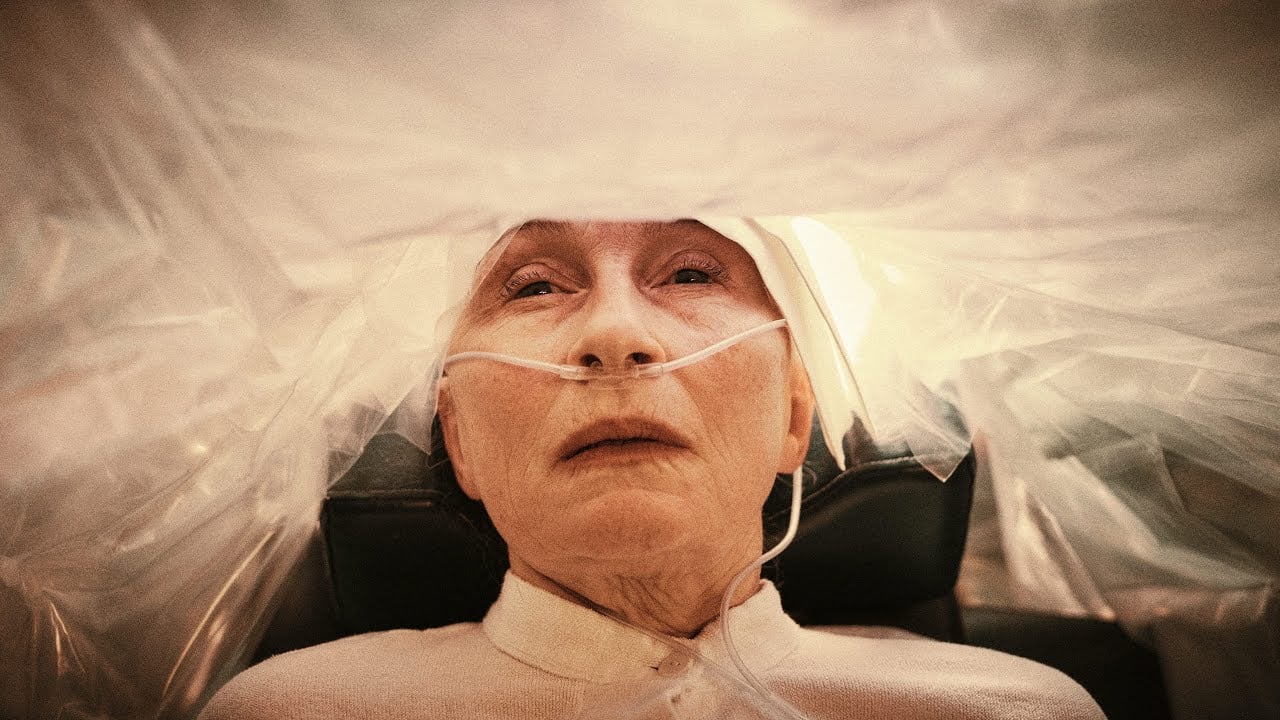
In his last few months as president, Mariano de Santis has a few loose ends to tie up. This includes the pardon of two murderers and the signing of a euthanasia bill into law. Both are important topics, yes, but La Grazia is more interested in how reluctant this fictional president is in finishing up his term. In lingering shots and moments of silent contemplation, director Paolo Sorrentino studies this man in his despair, honing into Toni Servillo’s every expression in the wider spaces we find him in. It’s clear that part of his hesitancy stems from his personal despair. De Santis is painted as a dutiful jurist, who has diligently pursued the spirit of the law, but his unresolved agony– the infidelity of his late wife– confounds him, pushes him to cling onto that injustice while blinding him to his children, his best friend, and other personal relationships. Where other films separate the personal and political, La Grazia understands how both bleed into each other, through crafting a unique existential crisis from the most important man in the country.
With a movie adaptation released earlier in the same year, this miniseries version of the classic French novel was overlooked. It makes sense– the movie came directly from the native country and three hours is easier to watch than eight. However, The Count of Monte Cristo is a story that spans decades and countries, making the miniseries format much more fitting to adapt over a thousand pages. Instead of speeding through the novel, this series gets to linger in many of the important moments, with excellent performances from across the entire continent to expand on the entire ensemble. This is not to dismiss the French submission to the Academy Award. If anything, it’s nice to have options. We recommend this one if you’re not a French speaker, and if you prefer more detail from book-to-screen adaptations.
All We Imagine as Light is a political film that has many smart and moving things to say about the loneliness of migrating from the country to the city, the double standards women face on the daily, and the ever-widening gap between the rich and poor. But thanks to director Payal Kapadia’s deft hands, these weighty themes don’t hit you like a brick in the face. Intertwined in the rich inner lives of the two Malayali nurses and the Marathi cook who lead the film, they come off as subtle and poetic, like everything else about the film. There’s a quiet power at work here, and it will entrance you till the end.
This World Can’t Tear Me Down is a timely release on friendship, punk, and anti-fascism. From the Italian cartoonist Zerocalcare, his second Netflix show shifts his musings over mental health to his experiences with regard to the country’s rising neo-Nazism. As xenophobia tears his friend group, it’s easy to feel the fear and self-doubt Zero’s cartoon counterpart feels. It’s easy as well to empathize with Sarah and Cesare, characters failed by the system around them. In many ways, they themselves feel like they haven’t met their potential. But the show suggests that perhaps status and achievement aren’t what being successful is all about– it’s about holding onto principles. Through punk soundtracks and shifts between stop motion and 90s cartoon style, This World Can’t Tear Me Down captures the millennial generation’s bewilderment, as well as their hope.
With years of films depicting Italian crime syndicates, most focus on their leaders – the Dons, the Capos, and the Consiglieres. Most of them focus on the mafia’s men. However, in this series, it’s the women who are the stars of the show. Based on the novel of the same name, The Good Mothers is a compelling crime drama, focused on the women, not the men, of the ‘Ndrangheta clan. It’s from their perspective we see the mafia. The masterful way the series unfolds makes it clear that their lives are constrained, that this dated way of life still prioritizes the family over their individual women. It makes it all the more satisfying when they’re given the opportunity to retaliate, and when they choose to take that opportunity. And it’s so much better knowing that this was real.
While the market for animation is mostly dominated by American 3D and Japanese anime, once in a while, a film outside the two industries comes up with an entirely new style of its own, with the design inspired by their respective countries. European animation has garnered some interest with Loving Vincent, but Chicken with Linda! takes it further, taking a more vibrant than impressionistic approach to its art. Somewhat like a neon-colored Fauvist Madeline, the film proceeds with a series of hijinks that wouldn’t be out of place in a children’s storybook, but it charmingly captures the mother-daughter relationship healed through the power of homemade food. It’s sweet and chaotic, much like childhood and the art movement that inspired the film, and it’s undeniably human. Chicken with Linda! is an unexpected delight for both kids and adults.
La Chimera is often meandering. Scenes flitter about and move at different paces, resembling dreams more than they do reality, but they’re hardly trivial. Just the opposite, they enchant you with their beauty and confront you with deep, existential questions that haunt you long after the film’s run. You won’t find obvious answers here though, and you might even leave more perplexed than when you began. But that is the beauty of a film like La Chimera, it cracks you open to different realms and possibilities.
Based on a novel, The Lying Life of Adults might feel, at first, like a standard Netflix coming-of-age series, complete with vintage styling (the 90’s, this time) and teenage shenanigans, like skipping classes, preoccupation over sex, and rebelling against parental disapproval. Sure, the show does go through these moments, but the writing of original novelist Elena Ferrante, with the assistance of the writing team and showrunner Edoardo De Angelis, elevates this template through its subtleties, as Giovanna visits her estranged aunt Vittoria, and compares and contrasts the way she lives, with the way her parents approach life. It’s both a portrait of a divided family, but also one of a divided city, and it makes Giovanna’s coming-of-age a more nuanced journey that we haven’t seen before.
Fast and funny with surprisingly tender moments in between, Mixed by Erry doubles as a fascinating period piece and a heartfelt family comedy. On a larger scale, it tracks the rise of musical piracy, which Erry and his brothers accidentally stumble onto with their cassette-copying business, Mixed by Erry. But what starts out as an innovative trade fueled by Erry’s love for music—Erry himself is like a Spotify algorithm come to life, instantly creating mix tapes for people based on what they like—soon transforms into a legal threat that catches the ire of record labels and finance regulators alike. It sounds thrilling and complicated, but the film’s lofty premise is grounded by the relatable dreams Erry and his brothers share. They genuinely believe they’re doing nothing wrong by distributing music and boosting the local economy, and as naive and misguided as that may be, there’s something heartwarming about their intentions. The film itself doesn’t take sides. Instead, it acknowledges the situation for what it is—a landmark case in musical history ripe with educational and entertaining moments.
The way we are introduced to sex does shape the way sex features in our lives, whether that be an unintended glimpse into the wrong room, or an accidental encounter to NSFW media, or a proper discussion towards sex. Being inspired by, but not entirely accurate to the life of prolific Italian porn star Rocco Siffredi, sex is central to Supersex not just as his job, but as the way his family, relationships, and his concept of love is irrevocably affected by it. It’s fixated on sex, yes, but showrunner Francesca Manieri stirs the discussion not towards how hot it can be, but towards the various ways sex affirms and negates his masculinity, as well as the conceptions that determine that, and how it can slip into vice rather than healthy pleasure. There are moments where the series falters, particularly the way it depicts internalized homophobia, but overall, Supersex is a well-meaning exploration of sex work and masculinity.
This six-episode whodunit isn’t breaking any new ground, but it’s entertaining and engaging, especially with the rebellious Lidia Poët (Matilda De Angelis) as the lead. She’s smart and determined but not wholly immune to weaknesses—a sort of Enola Holmes for the more mature crowd. Her story is also a timeless reminder of the uphill battle women have fought (and are continuing to fight) for visibility and equality.
The familiar setup might also work for classic mystery fans. It’s a treat to dive into each episode knowing a new case is to be solved and a new lesson to be learned. The ending might be predictable at times, but this is one of those shows where the journey matters more than the destination. Italy in the early 20th century was a surprisingly restrictive and patriarchal society, making Lidia’s successes all the more noteworthy and resonant.
It’s a bold move, centering a drama around a creature as docile as a donkey, but EO pulls it off without ever leaning on the crutch of CGI. Instead, the film makes ingenious use of a hundred-year-old film technique: the Kuleshov effect. By splicing the image of the titular donkey’s placid, expressionless face against visual stimulus, the illusion of a genuine reaction is produced.
But don’t be mistaken: this is no twee Disney-esque tale of anthropomorphism. Inspired by the classic Au Hasard Balthasar, EO tracks the haphazard journey of a former circus donkey across Europe — one that is often depicted in surreal psychedelic reds instead of idyllic picture-book tones, and punctured by more horrors than joys (though we do, thankfully, get to see him munch away on some well-deserved carrot treats). EO’s docility frames him as a kind of holy innocent, making the cruelty meted out to him feel all the more like a grave violation of something sacrosanct. Seeing the world through his oft-neglected perspective also makes this a movie about humans by proxy — a fresh, empathetic approach that, even in its obvious dramatic liberties, makes us meditate on both the depth of experience that may be unfolding in our animal neighbors and our role in shaping it.
It’s an incredible story, but it’s one that only really deserves to be told a certain way, which director Arthur Harari gets right. Onoda’s one-man crusade to continue World War II is nothing short of delusional, and Harari spends most of the film following the soldier as his companions die one by one, worsening his delusions even further. Unfortunately, even with how impressively strange this story is, 10,000 Nights in the Jungle still misses the opportunity to look through the lens of Onoda’s victims. He is, after all, a literal embodiment of colonization’s lingering effects, so it’s sad that the Philippines here is just window dressing more than anything.
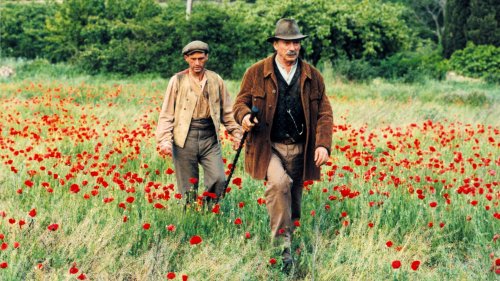
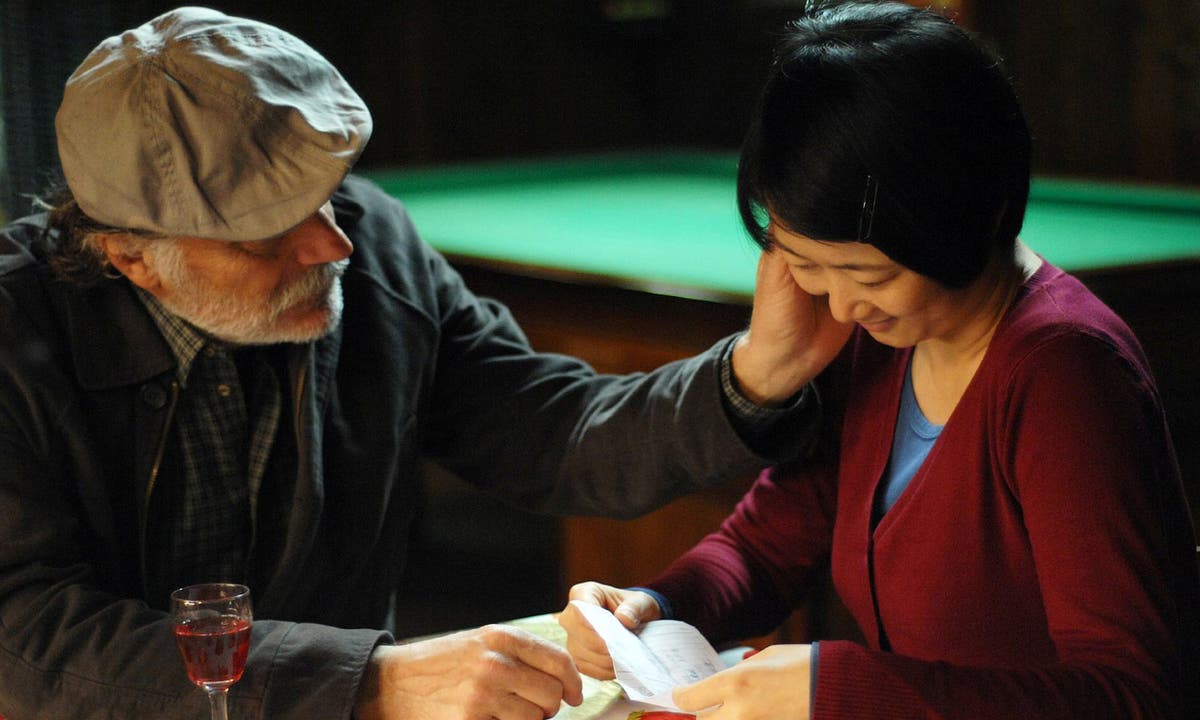
With truffle being so expensive, you would think that the world would eventually figure out how to get this tasty fungi in a more efficient way. Yet, the finicky nature of truffle eludes scientific research, improved cultivation, and strategic supply logistics, only allowing access to a select group of senior men and their very good dogs. The Truffle Hunters depicts the precariousness of this industry, how the entire endeavor can be easily lost to time, climate, and secrecy, but through delving into their lives, through unobstrusively capturing their day-to-day lives in gorgeous, meticulously framed shots that quietly celebrates their charming personalities, The Truffle Hunters becomes a small glimpse into a life that’s lost to urban living, a life that, perhaps, might be worth returning to.
How far would you go for the people that you love? Regardless of the answer, whether that would be one mile, five hundred, or five hundred more, the distance won’t matter if there’s something that blocks you. 200 Meters is a drive with the titular length, it’s not even longer than a mile. But it feels so much longer. Writer-director Ameen Nayfeh does just straightforwardly present these hurdles– the permits required, the time limits allowed, and the tollways guarded– but that’s just because the actual path to get there isn’t straightforward at all, transforming a drive to somewhat closer to an intense rescue operation with the plot, the score, and the performances by the cast. 200 Meters isn’t as harrowing as dramas about occupation are, but it’s because of this that Nayfeh can delve into the day-to-day nuances people like Mustafa must face.
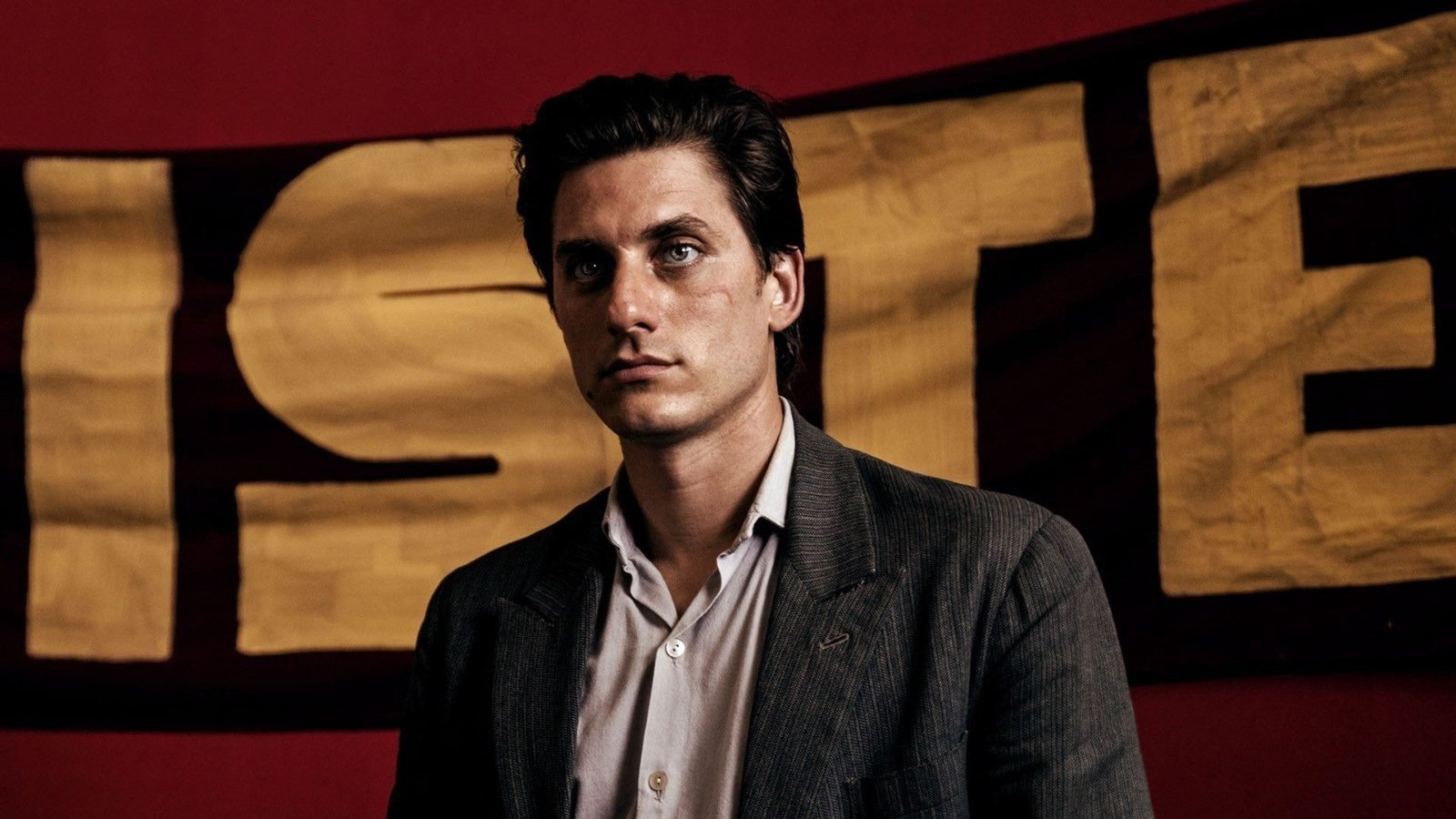
Spanning over decades and continents, The Eight Mountains depicts the kind of childhood friendship that remains central to one’s whole world. While city boy Pietro (Luca Marinelli) treks from the Alps to the Himalayas, the mountain pasture of Grana remains special as his father’s old refuge and as the hometown of childhood best friend Bruno (Alessandro Borghi). When they were younger, the two struck a summer friendship as the only two boys in the small town. However, their friendship isn’t the kind formed through day-to-day, routine interactions. Instead, each moment they share is fleeting, cut short by circumstances, but therefore, all the more precious. Co-directors Felix van Groeningen and Charlotte Vandermeersch slowly and patiently craft intermittent moments that form a lifelong friendship. And at the end, when they last bring us back to Grana, these moments are all we have left of this profound, meaningful connection.
A relatively straightforward story of a village of Sotho people building the courage to resist unwanted development on their land and the erasure of their culture, the rousingly titled This Is Not a Burial, It’s a Resurrection wastes no time on the oppressors’ point of view. For director Lemohang Jeremiah Mosese, there is no debate: these people are more important than any markers of progress hoping to displace them. Their struggle is rendered in some of the most crisp and colorful cinematography you could hope to see, with a powerful performance by the late, great Mary Twala front and center, channeling so much sadness into fury and determination.
There is a warm glow and a languid mood about We Are Who We Are that makes it feel familiar for anyone who’s seen Luca Guadagnino’s works. But this eight-part series is longer than the auteur’s films (a stacked list that includes Call Me By Your Name and Bones and All), and so it can feel slow at times, dragging even. Still, it’s easy to forgive because of the relatable characters that lead the show. They’re confused, curious, and willing to bend their identities forward and back to learn something true about themselves. Nothing is set in stone here, neither gender, relationships, or politics, but that’s what makes it so validating to watch. It’s a complex picture—pretty but complex, as life often can be.
The Hand of God is the autobiographical movie from Paolo Sarrantino, the director of the 2013 masterpiece The Great Beauty. He recently also directed The Young Pope with Jude Law and Youth Paul Dano, both in English. He is back to his home Italy with this one.
More precisely, he’s in his hometown Naples, in the 1980s, where awkward teenager Fabietto Schisa’s life is about to change: his city’s soccer team Napoli is buying the biggest footballer at the time, Diego Maradona.
Sarrantino, who is also from Naples, made this movie that is half a tribute to the city and half to what it meant growing up around the legend of Maradona.
The Hand of God is to Sarrantino what Roma was to Alfonso Cuarón, except it’s more vulgar, fun, and excessive. It is equally as personal though, and it goes from comedy to tragedy and back with unmatched ease.
In films made about celebrities befriending normal people, we’ve seen the dynamic play out romantically or tragically in the end. In this respect, Lurker is totally unpredictable. There are moments where the thriller seems to lead to one or the other, in part due to how ambiguous Oliver and Matthew’s relationship started, straddling the line between glorified groupie, collaborative creators, and actual friends. It’s also in part due to the performances of Théodore Pellerin and Archie Madekwe, which lends some believability towards the more extreme scenes later on. It’s actually funny as to how their dynamic ends up becoming, though for the sake of spoilers, all we will say is that Lurker truly captures how uniquely obsessive a parasocial relationship can be.
Two incredibly funny women are the stars of this authentic and heart-felt British comedy: writer, stand-up comedian, and main actress Aisling Bea, and the amazing Sharon Horgan (Catastrophe), who also co-produced the show. Irish teacher Áine (Bea) lives in London, yes, like Sharon Horgan’s character in Catastrophe, and works as an English-as-a-foreign-language teacher, but instead of getting knocked up by an American, she suffers a nervous breakdown and goes to rehab. When Áine checks out, she has to re-navigate all the aspects of real life that brought her to rehab in the first place. She does so with her sister Shona (Horgan) at her side. This is very clever and honest comedy about mental health, recovery, and loneliness, and about creating meaningful connections with the people around you. In true Bea and Horgan style, though, the humor is dark and will make you flinch and laugh at the same time. The chemistry between them is incredible!
The drug trade is international, but it is rarely portrayed as such on TV. Drug thrillers often take place in one country and in one or two languages (usually Spanish and English) – but in reality, there are producers, buyers, and sellers, all based in different parts of the world. So a show depicting the drug business in a realistic way should also move around the world. ZeroZeroZero is that. It’s a fast thriller set in many countries: The U.S., Italy, Mexico, Senegal, and Morocco to name a few. The stunning cinematography bounces between contexts seamlessly, telling a nihilistic yet thrilling story of a conflict that starts within the Italian Mafia.
After drawing controversy for the embellished, modern day-set Sound of Freedom, director Alejandro Monteverde and writer Rod Barr pivoted to the past to tell the story of Cabrini. It’s a straightforward biopic. It seemed like a safer story to tell, with the protagonist being a literal Catholic saint, who also happened to have an undisputed historical record of uplifting deeds. Francesca Cabrini is the sort of main character whose story writes itself. That being said, choosing to tell her particular story of helping immigrant orphans through her women-led order is an interesting choice at a time when immigration has become a point of contention. While rough in some scenes, Cabrini’s story proves to hold relevance in modern day America.
Earnest, beautiful, and tender, Luca Guadagnino’s Bones and All is many things: a road trip movie that sweeps the midwest deserts of 1980s America; a coming-of-age story that brings together two outsiders into an understanding world of their own; and a cannibal film that is unflinchingly flesh deep in its depiction of the practice. Bizarrely, these seemingly disparate elements work harmoniously to create a film that you won’t soon forget, not least because of its rawness.
As the aforementioned outsiders, Maren and Lee (Taylor Russell and Timothée Chalamet, respectively) are bewitching—individually sure but especially when they’re together. They have a bond that is quite difficult to replicate onscreen, charged as it is with so much chemistry and warmth. The background players also bring their a-game when called for, especially Mark Rylance as the disturbing stalker Sully, Michael Stuhlbarg as the creepy but good-willed Jake, and Chloë Sevigny as Maren’s stark mad mother.
It’s worth repeating that this movie goes all in on the gore, so steer clear if you don’t have the heart for these sorts of things. But if you do, the viewing experience is rewarding. Bones and All is as romantic as they get, and rather than bury its message, the many layers on top of its core serve as a meaningful puzzle to unpack and unravel long after the credits roll.
Terrence Malick (The Tree of Life) is back in full form with this three-hour movie based on a true story. His creation has one of the most beautiful depictions of happiness ever seen in film, portraying the simple yet joyous life of a farmer in the Austrian mountains. You’d have to see it for yourself to understand, but how Malick depicts this character’s love for his wife (and her love for him), their children, and even their farming rituals are nothing short of cinematic wizardry.
This peaceful existence changes when World War 2 intensifies and this farmer is called to serve for the Nazis. He refuses to enroll out of principle and puts himself and his family at great danger and alienation from their village. The question at the center of the film is one that other villagers and the church ask him a lot: what good can his actions do? And the title of the movie is taken from A George Eliot quote: “The growing good of the world is partly dependent on unhistoric acts; and that things are not so ill with you and me as they might have been, is half owing to the number who lived faithfully a hidden life, and rest in unvisited tombs.”
This wonderful Italian epic made by HBO was a huge hit in Italy but remains little-known elsewhere. It’s based on four famous books that tell the coming-of-age story of two brilliant girls who grow up in a poor suburb on Naples in the 1950s. It also has scenes from the current time where one of them mysteriously disappears. Amazing production value, acting, and story make this show so easy to get hooked to.
Abel Ferrara’s protagonists have always searched for higher meaning in a flawed, messed-up world of pain and violence. If 1992’s Bad Lieutenant took Harvey Keitel to church for one of American indie cinema’s most spectacular endings, Padre Pio doesn’t offer such solace. Ferrara (who’s been living and working in Rome for years now) teamed up with Italian screenwriter Maurizio Braucci to direct a period piece that brings together the real life of a Catholic Church saint (the titular Padre Pio) and the rise of socialism after WWI. What seems like a straightforward historical approach turns first gruesome and then profound to capture the contradictions at the heart of Italy as a nation. A character study that breaks free of its biographical chains, Padre Pio shows that Ferrara has still got it, 50 films in.
This fiery coming-of-age drama has an unlikely origin story: director Jonas Carpignano was first introduced to the sprawling Roma clan that makes up most of the movie’s cast when one of them stole his car while he shot another film. The charismatic Amato family made such an impression on him that he decided to center a movie around their real lives, naming it for the insular neighborhood they live in on the outskirts of a Southern Italian town.
The Amatos are part of a much-maligned ethnic minority, but not the only one in the film. The Ciambra pokes at the idea of solidarity between the Amatos and local African migrants: while his elders are quick to reject the idea, plucky 14-year-old Pio (Pio Amato) flits across these invisible borders and bonds with Ayiva (Koudous Seihon). But Pio is desperate to win the respect of the men in his family, who might then allow him to take part in their criminal exploits — a crisis point The Ciambra chronicles with raw emotion. This is a movie whose grit and bleakness often recall the uncompromising gaze of neo-realist classics, as a child is heartbreakingly forced to declare his allegiances in the dog-eat-dog world his elders can’t imagine an alternative to.
Best known for Italian neorealist classic Bicycle Thieves, Vittorio De Sica followed it up with a surprisingly hopeful fantasy comedy in Miracle in Milan. It’s very charming. It’s much more cheerful than his previous work, with fairytale-like happening and wishes coming true by angels. It’s also pretty funny to see the landlords and police fall flat in the face of magic. But underneath the town’s endearing optimism is a sadness that understands the magic’s improbability, a melancholy that playfully laughs at life’s sorrows with compassion reminiscent of Charlie Chaplin. Miracle in Milan might be happier than Bicycle Thieves, sure, but it’s no less powerful in depicting the common man.
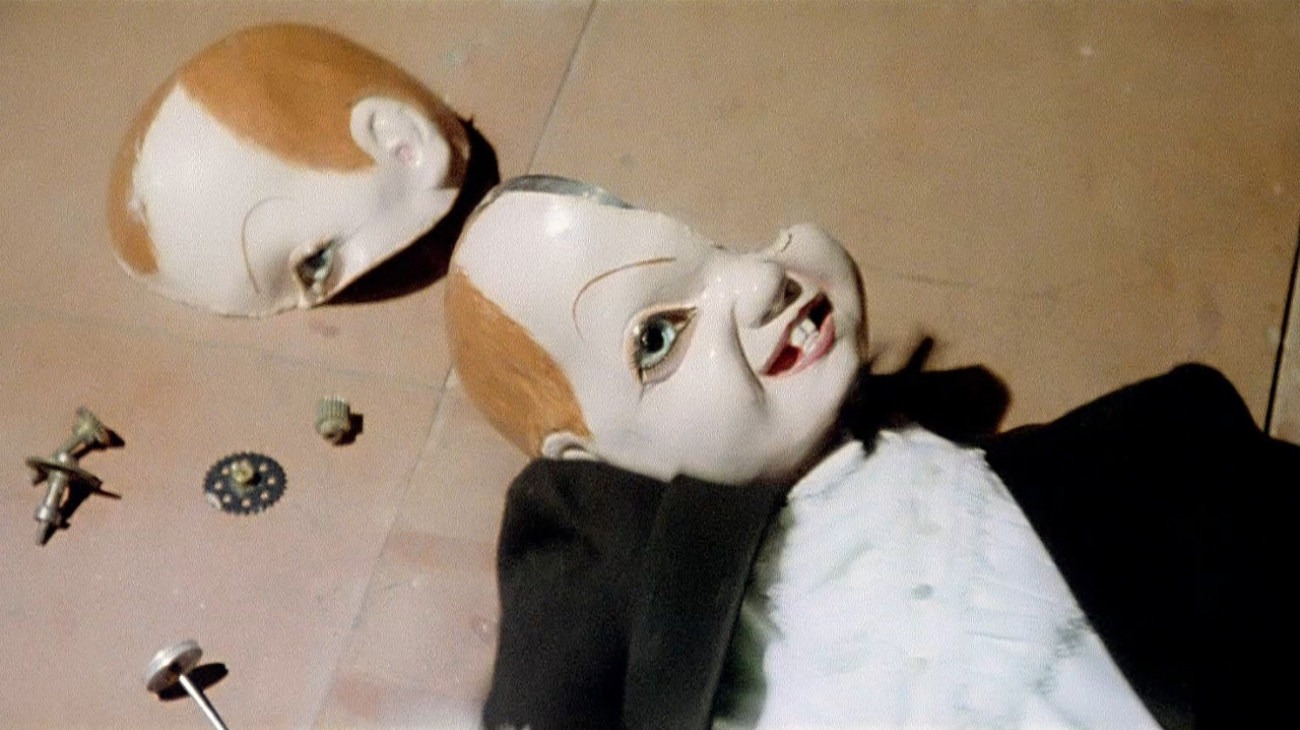
With cardboard houses, sugar winters, and broccoli trees, No Dogs or Italians Allowed at first seems lighthearted, playful, and not too serious. Alain Ughetto casts himself asking his grandmother Cesira about his family, but we only see his hands moving and interacting with the characters as if he was crafting clay model miniatures. However, the whimsical approach sugarcoats the very tragedies that struck his family– from the multiple wars to the discrimination they’ve faced as immigrants– with excellent animation and puppetry that feels much more lifelike than 3D CGI. In telling his family’s story, Ughetto also retells 20th century European history, reframing the worldwide events and movements through a personal perspective.
While best known for his provocative, existential dramas, Lars von Trier also made a provocative mini-series with surprising supernatural horror. Set at Denmark’s leading public hospital, The Kingdom takes familiar medical drama conflicts in handheld camera and sepia tone, but infused with an unsettling understanding of how the finest minds can fail, and how small science can feel in the face of the unexplained. That being said, the horror is much more wacky than spine-tingling or terrifying, but it’s played off through von Trier’s signature absurdism, taking a more humorous and sardonic approach. Riget may be an unexpected entry for those who have heard of von Trier, but it’s a must-watch for the auteur’s fans, showing a different side to the notorious director.
Anyone who’s seen Pietro Marcello’s Martin Eden will likely recognize the director’s fingerprints all over Scarlet. There’s the same haunting collage of colorized archival documentary footage and fictional scenes here, the same fascination with physical labor and historical moments of transition, the same loose approach to literary adaptation. Scarlet’s story is drawn from a 1923 Russian adventure novel but the action is transposed to post-WW1 rural France, where soldier Raphaël (Raphaël Thiéry) returns from the war to discover his wife has died and left him with a daughter, Juliette (Juliette Jouan). The local townsfolk reject the duo, but they manage to keep their head above water thanks to a kindly landlady with a storybook belief in magic and Raphael’s Geppetto-like skills at whittling beautiful toys from blank blocks of wood.
The fairy tale touches don’t stop there: the color grading and bucolic setting give the movie the look and texture of a fable, while Juliette is enraptured by a prophecy — given to her by a witchy forest woman — that tells her she’ll one day be swept away by scarlet sails in the sky. It’s a charming, if airy, yarn, but the craftsmanship in front of and behind the camera makes Scarlet a gorgeous escape.
You wouldn’t expect two old men discussing God and politics to be deeply intriguing, but I suppose it’s different when you have Hopkins and Pryce leading the whole thing. Nothing overly dramatic happens between the two (those parts are saved for the flashbacks, which are just as compelling), but they manage to make every discussion, every point, and even every word feel heavy with the weight of their guilt and hope. These two are proof that good acting can be carried by the tiniest lilt in tone and shift in gesture. You don’t have to be a Catholic or be interested in God at all to appreciate the great performance and touching vulnerability at the heart of The Two Popes.
Set in 1970s Italian countryside, this is a quirky movie that’s full of plot twists.
Lazzaro is a dedicated worker at a tobacco estate. His village has been indebted to a marquise and like everyone else, he works without a wage and in arduous conditions.
Lazzaro strikes a friendship with the son of the marquise, who, in an act of rebellion against his mother, decides to fake his own kidnapping. The two form an unlikely friendship in a story that mixes magical realism with social commentary.
Werckmeister Harmonies is perplexing, to say the least. No one would expect that a circus would somehow disrupt a village in the middle of nowhere, all because a prince in its act is missing, and the whale, of all things, isn’t enough to make up for it. It’s a bizarre premise based on the novel The Melancholy of Resistance by László Krasznahorkai. However, co-directors Béla Tarr and Ágnes Hranitzky transform this strange story into a mesmerizing drama. The weird plot points are captured through black-and-white long takes, with each shot lingering in dread with what’s to come to town. Werckmeister Harmonies will be different things to different viewers, but there’s no denying the curious allure the shots have in capturing this uncanny allegory.
While many Palestinians had to leave their homeland, there are some families that stayed within the region. One such family is that of Palestinian director Elia Suleiman. The Time That Remains is a semi-biographical film that depicts each generation of the family in excellently framed, colorful shots, but while each scene is a beauty to watch, there’s an ugly undercurrent with the way one group is treated over the other. The film contrasts the stoic actions of Elia’s father Fuad and that of the Israeli soldiers, teachers, and nurses around them, and the contrast channels a dry sort of humor that pokes at the absurdity the occupation places 20% of its citizens through. It’s a smart, subtle way to depict the rage felt by the many people that remained in the area, as well as the sadness they must have felt with the loss, the pain, and the displacement they’ve gone through.
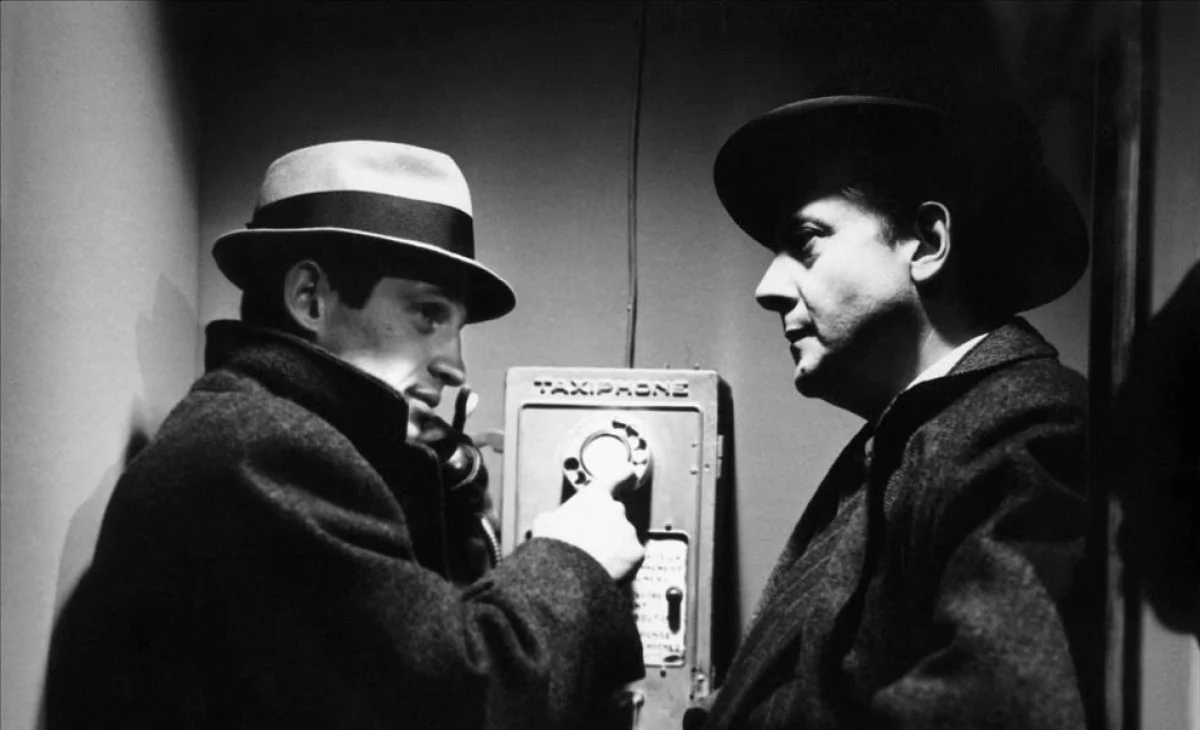
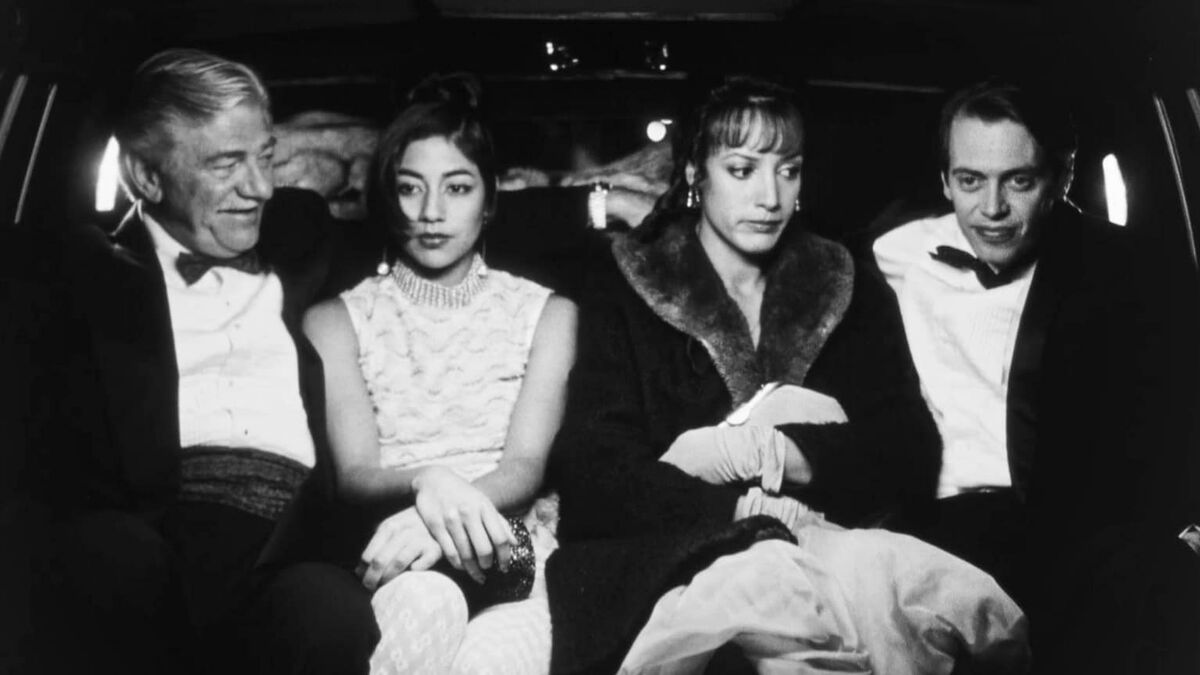
Le Doulos starts with an explanation of the title. While the word refers to the specific type of hat the gentlemen of this film wear, it has become a slang word meaning police informant. As such, an expectation is set– one of the thieves will end up as an informant. Admittedly, the path to get there is a bit convoluted, with every guy wearing the same trench coat and wide-brimmed fedora betraying each other (if they haven’t already), but the journey in finding the crook of crooks is made so intriguing by the strong direction of every scene. Each frame is shot in that signature shadowy light and visual innuendo that made film noir striking. It’s also paired with such a groovy score that sets the suspense of the heist that follows. So, while it may not be the most straightforward caper film, Le Doulos nonetheless is a fun pastiche of the film noir genre.
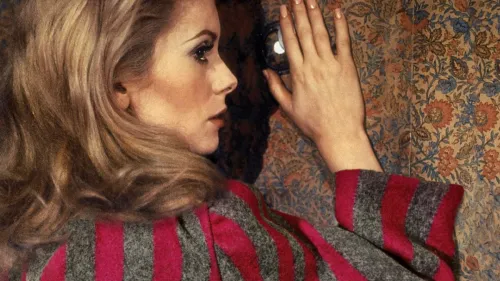
What makes something sexy? Belle de Jour doesn’t have any definite answers, nor does it present a straightforward narrative, especially with the way it slides in and out of the titular beauty’s fantasies and her reality. Still, the way director Luis Buñuel directs this film adaptation clearly holds an understanding of what makes something erotic. The masochism of Catherine Deneuve’s Séverine might be understood by today’s more sexually liberated audiences, but the rest of her desires and the images deliberately left out could easily baffle viewers or maybe even trigger the same feeling a bored, rich housewife would get. Belle de Jour understands something that can’t be easily put to words, and it’s this understanding that made this psychological drama a surrealist classic.
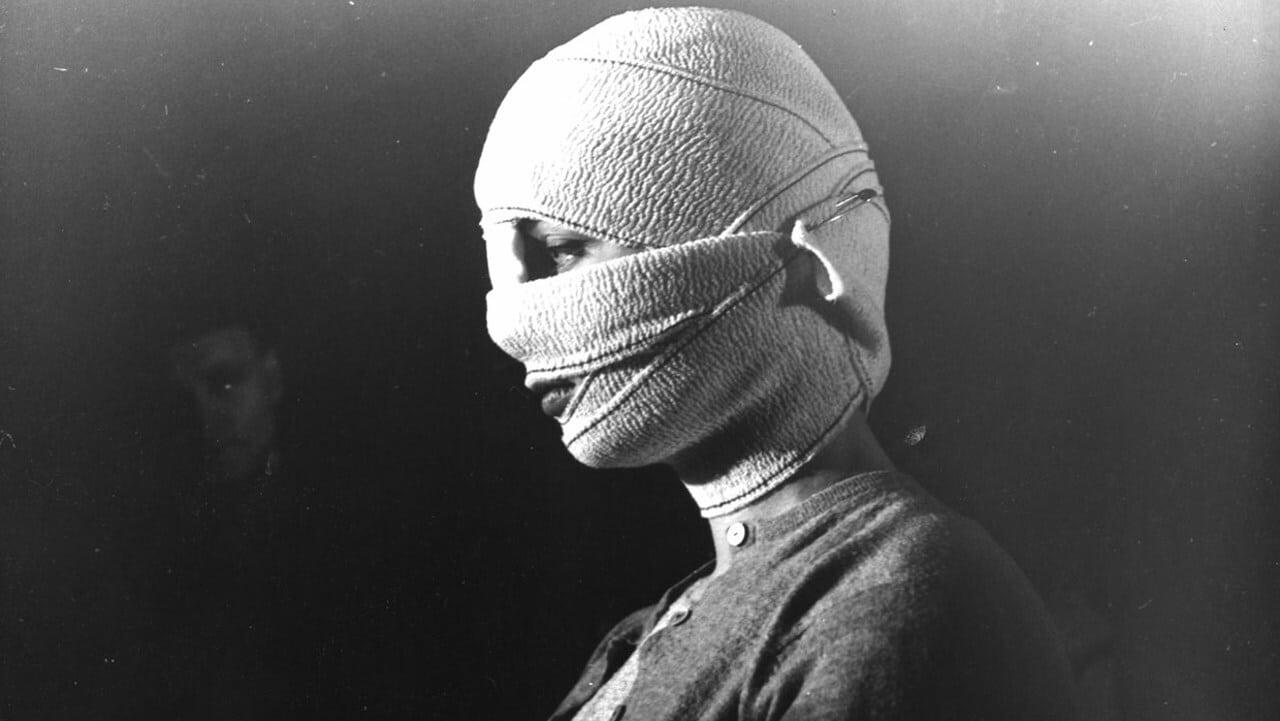
Eyes Without a Face is aptly titled. As the mad Dr. Génessier goes to extreme lengths to restore his daughter Christiane’s beauty, the beauty he accidentally disfigured in a car accident, we mostly see Christiane with her face masked, only with her eyes undamaged. It’s her eyes that drive this French body horror classic. Her fear over what her father is willing to do reflects our own, especially when he proves, again and again, how he’ll prioritize beauty and control at the expense of all life. It’s her expression that marks the vivid images that still influence horror up to today.
In 1994, Danish auteur Lars von Trier came up with a TV series called The Kingdom, an absurd supernatural comedy that takes place in a rundown hospital in Copenhagen. The show was well-received enough to warrant a second season, but just as von Trier was polishing up the third and final installment, the deaths of more than one lead actor pressed pause on the project, till now.
More than 10 years in the making, The Kingdom part III, also called Exodus, is still very much centered on the weird patients and staff members that populate the Riget hospital, as well as the possible evil buried beneath it. The comedy/horror has a robot dishwasher and a giant head. Danes and Swedes are perennially at war with each other. Willem Dafoe and Alexander Skarsgard make odd cameos.
I’m not sure it’s possible to write a coherent synopsis without sounding like I’ve fallen off the rails, but know that it is a unique headscratcher of a show, more interesting as an experience than anything else. Von Trier was also openly inspired by Twin Peaks, in making it, so David Lynch fans in particular will truly enjoy diving into this world.
As the Provence countryside is painted in golden sunshine, Jean de Florette seems like a straightforward period drama, celebrating the beauty of provincial life. It makes sense. Considering that this is the first half adapting classic French novel The Water of the Hills, this sunny time sets up the childhood of Manon of the Spring. Jean and the Cadoret family are depicted as honest people, city folk who unexpectedly inherit a family farm and who perseveres to work with it. However, this golden light mostly sets up the tragedy that is to follow, the Soubeyran’s greed, and their scheming that undermines the Cadorets. It’s only with this half that Manon’s later story can fully soar.
Loosely based on the 1909 novel, Martin Eden is a stunning film about the hollow success of individualism. The plot points remain the same: Eden, a self-taught sailor, wants to win the heart of the wealthy Elena Orsini. To do this, he strives to break into the upper class with his writing. However, in this film, writer-director Pietro Marcello adds another dimension to the anti-individualist story: he transports Eden from his original California setting to Naples—allowing for views of different cultures, languages, and classes. By intercutting between old film stock and lingering close-ups, Marcello draws from his documentary background to masterfully evokes the process of remembering. And in refusing to define the time period, Marcello recognizes that Eden’s struggle is still ongoing today—and that his success is still hollow.
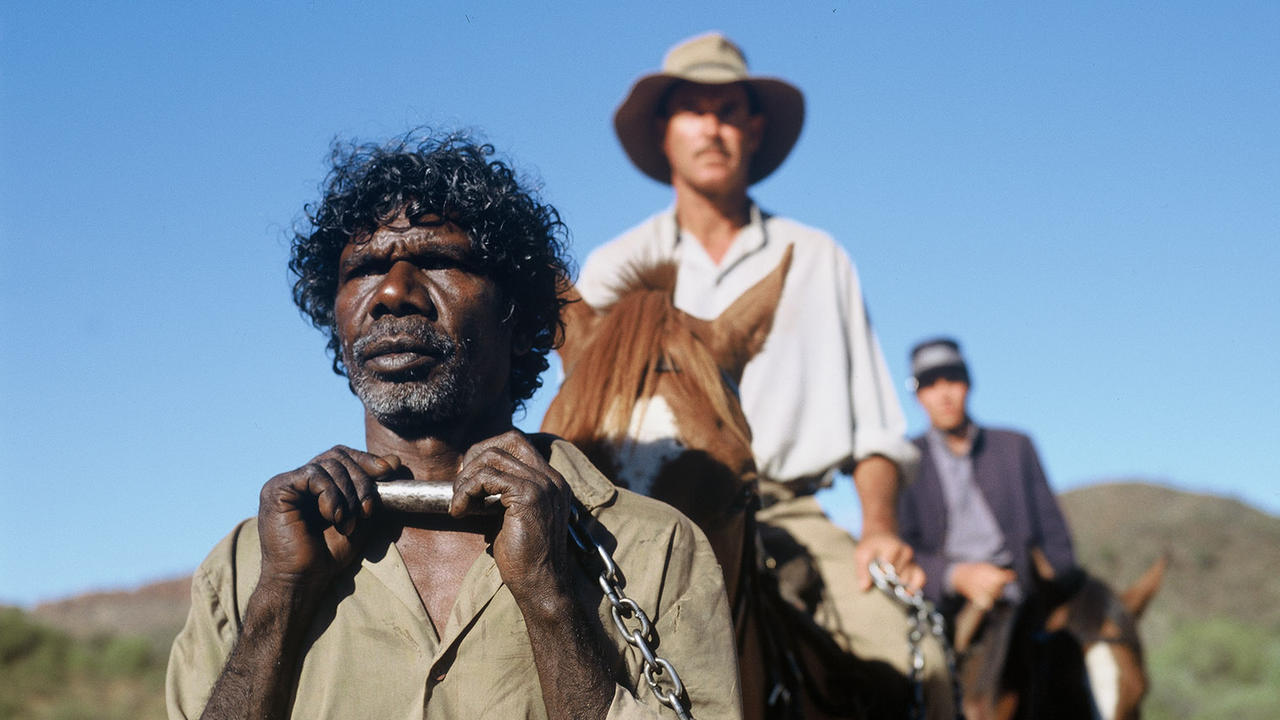
At first, The Tracker seemed to be a straightforward Australian Western with three white men tracking down a murderer, with the help of an Aboriginal man more familiar with the Outback. But The Tracker takes unexpected paths. First, no one is given an actual name– they’re referred to in the credits by titles (e.g. The Fanatic, The Follower, The Veteran, and of course, The Tracker). Second, the soundtrack seems to act as somewhat of a Greek chorus, with Archie Roach crooning the beliefs each player seems to hold. And third, the violence becomes more gripping because of the way it’s presented– intercuts to Peter Coad’s paintings depicting the violence inflicted upon Aboriginal people in just a frame. These choices craft an entirely unique approach. Rolf de Heer’s approach takes a familiar Western plot but doesn’t adhere to the genre’s conventions and it’s totally fitting for a film actively examining a part of Australian history that most of the country wouldn’t want to talk about. And of course, it’s all tied together by The Tracker himself, by David Gulpilil’s powerful performance.
The situation in No Man’s Land isn’t something we usually see in war movies, considering how often the genre has been used to criticize war, to examine people’s true nature, and to affirm a deeper love for humanity. There’s no time to have fun when these ideas are at stake. Yet, the awkward situation of being stuck where you shouldn’t have is likely to be true in reality. Wars like the Bosnian War did use landmines, causing situations for soldiers on both sides to unexpectedly end up stuck with each other. But if anything, the humor highlights the very same war film themes, albeit in a fresh way. Mirroring the historical indecision of the world leaders outside the trench, No Man’s Land takes this possible scenario to contemplate war’s absurdities.
While the mixed reception of its near-faithful American remake Vanilla Sky might make some viewers pause, there’s an intuitive brilliance in the Spanish original Open Your Eyes that isn’t easy to translate. Sure, the apparent differences help– it’s shorter and less complicated, and Cesar’s face turns more grotesque than David’s does. But what’s startling about Open Your Eyes is the way writer-director Alejandro Amenábar guides the camera through its various shifts, creating a more subtle and gradual realization that something is wrong, and thus, a more terrifying dream turned nightmare. Amenábar has later deemed the film as his worst, saying it was written when he didn’t know much about life, but, in our opinion, Abre Los Ojos still holds up as a groundbreaking existential sci-fi simulation, one that still puzzles and captivates years after.
One’s home country should be the place where a citizen has their rights, but that’s not the case in Charlie’s Country. At times, the film seems like a simple, straightforward depiction of an Aboriginal man living in a Westernized society, but David Gulpilil, who stars and who co-wrote the script, subtly infuses his community’s rage towards a system seemingly made for them to fail. While the pacing might be frustrating for some viewers, it’s quite a palpable way to recreate the community’s frustration as they bump against the arbitrary restrictions placed on them, but it also emphasizes how necessary art has become as one of the few ways to preserve their culture. It’s because of this that Charlie’s Country is unforgettable.
There is so much simmering under the surface of Monica. When her mother Eugenia (Patricia Clarkson) falls gravely ill, the titular character (played by Trace Lysette) returns home for the first time since being turned out as a youngster for her transgender identity. But whatever illness Eugenia has has addled her brain, and she seemingly doesn’t suspect that the woman who has come to help care for her is the daughter she rejected all those years ago.
Co-writer and director Andrea Pallaoro puts an understated spin on what could be an explosive scenario by letting much go unspoken, frequently framing Lysette’s face in long and wordless static shots. If the filmmaking edges towards being a little too patient at times, the naturally engaging Lysette keeps a firm hold of our attention with a vulnerable performance that expresses much without words. These infrequent wobbles aside, Monica’s restraint is to its credit: by not laying the drama on thick, all sorts of poignant nuances are allowed to bubble up, like the paradoxical difficulties and extraordinary intimacy that come with physically caring for a loved one. In choosing not to give Eugenia and Monica a direct confrontation or moment of revelation, too, the movie opens up to another beautiful possibility: acceptance, finally.
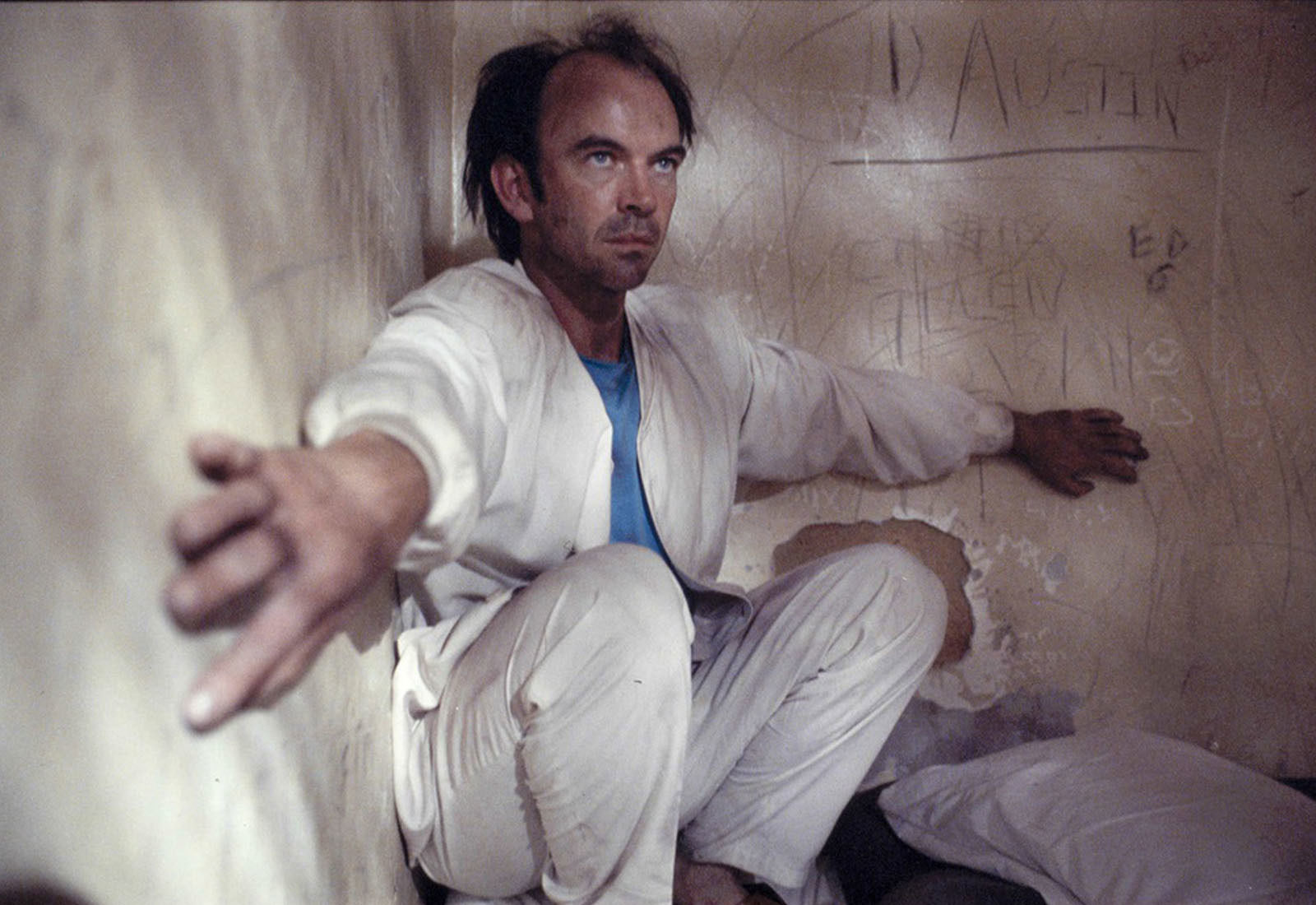
Bad Boy Bubby is not an easy watch. Within the first ten minutes, the indie drama seemed to be one of those films created only to provoke the viewer, and not much else. We won’t deny that the intro is provocative– in fact, we’re warning you outright that it includes domestic violence, abuse towards the disabled main character that’s implied to have started since childhood, and the killing of a cat– but with such a harrowing introduction, Bubby being thrown into the wider world actually becomes something optimistic. His escape is written to be full of possibilities, the possibilities that we ordinary folk take for granted, but possibilities nonetheless. There’s nowhere to go but up, for him. Writer-director Rolf de Heer matches this unusual characterization with unusual style, with 30+ cinematographers shooting with different styles as Bubby learns from each person he meets, and with the binaural audio recorded to simulate what Bubby would actually hear. It makes for a very weird, experimental film, but Bad Boy Bubby also reveals to be a surprisingly hopeful drama that celebrates the goodness of ordinary life.
This Netflix production is based on a case that rocked public opinion in Italy. Stefano Cucchi was arrested for a minor drug charge and died five days later from police brutality.
The movie takes its time to expose what Cucchi went through, which might lead some viewers to find On My Skin slow, and rightfully so. Thinking about the issues at hand here, it’s easy to understand why the director made that choice. In fact, Italians’ complex relationship with the Carabinieri, a division of the Italian army that carries out domestic policing, is delicate to explain and requires meticulous unveiling.
Nominated to nine David di Donatello Awards (the equivalent of the Academy Awards in Italy), of which it won three.
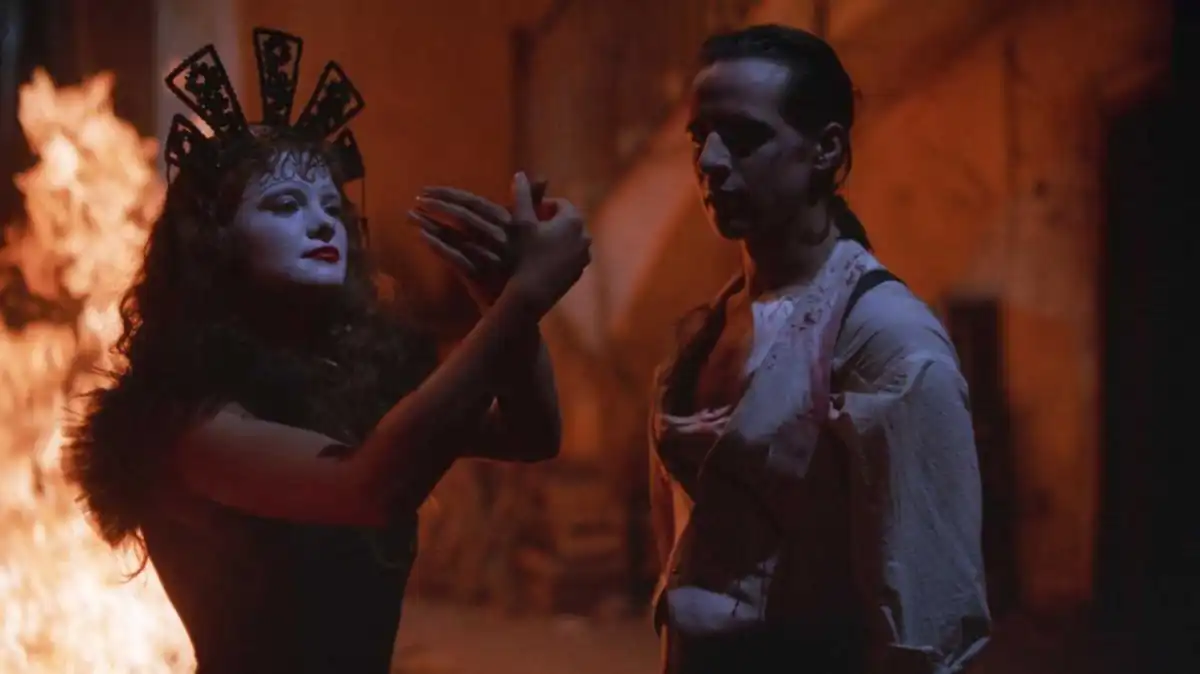
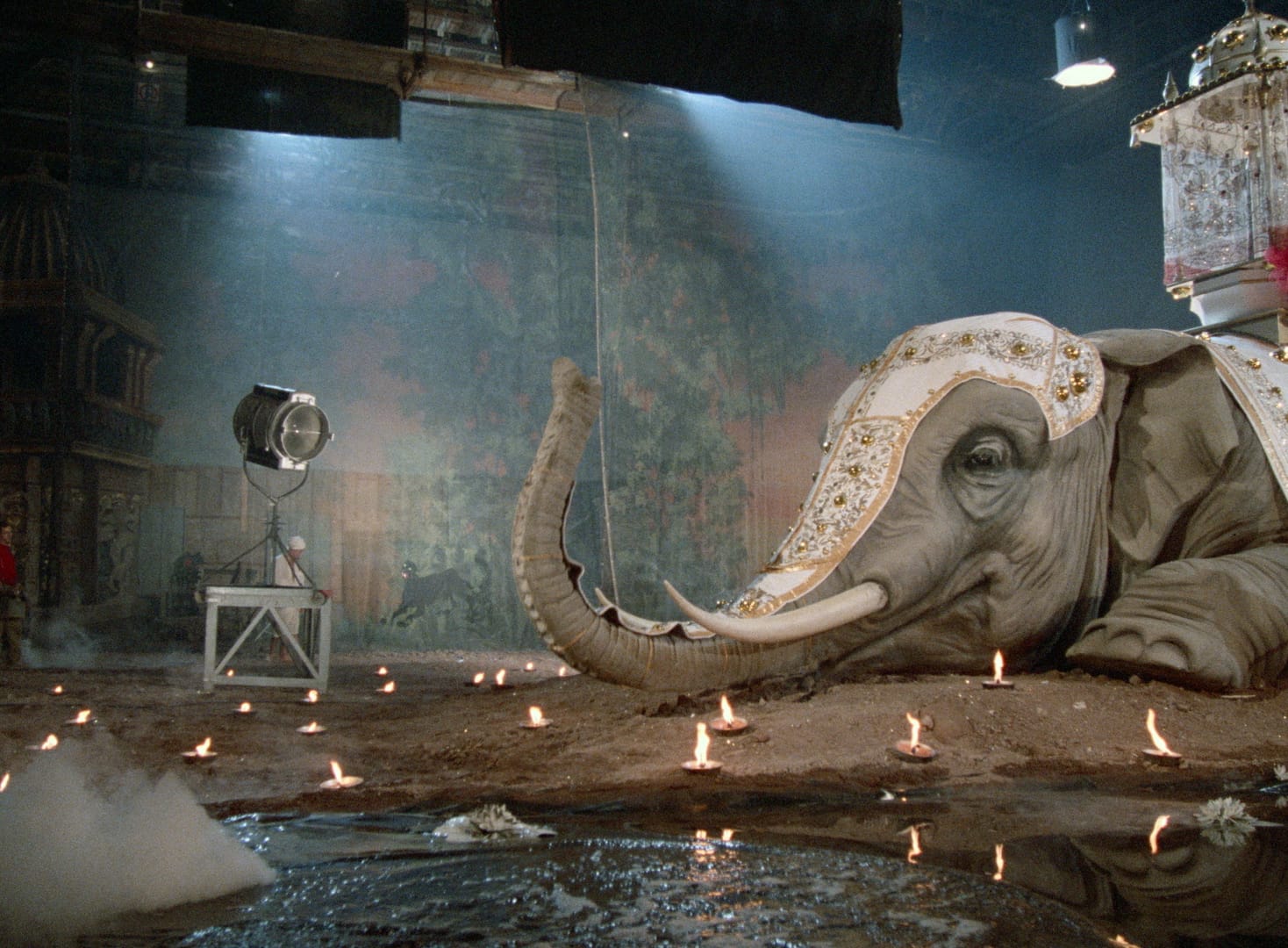
With an acrobat in a sanitarium, elephant trunks spouting blood, and a religious cult whose patron saint is a rape victim, Santa Sangre isn’t going to be an easy watch, especially with the avant-garde direction of the iconic Alejandro Jodorowsky. It’s tough to watch the explicit scenes, both of Fenix’s childhood circus reality and his adult hallucinations, with the hallucinations visually recalling his childhood trauma. But through these terrifying, freaky images, Jodorowsky takes his own memories and crafts it into a twisted, but deeply personal psychosexual nightmare, confronting the exploitative nature of faith and family through various circus acts. Santa Sangre is one of its kind.
What exactly are The Consequences of Love? At first glance, this seemingly mundane drama offers its audience an Italian loner having long resided in a hotel in the Swiss Alps. The combination of the title and the introduction seems like it could lead to a vacation romance with a local barmaid, but there’s more that the film offers. On top of all this, director Paolo Sorrentino transforms their relationship into a mystery of its own, complete with unexpected thrills, dramatic backstory, and the past returning at the worst time possible. And it’s all made compelling with the foundations of Sorrentino’s signature style.
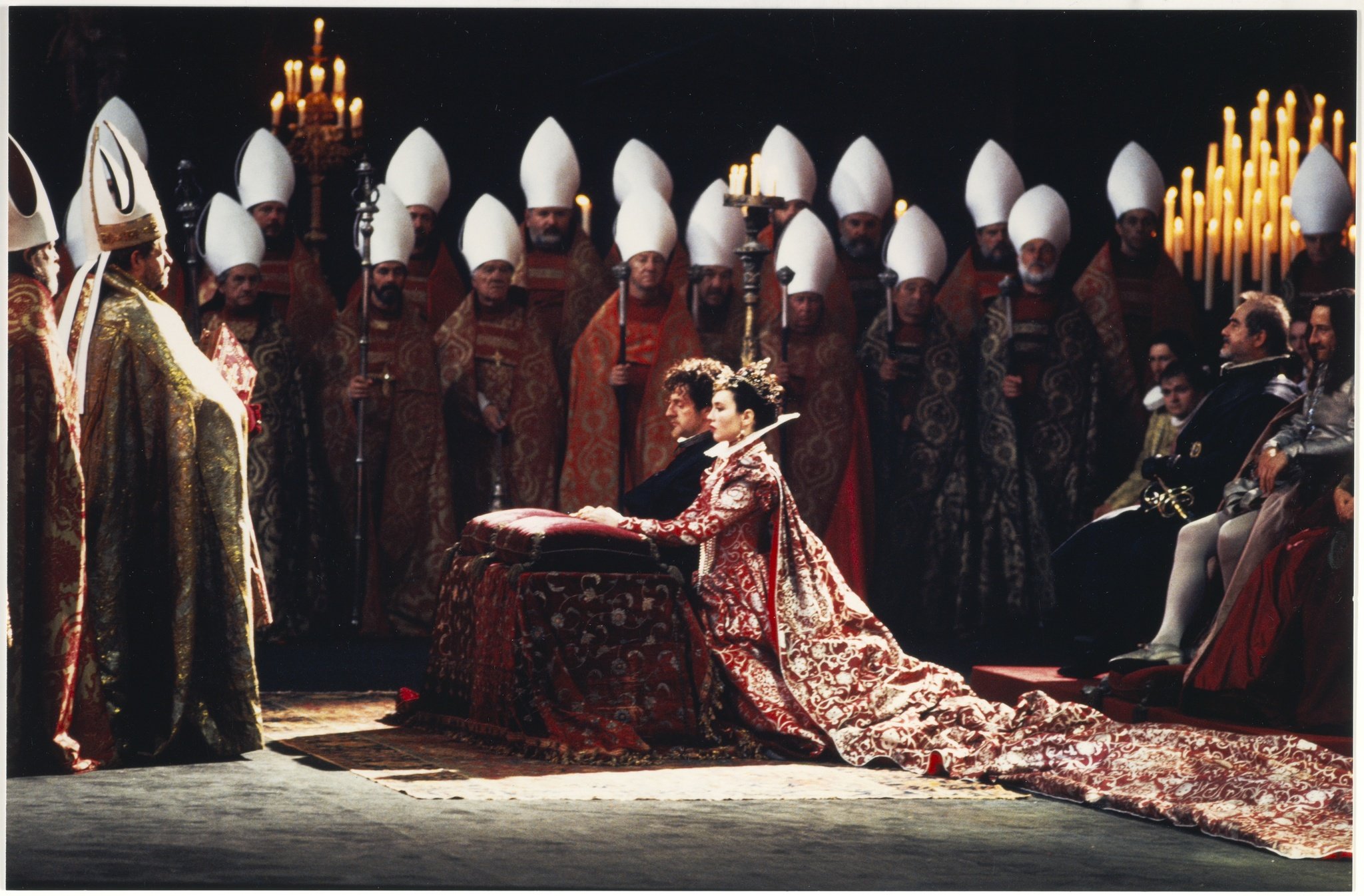
Before Games of Thrones delivered court intrigues, shocking murders, and adulterous affairs, Queen Margot delivered all these nearly two decades earlier, depicting the dramatized, real life events of the French Wars of Religion. While it doesn’t have dragons, it has style, with some of the most stunning scenes intercut with some of the most gruesome, pushing the envelope with a freedom only possible due to none of their descendants still holding the French throne. It’s also one of the most expensive French films ever made, but every franc was put to good use, with luxurious sound, sets, costumes, and camerawork excellently supporting the cast’s performances. Initially released to mixed reception in America with 20 minutes cut from the runtime, La Reine Margot has thankfully been restored and re-released in full for its 20th anniversary in 2014.
Does fiction influence real life? It’s a question many artists have to reckon with, especially if they depict darker themes and have detractors as a result. More so if they’re considered the Master of Italian Horror. This makes Tenebre quite interesting. Through a murder mystery where a serial killer seems to take their playbook from a visiting horror author, auteur Dario Argento returns to the giallo genre with a self-reflexive narrative, seemingly crafting each scene as response to some of his critics. And of course, he does so with the freaky fascination toward the macabre that his films are known for.


x1
x5